Do I Need A Visa To Visit Croatia?
Visa rules for visiting Split and Croatia: who needs a visa, how Schengen entry works at Split Airport since 2023, EES biometric checks and the ETIAS start date.
Split sits on the Adriatic coast of Croatia, a country that has been a full member of the Schengen area since 1 January 2023, with air borders following on 26 March 2023. That membership decides the answer to the visa question for almost everyone arriving at Split Airport or crossing the land borders. The European Commission's Schengen pages list Croatia among the member states, and the same rules that apply at Paris or Vienna now apply at the passport booths in Kaštel Štafilić. What has changed more recently is the machinery at the border itself: the Entry/Exit System, fully operational since 10 April 2026, now records biometrics for non-EU short-stay visitors, and the ETIAS travel authorisation is still not live with no fixed start date.
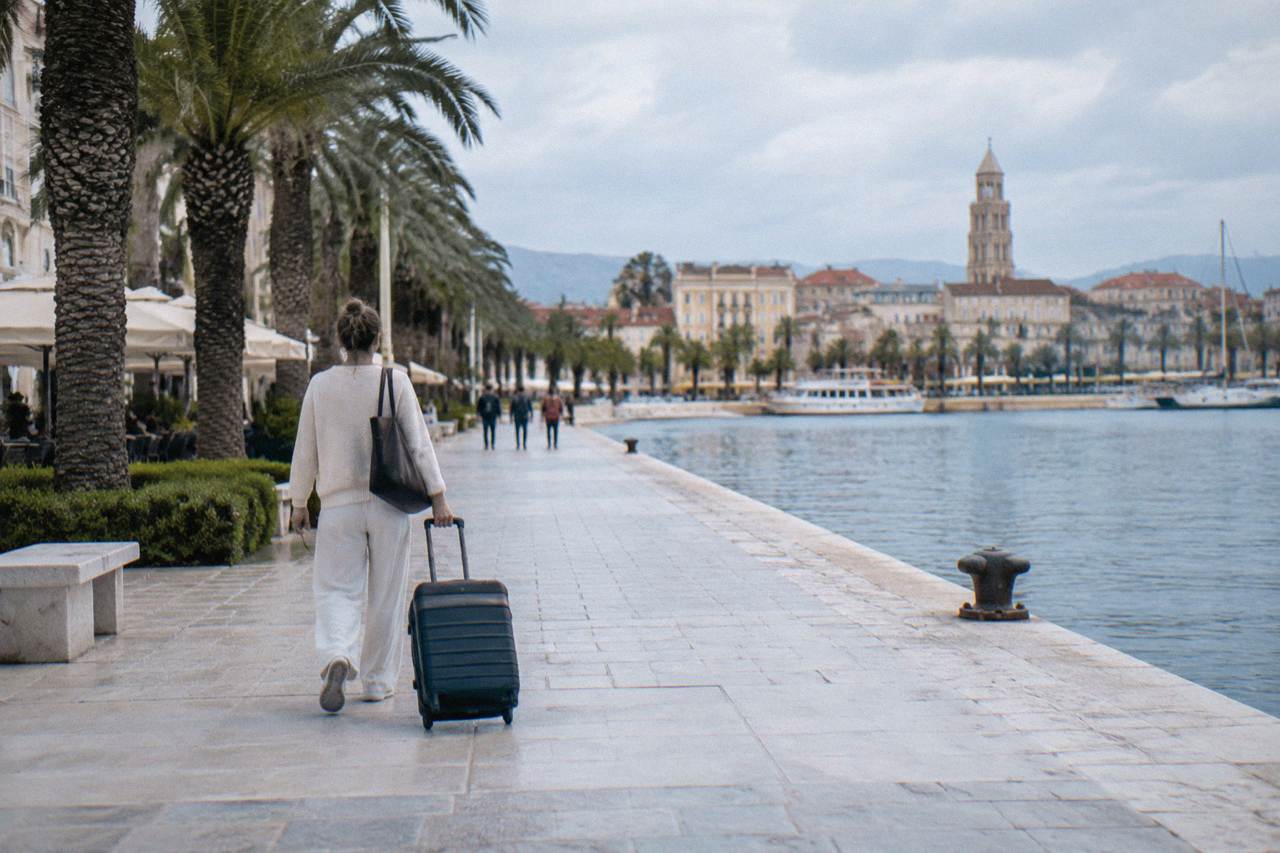
Do I Need A Visa To Visit Croatia?
It depends entirely on your citizenship, not on Split or Dalmatia specifically. Croatia applies the common Schengen visa policy, so citizens of the European Union, the wider European Economic Area and Switzerland enter with a national identity card and no visa at all. Citizens of the United States, the United Kingdom, Canada, Australia, Japan and roughly sixty other visa-exempt countries enter with a passport for a short stay of up to 90 days, with no visa and no prior authorisation while ETIAS remains unavailable.
Nationals of countries on the Schengen visa-required list, which includes Russia, India, China and Turkey among others, need a Schengen visa type C issued for short stays before travel. The application goes to the Croatian consulate or embassy covering your place of residence, or, in some cases, to the consulate of another Schengen state responsible for the assessment. The visa itself is not Croatian in the ordinary sense: it is a Schengen uniform visa valid across the whole area, so a trip that pairs Split with Italy or Austria is covered by one document.
One practical point for anyone planning the classic Dalmatian itinerary: the day trips from Split run in two different legal directions. Krka, Plitvice, Trogir, Hvar, Brač and Vis all stay inside Croatia and inside Schengen, so a single entry covers the lot. Mostar, across the border in Bosnia and Herzegovina, does not, which matters and gets its own section below.
Which Citizens Enter Croatia Visa-Free?
Citizens of EU and EEA member states and Switzerland may enter Croatia with just a national ID card, no passport required and no visa. Passport holders from the Schengen visa-waiver list, including the United States, the United Kingdom, Canada, Australia, New Zealand and Japan, enter visa-free for short stays of up to 90 days under the standard Schengen short-stay rule. Everyone else needs a Schengen type C visa obtained in advance.
Holders of a valid Schengen visa or residence permit issued by another member state may also enter Croatia on that document, which is worth knowing for anyone pairing Split with a longer stay elsewhere in Europe. The clean way to see the whole picture is in three tiers:
| Citizenship or document | What you need for Split | Stay allowed |
|---|---|---|
| EU / EEA / Switzerland | National ID card or passport | Free movement, no visa |
| Visa-waiver list (USA, UK, Canada, Australia, Japan and others) | Passport only | Up to 90 days, short stay |
| Visa-required list (e.g. India, China, Russia, Turkey) | Schengen type C visa obtained before travel | Up to 90 days, short stay |
| Holders of another state's Schengen visa or residence permit | That valid document | Same as the visa itself |
If you are unsure which tier you fall into, the Croatian Ministry of Foreign and European Affairs and the European Commission's Schengen pages carry the current lists, and a consulate can confirm your status before you book flights. Airlines also check documents at boarding, so a wrong assumption about visa-free entry usually surfaces at the departure gate rather than in Split.
What Happens At The Border With EES?
Since 10 April 2026 the Entry/Exit System has been fully operational at Croatia's external Schengen borders, including Split Airport, and it applies to non-EU visitors entering for a short stay. Instead of a passport stamp, the system records your fingerprints and a facial image on first entry and logs each entry and exit digitally thereafter. It asks for no application, fee or advance action from the traveller: it is a record-keeping system at the booth.
The practical effect is that your short-stay allowance is now computed automatically, which matters for long summers on the coast or back-to-back trips. Travellers who previously entered the Schengen area, left for a while and re-entered will find their movements already in the system, replacing the manual day-count that border officers previously did by paging through your passport. The European Commission's travel-europe pages describe the system as applying to third-country nationals admitted for a short stay, so EU citizens and their family members with residence rights are outside its scope.
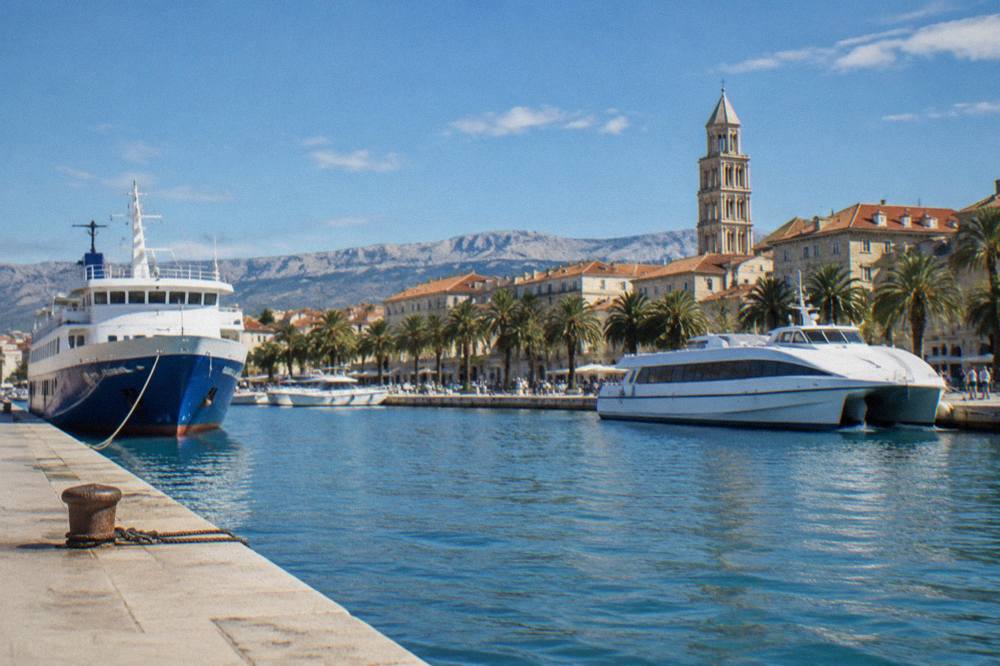
Two more border facts worth knowing for this part of the world. First, Croatia's land and sea borders became Schengen borders on 1 January 2023 and air borders on 26 March 2023, so crossing by ferry from Italy or by road from Slovenia and Hungary is now an internal Schengen move with no routine checks. Second, the emergency number across the country is 112, useful far beyond border questions.
Do You Need ETIAS For Croatia Yet?
No. Currently, the European Travel Information and Authorisation System is not live and has no fixed start date, so no traveller needs an ETIAS to board a flight to Split or to cross into Croatia. When it does launch, it will apply to the same visa-exempt nationals who currently enter with only a passport, it will cost 20 EUR and it will be valid for three years.
A transitional grace period is also planned after launch, so travellers without an authorisation will not be turned away at the gate on day one. The one line of caution worth keeping: plans for ETIAS have slipped repeatedly, and the European Commission's own pages give no launch date, so any blog or forum claiming you must apply "this year" is ahead of the official record. Until an official announcement exists, the correct answer for a trip booked now is that no authorisation is needed. Once the system starts, the application is expected to be an online form with a fee, closer to the United States ESTA in shape than to a visa, and it will not change the short-stay rule itself. The wider set of guides lives on Split Croatia Travel Guide.
While the border machinery gets sorted, the things that actually sell out in Split are the sea trips. A Check availability check on the full-day catamaran to Hvar and the Pakleni islands is a reasonable thing to do the moment flights are confirmed, and the internal guide to island hopping around Split covers the rest of the coastline.
What About Day Trips To Mostar And Bosnia?
Mostar is in Bosnia and Herzegovina, which is not in the European Union and not in Schengen, so leaving Split for a Mostar day trip means leaving the Schengen area and re-entering it on the way back. Visa-exempt nationals, including Americans, Britons, Canadians and Australians, can usually enter Bosnia visa-free for short stays on the same passport. Anyone travelling on a single-entry Schengen visa should check that it permits re-entry.
The drive from Diocletian's Palace to Mostar is about 2 hours 13 minutes free-flow, and organised Mostar and Kravice tours run the border crossing several times a week. Border police on both sides can ask for passports, and queues at the crossings vary with the season, so a tour that builds in crossing time is the safer plan than a tight self-drive schedule. Croatia itself requires nothing further on re-entry beyond the usual passport or ID check back into Schengen.
Everything else on the day-trip map stays inside the country: Trogir is 36 minutes away, Omiš 38, and Krka National Park about 74 minutes, all domestic. The Krka pre-booking question covers tickets for the park, which run 7 EUR in the January to March and November to December window, 20 EUR in April, May and October, and 40 EUR from June to September, per the park's 2026 price list.
How Long Can You Stay And What About Tourist Tax?
Visa-free and visa-holding short-stay visitors alike get up to 90 days under the Schengen short-stay rule, and the EES system now tracks that allowance automatically. Length of stay and the tourist tax are separate things: the tax is collected by your accommodation, runs at about 2.65 EUR per person per night in high season, defined as 1 April to 30 September, with children under 12 free and ages 12 to 18 at half rate, and the exact amount is confirmed at booking.
The tax appears on your accommodation bill, not at passport control, so nobody will ask you about it when you arrive in Split. For planning purposes, treat it as a small nightly line item on top of the room rate and confirm the figure with the host when you reserve. The county published an amendment for the 2027 season, so amounts are a year-to-year matter rather than a permanent constant.
Once the paperwork is behind you, the city itself is unusually compact. The ferry port, the main bus station and the railway station sit together on Obala kneza Domagoja, 500 to 600 m from Diocletian's Palace, and plenty of visitors never need more than their own feet between the two. The walkability question for cruise passengers covers exactly that arrival scenario.
Common Questions About Croatia Entry Rules
Do I need a visa to visit Croatia?
Only if your citizenship is on the Schengen visa-required list. EU, EEA and Swiss citizens enter with an ID card, visa-waiver nationals such as Americans, Britons, Canadians and Australians enter with a passport for a short stay of up to 90 days, and everyone else needs a Schengen type C visa obtained in advance from a consulate.
Do UK citizens need a visa for Split?
No. The United Kingdom is on the Schengen visa-waiver list, so a British passport holder enters Croatia for a short stay of up to 90 days without a visa or any advance authorisation, while ETIAS remains not live.
Do US citizens need ETIAS for Croatia in 2027?
Not yet, and there is no confirmed date. ETIAS was not live and has no fixed start. When it launches it will cost 20 EUR, be valid for three years and apply to visa-exempt nationals, with a transitional grace period planned after launch.
Is Croatia in the Schengen area?
Yes, without qualification. Croatia has been a full Schengen member since 1 January 2023, with air borders following on 26 March 2023, so a single Schengen entry covers Split together with the rest of the area.
Do I need a separate visa for the Mostar day trip?
Not usually for visa-exempt nationals, since Bosnia and Herzegovina admits them for short stays on a passport, but you are leaving Schengen and re-entering it the same day. Holders of a single-entry Schengen visa should confirm with a consulate that they can re-enter Croatia on that document.
Does Croatia stamp passports?
Not for non-EU visitors any more. Since the Entry/Exit System became fully operational on 10 April 2026, entries and exits at Split Airport and other external borders are recorded digitally with fingerprints and a facial image instead of ink stamps.
The short version: if you hold a Western passport, no visa and no authorisation stand between you and Split today, only a passport, the new digital EES record at the booth, and the sea once you are through. Confirm your own tier against the official lists before booking, and the rest of the planning is just choosing which island to sail to first.
