Things To Do In Split
Split is a coastal city in central Dalmatia on the Adriatic, built in and around a Roman emperor's palace, with a forested peninsula on one side and the islands of Brač, Šolta, Hvar and Vis offshore.
Short answer
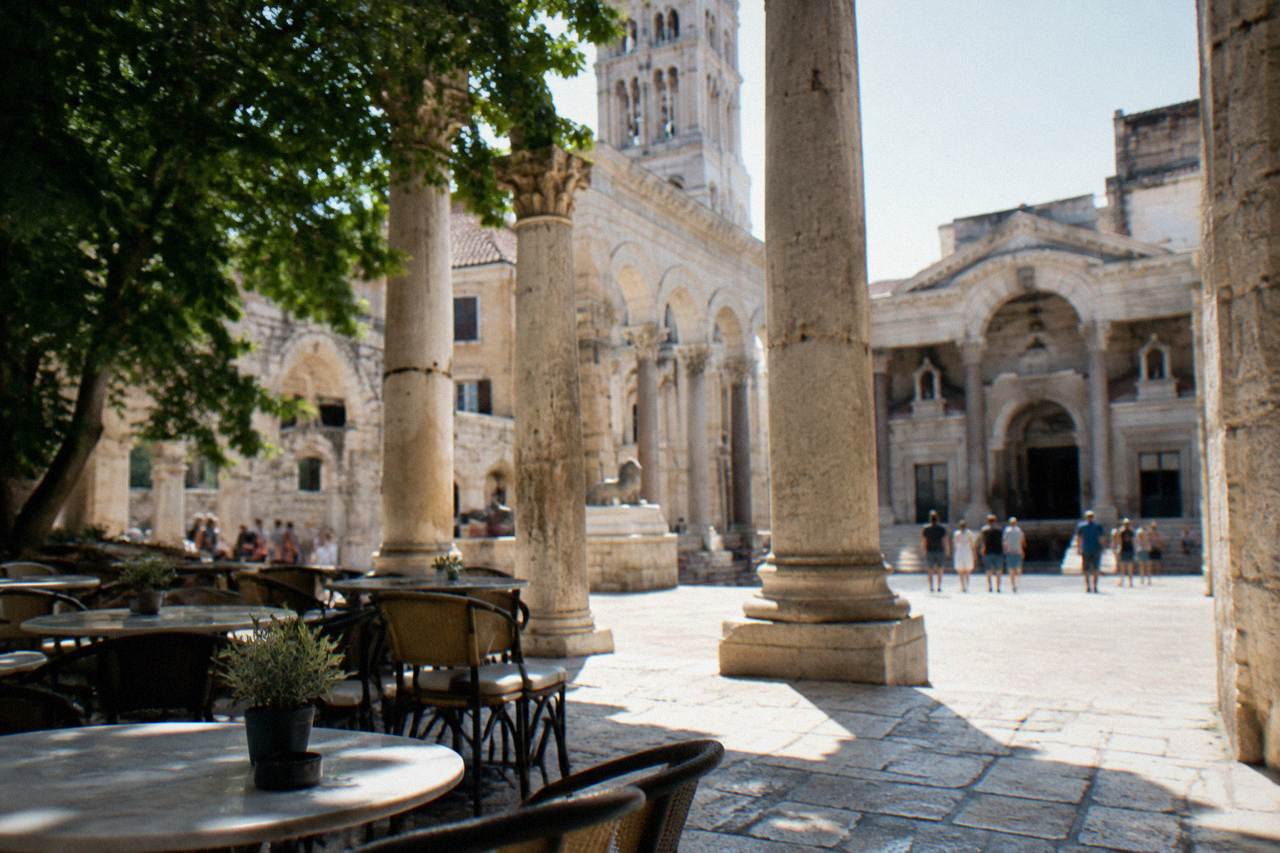
The core things to do in Split are Diocletian's Palace and its substructures, the Cathedral of St Domnius, the Peristyle, the Riva promenade and Marjan hill, plus day trips to Krka, Trogir, Hvar and the Blue Cave.
Split is a coastal city in central Dalmatia, on the Croatian shore of the Adriatic Sea, with a population of 160,577 at the 2021 census and an Old Town that lives inside the walls of a Roman palace built for the emperor Diocletian around 295 to 305 AD. The city's ferry port, main bus station and railway station sit together on Obala kneza Domagoja, 500 to 600 m from the palace, which makes Split the natural base for the whole of central Dalmatia: Krka and Plitvice upstream, Trogir and Šibenik north, the islands of Brač, Šolta, Hvar and Vis offshore. This page lays out the things to do in Split in the order a visitor actually needs them: the first-day sights, the costs, the free options, rain plans, children, nightlife, the day trips, and how to move between all of it on foot.
Things To Do In Split On Your First Day
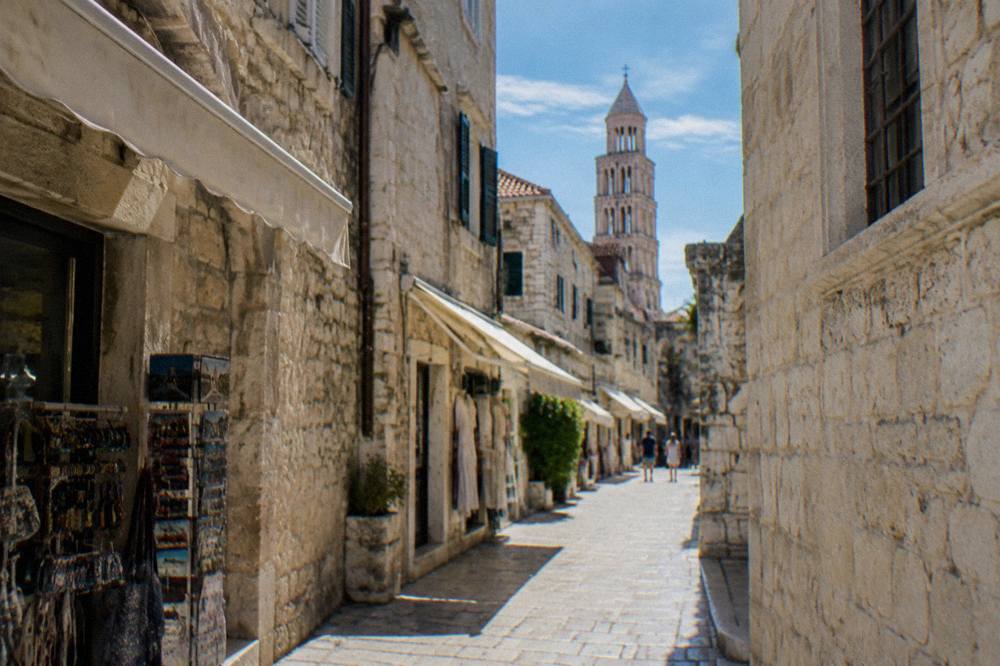
Start at Diocletian's Palace, walk the Peristyle, the Golden Gate and the substructures, climb the 57 m cathedral bell tower, then finish the day on the Riva promenade or up on Marjan hill, all within roughly one square kilometre of pedestrian streets. The palace complex, inscribed by UNESCO in 1979, is the city itself, not a museum behind a fence, so a first day in Split is simply walking through it slowly.
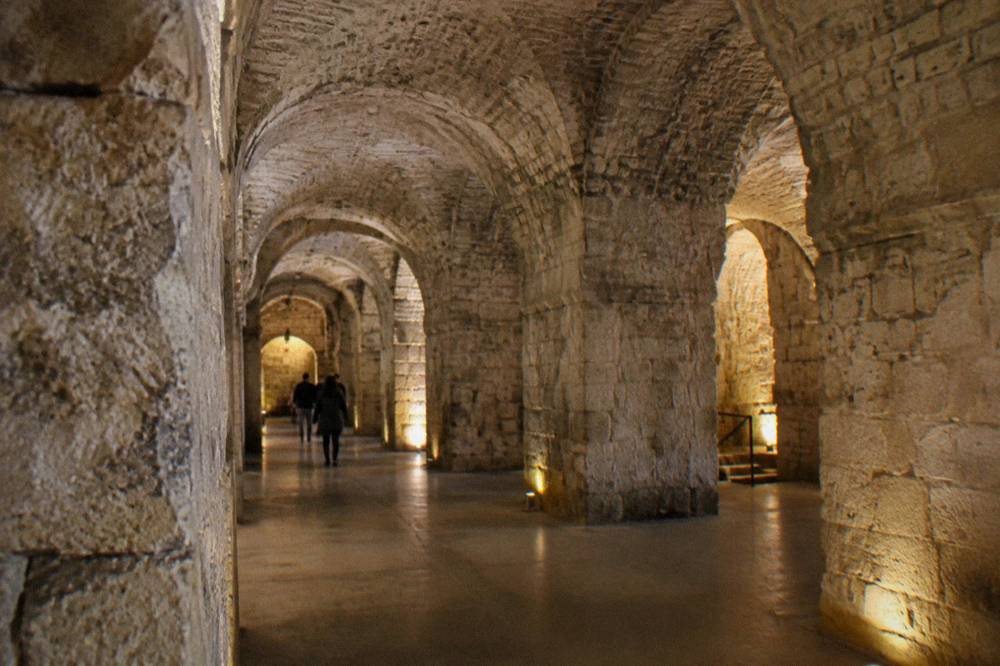
The palace is the frame for everything. Its substructures, the cellars, are run by the Split City Museum and open Monday to Sunday from 8:30 to 20:00, with the central part under restoration to the end of 2026 while the passage stays open. Above ground, the Peristyle, the colonnaded courtyard at the heart of the complex, is free to enter and hosts the Roman guard change at noon, which ran daily from 28 May to 27 September 2026. The Split City Museum itself sits in the Papalić Palace nearby and charges 10.00 EUR for an adult ticket, 8.00 reduced, with a family ticket at 18.00, closed Mondays.
The Cathedral of St Domnius and its bell tower stand on the Peristyle's west side. The tower is 57 m high. Ticketing for the cathedral complex is secondary-sourced, so write it as from about 5 EUR for a single site, with combined tickets up to about 15 EUR covering the cathedral, crypt, baptistery, treasury and tower, and confirm at the kiosk on the Peristyle; shoulders and knees must be covered. The former Temple of Jupiter is now the Baptistery of St John and is ticketed within the same scheme.
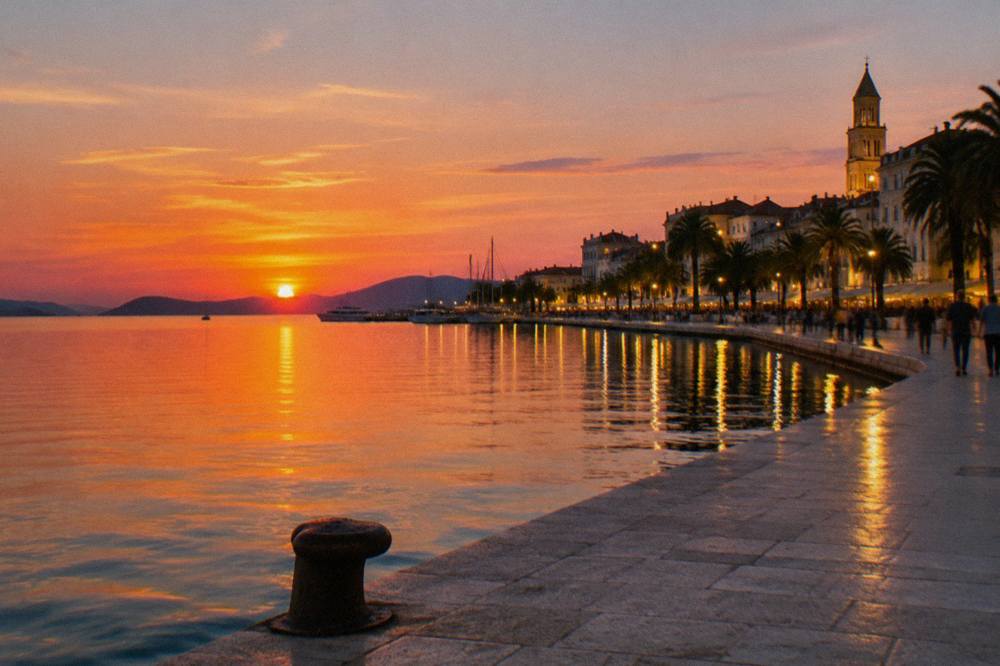
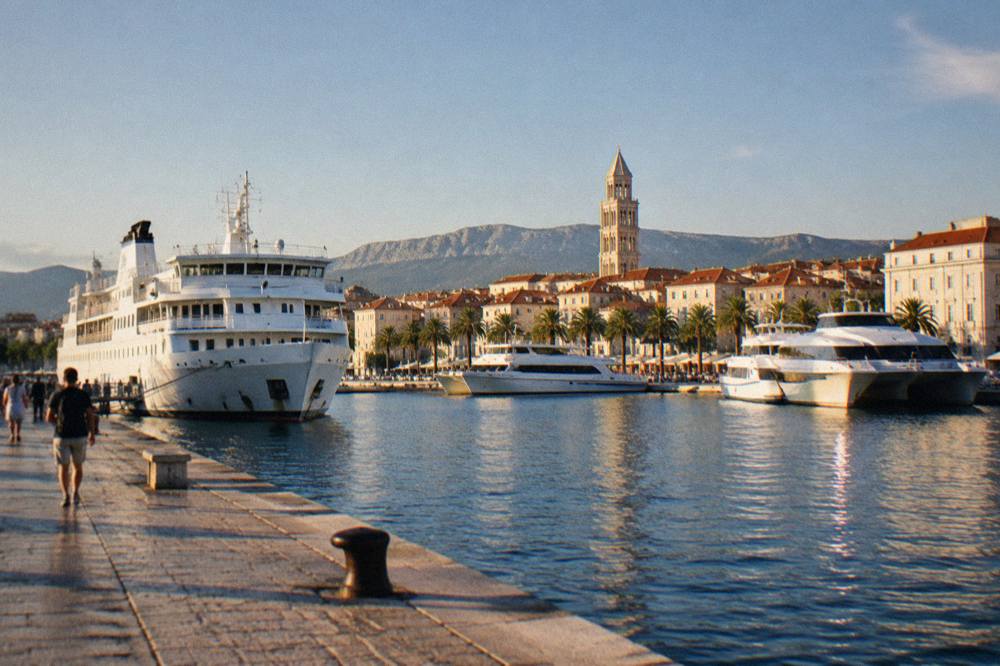
From the Peristyle it is a few minutes north to the Golden Gate and the bronze Grgur Ninski statue, both free, and then out onto the Riva, the waterfront promenade where the ferries to the islands come and go. One planning note for late 2026 and 2027: the Riva's central section is scheduled for renovation works from November 2026 lasting a little over a year, so partial closures should be expected through 2027, with the rest of the promenade staying open. The full palace walkthrough and the one day in Split itinerary carry the hour-by-hour detail.
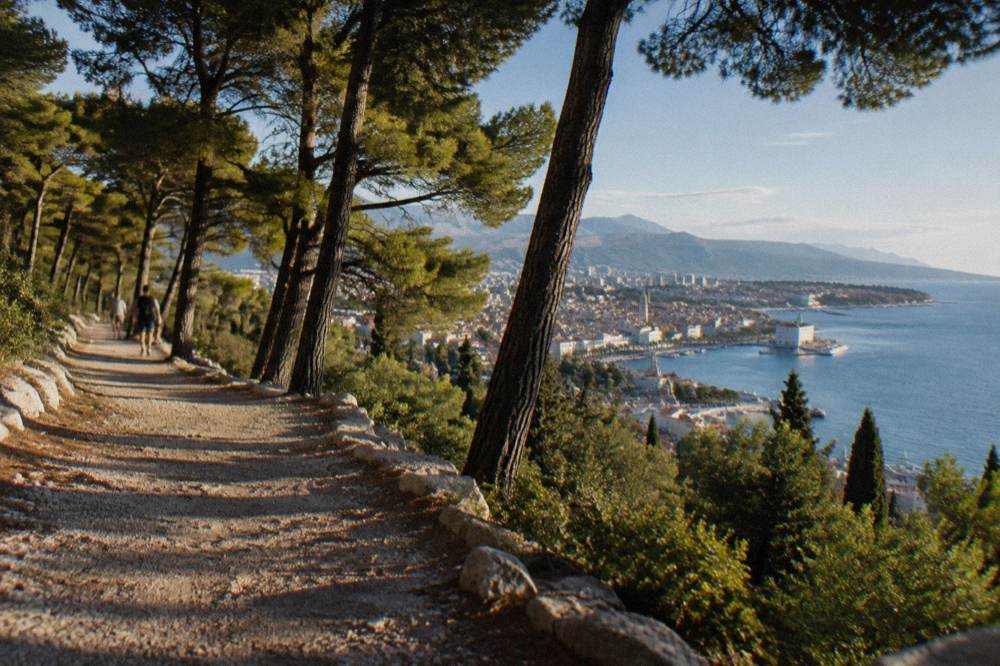
End the first day on Marjan, the forested peninsula on the city's western edge. The park-forest is 3.5 km long and 1.5 km wide, its highest point Telegrin stands at 178 m, and the stepped path from Trumbićeva obala to the summit counts 819 steps. Entry is free, and the viewpoint over the city and the islands repays the climb at sunset.
What Do Split Tours And Tickets Cost?
Entry prices in Split range from free, for the Peristyle, Riva, Golden Gate, markets, Marjan and the city beaches, to 12.00 EUR at the Meštrović Gallery, with the palace cellars and the City Museum at 10.00 EUR, the Archaeological Museum at 8 EUR, and the cathedral complex running from about 5 EUR up to about 15 EUR depending on the combination chosen. A day trip to Krka carries a park ticket of 7, 20 or 40 EUR by season, paid separately from any tour.
The table below gathers the adult entry prices for the in-city sights. Every figure comes from the operator's own price list, and the cathedral line is stated as a range because no official price page exists.
| Sight | Adult entry | Notes |
|---|---|---|
| Peristyle, Riva, Golden Gate, Grgur Ninski, Marjan, markets, beaches | Free | Open public space |
| Palace substructures (cellars) | 10 EUR | Mon to Sun 8:30 to 20:00, central part in restoration to end of 2026 |
| Split City Museum, Papalić Palace | 10.00 EUR | 8.00 reduced, family 18.00, closed Mondays |
| Cathedral of St Domnius complex | From about 5 EUR, combos up to about 15 EUR | Kiosk on the Peristyle, shoulders and knees covered |
| Archaeological Museum | 8 EUR | Combined with Salona 10 EUR within 7 days |
| Meštrović Gallery | 12.00 EUR | Includes Crikvine-Kaštilac, reopened April 2026 |
| Ethnographic Museum | 7.00 EUR | Vestibule 2.00 EUR |
What can be said in prose is what each trip covers. The Krka waterfalls trip pairs the park with a boat cruise and a swimming stop; the version with food and wine tasting adds a Dalmatian tasting table to the same park day; and the Blue Cave and Hvar speedboat trip covers Biševo, the Pakleni islands and Hvar town in one long day on the water. The trio below shows all three side by side with live prices and ratings.
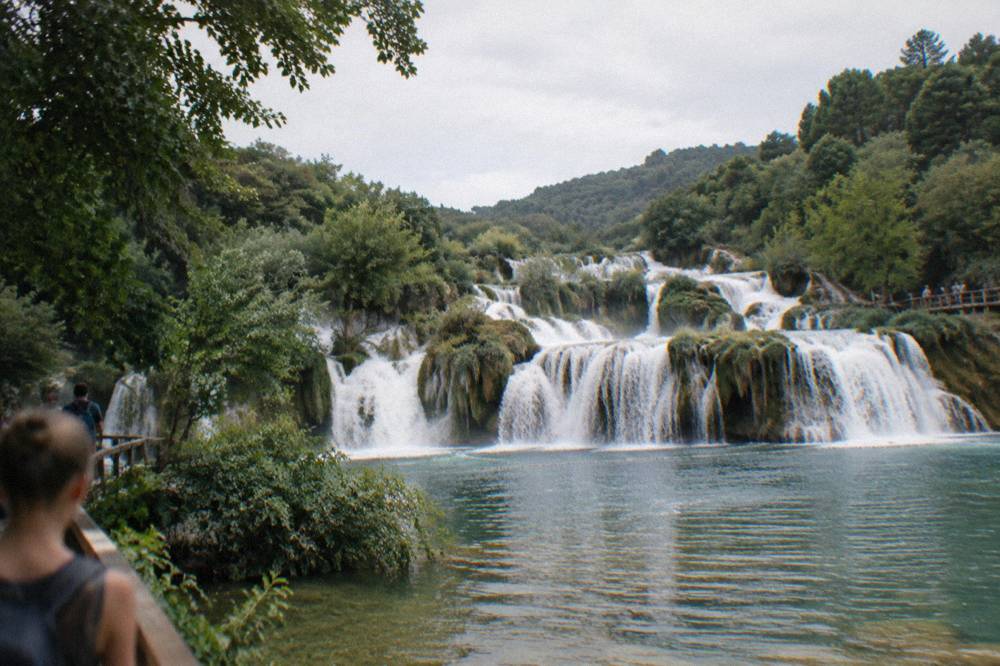
Park tickets matter more than tour prices when planning a Krka or Plitvice day, because the entry fee is usually paid on top. Krka charges 7 EUR from January to March and in November and December, 20 EUR in April, May and October, and 40 EUR from June to September, with the Skradin boat and Lozovac bus transfers included from 1 April to 31 October. Plitvice charges 10 EUR in the January to March and November to December windows, 23 EUR in April, May and October, 40 EUR from June to September, and 25 EUR for an afternoon slot in peak, with the visitor's name mandatory on the ticket and timed entry sold through the official webshop. Swimming at Krka is allowed only in clearly marked areas.
For city walking tours, the walking tours overview compares the guided options, and tip-based walks also run locally; confirm the arrangement with the guide on the day.
Free Things To Do In Split
The free list is long: the Peristyle, the Riva, Prokurative square, the Golden Gate, the Grgur Ninski statue, the green market, Marjan hill with its 819-step climb to Telegrin at 178 m, and the city beaches including Bačvice are all open public space with no ticket. Add the noon Roman guard change on the Peristyle in season, and picigin on Bačvice, and a full free day is easy to build.
Marjan is the biggest free asset. The park-forest covers the whole western peninsula, and the stepped route from Trumbićeva obala to the Telegrin summit is the standard climb, rewarded with the city and the offshore islands laid out below. The trail network extends for kilometres past lookout points, small chapels and the southern coves, so it serves a one-hour stroll and a half-day hike equally well. The Marjan hill guide maps the routes.
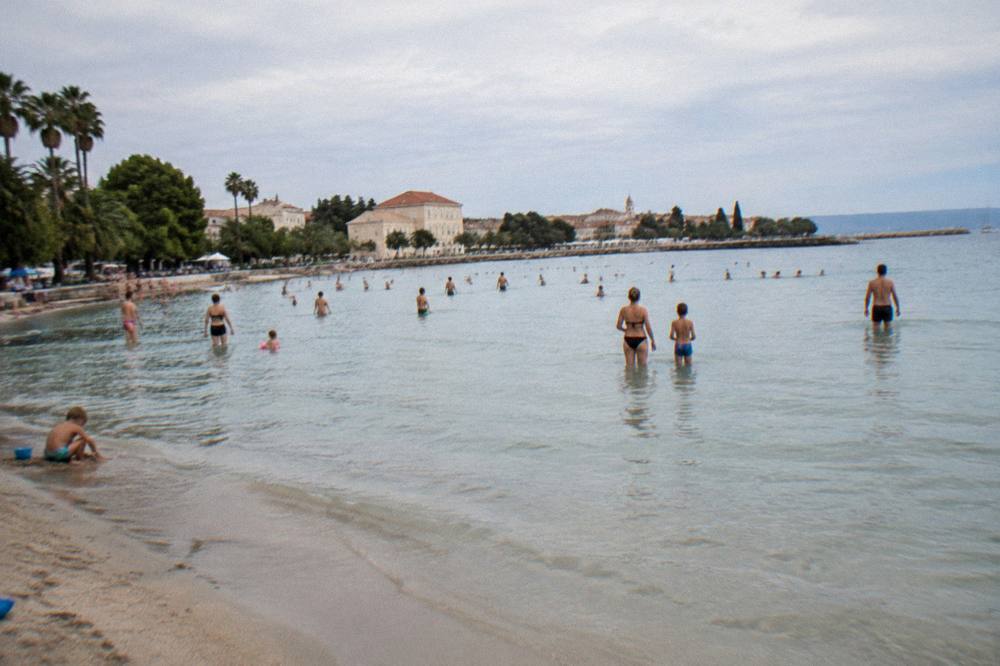
Picigin belongs on the free list too. The ball game was born on Bačvice beach in 1908 and is protected intangible heritage of Croatia; it is played standing in the shallows, and on a summer evening the local players are easy to watch from the sand. The free things to do roundup and the budget guide extend this section with eating and transport savings.
Things To Do In Split When It Rains
When it rains, the paid interior options carry the day: the palace substructures, the Split City Museum, the Archaeological Museum founded in 1820, the Meštrović Gallery reopened in April 2026 after a fifteen-month renovation, the Ethnographic Museum and Froggyland together cost about 40 to 50 EUR per adult, all within a short walk of each other. November is the wettest month at 115.5 mm, so this plan matters most in late autumn.
Rain in Split is a winter and late-autumn phenomenon. The DHMZ Split-Marjan station table for 1948 to 2024 puts November at 115.5 mm and December at 103.7 mm, against July at just 26.6 mm. The same table gives January a mean of 8.0 C against 26.2 C in July, so a wet day is usually a mild one, and the museums sit close enough together that walking between them under an umbrella is not a hardship.
The substructures work especially well in rain because they are substantially covered. The cellars are open daily from 8:30 to 20:00, and the Split City Museum a few streets away holds the history collection, though it closes Mondays. The Archaeological Museum pairs with Salona on a 10 EUR combined ticket valid for seven days, and the Meštrović Gallery ticket includes the Crikvine-Kaštilac chapel site a short drive along the coast. The rainy day guide sequences all of it.
| Month | Mean temperature C | Precipitation mm |
|---|---|---|
| Jan | 8.0 | 77.8 |
| Feb | 8.5 | 65.2 |
| Mar | 10.8 | 63.2 |
| Apr | 14.4 | 62.0 |
| May | 19.2 | 57.5 |
| Jun | 23.4 | 49.0 |
| Jul | 26.2 | 26.6 |
| Aug | 25.9 | 41.3 |
| Sep | 21.6 | 70.9 |
| Oct | 17.2 | 77.0 |
| Nov | 12.7 | 115.5 |
| Dec | 9.4 | 103.7 |
The table is the DHMZ Split-Marjan station monthly means for the period 1948 to 2024. July records 353.3 hours of sunshine and December 120.8 hours, and the year totals about 2,600 sunshine hours, which is why the rain plan is a plan for a handful of months rather than a routine.
Things To Do In Split With Children
Split works for children because its core attractions are free and outdoors: Bačvice beach with its shallow sandy bay, picigin in the shallows, Marjan's paths and the noon Roman guard change on the Peristyle are all built for short attention spans, and the ferry ride to Brač at about 50 minutes or to Šolta at about 60 minutes is itself an adventure. Paid add-ons are few and cheap.
Bačvice is the family beach. It is the city's shallow sandy bay a few minutes east of the palace, and it doubles as the home of picigin. Žnjan, further east, gives a longer paved stretch with play areas, and the Split with kids guide covers the practical detail. The guard change on the Peristyle, which ran daily at noon from 28 May to 27 September 2026, is short, loud and free, and the Riva's open length gives children room to run between ice creams.
For a bigger day, the boat trips adapt well. The Blue Lagoon cruises centre on swimming stops in sheltered water, and the half-day speedboat versions keep the commitment short. On land, the Cetina river trips from Omiš mix rafting and cave visits for older children; confirm age minimums on the operator's live listing before booking. The family beaches overview ranks the swimming options by shore type.
Things To Do In Split At Night
Split at night means the old town bars inside the palace walls, the Riva after dark, the evening kayak trip along the illuminated coastline, and a seasonal calendar that runs from the HNK Split theatre season, 25 September 2026 to 14 June 2027, to Ultra Europe on 9 to 11 July 2027 at Park Mladeži. The midnight streets of the palace stay lively through summer, and the Prokurative square bars sit under open sky.
The evening kayak trip is the unusual one: it paddles the city coastline after dark with the lights of Split on the water, and it books out in July and August when the mean temperature is 26.2 C and 25.9 C respectively and 18 and 17 days a month reach 30 C or more. On land, the palace's bars are concentrated in the alleys off the Peristyle and along the Marmontova axis, and the nightlife guide maps the districts by mood.
The event calendar fixes the big nights. The 72nd Split Summer Festival ran 14 July to 14 August 2026 with opera, ballet and drama across venues including the Peristyle, and its 2027 successor had not been announced. Ultra Europe 2027 is fixed for 9 to 11 July 2027 at Park Mladeži, and Advent in Split runs 27 November 2026 to 7 January 2027 with the ice rink at Đardin. One rule worth knowing: the 2026 city decision bans drinking alcohol in the historic core outside licensed terraces, with a 300 EUR fine, and shops in the centre stop selling alcohol at night in summer, so plan the evening around bars rather than street bottles.
Island And Park Day Trips From Split
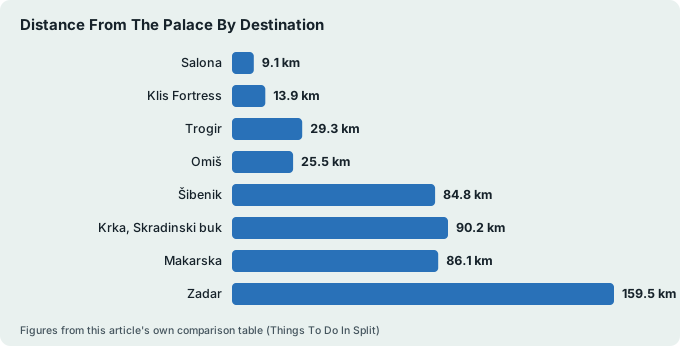
The four anchor day trips from Split are Krka National Park, about 74 minutes' drive from the palace, the Blue Cave and Hvar speedboat day, Plitvice Lakes at about 3 hours 15 minutes, and the near-city pair of Trogir at 36 minutes and Klis Fortress at 22 minutes, with Salona just 14 minutes out and Omiš 38. Ferries to Brač take about 50 minutes, to Šolta about 60, to Stari Grad on Hvar about 120 and to Vis about 140.
The driving times below are free-flow OSRM figures computed from Diocletian's Palace, and the island lines are the scheduled crossing times.
| Destination | Distance from the palace | Free-flow drive | Island crossing |
|---|---|---|---|
| Salona | 9.1 km | 14 min | road |
| Klis Fortress | 13.9 km | 22 min | road |
| Trogir | 29.3 km | 36 min | road |
| Omiš | 25.5 km | 38 min | road |
| Šibenik | 84.8 km | 71 min | road |
| Krka, Skradinski buk | 90.2 km | 74 min | road |
| Makarska | 86.1 km | 75 min | road |
| Zadar | 159.5 km | 2 h | road |
| Mostar | 173.2 km | 2 h 13 | road |
| Plitvice Lakes | 258.1 km | 3 h 15 | road |
| Dubrovnik | 234.8 km | 3 h 21 | road, coach about 4 h |
| Supetar, Brač | by sea | ferry | about 50 min |
| Rogač, Šolta | by sea | ferry | about 60 min |
| Stari Grad, Hvar | by sea | ferry | about 120 min |
| Vis town, Vis | by sea | ferry | about 140 min |
Two distinctions save confusion. Hvar town is reached by catamaran, while Stari Grad on the same island is the car ferry port on line 635; foot passengers pay 5.90 EUR off-season and 8.40 EUR in season to Stari Grad, and catamaran fares to Hvar or Jelsa run 6.40 to 10.00 EUR. And the Blue Cave sits on Biševo, an island beyond Vis, with an entrance fee of 24 EUR in the 20 June to 10 September high season and 18 EUR in the shoulder months, paid in cash on site. The day trips guide, the Krka guide and the ferries overview carry the route-by-route detail.
Getting Between Things To Do In Split On Foot
Split is a walking city because almost everything on this page sits inside one square kilometre: the palace, the Riva, the museums, Bačvice and the foot of Marjan are all within a 10 to 20 minute walk of each other, the ferry port and bus station are 500 to 600 m from the Peristyle, and the only walk that takes real effort is the 819-step climb to Telegrin on Marjan. Shoes matter more than transport inside the centre.
The palace grid is pedestrian, and its alleys run from the Riva to the Golden Gate in under ten minutes at a stroll. Bačvice lies about 10 minutes east of the palace along the shore, the green market sits at its north-eastern edge, and the Meštrović Gallery is the one major sight that sits beyond easy walking distance, out along the Marjan coast road; the local bus network covers it. The getting around guide and the walkable city answer cover the step-free routes and the hill shortcuts.
Two cautions for pedestrians. The public-order rules now in force in the historic core fine walking in swimwear or shirtless, with the amount set locally, so change before leaving the beach. And from November 2026 the Riva's central section enters renovation for a little over a year, meaning partial closures through 2027, with the diversion running one street back through the old town.
How To Get Around Split Without A Car
A car is unnecessary in Split itself: the centre is pedestrian, the Platanus airport shuttle runs from the terminal to the main bus station for 10 EUR one way or 15 EUR return, buses 37 and 38 also serve the airport for a few euros confirmed on board, ferries cover the islands from the port 500 to 600 m from the palace, and coaches reach Dubrovnik in about 4 hours and Zagreb in about 5 hours 30.
The airport, SPU, sits in Kaštel Štafilić, 20 km from Split and 6 km from Trogir by its own pages, and driving from the palace measures 24.9 km or about 31 minutes free-flow. The Platanus shuttle is the standard transfer to the main bus station beside the ferry port. The airport guide and the airport to centre guide give the full arrival sequence, and the car rental guide answers when a car is actually worth taking, which is essentially only for a multi-stop Dalmatian road trip.
On the water, Jadrolinija's 2026 timetable change removed the off-season period from the Split to Supetar line, which now runs high-season and low-season timetables only, and the season brings extra catamaran capacity from Kapetan Luka, TP Line and Bura Line alongside the state ferries. The port itself handled 6.05 million passengers in 2025, Croatia's busiest passenger port by its own figures, plus 487,377 cruise passengers. Croatia uses the euro since 1 January 2023 and has been in the Schengen area since 1 January 2023, and the emergency number is 112. For longer rail journeys, the train to Zagreb takes about 7 h 15 to 8 h 10.
| Route from Split | Mode | Typical time | Fare where stated |
|---|---|---|---|
| Airport to main bus station | Platanus shuttle | short transfer | 10 EUR one way, 15 EUR return |
| Split to Supetar, Brač | Ferry line 631 | about 50 min | on the operator's price list |
| Split to Rogač, Šolta | Ferry line 636 | about 60 min | on the operator's price list |
| Split to Stari Grad, Hvar | Ferry line 635 | about 120 min | 5.90 EUR off-season, 8.40 EUR in season, foot passenger |
| Split to Hvar or Jelsa | Catamaran | about 1 h | 6.40 EUR low, 10.00 EUR high |
| Split to Vis | Catamaran or ferry | about 140 min by ferry | 7.20 EUR low, 10.00 EUR high |
| Split to Dubrovnik | Coach | about 4 h | confirm with the carrier |
| Split to Zagreb | Coach | about 5 h 30 | confirm with the carrier |
| Split to Zagreb | Train | about 7 h 15 to 8 h 10 | confirm with the carrier |
Accommodation sits closest to all of this inside the old town and Veli Varos, with Bačvice and Žnjan east and the wider choice laid out in the where to stay guide. More reading for planning: Split Croatia Travel Guide for the site's full index, the Split restaurants guide for eating, and the Split vs Dubrovnik comparison if the itinerary is still being split between the two.
Common Questions About Things To Do In Split
What are the top things to do in Split in one day?
Diocletian's Palace with the Peristyle and the substructures, the Cathedral of St Domnius and its 57 m bell tower, the Golden Gate and the Grgur Ninski statue, the Riva, and the climb or drive up Marjan to Telegrin at 178 m. All of it fits inside one day on foot, and the one day itinerary sequences it.
Is Diocletian's Palace free to walk around?
The palace streets, the Peristyle, the Golden Gate and the Riva are free public space. The substructures charge 10 EUR, and the cathedral complex runs from about 5 EUR for a single site up to about 15 EUR for a combined ticket.
What is the best day trip from Split?
Krka National Park is the most-booked, about 74 minutes' drive away, with entry at 7, 20 or 40 EUR by season and swimming only in clearly marked areas. The Blue Cave and Hvar speedboat day and Trogir, 36 minutes away, are the other anchors.
Can you swim in Split itself?
Yes. Bačvice is the city's sandy bay and picigin, the game born there in 1908, is played in the shallows. Žnjan, Kašjuni beneath Marjan and Firule extend the options, and all city beaches are free.
Which month is warmest in Split?
July, with a mean of 26.2 C at the DHMZ Split-Marjan station for 1948 to 2024, ahead of August at 25.9 C. July is also the driest month at 26.6 mm, and November the wettest at 115.5 mm.
Do you need to book Split tours in advance?
In July and August the Krka, Plitvice and Blue Cave trips fill early, and Plitvice itself sells timed entry online with the visitor's name on the ticket. Check availability on the operator's live listing before the travel dates firm up.