What Is The Nicest Hotel In Split?
No single hotel wins the title of nicest in Split. This desk guide explains the areas, the new openings and the checks to make before booking a stay.
There is no official ranking that names the single nicest hotel in Split, and no published rate, rating or review score from any accommodation may be quoted on this page. What the sources do give is a picture of where the desirable stays sit: the palace Old Town, the Bačvice and Meje streets under Marjan, and the Žnjan waterfront, plus a significant five-star arrival, Hotel Marjan, planned to open for the 2027 season on the Marjan side of the city. Picking the nicest bed in Split is therefore a question of area, timing and what a booking actually includes.
What Is The Nicest Hotel In Split?
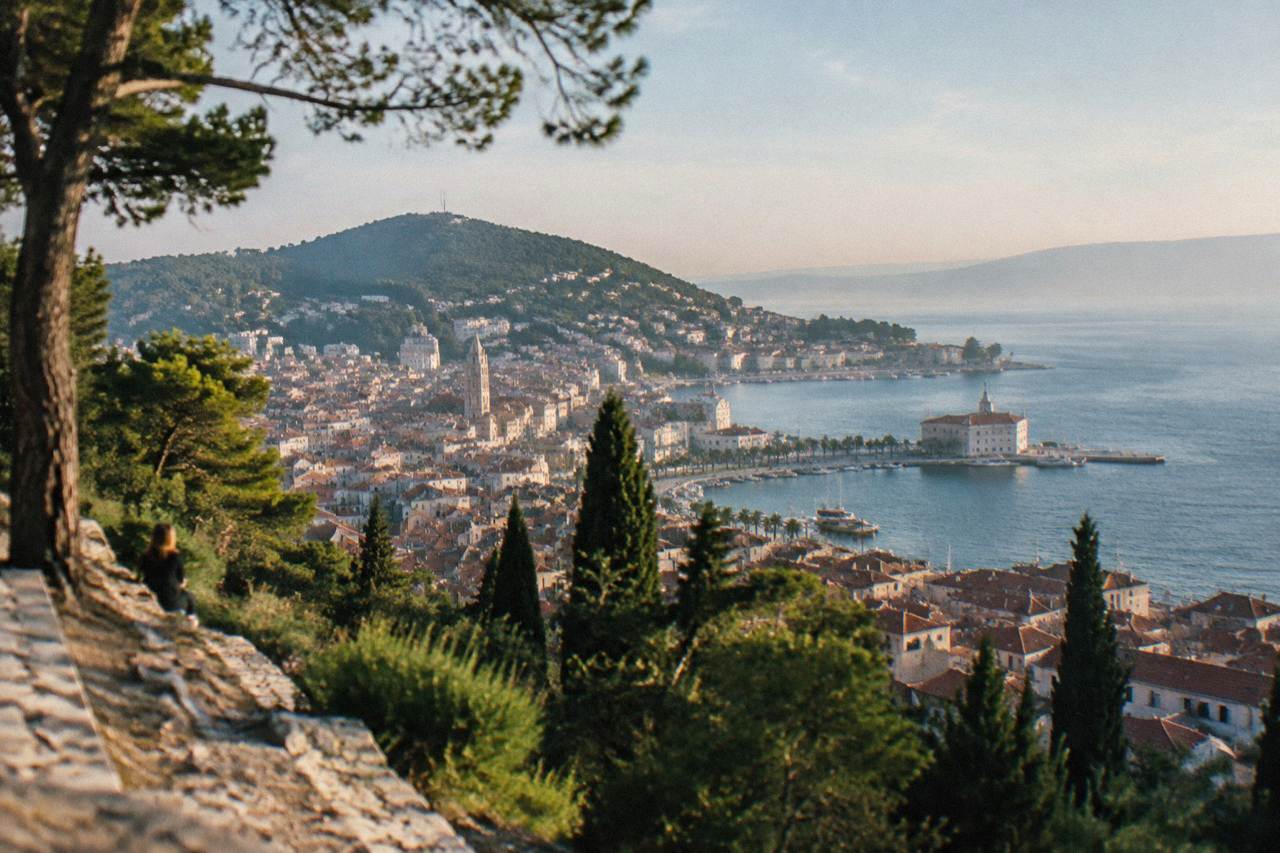
No single hotel holds the title of nicest in Split, because no official body or ranking awards it and this desk publishes no accommodation rates. The honest answer is that the nicest stay depends on the neighbourhood: the Old Town inside Diocletian's Palace puts the Peristyle, the Riva and the Green Market on the doorstep, while the Meje side sits under Marjan hill with 178 m of park forest above and Kašjuni within easy reach.
A five-star Hotel Marjan, 285 units, is planned to open for the 2027 season and will change that conversation.
The Old Town carries the strongest argument for anyone whose priority is walking. The ferry port, the main bus station and the railway station sit together on Obala kneza Domagoja, 500 to 600 m from the palace, so a hotel inside or beside the walls puts the arrival point, the Peristyle, the cathedral complex and the evening Riva all within a short flat stroll. The trade-off is noise and crowds in summer, which is exactly what the best area to stay in Split question turns on.
The Meje district, climbing the southern slopes of Marjan, is the quieter counterweight. Marjan is 3.5 km long and 1.5 km wide, with 819 steps from Trumbićeva obala to the Telegrin summit at 178 m, and the park forest wraps the hotels below it in shade and pine. Kašjuni beach sits on that side, and the Marjan side is also where the new Hotel Marjan is rising: reporting on the project describes a 285-unit five-star hotel by the Adris Group, designed by the 3LHD studio, with the top floor completed in mid-2026 and opening planned for the start of the 2027 season.
Žnjan and the eastern waterfront form the third candidate zone, a modern stretch east of the centre that trades historic atmosphere for sea-facing blocks and newer build stock. None of these areas is objectively "nicest"; each one matches a different traveller, which is why the honest answer starts with neighbourhood rather than with a name.
| Area | Character | What the sources give |
|---|---|---|
| Old Town (Diocletian's Palace and around) | Stone streets, palace walls, the Peristyle and Riva on foot | Ferry port, bus and rail stations 500 to 600 m from the palace; UNESCO property 20.8 ha |
| Meje and Marjan south | Quiet villas, pine slopes, 178 m Telegrin summit above | Marjan 3.5 km by 1.5 km, 819 steps from Trumbićeva obala to Telegrin; Hotel Marjan planned for the 2027 season |
| Bačvice and Firule | Sandy swimming bay, family atmosphere, east of the centre | Bačvice is the home beach of picigin, the ball game protected as Croatian intangible heritage, born in 1908 |
| Žnjan | Modern seafront blocks east of the centre | Free city beach listed among the no-ticket public spaces |
Where Should You Stay In Split To Be Close To Everything?
For proximity, the nicest base in Split is a stay inside or immediately beside Diocletian's Palace: the Peristyle, the Golden Gate, the Grgur Ninski statue, the Green Market and the Riva are all free, walkable sites in a compact UNESCO property of 20.8 ha, and the transport hub on Obala kneza Domagoja sits 500 to 600 m away. The palace substructures run by Split City Museum open 8:30 to 20:00 daily, and the cathedral bell tower rises 57 m above it all.
That compactness is the practical case for the centre. Everything a first-time visitor lists, the Peristyle at noon, the Riva at sunset, the markets in the morning, lies inside or on the edge of a rectangle the UNESCO listing measures at 20.8 hectares. The day-trip infrastructure departs from the same corner: ferries to Brač, Šolta, Hvar and Vis, and the coach departures to Krka, Plitvice and Dubrovnik, all leave from the waterfront strip a few hundred metres from the palace walls.
Two cautions belong in the same breath. First, the Old Town is stone and steps, so a "central" address can still mean luggage dragged over cobbles; the palace cellars' own central section is under restoration to the end of 2026, a reminder that works happen in the core. Second, a short-stay moratorium on new rentals inside the historic core was extended through 2026, which keeps the registered stock older and smaller than on the outskirts.
A central bed also pays off on arrival day. The one practical question worth reading first is how long the stay should be, because a two-night visit argues hard for the palace core while a week argues for somewhere quieter with a balcony.
What Is Changing On The Split Hotel Scene For 2027?
The single biggest change is Hotel Marjan, a 285-unit five-star hotel on the Marjan side of Split, planned to open for the start of the 2027 season, with its top floor completed in mid-2026 and interior works under way. Beyond it, the Riva central section is set for renovation from November 2026 lasting a little over a year, so partial closures on the seafront promenade should be expected through 2027.
Hotel Marjan is the project the city's own reporting follows closely: the Adris Group development, designed by 3LHD, will bring 285 units to the foot of Marjan hill. Reporting from mid-2026 describes the final floor in place and roughly 300 workers a day on interiors and furniture, with the opening aimed at the start of the 2027 season. Until it opens, no claim about how it compares can honestly be made, but its arrival adds a five-star option on the quiet, green side of the city.
The Riva works matter to anyone booking a seafront stay. The planned renovation of the central section, budgeted at roughly 3.5 to 4 million EUR, is scheduled to begin in November 2026 and run a little over a year, which puts partial closures on the promenade through 2027. A hotel directly on the Riva during that window may face hoarding and works; the reporting gives the scope, and the practical step is to ask the property directly before booking.
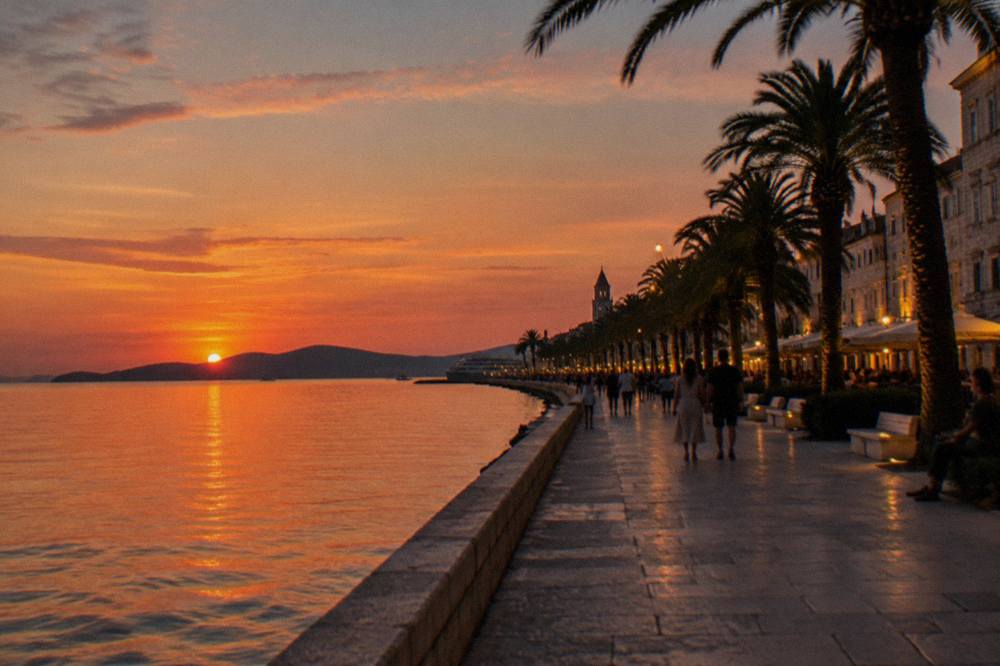
The wider waterfront is also in motion. The Split Port Authority obtained a location permit in September 2026 for a new passenger and hospitality complex on the eastern coast, and the St Peter pier expansion advanced through 2026, all of which points to a busier, rebuilt harbour edge over the coming seasons rather than a finished one.
What Should You Check Before Booking Any Split Hotel?
Check four things before paying: that the listing shows a valid registration, since short-stay units inside the historic core operate under a moratorium extended through 2026; that the tourist tax is included or stated, at about 2.65 EUR per person per night in high season, under 12 free, 12 to 18 half, confirmed at booking; that the address is genuinely where it claims, since "walking distance" means little across 20.8 ha of stone steps; and that the price is in euro, Croatia's currency since 1 January 2023.
When you are ready to compare rooms and dates, book a hotel stay here.
The registration point is the one travellers skip. Croatia requires a registration number for short-stay listings, and inside the Split historic core a moratorium on new registrations was extended through 2026, with existing units grandfathered. A listing that cannot show a registration is a listing to walk away from. Rules also tightened around 80 percent co-owner consent in multi-unit buildings, all of which pushes the market toward compliant, established properties.
The tourist tax is collected by the accommodation, not paid at a desk afterwards. County figures for Split-Dalmatia put it at about 2.65 EUR per person per night in high season, 1 April to 30 September, with under 12s free and 12 to 18s at half; the exact amount is confirmed at booking. Payment is in euro everywhere, and 112 is the emergency number.
| Check | What the sources give |
|---|---|
| Registration number | Required for short-stay listings; new registrations inside the historic core under moratorium through 2026 |
| Tourist tax | About 2.65 EUR per person per night in high season (1 April to 30 September), under 12 free, 12 to 18 half, collected by the accommodation |
| Currency | Euro (EUR) since 1 January 2023 |
| Emergency number | 112 |
| Works nearby | Riva central section renovation planned from November 2026, a little over a year of works |
Timing matters as much as the property. The best month to visit Split shapes both availability and comfort: the DHMZ Split-Marjan station table gives a July mean of 26.2 C with 18 days at 30 C or more, against 8.0 C in January, and July is the driest month at 26.6 mm while November is the wettest at 115.5 mm.
How Does Your Hotel Choice Change Your Days Out From Split?
Whichever side of Split you sleep on, the day trips all leave from the same waterfront: ferries to Brač, Šolta, Hvar and Vis, and coach tours to Krka, Plitvice and Dubrovnik, depart from the port area 500 to 600 m from the palace. A hotel near that hub cuts every travel morning to a short walk, while a Marjan or Žnjan base trades that for quiet and pays it back with a tram-free, traffic-light start to the day on foot or by taxi.
The distances involved are worth knowing when choosing. Jadrolinija's route pages give about 50 minutes to Supetar on Brač, about 60 minutes to Rogač on Šolta and about 120 minutes to Stari Grad on Hvar, with catamarans serving Hvar town and Vis. On the road, OSRM free-flow figures give 38 minutes to Omiš A stay near the port makes the early departures painless.
One of the strongest-rated active days out is the Cetina river rafting, cliff jumping and cave exploring tour, which runs on the river at Omiš, and you can Check availability alongside it. Omiš sits 38 minutes from the palace by road, and the Mirabela fortress there charges 4 EUR, or 6 EUR from 1 June to 30 September, if a free hour follows the water.
For a fuller picture of the city beyond the hotel door, the Split Croatia Travel Guide covers the palace, the beaches and every island route from the same port. And if the aim is simply a pleasant base without overthinking it, the nicest town near Split question has its own answer, with Trogir, a UNESCO city since 1997, 36 minutes up the coast.
Common Questions About Split Hotels
What is the nicest hotel in Split?
There is no official titleholder, and this desk publishes no hotel rates or ratings. The nicest stay depends on area: the palace Old Town for proximity, Meje under Marjan for quiet, and a 285-unit five-star Hotel Marjan planned to open for the 2027 season.
How much is the tourist tax in Split?
About 2.65 EUR per person per night in high season, 1 April to 30 September, with under 12s free and 12 to 18s at half. The accommodation collects it and the exact amount is confirmed at booking.
Is it better to stay in the Old Town or near Marjan?
The Old Town puts the Peristyle, the Riva and the transport hub 500 to 600 m away, at the cost of summer crowds. Meje under Marjan is quieter, with the 178 m Telegrin summit and Kašjuni on that side, but adds distance to the port departures.
Will the Riva works affect a seafront hotel stay?
The central section of the Riva is planned for renovation from November 2026, lasting a little over a year, so partial closures should be expected through 2027. Ask the property directly about the works before booking a seafront room.
When is the new Hotel Marjan opening?
Reporting on the project gives the start of the 2027 season, with the top floor completed in mid-2026 and interior works under way. It will be a 285-unit five-star hotel on the Marjan side of the city.
Do Split hotels charge in euro?
Yes. Croatia has used the euro since 1 January 2023, and all accommodation bills, including the tourist tax, are charged in euro.