What Is The Best Month To Visit Split?
Month-by-month guidance for visiting Split, from DHMZ Split Marjan temperature and rainfall data to seasonal crowds, sea swimming, ferry schedules and festival dates.
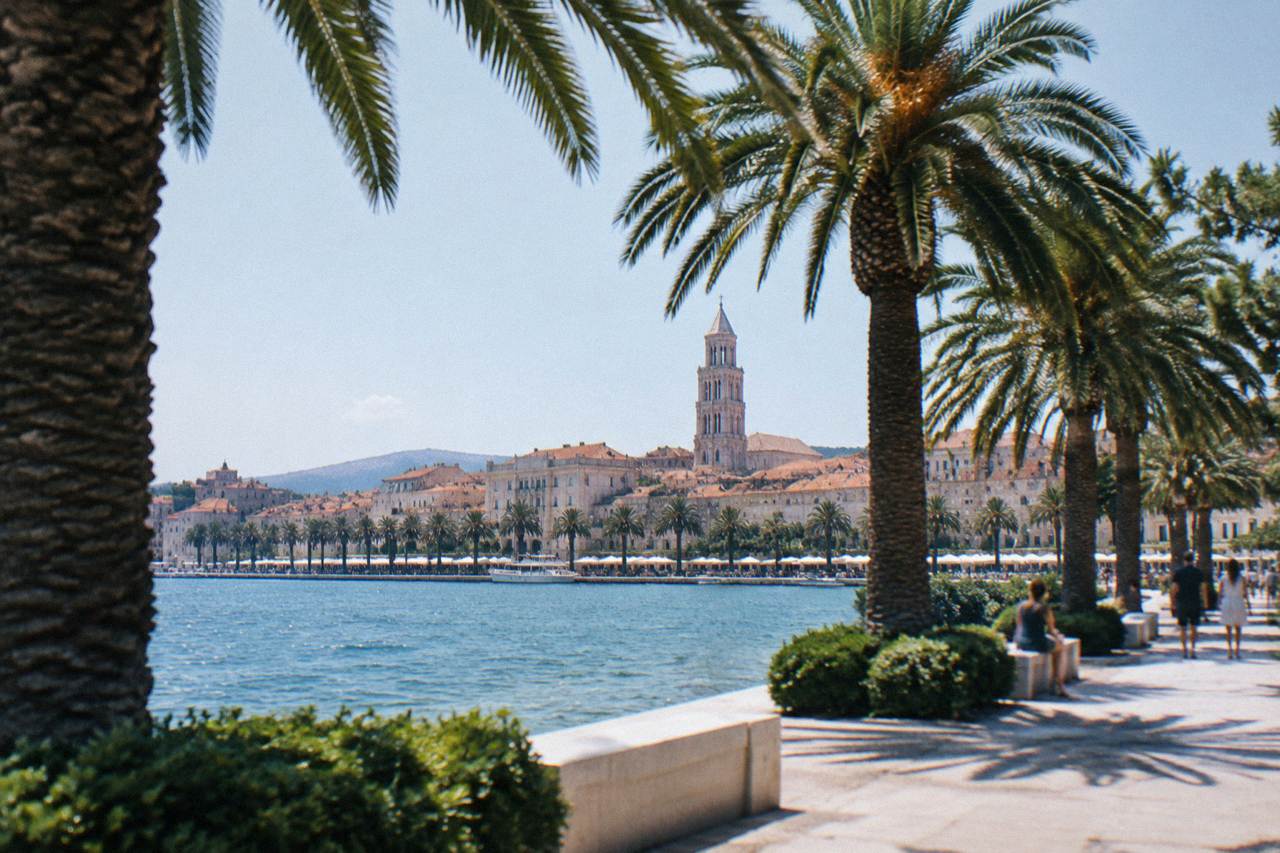
Split sits on the Adriatic coast of central Dalmatia, built in and around Diocletian's Palace, and its season is shaped by one number above all: the sea. The DHMZ Split Marjan station table, covering the period 1948 to 2024, gives a July mean of 26.2 C against a January mean of 8.0 C, and that spread drives ferry schedules, festival dates, park ticket prices and the size of the crowds on the Riva. Choosing a month is really choosing between warmth, water and peace.
What Is The Best Month To Visit Split?
June is the best single month for a balanced Split trip: the DHMZ Split Marjan station table shows a June mean of 23.4 C with only 49 mm of rain, the sea is warm enough to swim, Krka and Plitvice move to their 40 EUR summer tier on 1 June, and the July visitor peak has not yet arrived. September runs June close, with a 21.6 C mean and warm sea after the summer heat.
July and August deliver the full Mediterranean summer, 353.3 hours of July sunshine on the same station record and 18 days at 30 C or more in July, but they also deliver the peak: the highest park ticket tiers, the fullest ferries and the highest accommodation demand. Anyone whose priority is the water rather than the calendar will still love them. Anyone balancing cost, comfort and space should aim for early June or mid-September.
One planning note for 2026 and 2027: the central section of the Riva is scheduled for renovation works from November 2026, expected to last a little over a year, so partial closures on the waterfront promenade are likely through 2027. The rest of the Old Town is unaffected, and the palace, the markets and Marjan hill all carry on as normal through the works.
Which Months Are Warmest In Split?
July is the warmest month in Split at a 26.2 C mean on the DHMZ Split Marjan station table for 1948 to 2024, with August second at 25.9 C and 17 days at 30 C or more, and June third at 23.4 C. Sunshine peaks in July at 353.3 hours, falling to 120.8 hours in December. No official monthly sea-temperature normal exists, so sea comfort is judged from live readings and the season.
The full monthly picture from the same station record:
| Month | Mean temperature (C) | Precipitation (mm) |
|---|---|---|
| Jan | 8.0 | 77.8 |
| Feb | 8.5 | 65.2 |
| Mar | 10.8 | 63.2 |
| Apr | 14.4 | 62.0 |
| May | 19.2 | 57.5 |
| Jun | 23.4 | 49.0 |
| Jul | 26.2 | 26.6 |
| Aug | 25.9 | 41.3 |
| Sep | 21.6 | 70.9 |
| Oct | 17.2 | 77.0 |
| Nov | 12.7 | 115.5 |
| Dec | 9.4 | 103.7 |
July is also the driest month at 26.6 mm and November the wettest at 115.5 mm, with autumn as a whole wetter than winter, 263.4 mm from September to November against 246.7 mm from December to February. On sun, the year runs to about 2,600 hours at this station. Whether the sea itself is swimmable in a given month is a live question rather than a table: the only official figure is a real-time DHMZ reading, so check conditions near your dates, and see can you swim in the sea in Split for how the bathing season works around Bačvice and the city beaches.
Day trips scale with the weather. The Krka waterfalls are at their best in late spring and early autumn, when the water is high, the trails are comfortable and the park's spring and autumn ticket tiers apply instead of the summer one. A boat-and-swimming Krka trip is one of the strongest June or September choices from the city:
The same logic applies to the islands: Hvar catamarans and the Blue Cave boats fill up in July and August, while June and September keep the same routes running with more space on board.
When Is The Rainy Season In Split?
November is the wettest month in Split at 115.5 mm on the DHMZ Split Marjan station table, followed by December at 103.7 mm and October at 77.0 mm, while July at 26.6 mm and August at 41.3 mm are the driest months. Rain concentrates in late autumn and winter, but even the wettest month averages well under the totals of continental climates.
What that means in practice: October is a genuinely pleasant month at a 17.2 C mean, but the chance of a wet day rises sharply through it, and by November the city shifts into its indoor rhythm, museums, the Croatian National Theatre season running 25 September 2026 to 14 June 2027, and the start of Advent planning. A rainy-day plan matters from late October to February. The trade is real value: Old Town streets calm down, and the palace cellars, the Split City Museum and the Meštrović Gallery, reopened in April 2026 after a fifteen-month renovation, are all open through the cooler months.
June and September sit in the sweet spot between the two patterns, dry enough to rely on, warm enough for boats and beaches, and outside the peak ferry crush. For a deeper comparison of the two national parks that anchor Split day tripping in shoulder season, see which one is better, Plitvice or Krka.
How Do Crowds, Prices And Events Change By Month?
July and August bring the peak: Krka and Plitvice charge their 40 EUR summer ticket tier from June to September, the islands run full schedules, and Split's port, which handled 6.05 million passengers in 2025, is at its busiest. May, June, September and October trade smaller crowds for cooler water, while winter is quiet with Advent running 27 November 2026 to 7 January 2027.
The event calendar gives each month a distinct character:
| Period | What defines it in Split |
|---|---|
| 27 Nov to 7 Jan | Advent in Split, ice rink at Đardin |
| 7 May | Sudamja, the city's day for its patron St Domnius |
| June to mid-July | Shoulder season: warm sea, spring park ticket tiers until 31 May |
| 9 to 11 Jul 2027 | Ultra Europe at Park Mladeži |
| Late Jul to mid-Aug | Peak season and the Split Summer Festival window (2026 edition ran 14 July to 14 Aug) |
| September | Warm sea, thinner crowds, autumn park prices from 1 October |
The Split Summer Festival stages opera, ballet and drama across venues including the Peristyle in July and August; its 2027 dates had not been announced. Anyone planning around Ultra Europe 2027 should book early, those dates pull a large international crowd into the same weeks as the festival and the school-holiday peak.
Should Day Trips Be Booked Ahead For The Busy Months?
Yes for July and August, when Krka, Plitvice and the Blue Cave boats run closest to capacity, and Plitvice itself uses timed online entry with the visitor's name on the ticket. In June and September there is more same-week flexibility, though Blue Cave trips depend on sea conditions and can be cancelled or rerouted, a fact of the itinerary rather than a fault of the operator. Book park entry and island boats before you travel in peak season.
The Krka trip that pairs the waterfalls with a boat cruise and swimming is the natural anchor for a June or September visit, and the operator's live listing shows current dates and availability: Check availability. Full details are on the Krka waterfalls trip page. Free, tip-based walks also run in the Old Town through the season; confirm meeting points and tipping directly with the guide.
Is Split Worth Visiting In Winter?
Yes, if the plan is the city itself rather than the sea: January's 8.0 C mean is mild by continental standards, Diocletian's Palace, the museums and the markets run all year, and Advent in Split runs 27 November 2026 to 7 January 2027 with an ice rink at Đardin. Island ferries run reduced winter timetables, so day trips narrow to Klis, Salona, Trogir and Omiš.
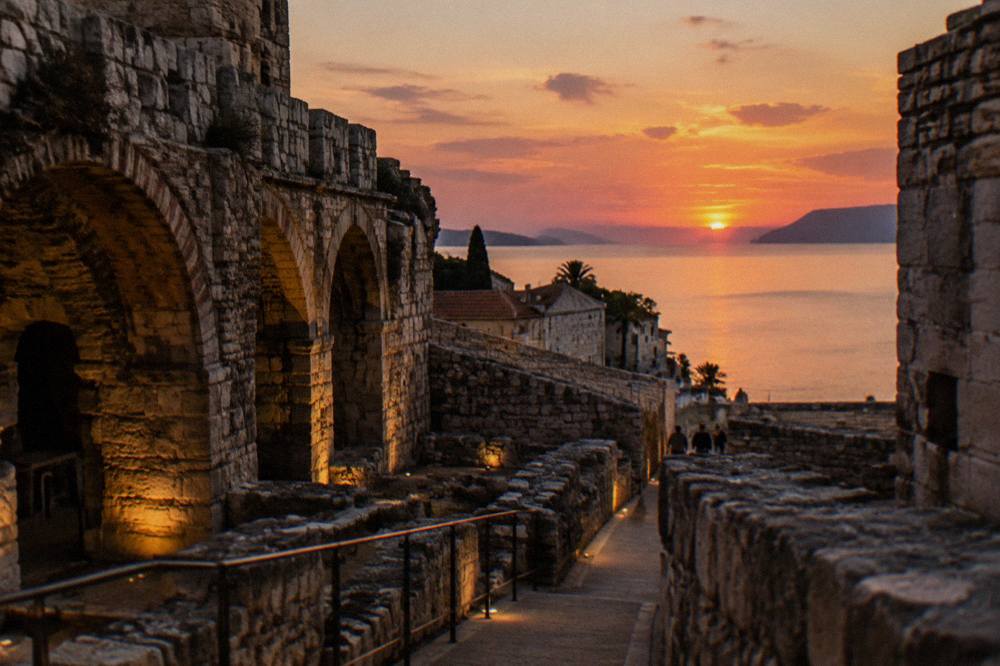
Winter is also when the city belongs to itself: picigin, the shallow-water ball game born on Bačvice in 1908, continues in cold water, and the Riva cafes stay open between the renovation phases. The Split City Museum's Papalić Palace site closes Mondays, and the palace cellars keep daily hours, so a two-day winter itinerary covers the whole Old Town comfortably. For what to skip at any time of year, the site's what to avoid in Split page lists the checks worth making, and how many days is enough for Split helps size the stay.
For a trip that mixes the palace with a waterfall day, these three picks cover the strongest options from Split:
Whatever the month, the same rule holds: match the itinerary to the season, warm-water boats and islands from June to September, parks and the palace in the shoulders, museums and Advent from November, and Split repays the visit in every one of them. More month-by-month context sits in the listing and across the Split Croatia Travel Guide season pages.
Common Questions About The Best Month To Visit Split
What is the best month to visit Split?
June, for warm weather, a 23.4 C mean on the DHMZ Split Marjan table, swimmable sea, the cheaper spring ticket tiers at Krka and Plitvice only until 31 May, and crowds below the July peak. September is the close alternative at 21.6 C with the sea at its warmest after summer.
Which month is warmest in Split?
July, at a 26.2 C mean on the DHMZ Split Marjan station record for 1948 to 2024, with 18 days at 30 C or more and 353.3 hours of sunshine. August follows at 25.9 C.
What is the wettest month in Split?
November, at 115.5 mm on the same station table, with December second at 103.7 mm. July is the driest at 26.6 mm.
Is Split too crowded in August?
August is the peak: summer park ticket tiers are in force, ferries and island boats run fullest, and the port's 6.05 million annual passengers concentrate into the summer months. June, September and early October offer the same routes with fewer people.
Can you swim in Split outside summer?
The sea stays warm into late September and early October, but no official monthly sea-temperature normal exists, so judge it from the live DHMZ reading near your dates. Locals swim on Bačvice well into autumn, and picigin players are in the water year round.
When is Ultra Europe in Split?
Ultra Europe 2027 runs 9 to 11 July 2027 at Park Mladeži. Those dates overlap the peak season and the summer festival weeks, so book accommodation and day trips well ahead if the festival is part of the plan.
