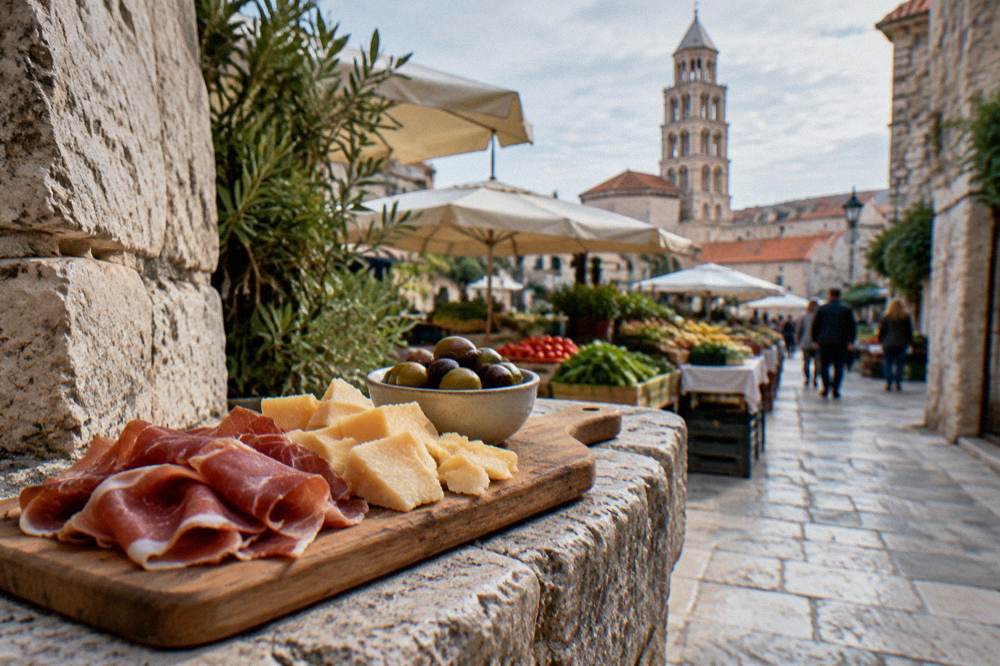
Is There A Michelin Star Restaurant In Split?
Split's dining scene explained: what the Michelin Guide means for the city, what fine dining exists, and where to eat well in Dalmatia's largest coastal city.
Split, the coastal city in central Dalmatia on the Adriatic, is a place where dinner still means grilled fish, olive oil from the hinterland and a glass of local wine on a stone street inside Diocletian's Palace. Travellers arriving with a checklist built around other European cities often ask whether a Michelin star sits somewhere in the old town, and the question deserves a straight answer rather than a promotional one. The Michelin Guide does cover Croatia, its selection changes each year, and the current starred list for the country should be checked on the guide's own pages before any trip is planned around it. What can be said with confidence is that Split's reputation rests on a different kind of eating: the green market, the konoba, the peka slow-cooked under a bell, and the simple waterfront restaurants near Bačvice and Žnjan. This page sets out what that means in practice, what a fine-dining evening in Split looks like, and how to eat well without chasing a badge. For the broader question of where locals eat in Split, there is a dedicated answer on this site as well.
Is There A Michelin Star Restaurant In Split?
The Michelin Guide covers Croatia and updates its selection annually, so the starred list to trust is the one on the guide's own pages, checked close to your travel date. Split's dining identity, though, is not built on starred tasting menus: it is a city of konobas, the green market and Dalmatian seafood, and a meal planned around those will define the visit far more than any badge.
Croatia's fine-dining conversation has long been centred on the northwest of the country and on a handful of Adriatic kitchens, and any traveller booking specifically to dine at a starred table should confirm the current selection directly with the guide before reserving anything else. Selections move between cities, restaurants close, and a list quoted in an older article may simply no longer be true. That caution is not a hedge, it is the practical reality of an annual award.
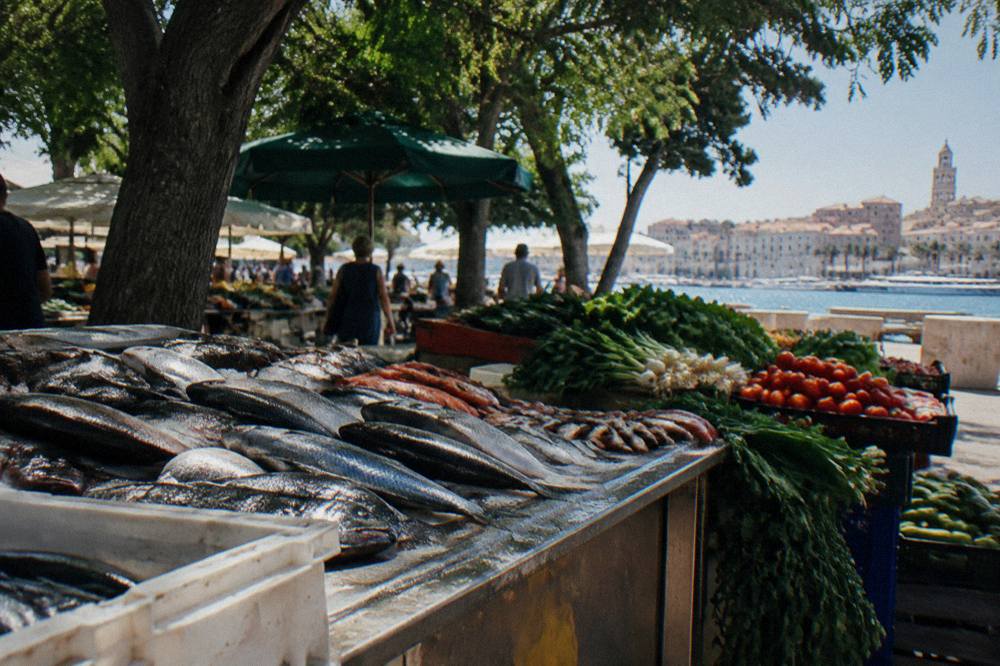
What Split offers instead is depth of a different kind. The city's central market, studied in detail on this site's guide to the Split green market, sets the tone for how the city eats: morning stalls of figs, cherries, olives and herbs, and a fish hall whose catch dictates what appears on plates that evening. From that market the cooking tradition runs straight through the old town, where restaurants occupy cellars, courtyards and terraces of the palace built for Emperor Diocletian around 295 to 305 AD.
The honest framing, then, is that Split rewards eaters who arrive curious rather than status-driven. A long lunch of grilled sardines near Bačvice, where the ball game picigin has been played since 1908, says more about the city than a tasting menu flown in from anywhere else. And for anyone balancing a food-focused stay with the day trips the region is famous for, the options below pair eating with the landscape.
What Does Fine Dining In Split Actually Look Like?
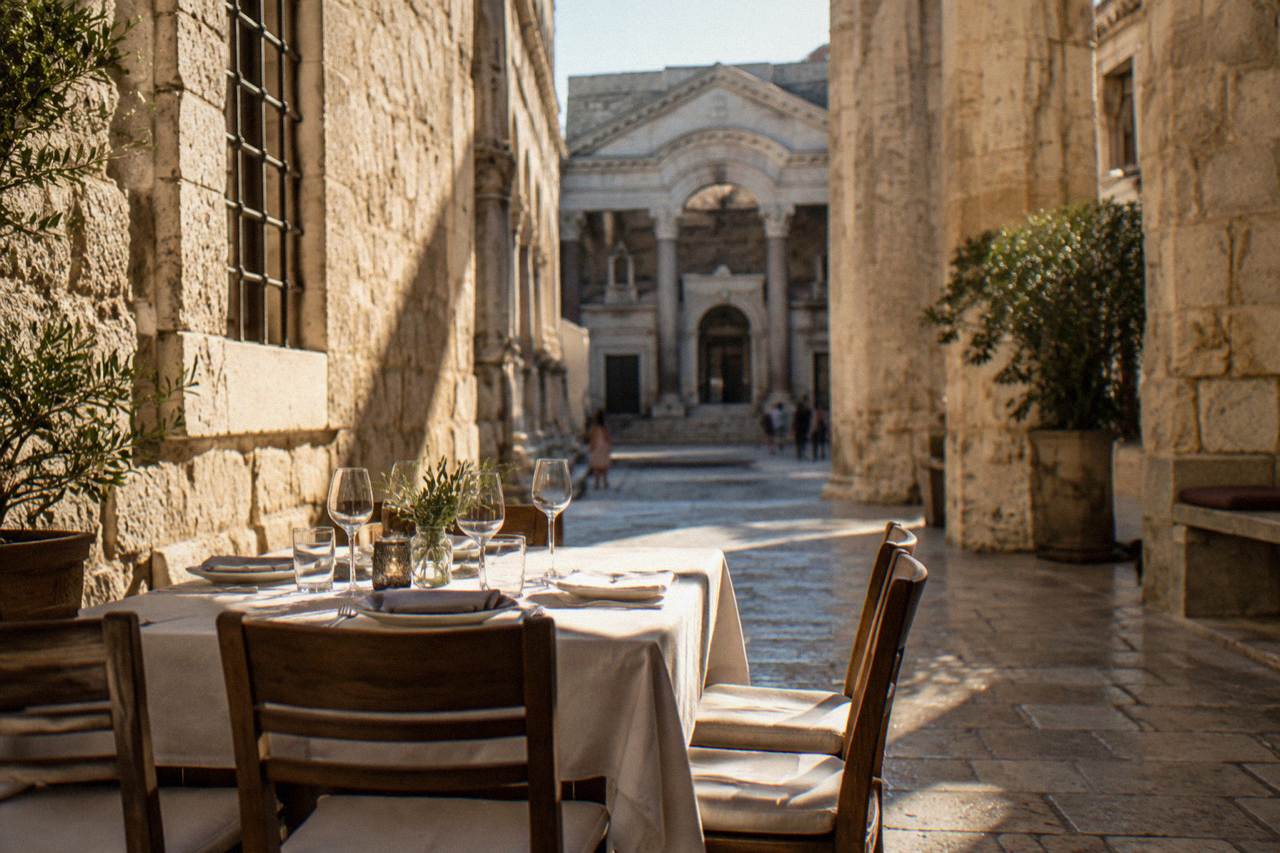
Fine dining in Split means refined Dalmatian cooking rather than a formal international scene: tasting menus built on Adriatic fish, lamb and peka, olive oil from the surrounding county, and wine lists heavy in local varieties such as plavac mali. Dress is relaxed, tables sit in palace courtyards or on terraces above the sea, and the best tables book out in July and August, when the city is at its busiest.
The refined end of Split's scene grew out of the konoba tradition, not in opposition to it. A konoba is a tavern, often family-run, where fish is grilled simply and charged by the kilo, and several of the city's more ambitious kitchens still keep that format's bones while raising the execution. Reservations matter in summer: the DHMZ Split Marjan station table, covering 1948 to 2024, puts the July mean at 26.2 C with 18 days at 30 C or more, and August close behind at 25.9 C with 17 such days, which drives the entire city's life outdoors and outdoors tables are finite. Other pages covering the same trip are gathered on Split Croatia Travel Guide.
Two checks are worth making wherever you eat. First, look at whether the menu is priced and displayed, including any cover charge, which should appear on the menu itself. Second, ask for the itemised bill, called the račun, before paying; this is ordinary practice in Croatia and any restaurant that resists it is telling you something. These are checks a reader can make directly, and they travel well across every budget level discussed in how expensive it is to eat in Split.
Where To Eat Well In Split Without Chasing A Star?
Eat where the supply chain is shortest: the fish market stall tells you what the konoba will grill, the green market tells you what the starter will be, and the islands of Brač, Šolta and Hvar send the olive oil, wine and lamb that appear on nearly every serious menu in the city. Split's strength is this proximity, not ceremony, and it rewards a walk between market, bakery and dinner table.
A practical shape for a food day in Split starts at the market in the morning, moves to a bakery or a simple lunch inside the palace walls, and ends with dinner either in the old town or by the water on the Riva, the seaside promenade. Note that the Riva's central section is scheduled for renovation works from November 2026, expected to last a little over a year, so partial closures should be expected through 2027 and some terrace seating will shift elsewhere. The city's restaurant geography is compact: the ferry port, bus station and railway station sit together 500 to 600 m from the palace, so nothing food-related in the centre is more than a short walk apart, a point developed in is Split a walkable city.
If you would rather have the whole food day arranged, book a guided food tour here.
For visitors who want food and landscape together, the day trips from Split include options where eating is built in. The featured trip on this page combines the waterfalls of Krka National Park with Dalmatian food and wine tasting, and its full description lives at the Krka waterfalls tour with boat cruise, with Check availability showing current dates. Driving times from the palace make the food-adjacent day trips genuinely easy:
| Food day trip from Split | Driving time from the palace | What the food angle is |
|---|---|---|
| Omiš and the Cetina valley | 38 minutes | River-side konobas, lamb and peka country |
| Klis | 22 minutes | Village kitchens above the city |
| Trogir | 36 minutes | Seafood town with its own market tradition |
| Šibenik | 71 minutes | City dining near the St James cathedral, UNESCO listed 2000 |
| Krka National Park, Skradinski buk | 74 minutes | Regional tastings and park restaurants |
When Is The Best Month To Plan A Food Trip To Split?
July and August bring the full menu of summer produce, figs, tomatoes, grilled sardines and every terrace open, on DHMZ Split Marjan means of 26.2 C and 25.9 C respectively, but May, June and September trade slightly cooler air, at 19.2, 23.4 and 21.6 C, for thinner crowds and easier reservations, while November is the wettest month at 115.5 mm and reshapes dining indoors.
The monthly detail matters more here than in many cities because so much of Split's eating happens in the open. The same station record shows June carries 7 days at 30 C or more and July 18, which is why evening tables near the sea fill early in high summer. September keeps the sea-facing season alive with 70.9 mm of rain across the month, and October, at a 17.2 C mean with 77 mm, is when menus shift toward heartier inland dishes. The full monthly picture, and what it means for crowds and prices, is laid out in the best month to visit Split.
| Month | Mean temperature (DHMZ Split Marjan, 1948 to 2024) | Precipitation (mm) | What it means for eating |
|---|---|---|---|
| May | 19.2 C | 57.5 | Terraces open, spring produce |
| June | 23.4 C | 49.0 | Full summer menu begins |
| July | 26.2 C | 26.6 | Peak season, book dinner ahead |
| September | 21.6 C | 70.9 | Seafood still strong, thinner crowds |
| October | 17.2 C | 77.0 | Heartier dishes, indoor tables return |
| November | 12.7 C | 115.5 | Wettest month, konoba comfort food |
Advent changes the picture again: the city's Advent season runs 27 November 2026 to 7 January 2027, with an ice rink at Đardin and the associated stalls and mulled-wine stands that come with it. A winter food trip is a different trip, and a rewarding one, centred on pasticada, lamb and the indoor tables of the old town.
Can A Day Trip From Split Be A Food Experience Too?
Yes, and in Dalmatia it often is: the region's food and its landscape are the same subject, so a boat trip that serves lunch, a Krka excursion with wine tasting or an island cruise with a cook on board delivers both halves of the day at once, with all logistics handled from the waterfront 500 to 600 m from the palace.
The pairing is a genuine strength of basing yourself in Split rather than a smaller town. Boat trips from the waterfront routinely include lunch and drinks, island excursions stop at villages where lunch is the reason to stop, and inland trips reach the lamb and river-fish traditions of the Cetina valley around Omiš. The options below are the ones this site carries for exactly that combination of eating and exploring.
Common Questions About Michelin Dining In Split
Is there a Michelin star restaurant in Split?
The Michelin Guide covers Croatia and revises its selection every year, so check the guide's own pages for the current starred list before planning around one. Split's dining reputation rests on konoba cooking, the green market and Dalmatian seafood rather than on starred tasting menus.
Is fine dining in Split expensive?
Prices vary widely, and this site carries a full answer on the cost of eating in the city. The checks that protect any budget are simple: read the posted menu including any cover charge, and ask for the itemised bill before paying.
What food is Split known for?
Grilled Adriatic fish, peka cooked under a bell, lamb from the hinterland, olive oil, and the produce of the green market beside the old town. Picigin, a ball game played in the shallows of Bačvice since 1908, is the beach-side companion tradition, though it is sport rather than food.
When should I book dinner in Split?
In July and August, book ahead for any specific table, especially terraces: the DHMZ Split Marjan record shows 18 days at 30 C or more in July, and outdoor seating is finite. In May, June and September walk-ins are far more workable.
Are there food tours or wine tastings from Split?
Yes. Options from Split combine waterfalls and wine tasting at Krka, or island cruising with lunch and drinks included, and the listings on this site show what each covers; confirm current dates at booking.
Split answers the Michelin question sideways: the city eats brilliantly at the level of the market, the grill and the vineyard, and the guide's current pages are the right place to check on any starred table elsewhere in Croatia before you travel.