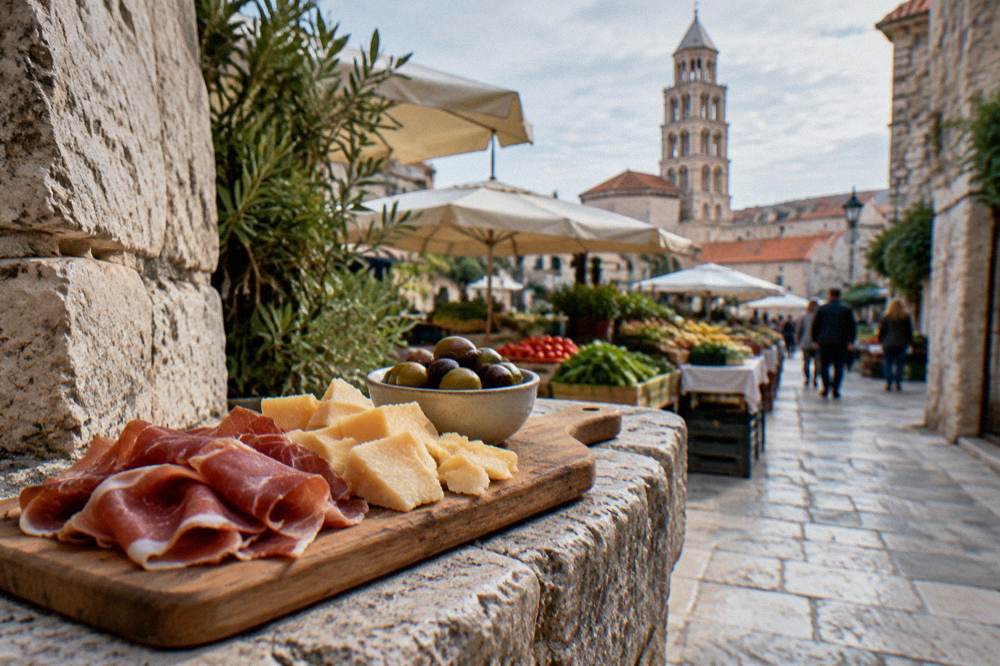
Is It Expensive To Eat In Split?
A clear answer to whether eating out in Split is expensive, with verified fixed costs, season effects and the checks to make before ordering in the old town.
Split is a coastal city in central Dalmatia, on the Adriatic Sea, and its eating scene runs from market bread and figs to white-tablecloth terraces inside Diocletian's Palace, a structure built around c. 295 to 305 AD for the emperor Diocletian and inscribed by UNESCO in 1979. Whether that scene feels expensive depends on three levers: the street you choose, the month you visit and the checks you make before the bill arrives. Croatia has used the euro since 1 January 2023, so there is no currency math left to do, only prices to compare. This page answers the question directly, then breaks down where costs concentrate, what the published fixed costs around a food budget actually are, and what any visitor can verify with their own eyes before ordering.
Is It Expensive To Eat In Split?
Split is moderately priced for a coastal Adriatic city, not cheap and not extreme, and the cost of eating swings far more with location and season than with the city as a whole. Croatia has used the euro since 1 January 2023, a tourist tax of about 2.65 EUR per person per night is collected by accommodation in high season, and the published fixed costs around a visit, from the airport shuttle at 10 EUR to the palace cellars, are modest by Western European standards.
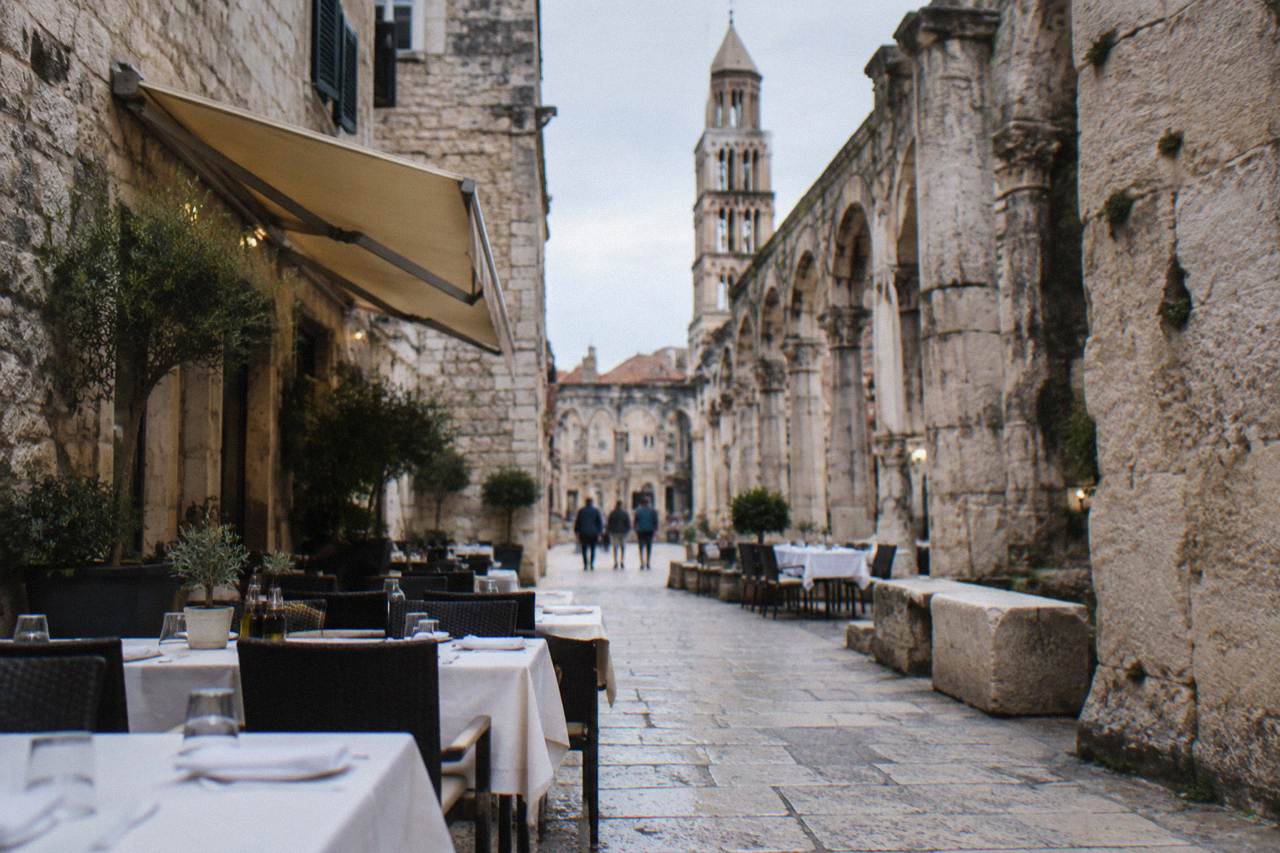
What can be reported is the structure of costs. Split's Old Town sits inside a UNESCO-inscribed palace, and tables in and around the Peristyle and the Riva promenade carry the location premium every historic core carries. Ten minutes outside the walls, in Veli Varos or along the streets behind the ferry port, prices drop, and the city's green markets sell produce at posted prices anyone can read before buying.
Two published facts frame the comparison. The Port of Split handled 6.05 million passengers in 2025, its own page calling it Croatia's busiest passenger port, and 487,377 cruise passengers passed through the same year. A city with that volume of summer traffic prices its prime squares accordingly in July and August, and softly in November. For where residents actually eat, the companion page on where locals eat in Split goes street by street.
Where Do Eating Costs Concentrate In The Split Old Town?
Costs concentrate on the Peristyle, the Riva waterfront and the lanes immediately inside Diocletian's Palace, where terrace positions carry the clearest premium, while the green market, the hood-only sites and the neighbourhoods west and east of the core sit noticeably lower on the scale. The Peristyle, the Riva, the Prokurative, the Golden Gate, the Grgur Ninski statue, the markets and Marjan are all free to walk, so the price of a seat, not the price of a stroll, is what varies.
The geography is small enough to make this practical. The ferry port, the main bus station and the railway station sit together on Obala kneza Domagoja, 500 to 600 m from the palace, so a visitor can walk from a transport hub to the most expensive tables in the city in under ten minutes, and then keep walking another ten to cheaper ones. The pattern is consistent with any heavily visited historic core: prices fall with distance from the monumental centre, and the neighborhoods at the foot of Marjan and around Bačvice mix neighbourhood konobas with seasonal venues.
The free-to-enter list matters for a food budget because it removes the entrance-fee floor that some destinations add. Eating near the Peristyle costs only what the menu says, and the Split Green Market operates as a working market where prices are posted at the stalls. The things to do in Split overview maps which of these sights cluster together, which is the practical way to plan a cheap eating day around free sights.
A walking tour is one of the few spending categories that anchors the rest of the day cheaply, because it covers the monumental core on foot and ends wherever the group likes. The Game of Thrones and history walking tour includes entry tickets and covers the palace quarter, after which lunch can happen anywhere along the walk out of the core. Klis Fortress, a Game of Thrones Meereen location, is 13.9 km and about 22 minutes' drive from the palace, with entry at 10 EUR adults, in case a filming-location day replaces a restaurant afternoon.
What Checks Can You Make Before Ordering In Split?
Read the posted menu with prices outside the door, check whether a cover charge appears as a printed line on the menu itself, and expect the bill to be itemised, because those are checks any visitor can make in thirty seconds and they answer the price question better than any average. Croatia's consumer rules require prices to be displayed, and in Split the historic core has its own published public-order rules, including a 300 EUR fine for drinking alcohol in public in the historic centre outside licensed terraces.
The practical sequence is simple. Menus with prices are displayed at the entrance, so comparing two or three tables before sitting down takes minutes and costs nothing. A cover charge, where a venue applies one, has to appear on the menu rather than appear as a surprise on the bill. The bill should itemise what was served. These are checks against posted information, and they work precisely because they require no guidebook figure at all. The rest of the planning pages sit on Split Croatia Travel Guide.
The published public-order fines give a second, harder cost line. Beyond the 300 EUR alcohol fine, the city's rules set 300 EUR for urinating in public, 300 EUR for climbing on monuments or bathing in fountains, 150 EUR for sleeping in public spaces and 300 EUR for taxi touting. Walking in swimwear or shirtless in the historic centre is also fined, with the amount set locally, so the dress rule is a real cost line, not a suggestion. The page on what to avoid in Split collects these in one place, and the companion question about whether Split is worth visiting weighs them against what the city offers.
| Check before ordering | What to look for | What it tells you |
|---|---|---|
| Menu at the entrance | Printed prices per dish | The venue's real pricing, comparable table to table |
| Cover charge line | A printed charge on the menu itself | An extra per-person cost you can see before sitting |
| Itemised bill | Each item listed separately | A way to verify the total against the menu |
| Terrace vs indoor pricing | Same menu, two price columns | The cost of the seat, not the food |
| Market stalls | Posted prices per kilo or per item | The non-restaurant benchmark for the day |
How Does The Season Change Eating Costs In Split?
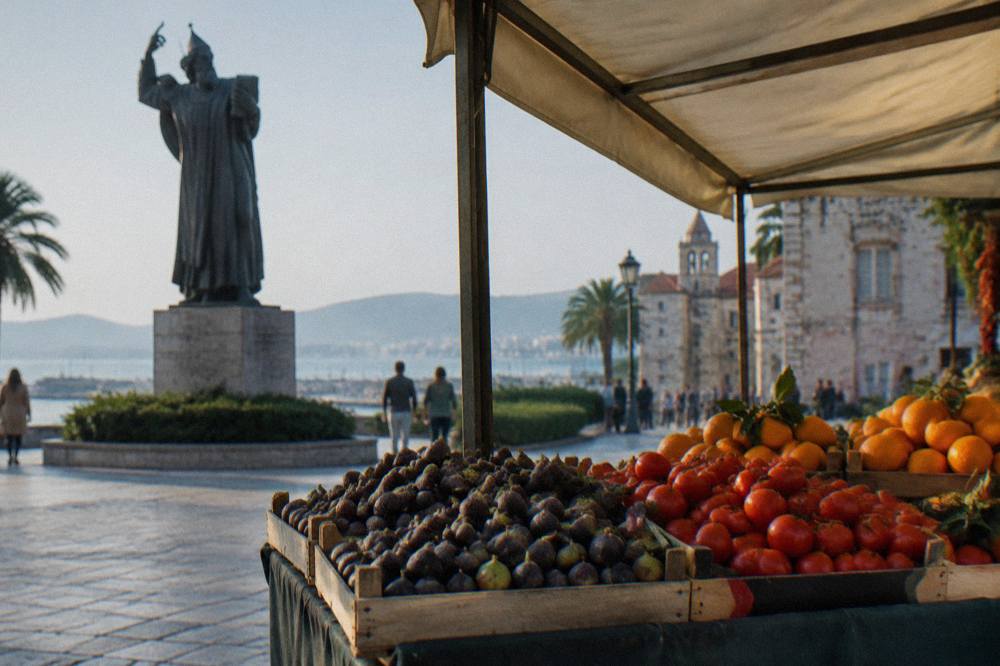
July and August are the expensive months, with station means of 26.2 C and 25.9 C respectively and 18 and 17 days at 30 C or more, which is exactly when terrace demand peaks, while the shoulder months of May, June, September and October carry milder means of 19.2 to 23.4 C and 17.2 to 21.6 C and softer pricing. The DHMZ Split Marjan station table, covering 1948 to 2024, is the measured basis for saying when the city is at its fullest.
Season drives price through demand, and the measured climate shows why. November is the wettest month at 115.5 mm and December brings 120.8 sunshine hours against July's 353.3 hours, so the outdoor terrace economy, the most expensive seat category, operates at full tilt for a defined summer window and contracts outside it. A city whose port processed 6.05 million passengers in 2025 fills that window quickly.
| Month | Mean temperature (C), DHMZ Split Marjan 1948-2024 | Precipitation (mm) | Terrace season |
|---|---|---|---|
| May | 19.2 | 57.5 | Shoulder, softer prices |
| June | 23.4 | 49.0 | Peak building |
| July | 26.2 | 26.6 | Peak, 18 days at 30 C or more |
| August | 25.9 | 41.3 | Peak, 17 days at 30 C or more |
| September | 21.6 | 70.9 | Shoulder, softening |
| October | 17.2 | 77.0 | Off-peak |
| November | 12.7 | 115.5 | Off-peak, wettest month |
The national park day trips show the same seasonal mechanism in published numbers, which is a useful sanity check on how the whole regional price system moves. The Krka price list sets 7 EUR in January to March and November to December, 20 EUR in April, May and October, and 40 EUR from June to September. Plitvice Lakes runs 10 EUR, 23 EUR and 40 EUR across the same bands, with a 25 EUR afternoon slot at peak. Eating prices are not published the same way, but the pattern, a roughly fourfold swing between winter and July, is the regional norm. The question of which is better, Plitvice or Krka covers those choices, and the best month to visit Split weighs the same table for the city itself.
Which Published Fixed Costs Sit Around A Split Food Budget?
The fixed costs of a Split visit are small next to a week of restaurant meals: the Platanus airport shuttle at 10 EUR one way and 15 EUR return, the Diocletian's Palace cellars open 8:30 to 20:00 daily, the Split City Museum at 10.00 EUR adult, the Archaeological Museum at 8 EUR or 10 EUR combined with Salona, and the Meštrović Gallery at 12.00 EUR, while the tourist tax runs about 2.65 EUR per person per night in high season.
These are the figures the sources actually publish, and they bound the non-food side of a daily budget tightly. Ferries add surprisingly little for foot passengers: Jadrolinija's price list shows 5.90 EUR off-season and 8.40 EUR in season on the Split to Stari Grad line, with catamarans to Hvar or Jelsa at 6.40 EUR low and 10.00 EUR high season, meaning an island lunch trip costs less to reach than a main course in some palace terraces. A table for two eating modestly can therefore spend more on food over three days than on every published entrance and transfer combined.
| Verified fixed cost | Published figure | Notes |
|---|---|---|
| Airport shuttle (Platanus) | 10 EUR one way, 15 EUR return | Airport to the main bus station by the ferry port |
| Tourist tax | About 2.65 EUR per person per night, high season | Collected by accommodation, confirmed at booking |
| Ferry, Split to Stari Grad, foot passenger | 5.90 EUR off-season, 8.40 EUR in season | Jadrolinija price list |
| Catamaran to Hvar or Jelsa | 6.40 EUR low, 10.00 EUR high season | Jadrolinija routes |
| Split City Museum | 10.00 EUR adult, family 18.00 | Closed Mondays |
| Meštrović Gallery | 12.00 EUR adult | Includes Crikvine-Kaštilac, reopened April 2026 |
| Archaeological Museum plus Salona | 10 EUR combined, within 7 days | Museum alone 8 EUR |
The palace cellars deserve one practical note: the central part is under restoration to the end of 2026, with the passage staying open, so a visit works through the works. The cathedral complex is different, its prices coming from secondary listings rather than an official page, so treat "from about 5 EUR, combined tickets up to about 15 EUR" as the reliable wording and confirm at the Peristyle kiosk. For the full sight-by-sight picture, the Split museums roundup exists on the guides side of the site.
One spending category does the opposite of a restaurant bill: a guided activity that fixes its cost up front and removes the variable part of the day. The tours below are the three this page's editorial desk would put in front of a reader deciding between another restaurant terrace and something to do, and each has its own page with full details.
To eat your way through Split with a full meal included, book a food tour with drinks included here.
For readers who want a single pick rather than a comparison, the Game of Thrones and history walk is the one this article features, because it covers the core the cheap-eating question is really about, and tickets are included.
Common Questions About Eating Costs In Split
Is it expensive to eat in Split?
Split is moderately priced for an Adriatic coastal city. Costs concentrate on the Peristyle, the Riva and the lanes inside Diocletian's Palace, and fall sharply in the neighbourhoods outside the core and at the green markets, where prices are posted at the stall. No official source publishes meal prices, so compare the posted menus at the door before sitting down.
Is there a Michelin star restaurant in Split?
The dedicated page on Michelin-star dining in Split covers the fine-dining end of the scale, which sits at the top of the city's price range.
Can you drink alcohol in public in Split?
No, not in the historic centre. The city's published rules set a 300 EUR fine for consuming alcohol in public in the historic centre outside licensed terraces, with further 300 EUR fines for urinating, climbing on monuments or bathing in fountains. Drinking happens on licensed terraces, where prices are on the menu.
Do I need cash to eat out in Split?
Croatia uses the euro since 1 January 2023 and cards are widely accepted in restaurants, though some market stalls and small counters prefer cash or small notes. The Blue Cave entrance on Biševo is one published example of a cash-on-site charge, at 24 EUR in high season, showing that cash still matters for specific venues. Confirm at the counter before ordering.
When is eating in Split at its most expensive?
July and August, when the DHMZ Split Marjan station table for 1948 to 2024 shows means of 26.2 C and 25.9 C and 18 and 17 days at 30 C or more. The regional price system moves the same way, with Krka's published ticket swinging from 7 EUR in winter to 40 EUR in summer.
Where can I eat cheaply in Split?
At the green market for produce, and in the neighbourhood restaurants of Veli Varos and the blocks around the ferry port, all within a short walk of the palace. The page on where locals eat in Split lists the streets to aim for, and the free sights, the Peristyle, the Riva, the markets and Marjan, cost nothing around them.