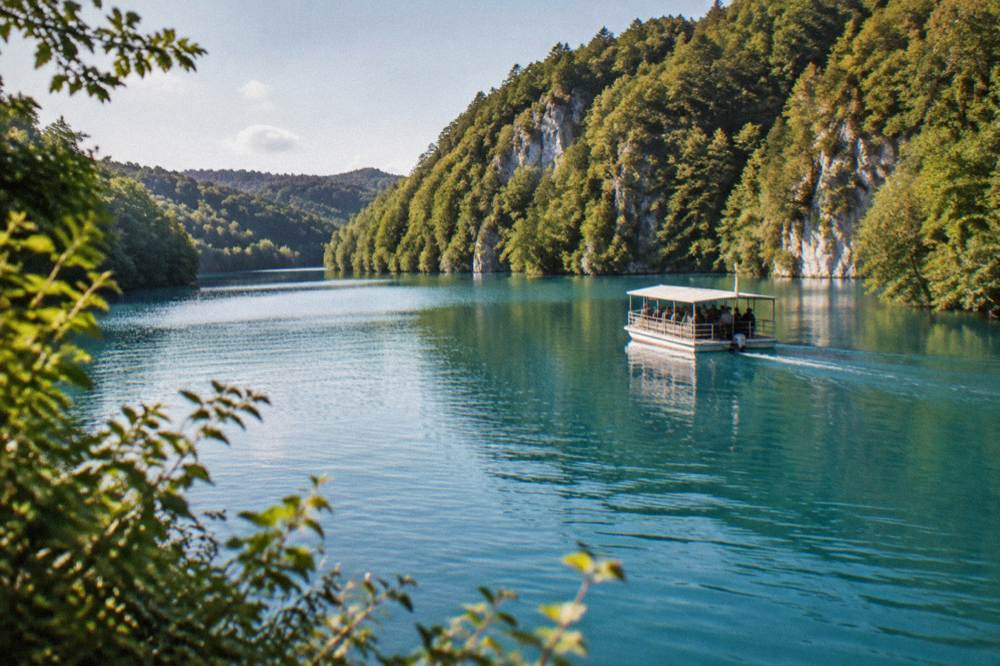
Which One Is Better, Plitvice Or Krka?
Plitvice or Krka from Split: verified ticket prices by season, driving times, swimming rules and which park suits a day trip from the Dalmatian coast.
Split, the coastal city in Dalmatia where Croatia's ferry, bus and rail hubs sit side by side on Obala kneza Domagoja, is the launch point for the country's two famous inland water parks: Krka National Park and Plitvice Lakes. Travellers with only one spare day ask the same question, and the answer depends on distance, season and whether swimming matters. This page compares the two parks using the parks' own price lists, route data computed from the palace, and the rules each park publishes, so the choice rests on numbers rather than on taste.
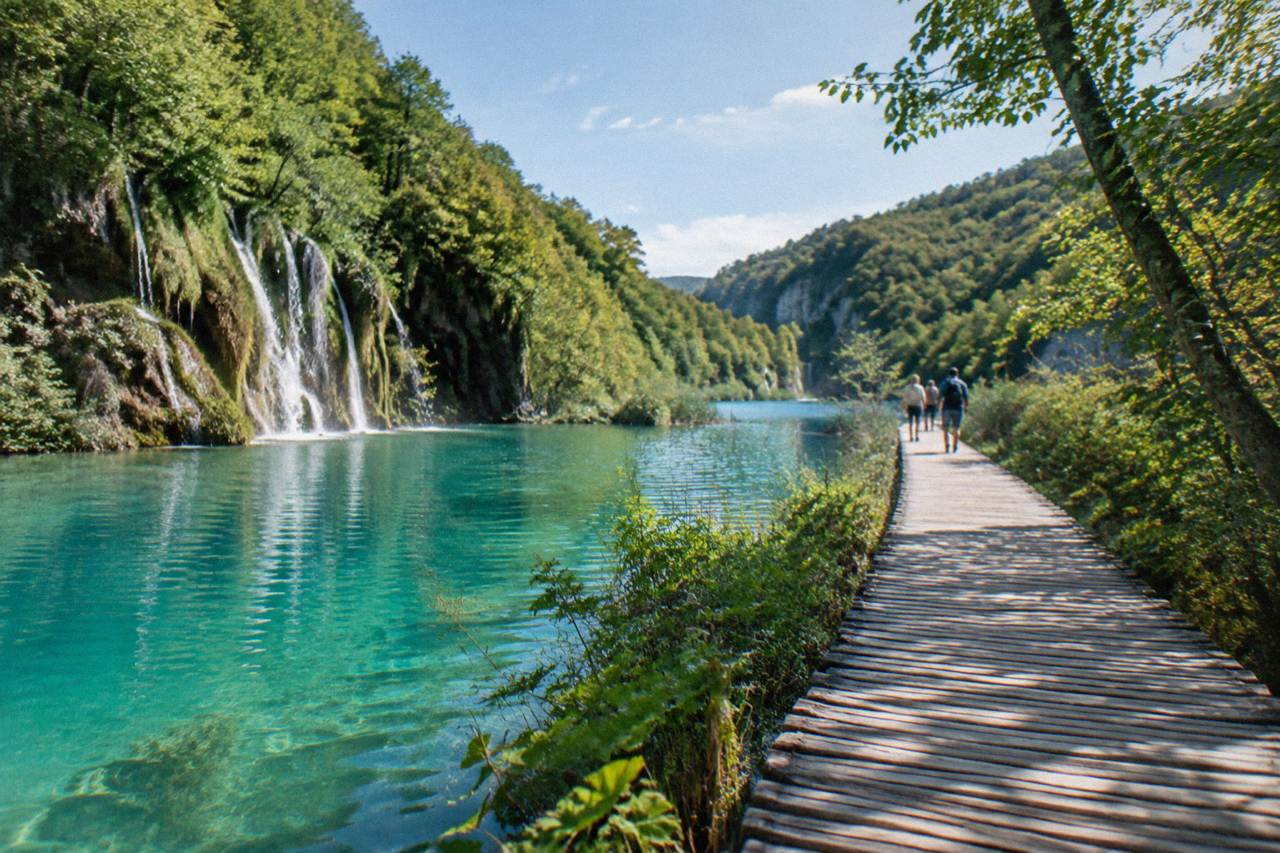
Both parks sell seasonal tickets, both charge 40 EUR for an adult at the height of summer, and both sit far enough from the coast that the drive shapes the whole day. The differences that matter are the travel time, the price in shoulder months, and the fact that Krka permits swimming in marked areas while Plitvice does not. The sections below set out each of those points with the figures the parks themselves publish, plus day trip context from Split Croatia Travel Guide.
The comparison also has a seasonal dimension that first-time visitors often miss. In October, April or May, when the summer crowds thin and the ticket prices drop, the calculus shifts: the cheaper shoulder-season tickets make the longer Plitvice drive easier to justify, because the total cost of the day falls while the landscape stays green. In deep winter the equation changes again, with both parks at their lowest price tiers and the swimming season at Krka closed. Reading the price tables below against the calendar is the fastest way to settle the question for a specific trip.
Which One Is Better, Plitvice Or Krka?
For a single day from Split, Krka is the better fit, because the drive from the palace to Skradinski buk is 90.2 km, about 74 minutes, while Plitvice is 258.1 km, about 3 h 15 each way. Plitvice is the better pick for a lakes-and-walkways landscape and for travellers who can overnight nearby, and its summer ticket equals Krka's at 40 EUR. In shoulder months Krka and Plitvice both drop to 20 and 23 EUR in October, April and May.
Happy to let someone else handle the drive to the falls. Book a Krka waterfalls day trip here.
That is the short arithmetic. Krka gives a Split-based visitor more hours inside the park and fewer hours on the motorway, which is why the Krka excursions dominate the day trip offer from the city. Plitvice answers with scale: a linked system of lakes and falls that earns its own UNESCO inscription and rewards anyone who turns the visit into an overnight rather than a round trip. The full park profiles live at Krka National Park and Plitvice Lakes.
Neither park publishes a visitor cap, so no limit can be stated here. Plitvice does run timed online entry through its official webshop, and the visitor's name is mandatory on the ticket, which effectively spreads arrivals across the day. Krka has no comparable named-ticket rule in the published material.
There is also a practical difference in what happens after the ticket is checked. At Krka the summer admission includes the Skradin boat and the Lozovac bus transfers from 1 April to 31 October, so the internal transport costs nothing extra once inside. At Plitvice the timed entry slot is the fixed anchor of the day, and the walkway route around the lakes is the visit itself, with lake boats operating as part of the park's own system. Neither park's ticket covers food, and both have long stretches without shade in midsummer, so water and sun protection belong in the bag regardless of which park wins the day.
How Far Is Each Park From Split?
Krka's main entrance at Skradinski buk is 90.2 km from Diocletian's Palace, about 74 minutes of free-flow driving, while Plitvice Lakes are 258.1 km away, about 3 h 15. Those figures are one-way, computed on the fastest road route, and they make Krka a comfortable day trip and Plitvice a long one from the coast.
The distance gap is the single biggest practical difference between the two parks. A Krka day from Split leaves room for a late breakfast; a Plitvice day does not. The question of whether Plitvice pairs better with a Zagreb base is covered in Is Plitvice Closer To Split Or Zagreb?.
| Destination from Diocletian's Palace | Distance | Free-flow driving time |
|---|---|---|
| Krka, Skradinski buk | 90.2 km | about 74 min |
| Šibenik (gateway town for Krka) | 84.8 km | about 71 min |
| Plitvice Lakes | 258.1 km | about 3 h 15 |
Both routes start on the same A1 motorway out of Split, so traffic out of the city affects them equally in July and August. The OSRM times are free-flow estimates, not seasonal predictions, and holiday weekends run slower.
It is worth translating the kilometres into hours at the destination, because that is where the parks part ways. A Krka round trip from the palace spends roughly two and a half hours on the road in total, leaving the majority of a summer daylight day for the falls, the walkways and a swim at a marked spot. A Plitvice round trip spends close to seven hours driving, which compresses the park visit into a fixed window bounded by the booked entry slot and the return departure. Anyone who sleeps badly in cars, or who is travelling with small children, should read those two numbers as the whole argument.
What Do Plitvice And Krka Tickets Cost In 2026?
The Krka price list charges adults 7 EUR from January to March and November to December, 20 EUR in April, May and October, and 40 EUR from June to September, including the Skradin boat and Lozovac bus transfers from 1 April to 31 October. Plitvice charges adults 10 EUR from 1 January to 31 March and 1 November to 31 December, 23 EUR in April, May and October, and 40 EUR from 1 June to 30 September, with a 25 EUR afternoon slot in peak.
Both parks are seasonal, and any guide quoting a flat year-round fee is wrong. The autumn reductions from 1 October match these tiers exactly. Note the structural difference: Krka's summer ticket bundles the internal boat and bus transfers, while Plitvice's timed-entry webshop ticket carries the visitor's name.
| Adult ticket (EUR) | Jan to Mar | Apr, May, Oct | Jun to Sep |
|---|---|---|---|
| Krka, all accessible land sites | 7 | 20 | 40 |
| Krka, Roški slap and other satellite sites | 7 | 12 | 20 |
| Plitvice Lakes | 10 | 23 | 40 (25 afternoon slot) |
The satellite-site row deserves a second look. Krka's price list sells Roški slap and the other outlying sites at 7, 12 and 20 EUR across the three seasons, below the main-area tariff, which means a visitor with a car and a second day in the region can see a quieter stretch of the river for less than the headline price. The main Skradinski buk ticket is the one included in the standard day trip transport from Split, and the transfer inclusion dates matter: the Skradin boat and Lozovac bus are covered from 1 April to 31 October, so a winter visit reaches the falls by other means and should be confirmed locally.
If the whole plan is a water-park day trip sandwiched between city days, the city sightseeing itself can be compressed into a single loop. The electric tuk-tuk city tour covers Split's highlights without the walking miles a palace day normally demands, and it pairs well with a rest day after a long excursion; check the tour's page here or Check availability.
Can You Swim At Krka Or Plitvice?
Krka permits swimming only in clearly marked areas, and its park rules state that swimming at Skradinski buk is not allowed; designated spots are reported at Roški slap, Stinice and Pisak, from 1 June to 30 September. Plitvice does not permit swimming at all, in any month, in any part of the lakes system.
This is the difference that decides the trip for many summer visitors, and it is also the most misrepresented fact in older guides. Stories of swimming beneath the Skradinski buk falls date from years when the rules were different; the current park rules page is explicit that only marked areas are open. Anyone booking a Krka trip that advertises "swimming" should read what the listing says about where, because the marked zones sit away from the main falls. Whether a pre-booked ticket is needed at all is answered in Do You Need To Pre-Book Krka National Park?.
Plitvice offers no equivalent: the lakes are a strictly protected ecosystem and the ticket buys walkways, boats across the lakes and views, never a swim. A swim day from Split belongs to the coast or the islands, not to either park.
The swimming window matters for trip timing. The reported designated spots at Roški slap, Stinice and Pisak operate from 1 June to 30 September, which aligns exactly with the two parks' 40 EUR peak ticket tier. A visitor who wants to swim at Krka is therefore paying the peak price for it, and a May or October visitor, on the cheaper 20 EUR ticket, arrives outside the swimming season and should plan the day around walkways and viewpoints instead. Anyone uncertain on the day should ask at the entrance, because the marked areas are the only legal places to enter the water.
Which Park Fits A Split Day Trip Better?
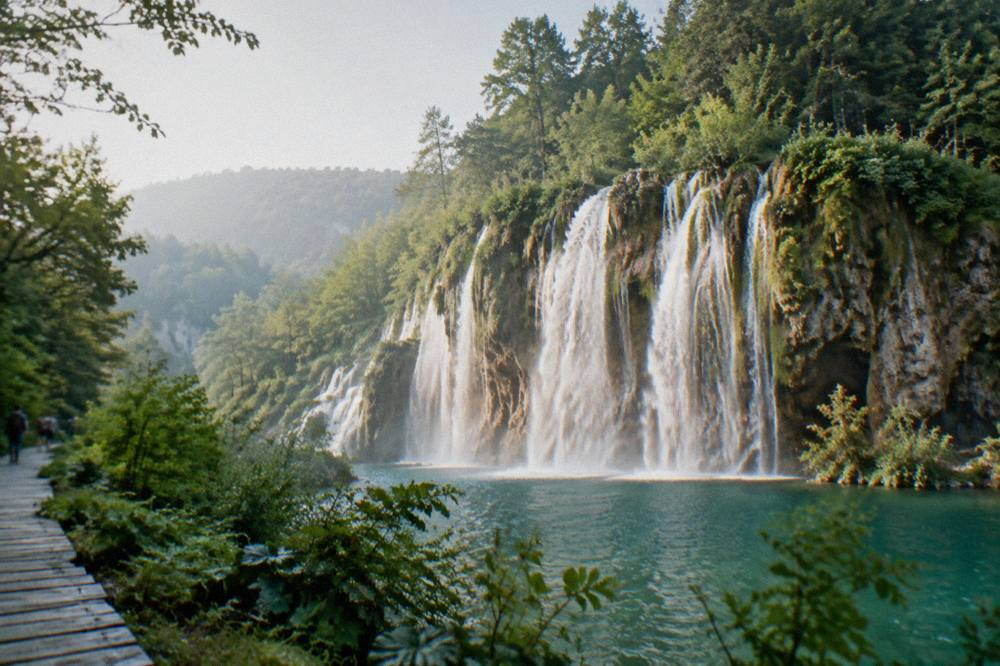
Krka fits a Split day trip better on every travel metric: about 74 minutes each way against about 3 h 15 to Plitvice, and a summer ticket that includes internal transfers. Plitvice works from Split only as a very long day, and the named, timed-entry ticket system means the visit must be planned around a booked entry slot rather than an arrival time.
The practical pattern the data supports is simple. With one free day and a Split base, choose Krka, arrive early, and swim afterwards at a marked spot in the June-to-September window if the season allows. With two free days, or with a route that continues towards Zagreb, move the Plitvice visit to an overnight near the park and enter in the first timed slot of the morning.
Guided transport removes the driving question entirely, and the operator listings below cover both parks plus the city and island alternatives. A coach journey from Split to Zagreb runs about 5 h 30 by the published schedules, which is one reason the overnight-near-Plitvice pattern suits travellers heading north: the park sits between two bases and the ticket prices reward the shoulder months either way. Visitors flying out through the coast can read Is It Better To Fly Into Split Or Dubrovnik? before locking the route.
Common Questions About Plitvice Or Krka From Split
Which one is better, Plitvice or Krka?
Krka is better as a day trip from Split: 90.2 km and about 74 minutes away, against Plitvice's 258.1 km and about 3 h 15. Plitvice is better as a destination in itself, best visited with an overnight near the park.
Are Krka and Plitvice the same price?
Only in high season, when both charge adults 40 EUR from June to September. Outside that, Krka is 7 EUR in the winter months and 20 EUR in April, May and October, while Plitvice is 10 EUR in winter, 23 EUR in April, May and October, with a 25 EUR afternoon slot in peak.
Can you swim at either park?
At Krka, only in clearly marked areas, and not at Skradinski buk; designated spots are reported at Roški slap, Stinice and Pisak from 1 June to 30 September. Swimming is not allowed at Plitvice in any part of the lakes.
Do you need to book Plitvice in advance?
Plitvice runs timed online entry through its official webshop and the visitor's name is mandatory on the ticket, so booking ahead is part of how the park operates. Krka publishes no comparable named-ticket rule.
Is Krka worth it if you cannot swim at the main falls?
The park rules close Skradinski buk itself to swimming, but the marked swimming areas, the boat and bus transfers included in the ticket from 1 April to 31 October, and the short drive from Split keep the visit a full day out. Confirm on the day where the marked areas are open.
The two parks are not rivals so much as two different trips: Krka is the near, swimmable, transfer-included option that fits inside a Split holiday, and Plitvice is the farther, timed-entry lakescape that rewards an overnight. Whichever way the day goes, the drive back ends 500 to 600 m from the palace, which is the quiet advantage of a city built around its port.