Krka National Park From Split
Krka National Park sits about 90 km north of Split, and its tiered waterfalls, lake boat rides and riverside walkways make it the most booked countryside day trip on the Dalmatian coast. This guide sets out the ticket prices by month, the swimming rules, the driving and bus options from Split, and how Krka compares with Plitvice.
Short answer
Krka National Park is 90.2 km from Split by road, about 74 minutes of free-flow driving from Diocletian's Palace to the Skradinski buk entrance. Adult entry costs 7 EUR in January to March and November to December, 20 EUR in April, May and October, and 40 EUR from June to September, and the ticket includes the Skradin boat and Lozovac bus transfers from 1 April to 31 October. Swimming is only allowed in clearly marked areas, and not at the main waterfall.
Krka National Park is the waterfall country of central Dalmatia, roughly 90 km north of Split, where the Krka river cuts a canyon through limestone and drops in wide tiers at Skradinski buk. Split is the natural base for the trip: the park's main entrances at Skradin and Lozovac are both about an hour and a quarter's drive from Diocletian's Palace, and organised day trips leave from the Split waterfront every day in season. The park publishes a clear seasonal price list, firm swimming rules and a shuttle system between its entrances, so the trip rewards a little planning before you set off. This page gathers what the park's own price list and rule pages state, plus the driving figures, so you can decide how to fit Krka into a Split itinerary.
How Far Is Krka National Park From Split?
Krka National Park's main waterfall, Skradinski buk, is 90.2 km from Diocletian's Palace in Split, about 74 minutes of driving in free-flow traffic, measured on the standard routing to the Lozovac and Skradin entrances. From 2026 the trip sits entirely on fast roads for the bulk of the distance, and Šibenik, the nearest city to the park, is 84.8 km and about 71 minutes from the palace, so Krka adds only a short leg beyond it.
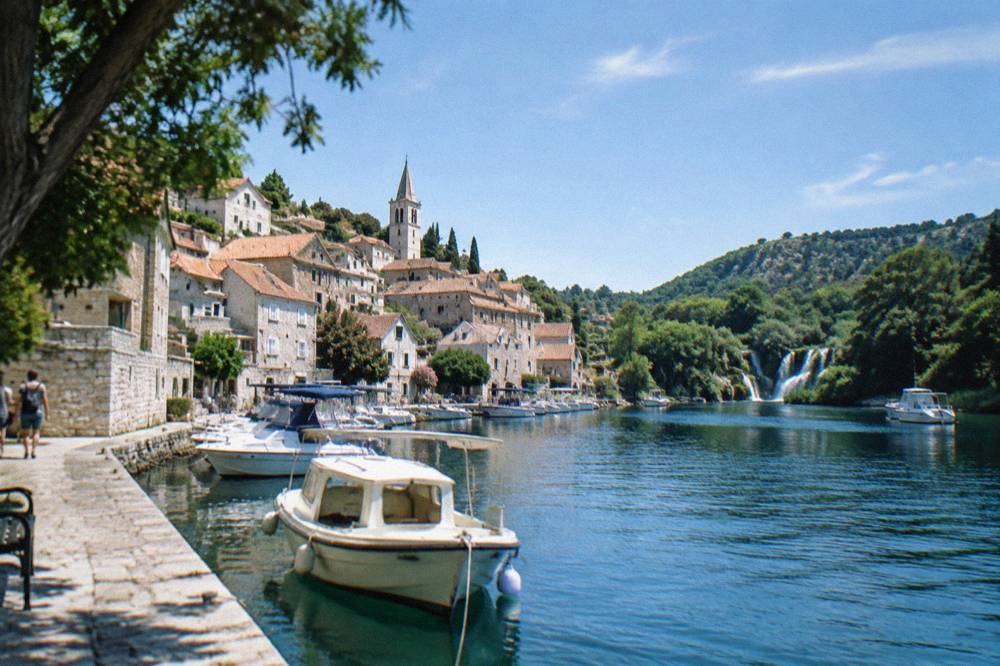
Those figures are free-flow driving times, computed on the standard route, so add margin in July and August when the coastal road and the park car parks fill early. Skradin, the riverside town where the boat leg of a Krka visit begins, sits just outside the park boundary; Lozovac is the entrance above the falls, reached by road from the west. Both serve Skradinski buk, and the park's own ticket terms include transfers between them in the shoulder and summer months.
The drive out of Split passes two towns worth knowing. First Solin, the site of ancient Salona, 9.1 km and about 14 minutes out, then Trogir on its small island, 29.3 km and about 36 minutes from the palace. For the fuller picture of the coast between Split and the park, see the Trogir day trip guide and the Šibenik day trip guide, which covers the city whose cathedral is a UNESCO listing of its own.
What Do Krka Tickets Cost And What Does The Entry Include?
An adult ticket to all of Krka's accessible land sites costs 7 EUR from January to March and from November to December, 20 EUR in April, May and October, and 40 EUR from June to September 2026, on the park's published price list. The ticket covers the park's land sites and, from 1 April to 31 October, includes the boat transfer from Skradin to Skradinski buk and the bus transfer at Lozovac, so the two entry systems cost nothing extra once you hold a ticket.
The seasonal tiers are the detail to check against your travel dates. A visit in early June pays the full 40 EUR; the same trails a few weeks earlier in May cost 20 EUR; and from 1 October the price drops back to 20 EUR again, then to 7 EUR from November. Autumn therefore pairs thinner crowds with a mid-tier price, a point the park itself makes with its published reductions from 1 October 2026.
| Period (2026) | Adult, all land sites | What applies |
|---|---|---|
| 1 January to 31 March | 7 EUR | Winter access, transfers not running |
| April and May | 20 EUR | Boat and bus transfers included |
| 1 June to 30 September | 40 EUR | Peak season, transfers included |
| October | 20 EUR | Autumn reduction from 1 October |
| November and December | 7 EUR | Winter access, transfers not running |
The outlying sites carry their own, lower tiers on the same price list. Roški slap, the series of smaller cascades upstream, and the sites around Kistanje, Manojlovac, Burnum and the Eco Campus at Puljani, are priced at 7, 12 and 20 EUR across the same seasonal bands, so a second day upstream costs less than the main falls.
| Krka site | Low season | Spring and October | Peak season |
|---|---|---|---|
| All accessible land sites | 7 EUR | 20 EUR | 40 EUR |
| Roški slap | 7 EUR | 12 EUR | 20 EUR |
| Kistanje area sites | 7 EUR | 12 EUR | 20 EUR |
| Manojlovac and Burnum | 7 EUR | 12 EUR | 20 EUR |
| Eco Campus, Puljani | 7 EUR | 12 EUR | 20 EUR |
One planning question comes up again and again, and the site answers it in full on a dedicated page: do you need to pre-book Krka National Park. The short version is that the park has no verified visitor cap and entry is not sold as timed slots in the way Plitvice's is, but arrival before mid-morning in July and August is the practical way to avoid the car park and boat queues.
The park's price list also settles the transfer question. From 1 April to 31 October the Skradin boat to the base of Skradinski buk and the Lozovac bus down to the falls are inside the ticket price, which is why visitors arriving at either entrance converge on the same trail network without paying twice.
Can You Swim At Krka National Park?
Swimming at Krka is allowed only in clearly marked swimming areas, on the park's own rules page, and Skradinski buk, the main waterfall, is not one of them. Reported designated swimming spots sit at Roški slap, Stinice and Pisak, and the season for them runs 1 June to 30 September. Outside those marked zones and that window, entering the water is against the park's rules, full stop.
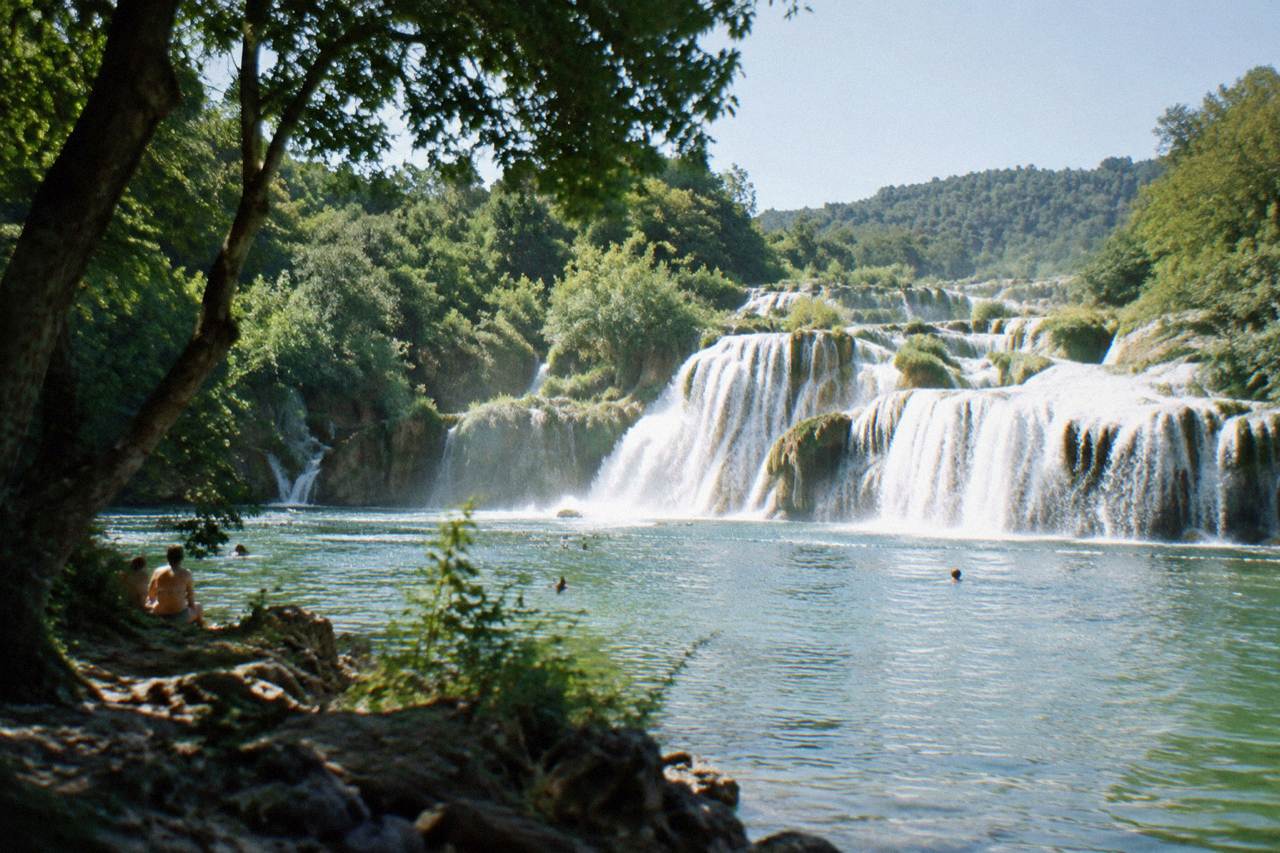
This is the single biggest change returning visitors notice. Swimming in the Skradinski buk pools was once the postcard image of a Krka trip, and older articles still show it. The park's current rules page states plainly that bathing is limited to clearly marked areas, and any day trip that still promises "swimming at the waterfalls" is promising something the park does not permit. If a swim in a river canyon is the point of your day, the Cetina canyon east of Split is the alternative built for it, covered in the Omiš and Cetina River guide.
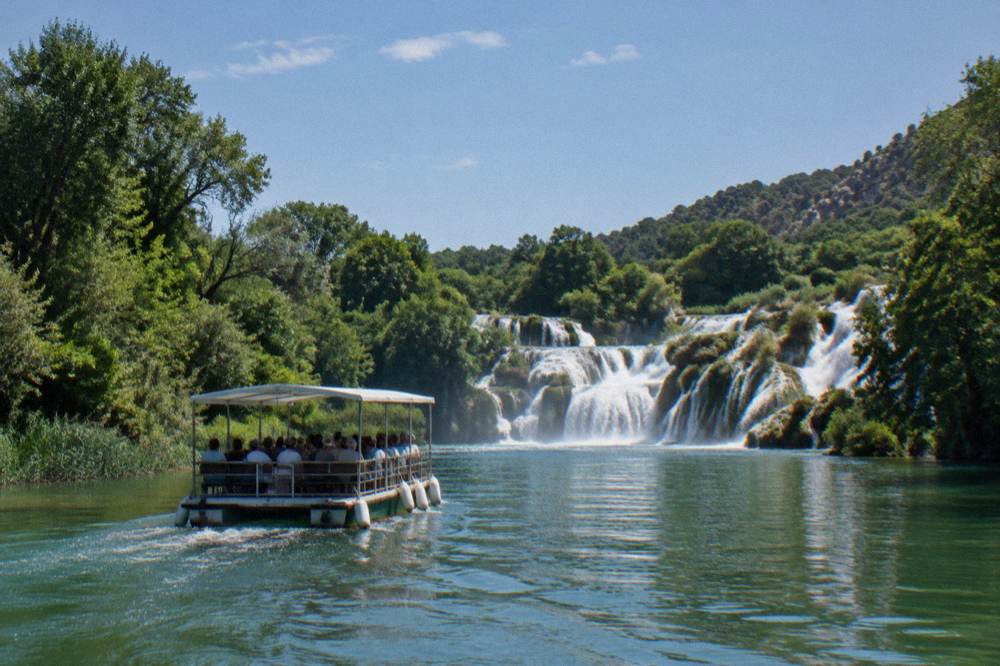
For the practical shape of a visit built around the water rather than a swim, boat-based trips from Split pair a stretch of the coast with a Krka stop. Two of the most-booked examples combine the park with the islands, and their prices, ratings and durations render on the cards below.
If your heart is set on a guided countryside day instead, one option that covers Krka in full, with the boat ride on the river inside the park, is listed here: Check availability.
How Do You Get To Krka From Split Without A Car?
Independent travel from Split to Krka runs through Šibenik: there is no airport or rail link involved, so the route is Split to Šibenik by intercity bus, then a local bus or taxi to Skradin or Lozovac, then the park's own included boat or bus transfer to the falls. The full journey from Split works out at a little over two hours each way in normal conditions, against 74 minutes of pure driving, which is the arithmetic that pushes visitors without a car toward organised day trips.
With a car, the trip is simple: leave Split northbound, pass Trogir and Šibenik, and follow signs for Lozovac for the entrance above the falls, or Skradin for the boat departure point.
| Leg | Figure from this site's research |
|---|---|
| Split, Diocletian's Palace to Šibenik | 84.8 km, about 71 minutes |
| Šibenik to Skradinski buk entrances | 90.2 km total from the palace, about 74 minutes |
| Split to Trogir, on the way | 29.3 km, about 36 minutes |
| Split to Solin (Salona), on the way | 9.1 km, about 14 minutes |
| Split to Omiš, for comparison | 25.5 km, about 38 minutes |
Coach timetables and fares for the Split to Šibenik leg are not published in a fixed form, so check the operator's own listing or the Split main bus station boards on Obala kneza Domagoja. What is verified is the geography: the bus station, ferry port and railway station share one hub 500 to 600 m from the palace, so every form of onward transport starts within a short walk of the Old Town. The hub and its connections are covered in the things to do in Split overview.
The door-to-door alternative is a day trip with transport included, which removes the Skradin connection entirely. The featured option on this page runs from Split with a guide:
If the connections sound like a chore, book a Krka waterfalls day trip here.
Krka Or Plitvice: Which Is Better From Split?
Krka is the closer and cheaper day trip from Split: 90.2 km and about 74 minutes against 258.1 km and about 3 h 15 to Plitvice, and peak entry of 40 EUR at Krka against Plitvice's peak of 40 EUR with a 25 EUR afternoon slot. Plitvice answers with scale, its chain of linked lakes and upper and lower canyons, and a strict timed online entry system with the visitor's name on the ticket, while Krka allows swimming in marked zones that Plitvice never has.
The two parks reward different itineraries. Plitvice is a full-day commitment from Split and suits a once-only centerpiece excursion; Krka slots into a relaxed day that can absorb Trogir or Šibenik on the way back, or a morning in the park and an afternoon back on the Split coast. This site compares the two in detail in Plitvice or Krka: which one is better, and the full park background sits in the Plitvice Lakes guide.
| Measure | Krka | Plitvice Lakes |
|---|---|---|
| Distance from Diocletian's Palace | 90.2 km | 258.1 km |
| Free-flow driving time | About 74 minutes | About 3 h 15 |
| Peak adult ticket (Jun to Sep) | 40 EUR | 40 EUR, 25 EUR afternoon slot |
| Spring and October ticket | 20 EUR | 23 EUR |
| Winter ticket | 7 EUR | 10 EUR |
| Swimming | Marked areas only, 1 June to 30 September | Not permitted |
| Entry system | Standard entry | Timed online entry, name on ticket |
The swimming row is the honest tiebreaker for summer visitors. If standing under a waterfall matters, neither park allows it at the headline cascade; if a marked river swim alongside a canyon day does, Krka in the 1 June to 30 September window is the park that offers it. If a lake-and-waterfall landscape without any swimming is the draw, Plitvice is the stronger spectacle and the longer, costlier day. Other pages covering the same trip are gathered on Split Croatia Travel Guide.
What Is There To See Inside Krka National Park?
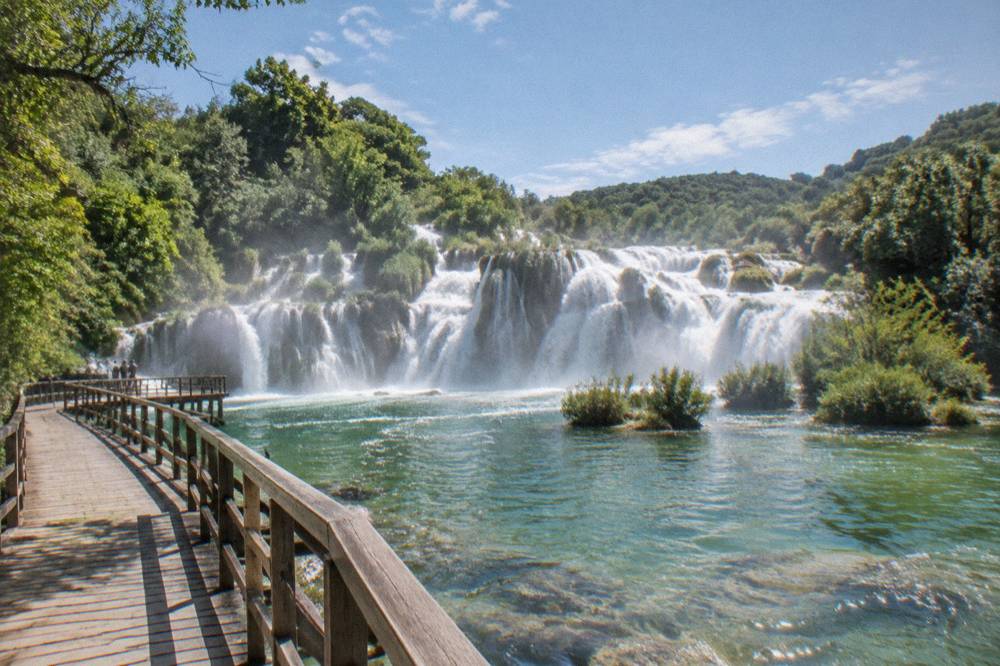
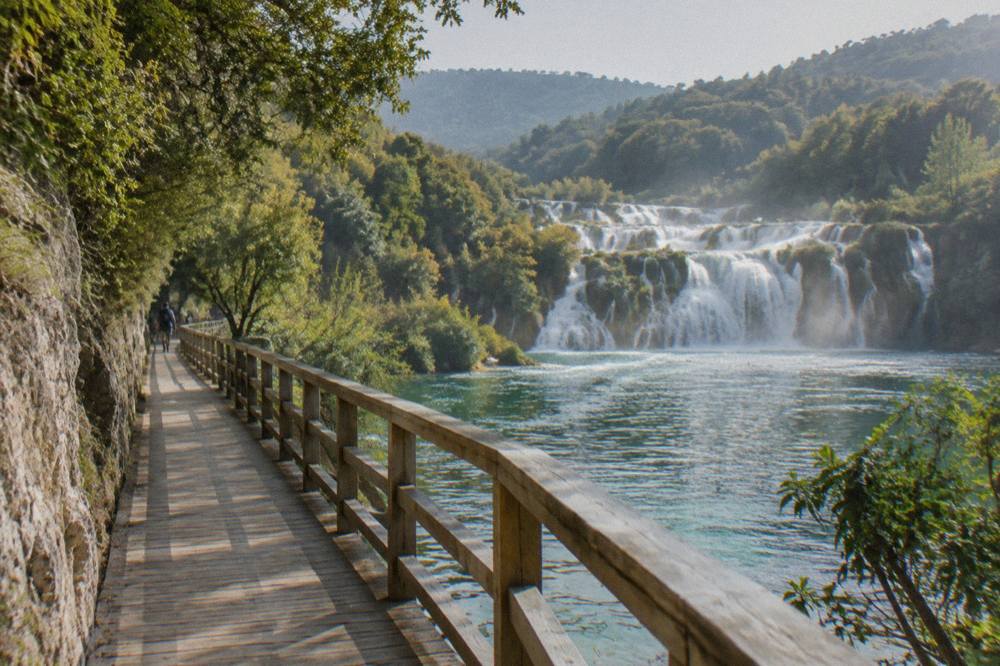
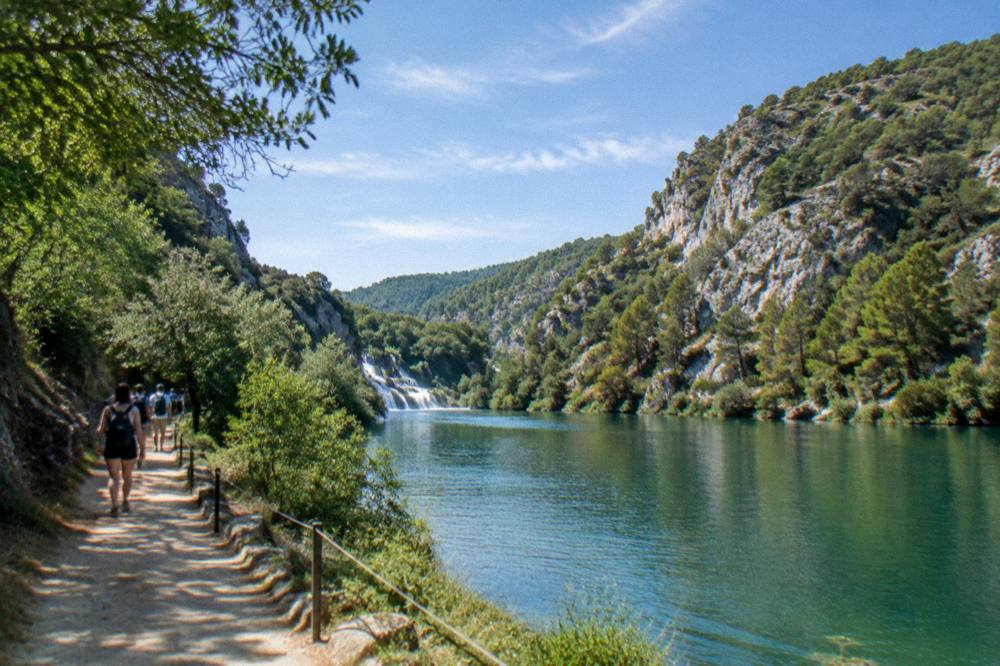
The park's centrepiece is Skradinski buk, a broad travertine barrier where the Krka river spreads into a staircase of pools and cascades, reached by wooden walkways from either the Skradin boat dock or the Lozovac bus stop. Upstream sit Roški slap's chain of smaller falls, the canyon stretches at Stinice, the Roman-site area around Burnum and Manojlovac's tall drop, and the Eco Campus at Puljani, all covered by the outlying-site tickets at 7, 12 and 20 EUR across the seasons.
Skradinski buk is where the walkway network and the daylight hours go. The trails loop both banks, cross the water on timber bridges, and pass watermills and craft displays at the top of the barrier, and the park's included boat from Skradin delivers visitors to the base of it. Roški slap, upstream, is quieter, reachable by park boat excursions on the river, and holds one of the designated swimming areas in season.
The river between the two waterfall groups is canyon country, and Stinice on the Krka's bank is both a viewpoint and the reported site of another marked swimming zone. Burnum holds Roman remains beside the water, and Manojlovac is the tallest cascade in the park, set in a section that reads as wild river rather than landscaped falls. The Eco Campus at Puljani is the park's education base on that upstream stretch.
| Site | What it is | Ticket tier it sits on |
|---|---|---|
| Skradinski buk | Main travertine barrier and walkway network | All-land-sites ticket |
| Roški slap | Chain of smaller cascades, marked swimming in season | Outlying sites, 7 / 12 / 20 EUR |
| Stinice | Canyon bank with river access | Outlying sites, 7 / 12 / 20 EUR |
| Burnum | Roman remains by the river | Outlying sites, 7 / 12 / 20 EUR |
| Manojlovac | Tallest cascade in the park | Outlying sites, 7 / 12 / 20 EUR |
| Eco Campus, Puljani | Upstream education and trails | Outlying sites, 7 / 12 / 20 EUR |
Visitors with two spare days sometimes take Skradinski buk on the first and the upstream cluster on the second, using Šibenik as the overnight stop. The city deserves the night in its own right: its cathedral of St James is inscribed by UNESCO, and the details are in the Šibenik guide.
When Is The Best Time Of Year To Visit Krka From Split?
The price list alone frames the seasons: 7 EUR entry from January to March and November to December, 20 EUR in April, May and October, and 40 EUR from June to September, with the boat and bus transfers running only from 1 April to 31 October. Late May and late September pair the lower 20 EUR tier with warm weather and running transfers, and they sit outside the peak domestic holiday weeks, while the marked swimming areas operate from 1 June to 30 September.
Summer brings the water at full theatrical flow, the fullest walkways and the 40 EUR tier, and it stacks on the Split coast's own peak: the DHMZ Split Marjan station table, for the period 1948 to 2024, records 18 days at 30 C or more in July and 17 in August in the city itself. Autumn cools gently, and the September sea and river temperatures stay mild enough that the swimming zones stay open to the end of the month. Winter entry at 7 EUR suits a quiet walk at Skradinski buk, with the transfer system paused until 1 April.
| Month band | Entry price | Transfers | River swimming zones |
|---|---|---|---|
| January to March | 7 EUR | Not running | Closed |
| April and May | 20 EUR | Running from 1 April | Closed until 1 June |
| June to September | 40 EUR | Running | Open 1 June to 30 September |
| October | 20 EUR | Running to 31 October | Closed from 1 October |
| November and December | 7 EUR | Not running | Closed |
For weather context on the Split end of the trip, the Split weather guide climate section carries the full DHMZ Split Marjan monthly table, and the broader seasonal framing, including Ultra Europe in July and the Advent season from 27 November, sits in the things to do in Split overview. July's 353.3 sunshine hours make it a strong month for a park-and-swim day, but the same month carries the top ticket tier and the fullest car parks.
What Rules Should You Know Before A Krka Day Trip?
The park's rules are specific: swimming only in clearly marked areas, and the river's travertine barriers protected from every angle. Inside Split itself, the city's public order rules carry fines of 300 EUR for drinking alcohol in the historic centre, 300 EUR for urinating, 300 EUR for climbing monuments or bathing in fountains, and 150 EUR for sleeping in public spaces, and walking in swimwear in the historic centre is also a fined offence.
The swimwear point deserves emphasis because a Krka day ends back in the Old Town. The fine amount for swimwear in the centre is set locally and is not published as a figure on the city's rules page, so treat the rule, not a number, as the boundary. Pack a cover-up for the walk back through the centre, and the problem never arises. Alcohol bought in shops in the historic core is also restricted at night during the summer season, with the ban applying to retail sales between 21:00 and 06:00 from 1 June to 15 September, a rule aimed at street drinking rather than bar terraces.
Drones are a second frequent trap. The park bans them, and the same national rules that restrict flights over Split's old town apply over the airport corridor you may drive past on the way out of the city. The third practical rule is timing: the park's transfers and boat legs run 1 April to 31 October, so a visit outside that window means arriving by road at Lozovac and walking in on the trail network.
Common Questions About Krka National Park From Split
How far is Krka National Park from Split?
Skradinski buk is 90.2 km from Diocletian's Palace, about 74 minutes of free-flow driving, with Šibenik at 84.8 km and about 71 minutes on the way. Allow more time in July and August.
What does a Krka ticket cost in 2026?
Adult entry to all land sites is 7 EUR from January to March and November to December, 20 EUR in April, May and October, and 40 EUR from June to September. Roški slap and the other outlying sites cost 7, 12 or 20 EUR by season.
Can you swim at Krka National Park?
Only in clearly marked swimming areas, and not at Skradinski buk. Reported designated spots sit at Roški slap, Stinice and Pisak, open 1 June to 30 September.
Does the Krka ticket include the boat from Skradin?
Yes. From 1 April to 31 October the ticket includes the Skradin boat to Skradinski buk and the Lozovac bus transfer, on the park's published price list.
Is Krka or Plitvice better from Split?
Krka is closer and cheaper to reach, at 90.2 km against 258.1 km, and allows marked-zone swimming in summer. Plitvice answers with its linked lake chain and timed online entry. The full comparison is on the site's Plitvice or Krka page.
Do you need to pre-book Krka National Park?
No verified visitor cap or timed entry system exists for Krka, but arriving before mid-morning in July and August is the practical way to avoid car park and boat queues.
Krka rewards exactly the kind of planning this page walks through: a date matched to the right price tier, a swim planned only where the park marks it, and a route that treats Šibenik and Trogir as part of the day rather than a blur past the window. Whether you drive it yourself or take a guided trip from the Split waterfront, the falls will be there at the end of the same 90 kilometres they have always occupied.