Is It Better To Fly Into Split Or Dubrovnik?
Split Airport sits 20 km from the city with cheap shuttle links, while Dubrovnik anchors the far south of Dalmatia. Here is how the two arrival points compare for islands, day trips and travel between them.
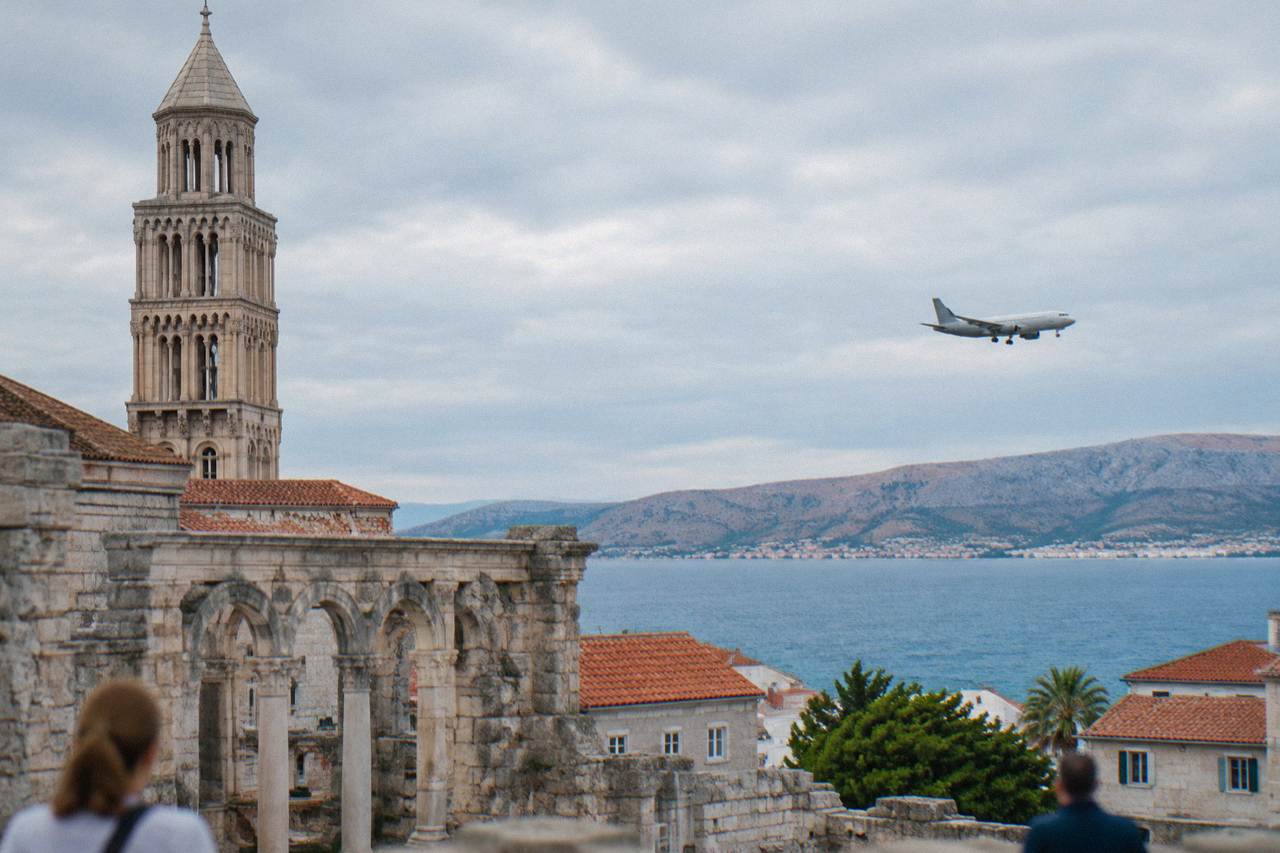
Split Airport (SPU) sits in Kaštel Štafilić, 20 km from Split and 6 km from Trogir, and it handled 3,881,186 passengers in 2025, the airport's own statistics page shows. Dubrovnik sits at the far southern end of Dalmatia, 234.8 km and about 3 hours 21 minutes of free-flow driving from Split's palace, with no rail link between the two cities at all. That geography, not the airports themselves, decides the question: Split is a hub for islands, parks and day trips in every direction, while Dubrovnik works as a destination you fly into, enjoy, and leave by road, sea or plane. This page compares the two arrival points using the published figures, and it closes with the practical details, shuttle prices and transfer times, that the official pages actually carry.
Is It Better To Fly Into Split Or Dubrovnik?
Flying into Split is the better choice for a trip built around islands and day trips, because the city is Dalmatia's transport hub: car ferries leave its port for Stari Grad on Hvar in about 120 minutes and Supetar on Brač in about 50 minutes, and Krka, Trogir, Salona and Omiš all sit within an hour's drive. Dubrovnik is the better arrival point only when the trip is short and concentrated on Dubrovnik itself, since the drive back north to Split takes about 3 hours 21 minutes each way.
The honest answer depends on what the trip is for. A visitor planning four or more days, or anyone who wants Hvar, Brač, Šolta or the Blue Cave, should land in Split: Jadrolinija's route page shows line 635 to Stari Grad running about 120 minutes, line 631 to Supetar about 50 minutes and line 636 to Rogač on Šolta about 60 minutes, and the ferry port, main bus station and railway station all sit together on Obala kneza Domagoja, 500 to 600 m from the palace. A visitor with three days for Dubrovnik's walls and old town saves hours by flying straight there rather than transferring. The comparison piece on Split versus Dubrovnik breaks the two cities down side by side, and the question of how many days is enough for Split shapes which airport makes sense at all.
Where Does Split Airport Sit And How Do You Reach The City?
Split Airport is in Kaštel Štafilić in the Kaštela belt, 20 km from Split and 6 km from Trogir by the airport's own pages, with the drive from Diocletian's Palace measured at 24.9 km and about 31 minutes free-flow. The Platanus shuttle runs from the airport to the main bus station beside the ferry port for 10 EUR one way or 15 EUR return, and Promet Split city bus lines 37 and 38 also stop at the airport.
Two corrections matter here because they are repeated wrongly across the internet. The airport is not "10 minutes from the city": the airport's own information page gives the 20 km figure, and the driving time of about 31 minutes assumes free-flow traffic on a coastal road that slows in summer. The shuttle is not the operator older guides name either: Platanus runs it, one way 10 EUR, return 15 EUR, between the airport's north parking and the main bus station on Obala kneza Domagoja, which puts a arriving passenger a short walk from both the palace and the ferry piers. City bus lines 37 and 38 stop at the airport too; the fare is a few euros and should be confirmed on board. No taxi fare can be quoted from any official page, so agree the price before getting in.
| Transfer from Split Airport | What the official pages say | Cost |
|---|---|---|
| Platanus shuttle to the main bus station | Airport north parking to Obala kneza Domagoja, by the ferry port | 10 EUR one way, 15 EUR return |
| Promet Split lines 37 and 38 | Stop at the airport, city service | A few euros, confirm on board |
| Drive from the palace | 24.9 km, about 31 minutes free-flow | Not published |
| Taxi | No official fare page exists | Agree before travel |
Which Airport Works Better For Islands And Day Trips?
Split wins the island and day-trip contest decisively, because its port is Croatia's busiest passenger port at 6.05 million passengers in 2025 and its ferry lines reach four islands directly, while Krka National Park sits 74 minutes away by road, Trogir 36 minutes, Salona 14 minutes and Omiš 38 minutes. Dubrovnik's day-trip reach runs south and east, toward Mostar at 2 hours 13 and the Bay of Kotor, with the drive back to Split's island network taking over three hours each way.
The numbers make the case plainly. Jadrolinija's route pages give about 120 minutes to Stari Grad on Hvar by car ferry and about 140 minutes to Vis, with catamarans running to Hvar town, Jelsa and Vis as foot-passenger services; foot passengers on line 635 pay 5.90 EUR off-season and 8.40 EUR in season per the published price list. Krka's own price list charges 40 EUR adult entry in June to September, 20 EUR in April, May and October, and 7 EUR through the winter months, and the park ticket includes the Skradin boat and Lozovac bus transfers from 1 April to 31 October. Plitvice Lakes is a long but doable day at 258.1 km and about 3 hours 15 minutes each way, with adult entry of 10 to 40 EUR by season and the visitor's name required on the ticket under timed online entry. From Dubrovnik, the equivalent outings run to Mostar, whose Old Bridge Area was inscribed by UNESCO in 2005 after the bridge's 2004 rebuilding, or along the coast, but the island network north of Split is simply out of range for a day return.
This is also where a Split arrival converts into booked activities rather than planning. The operator's live listing for the half-day three-island speedboat adventure from Split and Trogir covers exactly the waters the ferries serve, and Check availability shows the current dates and from-price. The same logic applies to Krka and Mostar: both are day trips that only work from a Split base.
Should You Book A Day Trip Before You Arrive?
Booking ahead matters for Krka and Plitvice in summer and for speedboat trips in July and August, because Plitvice operates timed online entry with the visitor's name printed on the ticket and boat trips carry limited seats, while walking tours and city activities can usually be arranged a day or two ahead. Free cancellation terms on the operator's live listing mean an early booking costs little flexibility.
The timed-entry rule at Plitvice is the one hard constraint: entry is sold through the official webshop in slots, the visitor's name is mandatory on the ticket, and summer slots sell out. Krka has no published visitor cap, so the risk there is queueing rather than closure. For everything booked through an operator, the listing's own cancellation terms are the reassurance to read before paying.
Want The Island Day Locked In Before You Land?
Free cancellation applies on the operator's live listing, so a Split-arrival plan can be reserved before flights are final.
Check availability
How Do You Travel Between Split And Dubrovnik?
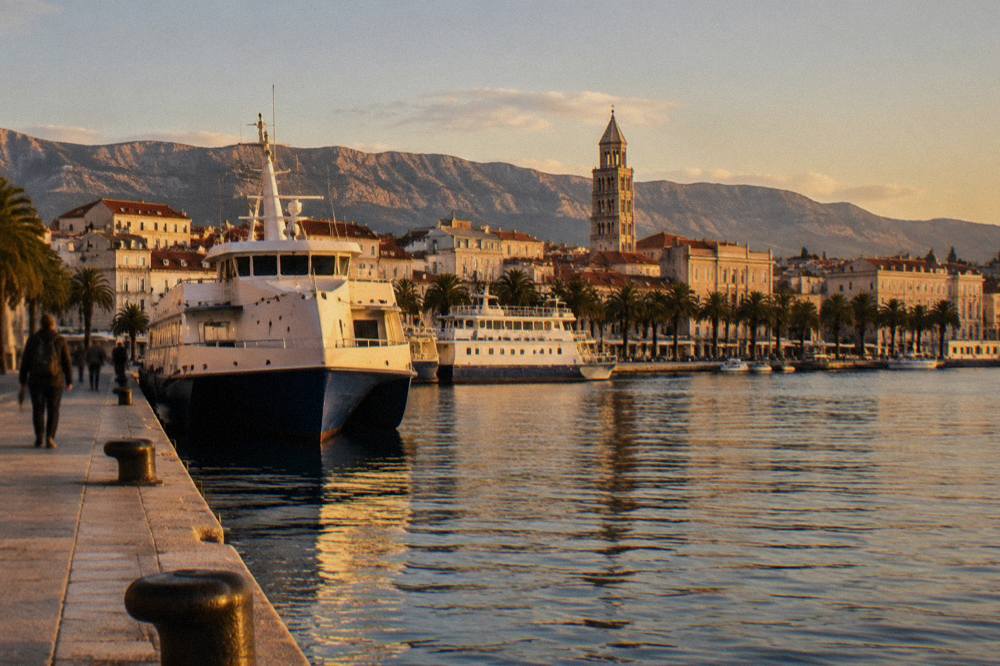
There is no train between Split and Dubrovnik, so the journey runs by road or by coach: driving covers 234.8 km in about 3 hours 21 minutes free-flow from the palace, while the coach takes about 4 hours, and seasonal ferry and catamaran services connect the two cities by sea in summer. Flying between them is rarely the efficient answer given the transfer times at each end.
Wondering how to get from one city to the other? Book a Split to Dubrovnik transfer here.
The road route hugs the coast and passes through Bosnia and Herzegovina briefly near Neum, which means a passport or ID card is needed even inside what feels like one country; Croatia has been in the Schengen area since 1 January 2023, but the Neum corridor is not inside it. Coaches run from the same Obala kneza Domagoja hub as the ferries, about 4 hours end to end per the published timetables. The rail option that exists northward, Split to Zagreb in about 7 hours 15 to 8 hours 10, has no southern counterpart at all, a point worth checking before anyone plans a rail loop of Dalmatia. The full guide to Split to Dubrovnik covers the routes in detail, and the question of whether you can catch a train from Split to Dubrovnik is answered plainly: no.
| Split to Dubrovnik | Figure | Source basis |
|---|---|---|
| Drive from the palace | 234.8 km, about 3 h 21 free-flow | OSRM free-flow routing |
| Coach | About 4 h | Published timetables |
| Train | Does not exist | No rail line south of Split |
| Dubrovnik city walls entry | About 40 EUR, includes Lovrijenac | Secondary ticketing source |
Which Base Suits A First Trip To Dalmatia?
A first-time visitor splitting a week between both cities should fly into Split and out of Dubrovnik, because the island and park day trips all sit north and west of Split while Dubrovnik sits at the dead end of the coast, so the one-way direction saves a repeat of the 3 hour 21 minute drive. A short trip of three days or less focused on one city should simply fly into that city.
Split's own weight supports a first visit on its own terms: the Historical Complex of Split with the Palace of Diocletian was inscribed by UNESCO in 1979, the cathedral bell tower stands 57 m, and the Marjan park forest rises to Telegrin at 178 m above the city, all of it walkable from the port. The question of whether Split is worth visiting has a short answer in those listings. The comparison piece on spending longer in Split or Dubrovnik helps once the flights are priced, and the things to do in Split collection shows what a Split-first itinerary fills with. For the airport side of the decision, the pages on flying direct from the US to Split and which cities fly direct to Split list the route network, including United Airlines' seasonal Newark service that began on 30 April 2026.
Common Questions About Flying Into Split Or Dubrovnik
Is it better to fly into Split or Dubrovnik?
Fly into Split for island and day-trip itineraries, since the port serves Hvar, Brač, Šolta and Vis directly and Krka, Trogir and Omiš sit within about an hour by road. Fly into Dubrovnik when the trip is short and centred on Dubrovnik itself. A one-way Split-in, Dubrovnik-out plan avoids repeating the 3 hour 21 minute drive between them.
How far is Split Airport from the city centre?
The airport's own pages give 20 km from Split and 6 km from Trogir. Driving from Diocletian's Palace is measured at 24.9 km, about 31 minutes in free-flow traffic.
What does the Split Airport shuttle cost?
The Platanus shuttle runs from the airport to the main bus station beside the ferry port for 10 EUR one way and 15 EUR return. Promet Split bus lines 37 and 38 also stop at the airport; confirm that fare on board.
Can you take a train from Split to Dubrovnik?
No. Rail runs north from Split to Zagreb, about 7 hours 15 to 8 hours 10, but no line serves the southern coast. Split to Dubrovnik travels by road, about 3 hours 21 driving or about 4 hours by coach.
Which airport is closer to Hvar and the islands?
Split. Car ferries reach Stari Grad on Hvar in about 120 minutes and catamarans reach Hvar town, Jelsa and Vis as foot-passenger services, all from the port 500 to 600 m from the palace. Dubrovnik has no equivalent island network.
Is there a direct flight from the US to Split?
Yes. United Airlines flies seasonal Newark to Split service that began on 30 April 2026, the airport's first transatlantic route, operating into early September.
The editorial desk at Split Croatia Travel Guide keeps this comparison aligned with the published airport, ferry and park figures, and every price on this page carries its source: the shuttle fares from Platanus, the ferry times from Jadrolinija's route pages, and the park entries from the Krka and Plitvice price lists. Where no official figure exists, including taxi fares and Dubrovnik-side transfer prices, the honest instruction is to confirm locally before committing.