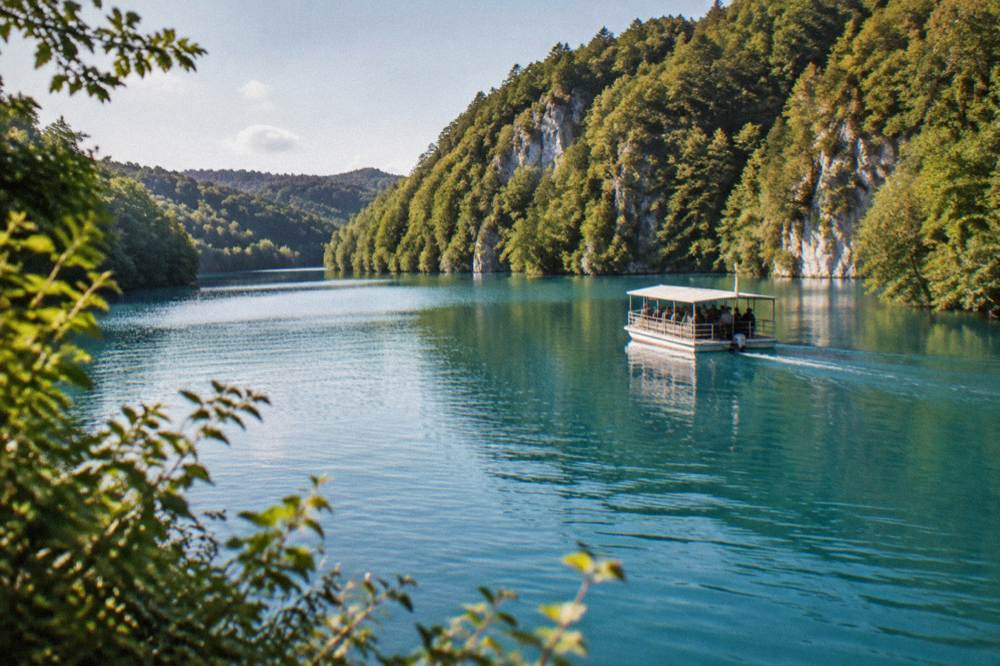
Plitvice Lakes From Split
Plitvice Lakes is the farthest big day trip from Split, 258.1 km and about 3 h 15 of driving each way, and its entry price swings between 10 and 40 EUR depending on the month. Here is what the official price list and timetable facts mean for planning the day.
Short answer
Plitvice Lakes sits 258.1 km from Split, about 3 h 15 of free-flow driving each way. Adult tickets cost 10 EUR in winter, 23 EUR in April, May and October, and 40 EUR from 1 June to 30 September, with a 25 EUR afternoon slot in peak season. Entry is timed and booked online, and the visitor's name is mandatory on the ticket.
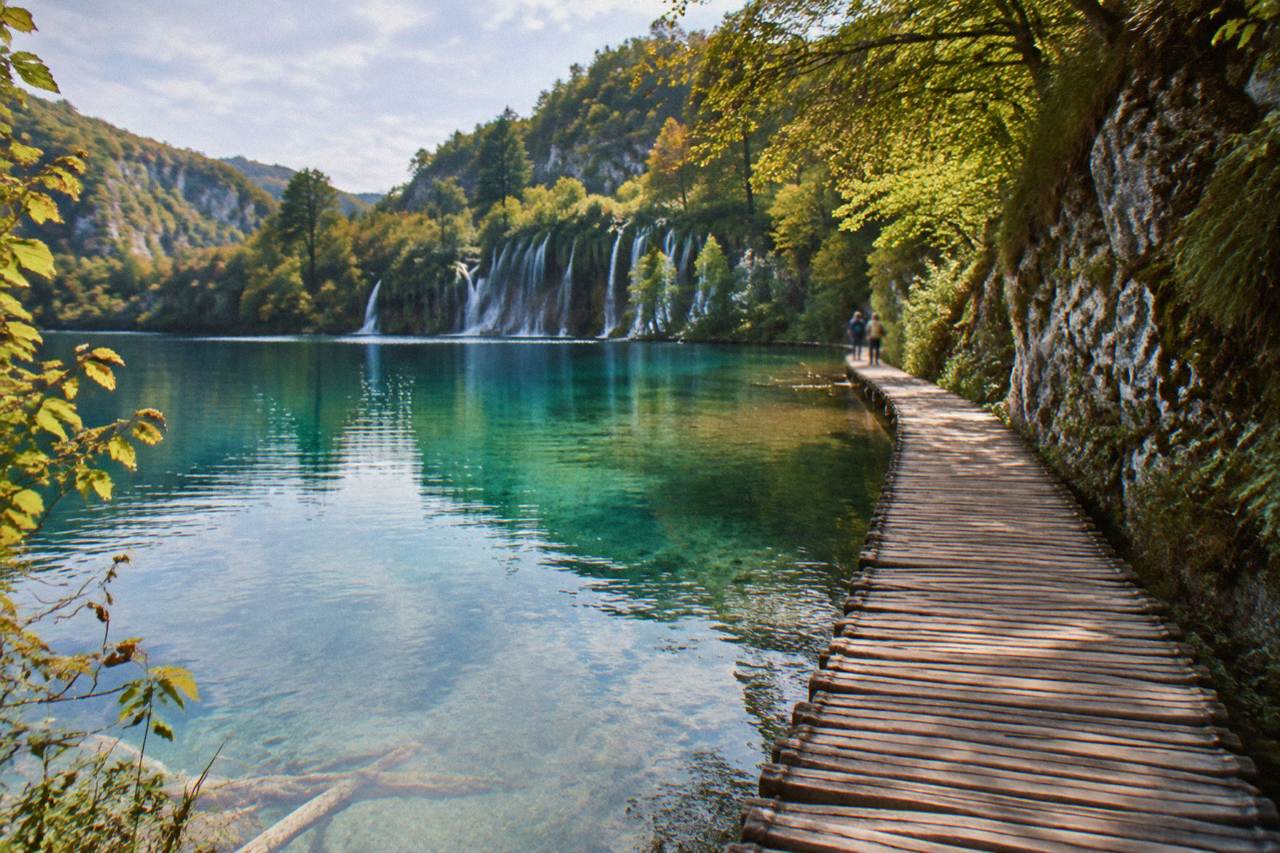
Plitvice Lakes National Park is the longest of the classic day trips from Split: 258.1 km each way by road, about 3 h 15 of driving without traffic, into the forested interior of Croatia rather than along the Adriatic coast. The reward is a chain of terraced lakes and waterfalls walked on wooden paths, and the price of admission changes with the calendar: the official 2026 price list charges adults 10 EUR in the depths of winter, 23 EUR in April, May and October, and 40 EUR from 1 June to 30 September. This guide lays out what the published figures say about timing the trip, getting there under your own steam or on a guided tour, and how the park's timed online entry system works.
How Far Is Plitvice Lakes From Split, And How Long Does The Journey Take?
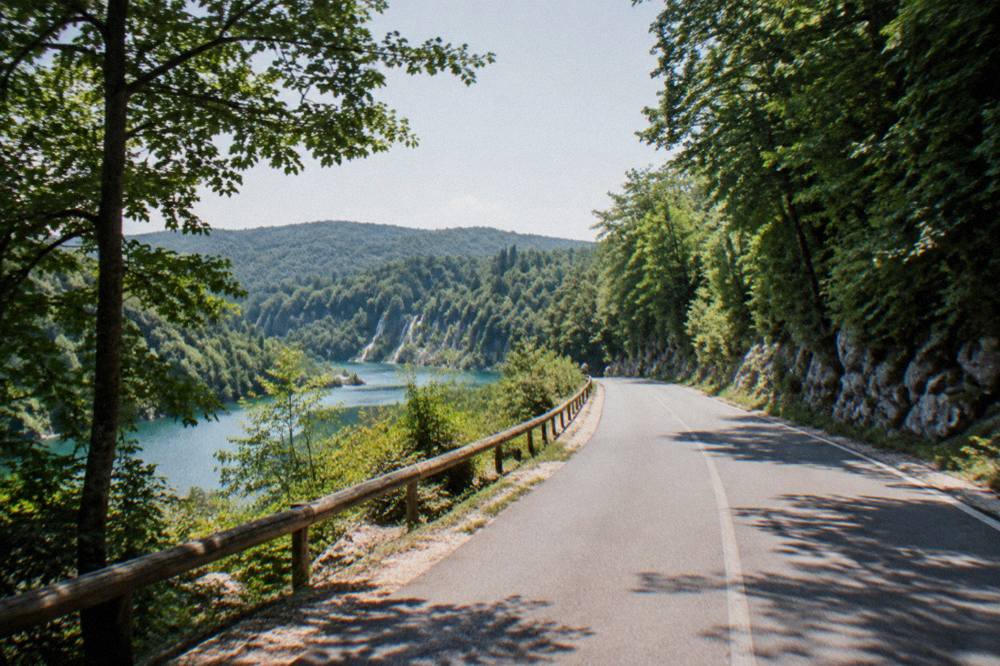
Plitvice Lakes is 258.1 km from Diocletian's Palace in Split by road, and the free-flow driving time is about 3 hours 15 minutes each way, which makes it the longest of the standard Split day trips by a clear margin. The route runs inland from the coast, and the measured distance is a computed free-flow figure, so real journey times in summer traffic run longer. A door-to-door day needs an early start and a late return.
For comparison, the other headline day trips from the palace are all closer: Krka National Park is 90.2 km and about 74 minutes, Šibenik 84.8 km, Trogir 29.3 km and about 36 minutes. Plitvice is roughly three times the Krka distance, and that single fact shapes the whole decision between the two parks. The sibling comparison article Plitvice Or Krka: Which One Is Better? works through the trade-offs in detail.
The practical consequence of 3 h 15 each way is simple arithmetic: about six and a half hours of the day sit inside a vehicle. Guided day trips from Split schedule the drive with stops, and a self-drive day needs the driver to plan fuel and rest themselves. The park's own opening arrangements change through the year, so check the current entry slots for your date when you book.
| Day Trip From Split | Road Distance (km) | Free-Flow Drive Time |
|---|---|---|
| Plitvice Lakes | 258.1 | about 3 h 15 |
| Dubrovnik | 234.8 | about 3 h 21 |
| Mostar | 173.2 | about 2 h 13 |
| Krka (Skradinski buk) | 90.2 | about 74 min |
| Trogir | 29.3 | about 36 min |
What Do Plitvice Lakes Tickets Cost, And When Is Entry Cheapest?
The official 2026 price list charges adults 10 EUR from 1 January to 31 March and from 1 November to 31 December, 23 EUR in April, May and October, and 40 EUR from 1 June to 30 September, with a 25 EUR ticket for the afternoon slot during the peak summer season. Student tickets run 6, 14 and 25 EUR across the same seasonal bands. There is no flat year-round price, so the date you pick changes the ticket by a factor of four.
Those figures come from the park's own published price list. The afternoon slot in peak season is the one genuinely useful discount structure for a Split day tripper, since the morning drive consumes the early hours anyway. A start from Split that arrives after midday misses the busiest stretch of the walking routes and pays 25 EUR instead of 40 EUR at the gate.
The seasonal bands also mean the shoulder months are quiet-value months: a late-May or early-October date combines the 23 EUR ticket with walking weather. What the price list does not publish is any visitor cap or daily limit, and none has been verified, so nothing reliable can be said about how early tickets sell out beyond the general advice to book online ahead.
| Period | Adult Ticket (EUR) | Student Ticket (EUR) |
|---|---|---|
| 1 January to 31 March | 10 | 6 |
| April, May, October | 23 | 14 |
| 1 June to 30 September | 40 | 25 |
| Peak-season afternoon slot | 25 | 25 |
Plitvice is not the only Split day trip where the calendar moves the price. Krka's own price list runs 7 EUR in winter, 20 EUR in the shoulder band and 40 EUR in summer for its all-sites ticket, a parallel structure worth knowing when you compare the two parks.
How Does Timed Online Entry Work At Plitvice?
Entry to Plitvice Lakes runs on timed online booking through the park's official webshop, and the visitor's name is mandatory on the ticket, so a resale or a transfer of a booking to another person is not an option. You choose a date and an entry slot when you buy, and you arrive inside that window rather than whenever you like. That system is why a self-drive day from Split should be planned around a booked slot, not around the drive.
The name-on-ticket rule has a direct consequence for groups: every member needs to be named correctly at purchase. The rule is the park's own, and it is the detail that separates Plitvice from the more casual turn-up-and-pay sites around Split such as the Peristyle or the Riva, which are free and unticketed.
For a Split traveller, the timed system interacts with the long drive. A booked slot in the 10:00 to 12:00 range implies leaving Split in the very early morning. The peak-season afternoon slot, at 25 EUR, lines up naturally with a departure from Split in the late morning and a return late at night.
Is Plitvice Or Krka The Better Day Trip From Split?
Krka is 90.2 km from Split and about 74 minutes each way, while Plitvice is 258.1 km and about 3 h 15, so Krka returns roughly four hours of your day that Plitvice spends on the road. Plitvice answers with scale: a system of terraced lakes and waterfalls walked on long wooden routes, versus Krka's single headline waterfall at Skradinski buk. The choice is about how much of your day you will trade for the bigger park.
The price lists are close in peak season, with both parks at 40 EUR from June to September, but the Krka ticket includes the Skradin boat and the Lozovac bus transfers from 1 April to 31 October, which is a real in-kind difference at the gate.
One rule matters at Krka and not at Plitvice: swimming. The Krka park rules state that swimming is allowed only in clearly marked areas, and reports place the designated spots at Roški slap, Stinice and Pisak between 1 June and 30 September. Plitvice has no swimming in the lakes at all. If a swim on the day matters, neither park is the right answer, and the coastal alternatives, from the Blue Lagoon and Šolta boat trips to the city beaches described in things to do in Split, do it better.
| Plitvice Lakes | Krka | |
|---|---|---|
| Distance from Split | 258.1 km | 90.2 km |
| Free-flow drive | about 3 h 15 | about 74 min |
| Peak adult ticket | 40 EUR (1 Jun to 30 Sep) | 40 EUR (Jun to Sep) |
| Shoulder adult ticket | 23 EUR | 20 EUR |
| Winter adult ticket | 10 EUR | 7 EUR |
| Swimming | Not permitted | Marked areas only |
The full comparison, including the driving logic for visitors based in Zagreb rather than Split, sits in Is Plitvice Closer To Split Or Zagreb?.
Should You Drive Yourself, Take A Guided Tour, Or Go Independently?
Driving yourself to Plitvice from Split means about 3 h 15 each way with parking at the park and a timed online ticket already bought, while a guided day trip puts the road time, the parking and the booking in one operator's hands. The guided option is the one the long distance argues for, because the driver problem disappears. A third option, the self-guided tour product, splits the difference with transport arranged but the park walked on your own.
The case for the tour is the arithmetic above all: six and a half hours of driving plus a timed entry slot is a lot of moving parts for one day. The featured guided option on this site covers transport from Split and the park route with a guide, and its live listing carries the current price and departure details: Check availability.
The case for self-drive is flexibility on dates, especially for the 23 EUR shoulder months or the 10 EUR winter window, when tour schedules thin out and the park is at its quietest.
Prefer not to handle all that driving yourself? Book a self-guided Plitvice day trip here.
For travellers weighing Plitvice against a coastal day instead, the Hvar and Brač and Zlatni Rat trips give sea, swimming and a shorter journey in the other direction, and the Blue Cave and Vis option adds the cave entry fee on Biševo, which runs 24 EUR in high season and 18 EUR in the shoulder months, paid in cash on site.
What Does A Day Trip To Plitvice Actually Look Like From Split?
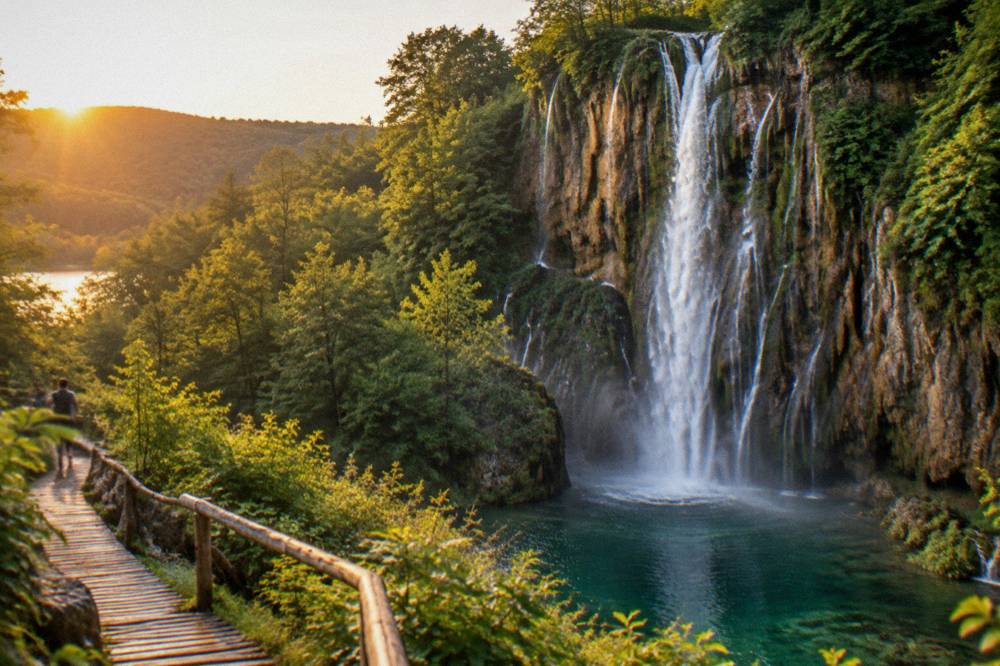
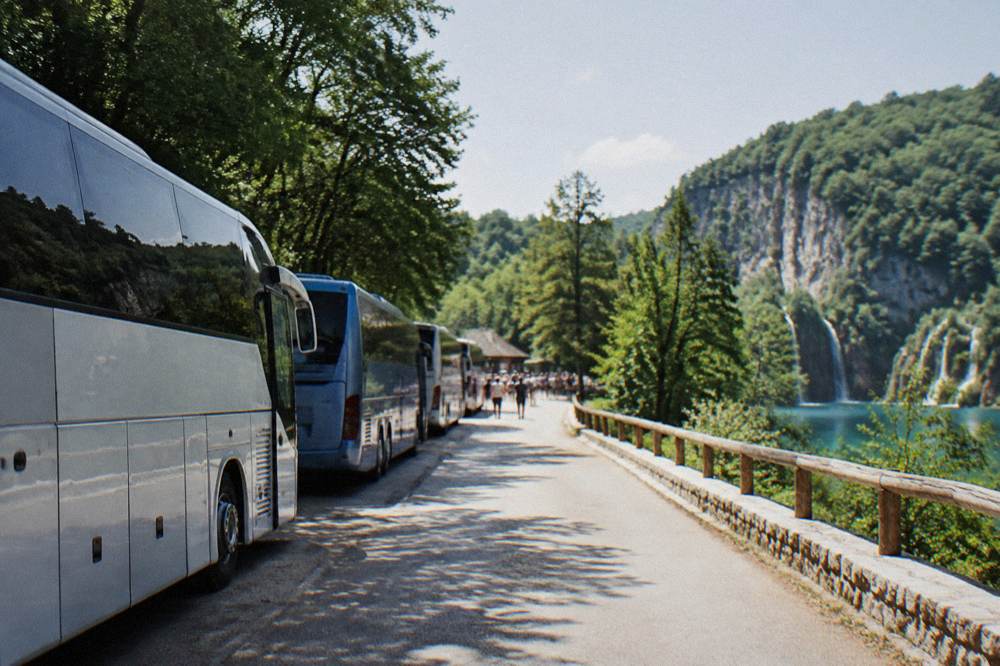
A Plitvice day from Split follows a fixed shape: a very early departure, roughly three and a quarter hours of driving with a rest stop, arrival at a booked timed-entry slot, four to five hours in the park on the wooden walking routes and lake crossings, and a late-evening return to Split. The park's routes are loops of different lengths between the two entrance areas, linked by walking paths and boat crossings on the lakes themselves.
The day is long enough that the season matters twice over: in summer, the 40 EUR window is also the crowded and warm one, while the DHMZ Split Marjan station's 1948 to 2024 record, which describes the coast rather than the inland park, counts 18 days at 30 C or more in July and 17 in August in Split itself, and the inland forest setting of Plitvice is a different microclimate again.
Back in Split, the day ends where the transport hub sits: the ferry port, main bus station and railway station all share Obala kneza Domagoja, 500 to 600 m from the palace, so a tour coach drop-off and a self-drive return land you within a short walk of the Old Town. Late food options around the palace are worth checking in advance, because a Plitvice return is one of the latest arrivals of any Split day trip.
What Should You Pack For A Plitvice Day From Split?
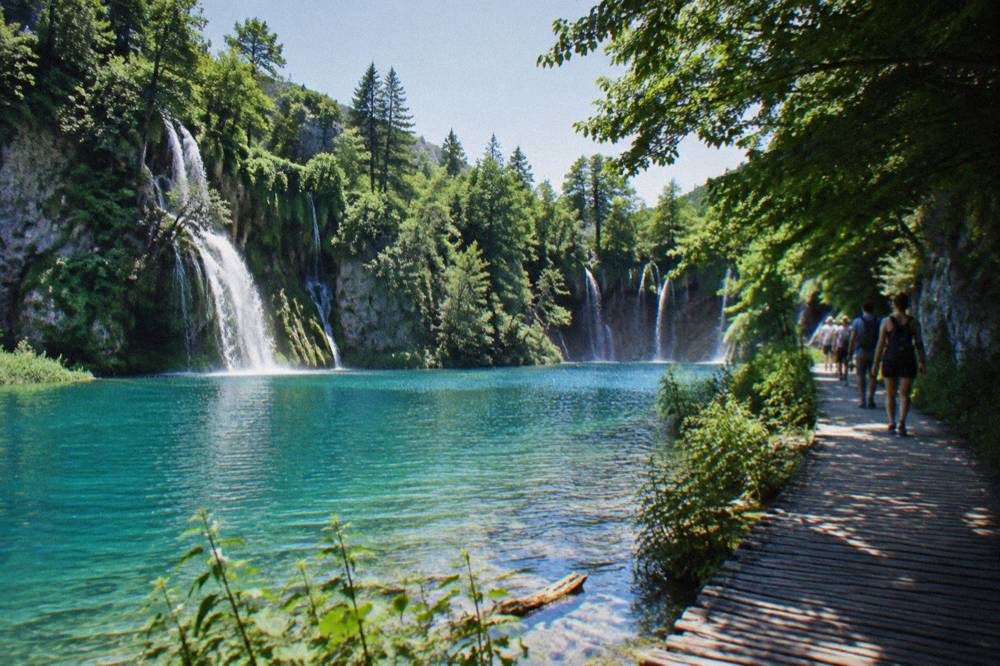
A Plitvice day needs walking shoes with grip, because the wooden walkways are worn smooth and can be slippery when wet, plus layered clothing for a day that starts before dawn and ends after dark, water and food for the park, and your digital or printed ticket carrying your name. The park's routes are long walks on uneven natural terrain, not city pavements, and the inland weather has no relation to the Split beach forecast for the same day.
Croatia uses the euro since 1 January 2023, so no currency exchange is needed for the ticket or for park catering, and the emergency number across the country is 112. Drones are banned in national parks under the Croatian rules, so aerial footage plans end before they start.
The packing question also depends on the season. A winter visit at the 10 EUR ticket rate is a forest walk in genuinely cold conditions, while the shoulder-band months at 23 EUR are usually the kindest for a long loop. The climate table below is the coastal Split record, labelled DHMZ Split Marjan station, 1948 to 2024, and it is included because your day starts and ends there, not because it describes the park.
| Month | Mean Temperature Split Station (C) | Precipitation (mm) |
|---|---|---|
| January | 8.0 | 77.8 |
| March | 10.8 | 63.2 |
| May | 19.2 | 57.5 |
| July | 26.2 | 26.6 |
| September | 21.6 | 70.9 |
| November | 12.7 | 115.5 |
Which Other Day Trips From Split Compete With Plitvice?
The main alternatives to Plitvice from Split are Krka for a shorter waterfall day at 90.2 km, Mostar at 173.2 km and about 2 h 13 for a heritage city in Bosnia and Herzegovina, Dubrovnik at 234.8 km for the walled city, and the island trips to Hvar and Brač by ferry or catamaran, which replace driving with a sea crossing. Each trades a different thing against Plitvice's distance: journey length, price or scenery type.
The island option deserves a line of its own: the Jadrolinija car ferry on line 635 carries foot passengers to Stari Grad on Hvar for 5.90 EUR off-season and 8.40 EUR in season, and the catamaran fares run 6.40 EUR low and 10.00 EUR high to Hvar or Jelsa, all far below any park ticket, though they buy a different day entirely.
| Alternative Day Trip | Distance Or Route | Peak Comparison Point |
|---|---|---|
| Krka National Park | 90.2 km by road | 40 EUR summer ticket, transfers included |
| Mostar | 173.2 km, about 2 h 13 | Old Bridge Area, UNESCO listed 2005 |
| Dubrovnik | 234.8 km, about 3 h 21 | City walls ticket 40 EUR in 2026 |
| Hvar by catamaran | Sea crossing to Hvar town | Fortica fortress 12 EUR |
| Brač by ferry | Line 631, about 50 min to Supetar | Zlatni Rat beach |
For deeper planning on each, see Mostar and Dubrovnik on this site, and for the full spread of options with distances, the day trips from Split overview is the hub page. More reading on the Split end of every trip sits on the Split Croatia Travel Guide homepage.
Is A Plitvice Day Trip Worth It From Split, Or Should You Stay Overnight?
A Plitvice day trip from Split is worth it if the lakes are the single priority of your stay and you accept about six and a half hours of driving, but an overnight near the park buys an early-morning slot before the coaches arrive and a calmer second morning. The timed-entry system makes the overnight option more attractive than it used to be, because an early booked slot is the one reliable way to walk ahead of the crowds.
The overnight argument strengthens in peak season, when the 40 EUR ticket coincides with the fullest car parks and the busiest walkways. In the 23 EUR months or the 10 EUR winter window, the day trip is easier to justify, because demand is lower on every leg of the journey.
Split itself rewards the days you give it: the Diocletian's Palace cellars run by the Split City Museum open 8:30 to 20:00, the cathedral complex is ticketed from about 5 EUR with combined tickets up to about 15 EUR, and a slow morning on the Riva costs nothing. A Plitvice day is the opposite of that rhythm, which is exactly why it should be planned rather than improvised.
What Are The Rules Inside Plitvice Lakes National Park?
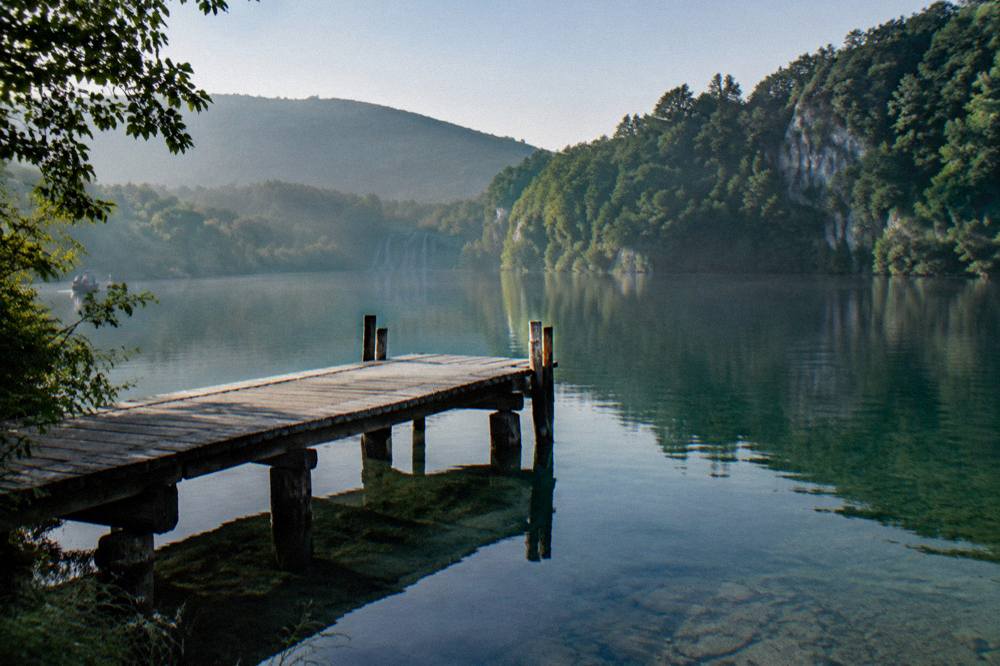
The published park rules at Plitvice centre on protection of the lakes: no swimming in any of them, drones are prohibited, and visitors must stay on the marked routes and walkways rather than stepping onto the travertine barriers that build the waterfalls. The visitor's name on the ticket ties each booking to one person. Fines exist for breaches, though the specific amounts are not in the published material here, so confirm the current rules on the park's own pages before your visit.
Those rules are stricter than a casual reader might expect from a day at a lake. The terraced lakes at Plitvice are a living natural process, and the barriers that create the waterfalls grow and change; walking on them damages the mechanism itself. The wooden paths exist to keep thousands of daily visitors off exactly that surface.
Compared with Split's own public-order rules, the contrast is sharp. In Split's historic core, the published fines run to 300 EUR for public alcohol consumption, urinating, climbing on monuments or bathing in fountains, and 150 EUR for sleeping in public spaces, while at Plitvice the sanctions are ecological rather than behavioural. Different place, different rulebook.
How Do You Book A Plitvice Tour From Split, And What Should You Check First?
Booking a Plitvice tour from Split means choosing between the guided group option, a version with entry tickets included, and a self-guided transport product, and the checks that matter are whether the park entry ticket is inside the price, what the departure time is, and where in Split the pickup sits. The operator's live listing carries the current price, the departure point and the cancellation terms, and every booking should be read there rather than assumed.
The entry-ticket question is the one that bites. With the park's timed online system and a mandatory name on each ticket, a tour that includes entry has already done the binding part of the logistics. A tour that excludes it leaves you buying a timed slot yourself for the correct arrival window, which is workable only if the tour's schedule is published precisely enough to match a slot to it.
Cancellation is the second check. Summer plans around Split change with the weather and the sea state, and an operator's own terms, not a summary, govern what happens when a booking moves.
The Blue Lagoon cruise above is the natural counterweight booking: a coastal day with lunch, wine and swimming stops, no timed entry and no long drive. For a city day instead, the palace walking tour below covers the monument you return to after every day trip.
Common Questions About Plitvice Lakes From Split
How Far Is Plitvice Lakes From Split?
Plitvice Lakes is 258.1 km by road from Diocletian's Palace in Split, with a free-flow driving time of about 3 hours 15 minutes each way. Real journey times in summer traffic run longer.
How Much Do Plitvice Lakes Tickets Cost?
The official 2026 price list charges adults 10 EUR from 1 January to 31 March and from 1 November to 31 December, 23 EUR in April, May and October, and 40 EUR from 1 June to 30 September, with a 25 EUR afternoon slot in peak season. Student tickets run 6, 14 and 25 EUR across the same bands.
Can You Swim In The Plitvice Lakes?
No. Swimming is not permitted in the Plitvice lakes, which are a protected natural system. Krka National Park is the waterfall park with clearly marked swimming areas, reported at Roški slap, Stinice and Pisak from 1 June to 30 September.
Is Plitvice Or Krka Better From Split?
Krka is 90.2 km and about 74 minutes from Split, while Plitvice is 258.1 km and about 3 h 15, so Krka gives you roughly four extra hours in the day. Plitvice offers the larger lake system. Full comparison: which one is better, Plitvice or Krka?
Do You Need To Book Plitvice Tickets In Advance?
Entry runs on timed online booking through the park's official webshop, and the visitor's name is mandatory on the ticket. Booking ahead for your chosen date and slot is the park's own system, so treat advance booking as required rather than optional, especially from June to September.
What Is The Cheapest Month To Visit Plitvice From Split?
The 10 EUR ticket applies from 1 January to 31 March and from 1 November to 31 December, making winter the cheapest window. April, May and October sit at 23 EUR, and the peak-season afternoon slot is 25 EUR.
A Plitvice day from Split is a commitment of distance rewarded by the largest lake-and-waterfall system in the country, and the published price list makes the calendar the single biggest lever on cost: pick the month well, book the timed slot, and the long road does the rest.