Is Split A Walkable City?
Yes, Split is a highly walkable city: the Old Town sits inside Diocletian's Palace, the ferry port and bus station are 500 to 600 m away, and Marjan's trails start at the edge of the centre.
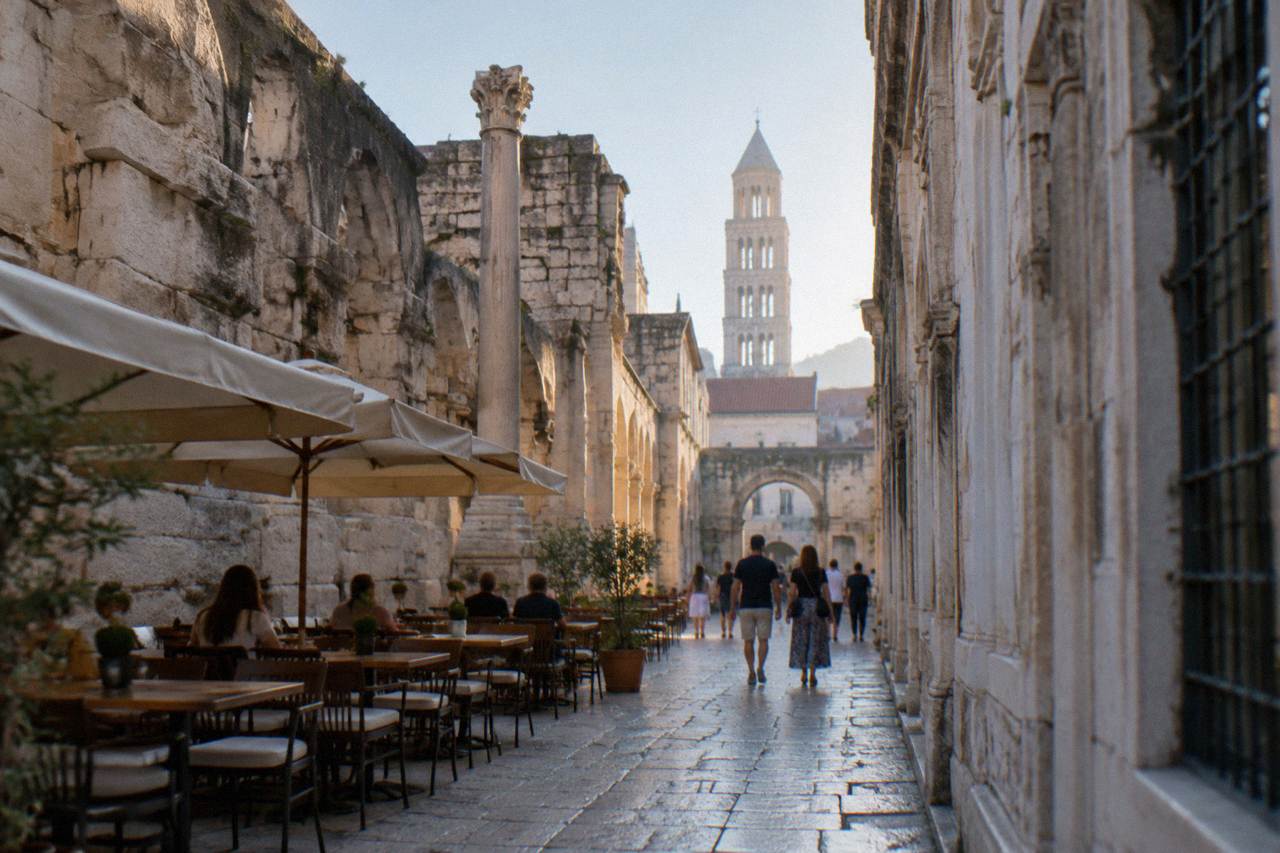
Split, the coastal city in central Dalmatia on the Adriatic Sea, answers the walkability question almost by accident of history: its Old Town is not a district beside a Roman monument, it is the monument. Shops, apartments, bars and churches are built into the walls and chambers of Diocletian's Palace, a Roman structure begun around 295 to 305 AD and inscribed by UNESCO in 1979 as the Historical Complex of Split with the Palace of Diocletian, a protected property of 20.8 hectares. A visitor can cross the whole core on foot in minutes, and the city's transport hub, the ferry port, the main bus station and the railway station together on Obala kneza Domagoja, sits just 500 to 600 m from the palace walls. On top of that, the Marjan peninsula park forest rises on the western edge of the centre, so even the hiking is within walking distance.
Is Split A Walkable City?
Yes. Split is a genuinely walkable city: the entire historic core sits inside and around Diocletian's Palace, an area of roughly 20 hectares, the ferry port, main bus station and railway station lie 500 to 600 m from the palace, the Riva waterfront promenade and the city beaches are reached on foot, and the Marjan park forest begins at the western edge of the centre. Cars are largely irrelevant to a stay focused on the Old Town and the seafront.
That is the short answer, and it holds for the way a typical visit to Split is actually shaped. The palace core is a network of narrow stone lanes where vehicle access is restricted, so walking is not just convenient there, it is the only practical way around. The Riva, the Prokurative square, the Golden Gate and the Grgur Ninski statue are all free, open, and strung together in a continuous pedestrian sequence. The green market and the fish market sit by the eastern edge of the core, and Bačvice beach, the home of picigin, the ball game born there in 1908 and now protected intangible heritage of Croatia, lies a short seaside stroll east of the centre.
To get oriented in those lanes, book a free Split walking tour here.
The walkability has limits, and they are worth naming honestly. The palace streets are stone, worn and sometimes stepped, so wheels struggle: prams and wheelchairs manage better on the Riva and the wider quays than in the cellars or the lanes. And Marjan, the peninsula that dominates the city's western skyline, is a hill park with 178 m of ascent to its highest point Telegrin, which rewards walkers with the view but is a real climb. For the flat, dense, everyday city, though, shoes are all a visitor needs.
How Far Is The Port And Bus Station From The Old Town?
The ferry port, the main bus station and the railway station sit together on Obala kneza Domagoja, 500 to 600 m from Diocletian's Palace, which is a walk of a few minutes along the waterfront. Jadrolinija's car ferries to Stari Grad on Hvar, Supetar on Brač and Rogač on Šolta, and the catamarans to Hvar town, Jelsa and Vis, all leave from this one hub. Cruise passengers face a similar short distance, covered in detail at the walkable-from-cruise-port question.
This single fact does a lot of work for anyone planning a car-free trip. Arrive by ferry, catamaran, long-distance coach or train, and the historic centre is already within an easy walk with luggage, along the seafront rather than up hills. The 2026 ferry timetables strengthened the pattern: Jadrolinija's news page reports that the Split to Supetar line, number 631, dropped its off-season timetable from 2026 and now runs only high-season and low-season schedules, with departures aligned to bus timetables, so foot passengers connect smoothly between the two. Line 635 to Stari Grad takes about 120 minutes, line 631 to Supetar about 50, and line 636 to Rogač on Šolta about 60.
The wider day-trip network also runs through the same hub, which keeps the car-free plan intact. Driving times from the palace, computed by OSRM for free-flow traffic, show what a driver faces to the classic destinations: Klis Fortress 22 minutes, Salona 14, Trogir 36, Omiš 38, Šibenik 71, Krka's Skradinski buk 74 and Plitvice Lakes 3 hours 15. A guided coach or minibus tour replaces all of that driving, which is why the national-park day trips from Split are so widely sold. For the two Plitvice options the choice comes down to how the entry ticket is handled.
Plitvice's own price list makes the trade-off concrete. The official list gives an adult ticket at 10 EUR from 1 to 31 March and from 1 November, 23 EUR in April, May and October, and 40 EUR from 1 June to 30 September, with a 25 EUR afternoon slot in the peak period. The park also requires the visitor's name on the ticket and sells timed entry through its official webshop, so a tour that includes the tickets removes the one piece of booking friction the park itself imposes.
Is Split Hilly? What About Walking Up Marjan?
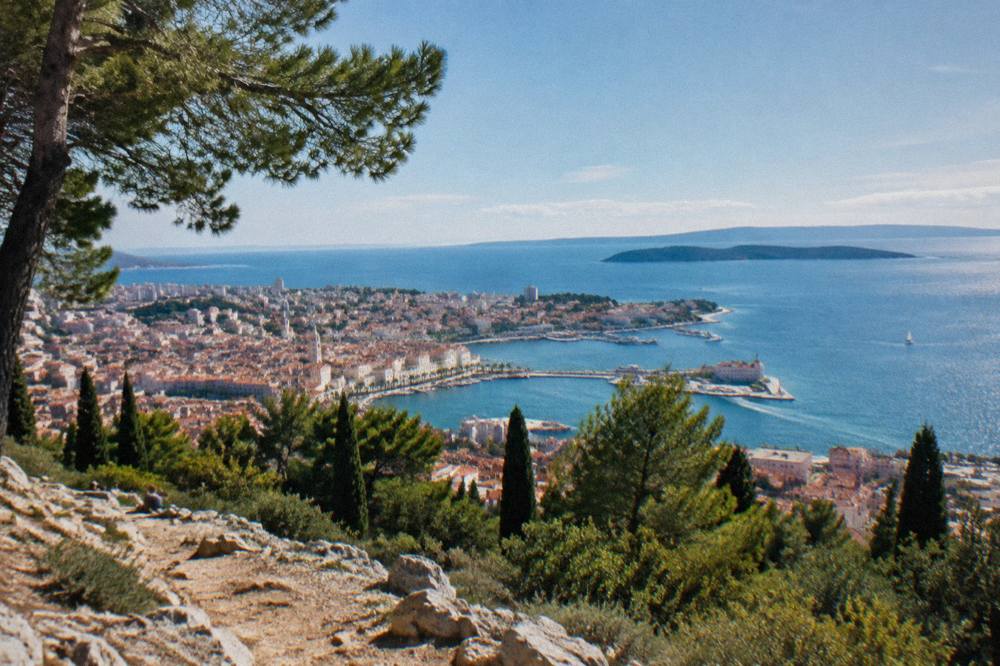
Marjan, the park-forest peninsula on Split's western side, is the one genuinely hilly walk: it is 3.5 km long and 1.5 km wide, its highest point Telegrin stands 178 m above the sea, and the route from Trumbićeva obala to the top covers 819 steps. Entry is free, the paths are marked, and the climb is the steepest walking Split asks of a visitor. The palace core and the Riva, by contrast, are flat.
The number to fix in mind is the steps, 819 of them from the waterfront street to Telegrin, a figure the Marjan park society publishes on its own data page. Anyone happy with that climb gets the whole peninsula on foot: pine forest, lookout points and small stone churches along the ridge, all free and all within walking distance of the Old Town without a bus or a taxi. Anyone not happy with it can still enjoy the lower slopes, where the paths level out along the northern shore toward the coves.
Down at sea level the walking is easy again. The Riva promenade runs along the harbour, the Peristyle, the colonnaded square at the heart of the palace, hosts the daily change of Diocletian's Roman Guard at noon, which ran from 28 May to 27 September 2026, and the whole sequence from the Golden Gate to the Riva crosses without a single serious incline. Visitors planning a longer stay can weigh it all up against the how-many-days question for Split.
After days on foot, a day on the water is the natural counterweight, and it departs from the same walkable waterfront. The Blue Lagoon and three-island cruise with food and drinks, this site's featured trip, leaves from the Split seafront, so no transfer is needed, and it pairs swimming stops with lunch and drinks served on board. The full rundown sits on the Blue Lagoon cruise and food page, with live dates and pricing on the operator's listing.
Which Parts Of Split Are Hard To Walk, And When Is Walking Uncomfortable?
The walkable core covers the palace, the Riva, the Prokurative, the markets and the near beaches, but the modern districts spreading east and north, toward Žnjan and the hillside suburbs, are spread out and served by city buses rather than pedestrian lanes. Summer heat is the other constraint: the DHMZ Split-Marjan station table for 1948 to 2024 records 18 days at 30 C or more in July and 17 in August, so midday walking needs shade, water and a slower pace.
The climate record tells the story plainly. The DHMZ Split-Marjan station table, covering the period 1948 to 2024, gives a July mean of 26.2 C and an August mean of 25.9 C, with sunshine at 353.3 hours in July against 120.8 hours in December. Rain is not the issue a visitor might expect in summer: November is the wettest month at 115.5 mm while July is the driest at 26.6 mm. The planning consequence is simple, walk mornings and evenings in July and August, and save the middle of the day for the sea or a museum.
| Month | Mean temperature (C) | Precipitation (mm) | Days at 30 C or more |
|---|---|---|---|
| April | 14.4 | 62.0 | 0 listed |
| May | 19.2 | 57.5 | 0 listed |
| June | 23.4 | 49.0 | 7 |
| July | 26.2 | 26.6 | 18 |
| August | 25.9 | 41.3 | 17 |
| September | 21.6 | 70.9 | 0 listed |
Source for all figures: DHMZ Split-Marjan station, monthly means 1948 to 2024.
Surface and behaviour matter as much as weather. The palace lanes are polished stone, and the local rules, published by the city's Enjoy Respect page, fine walking in swimwear or shirtless in the historic centre, with the amount set locally, alongside verified fines of 300 EUR for drinking alcohol in the historic centre, urinating in public, climbing on monuments or bathing in fountains, and 150 EUR for sleeping in public spaces. Comfortable shoes and a cover-up over swimwear are the practical takeaways for anyone walking between the beach and the Old Town. The broader local-rule picture is covered in the what-to-avoid page.
Do You Need A Car To Enjoy Split?
No. A car is unnecessary for Split itself and a liability in its core, where the lanes are pedestrian, parking is scarce and the transport hub is 500 to 600 m from the palace. Every headline island trip leaves on foot from the ferry port or the waterfront, and the land day trips, Krka, Plitvice, Trogir, Klis, Mostar and Dubrovnik, are served by guided coach and minibus tours plus public transport, so a car-free stay closes no doors.
The ferry and catamaran network makes the islands the easiest car-free territory of all. Jadrolinija's price PDF gives the foot passenger fare to Stari Grad at 5.90 EUR off-season and 8.40 EUR in season, and the catamaran fares run at 6.40 EUR low and 10.00 EUR high season to Hvar or Jelsa, and 7.20 EUR low and 10.00 EUR high to Vis. Remember the split that trips people up: Hvar town is reached by catamaran, while the car ferry lands at Stari Grad, also on Hvar island. Brač, Šolta and Vis round out the schedule, with the Vis crossing taking about 140 minutes.
For the days when the islands and the hills have both been walked out, a boat day needs no planning beyond the seafront.
The land trips are just as workable without driving. Krka's own 2026 price list runs at 7 EUR from January to March and in November and December, 20 EUR in April, May and October, and 40 EUR from June to September, with the Skradin boat and the Lozovac bus transfers included in the ticket from 1 April to 31 October, so the park handles its own internal transport once the coach arrives. Note the park rule that swimming is allowed only in clearly marked areas, with reported designated spots at Roški slap, Stinice and Pisak between 1 June and 30 September.
Common Questions About Walking In Split
Is Split a walkable city?
Yes. The historic core sits inside Diocletian's Palace, the ferry port, bus station and railway station are 500 to 600 m from the palace, the Riva and the beaches are reached on foot, and Marjan's trails begin at the edge of the centre. Only the outlying modern districts and the Marjan climb call for buses or effort.
Can you walk from the cruise port into Split?
Yes. Cruise passengers dock close to the city centre, and the walk from the passenger terminal area into the palace core is short and flat along the waterfront. The full route, with distances and what sits along the way, is covered in the cruise-port walking question on this site.
How long does it take to walk across the Old Town of Split?
The UNESCO-listed historical complex covers 20.8 hectares, and the palace core itself is crossed on foot in a matter of minutes at a relaxed pace. The wider walking circuit, Golden Gate to Peristyle to Riva to the green market, is a single continuous stroll with no hills.
Is Split Old Town suitable for wheelchairs and prams?
Partly. The Riva, the Prokurative and the wider quays are flat and open, but the palace lanes are narrow, worn stone with steps, and the cellars and the bell tower route are harder with wheels. The easier seaside circuit avoids the worst of the stepped lanes.
What is the hardest walk in Split?
Marjan hill. The peninsula rises to Telegrin at 178 m, and the path from Trumbićeva obala to the top covers 819 steps. It is free, marked and shaded, but it is a genuine climb, best done in the morning in July and August, when the DHMZ Split-Marjan station records 18 days at 30 C or more in the month.
Are there rules about how to dress when walking in the historic centre?
Yes. Walking in swimwear or shirtless in the historic centre is fined, with the amount set locally, and the public-order fines include 300 EUR for drinking alcohol in the historic centre and for climbing on monuments. Shoulders and knees covered are also expected inside the Cathedral of St Domnius complex.
The verdict of this Split Croatia Travel Guide desk is short: pack walking shoes, leave the car keys at home, and let the palace, the waterfront and the 819 steps of Marjan set the pace.
