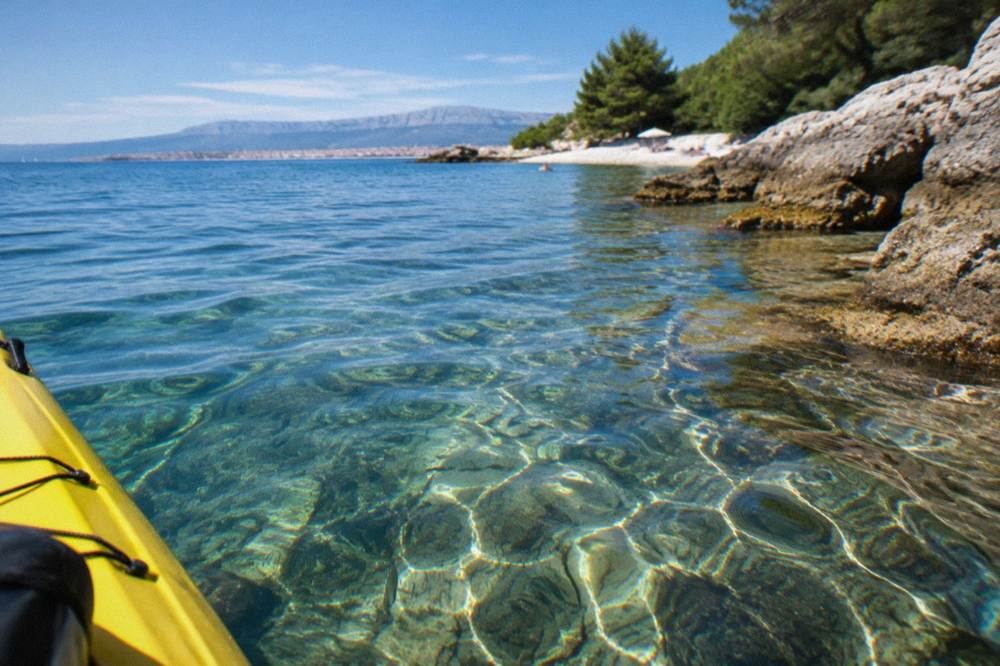
Bacvice Beach
Bacvice is Split's main sandy city beach, a ten-minute walk east of Diocletian's Palace, and the home of picigin, a protected ball game played in the shallows since 1908.
Short answer
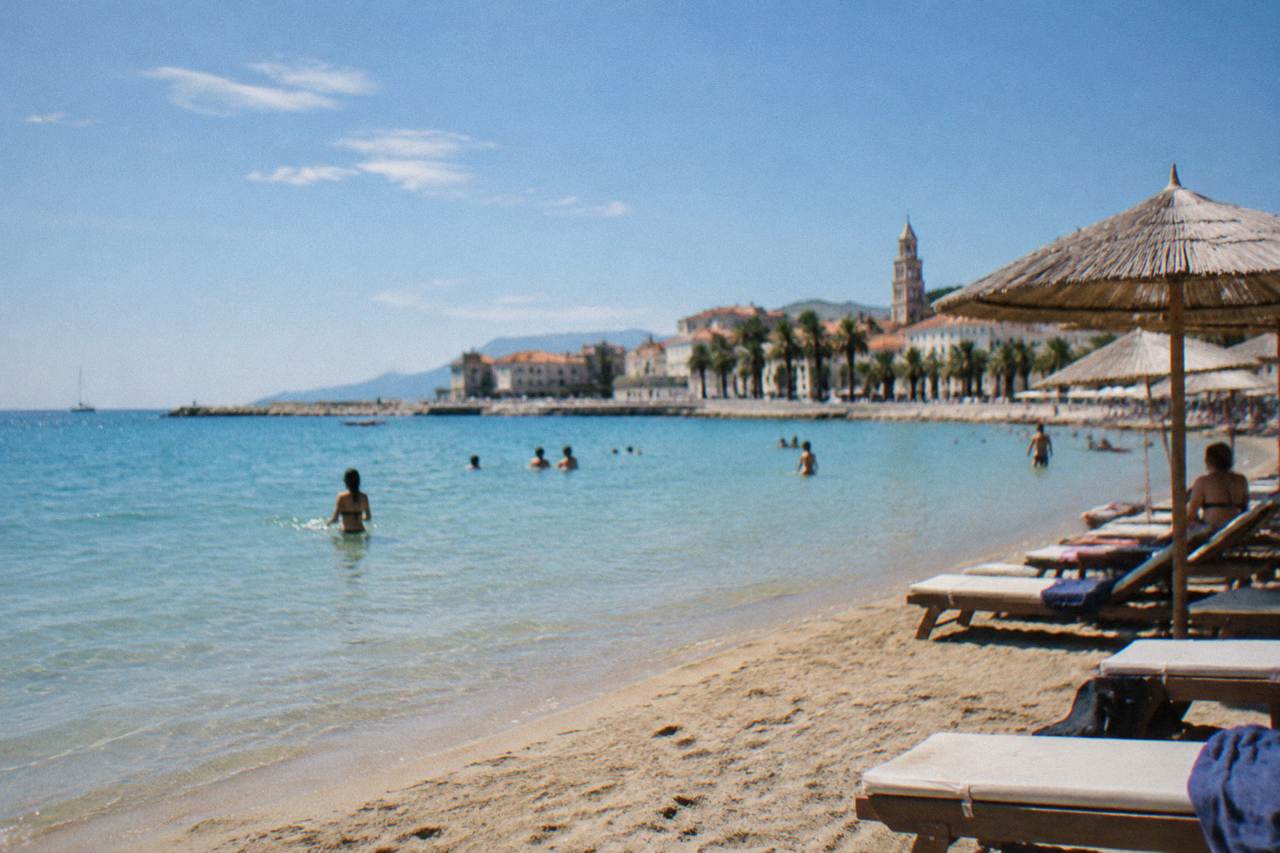
Bacvice Beach is a free sandy beach about 600 m east of Diocletian's Palace in Split, with shallow water, beach bars, nightclubs behind the sand and picigin played in the shallows.
Bacvice is the sandy beach that sits at the foot of Split, in Dalmatia, Croatia, a short walk east of Diocletian's Palace and the Riva. It is the city's best-known swimming spot, a shallow sandy bay with beach bars and nightclubs ranged behind it, and it is the birthplace of picigin, a ball game played standing in waist-deep water that Croatia protects as intangible heritage. Unlike the pebble coves under Marjan, Bacvice is free, sandy and walkable from the Old Town without a bus, which is exactly why it fills first in summer.
What Is Bacvice Beach And Where Is It In Split?
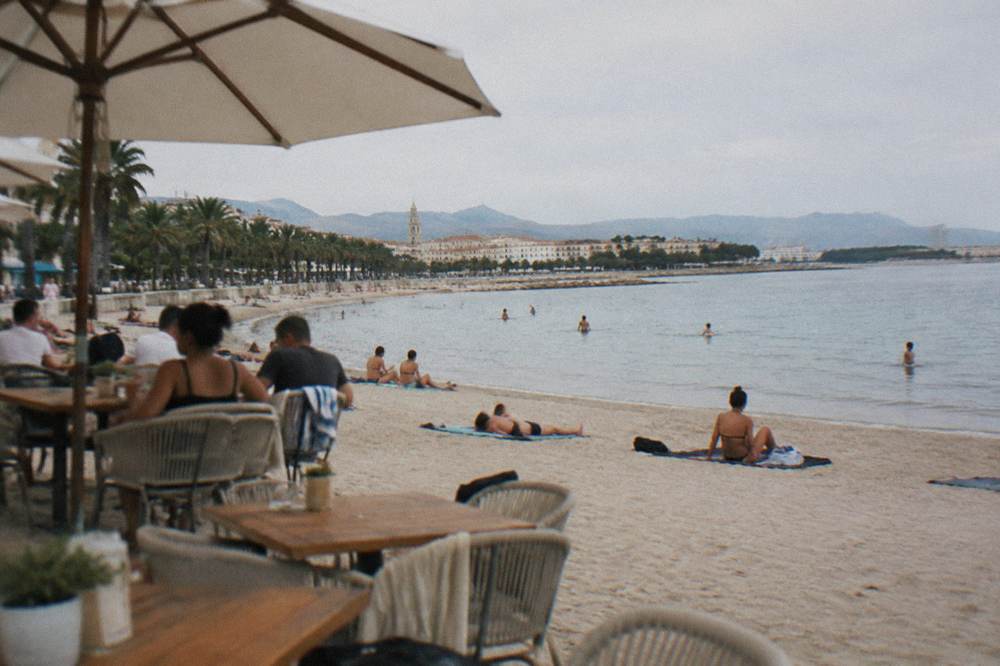
Bacvice Beach is a free public sandy beach roughly 600 m east of Diocletian's Palace, at the head of a shallow sandy bay between the ferry port and the Firule beaches, backed by cafes, bars and nightclubs. It is the principal city beach of Split and the home ground of picigin, the shallow-water ball game first recorded on this sand in 1908. No ticket, gate or season pass applies at any time of year.
The beach faces south onto the Adriatic, sheltered by the breakwater of the port on one side and the Firule coast on the other. Because the bay shelves gently, the water stays shallow for a long way out, which is what made picigin possible here: the game is played standing in water around knee to waist depth, with a small ball kept in the air by any means except catching it. The Croatian state protects picigin as intangible cultural heritage, and Bacvice is the place it belongs to.
The sand itself is the anomaly. Split's coastline is mostly limestone and pebble, and the coves on the far side of Marjan hill, such as Kasjuni Beach, are pebble and rock. Bacvice, together with the neighbouring Firule bay, is the one stretch of genuine sand you can walk to from the palace, and it is free to sit on. Arrive early in July and August if you want space, because everything within walking distance of the Old Town fills by late morning.
Behind the sand sits a strip of cafes and nightclub terraces, and behind them the Ovcice and Znjan beaches continue the coast east. The whole stretch is city, not resort: apartment blocks, a sports centre, and the kind of beach bars that turn into open-air clubs after dark. For planning how the beach fits into a wider stay, the one day in Split itinerary puts a Bacvice swim after a morning in the palace.
Is The Sea At Bacvice Clean And Safe For Swimming?
Swimming at Bacvice is safe in the ordinary city-beach sense: the bay is shallow, sandy and sheltered, with no currents worth worrying about and no rocks underfoot, and the sea warms through summer exactly as the Split station record shows for the coast. This is a city beach next to a working port, so it lacks the wild-water feel of Marjan's coves, but nothing about its operation suggests caution beyond normal supervision of children.
The shallowness is the main safety feature and the main limitation. You can walk out tens of metres and still stand, which suits families with small children and picigin players, and tires strong swimmers who want depth. The DHMZ Split-Marjan station table, covering 1948 to 2024, shows what the air does: a July mean of 26.2 C, 18 days at 30 C or more in July and 17 in August. Those are the months the beach is at its busiest. The sea itself has no official monthly temperature normal, so treat any water figure you see quoted as a live reading for that day, not a rule.
Water quality is not something this page can certify, and no Blue Flag claim will be printed here because none can be made for 2026. What can be said is practical: it is an urban bay beside a port, so swim in the designated area, keep clear of the port breakwater where boats pass, and check the flag or signage at the beach on the day. The city's own tourism pages carry current beach information through the season.
What Is Picigin And Why Is Bacvice Its Home?
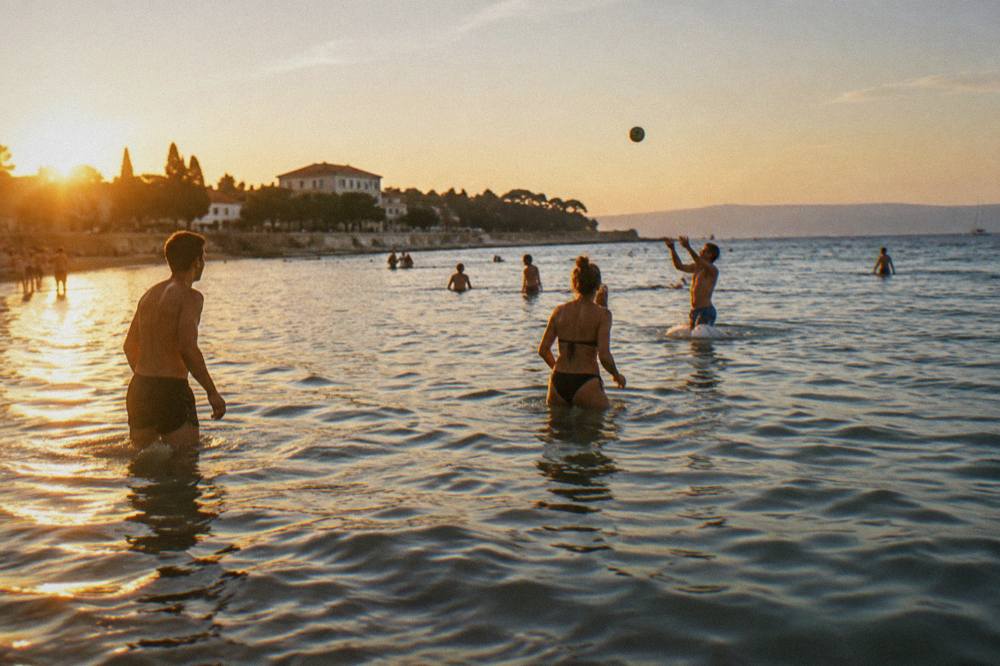
Picigin is a ball game played standing in shallow seawater, in which players keep a small rubber ball in the air by hitting, palm-blocking and diving, never catching, and it was born on Bacvice in 1908 according to the account the city repeats. Croatia lists it as protected intangible heritage, and Bacvice remains its competitive home ground.
The rules are informal and the theatre is the point. Five or so players form a circle in waist-deep water and keep the ball up with acrobatic dives; the closer to the sand and the more horizontal the save, the better it is judged. There is no net, no score in casual play and no season: picigin is played year round on Bacvice, including in winter, which is when the hard core of the local clubs turns out.
The World Picigin Championship is held on Bacvice, traditionally in early summer, and local teams train on this sand the way football clubs train on a home pitch. If you walk out onto the flats at almost any hour of daylight you will see a circle of players, and joining a casual circle as a visitor is tolerated in the easy-going local tradition of the game. Watch first: the etiquette is to keep the rally alive, not to win it.
How Do You Get To Bacvice Beach From The Old Town?
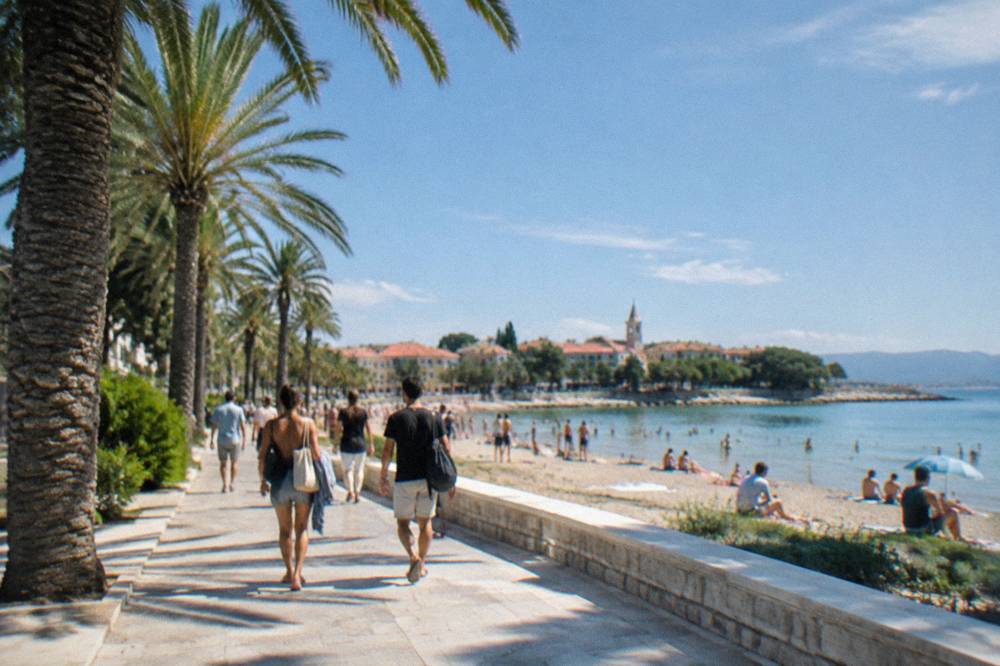
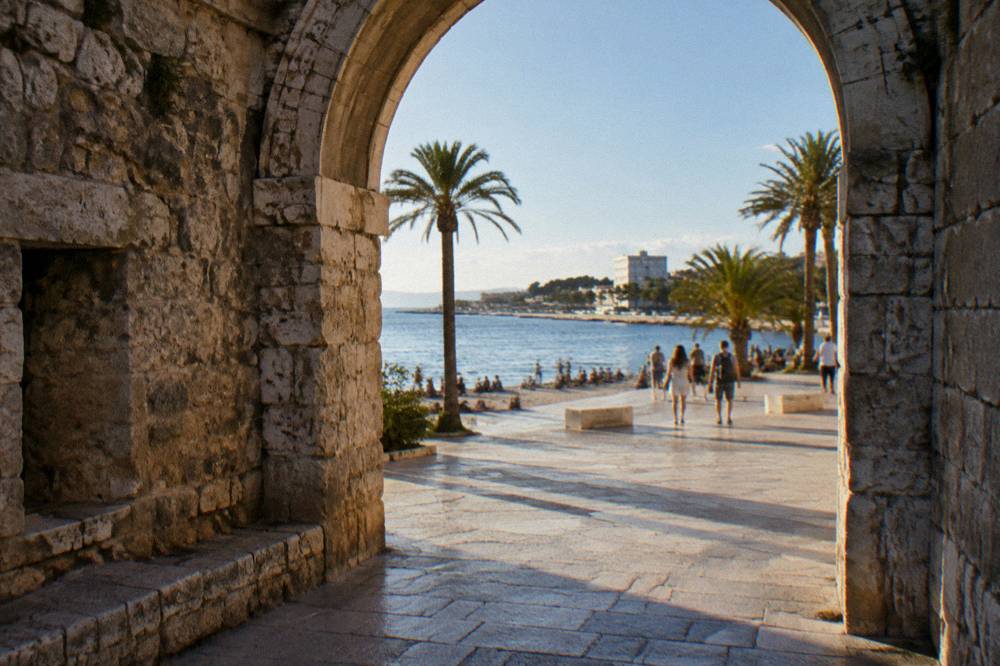
You walk. Bacvice is a level ten-minute stroll east along the seafront from the end of the Riva, past the ferry port on Obala kneza Domagoja, with no bus, taxi or ticket needed, and the beach sits directly behind the Bacvice nightclub terrace. From the Peristyle inside Diocletian's Palace the whole distance is under a kilometre on flat pavement.
The walking route is simple: leave the palace by the Bronze Gate or the Riva side, follow the waterfront road east with the ferry piers on your right, and the sand begins where the port fences end. The ferry port, the main bus station and the railway station all sit together on that same Obala kneza Domagoja stretch, 500 to 600 m from the palace, so Bacvice is also the nearest beach to anyone arriving by ferry, coach or train. Cruise passengers docking at the port are the same short walk away.
Arriving from further out, the same hub does the work. The Platanus airport shuttle runs from the airport's north parking to the main bus station by the ferry port at 10 EUR one way and 15 EUR return, and Promet Split city bus lines 37 and 38 stop at the airport itself. The card gives no exact city bus fare to print, so confirm on board. From the bus station the beach is minutes on foot.
| Arrival point | How to reach Bacvice | Verified detail |
|---|---|---|
| Diocletian's Palace | Walk east along the seafront | Under 1 km, flat, no transport needed |
| Ferry port / bus station / railway station | Walk east past the piers | Hub sits 500 to 600 m from the palace on Obala kneza Domagoja |
| Split Airport (SPU) | Platanus shuttle to main bus station | 10 EUR one way, 15 EUR return; airport is 20 km from Split |
| Airport by city bus | Promet lines 37 and 38 | Fare a few euros, confirm on board |
For a sense of how the pieces connect, getting around Split is covered in its own guide, and the palace end of the walk is described in the Diocletian's Palace attraction page.
What Facilities Does Bacvice Beach Have?
Bacvice is a full-service city beach: showers, changing cabins and sunloungers for rent along the sand, cafes and a nightclub terrace directly behind it, and a shallow lifeguard-patrolled swimming zone in season. The sand itself and the water are free, and the beach is lit and busy into the night because the bars behind it stay open late.
The commercial strip is the definition of the place. By day the terraces serve coffee, grill food and ice cream with your feet in the sand; by night the same terraces become the open-air club scene that gives Bacvice its after-dark reputation. Sunloungers and parasols are rented by the day from the operators on the sand, and the card carries no rental price list, so expect to pay per lounger at the stand and check the posted rate before you settle.
What the card does verify is the cost of the sights around the beach, which is worth knowing when a beach day mixes with a sightseeing day:
| Nearby sight | Adult price 2026 | Status |
|---|---|---|
| Bacvice Beach itself | Free | City beach, no ticket |
| Diocletian's Palace cellars | 10 EUR | Split City Museum, open 8:30 to 20:00 |
| Split City Museum, Papalić Palace | 10 EUR, reduced 8 EUR, family 18 EUR | Closed Mondays |
| Cathedral of St Domnius complex | From about 5 EUR, combos up to about 15 EUR | Secondary pricing, kiosk on the Peristyle |
| Peristyle, Riva, Golden Gate, Grgur Ninski statue | Free | Open public space |
Families should know the shape of the coast east of the sand: Ovcice and then Firule continue as smaller, quieter sandy bays within a few minutes' walk, and the Bacvice and Firule area guide covers the differences. For a day that pairs a morning in the palace with an afternoon on the sand, the two days in Split plan does exactly that split.
When Is The Best Time Of Day And Year For Bacvice?
July and August are the peak beach months on the Split Marjan station record, with July means of 26.2 C and 18 days at 30 C or more, but June and September are quieter and still warm at 23.4 C and 21.6 C means. On any day, before 10:00 and after 17:00 is when the sand has space, and winter picigin players use the bay year round.
The full station table, monthly means for 1948 to 2024, shows the rhythm of the year. November is the wettest month at 115.5 mm and July the driest at 26.6 mm, with about 2,600 sunshine hours across the year at this station. May to October is genuinely beach-capable at the averages; only the depths of winter rule swimming out for anyone but locals. Other pages covering the same trip are gathered on Split Croatia Travel Guide.
| Month | Mean temperature (C) | Precipitation (mm) | Beach verdict |
|---|---|---|---|
| Jan | 8.0 | 77.8 | Picigin weather only |
| Feb | 8.5 | 65.2 | Cold, quiet |
| Mar | 10.8 | 63.2 | Walks, not swimming |
| Apr | 14.4 | 62.0 | First warm days |
| May | 19.2 | 57.5 | Pleasant, uncrowded |
| Jun | 23.4 | 49.0 | Prime, before the crowds |
| Jul | 26.2 | 26.6 | Peak heat, peak numbers |
| Aug | 25.9 | 41.3 | Peak, 17 days at 30 C or more |
| Sep | 21.6 | 70.9 | Warm sea, thinner crowds |
| Oct | 17.2 | 77.0 | Late swimmers only |
| Nov | 12.7 | 115.5 | Wettest month, storms |
| Dec | 9.4 | 103.7 | Winter picigin |
Night is half the story here. The Bacvice club terraces run through the summer season and the beach stays animated after dark, which makes this the beach for people whose holiday runs late. If quiet is the priority, reverse it: swim at dawn, when the sand is empty and the water is at its calmest, and spend the evening up in the Old Town instead. The best time to visit Split guide works through the same trade-offs across the whole city.
Is Bacvice Good For Families With Children?
Yes, on its own terms: the bay is sandy, the water stays shallow for a long distance, there are no rocks or sea urchins underfoot, and toilets, food and shade are steps away on the terrace strip. The trade-offs are crowds in July and August, music from the bar terraces, and a city beach's lack of natural shade, so bring or rent a parasol.
The shallows that make picigin work also make toddlers happy: parents can stand in waist-deep water twenty metres from the sand. Firule, the next bay east, is the calmer family alternative when Bacvice is full, and the Split with kids guide builds a full family plan around both. In the evening the Riva, a short walk west, turns into the family promenade, with ice cream and the ferries coming and going.
One rule of the city matters on the walk between palace and beach. Split's public-order decision for the historic core fines walking in swimwear or shirtless in the centre, alongside 300 EUR fines for public drinking in the historic core and 150 EUR for sleeping in public spaces. The swimwear fine amount is set locally and is not printed here, so the practical habit is simple: cover up on the promenade between the beach and the Old Town gates.
What Is There To Do Near Bacvice When You Are Done Swimming?
Within a fifteen-minute walk of Bacvice you have the whole of Diocletian's Palace, the cellars, the Peristyle, the Cathedral of St Domnius, the Riva and the green market, all free or cheap, plus Marjan's trails beginning beyond the west end of the Riva. The beach doubles as a base for sightseeing because everything central in Split sits on one flat axis through the port.
Walking west from the sand, the order of sights is fixed and flat: the ferry piers, then the Riva promenade, then the Bronze Gate into the palace. Inside, the cellars run by the Split City Museum charge 10 EUR and open 8:30 to 20:00, with the central part under restoration to the end of 2026 while the passage stays open. The cathedral complex sells combined tickets from about 5 EUR up to about 15 EUR, and its bell tower, 57 m, gives the view over the beach bays.
Beyond the palace, the Golden Gate and the Grgur Ninski statue sit at the north exit, and the Split green market is the place to buy fruit for the beach. For rainy days or the siesta hours, Froggyland and the museums fill the gap.
Which Day Trips Work Alongside A Bacvice Beach Holiday?
The classic Split pattern is a beach morning and a day trip the next, and every major trip leaves from the port and bus station a few minutes' walk from the sand: Krka in about 74 minutes' drive, Trogir in 36, Omiš in 38, and the islands by ferry and catamaran from the piers beside the beach. Guided tours pick up centrally and return you to the same spot, so nothing about a Bacvice base gets in the way.
For the island version of that day trip, book a Blue Lagoon speedboat tour here.
The driving times below are free-flow figures computed from the palace, so treat them as the floor, not the summer reality. Border trips such as Mostar add queue time at the crossing, which is the single best argument for a guided coach on those routes.
| Day trip from Split | Driving time from the palace | Notes |
|---|---|---|
| Salona | 14 min | Roman ruins, 10 EUR combined ticket with the Archaeological Museum |
| Klis Fortress | 22 min | 10 EUR, Game of Thrones Meereen location |
| Trogir | 36 min | UNESCO town since 1997 |
| Omiš | 38 min | Cetina river adventures |
| Šibenik | 71 min | UNESCO cathedral, 2000 |
| Krka, Skradinski buk | 74 min | 7 / 20 / 40 EUR by season |
| Makarska | 75 min | Long pebble beach |
| Zadar | 2 h | Old town organ and sea gate |
| Mostar | 2 h 13 | Border crossing, allow more |
| Plitvice Lakes | 3 h 15 | 10 / 23 / 40 EUR by season |
Two trips suit a Bacvice base particularly well. The Mostar and Kravice waterfalls tour runs from Split and handles the Bosnia border, the roads and the timings in one move, and the operator's live listing shows the current price and dates: Check availability. For a same-country contrast, the Dubrovnik day tour from Split or Trogir covers the walled city and its 40 EUR walls ticket logistics in a long but single day: Check availability.
Can You Visit The Islands From Bacvice Without Moving Base?
Yes, completely. The car ferries to Stari Grad on Hvar, Supetar on Brač and Rogač on Šolta, and the catamarans to Hvar town, Jelsa and Vis, all leave from the piers five minutes' walk from the beach, with foot passenger fares from 5.90 EUR off-season and catamaran fares from 6.40 EUR. A Bacvice hotel plus ferry tickets is a workable no-car island holiday.
The key distinction that trips people up: Hvar town is reached by catamaran, while the car ferry lands at Stari Grad on the same island. Line 635 to Stari Grad takes about 120 minutes, line 631 to Supetar about 50, and line 636 to Rogač on Šolta about 60. Jadrolinija's fare pages put the Stari Grad foot passenger at 5.90 EUR off-season and 8.40 EUR in season, and catamarans at 6.40 to 10.00 EUR to Hvar or Jelsa and 7.20 to 10.00 EUR to Vis.
| Route from Split | Type | Sailing time | Foot fare |
|---|---|---|---|
| Stari Grad, Hvar (line 635) | Car ferry | About 120 min | 5.90 EUR off-season, 8.40 EUR season |
| Supetar, Brač (line 631) | Car ferry | About 50 min | On the operator's price list |
| Rogač, Šolta (line 636) | Car ferry | About 60 min | On the operator's price list |
| Vis | Ferry | About 140 min | Catamaran 7.20 to 10.00 EUR |
| Hvar town / Jelsa | Catamaran | On the sailing list | 6.40 low, 10.00 EUR high |
From 2026 the Supetar line runs with no off-season timetable, only high and low season sailings, one of five such lines in Croatia. The dedicated pages on Hvar, Brač and Zlatni Rat and the Blue Cave and Vis trip cover each island day in depth.
What Should You Know About Bacvice At Night?
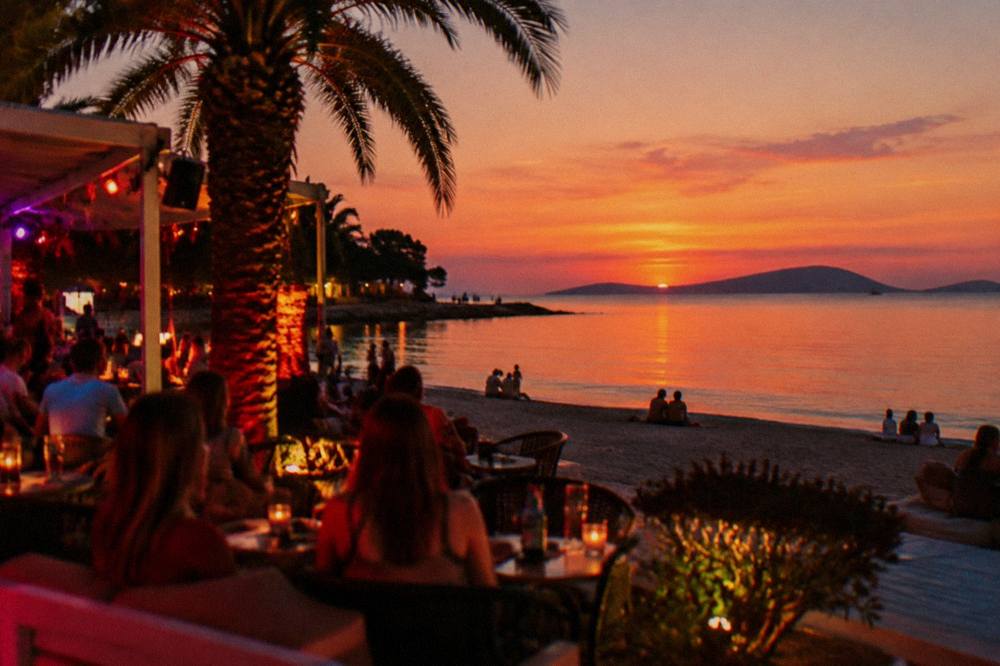
After dark Bacvice becomes Split's closest thing to a beach club strip: the terraces behind the sand stay open late into the summer season, the beach itself remains lit and busy, and the walk home to the Old Town is ten flat minutes along the Riva. The night-time retail alcohol ban stops shops, not bars, selling between 21:00 and 06:00 in the summer season, so the terraces carry the evening.
The scene is concentrated and easy to read. A handful of venues on the sand run DJ nights through summer, and the best beach clubs in Split answer works through what the current season offers, since line-ups and opening dates change yearly and are confirmed on the door. The public-order rules apply here as in the centre: drinking outside licensed terraces in the historic core carries a 300 EUR fine, and the ban on carrying open alcohol applies to the streets you walk back through.
For a quieter evening, the alternative is to walk west. The Riva at night, the palace lit from within, and a drink on the Prokurative give you the same sky without the bass, and the Split nightlife guide maps both halves of the city.
How Does Bacvice Compare With Split's Other Beaches?
Bacvice is the sandy, social, walkable choice; Kasjuni and the Marjan coves are the pebble-and-pine alternative with clearer water and far fewer people; Žnjan east of the port is the concrete-and-cafe stretch; and Firule next door is Bacvice's quieter sandy sibling. All of them are free city beaches, and the choice is really sand and crowds versus pebble and calm.
| Beach | Surface | Character | Walk from palace |
|---|---|---|---|
| Bacvice | Sand | City beach, picigin, clubs | Under 1 km east |
| Firule | Sand | Quieter family bay | East past Bacvice |
| Žnjan | Concrete and pebble | Cafe terraces, east coast | East, bus or long walk |
| Kasjuni | Pebble | Pine-shaded cove under Marjan | West, walk or bus |
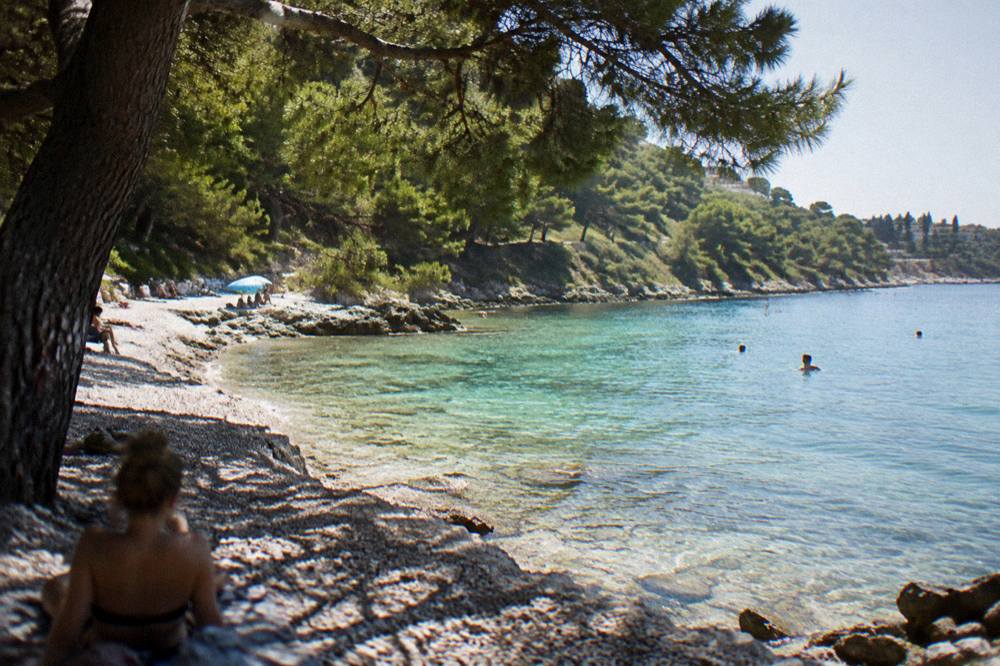
The Split beaches guide compares them all in one place, and Kasjuni Beach has its own page. The honest summary: if sand and sociability matter, Bacvice wins; if clear water and shade matter, Marjan wins; and Split is small enough that a holiday can alternate between both on consecutive days.
Common Questions About Bacvice Beach
Is Bacvice Beach free?
Yes. Bacvice is a public city beach with no entry charge at any time of year. You pay only for extras such as sunloungers, parasols, food and drinks from the terraces behind the sand.
Is Bacvice Beach sandy?
Yes, Bacvice is one of the few genuinely sandy beaches walkable from Split's Old Town. Firule, the next bay east, is also sandy; the Marjan coves such as Kasjuni are pebble.
How far is Bacvice Beach from Diocletian's Palace?
Under a kilometre, a flat walk of about ten minutes east along the seafront past the ferry port. No bus or taxi is needed from the centre.
Can you play picigin at Bacvice as a visitor?
Yes, casually. Picigin is played year round on Bacvice, and visiting players who keep the rally alive are generally welcomed. The World Picigin Championship is held on this sand.
Is Bacvice good for children?
The shallow, sandy, rock-free bay suits young swimmers, with food and toilets steps away on the terrace strip. The trade-offs are summer crowds and a lack of natural shade, so plan around a parasol.
Does Bacvice have a Blue Flag?
No Blue Flag claim is made on this page, because no verified award listing for 2026 exists for Split's beaches. Check the current season's signage at the beach or the city's own beach information.
Bacvice is the beach Split walks to, plays picigin on and dances behind, and it costs nothing but the effort of the stroll from the palace. Pair it with a morning inside Diocletian's Palace, a ferry day to Šolta or Hvar from the piers beside it, and one long guided day inland, and the sandy bay does what it has done since 1908: it holds the whole city's summer in waist-deep water.