Marjan Hill
Marjan Hill is the protected park forest on the peninsula west of Split's Old Town in Dalmatia, Croatia: 3.5 km long, 1.5 km wide, free to enter, with the 178 m Telegrin lookout reached by 819 steps from Trumbićeva obala.
Short answer
Marjan Hill is a free-entry park forest peninsula west of Split's Old Town. Its highest point is Telegrin at 178 m, reached by 819 steps from Trumbićeva obala, with views over the city, the islands and the Adriatic.
Marjan Hill is the green lung of Split, the coastal city in central Dalmatia, Croatia, built in and around Diocletian's Palace on the Adriatic Sea. The peninsula rises immediately west of the Old Town, separating the city's western bays from the open sea, and the Društvo Marjan park documentation describes it as 3.5 km long and 1.5 km wide, with its highest point, Telegrin, at 178 m. Entry costs nothing. The park forest holds pine woods, marked paths, small churches, lookouts over the islands, two city beaches on its southern and northern shores, and the Meštrović Gallery on its eastern slope, which the gallery's own price list lists at 12.00 EUR for an adult ticket that also includes Crikvine-Kaštilac.
This page on Split Croatia Travel Guide covers everything the hill itself involves: the climb, the paths, the beaches below it, the museums on its flanks, the weather the DHMZ Split-Marjan station records there, and how the park fits into a wider day around the city.
What Is Marjan Hill In Split?
Marjan Hill is a protected park forest occupying the peninsula directly west of Split's Old Town in Dalmatia, Croatia, 3.5 km long and 1.5 km wide, with its highest point Telegrin at 178 m above the Adriatic. The Društvo Marjan documentation gives these figures, and entry to the park is free, with no gate, ticket or opening hour anywhere on the peninsula.
The hill has been the city's park forest for generations, and its identity is inseparable from the city below it. Split grew outward from Diocletian's Palace, built c. 295 to 305 AD for the emperor who retired here, and Marjan stayed wooded while the city spread east and west along the coast. The old fishing quarter of Veli Varos, with its stone houses clustered at the hill's eastern foot, is the traditional route up; Veli Varos and the Old Town area sit between the palace and the first flights of steps.
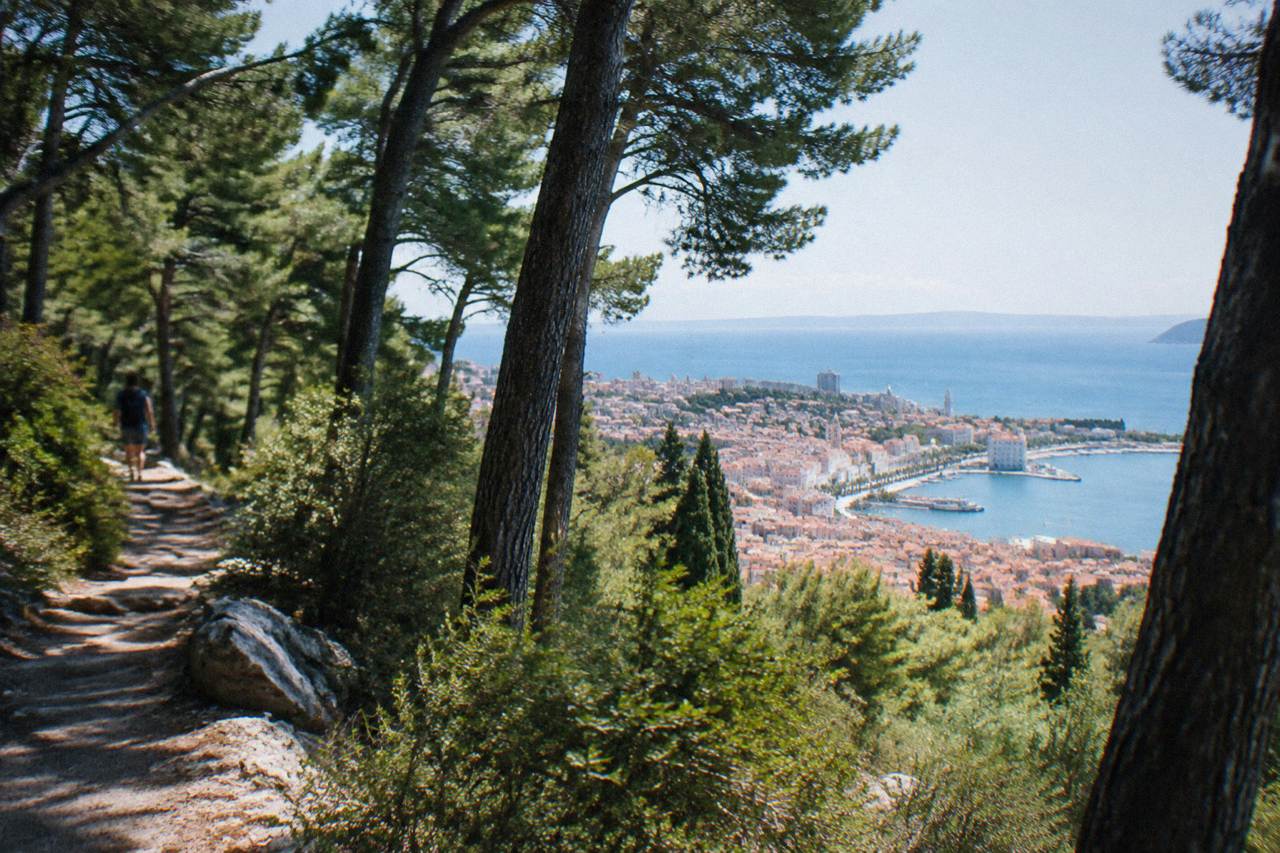
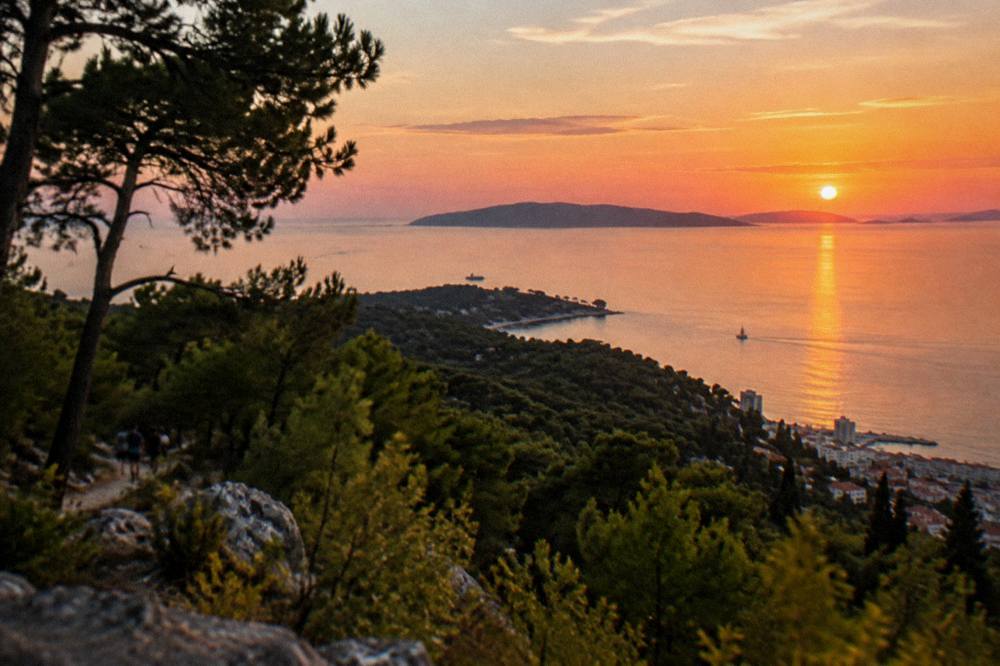
The park's coverage is broader than the single summit. The peninsula's southern shore holds Kašjuni beach in a cove below the cliffs, the northern shore holds Bene at the tip, and the eastern slope carries the Meštrović Gallery and its companion site at Crikvine-Kaštilac. Wander the upper paths and the view opens across Brač, Hvar, Šolta and Vis offshore, the same islands the ferry port at Obala kneza Domagoja serves daily.
The essentials, as the park documentation and museum price lists give them:
| Item | Figure | Source |
|---|---|---|
| Highest point | Telegrin, 178 m | Društvo Marjan park documentation |
| Peninsula size | 3.5 km long, 1.5 km wide | Društvo Marjan park documentation |
| Steps to Telegrin | 819 from Trumbićeva obala | Društvo Marjan park documentation |
| Entry fee | Free | No ticket on any official source |
| Meštrović Gallery adult ticket | 12.00 EUR, includes Crikvine-Kaštilac | Meštrović Gallery price list |
| Reopened | April 2026 after a 15-month renovation | Meštrović Gallery site |
How High Is Marjan Hill And How Hard Is The Climb?
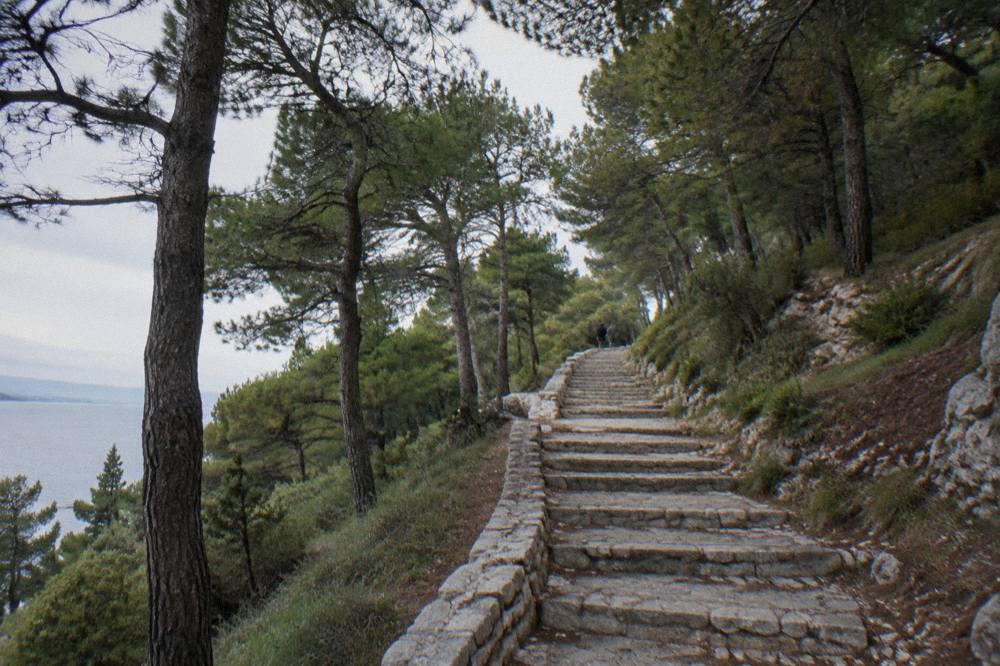
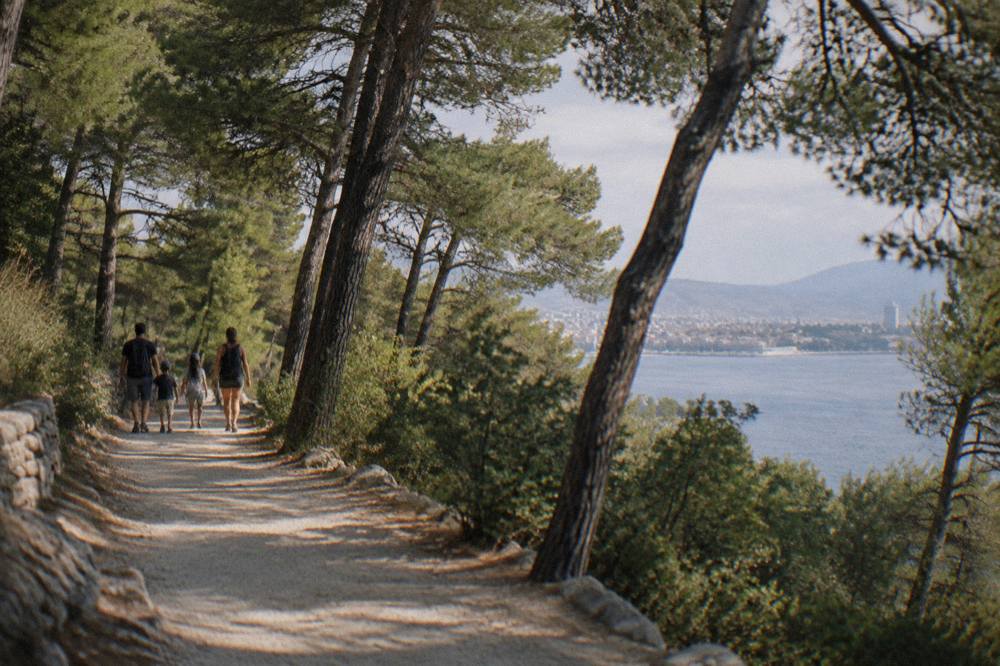
Telegrin, the highest point of Marjan Hill, stands 178 m above sea level, and the Društvo Marjan documentation counts 819 steps from Trumbićeva obala at the foot of the hill up to it. The climb is a steady stone staircase through pine forest, and the reward at the top is a panoramic terrace over Split, the Adriatic and the offshore islands.
The step count is the number to plan around. Eight hundred and nineteen steps is a real effort in summer heat, and the DHMZ Split-Marjan station table shows 18 days at 30 C or more in July and 17 in August on its 1948 to 2024 record, so the staircase is best done early or late in those months. There are benches at intervals, shade for almost the whole route, and no exposure to drops, so the effort is aerobic rather than technical.
Telegrin is not the only viewpoint. The southern cliffs above Kašjuni give a different frame, over the beach and out to the islands, and the path network along the spine links a series of lookouts without requiring the full staircase every time. Cyclists use the wider forest tracks, and the flat route out to Bene on the northern shore avoids the stairs almost entirely.
The route options, as the park's own geography presents them:
| Route | Character | Climb |
|---|---|---|
| Trumbićeva obala to Telegrin | Stone staircase, 819 steps, shaded | 178 m of ascent |
| Veli Varos lanes to the spine | Stone lanes and steps from the old quarter | Gradual, joins the upper paths |
| Northern shore track to Bene | Wide forest track, near level | Minimal |
| Southern path above Kašjuni | Cliff-top path with sea views | Moderate, some steps |
What Can You See And Do On Marjan Hill?
The park forest offers the Telegrin staircase and its panorama, marked walking and cycling trails, small historic churches scattered through the pines, the Kašjuni and Bene beaches on its shores, and the Meštrović Gallery on the eastern slope, whose 12.00 EUR adult ticket also covers the Crikvine-Kaštilac site. All of the outdoor side of the peninsula is free.
A morning on the hill can be as short or as long as the day allows. The classic circuit starts in Veli Varos, climbs to Telegrin, drops to the southern shore and returns along the sea, with a swim at Kašjuni in the warmer months. Families with children often do the reverse, beach first and stairs only if energy allows.
The gallery is the one ticketed attraction inside the park's footprint. It reopened in April 2026 after a 15-month energy renovation, with new windows, roof, heating, cooling and solar installations, and its current exhibition covers life and art in the Meštrović house. The adult ticket is 12.00 EUR, reduced 8.00 EUR, family 20.00 EUR, and it includes the companion site at Crikvine-Kaštilac a short walk up the hill.
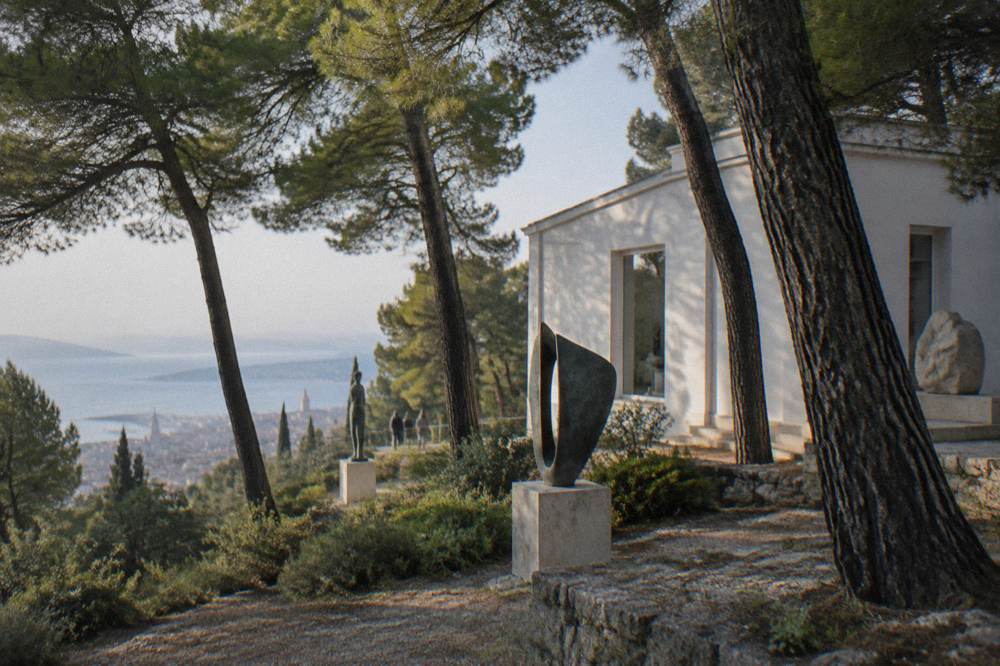
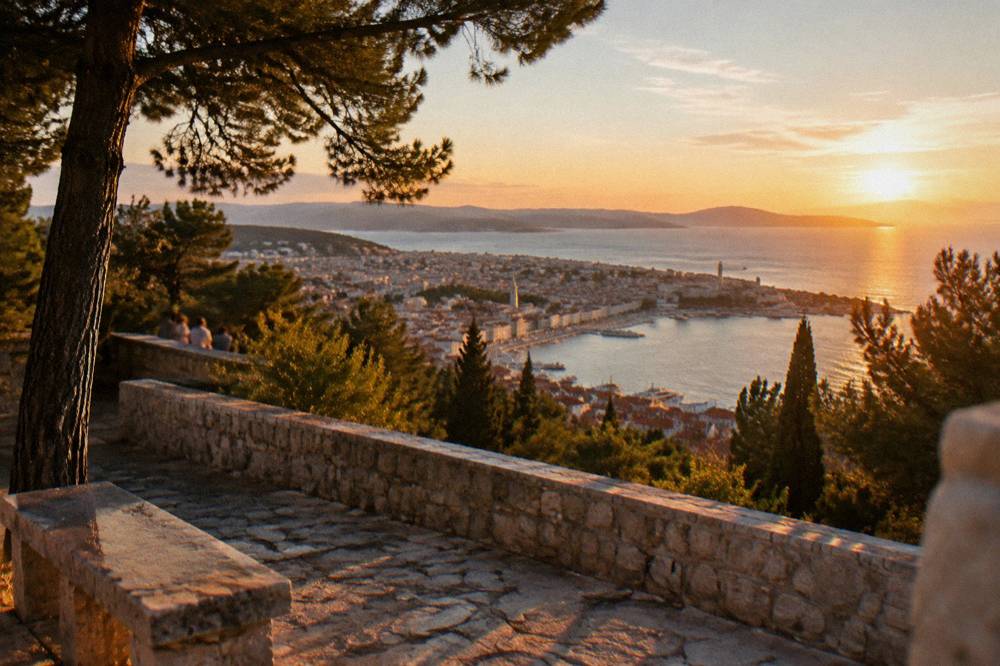
For visitors who want a guided angle on the city after the hill, a small-group palace walk such as the Old Town and Diocletian's Palace guided tour pairs naturally with a Marjan morning, since the palace lies ten minutes from the first steps. The evening version works too: the hill's western terraces face the setting sun over the open sea, which is why the park appears in every sunset plan for the city.
Is There A Dress Code Or Any Rules To Know On Marjan Hill?
The park itself has no dress code and no entry rules beyond ordinary public-order rules, but the city's 2026 public-space decision fines walking in swimwear or shirtless in the historic centre, and the fines listed by the city's tourism site run to 300 EUR for alcohol in the historic core, urinating, climbing monuments or bathing in fountains, and 150 EUR for sleeping in public spaces.
On the hill, ordinary walking gear is the practical answer. The staircase is stone and can be slick in rain, shoes with grip matter more than anything else, and the November station figure of 115.5 mm of rain makes that month the one where the paths are most often wet. Swimwear belongs on the beaches below the hill, not on the walk back through the Old Town lanes to a hotel or apartment.
How Do You Get To Marjan Hill From The Split Old Town?
Marjan Hill starts where the Old Town ends: the main staircase begins at Trumbićeva obala on the northern shore of the peninsula, roughly ten minutes on foot from the Peristyle through the Veli Varos lanes, and no bus, ticket or transfer is needed to reach it. The whole approach is on foot through the old fishing quarter at the hill's eastern foot.
From the palace, the route runs west past the Riva promenade, turns north along the shore, and enters Veli Varos, where stone lanes climb gently toward the first steps. The Old Town area is compact enough that every approach to Marjan is a short walk; the ferry port, bus station and railway station on Obala kneza Domagoja sit 500 to 600 m from the palace, so even arrivals can walk to the hill with luggage stored.
Cyclists and walkers who want the flat option follow the northern shore road toward Bene. Cars can reach limited parking spots near the northern and western edges, though no parking tariff is printed here, so check the signage on arrival. The golden rule is simple: the hill is closer to the palace than almost any other green space is to any European old town.
To cover that route on two wheels, book a bike rental here.
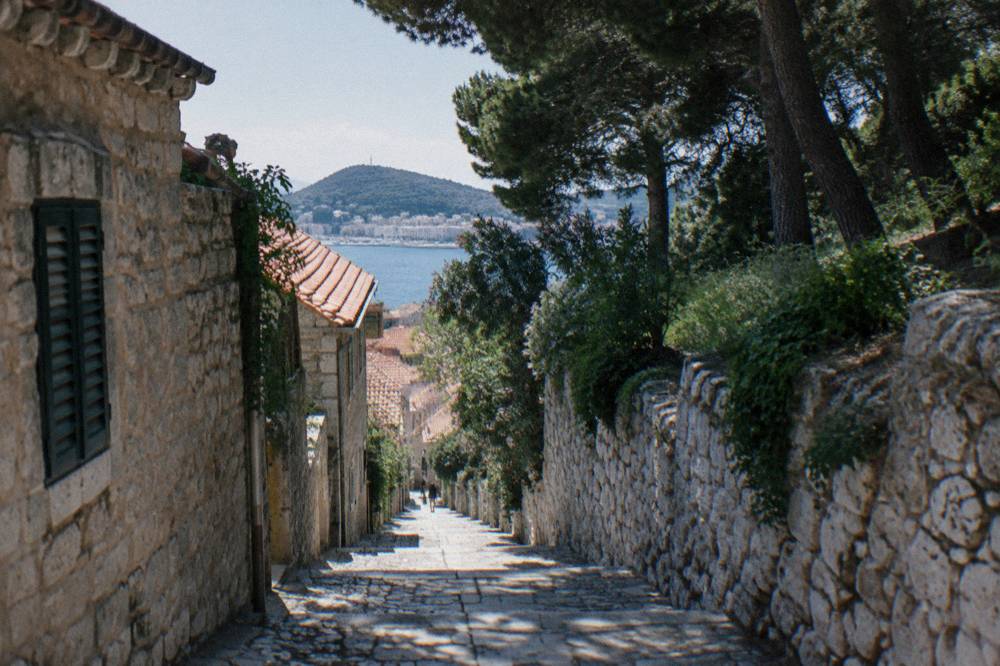
Which Beaches Sit Below Marjan Hill?
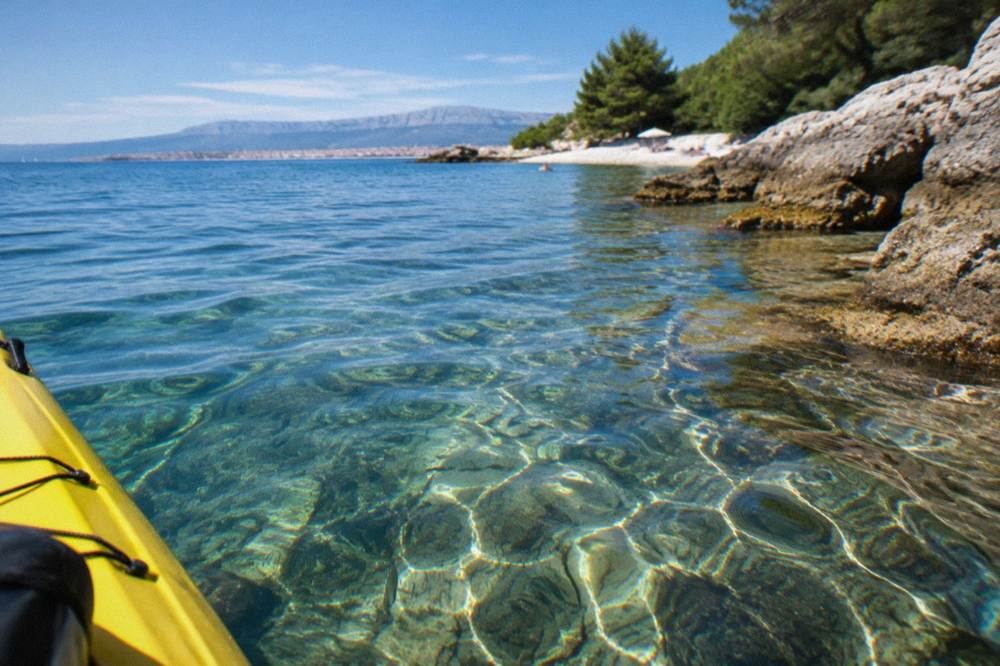
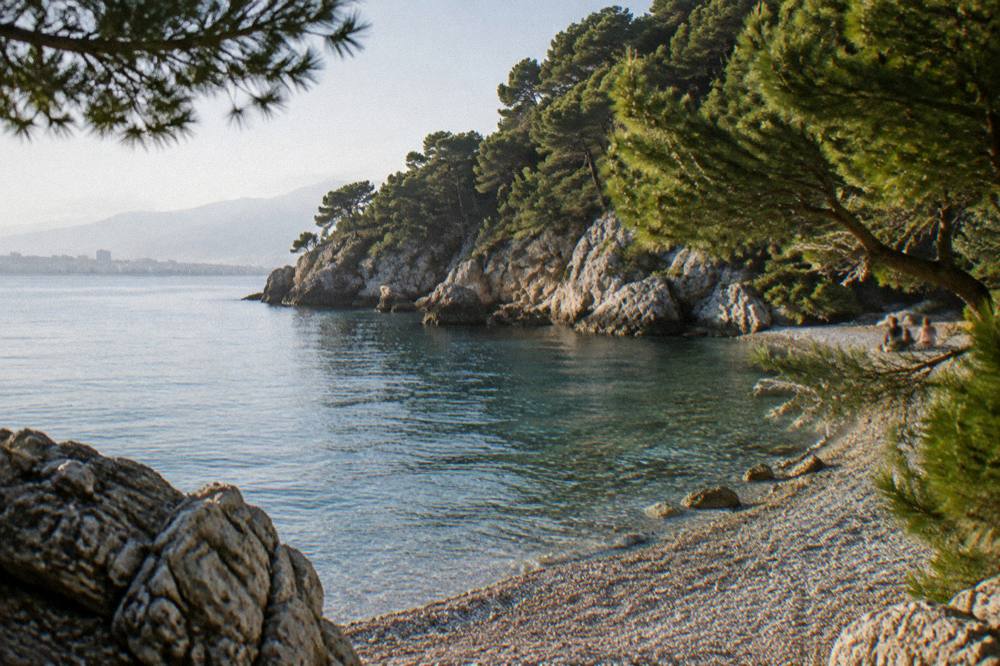
Two of Split's city beaches sit directly on the Marjan peninsula: Kašjuni in a cove on the southern shore below the cliffs, and Bene at the northern tip, both free to access like every city beach. Kašjuni is the calmer of the two, reached by a road and path from the southern side of the hill, while Bene pairs its beach with the flat forest track along the northern shore.
Kašjuni is the beach that appears in photographs of the hill, because the cliffs rise straight behind the pebble shore and the islands sit offshore. The Kašjuni beach page covers it in detail. On the other side of the city, east of the peninsula, Bačvice is the sandy city beach where picigin, the ball game protected as intangible heritage of Croatia and dated to 1908 in local accounts, is played in the shallows; the Bačvice beach guide tells that story.
No Blue Flag claim is made for any Split beach on this site, and swimmers should simply judge conditions on the day. The sea is swimmable from late spring through early autumn, and the city's outdoor life in those months rotates between the hill, the beaches and the Peristyle and Cathedral of St Domnius core.
The beaches and shores of the peninsula compared:
| Beach | Shore of Marjan | Character | Access |
|---|---|---|---|
| Kašjuni | Southern, below the cliffs | Pebble cove, calm water | Road and path from the southern side |
| Bene | Northern tip | Pebble and concrete, pine shade | Flat forest track or road |
| Kaštelet area | Eastern edge | Small bays near the gallery | Short walk from the Old Town |
What Is The Weather Like On Marjan Hill?
The DHMZ Split-Marjan weather station sits on the hill itself and records a July mean of 26.2 C and a January mean of 8.0 C on its 1948 to 2024 record, with July the driest month at 26.6 mm of rain and November the wettest at 115.5 mm. The station gives 353.3 hours of sunshine in July against 120.8 hours in December.
Because the station that defines the city's climate is literally on Marjan, these numbers describe the hill's walking conditions better than any general Dalmatian average. July and August bring 18 and 17 days at 30 C or more respectively, which argues for early-morning stairs and shaded trails. Spring and autumn are the comfortable middle: May averages 19.2 C and October 17.2 C, with rainfall still modest at 57.5 mm and 77.0 mm.
| Month | Mean C | Precip mm |
|---|---|---|
| Jan | 8.0 | 77.8 |
| Feb | 8.5 | 65.2 |
| Mar | 10.8 | 63.2 |
| Apr | 14.4 | 62.0 |
| May | 19.2 | 57.5 |
| Jun | 23.4 | 49.0 |
| Jul | 26.2 | 26.6 |
| Aug | 25.9 | 41.3 |
| Sep | 21.6 | 70.9 |
| Oct | 17.2 | 77.0 |
| Nov | 12.7 | 115.5 |
| Dec | 9.4 | 103.7 |
Winter walking has its own appeal. The station's December mean of 9.4 C is mild by continental standards, the pines hold their green, and the rain, 103.7 mm in December, usually arrives in short spells rather than all-day drizzle. Advent in Split runs from 27 November 2026 to 7 January 2027 with an ice rink at Đardin, so a winter circuit can pair the hill with the season's programme in the city below.
Is Marjan Hill Good For Families And Casual Walkers?
Yes, in the sense that entry is free, the northern shore track to Bene is flat and shady, and the beaches give children a reward at either end of a walk, while the 819-step Telegrin staircase is the one section to judge against the family's legs and the temperature. Nothing on the peninsula requires equipment, booking or a ticket.
The flexible geometry is what makes it work. A family can walk the flat northern track, swim at Bene, and return without ever touching the stairs; or climb part-way to a lookout and turn back. The marked trails mean nobody needs to navigate, and the forest cover keeps the middle of the day bearable even in July.
For visitors planning the whole city around such a morning, the itinerary pages help: one day in Split, two days in Split and three days in Split each fold the hill into a wider route, and the cruise-port day plan does the same for callers with limited hours. The full list of options is on things to do in Split.
What Else Combines Well With Marjan Hill In One Day?
The hill pairs naturally with the palace core and Veli Varos in the city, with the Meštrović Gallery on its own slope, and with farther day trips: the driving times from the palace give Klis Fortress at 22 minutes, Salona at 14 minutes, Trogir at 36 minutes and the Krka National Park entrance at Skradinski buk at 74 minutes, so a Marjan morning can become a full Dalmatian day.
The hill is the quiet half of a Split day; the loud half is the sea. Kayak trips leave from the city beaches and paddle the peninsula's coastline, and the evening illuminated kayak tour runs along the same shores after dark. For a different kind of water, the Cetina river near Omiš, a 38-minute drive from the palace, carries rafting trips with cliff jumping, and the Omiš fortress Mirabela charges 4 EUR, rising to 6 EUR from 1 June to 30 September by the city's 2026 decision.
Sunset is the other classic pairing. The sunset tour to Klis Fortress runs to the fortress that served as a Game of Thrones Meereen location and looks back over Split and the sea from inland, a mirror image of the view from Telegrin. Klis charges 10 EUR for adults by the figures reported locally.
For a full-day option beyond Croatia, the Mostar and Kravice waterfalls day trip crosses into Bosnia and Herzegovina and back in a single guided loop; the Mostar day trip guide covers what that route involves.
Distances and free-flow driving times from Diocletian's Palace, as computed for this site:
| Destination | Distance | Driving time |
|---|---|---|
| Klis Fortress | 13.9 km | 22 min |
| Salona | 9.1 km | 14 min |
| Trogir | 29.3 km | 36 min |
| Omiš | 25.5 km | 38 min |
| Krka, Skradinski buk | 90.2 km | 74 min |
| Šibenik | 84.8 km | 71 min |
| Plitvice Lakes | 258.1 km | 3 h 15 |
Common Questions About Marjan Hill
Is Marjan Hill free to enter?
Yes. There is no gate, ticket or charge anywhere on the peninsula; the only ticketed site within its footprint is the Meštrović Gallery, whose price list shows 12.00 EUR for adults including Crikvine-Kaštilac.
How many steps is Marjan Hill in Split?
The Društvo Marjan documentation gives 819 steps from Trumbićeva obala up to the Telegrin viewpoint at 178 m, the peninsula's highest point.
Can you see the islands from Marjan Hill?
Yes. From Telegrin and the southern lookouts the view opens across the Adriatic to the islands of Brač, Hvar, Šolta and Vis that lie offshore from Split.
Is Marjan Hill suitable for children?
The flat forest track along the northern shore to Bene beach is easy for children, and the main staircase is a matter of legs and heat; the DHMZ station on the hill records 18 days at 30 C or more in July, so early starts are the sensible choice in summer.
Are there beaches on Marjan Hill?
Two city beaches sit on the peninsula: Kašjuni in a cove on the southern shore below the cliffs, and Bene at the northern tip. Both are free to access, like all of Split's city beaches.
How long does a walk on Marjan Hill take?
A circuit from Trumbićeva obala up the 819 steps to Telegrin and back down to the shore takes a relaxed half day with a swim; the flat northern track to Bene can be done in an hour or two at an easy pace.