Is Zadar Nicer Than Split?
A calm comparison of Split and Zadar, two coastal cities on the Adriatic, using verified ticket prices, distances and climate figures to help you choose between them.
Split is a coastal city in central Dalmatia, on the Croatian shore of the Adriatic Sea, built in and around the palace the Roman emperor Diocletian commissioned around 295 to 305 AD. Whether Zadar is "nicer" than Split depends entirely on what a traveller wants from a Dalmatian base, because the two cities answer that question in opposite ways, and the comparison below sticks to published figures.
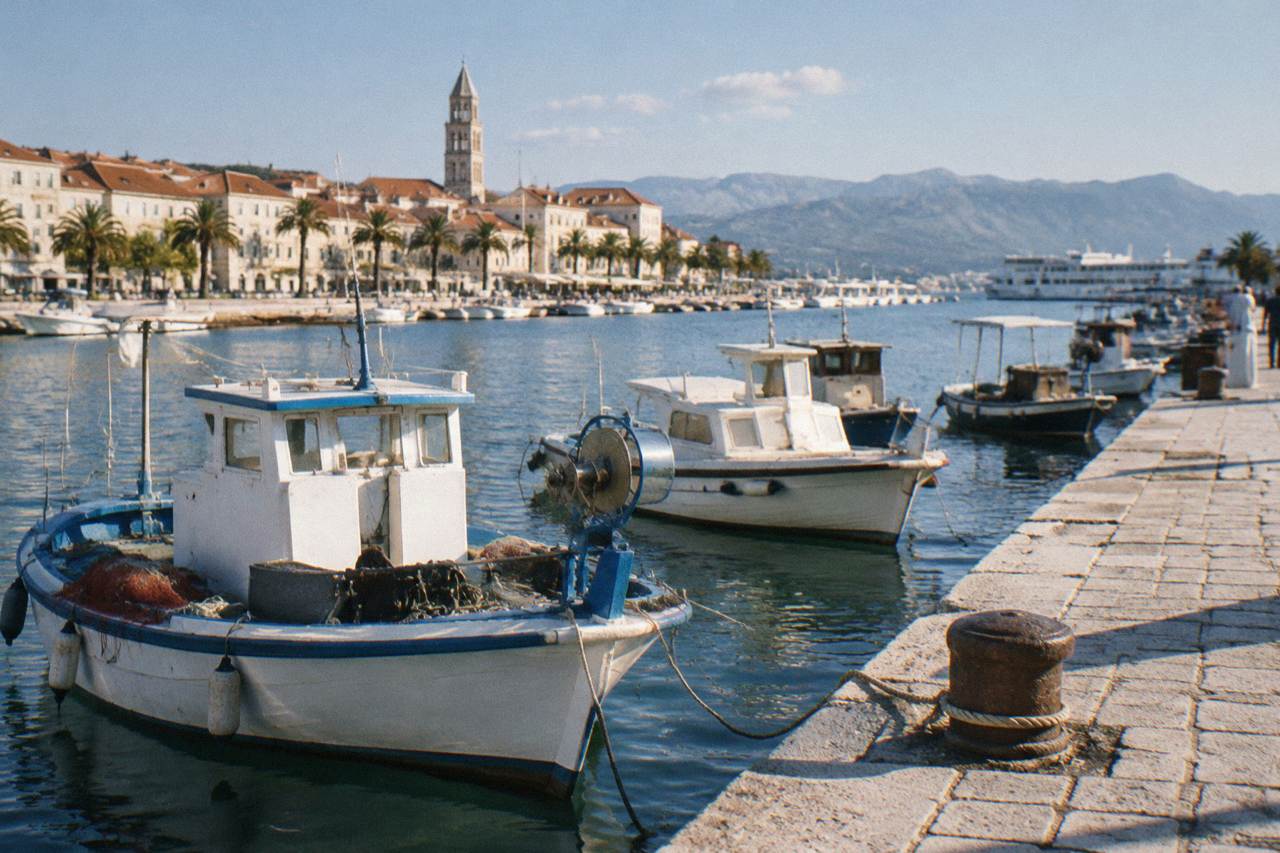
The honest summary is that Split is larger, busier and dramatically better connected for day trips, while Zadar is smaller, calmer and easier to absorb at a slow pace in a short stay. Split carries the UNESCO listing, the working port and the island ferry lines. Zadar carries a compact Roman forum core without anything like the same volume of traffic. Neither is simply "nicer": the pair split the decision along lines of scale, and the sections below set those lines out with real numbers.
Is Zadar Nicer Than Split?
No single answer holds, because the two cities optimise for different trips: Split is the larger destination with a UNESCO-listed palace core, 160,577 residents at the 2021 census, and the ferry lines, coaches and tours that reach Krka, Trogir, Hvar and Brač, while Zadar is a smaller coastal city 159.5 km to the northwest that trades that reach for a quieter, more walkable old town.
The question usually comes from travellers planning one base for a Dalmatian week, and that framing matters. The Split Croatia Travel Guide desk compares the two constantly, and the pattern in the published figures is consistent: Split concentrates people, transport and paid sights, Zadar spreads less of all three over a smaller centre. If the trip is built around islands and national parks, the port decides it. If the trip is built around one old town and early evenings, the smaller city decides it.
Scale is the honest starting point. Split's port alone recorded 6.05 million passengers in 2025, which the Port of Split's own page describes as Croatia's busiest passenger port, and the airport counted 3,881,186 passengers in the same year. That volume shapes everything about a Split stay, from the Riva promenade to the queue at the palace cellars.
What Does Split Have That Zadar Does Not?
Split holds the "Historical Complex of Split with the Palace of Diocletian", inscribed by UNESCO in 1979, including a cathedral bell tower 57 m high, the palace cellars open 8:30 to 20:00 daily, and a day-trip ring that reaches Trogir in 36 minutes, Klis Fortress in 22 and the Krka waterfalls in 74 by road.
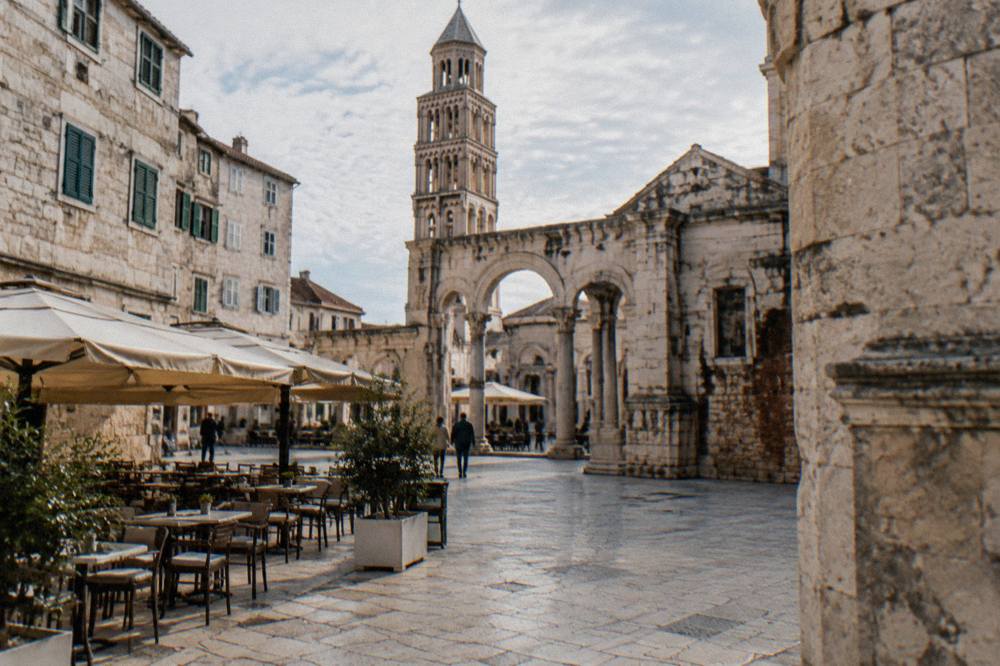
The palace is the structural difference between the cities. It is not a monument beside the city, it is the city: the Old Town sits inside walls laid out at the turn of the 4th century, and the Split City Museum runs the substructures with hours from 8:30 to 20:00, Monday to Sunday, while its central part is under restoration to the end of 2026 with the passage left open. Around it, the Peristyle, the Riva, the Prokurative, the Golden Gate, the Grgur Ninski statue, the markets, Marjan park forest and the city beaches are all free to walk.
A week based in Split can take in islands and two national parks without ever moving hotel.
That reach is also why the full Split vs Zadar comparison on this site keeps landing on the same verdict for first-time visitors: Split is the better single base for a first Dalmatian trip, and Zadar is the better destination for a return visit that deliberately skips the crowds.
Which City Is Easier To Reach And Get Around?
Split is the stronger transport hub: its airport sits 20 km from the city in Kaštel Štafilić, the Platanus shuttle runs to the main bus station for 10 EUR one way or 15 EUR return, and the ferry port, bus station and railway station sit together 500 to 600 m from the palace, while Zadar is reached from Split by 159.5 km of road, about 2 hours free-flow.
To check coach times and fares from Split, book a coach ticket here.
The airport's own pages put it 20 km from Split and 6 km from Trogir, and the Platanus shuttle fare is published on the operator's page. City bus lines 37 and 38 of Promet Split also stop at the airport, at a fare of a few euros, confirmed on board. The hub arrangement on Obala kneza Domagoja matters more than any single fare: a foot passenger stepping off the Stari Grad ferry, a coach passenger from Zagreb and a rail passenger all arrive within a short walk of the palace, which is rare on this coast.
Inside the city, Split is compact at its centre and hilly at its western edge. Marjan park forest rises to Telegrin at 178 m, with 819 steps from Trumbićeva obala to the top, and the peninsula runs 3.5 km long and 1.5 km wide. Everything else a short visit needs sits within the walls and the Riva.
How Do Split And Zadar Compare On Cost?
On ticket prices, Split's paid sights run from free public spaces up to 12 EUR at the Meštrović Gallery, 10 EUR at the Split City Museum and Klis Fortress, 8 EUR at the Archaeological Museum, and about 5 EUR upward for the Cathedral of St Domnius complex, with combined cathedral tickets up to about 15 EUR.
The Split prices come from the institutions' own lists. The Split City Museum at Papalić Palace charges 10.00 EUR adult, 8.00 reduced, 18.00 family, and closes Mondays. The Archaeological Museum is 8 EUR, or 10 EUR combined with the Salona site within 7 days. The Meštrović Gallery reopened in April 2026 after a 15-month energy renovation and charges 12.00 EUR adult, a ticket that also covers Crikvine-Kaštilac. The cathedral complex prices are secondary figures, so they are written here only as "from about 5 EUR" and "up to about 15 EUR".
| Split sight | Adult price | Source note |
|---|---|---|
| Peristyle, Riva, Golden Gate, Marjan, city beaches | Free | No ticket on any official source |
| Split City Museum (Papalić Palace) | 10.00 EUR | Museum price list, closed Mondays |
| Palace cellars | Run by Split City Museum, open 8:30 to 20:00 | Hours from museum page |
| Archaeological Museum | 8 EUR, 10 EUR with Salona | Price list, combined within 7 days |
| Meštrović Gallery | 12.00 EUR | Includes Crikvine-Kaštilac |
| Ethnographic Museum | 7.00 EUR | Museum page |
| Cathedral of St Domnius complex | From about 5 EUR, combos up to about 15 EUR | Secondary figures, shoulders and knees covered |
| Klis Fortress | 10 EUR | Operator tariff |
What can be compared fairly is the shape of a day-trip budget, because the shared costs of reaching the region are published. Krka National Park charges 7 EUR in January to March and November to December, 20 EUR in April, May and October, and 40 EUR from June to September, and the ticket includes the Skradin boat and the Lozovac bus transfers from 1 April to 31 October. Plitvice Lakes charges 10, 23 and 40 EUR across the same seasonal bands, with 25 EUR for the afternoon slot in peak and the visitor's name required on the ticket.
| Journey from Split | Road distance | Free-flow time |
|---|---|---|
| Zadar | 159.5 km | 2 h |
| Trogir | 29.3 km | 36 min |
| Šibenik | 84.8 km | 71 min |
| Krka, Skradinski buk | 90.2 km | 74 min |
| Makarska | 86.1 km | 75 min |
| Mostar | 173.2 km | 2 h 13 |
| Dubrovnik | 234.8 km | 3 h 21 |
What About Weather And The Time Of Year?
The DHMZ Split-Marjan station table, covering 1948 to 2024, gives Split a July mean of 26.2 C and 353.3 hours of July sunshine against 120.8 hours in December, with November the wettest month at 115.5 mm and July the driest at 26.6 mm; no matching station table for Zadar is used here, so the two cities cannot be fairly compared on weather here.
The Split figures are worth knowing in themselves, because they shape the nicer-versus-busier trade. July averages 18 days at 30 C or more and August 17, June 7. January sits at a mean of 8.0 C. Autumn, September to November, brings 263.4 mm of rain against 246.7 mm across the winter months. Anyone who dislikes heat and crowds should read the best month comparison before booking either city, because the coastal high season compresses everything into the same weeks.
Which City Should You Actually Choose?
Choose Split if the trip is a first visit to Dalmatia built around Diocletian's Palace, island ferries and day trips to Krka, Trogir, Hvar or Mostar, and choose Zadar if the trip is a second or third Croatian stay where a smaller, quieter old town matters more than the day-trip network; both are coastal, euro-using, Schengen cities, so money and borders make no difference between them.
Croatia adopted the euro on 1 January 2023 and joined Schengen on the same date, so neither city adds friction on currency or border checks, and the emergency number 112 works identically in both. A practical pattern many itineraries use is to treat the cities as a pair rather than rivals: the road route from Split to Zadar is 159.5 km, about two hours without stops, which fits comfortably as a transfer day with a stop in Šibenik, 71 minutes out of Split, where the Cathedral of St James has held its UNESCO inscription since 2000.
For a one-week first trip, the desk's reporting keeps landing on Split, simply because the transport facts concentrate there. The ferries alone frame it: the Stari Grad car ferry runs about 120 minutes, Supetar on Brač about 50, Rogač on Šolta about 60, and Vis about 140, with foot-passenger fares on the Stari Grad line of 5.90 EUR off-season and 8.40 EUR in season. Hvar town itself is reached by catamaran, not by the car ferry, a distinction first-time planners regularly miss. None of that network radiates from Zadar.
If Split wins the base decision, the first afternoon belongs to the palace itself, and a guided walk earns its place there. The small-group walking tour led by a guide holding a history degree covers Diocletian's Palace and the streets around it, and its live listing shows the current price and departure times: Check availability.
Common Questions About Split And Zadar
Is Zadar nicer than Split?
Not in any absolute sense. Split is the larger city with the UNESCO-listed palace, the ferry network and the day-trip reach; Zadar is the smaller, quieter one. First trips to Dalmatia generally work better from Split, and return trips often suit Zadar.
How far is Zadar from Split?
The road distance is 159.5 km from Diocletian's Palace, about 2 hours of free-flow driving. Šibenik sits roughly midway, 71 minutes out of Split by road.
Is Split or Zadar better for day trips?
Split, by a wide margin on the transport figures: Trogir is 36 minutes away, Klis 22, Salona 14, the Krka waterfalls 74, and the car ferries and catamarans to Hvar, Brač, Šolta and Vis all leave from the Split waterfront.
Is Split or Zadar cheaper?
Split's verified adult ticket prices run from free public spaces to 12.00 EUR at the Meštrović Gallery, with the City Museum at 10.00 EUR and the Archaeological Museum at 8 EUR. Croatia uses the euro in both cities.
Can you visit both Split and Zadar on one trip?
Yes, easily. The two cities are 159.5 km apart by road, about 2 hours free-flow, which works as a single transfer day, often with a stop in Šibenik on the way.
Which city is warmer, Split or Zadar?
Split's DHMZ Split-Marjan station table, covering 1948 to 2024, gives a July mean of 26.2 C and a January mean of 8.0 C.
