Split To Zadar
Zadar sits 159.5 km up the Dalmatian coast from Diocletian's Palace, about two hours of free-flow driving, with Krka National Park almost exactly on the way. This page lays out the route, the stops, the ticket prices that are published, and how to decide between the two cities.
Short answer
The drive from Split to Zadar is 159.5 km and about 2 hours free-flow from Diocletian's Palace. Krka National Park sits about 71 minutes out of Split at Skradin buk, so a Split, Krka, Zadar day is realistic with an early start. There is no ferry and no direct train option worth taking: the route is a road journey.
Zadar lies 159.5 km up the Adriatic coast from Diocletian's Palace in Split, a drive of about two hours in free-flow traffic, and the road between them passes within reach of Krka National Park, Šibenik and Trogir. That combination makes this one of the more useful stretches of coast in Dalmatia: a single day can carry a palace morning, a waterfall afternoon and a sunset on Zadar's peninsula, if the timing is planned around the published schedules rather than guesswork. This guide sets out the distances, the ticket prices that are actually printed in official price lists, the seasons that change them, and the honest comparisons between the two cities, all from what the operators and institutions themselves publish.
How Far Is Zadar From Split And How Long Does The Drive Take?
The drive from Diocletian's Palace in Split to Zadar is 159.5 km and takes about two hours in free-flow traffic, measured on the standard routing from the palace itself. The route runs up the Dalmatian coast past Šibenik, which sits 84.8 km and about 71 minutes from Split, and past the Krka National Park turn-offs before the road continues north. Traffic in July and August can stretch the journey well beyond the free-flow figure.
Those distances come from routing calculations made from the palace as the origin point, which is the honest way to state them: the free-flow times are what the road itself allows, not what a summer Saturday allows. The Adriatic coast road and the motorway run broadly in parallel along this stretch, and the two hours to Zadar assumes reasonable conditions on the faster routing. In peak season, when the coast fills with coaches, caravans and rental cars, the same drive can take considerably longer, and the return leg in the late afternoon is often slower than the outbound leg.
The scale of the trip matters for planning. Zadar is not a suburb visit; it is the same order of distance as Mostar at 173.2 km, and shorter only than Dubrovnik at 234.8 km among the classic day trips from Split. Anyone combining Zadar with a stop at Krka needs to treat the day as a full-day outing with a fixed timetable, because the park's last boat and bus transfers do not wait for late arrivals. The table below places Zadar in context against the other headline destinations reachable by road from the palace.
| Destination from Diocletian's Palace | Distance | Free-flow drive time |
|---|---|---|
| Salona | 9.1 km | 14 min |
| Klis Fortress | 13.9 km | 22 min |
| Trogir | 29.3 km | 36 min |
| Omiš | 25.5 km | 38 min |
| Šibenik | 84.8 km | 71 min |
| Krka National Park, Skradinski buk | 90.2 km | 74 min |
| Makarska | 86.1 km | 75 min |
| Zadar | 159.5 km | 2 h |
| Mostar | 173.2 km | 2 h 13 |
| Plitvice Lakes | 258.1 km | 3 h 15 |
| Dubrovnik | 234.8 km | 3 h 21 |
For anyone still shaping the wider Dalmatian itinerary, the Split day trips guide ranks the full set of road and sea outings from the city, and things to do in Split covers what stays inside the city itself on the days you do not leave it.
Should You Drive, Take A Coach, Or Join A Tour From Split To Zadar?
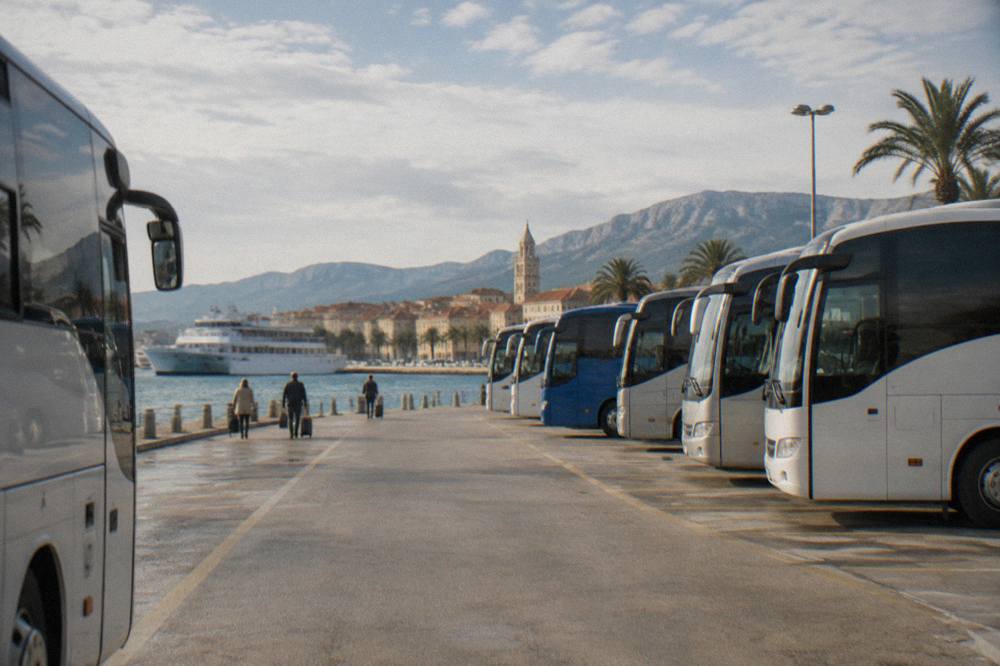
Driving gives the only fully flexible Split to Zadar day: 159.5 km and about two hours each way, on your own clock. The alternative is a coach from Split's main bus station on Obala kneza Domagoja, 500 to 600 m from the palace, where Split's bus hub sits alongside the ferry port and the railway station. A hired day trip suits travellers who want the Krka stopover handled for them.
The self-drive case rests on the stops. The road from Split to Zadar passes Trogir at 36 minutes, Šibenik at 71 minutes and the Krka turn-offs around 74 minutes out, so a car turns a two-hour transfer into a day with three visits in it. The trade-off is parking and tolls: this site prints no parking tariffs and no motorway toll figures, because none are published in its source material, so budget for both as unknowns and check locally. The Split car rental guide covers the practical side of hiring in the city.
The coach case rests on simplicity. Split's main bus station is a short walk from the palace, and intercity coaches run along the coast to destinations including Dubrovnik, at about four hours, and Zagreb, at about five and a half.
The tour case rests on the Krka problem. The park lies almost exactly on the Split to Zadar axis, and its ticket already includes the Skradin boat and Lozovac bus transfers from 1 April to 31 October, but getting to Skradin or Lozovac from Split without a car requires planning that a guided trip absorbs. The operator's live listing carries the current price, the meeting point and what is included.
A middle path deserves mention: drive yourself one way and spend a night in Zadar rather than returning the same evening. A same-day round trip means driving the full 159.5 km route twice, out and back, which leaves little daylight for anything at the far end outside midsummer. An overnight turns the journey into a relaxed coastal transfer with a Krka or Šibenik stop in each direction. The where to stay in Split guide explains the neighbourhood logic for the Split end of that plan.
Is Krka National Park On The Way From Split To Zadar?
Krka National Park sits almost exactly on the Split to Zadar route: Skradinski buk, the park's headline waterfall area, is 90.2 km and about 74 minutes of free-flow driving from Diocletian's Palace, within easy reach of the road before it continues north to Zadar.
The park's 2026 price list charges adults 40 EUR in June to September, 20 EUR in April, May and October, and 7 EUR from January to March and in November to December, and the ticket includes the Skradin boat and Lozovac bus transfers from 1 April to 31 October.
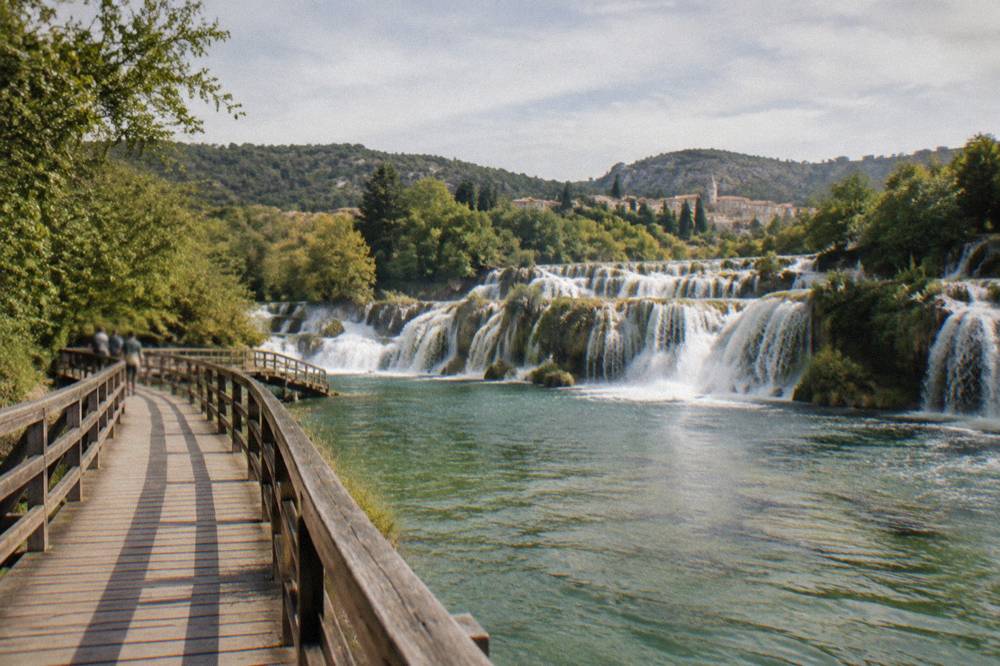
The geography is what makes this stop so workable. Skradin, the boat departure point for Skradinski buk, sits just off the northbound route inland of Šibenik, so the detour from a Split to Zadar drive is measured in minutes rather than hours. The Krka price list publishes its full seasonal ladder, and from 1 October 2026 the autumn reduction brought the adult ticket to 20 EUR in October and 7 EUR from November, which makes late-season travel to Zadar noticeably cheaper for anyone stopping at the park.
One rule matters more than the price. The park's own rules state that swimming is not allowed outside clearly marked swimming areas, and the old claim that you can swim at Skradinski buk no longer describes the park's regulations. Designated swimming spots are reported at Roški slap, Stinice and Pisak, open 1 June to 30 September. Anyone booking a tour on the promise of a swim under the main falls should read the itinerary wording carefully.
| Period | Krka adult ticket | Notes |
|---|---|---|
| January to March | 7 EUR | Boat and bus transfers not running |
| April, May, October | 20 EUR | Transfers included from 1 April to 31 October |
| June to September | 40 EUR | Peak season price, transfers included |
| Roški slap, Kistanje, Manojlovac, Burnum, Eco Campus sites | 7 / 12 / 20 EUR by season | Separate price ladder for the outlying sites |
Guided Krka options from Split vary in what they wrap around the park entry. The related trip on this page pairs the waterfalls with food and wine tasting and runs as a full day from the city; Check availability on the operator's live listing for the current dates and inclusions. The Krka National Park guide covers the park's sites, rules and seasons in full detail.
What Does A One-Day Split To Zadar Itinerary Look Like?
A realistic one-day plan leaves Split by 8:00, reaches Skradin or Lozovac by about 9:30, spends two and a half to three hours at Krka, and drives the remaining leg to Zadar in roughly the second hour of the day's driving, arriving mid afternoon with time on the peninsula before the evening return of about two hours to Split. The shape of the day is dictated by the park's transfer boats and the 40 EUR peak ticket, not by Zadar itself.
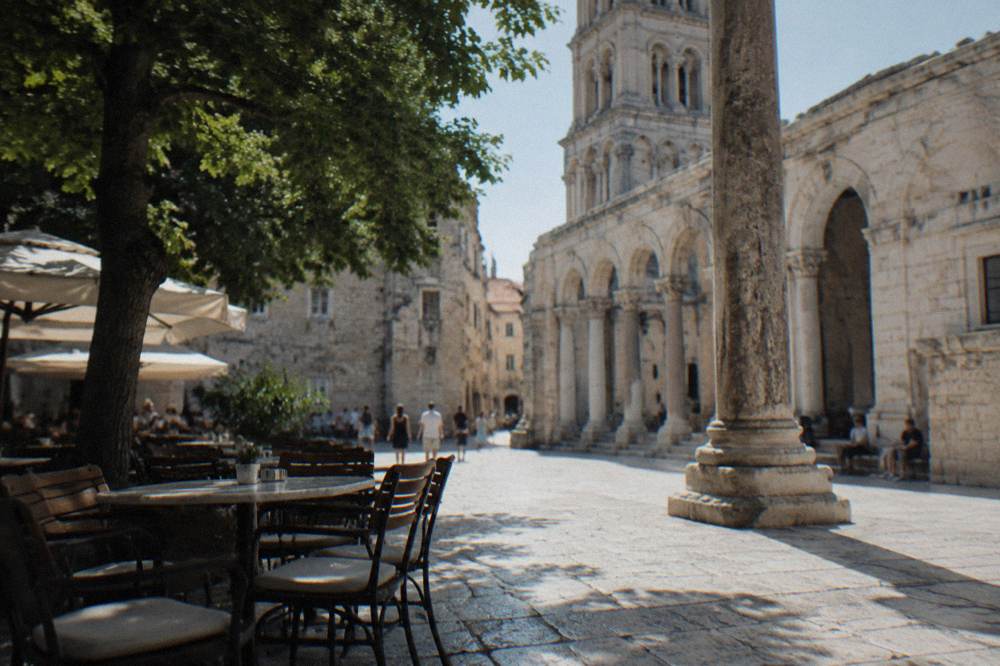
The morning belongs to the road and the waterfalls. An 8:00 departure from the palace puts you at the Krka entrance around 9:30 in free-flow conditions, which matters because the included boat from Skradin and bus from Lozovac run on fixed schedules and the midday hours are when the park's walkways are busiest. Two and a half hours is enough to walk the Skradinski buk boardwalk circuit and see the main falls without rushing; longer if you want the outlying sites, which carry their own ticket ladder and their own driving time.
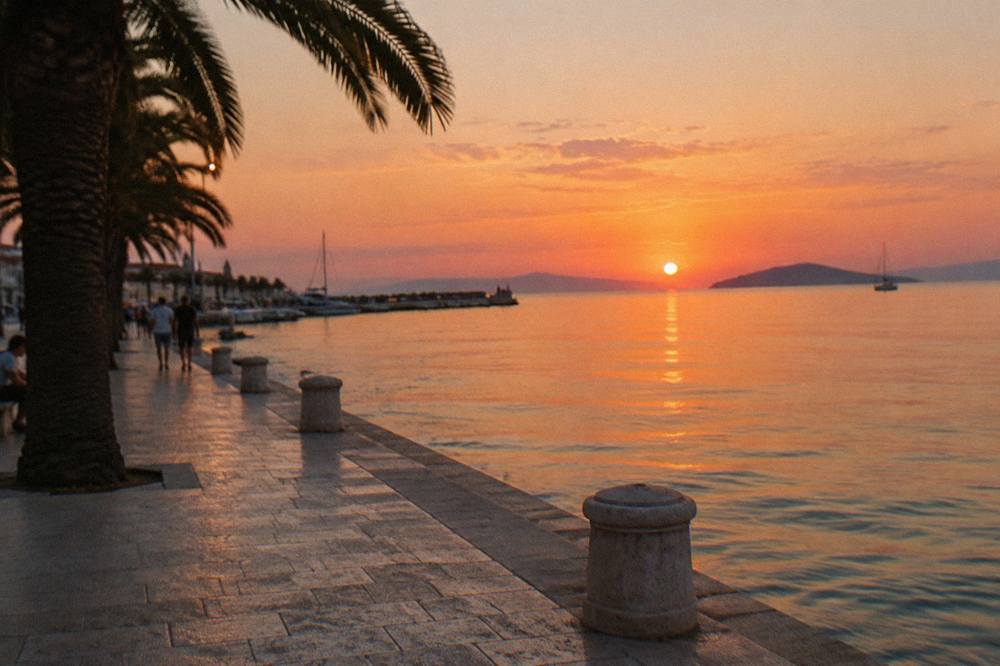
The afternoon belongs to Zadar. The final leg north is the shortest of the day, and arrival in the early afternoon leaves three to four usable hours on the peninsula before the drive back. Zadar's old core is compact and walkable, set on a peninsula jutting into a narrow channel, so a first visit does not need transport once you have parked or been dropped. The evening return to Split is about two hours of driving, and in summer it is worth delaying departure until after the sunset crowd thins, because Zadar's west-facing waterfront is built for exactly that hour.
A variant that removes the pressure: skip Krka on the northbound leg, go straight to Zadar in two hours, spend a full afternoon there, and stop in Šibenik or Trogir on the way back instead. Trogir at 36 minutes from Split is the easiest late stop of all, a UNESCO-listed old town on its own small island, inscribed in 1997, and the Trogir guide covers it separately. This site's source material does not verify a Trogir cathedral ticket price, so confirm that at the entrance.
How Do Split And Zadar Compare As Bases In Dalmatia?
Split is a city of 160,577 people at the 2021 census, Croatia's busiest passenger port at 6.05 million port passengers in 2025, and the transport hub from which the Dalmatian day trips radiate; Zadar is smaller, quieter and closer to the northern parks. Split holds the UNESCO listing for Diocletian's Palace from 1979, the airport with 3,881,186 passengers in 2025, and the islands of Brač, Hvar, Šolta and Vis offshore. The comparison comes down to connections versus calm.
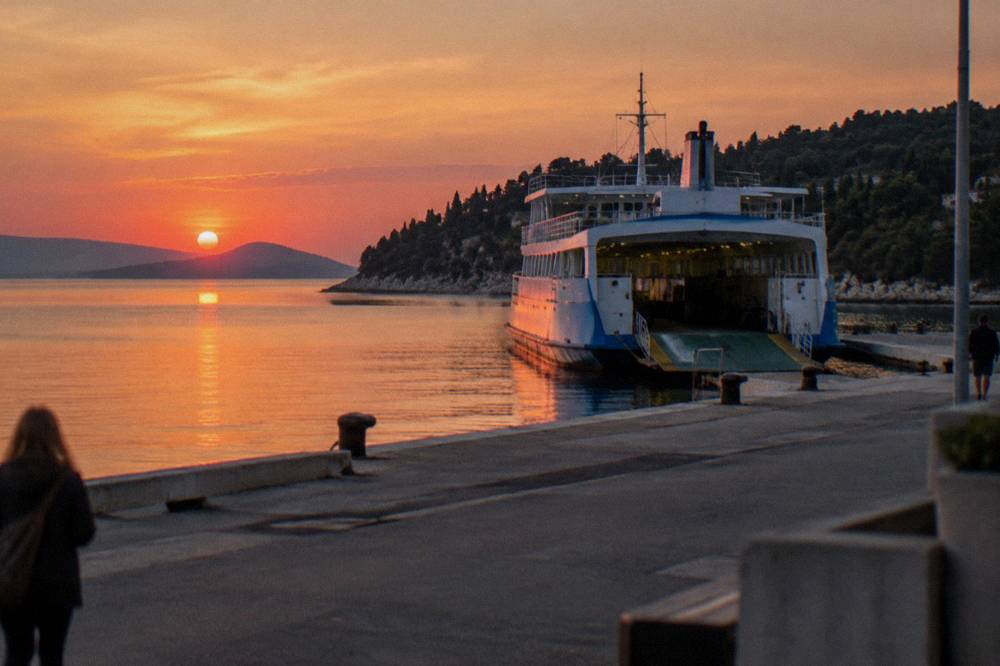
The numbers tell the hub story plainly. The Port of Split's own page states 6.05 million passengers in 2025 and calls itself Croatia's leading passenger port; the airport's statistics page records 3,881,186 passengers in 2025 and 3,376,272 in January to September 2026. From the port, the Jadrolinija network runs car ferries to Stari Grad on Hvar in about 120 minutes, to Supetar on Brač in about 50, to Rogač on Šolta in about 60, and to Vis in about 140, alongside catamarans to Hvar town, Jelsa and Vis.
| Measure | Split | Zadar |
|---|---|---|
| Population | 160,577 (2021 census) | Smaller; no figure in this site's sources |
| UNESCO listing | Palace of Diocletian complex, 1979 | Not stated in this site's sources |
| Port passengers 2025 | 6.05 million | No figure in this site's sources |
| Airport passengers 2025 | 3,881,186 | No figure in this site's sources |
| Drive from the other city | 159.5 km, about 2 h | Same, in reverse |
| Classic day trips | Krka, Plitvice, Hvar, Brač, Vis, Trogir, Mostar, Dubrovnik | Closer to the northern park areas by road position |
For a fuller argument in both directions, the Split vs Zadar guide and the reader question is Zadar nicer than Split take the comparison deeper than this route page can. The short version: if the itinerary is built around islands and boat days, Split's ferry web decides it; if it is built around long northern drives and smaller-town evenings, Zadar earns its place, and many travellers do both in one trip, which is exactly the journey this page describes.
What Does The Split To Zadar Route Cost In Tickets And Entry Fees?
The route's published costs are the Krka ticket, 7 / 20 / 40 EUR by season for adults, the ferry-free road journey itself, and anything you spend in Zadar, for which this site's sources publish no entry prices. Split's own headline sites sit at the start of the day: the palace cellars are run by the Split City Museum, whose price list shows 10.00 EUR adult, 8.00 reduced, family 18.00, and the Archaeological Museum charges 8 EUR with a 10 EUR combined ticket including Salona within 7 days.
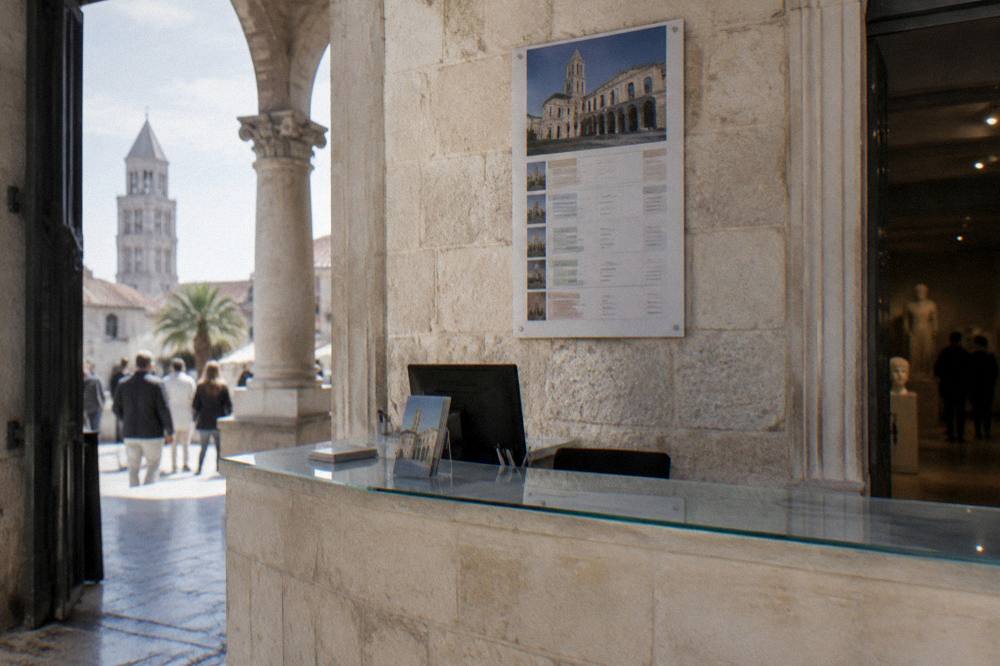
The honest position on the gaps: this site prints no coach fare between Split and Zadar, no parking tariffs in either city, no motorway tolls and no fuel estimate, because none of those figures exists in its source material. Any page quoting an exact Split to Zadar bus price without naming the carrier's own tariff is guessing. Confirm those items at the station, at the parking meter or with the rental company.
What can be tabulated is the published entry ladder for the stops that sit on or near this route, all of it from official price lists. Note that the Split City Museum at Papalić Palace is closed Mondays, while the cellars run Monday to Sunday 8:30 to 20:00, with the central part under restoration to the end of 2026 while the passage stays open.
| Site on or near the route | Adult price | Source basis |
|---|---|---|
| Diocletian's Palace cellars, Split | 10.00 EUR | Split City Museum price list |
| Split City Museum, Papalić Palace | 10.00 EUR, family 18.00 | Official price list, closed Mondays |
| Archaeological Museum Split | 8 EUR, combined with Salona 10 EUR | Official price list, within 7 days |
| Meštrović Gallery, Split | 12.00 EUR, includes Crikvine-Kaštilac | Official price list |
| Klis Fortress, 22 min off route | 10 EUR | Reported figure, Game of Thrones Meereen location |
| Krka National Park | 7 / 20 / 40 EUR by season | Official 2026 price list |
| Zadar entries | No published figure in this site's sources | Confirm on site |
Two planning notes on that column. First, the Krka prices quoted are the 2026 ladder, and the autumn reduction from 1 October 2026 dropped the adult ticket to 20 EUR in October and 7 EUR from November, so a shoulder-season Zadar trip with a Krka stop is materially cheaper than the same day in August. Second, the tourist tax applies wherever you sleep: about 2.65 EUR per person per night in high season, under 12 free and 12 to 18 half, collected by the accommodation and confirmed at booking.
When Is The Best Time Of Year To Do The Split To Zadar Trip?
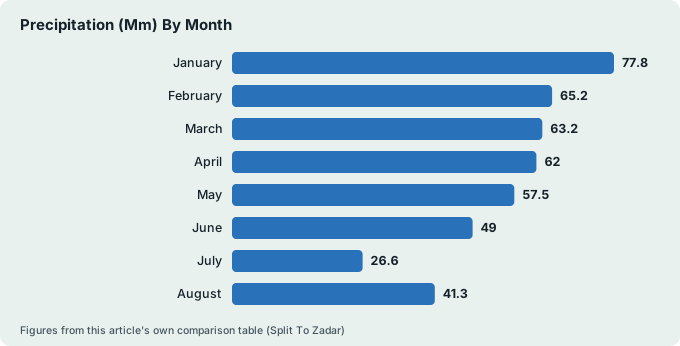
The warmest and busiest window is July at a 26.2 C monthly mean on the DHMZ Split-Marjan station record for 1948 to 2024, with August close behind at 25.9 C and 17 days at 30 C or more; the quieter value window is late September into October, when the sea is still swimmable in practice and Krka's ticket drops to 20 EUR from 1 October. November is the wettest month at 115.5 mm, and July the driest at 26.6 mm.
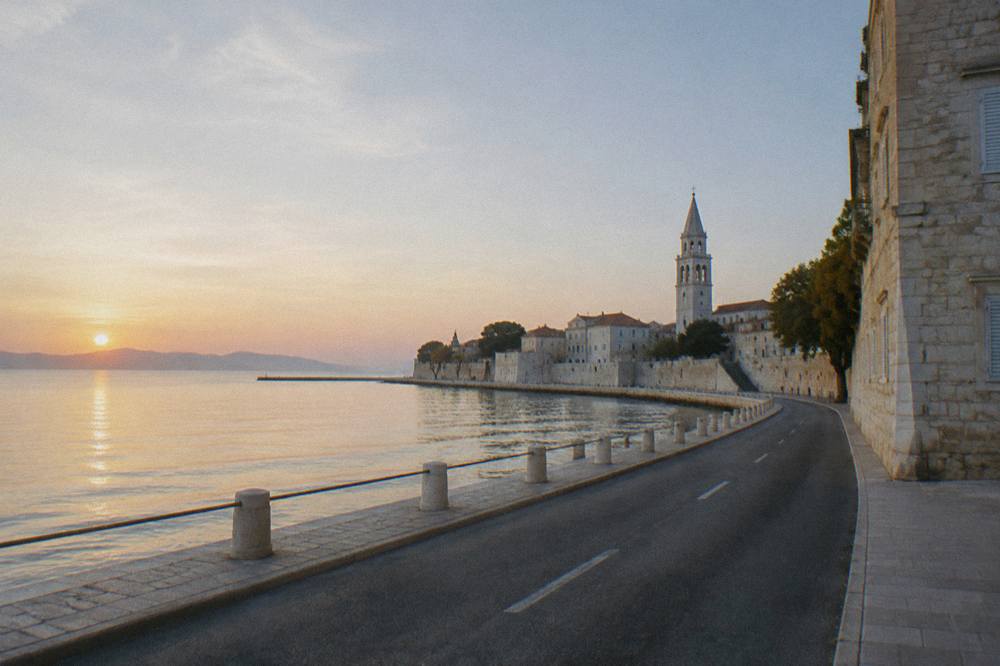
The monthly record from the Split-Marjan station gives the planning frame. Rainfall bottoms out in July at 26.6 mm and peaks in November at 115.5 mm, with October already at 77 mm, so the dry window for a long outdoor day runs May through September. Sunshine follows the same curve, with 353.3 hours in July against 120.8 in December. The full table and its interpretation sit in the Split weather guide, and the month-by-month trade-offs are argued in the best time to visit Split.
| Month | Mean temperature (C) | Precipitation (mm) |
|---|---|---|
| January | 8.0 | 77.8 |
| February | 8.5 | 65.2 |
| March | 10.8 | 63.2 |
| April | 14.4 | 62.0 |
| May | 19.2 | 57.5 |
| June | 23.4 | 49.0 |
| July | 26.2 | 26.6 |
| August | 25.9 | 41.3 |
| September | 21.6 | 70.9 |
| October | 17.2 | 77.0 |
| November | 12.7 | 115.5 |
| December | 9.4 | 103.7 |
Source: DHMZ Split-Marjan station, monthly means 1948 to 2024.
For this specific route, October deserves a stronger case than it usually gets. The Krka price halves from 1 October, the road traffic thins after the summer peak, and the 17.2 C monthly mean is still a lunch-outdoors temperature on Zadar's waterfront. The trade-off is the rising rain figure and the end of the park's included boat and bus transfers on 31 October. In midsummer, the argument reverses: everything is open, the days are long, and both the road and the Krka boardwalks are at their fullest, so book any guided element early and leave Split as early as you can manage.
Worth saying plainly: if the point of the trip is coastline rather than the specific city at the far end, the sea alternatives from Split are strong. A boat day out of Split reaches the Blue Cave, Hvar and the Pakleni islands, and the Split boat tours guide compares the whole fleet against a road day like this one. Some travellers do a road day north and a boat day south in the same week, which is arguably the best use of a Split base of all.
Common Questions About Split To Zadar
How Far Is Zadar From Split?
Zadar is 159.5 km from Diocletian's Palace in Split, a drive of about two hours in free-flow traffic on the standard routing. Summer traffic can extend that considerably.
Can You Do Zadar As A Day Trip From Split?
Yes, with an early start. The two-hour drive each way leaves three to four usable hours in Zadar, and a Krka stop on the way is realistic if you leave Split by about 8:00. An overnight is the more relaxed option.
Is Krka National Park On The Way To Zadar?
Almost exactly. Skradinski buk is 90.2 km and about 74 minutes from the palace, with the Skradin boat and Lozovac bus transfers included in the ticket from 1 April to 31 October.
How Much Does Krka Cost On The Split To Zadar Route?
The official 2026 price list charges adults 40 EUR in June to September, 20 EUR in April, May and October, and 7 EUR from January to March and November to December. The outlying park sites carry their own ladder of 7, 12 and 20 EUR.
Is There A Ferry Or Train From Split To Zadar?
No useful one. The route is a road journey by car or coach. Split's ferries serve the islands, including about 120 minutes to Stari Grad on Hvar and about 50 to Supetar on Brač, not the northern coast.
Which Is A Better Base, Split Or Zadar?
Split holds the transport web: 6.05 million port passengers in 2025, ferry lines to four islands, and the airport with 3,881,186 passengers that year. Zadar is quieter and better placed for the north. The full argument is in the Split vs Zadar guide on Split Croatia Travel Guide.
The route between Split and Zadar is one of the few Dalmatian journeys where the stops are as good as the destination, and the numbers above let you cost and time it before you commit to either city as your base.