Split Vs Zadar
Split is a coastal city in central Dalmatia built in and around Diocletian's Palace, and Zadar sits 159.5 km up the Adriatic coast. Here is how the two cities actually compare for a holiday base, with the real numbers.
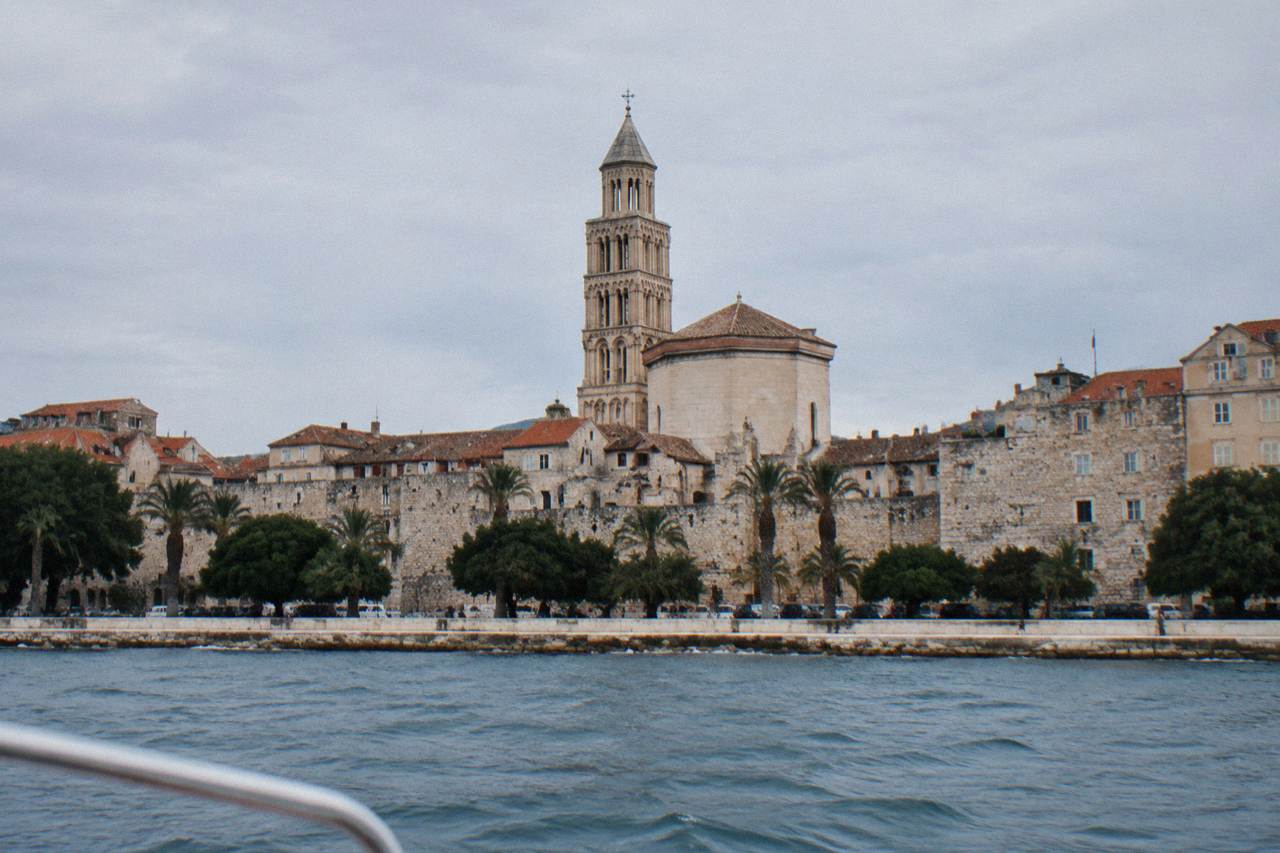
Short answer
Split is the bigger transport hub: its ferry port, main bus station and railway station sit together 500 to 600 m from the palace, and Krka, Trogir, Hvar and Plitvice day trips all start there. Zadar is 159.5 km away, about 2 h by road, and makes a workable long day trip or an overnight stop.
Split is a coastal city in central Dalmatia, on the Adriatic, built in and around a Roman emperor's palace, and Zadar is another Dalmatian coastal city 159.5 km to the northwest, about two hours away by road. Travellers planning a Dalmatian itinerary keep asking which city deserves the hotel nights, and the honest answer depends on what the trip is for: Split is Croatia's busiest passenger port with 6.05 million port passengers in 2025 and the launch point for the islands of Brač, Hvar, Šolta and Vis, while Zadar is quieter and sits closer to the northern parks. This comparison sticks to figures that can be checked, from driving times to ferry crossings to ticket prices.
Is Split Or Zadar Better For A First Visit To Dalmatia?
Split works better as a first-visit base for Dalmatia, because its ferry port, main bus station and railway station sit together on Obala kneza Domagoja, 500 to 600 m from Diocletian's Palace, and every major day trip in the region starts from that one hub. Zadar suits a second visit or a northern itinerary built around the Zadar area itself. Neither city is a suburb of the other: they are 159.5 km apart.
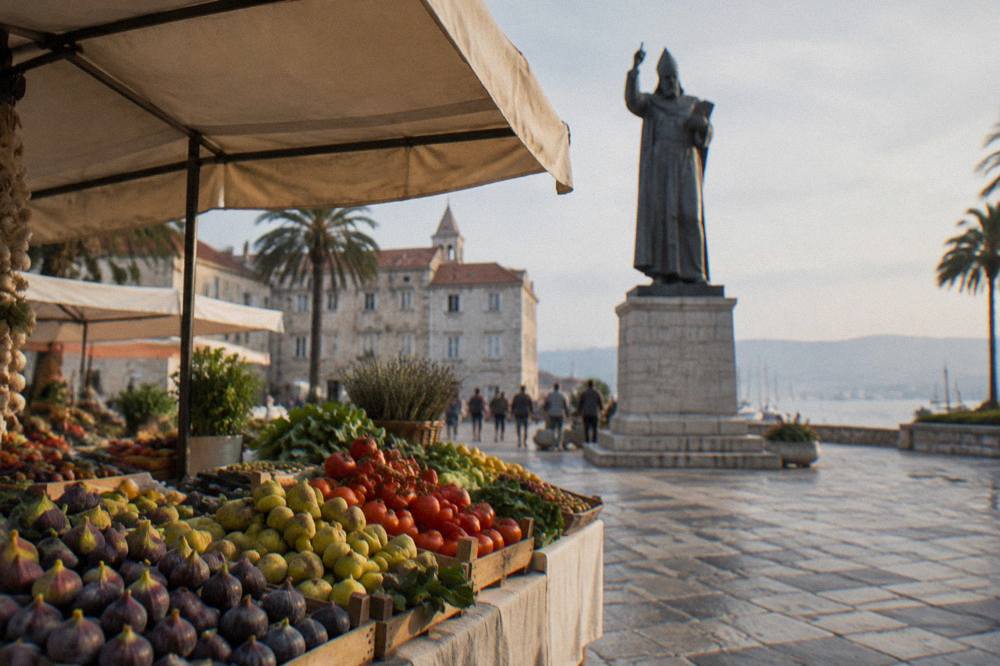
The case for Split is concentration. The UNESCO-listed Historical Complex of Split with the Palace of Diocletian, inscribed in 1979, is not a museum behind a ticket booth; it is the city centre, with 160,577 residents living in and around it according to the 2021 census. The Peristyle, the Riva, the Prokurative, the Golden Gate, the Grgur Ninski statue, the green markets, Marjan park forest and the city beaches are all free to walk. Ferries to four inhabited islands leave from the waterfront a few minutes' walk from the palace, and the day-trip belt around Split runs from Klis Fortress at 22 minutes by road to Plitvice Lakes at 3 h 15.
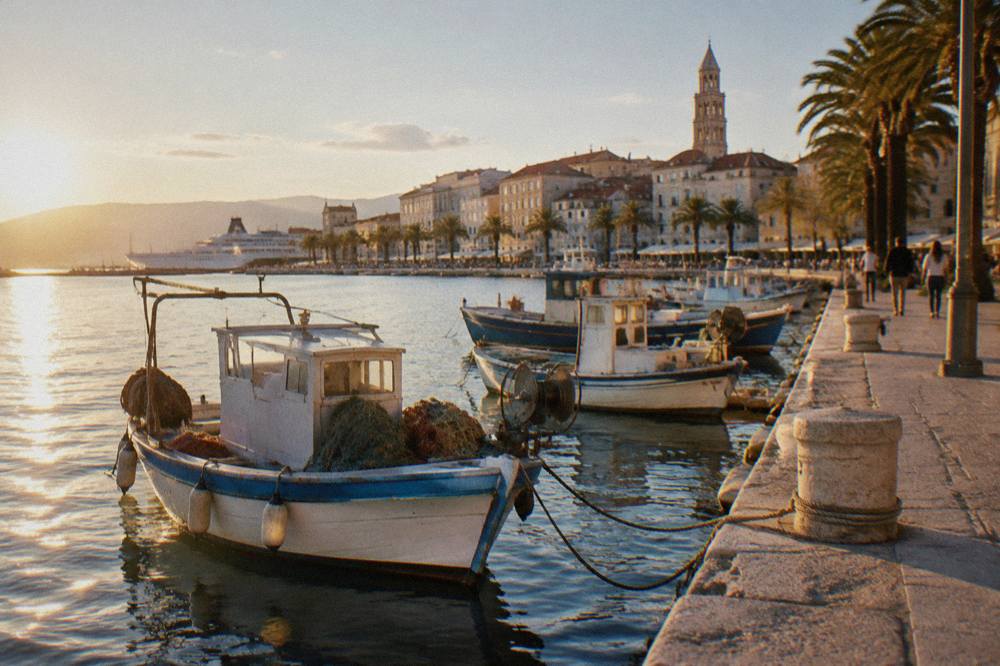
Zadar's advantages are real but narrower. It lies on the route between Split and the north, roughly two hours by road from Split and about four hours from Zagreb by comparison with Split's coach time of about 5 h 30. If the itinerary runs Zagreb, Plitvice, the coast and home, Zadar breaks the journey naturally. If the trip is anchored on islands, beaches and Roman Split, basing in Zadar means backtracking. The Split Croatia Travel Guide covers the southern base in depth; start with Things To Do In Split for the full picture.
How Far Is Zadar From Split, And How Do You Travel Between Them?
Zadar is 159.5 km from Diocletian's Palace in Split, about 2 h by road in free-flow conditions, measured from the palace itself. There is no direct sea link between the two cities, so the journey runs by road: a hired car, a coach, or a private transfer. Split's airport sits 20 km from the city and 6 km from Trogir, in Kaštel Štafilić, and Zadar has its own airport north of the city.
To check coach times and fares for the road north, book an intercity bus ticket here.
The 159.5 km figure is a computed free-flow driving time, so real summer traffic on the coastal stretch can stretch it. The motorway inland is the faster route for the whole distance; the coastal road through Šibenik, 84.8 km and 71 minutes from Split, is the scenic alternative and the one that serves the towns between. Coach timetables and fares between Split and Zadar are not carried here, so confirm schedules at the main bus station on Obala kneza Domagoja or with the operator before locking an itinerary.
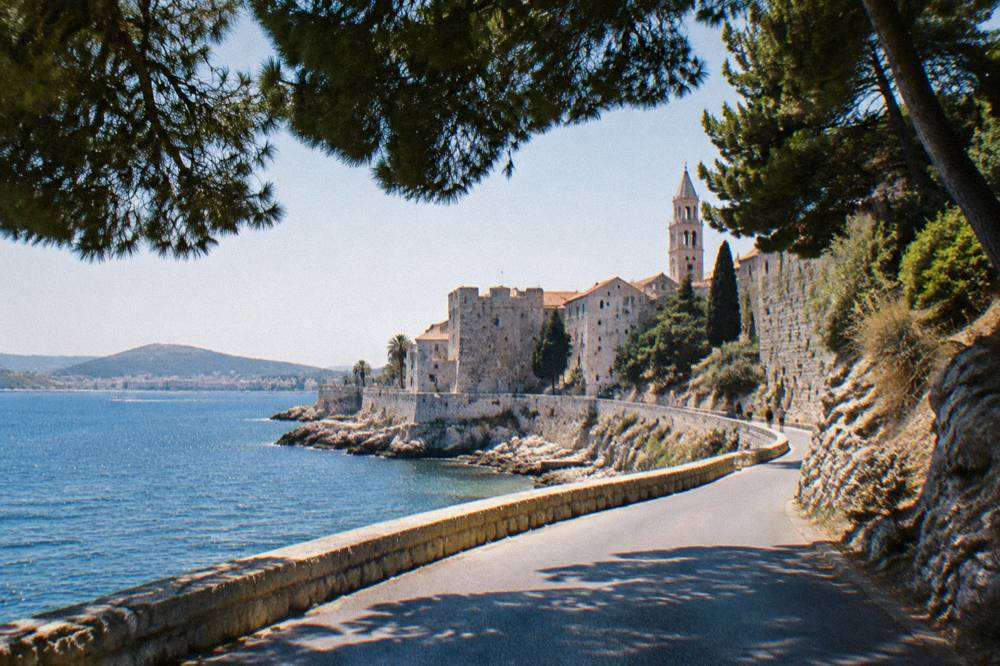
For flights, the calculus differs. Split Airport handled 3,881,186 passengers in 2025 and 3,376,272 in the first nine months of 2026, and from 30 April 2026 United Airlines ran a seasonal Newark service, the airport's first transatlantic route, into early September 2026. The planning pages Split Airport, Flights To Split and Split Airport To City Centre cover the southern side, and Split Car Rental covers the self-drive option for the coastal route north.
What Does Split Have That Zadar Does Not?
Split has a living Roman palace at its core, four ferry-served islands within 140 minutes, a 3.5 km forest peninsula inside the city, and a day-trip radius that includes Krka National Park at 74 minutes by road, Trogir at 36 minutes, Salona at 14 minutes and Klis Fortress at 22 minutes. No other Dalmatian city combines a UNESCO palace, a port of that scale and a park hill on one waterfront.
Diocletian built the palace c. 295 to 305 AD, and the UNESCO inscription of 1979 covers the whole historical complex, 20.8 ha of it. The cathedral bell tower, 57 m high, rises over the Peristyle, and the Temple of Jupiter survives as the Baptistery of St John inside the cathedral ticket scheme. The cellars, run by the Split City Museum, are open Monday to Sunday 8:30 to 20:00, with the central part under restoration to the end of 2026 while the passage stays open. That is a lot of Roman substance for a city you can also swim from.
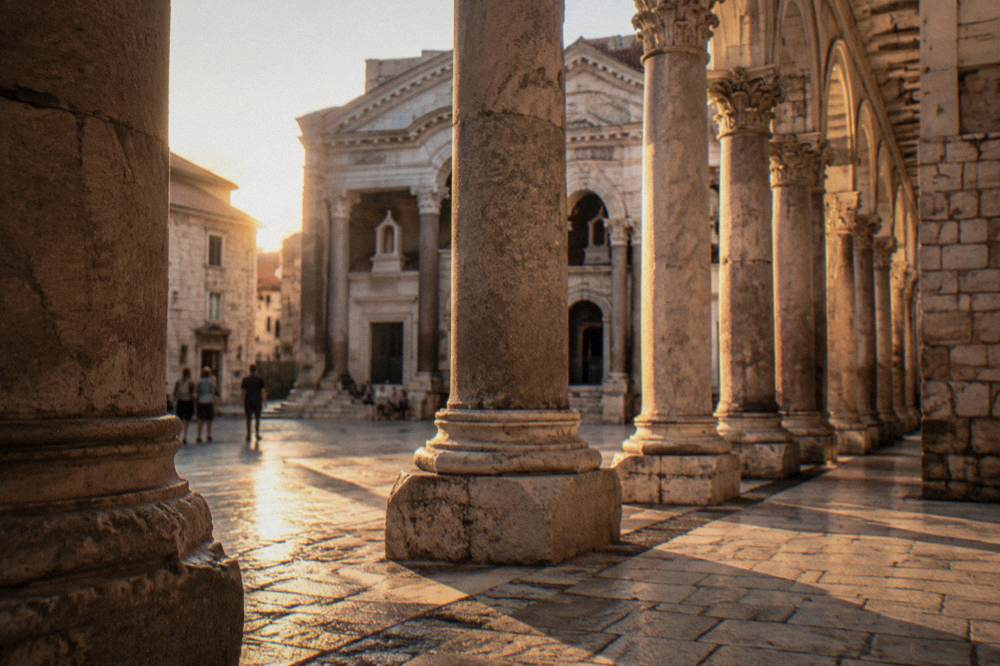
Marjan is the second card. The peninsula is 3.5 km long and 1.5 km wide, its highest point Telegrin stands 178 m above the sea, and 819 steps climb from Trumbićeva obala to the top. The city beaches, Bačvice among them, wrap the shoreline below, and picigin, the shallow-water ball game born on Bačvice in 1908 and now protected intangible heritage of Croatia, is played there in summer. None of this needs a ticket. Zadar's own sights are outside this comparison, so read the Zadar tourism pages directly for that side of the ledger.
Can You Visit Zadar As A Day Trip From Split?
Yes, Zadar is a workable day trip from Split: 159.5 km and about 2 h each way by road means roughly four hours of driving for a full day on the ground. It is a long day, and an overnight gives Zadar its due, but the distance is comparable to Split's own day trips to Plitvice, 258.1 km and 3 h 15 each way, which thousands of visitors do every season.
Treat the comparison honestly. Split's day-trip belt already includes two national parks and three UNESCO sites in every direction, listed in Split Day Trips. Zadar adds a northern coastal city to that list rather than replacing anything in it. If a Split-based week has a spare day and the road north appeals, Zadar fits; if the week already holds Krka, Plitvice and an island or two, the spare day is better spent on the water or on Marjan.
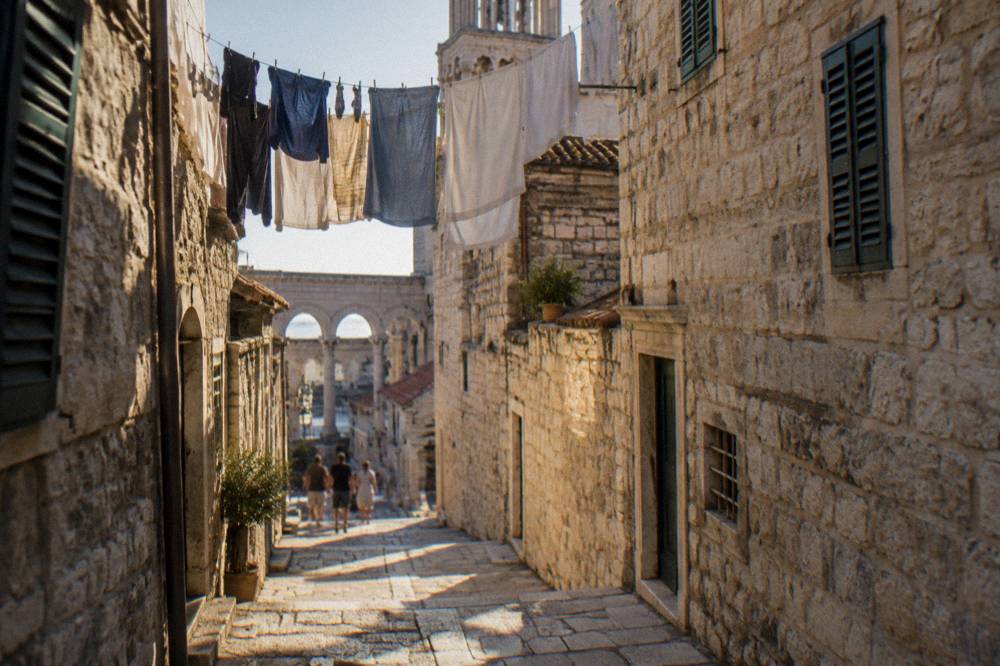
One structural point matters more than any single sight. Split's transport hub puts the ferry port, the main bus station and the railway station within 500 to 600 m of the palace, so day trips by sea, coach and rail all start from the same doorstep. Zadar, reached only by road from Split, cannot serve as a hub for the southern day trips: Krka's Skradinski buk is 90.2 km and 74 minutes from Split's palace, and every island crossing in this comparison leaves from Split. Base accordingly.
Which City Is Better For Islands And Boat Trips?
Split wins the island comparison outright, because the islands themselves are served from its port: the car ferry to Stari Grad on Hvar takes about 120 minutes, Supetar on Brač about 50, Rogač on Šolta about 60 and Vis about 140. Zadar has its own northern archipelago, but it does not serve Brač, Hvar, Šolta or Vis, and those four are the islands this comparison is about.
The fare picture from Split is concrete. Jadrolinija's price list shows a foot passenger on the Stari Grad line at 5.90 EUR off-season and 8.40 EUR in season. Catamarans run to Hvar town and Jelsa at 6.40 EUR low season and 10.00 EUR high, and to Vis at 7.20 and 10.00. From 2026 the Split to Supetar line has no off-season timetable at all, only high and low season, the fifth such line in Croatia, which says something about year-round island demand. Hvar town itself is reached by catamaran and Stari Grad by car ferry; the two are not interchangeable, a trap Split To Hvar Ferry and Ferries From Split unpack in detail.
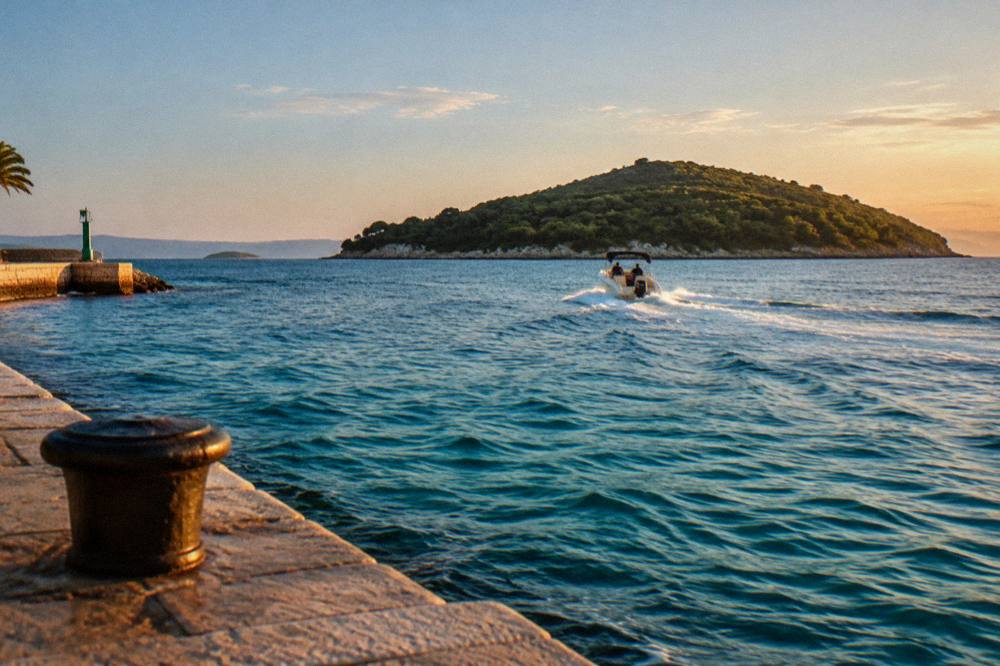
Paid boat trips stack on top of the ferries. The Blue Lagoon and three-island runs are the classic first boat day from Split, and the related trip for this page, the Split/Trogir Half-Day 3-Island Speedboat Adventure, covers exactly that shape of day: a half-day speedboat circuit of three islands with swim stops, departing from Split or Trogir. Its price, rating and running time render on its own page and in the live listing, so Check availability there rather than trusting second-hand figures. Split Boat Tours sorts the rest of the fleet by trip type.
How Do The Costs Compare Between Split And Zadar?
On the figures this site can print, Split's paid attractions run from 7.00 EUR at the Ethnographic Museum to 12.00 EUR at the Meštrović Gallery, with the Archaeological Museum at 8 EUR or 10 EUR combined with Salona within 7 days, and Klis Fortress at about 10 EUR. Croatia's tourist tax is about 2.65 EUR per person per night in high season everywhere in Split-Dalmatia County, under 12 free, 12 to 18 half, collected by the accommodation.
Zadar's museum and attraction prices are not compared here; check each venue's own price list before budgeting. What can be compared honestly is structure. Split's high-cost items are concentrated and optional: the palace substructures and cathedral complex tickets, a couple of museums, and the big day trips. The free layer, Peristyle, Riva, Prokurative, Golden Gate, the markets, Marjan and the beaches, is unusually thick for a city of this size and covers a full day on its own.
| Split attraction | Adult price | Notes |
|---|---|---|
| Peristyle, Riva, Prokurative, Golden Gate, Marjan, city beaches | Free | No ticket on any official source |
| Diocletian's Palace cellars | 10 EUR | Split City Museum, Mon to Sun 8:30 to 20:00; central part under restoration to end of 2026, passage open |
| Split City Museum, Papalić Palace | 10.00 EUR | 8.00 reduced, family 18.00, closed Mondays |
| Cathedral of St Domnius complex | From about 5 EUR, combined up to about 15 EUR | Secondary pricing; shoulders and knees covered; no hours printed |
| Archaeological Museum | 8 EUR | Combined with Salona 10 EUR within 7 days |
| Meštrović Gallery | 12.00 EUR | Includes Crikvine-Kaštilac; reopened April 2026 after renovation |
| Ethnographic Museum | 7.00 EUR | Vestibule 2.00 |
| Klis Fortress | About 10 EUR | 22 min by road from the palace |
Budget travellers should also weigh the day-trip maths, since that is where a Split week's spending concentrates. Krka costs 7 EUR in January to March and November to December, 20 EUR in April, May and October, and 40 EUR from June to September, with the autumn prices confirmed from 1 October 2026. Plitvice runs 10, 23 and 40 EUR by the same seasons, with a 25 EUR afternoon slot at peak and the visitor's name mandatory on the ticket under timed online entry. Split On A Budget and Free Things To Do In Split build the low-spend days around them.
Which City Has The Better Weather And Beach Season?
Split's climate record is the only one this site prints: the DHMZ Split Marjan station, monthly means for 1948 to 2024, shows July warmest at 26.2 C and January at 8.0 C, November the wettest month at 115.5 mm and July the driest at 26.6 mm, with 353.3 hours of sunshine in July and about 2,600 hours across the year. No Zadar station figure is printed here, so no city is called warmer or sunnier.
The Split numbers set the regional rhythm, and Zadar, on the same coast 159.5 km north, shares the broad pattern even though its own station data is not printed on this page. What the Split table does support is season planning. July and August are the peak: 18 days at 30 C or more in July and 17 in August, against 7 in June, which makes June the sweeter month for anyone who melts slowly. Rain concentrates in late autumn, with November at 115.5 mm and December at 103.7 mm.
| Month | Mean temperature C | Precipitation mm |
|---|---|---|
| Jan | 8.0 | 77.8 |
| Feb | 8.5 | 65.2 |
| Mar | 10.8 | 63.2 |
| Apr | 14.4 | 62.0 |
| May | 19.2 | 57.5 |
| Jun | 23.4 | 49.0 |
| Jul | 26.2 | 26.6 |
| Aug | 25.9 | 41.3 |
| Sep | 21.6 | 70.9 |
| Oct | 17.2 | 77.0 |
| Nov | 12.7 | 115.5 |
| Dec | 9.4 | 103.7 |
Beaches are a Split structural advantage rather than a weather one. Bačvice, the city beach where picigin has been played since 1908, sits minutes from the palace; Žnjan and the eastern beaches spread along the shore, and Marjan's coves sit under the hill. Split Beaches maps them. For the season question overall, Split Weather and Best Time To Visit Split carry the detail; the short version is May, June and September for warmth without the 30 C days, and November for the quietest, wettest streets.
Should You Split Your Trip Between Split And Zadar?
A split itinerary works well: base four or more nights in Split for the palace, Marjan, the islands and the southern day trips, then take the 159.5 km road north, about 2 h, and finish with one or two nights in Zadar on the way towards Plitvice or Zagreb. Reversing the order works equally well if the flights land in the north, and the drive between the two cities passes Šibenik and Trogir if you break it.
The direction usually follows the flights. Split Airport's 2026 season added the first transatlantic route, Newark from 30 April to early September, alongside its 3,881,186 passengers in 2025, so plenty of itineraries now open in the south. From the north, Zagreb connects to Split by coach in about 5 h 30 or by train in about 7 h 15 to 8 h 10, and Plitvice is 258.1 km and 3 h 15 from Split's palace, which makes the park a natural hinge between a Zadar finish and a Split finish.
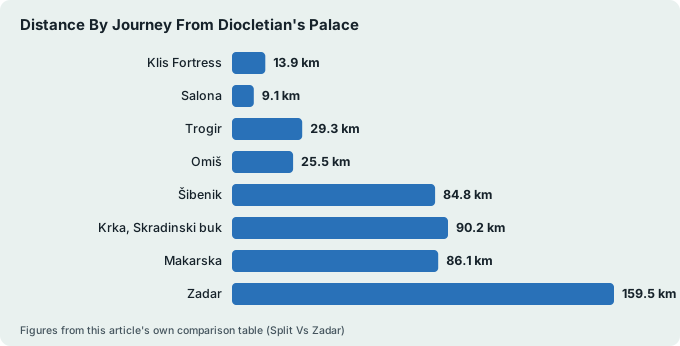
| Journey from Diocletian's Palace | Distance | Free-flow time |
|---|---|---|
| Klis Fortress | 13.9 km | 22 min |
| Salona | 9.1 km | 14 min |
| Trogir | 29.3 km | 36 min |
| Omiš | 25.5 km | 38 min |
| Šibenik | 84.8 km | 71 min |
| Krka, Skradinski buk | 90.2 km | 74 min |
| Makarska | 86.1 km | 75 min |
| Zadar | 159.5 km | 2 h |
| Mostar | 173.2 km | 2 h 13 |
| Plitvice Lakes | 258.1 km | 3 h 15 |
| Dubrovnik | 234.8 km | 3 h 21 |
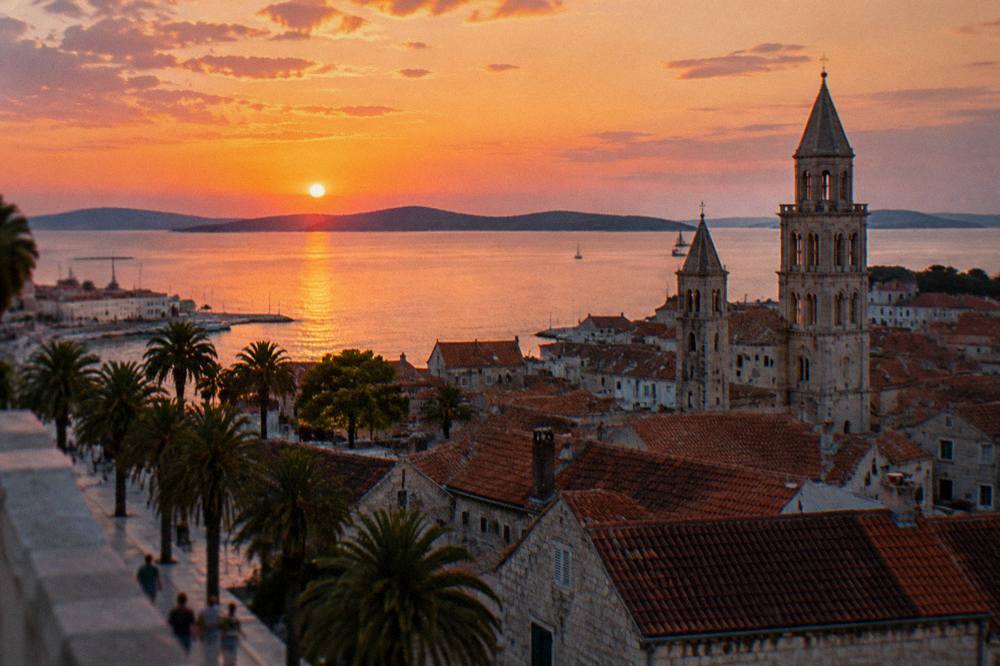
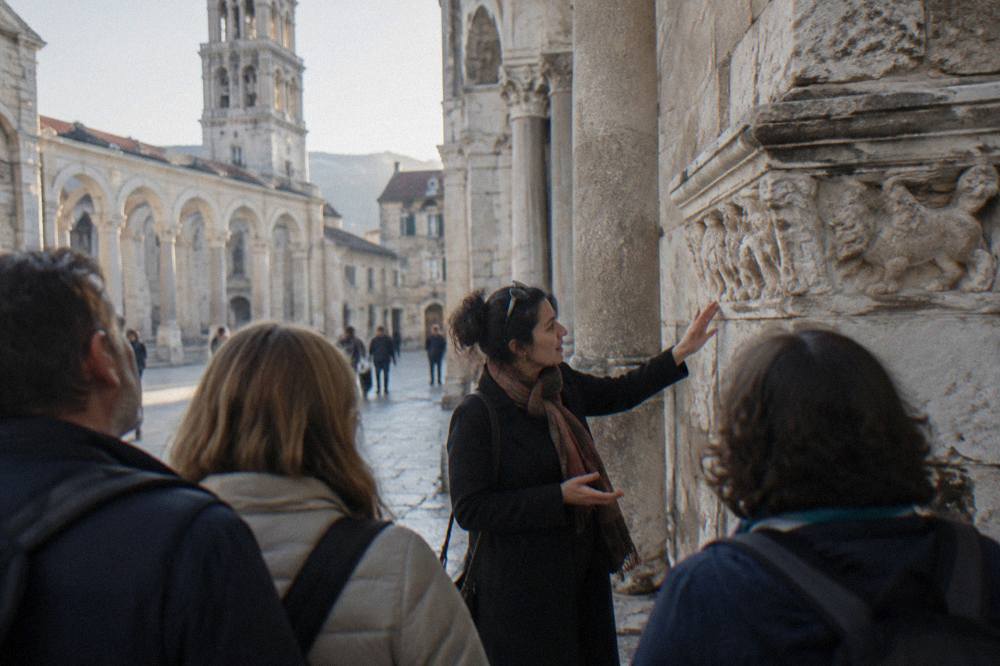
For a Split base, the practical picks depend on the day. A walking tour of the palace gives the history in one pass; the Krka, food and wine, and Mostar circuits cover the far day trips; and the speedboat half-day covers the water. Each tour's price, rating and duration sit on its live listing, never in prose, and the operator's pages carry free-cancellation terms worth checking before committing a summer date.
Common Questions About Split Vs Zadar
Is Zadar nicer than Split?
Nicer is a taste question the numbers cannot settle. Split is bigger, 160,577 residents at the 2021 census, with a Roman palace centre and the region's busiest passenger port; Zadar is smaller and 159.5 km to the north. The full discussion sits in Is Zadar Nicer Than Split.
How far is Zadar from Split?
Zadar is 159.5 km from Diocletian's Palace in Split, about 2 h by road in free-flow conditions. There is no direct ferry between the two cities, so the trip runs by road.
Can you do a day trip from Split to Zadar?
Yes. At about 2 h each way by road, Zadar is a feasible long day trip from Split, though an overnight is more comfortable. It is shorter than the Plitvice day trip from Split, 3 h 15 each way.
Which city is better for islands, Split or Zadar?
For Brač, Hvar, Šolta and Vis, Split. Jadrolinija's lines run from Split: Stari Grad about 120 minutes, Supetar about 50, Rogač about 60 and Vis about 140, with foot-passenger fares from 5.90 EUR off-season on the Stari Grad line. Zadar does not serve these islands.
Is Split or Zadar cheaper?
Split's printed attraction prices run from 7.00 EUR to 12.00 EUR for its museums, with the tourist tax about 2.65 EUR per person per night in high season across Split-Dalmatia County. Zadar prices are not carried on this site; compare venue price lists directly before budgeting.
Should I stay in Split or Zadar for a first visit?
Split, for a first Dalmatian visit built around a Roman city, beaches and islands: its ferry port, bus station and railway station sit 500 to 600 m from the palace and every major day trip starts there. Add Zadar as an overnight on the way north to Plitvice or Zagreb.
The verdict in one line: base in Split, drive north when the islands are done, and let the 159.5 km between the two cities carry you past Trogir, Šibenik and the Krka turn-off on the way. Both cities keep their character best outside the July and August peak, when the DHMZ Split Marjan record shows 18 days at 30 C or more and the coast runs at full tilt.
