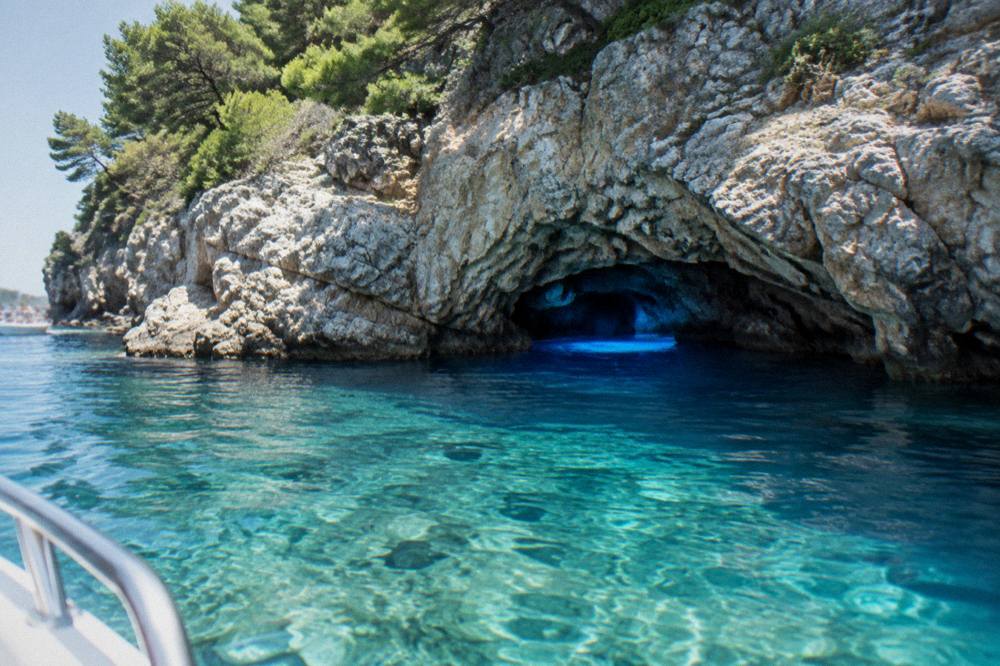
Blue Cave From Split
The Blue Cave sits on the island of Biševo, southwest of Vis, and Split is the practical departure point for the speedboat day trips that reach it. Here is what the timetables, price lists and tour listings actually say.
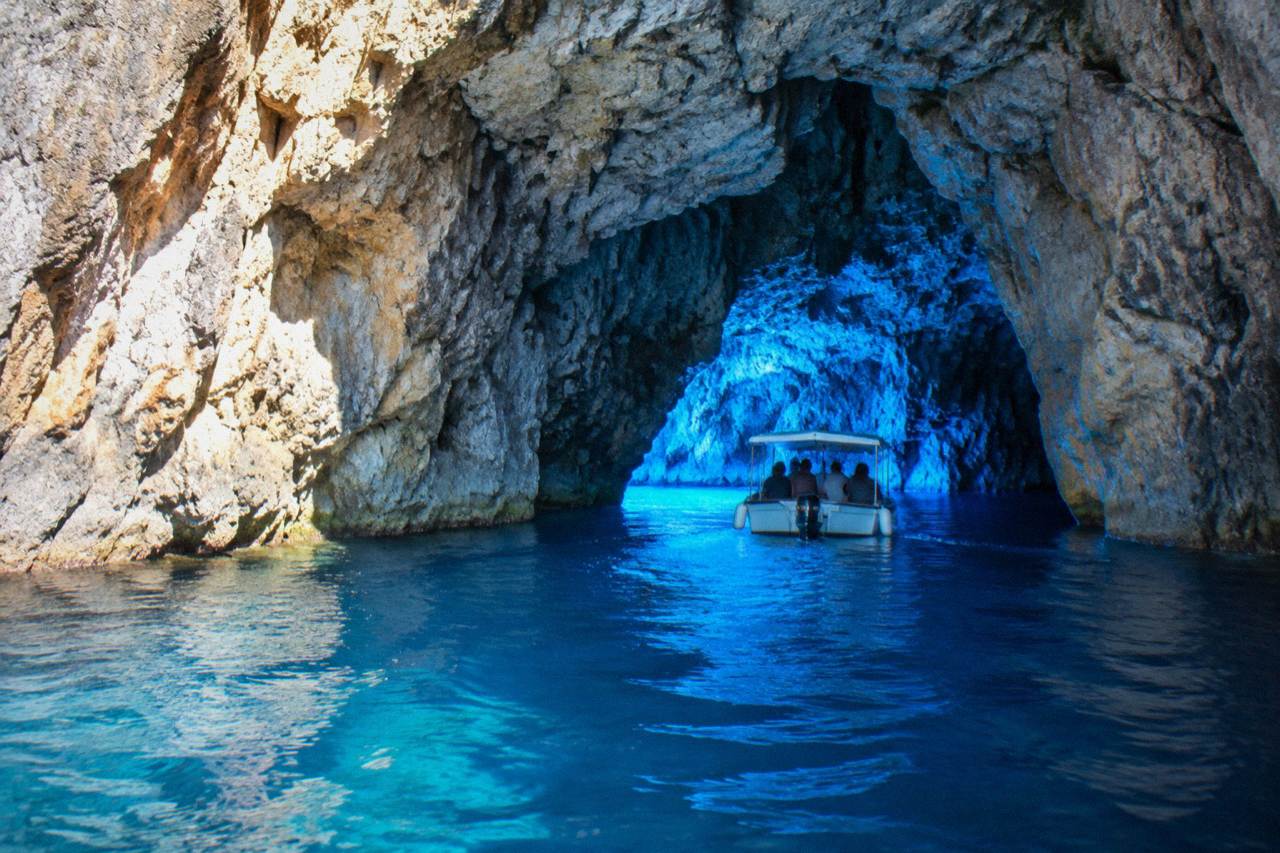
Short answer
The Blue Cave is reached from Split on a full-day speedboat tour via Vis, or independently by ferry to Vis plus a local boat transfer. Entrance is paid in cash on Biševo, about 24 EUR in high season, and sea conditions decide whether entry is possible on any given morning.
Split, the coastal city in Dalmatia on the Adriatic, is the departure point for one of the more demanding and more rewarded day trips on the Croatian coast: the Blue Cave on the island of Biševo, usually combined with the island of Vis and several swimming stops along the way. The cave is a sea grotto whose flooded interior glows blue in morning light, and reaching it from Split means crossing open water to a small island southwest of Vis, then transferring to a small local boat that enters the cave mouth. Tours, ferries, fees and weather all shape the day, and this guide sets out what the operator pages, price lists and timetables actually say.
What Is The Blue Cave And Where Exactly Is It?
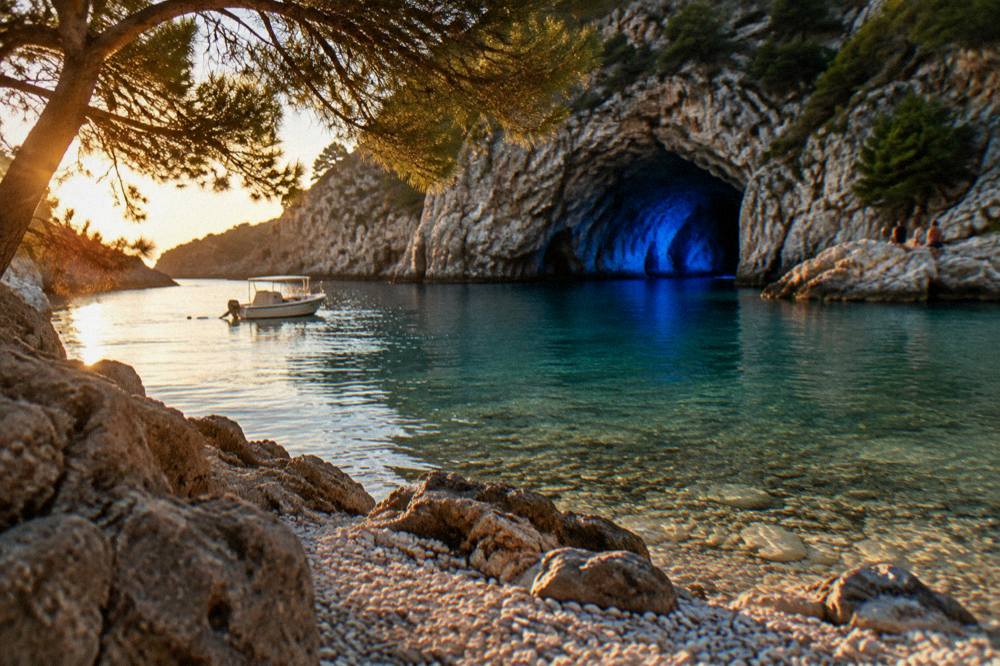
The Blue Cave is a sea cave on the eastern side of the island of Biševo, a small island southwest of Vis in the central Adriatic, reached from Split only by boat. Morning sunlight enters through an underwater opening and lights the water inside from below, which is why the cave glows blue. Entry is by small transfer boat, in groups, with life jackets, and only when the sea is calm enough. The effect depends on the sun being high enough and the water flat enough, so the whole operation is a morning business: boats aim to be at the cave entrance in the first hours after sunrise, well before the midday wind picks up. Biševo itself is a sparsely settled island of a few dozen permanent residents, and the cave is far and away its main draw. A fuller answer to the basic question sits in is there a Blue Cave in Split, which explains that the cave is not in Split at all but on Biševo, and that every trip to it starts from the Split waterfront or from Vis town.
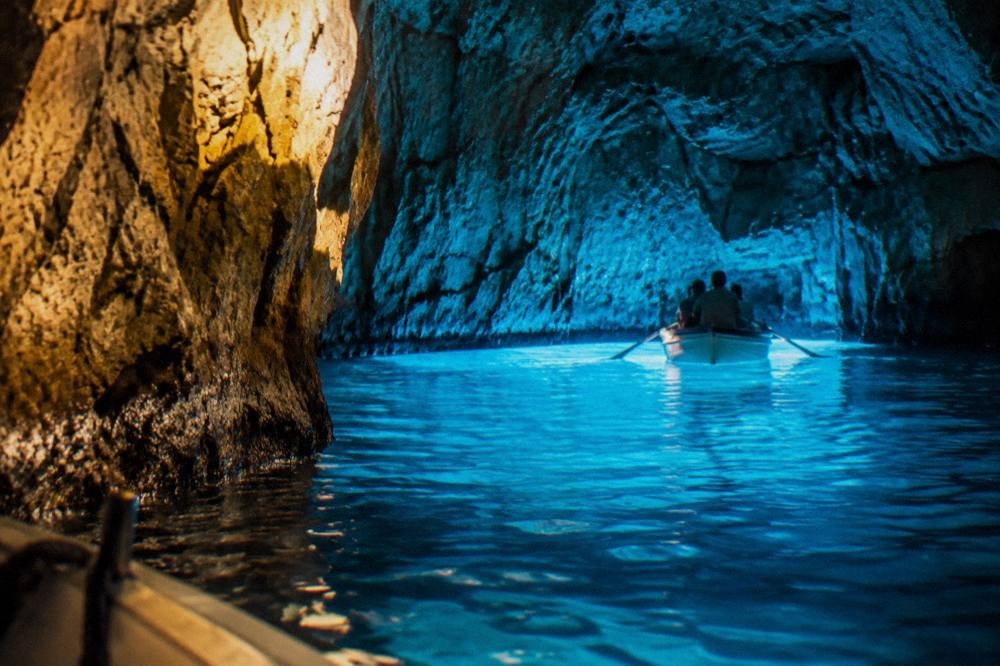
The crossing matters as much as the destination. From Split, a speedboat heading for Biševo passes either side of Šolta or across to Vis first, and the open stretch between Vis and Biševo is where skippers watch the weather most closely. When the maestral wind or a swell makes the cave mouth unsafe, trips divert to other stops rather than cancel outright, and the listings state this openly. Readers comparing cave trips should also check is Blue Lagoon the same as Blue Cave: the Blue Lagoon is a shallow swimming spot between Šolta and Drvenik, much closer to Split, and tours sometimes bundle both names in one long day.
How Do You Get From Split To The Blue Cave?
Two realistic routes exist from Split: a full-day small-group speedboat tour that visits the Blue Cave, Vis and further stops, or an independent trip using the Split to Vis ferry (about 140 minutes) or catamaran (line 9602, via Milna and Hvar) and then a local boat transfer from Vis town or Komiža to the cave. The tour is the only way to see the cave and swim stops in one day without an overnight on Vis. The port of Split, on Obala kneza Domagoja beside the main bus and railway stations, is where both routes begin; the ferry berths and the catamaran piers sit 500 to 600 m from Diocletian's Palace, and tour boats leave from the same waterfront. Jadrolinija's route page gives the Vis ferry at about 140 minutes, and the catamaran line 9602 runs Split, Milna, Hvar, Vis, with foot passenger fares to Vis reported at 7.20 EUR low season and 10.00 EUR high season. The Port of Split handled 6.05 million passengers in 2025, its own page states, and island traffic on these routes is a large share of it.
Prefer to make the crossing on your own schedule? Book a ferry ticket here.
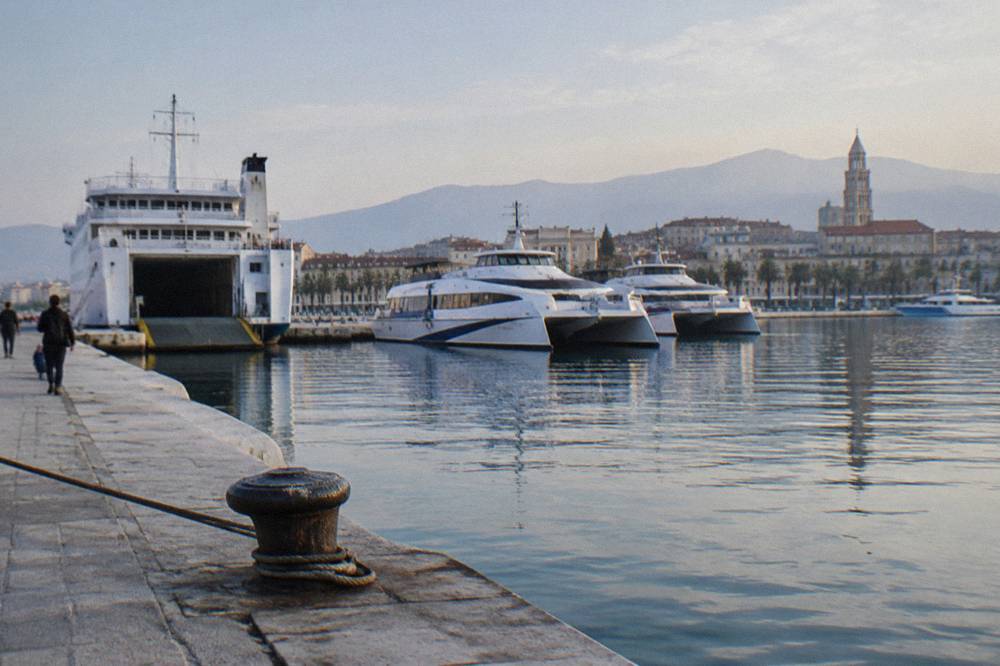
The independent route has a catch worth planning around: the local transfer boats from Vis to the cave are tied to the morning window, and the ferry schedule does not always deliver a foot passenger to Vis early enough on the same day. The practical independent version is an overnight on Vis, doing the cave the following morning from Komiža. For a single-day visit from Split, a tour is the structure that works, and the featured option on this site, the Blue Cave, Mamma Mia and Hvar 5-islands speedboat trip in a small group, covers Biševo, Vis and further island stops in one loop from the Split waterfront. You can Check availability for that trip, and read the details on its own page at Blue Cave, Mamma Mia and Hvar speedboat trip.
For readers mapping the wider island network from the same port, the day-trip guides to Hvar and Šolta and the Blue Lagoon cover the catamaran and ferry combinations in detail, and the general ferries from Split page lists the routes, including line 635 to Stari Grad on Hvar at about 120 minutes and line 636 to Rogač on Šolta at about 60 minutes.
What Does The Blue Cave Cost To Enter?
The Blue Cave entrance fee is reported at about 24 EUR per adult in the high season window from 20 June to 10 September, and about 18 EUR in the shoulder season, with children aged 6 to 12 paying half, and the fee is paid in cash on site at Biševo. The fee is separate from any tour price: tours carry you to the island, and the cave entry is collected at the entrance. These figures come from secondary reporting rather than an official Biševo price page, so carry cash in euros and confirm the current amount on the day. No visitor cap or daily limit for the cave has been published in any source this desk holds, so print none: what is certain is that entry happens in small boats, a handful of visitors at a time, which is why morning queues form in July and August even without a stated cap.
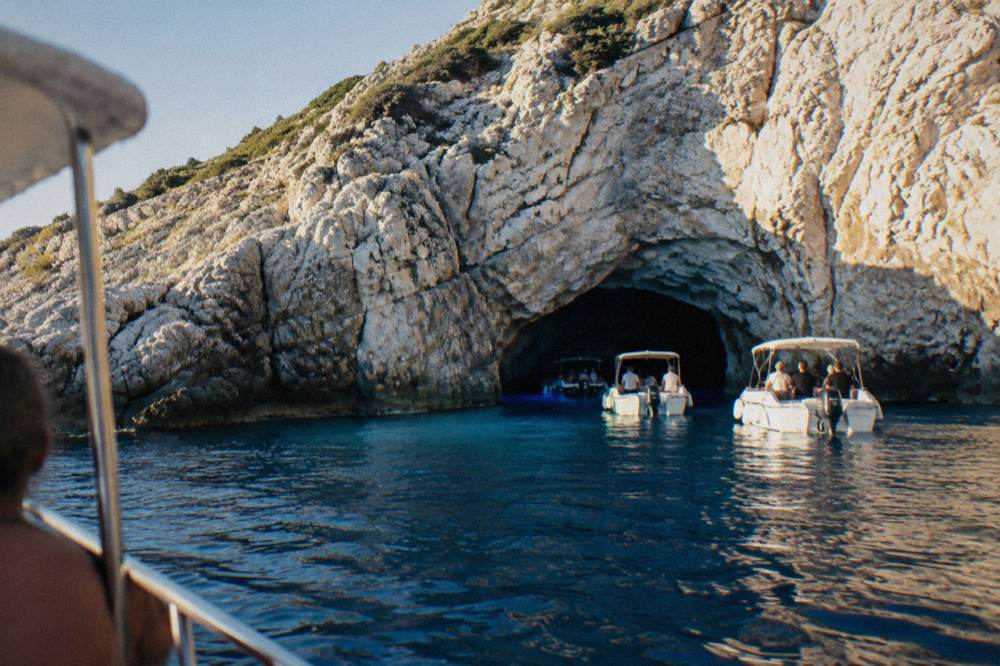
Budgeting the whole day means separating three costs: the tour or ferry fare from Split, the cave entry in cash, and whatever you spend on Vis or Hvar at the lunch stop. The table below sets out the entry side.
| Item | Reported amount | Notes |
|---|---|---|
| Blue Cave entry, 20 June to 10 September | about 24 EUR adult | Secondary source; cash on site |
| Blue Cave entry, shoulder season | about 18 EUR adult | April to mid June and mid September to October |
| Children 6 to 12 | half price | Under 6 free per the same report |
| Catamaran Split to Vis, foot passenger | 7.20 EUR low, 10.00 EUR high | Line 9602 via Milna and Hvar |
| Vis ferry, foot passenger basis | fares on the operator's price list | About 140 minutes sailing |
Why Is Vis Worth More Than A Lunch Stop?
Vis is the farthest of the inhabited islands from Split at about 140 minutes by ferry, a former closed military island that opened to tourism only after Croatia's independence, and its attractions are real destinations in their own right: Komiža fishing town, Stiniva cove, the Green Cave on Ravnik islet and the Blue Lagoon of Vis. Tours that treat Vis as a mere fuel stop miss the island's whole character, which is slower, stonier and less built-up than Hvar. Komiža, on the western side, is the base for the Biševo transfer boats and a stone waterfront town of fishing houses rather than fashion boutiques. Stiniva, a cove with a narrow rock entrance, is the postcard swim stop on the southern shore. The Green Cave on Ravnik, a short run from Rukavac, is often the second cave of the day on speedboat itineraries, with its own entry fee paid in cash on the water.
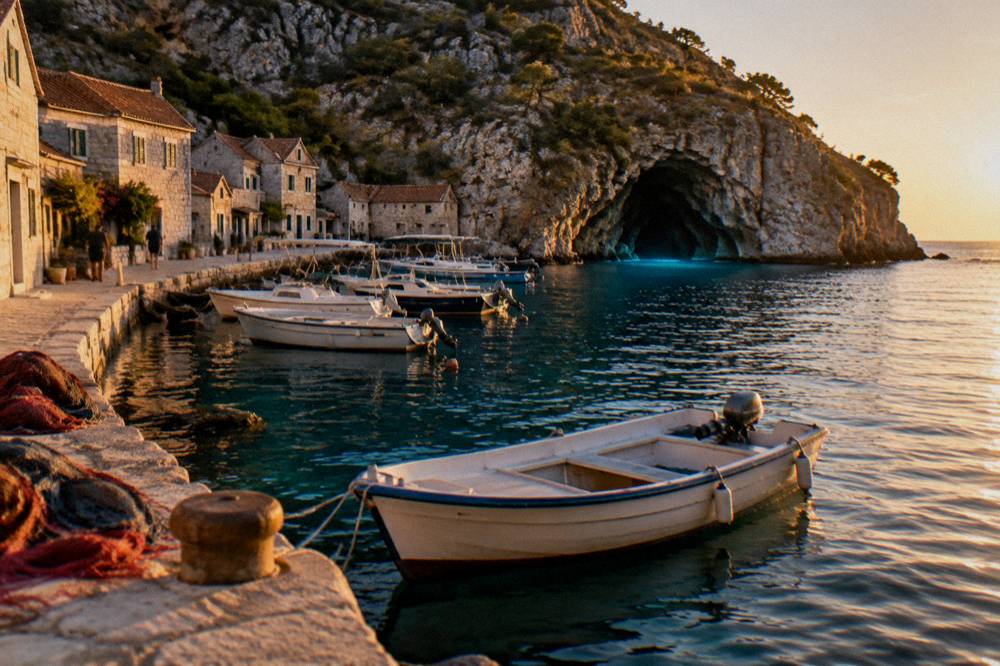
The Mamma Mia connection is real and worth knowing: the film was shot around Vis, and several tour names, including the featured trip above, lean on it. The listings describe photo stops at filming locations on the Vis coastline alongside the cave and swim stops. Readers with two days rather than one should consider the overnight version: the island-hopping itinerary at Split island hopping week builds a route through Vis, Brač and Zlatni Rat and Hvar with the ferry facts for each leg.
Which Tour Should You Book For The Blue Cave From Split?
Choose by group size and boat type, because those two variables decide the day: a small-group speedboat reaches the cave early, enters small coves like Stiniva and costs more per person, while a larger cruise boat, or a catamaran tour, offers a steadier ride, lunch on board and a more crowded cave transfer. The listings on this site let you compare directly, with prices, ratings and durations shown on each card. The featured small-group trip is the strongest fit for readers whose main goal is the cave itself, since an early arrival at Biševo is the single biggest factor in a smooth entry. Its full listing, with everything it covers, is at Blue Cave, Mamma Mia and Hvar, 5 islands speedboat. A second small-group option is the Blue Cave, Mamma Mia, Hvar and 5 island small group tour, which runs a similar route with a slightly different stop order, and a fuller comparison of both sits on the Split boat tours page.
The comparison table below lines up the structural differences without inventing a single figure: everything monetary renders from the listings themselves.
| Trip style | Typical route | Best for | Trade-off |
|---|---|---|---|
| Small-group speedboat | Split, Biševo cave, Vis, Stiniva area, Hvar or Pakleni, return | Cave-first days, swimmers | Faster ride, higher per-person price, weather sensitive |
| Larger cruise boat | Split, Vis or Biševo by transfer, one or two swim stops, lunch on board | Families, steady ride | Later cave arrival, bigger transfer groups |
| Catamaran day tour | Split, Hvar or Pakleni, swim stop, return | Hvar-first days | Often skips the cave; check the itinerary |
| Independent overnight | Ferry to Vis, cave from Komiža next morning | Slow travellers | Needs two days and local transfer booking |
What Does The Weather Do To A Blue Cave Trip?
The sea state, not the forecast temperature, decides whether the cave can be entered: skippers cancel or divert the Biševo leg when swell or wind makes the cave mouth unsafe, and this happens most often when the maestral builds through the afternoon and after southerly storms. Morning departures exist precisely to beat that window. Tours usually reroute to the Green Cave, Stiniva and extra swim stops rather than refund the day, and the listings say so in their terms. This is the honest reason the cave is not a guaranteed sight. A tour that reaches Biševo at 8:00 has a far better day than one arriving at 11:00, and it is the question worth asking before booking anything. Climate context for the season comes from the DHMZ Split-Marjan station table for 1948-2024: July, the busiest cave month, averages 26.2 C with only 26.6 mm of rain, and June averages 23.4 C, so rain rarely stops the trip, but wind can.
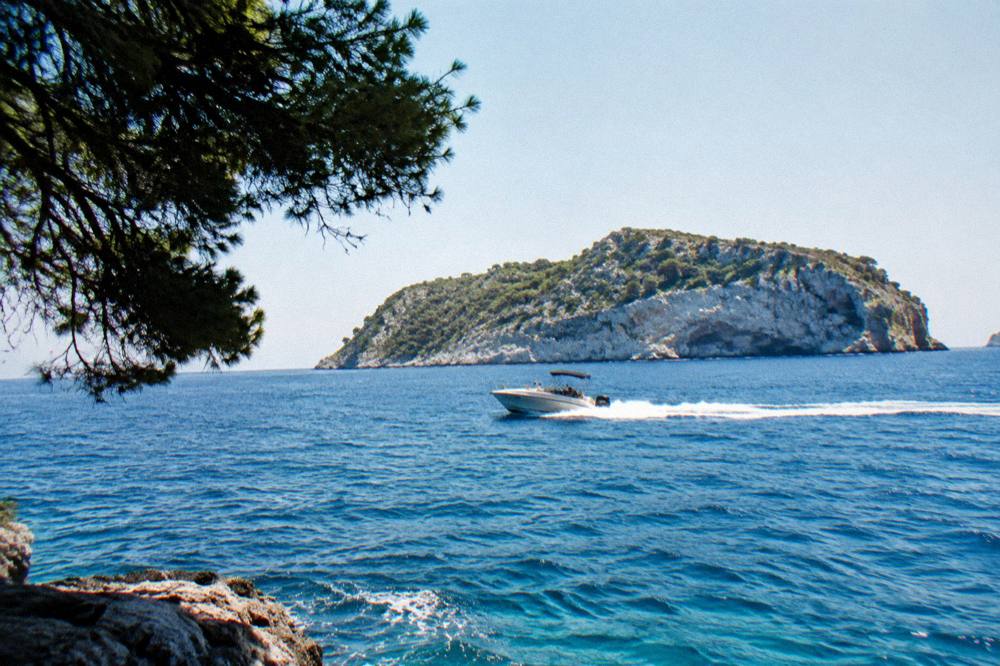
Readers sensitive to boats should weigh the crossing honestly: the run from Split to Vis is open water for long stretches, and a speedboat in a fresh maestral is a bumpy hour. The monthly picture for planning around it:
| Month | Mean temperature at Split (DHMZ, 1948-2024) | Precipitation | Cave-season note |
|---|---|---|---|
| May | 19.2 C | 57.5 mm | Shoulder entry fee, calmer mornings |
| June | 23.4 C | 49.0 mm | High season fee from 20 June |
| July | 26.2 C | 26.6 mm | Peak season, busiest cave queues |
| August | 25.9 C | 41.3 mm | Peak season, warmest sea feel |
| September | 21.6 C | 70.9 mm | High fee to 10 September, then shoulder |
How Do You Plan The Day Around The Riva And The Port?
The practical mechanics are simple: Blue Cave tours leave from the Split waterfront within a short walk of the Old Town, meeting in the early morning, and the ferry and catamaran piers for independent travel sit on the same stretch at Obala kneza Domagoja, 500 to 600 m from Diocletian's Palace. Arrive at the stated meeting point before the stated time, because cave-entry slots are fixed by the morning light and boats do not wait. After the trip, the Riva promenade is where the day ends for a drink, and one planning note for 2026 and 2027: the Riva's central section is scheduled for renovation works from November 2026 lasting a little over a year, so partial closures along the waterfront should be expected through 2027. The palace itself, the Peristyle and the cellars are all within a few minutes' walk of where the boats tie up, which is why a cave day and an evening palace walk combine so well.
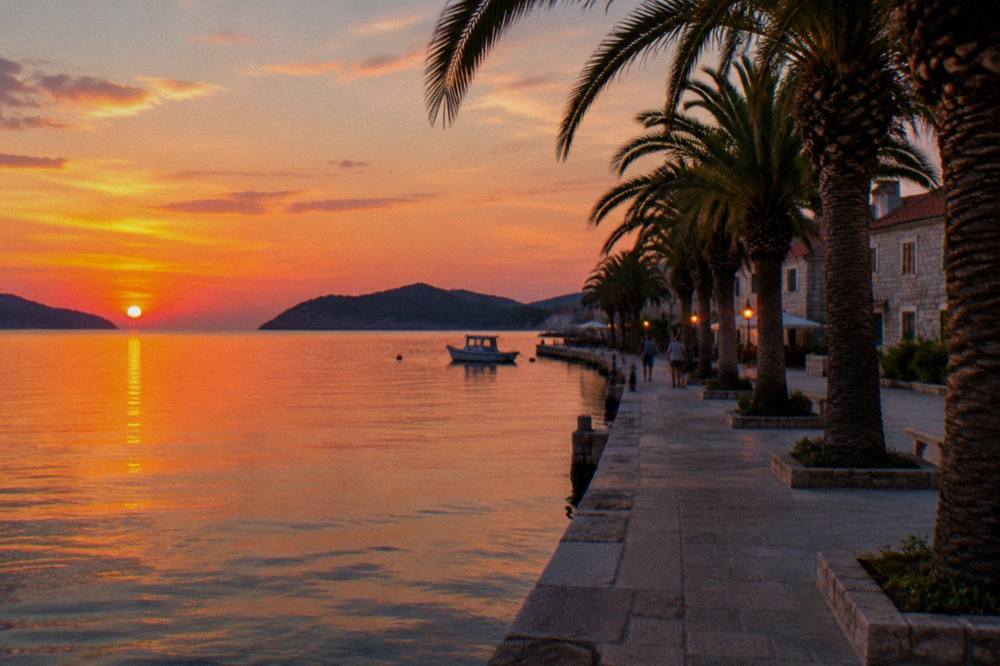
Two comforts for the day itself, from this desk's reading of the listings and price lists rather than from any visit: wear a hat and take more water than seems reasonable, since shade on a speedboat is minimal, and keep the cave fee in cash, since the payment point on Biševo is a hut at the jetty, not a card terminal. Everything else, lunch included on many listings, is on the boat.
What Are The Alternatives If The Cave Day Does Not Fit?
If the sea cancels the cave or the budget does not stretch to a speedboat day, the closest alternatives from the same port are the Blue Lagoon trips to Šolta and Drvenik, the Hvar catamaran day, and, for a completely different register, the Krka National Park coach trip, all leaving from the same waterfront area of Split. The Blue Lagoon and Šolta day is the natural fallback: shallower water, a swim-focused itinerary and a shorter crossing. Krka National Park trades the sea for waterfalls, at 40 EUR park entry in the June to September window, 20 EUR in April, May and October, per the park's own 2026 price list. Plitvice Lakes is the longest single-day option at about 3 h 15 of driving each way from the palace. The comparison below keeps the figures the packs actually carry.
| Day trip from Split | Type | Reported entry cost | Source note |
|---|---|---|---|
| Blue Cave and Vis | Speedboat day | about 24 EUR cave entry in season | Secondary reporting; cash on site |
| Blue Lagoon and Šolta | Boat day | swim stops, no park fee | Tour listing |
| Krka National Park | Coach and boat day | 7 / 20 / 40 EUR by month | Park price list 2026 |
| Plitvice Lakes | Coach day | 10 / 23 / 40 EUR by month, 25 EUR peak afternoon slot | Park price list 2026 |
| Hvar town | Catamaran day | Fortica fortress 12 EUR | Visithvar fee page |
Common Questions About The Blue Cave From Split
Can you visit the Blue Cave from Split in one day?
Yes. Full-day speedboat tours run from the Split waterfront to Biševo with a transfer boat into the cave, usually adding Vis, Stiniva and a Hvar or Pakleni stop. The independent one-day version is fragile because the ferry schedule to Vis does not always connect with the morning cave transfers; an overnight on Vis makes the independent route reliable.
How much does the Blue Cave cost?
Entry is reported at about 24 EUR per adult from 20 June to 10 September and about 18 EUR in the shoulder season, children 6 to 12 half price, paid in cash on site. The fee is separate from the tour or ferry fare that gets you to Biševo.
What happens if the sea is too rough for the cave?
The cave entry closes when the swell makes the cave mouth unsafe, and tours then divert to alternative stops such as the Green Cave, Stiniva or extra swim bays, as their terms state. Booking a small-group speedboat that reaches Biševo early gives the best odds of entering before the afternoon wind builds.
Is the Blue Cave the same as the Blue Lagoon?
No. The Blue Cave is a lit sea grotto on Biševo, entered by small boat. The Blue Lagoon is a shallow swimming area between Šolta and Drvenik, much closer to Split, and it appears on shorter boat trips rather than cave itineraries.
Do you need to book a Blue Cave tour in advance?
In July and August, yes: small-group boats have fixed seat counts and the morning cave window is limited, so peak-week dates sell ahead. In May, June outside the late-June fee window, and September, same-week booking is usually realistic. Check availability for your exact dates before locking in accommodation around them.
Is Vis worth an overnight stay?
For travellers with time, yes. Vis is about 140 minutes from Split by ferry, has the stone town of Komiža as the cave-boat base, and holds Stiniva cove and the Green Cave on its southern shore, which makes a two-day visit more relaxed than a single fast circuit.
The Blue Cave day from Split is a long one, early on the water and late back, and it is also the day trip where the payoff matches the effort most directly. Pick the boat that matches your stomach and your budget, carry cash for the cave, keep the morning light on your side, and let the Split Croatia Travel Guide ferry and day-trip pages fill in the rest of the week around it.