What To Avoid In Split?
The mistakes worth dodging in Split: the fined behaviours in the historic core, the streets that sell lunch twice, the wrong island ferry and the day trips booked for the wrong month.
Split, a coastal city in central Dalmatia on the Adriatic, packs a Roman palace, a working ferry port and a forested peninsula into a space you can cross on foot in under an hour, and that compactness is exactly why a handful of avoidable mistakes account for a disproportionate share of bad trips. The city publishes a fine schedule for behaviour in its historic core, its waterfront enters a renovation from November 2026, and its island connections are split between car ferries and catamarans that serve different ports on Hvar. This page lists what to avoid in Split, with the figures the sources actually print and the checks you can make yourself.
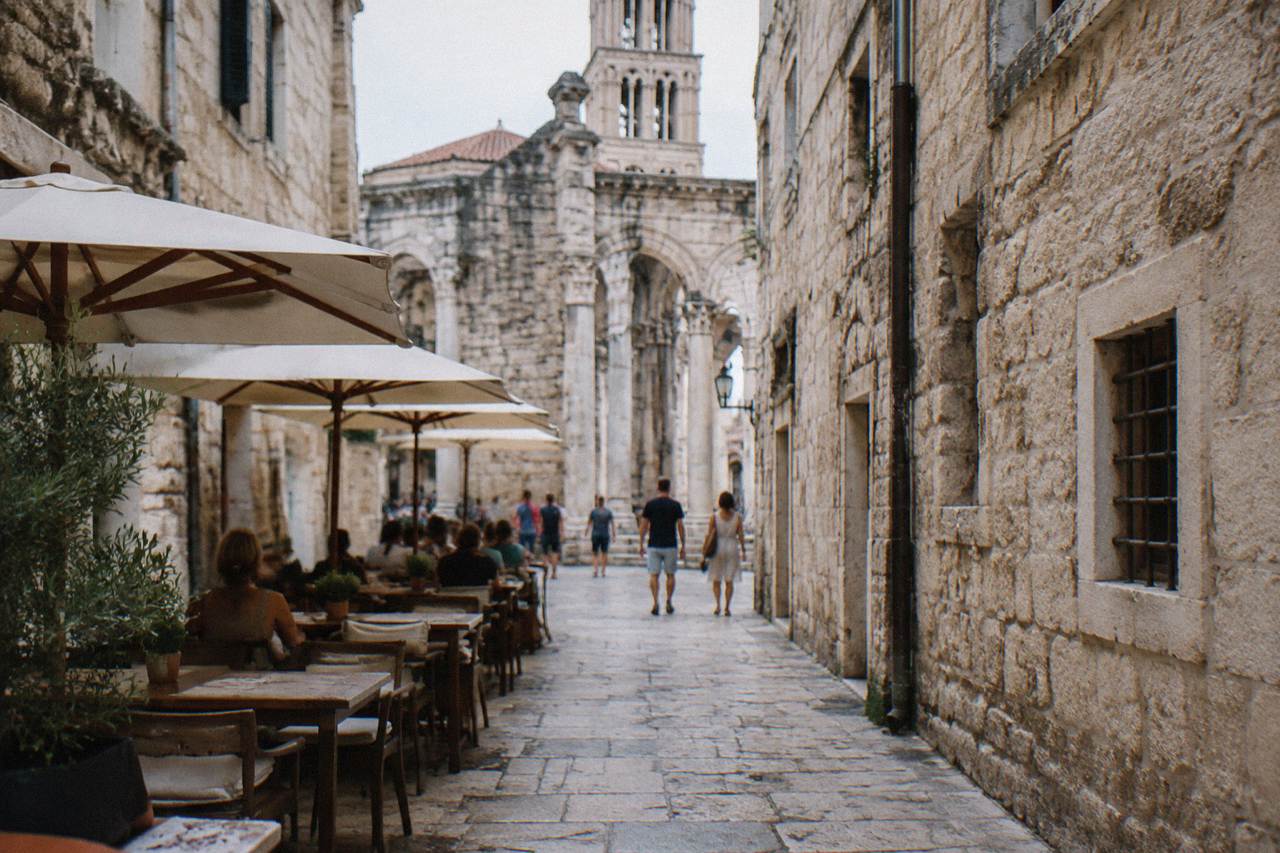
What To Avoid In Split?
The short list of things to avoid in Split is walking the historic centre in swimwear, drinking alcohol in public in the old core, buying lunch without checking posted prices, confusing the Stari Grad car ferry with the Hvar Town catamaran, and booking summer-only day trips in the shoulder season, when sea conditions and opening hours change. Each of these carries either a fine, a wasted afternoon or a doubled bill, and each is easy to avoid with one check. The rest of this page works through them in order: the rules, the money traps, the sea mistakes and the day trips, with the printed fine amounts and ticket prices attached to each. Nothing here requires a guide or a paid pass, just a habit of reading the notice, the menu and the timetable before committing.
Which Behaviours Are Fined In Split's Historic Core?
Split enforces a published set of public-order fines in its historic core: 300 EUR for drinking alcohol in the centre or within 100 m of schools, 300 EUR for urinating, vomiting, climbing on monuments or bathing in fountains, and 150 EUR for sleeping in public spaces, while walking in swimwear or shirtless is also fined with the amount set locally. The city's own tourism site carries the rules, voted in during 2026 with a transition period. A separate rule bans shops, though not bars or restaurants, from selling alcohol at night between 1 June and 15 September, so a late-evening supermarket beer run in the centre can simply fail. None of this is theatre: the amounts appear on the visitsplit page that introduced them, and they are the reason the centre stays quiet after midnight compared with the Bačvice strip.
| Behaviour | Fine | Where the rule applies |
|---|---|---|
| Drinking alcohol in public | 300 EUR | Historic core, or within 100 m of schools |
| Urinating in public | 300 EUR | City-wide public spaces |
| Climbing monuments or bathing in fountains | 300 EUR | Historic core |
| Sleeping in public spaces | 150 EUR | City-wide public spaces |
| Taxi touting | 300 EUR | City-wide public spaces |
| Swimwear or shirtless walking | Fined, amount set locally | Historic core |
The dress rule deserves a plain sentence: keep a cover-up for the walk between the beach and your room, because the walk from Bačvice to the palace gate is short enough to tempt exactly the wrong outfit. For the dress code inside the palace churches rather than the streets, see the cathedral dress-code answer. None of the fines on the table are negotiable on the spot, and none are worth testing on a warm afternoon.
Which Money Traps Should You Check For In Split?
The money traps to check for in Split are restaurants where the menu has no printed prices, bills that arrive with an unexplained cover charge, accommodation that collects the tourist tax at an unstated rate, and any street offer of tours or rooms from someone soliciting in the core, since soliciting is itself one of the behaviours the 2026 rules restrict.
The tourist tax runs at about 2.65 EUR per person per night in high season, is halved for ages 12 to 18, is free under 12, and is collected by the accommodation, so confirm it at booking. A bill in Croatia should be itemised, and a cover charge, where charged, belongs on the menu itself; if either is missing, that is a check, not a confrontation, and plenty of places in Split pass it.
The posted-price habit costs nothing. Menus in the palace core and on the Riva are displayed by law and pricing disputes shrink to zero when you have read yours before sitting down. For where the city eats when it eats at home, which is the reliable antidote to the high-rent streets, start with where locals eat in Split, and for the general cost of eating out, the page is it expensive to eat in Split carries the figures.
Which Island And Ferry Mistakes Do Visitors Make In Split?
The classic ferry mistake in Split is assuming one boat serves Hvar: the car ferry on line 635 lands at Stari Grad after about 120 minutes and costs a foot passenger 5.90 EUR off-season or 8.40 EUR in season, while the catamaran lands at Hvar Town itself and costs 6.40 EUR low season or 10.00 EUR high season to Hvar or Jelsa, and 7.20 or 10.00 EUR to Vis.
Booking the wrong one leaves you a bus ride from the town you actually wanted. The second mistake is seasonal: from 2026 the Split to Supetar line on Brač runs with no off-season timetable at all, only high and low season, the fifth Croatian line to move to that pattern, which changes winter planning for Brač entirely.
| Route | Vessel | Sailing time | Foot passenger fare |
|---|---|---|---|
| Split to Stari Grad, Hvar | Car ferry, line 635 | About 120 minutes | 5.90 EUR off-season, 8.40 EUR in season |
| Split to Hvar Town or Jelsa | Catamaran | Shorter crossing | 6.40 EUR low, 10.00 EUR high |
| Split to Vis | Catamaran or ferry | About 140 minutes | 7.20 EUR low, 10.00 EUR high |
| Split to Supetar, Brač | Car ferry, line 631 | About 50 minutes | Confirm on the operator's page |
| Split to Rogač, Šolta | Car ferry, line 636 | About 60 minutes | Confirm on the operator's page |
Two practical notes round this out. Vis is the long crossing at about 140 minutes, so a day trip there means an early start, and the port, the main bus station and the railway station sit together on Obala kneza Domagoja, 500 to 600 m from the palace, which means a late ferry is a walkable problem rather than a taxi problem. If you are weighing the islands against the city itself, is Hvar nicer than Split compares them directly.
Which Month-Centered Mistakes Should You Avoid In Split?
The calendar mistakes to avoid in Split are expecting the sea and the season in October and November, when the DHMZ Split-Marjan station's 1948-2024 table shows November as the wettest month at 115.5 mm and October at 77 mm, and expecting quiet in July, which averages 26.2 C and records 18 days at 30 C or more, the highest count of the year alongside 17 in August.
November through March is also when the big parks drop to their cheapest tickets and their shortest hours, so the trade is real in both directions.
| Month | Mean temperature (DHMZ Split-Marjan, 1948-2024) | Rainfall | What to avoid |
|---|---|---|---|
| January | 8.0 C | 77.8 mm | Expecting island day trips to run daily |
| April | 14.4 C | 62.0 mm | Expecting swim weather |
| July | 26.2 C | 26.6 mm | Expecting empty streets; 18 days at 30 C or more |
| September | 21.6 C | 70.9 mm | Assuming peak ferry frequency still runs |
| November | 12.7 C | 115.5 mm | The wettest month; sea trips thin out |
One dated trap belongs here too: the central section of the Riva, the waterfront promenade, enters a renovation planned from November 2026 for a little over a year, so partial closures along the seafront should be expected through 2027. The Riva remains free to walk and the works are not a reason to skip the city, but a café table directly on the water may be harder to find in 2027 than in a normal year. The month-by-month detail, including the sunshine figures, sits on the best month to visit Split.
Which Day-Trip Mistakes Cost Time From Split?
The day-trip mistakes that cost real time from Split are swimming at Skradinski buk in Krka, which is not allowed outside clearly marked swimming areas, treating the 40 EUR summer ticket at Krka or Plitvice as the year-round price when both parks charge 7 to 10 EUR in the November-to-March window, and underestimating distance: Plitvice is 3 h 15 of free-flow driving each way and Krka 74 minutes, so a single day absorbs both journeys. The palace cellars add a 2026 wrinkle: their central part is under restoration to the end of 2026, with the passage staying open, so a visit works but a full-width photo does not.
The antidote to packing too much is bundling. A guided loop that covers Trogir, Salona, an olive museum and Klis Fortress in one day solves the awkward fact that these four sit on separate lines, and the Trogir, Salona, Klis guided tour page describes exactly what the day covers; you can also Check availability at the operator's live listing. For working out how many days the city itself deserves before you commit to any of this, how many days is enough for Split does the arithmetic.
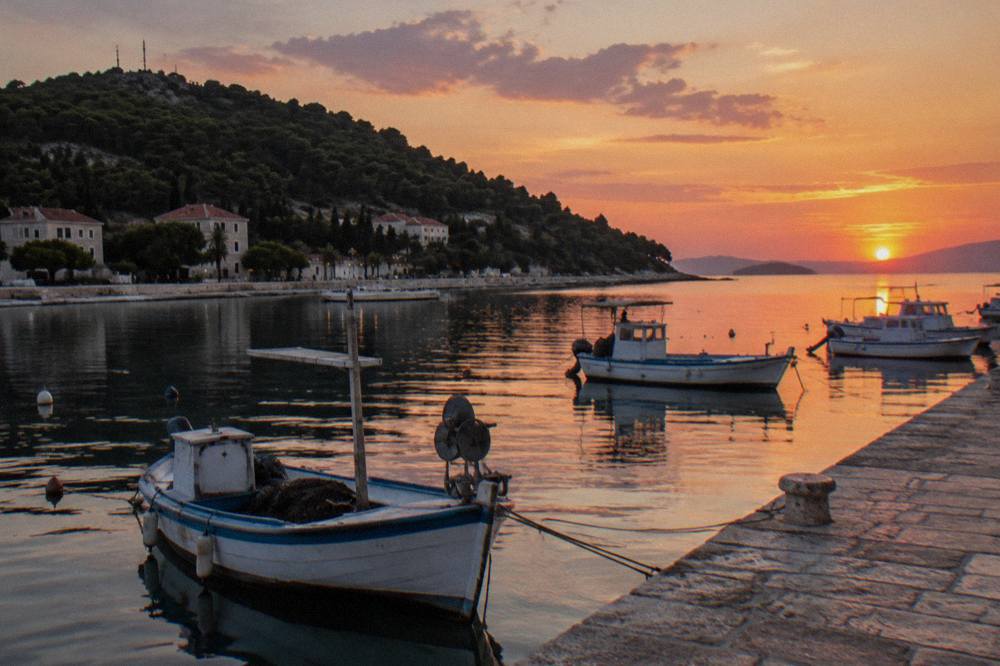
Which Arrival Mistakes Should You Avoid In Split?
The arrival mistakes in Split are believing the airport is minutes away when the airport's own page puts it at 20 km from Split and 6 km from Trogir, with the drive from the palace measured at 24.9 km and about 31 minutes free-flow, and paying for transfers without checking the Platanus shuttle, which the operator prices at 10 EUR one way or 15 EUR return between the airport and the main bus station by the ferry port.
Promet city bus lines 37 and 38 also stop at the airport for a few euros, to be confirmed on board. The one thing not to do is accept an unsolicited taxi offer at arrivals, since touting is on the 300 EUR fine schedule above.
The geography rewards a moment of planning. Because the bus station, the railway station and the ferry port share one frontage 500 to 600 m from the palace, a same-day arrival and island departure is genuinely possible with a wheeled bag and a wide margin. Croatia uses the euro since 1 January 2023, so there is no currency detour to build in, and the emergency number is 112. More of these guides are collected on Split Croatia Travel Guide.
Common Questions About Avoiding Mistakes In Split
What to avoid in Split?
Avoid swimwear in the historic core, public drinking where it is fined 300 EUR, unpriced menus, the wrong Hvar ferry, summer-only day trips booked out of season, and any solicited offer of rooms or tours in the centre. Each is avoidable with a posted notice, a menu or a timetable, all of which the city publishes.
Can you drink alcohol on the street in Split?
No, not in the historic core or within 100 m of schools; the fine is 300 EUR. Licensed terraces are exempt. Between 1 June and 15 September shops in the centre are also banned from selling alcohol at night, while bars and restaurants may keep serving.
Is it safe to walk around Split at night?
The city centre is a small, policed area and the public-order rules from 2026 keep the core quiet after dark. The ordinary precautions apply as in any port city, and the emergency number in Croatia is 112.
Which month is warmest in Split?
July, with a mean of 26.2 C on the DHMZ Split-Marjan station table for 1948-2024, ahead of August at 25.9 C. July is also the driest month at 26.6 mm and records 18 days at 30 C or more.
Do you need to book Krka or Plitvice tickets in advance?
Plitvice sells timed entry online and puts the visitor's name on the ticket, so advance booking is part of the system there. Krka's ticket covers the Skradin boat and Lozovac bus transfers from 1 April to 31 October, and remember that swimming is limited to clearly marked areas only.
Is the Split Riva closed for renovation?
The central section of the Riva enters renovation planned from November 2026, lasting a little over a year, so partial closures are expected through 2027. The promenade stays walkable and free throughout.
The pattern behind every item on this page is the same: Split publishes its rules, its prices and its timetables, and the mistakes all come from skipping the reading step. Check the menu before you sit, the ferry port before you book, the month before you plan the sea, and the fine schedule before you walk home from the beach, and the city has very little left with which to surprise you.
