Is Hvar Nicer Than Split?
A comparison of Split and Hvar from the sources: palace against harbour town, ferries, beaches, prices and which suits a short Dalmatian trip.
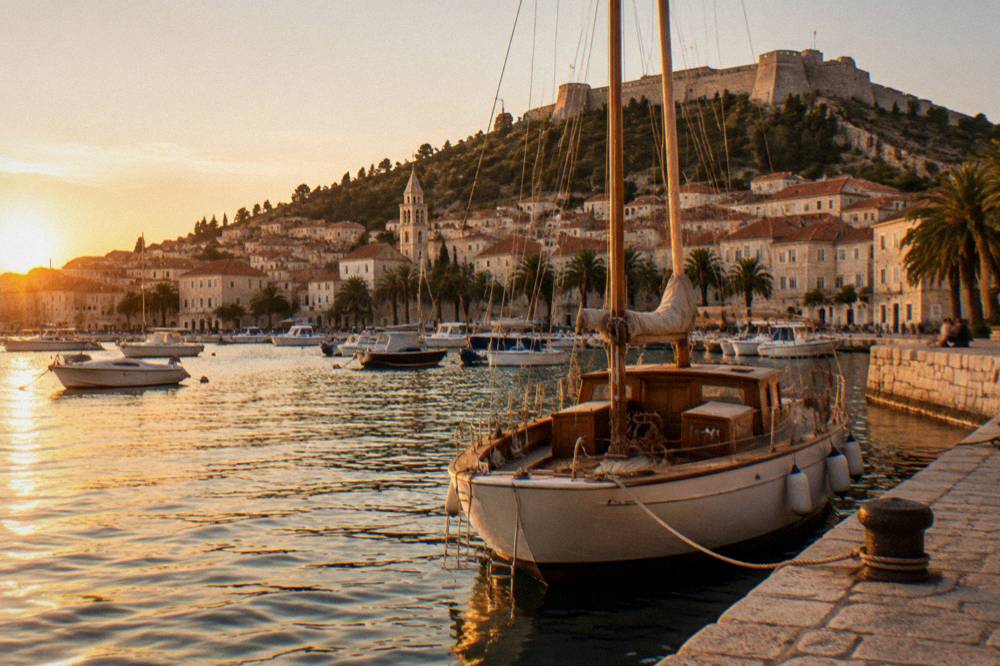
Split is a coastal city in central Dalmatia on the Adriatic, built in and around Diocletian's Palace, with a working ferry port that carried 6.05 million passengers in 2025. Hvar is an island town of stone houses and a hilltop fortress sitting offshore, reached from that same port by catamaran in under two hours on the fast lines, or by car ferry to Stari Grad on the other side of the island. The two are not rivals so much as different shapes of trip: one is a city with two thousand years of layering under it, the other is an island whose whole rhythm is set by the sea. "Nicer" therefore depends on the question behind the question, whether that is beaches, nightlife, history, food or simply how many days there are.
Is Hvar Nicer Than Split?
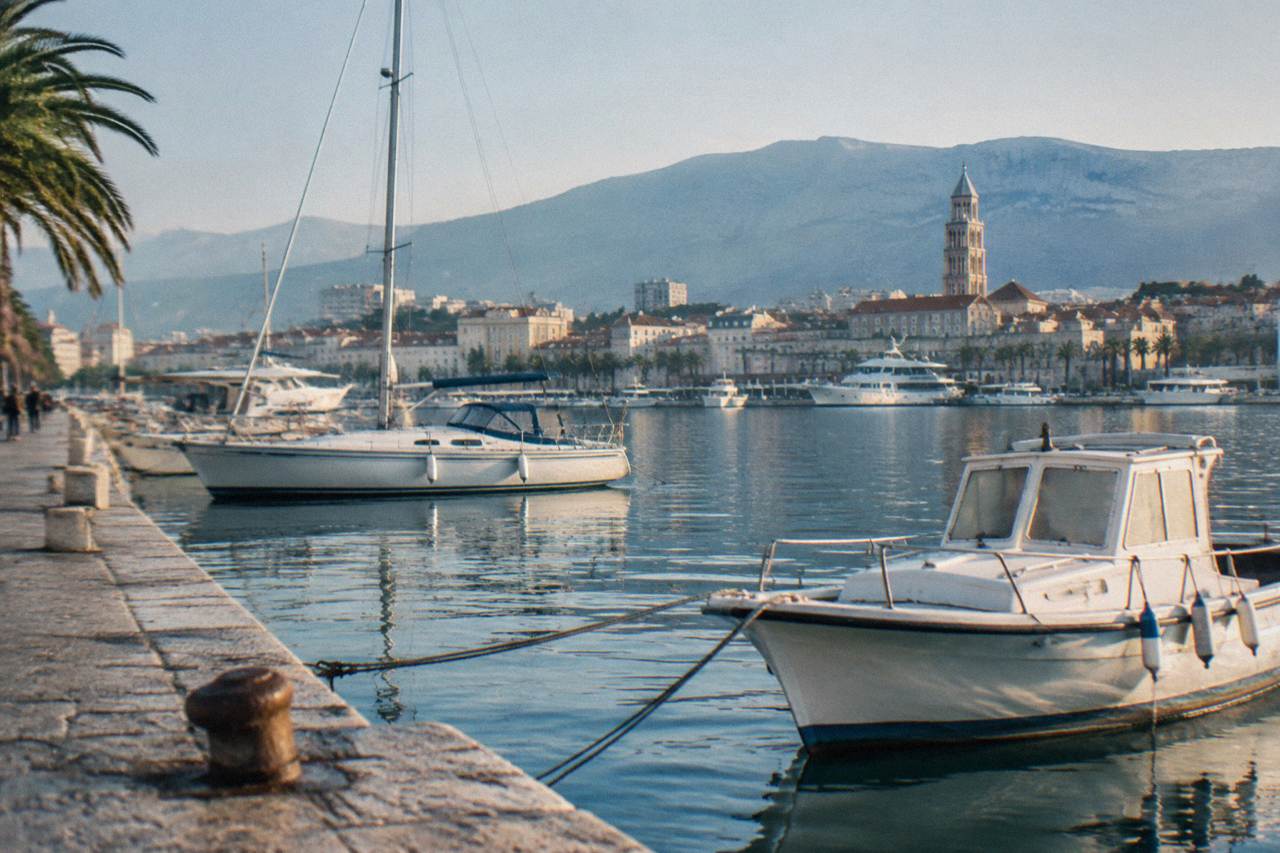
No single answer exists, and the honest one is that Hvar is nicer for a swim-and-island holiday built around one small town, while Split is nicer for history, food, transport links and day trips to Krka, Trogir, Brač and beyond. Hvar town packs a harbour, a fortress and lavender-scented interior into a walkable island setting; Split packs a Roman palace, a national theatre and Croatia's busiest passenger port into a city of 160,577 people. Neither replaces the other.
The comparison usually starts from a false premise, that the two compete for the same traveller. They do not. Split's Old Town is the palace itself, a UNESCO World Heritage property since 1979 covering 20.8 hectares, with the cathedral bell tower 57 m high and the cellars run by the Split City Museum. Hvar town's centrepiece is different in kind: the Fortica fortress above the harbour, 12 EUR to enter per the Hvar tourism site, looking down on the Pakleni islands. One is a lived-in city that happens to be a monument; the other is a destination that exists because of its setting.
Where the decision really gets made is logistics and pace. Split's ferry port, main bus station and railway station sit together on Obala kneza Domagoja, 500 to 600 m from the palace, which makes the city the natural base for day trips in every direction. Hvar inverts that: from the island you can swim, boat and eat well, but each excursion beyond the Pakleni islands involves getting back to the mainland first. Travellers who want to fill a week with different places each day almost always land on Split; travellers who want one beautiful spot and no daily packing almost always land on Hvar. The site's fuller side-by-side lives at Split vs Hvar.
What Does Split Have That Hvar Does Not?
Split holds the palace, the museums and the mainland connections, and Hvar has none of the three. Diocletian's Palace, built c. 295 to 305 AD, is inscribed on the UNESCO list as the Historical Complex of Split, and the Archaeological Museum, founded 1820, sells an 8 EUR adult ticket that combines with the Salona ruins for 10 EUR within 7 days. From Split you reach Krka, Plitvice, Trogir, Omiš, Mostar and Dubrovnik by road or boat. From Hvar you reach them through Split.
The palace is the structural fact of the city. The Peristyle, the Golden Gate, the Grgur Ninski statue and the Riva promenade are all free to walk, and the Split City Museum's price list shows 10.00 EUR for an adult ticket at Papalić Palace, 8.00 reduced, family 18.00, closed Mondays. The Meštrović Gallery reopened in April 2026 after a 15-month energy renovation, at 12.00 EUR including Crikvine-Kaštilac. Add the Marjan park forest on the western side, 3.5 km long with its Telegrin peak at 178 m and 819 steps from Trumbićeva obala, and the city holds several full days without repetition.
It is plenty for two unhurried days. The difference is that Split's depth is documented in price lists and UNESCO citations, while Hvar's appeal is the harbour, the water and the pace, which no ticket quantifies.
| Split | Hvar town | |
|---|---|---|
| UNESCO status | Historical Complex of Split with the Palace of Diocletian, 1979, 20.8 ha | None for the town itself |
| Signature monument | Diocletian's Palace, built c. 295 to 305 AD | Fortica fortress, 12 EUR |
| Headline museum | Archaeological Museum 8 EUR, founded 1820 | Island museums and monastery, confirm locally |
| Population | 160,577 (2021 census) | Small island town |
| Port | 6.05 million passengers in 2025 | Catamaran and ferry stops |
| Green space | Marjan, Telegrin 178 m, 819 steps to the top | Lavender hills and coastal paths |
How Do You Get From Split To Hvar?
Hvar town is reached by catamaran from Split, and Stari Grad, the island's car-ferry port, is a different place on the other side of the island, so the two must not be confused. Jadrolinija's line 635 car ferry runs Split to Stari Grad in about 120 minutes, with foot passengers paying 5.90 EUR off-season and 8.40 EUR in season. Catamarans serve Hvar town directly, at 6.40 EUR low season and 10.00 EUR high season to Hvar or Jelsa.
Ready to plan your crossing to the island? Book a Split to Hvar ferry ticket here.
The route map matters for the itinerary. A car or a bicycle has to go to Stari Grad, because Hvar town's quay takes passenger catamarans only, running on lines 9603 (Split, Bol, Stari Grad, Jelsa) and 9602 (Split, Milna, Hvar, Vis), with Kapetan Luka (Krilo), TP Line and Bura Line among the operators appearing in the Port of Split departures feed. The catamaran is the right answer for a day trip to Hvar town itself; the ferry is the right answer for a car, or for staying anywhere on the island's north side. The site's detailed guide is at Split to Hvar ferry, and the practical arrival question is covered at where the ferry from Split to Hvar arrives.
One more Split-side note: the 2026 ferry timetables changed the Split to Supetar (Brač) line so that it no longer has an off-season timetable, running only high-season and low-season schedules, which reflects how island traffic keeps growing. Always check the operator's own timetable before locking a plan, because the operator's schedule decides, and weather can cancel fast boats in any month.
Which Has Better Beaches And Swimming?
Hvar's swimming is generally the island kind, clear water reached from rocky shores and coves near Pakleni, while Split's swimming is city-beach kind, at Bačvice, Kašjuni and the other town beaches a short walk from the centre. Both are swimmable through the long summer: the DHMZ Split-Marjan station, 1948-2024, gives a July mean of 26.2 C and 18 days at 30 C or more in July. No official monthly sea-temperature normal exists, so treat any sea figure as a live reading.
Bačvice is the city's sandy shallow bay, the home of picigin, the ball game born there in 1908 and now protected intangible heritage of Croatia. Kašjuni sits under Marjan on the quieter western side. These are real beaches attached to a real city, which means sand in July comes with people, and no Blue Flag claim can be made for any Split beach for 2026. Hvar's beaches are mostly concrete slabs, pebble and rock, with the water clarity of an island exposed to open channels; the island question of whether you can swim comfortably is addressed at swimming in the sea in Split.
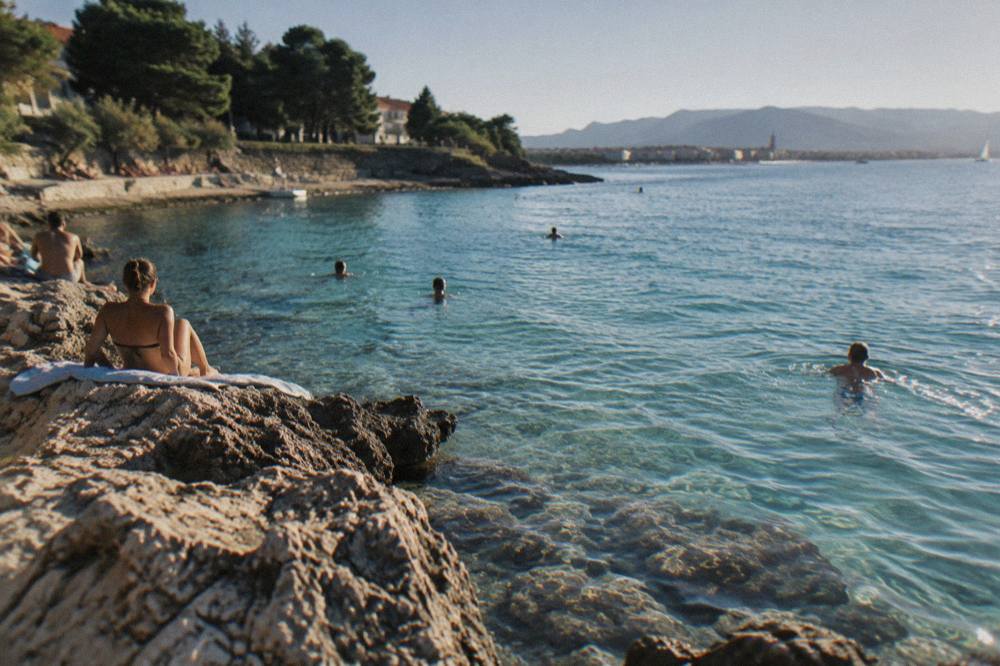
The honest framing is volume against purity. Split gives you a swim between museum visits, wet towel drying over a café chair. Hvar gives you a swim that is the whole point of the day, followed by another one. If the trip is built around water, the island wins on texture; if the swim is one item among many, the city's beaches do the job without a ferry ticket.
Is Hvar More Expensive Than Split?
Island prices run above mainland prices in season, and Hvar town in July sits at the expensive end of Dalmatia, while Split spreads from cheap market produce to high-season Riva dining. The tourist tax, about 2.65 EUR per person per night in high season, 1 April to 30 September, under 12 free and 12 to 18 half, is collected by accommodation and confirmed at booking.
That tax applies across Split-Dalmatia County, which includes Hvar island, so it is a constant rather than a differentiator. The real differences are logistical. On Hvar, everything that arrives by boat carries the boat in its price, and the season is short and concentrated, which pushes July and August rates up. In Split the year-round local economy keeps bakeries, markets and konobas anchored to what residents pay, even inside the palace walls. The checks a reader can make are the same in both: posted menu prices, an itemised bill, and the cover charge printed on the menu before ordering, with the broader picture at eating costs in Split.
Accommodation is where the 2026 rules bite hardest, and they bite in Split, not Hvar. The historic core around Diocletian's Palace operates under a moratorium on new short-term rental registrations extended through 2026, with existing registrations grandfathered, and national rules from May 2026 require a unique registration number per unit on booking platforms. The practical consequence for a summer visitor is that central Split books out early and the legal supply is capped, while Hvar's supply is seasonal and priced accordingly. Neither market rewards improvisation in July.
Should You Base Yourself In Split Or On Hvar?
Base in Split if the trip is three days or fewer, if day trips matter, or if you arrive by plane, since the airport at Kaštel Štafilić is 20 km from the city by its own pages. Base on Hvar if the trip is a week of swimming, boating and slow island days, or if it is a honeymoon-style stay in one place. The strongest version of a longer Dalmatian trip uses both: nights in Split first, then the catamaran out to the island.
The arithmetic of days decides it. Split rewards the how many days question with at least two, one for the palace and museums, one for Marjan and the sea, and it doubles as the launchpad for Krka, Plitvice, Trogir and the Blue Cave trips. Hvar rewards stopping: the fortress in the morning, the Pakleni islands by afternoon boat, the square at dusk. Doing Hvar as a day trip from Split works, but it samples rather than lives the island. Doing Split as a day trip from Hvar is possible by catamaran and mostly frustrating, because Split's best hours, the empty early Peristyle and the lit evening Riva, fall outside a day-trip window.
Whichever way the trip leans, start the Split half with the palace itself rather than circling it. The Check availability link sits beside the site's page for the small-group palace walk, and a guided first hour turns the walls from scenery into a plan for everything after it. Further reading on the Split Croatia Travel Guide homepage lays out the full day-trip field, and the nightlife angle, where Hvar town has its own reputation, is weighed at is Hvar no longer a party island.
| Trip shape | Better base | Why |
|---|---|---|
| 1 to 3 days total | Split | Palace, Marjan and one day trip fit without an extra ferry |
| A week of swimming | Hvar | Island pace, Pakleni boats, no daily transit |
| Many day trips | Split | Krka, Trogir, Omiš, Mostar all start on the mainland |
| Arriving by air | Split first | Airport is 20 km from Split, 6 km from Trogir |
| Split plus islands | Split then Hvar | Catamaran out after the city days |
Common Questions About Split And Hvar
Is Hvar nicer than Split?
Not better, different: Hvar suits a swim-centred island stay in one town, Split suits history, food and day trips across Dalmatia, and the honest choice follows the shape of the trip rather than a ranking.
Can you do Hvar as a day trip from Split?
Yes. Catamarans run from Split directly to Hvar town, at 6.40 EUR low season and 10.00 EUR high season, and the car ferry reaches Stari Grad in about 120 minutes for 5.90 EUR off-season or 8.40 EUR in season on foot.
Which is warmer, Split or Hvar?
No separate island figure is published here. The DHMZ Split-Marjan station, 1948-2024, gives a July mean of 26.2 C, 18 days at 30 C or more in July and July sunshine of 353.3 hours, and nearby islands sit close to that coastal pattern.
Is Split or Hvar better for nightlife?
Hvar town is known for concentrated summer nightlife and Split for a broader, year-round spread of bars plus a national theatre season running 25 September 2026 to 14 June 2027; the details are weighed at the site's nightlife pages and the Hvar party-island answer.
Do you need a car on Hvar?
Not for Hvar town itself, which is walkable, but a car helps for the island's interior and far side, and a car must travel by the Stari Grad car ferry rather than the catamaran. Confirm the current timetable with the operator before booking.
Is one night in Split enough before the ferry?
It covers the palace at a run. Split City Museum sites, the cellars open 8:30 to 20:00 Monday to Sunday, and the cathedral complex each take time, so two nights is the comfortable minimum.