Split To Hvar Ferry
Two kinds of boat connect Split with Hvar: a car ferry to Stari Grad and catamarans that call at Hvar town itself. This guide sets out the routes, times and fares the operators publish, and how to choose between them.
Short answer
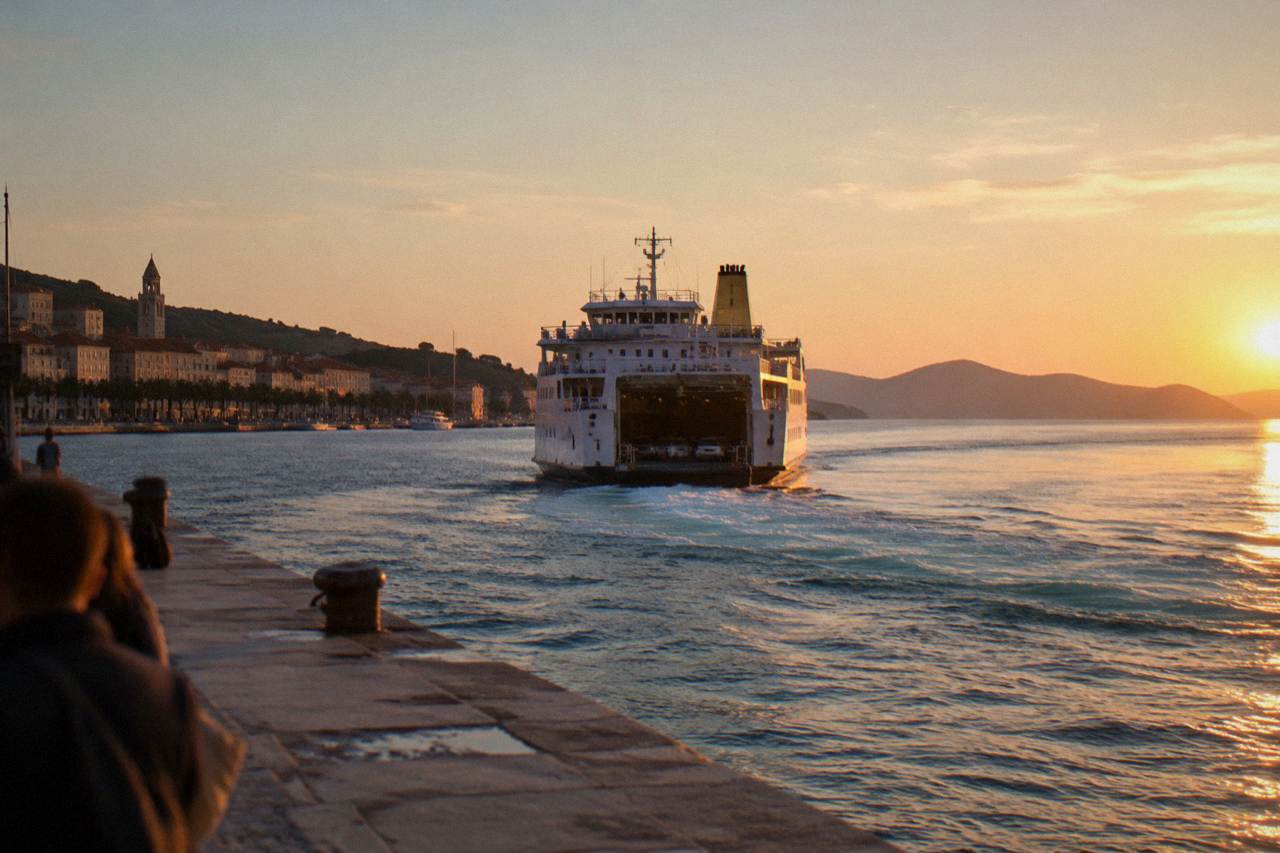
The Split to Hvar car ferry, Jadrolinija line 635, runs to Stari Grad in about 120 minutes and costs a foot passenger 5.90 EUR off-season or 8.40 EUR in season. Catamarans reach Hvar town directly in about an hour, with foot-passenger fares of 6.40 to 10.00 EUR depending on season.
The Split to Hvar connection is one of the busiest island crossings on the Croatian coast, run from the ferry port on Obala kneza Domagoja, 500 to 600 m from Diocletian's Palace. Two different kinds of service operate: a car ferry to Stari Grad on the north side of Hvar island, and fast catamarans that call at Hvar town, on the island's south-west coast. Confusing the two is the single most common planning error, because they arrive at different ports up to a half-hour drive apart on the island itself. This guide from the Split Croatia Travel Guide editorial desk sets out what the operators' own route pages and fare lists publish, and nothing beyond that. Croatia has used the euro since 1 January 2023, so every price below is in that currency, and the country has been a full Schengen member since the same date, which shapes the documents non-EU visitors carry on international sailings.
Does The Split To Hvar Ferry Go To Hvar Town Or Stari Grad?
No car ferry from Split calls at Hvar town. The car ferry, Jadrolinija line 635, crosses to Stari Grad on Hvar's north coast in about 120 minutes, while catamarans on lines 9602 and 9603 call at Hvar town itself and at other island ports. Stari Grad and Hvar town are separate places on the same island, roughly a half-hour apart by road, so the port you book decides where your day on Hvar begins.
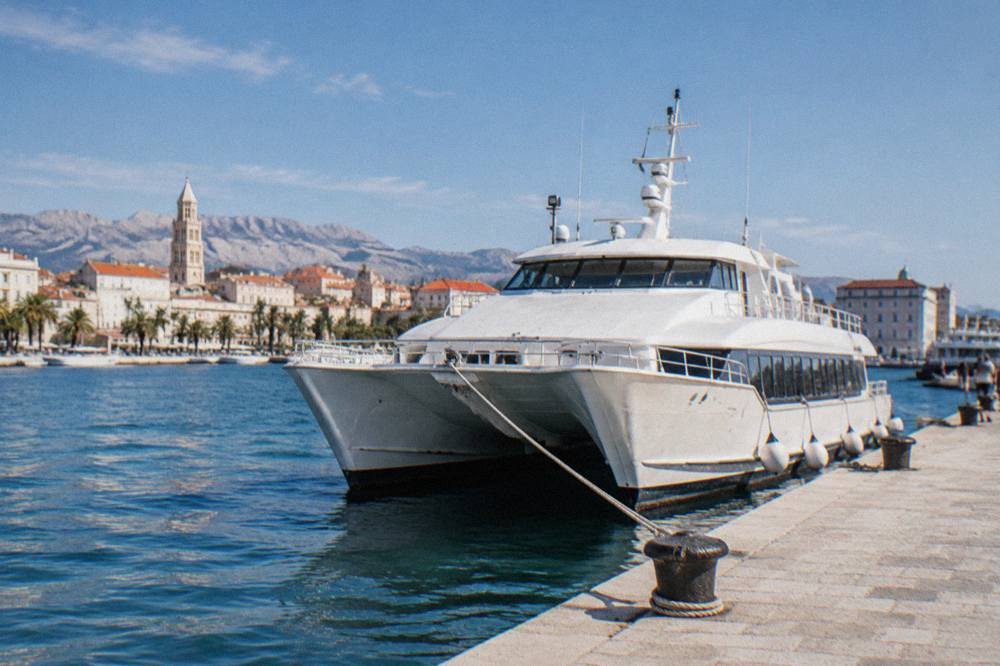
The split matters practically. If you are on foot and want the town, its waterfront, the Fortica fortress above it and the Pakleni islands just offshore, a catamaran is the direct answer, since it berths at Hvar town's own quay. If you have a car, a bicycle or heavy luggage, or your accommodation sits near Stari Grad, Jelsa or Vrboska on the island's north side, the car ferry to Stari Grad is the service built for you. Jadrolinija's route page shows line 635 as the Split to Stari Grad crossing, and the fare list the operator publishes gives the foot-passenger prices quoted below.
There is a second, quieter advantage to knowing the difference before you travel. Accommodation listings on Hvar sometimes name the nearest port loosely, and a booking that looks five minutes from the boat can in fact be on the other side of the island from where you land. Check the address against Stari Grad and Hvar town before reserving, or confirm with the host which quay they mean when they describe the arrival point. A short email saves a taxi ride across an island ridge in the afternoon heat.
The answer to the question of exactly where each arrival port sits, and what to do from each one, is covered in detail on where the Hvar ferry actually arrives, and the wider picture of every island crossing from this port is in the ferries from Split guide.
How Much Does The Split To Hvar Ferry Cost?
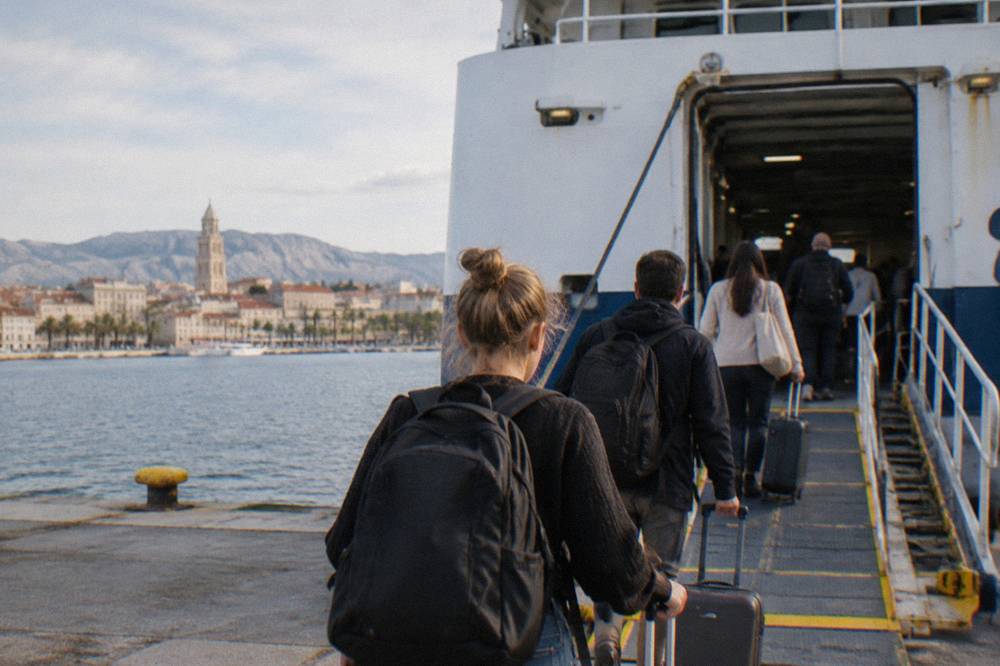
A foot passenger on the Stari Grad car ferry pays 5.90 EUR off-season and 8.40 EUR in season, per the Jadrolinija fare list. Catamaran fares to Hvar town or Jelsa are 6.40 EUR in the low season and 10.00 EUR in the high season, and to Vis 7.20 and 10.00 EUR. These are foot-passenger prices as published by the operators, with any vehicle, bicycle or seat reservation costing extra at booking.
The fare table the operators publish, converted into one view:
| Route | Type | Foot passenger, low season | Foot passenger, high season | Crossing |
|---|---|---|---|---|
| Split to Stari Grad (Hvar), line 635 | Car ferry | 5.90 EUR | 8.40 EUR | about 120 min |
| Split to Hvar town or Jelsa, lines 9602 / 9603 | Catamaran | 6.40 EUR | 10.00 EUR | faster, direct to town quays |
| Split to Vis | Catamaran | 7.20 EUR | 10.00 EUR | about 140 min by ferry |
| Split to Supetar (Brač), line 631 | Car ferry | see operator list | see operator list | about 50 min |
| Split to Rogač (Šolta), line 636 | Car ferry | see operator list | see operator list | about 60 min |
Two notes the operators themselves attach. First, the seasonal boundary on line 635 falls where Jadrolinija's fare list puts it, not where a blog guesses it, so the price you are quoted at booking is the one that counts. Second, catamarans are foot-passenger services: bicycles and luggage rules are set by each operator, and Kapetan Luka (Krilo), TP Line and Bura Line all appear in the Port of Split departures feed alongside Jadrolinija, each with its own fare list and conditions.
Children's fares, student discounts and any group rates are likewise set per operator and per line, and the ticket page at the moment of purchase lists them all. Nothing in this article should be read as a fare guarantee for a specific date; the operators revise prices and sailing patterns season to season, and the 2026 timetables already brought visible changes to neighbouring lines.
When the ferry timetable feels like a constraint rather than a convenience, an organised boat trip is the alternative: the operator handles the schedule, and the crossing becomes part of the day rather than a booking to manage. The selection below shows what is available from this port.
Can You Do Hvar As A Day Trip From Split By Ferry?
Yes, and the catamarans are what make it work, because they berth at Hvar town directly and return the same day, while the Stari Grad car ferry suits travellers with a car or those heading to the island's north side. The decision rests on three things: whether you want Hvar town itself, whether you need a vehicle on the island, and whether the day's sailing times on the operators' current timetables leave you enough hours ashore. Always read the live timetable before booking anything non-refundable around it.
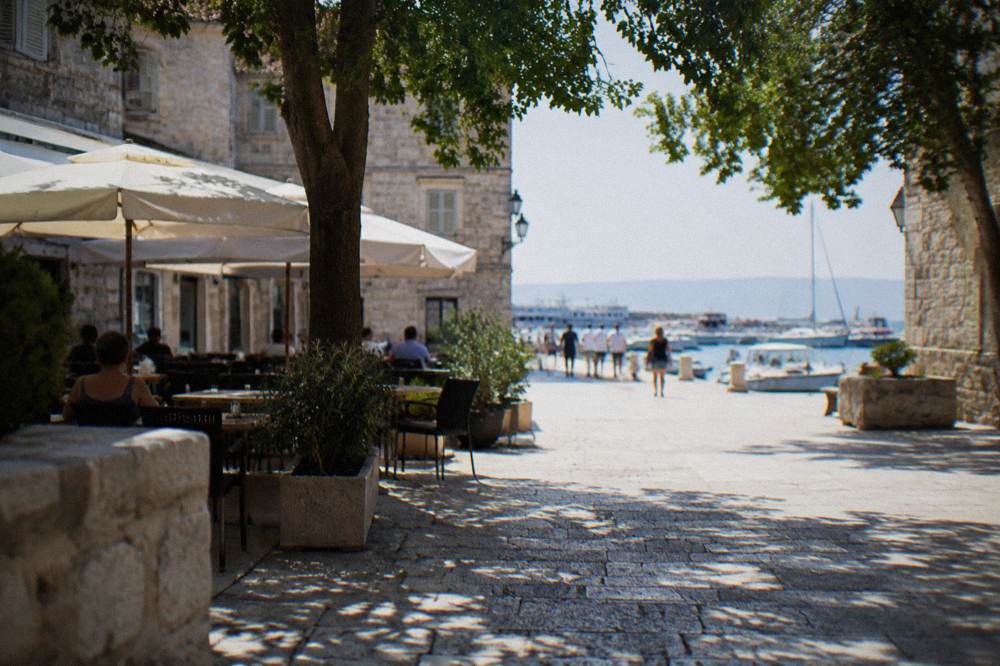
A day trip by public boat is a real option but a timetable-dependent one. The sailing times change by season, and the operator's timetable decides; never assume a crossing runs year-round or at a fixed hour. Check the current departures for the date you plan, then work backwards: the last catamaran back to Split sets a hard end to your day. For the fuller picture of island time on Hvar, including overnight options, see the Hvar day trip guide, and for the classic comparison of the two places, Hvar versus Split.
Planning the hours ashore is easier if you fix the shape of the day early. A catamaran day built around Hvar town gives you the piazza, the fortress climb and a swim stop at the Pakleni islands within walking or taxi-boat distance of the quay. A car-ferry day built around Stari Grad trades the town's waterfront glamour for stone lanes, quieter swimming coves on the north side and easier access to Jelsa and Vrboska, though a vehicle or island bus then becomes part of the plan. Neither shape is better; they are simply different islands depending on the port.
If the timetable does not fit, guided boat tours run daily in season with the schedule built in. One consideration worth weighing: whether the island still matches its party reputation is a fair question, and whether Hvar is still a party island addresses it directly.
If the timetables won't fit your plans, book a Hvar and Pakleni islands cruise here.
What Is The Difference Between The Car Ferry And The Catamaran?
The car ferry carries vehicles and foot passengers, takes about 120 minutes to Stari Grad, and is the only way to bring a car to Hvar island; the catamarans are fast foot-passenger-only boats calling at Hvar town, Milna, Bol, Jelsa and Vis depending on the line. Catamarans are quicker and land you in the town, but they cannot carry your rental car, and their luggage and bicycle rules are stricter.
The choice in one view:
| Car ferry, line 635 | Catamaran, lines 9602 / 9603 | |
|---|---|---|
| Arrives at | Stari Grad, north coast | Hvar town, Milna, Jelsa, Vis depending on line |
| Crossing | about 120 min | faster, direct town quays |
| Vehicles | Yes | No, foot passengers only |
| Foot fare | 5.90 / 8.40 EUR by season | 6.40 / 10.00 EUR by season |
| Operators | Jadrolinija | Jadrolinija, Kapetan Luka (Krilo), TP Line, Bura Line |
| Best for | cars, north-side accommodation, luggage | Hvar town day trips, foot travellers |
One detail from the 2026 timetable changes that Jadrolinija announced is worth knowing even though it concerns a different island: the Split to Supetar line on Brač dropped its off-season pattern entirely and now runs only high-season and low-season timetables, the fifth Croatian line to do so. It signals how demand on these central Dalmatian crossings has grown, and it is a reminder that seasonal patterns on the Hvar routes shift too. The Port of Split handled 6.05 million passengers in 2025, its own statistics page states, and the islands off this city absorb a large share of that traffic.
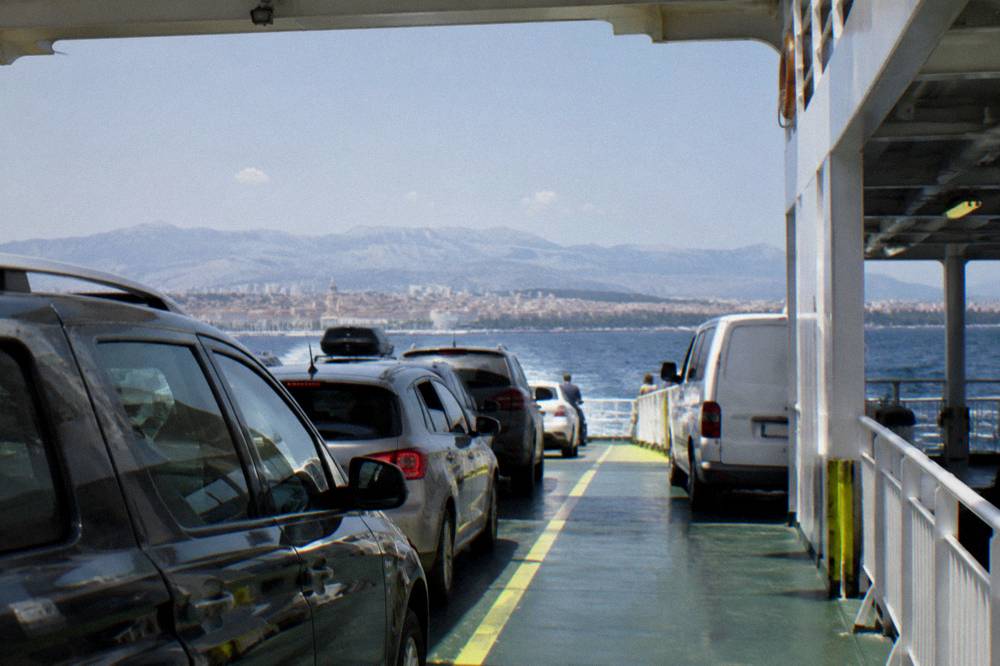
Seasickness is rarely a deciding factor on the catamarans in summer, but the crossing is open water and a strong bura or jugo wind can make any fast boat lively. The crew's instructions on boarding and seating settle most of it, and if the forecast looks doubtful, the car ferry is the steadier platform of the two. Neither operator publishes a weather-cancellation policy on its route page in plain terms, so a look at the live departures feed on the morning of travel, or a question at the ticket office, is the practical check.
How Do You Buy Split To Hvar Ferry Tickets?
Buy foot-passenger tickets from the operator's own website or app, or at the ticket offices at the Split ferry port on Obala kneza Domagoja; catamaran tickets are sold the same way, with Kapetan Luka (Krilo), TP Line and Bura Line each running their own sales channels. Vehicle spaces on the car ferry should be booked in advance in summer, and the price quoted at booking, not any figure on a third-party page, is the one that applies.
The port itself is hard to miss: the ferry port, the main bus station and the railway station sit together on Obala kneza Domagoja, 500 to 600 m from the palace, so arriving in Split by coach or train puts you within a short walk of the Hvar departures. The same proximity is why a Split arrival by air connects easily too; the Platanus airport shuttle runs from the airport to the main bus station by the ferry port for 10 EUR one way or 15 EUR return, its own page states, and the planning detail is in getting from Split airport to the city centre.
A short checklist before you book:
- Confirm the arrival port: Stari Grad and Hvar town are different destinations.
- Check the live timetable for your date, in both directions, before booking a non-refundable hotel or tour.
- Book vehicle space on the car ferry early in July and August.
- Keep the ticket for the return leg; catamaran operators check boarding at the quay.
- Arrive at the port early enough to find the right berth; the port serves Brač, Šolta, Hvar and Vis crossings from adjacent piers.
Digital tickets shown on a phone are accepted by the operators on these routes, but a paper backup from the ticket office costs nothing and survives a dead battery at the gangway. In the peak weeks of July and August the ticket queues at the port lengthen, so buying the day before, or online as soon as the date opens, removes the morning's main uncertainty.
What Is There To Do Once You Arrive On Hvar?
Hvar town's harbour front, its hilltop Fortica fortress at 12 EUR entry per the Hvar tourist board's fee page, and the Pakleni islands just offshore are the core of a visit, while Stari Grad puts you among stone lanes and the island's older settlements on the north coast. The Fortica is open 9:00 to 20:00 per the same listing, and the Pakleni islands are reached by small taxi boats from Hvar town's quay.
| Sight on Hvar | Where | Entry |
|---|---|---|
| Fortica (Španjola) fortress | Above Hvar town | 12 EUR, 9:00 to 20:00 |
| Hvar town harbour and piazza | Hvar town | Free to walk |
| Pakleni islands | Off Hvar town | Taxi boat, price set at the quay |
| Stari Grad old town | North coast, ferry port | Free to walk |
| Lavender fields | Interior, inland villages | Seasonal, confirm locally |
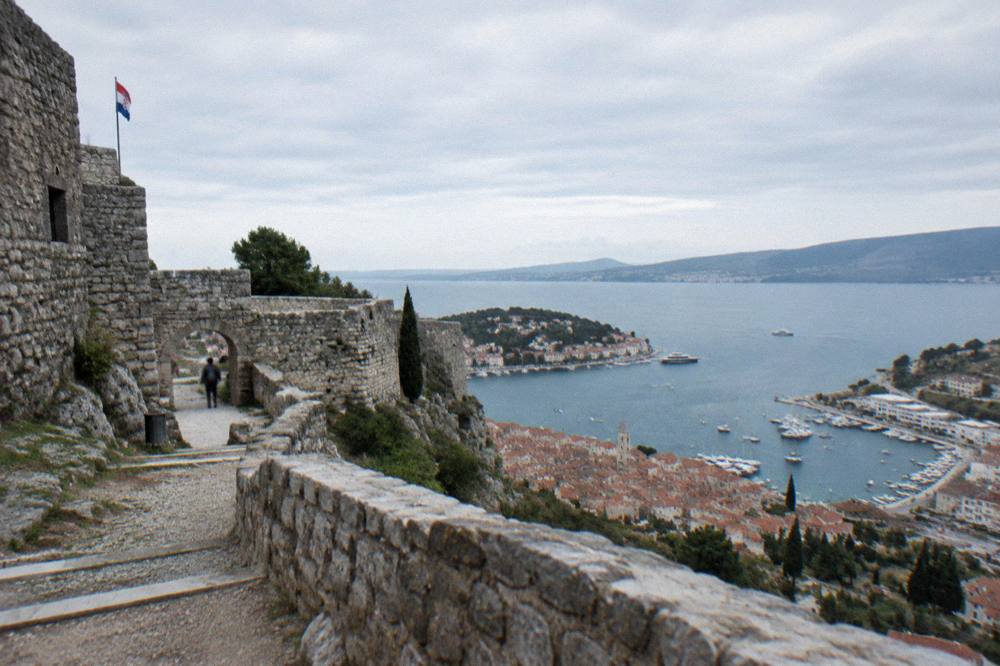
Time on the island is bounded by the sailing you pick, so plan the Fortica climb and the town around it, and leave margin for the walk back down to the quay. The path up to the fortress runs through pine shade for much of the way, and the view from the top takes in the town, the Pakleni chain and the channel back toward Split, which makes the entry fee one of the clearer spends on the island. If a day proves too short, the wider question of whether Hvar is nicer than Split is worth reading before committing nights to either.
When Is The Best Time Of Year For The Split To Hvar Crossing?
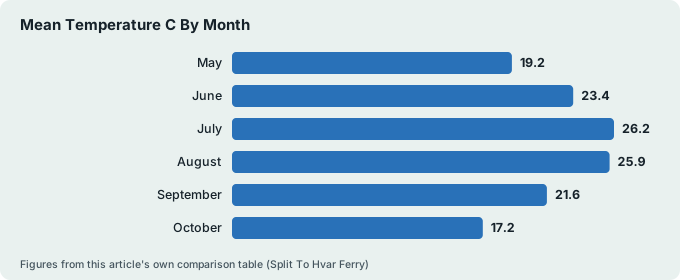
July and August bring the warmest weather and the fullest timetables but also the busiest boats, while May, June and September balance reliable sailing weather with thinner crowds; from late autumn to early spring the timetable thins out and sea conditions become the deciding factor. The DHMZ Split-Marjan station table gives July a mean of 26.2 C and January 8.0 C, with November the wettest month at 115.5 mm and July the driest at 26.6 mm.
The monthly picture from the DHMZ Split-Marjan station, period 1948-2024:
| Month | Mean temperature C | Precipitation mm |
|---|---|---|
| May | 19.2 | 57.5 |
| June | 23.4 | 49.0 |
| July | 26.2 | 26.6 |
| August | 25.9 | 41.3 |
| September | 21.6 | 70.9 |
| October | 17.2 | 77.0 |
Sailing frequency follows demand rather than weather alone. The operator's timetable decides what runs in any given week, and the shoulder months sit in a middle zone: enough traffic for regular crossings, not so much that a vehicle booking is hopeless two weeks out. For the fuller seasonal argument, see the best time to visit Split and the Split weather guide.
Autumn deserves a particular mention for island day trips. The sea stays swimmable well after the school holidays end, the DHMZ table shows September still averaging 21.6 C, and October 17.2 C, while the crowds thin and the queues at the gangway shorten with them. The trade-off is rainfall: November averages 115.5 mm at the Split-Marjan station, the wettest month of the year, and by then many seasonal sailings have already dropped to their winter pattern. A late-September or early-October crossing is the sweet spot the table points toward.
Is The Split To Hvar Ferry The Same As The Blue Cave Tour?
No. The ferry and catamaran lines are scheduled public transport between Split and Hvar island ports, while Blue Cave and five-island speedboat tours are guided excursions that pass Biševo's sea cave, the Pakleni islands and Hvar town in one circuit, usually with a swim stop. The Blue Cave entry fee, 24 EUR in high season and 18 EUR in the shoulder season, is paid in cash on site and is separate from any tour price.
The distinction matters when planning. Public boats give you Hvar on your own clock; the excursion boats give you a packed multi-stop day with the cave, which no scheduled ferry serves, since Biševo is a separate island reached by small boat from Vis. The two options are compared at length in the Blue Cave and Vis guide and across the Split boat tours overview.
A further practical difference is the start time. Excursion boats leave early, typically before the first scheduled crossings of the morning, and they return in the late afternoon on a timetable fixed by the operator. The public catamaran keeps its own hours, and the combination of the two is possible only if the times happen to align; check both before assuming a ferry-plus-tour day on the island can be built.
What Else Can You Reach From The Same Split Port?
The same port on Obala kneza Domagoja runs car ferries to Supetar on Brač in about 50 minutes, to Rogač on Šolta in about 60 minutes and to Vis in about 140 minutes, plus catamarans on lines 9602 and 9603 through Milna, Hvar, Bol, Jelsa and Vis, and international sailings including a summer Split to Bari route added in 2026. Every one of these departs from the piers a few minutes' walk from Diocletian's Palace.
| Destination | Service | Crossing |
|---|---|---|
| Stari Grad, Hvar | Car ferry, line 635 | about 120 min |
| Hvar town, Milna, Vis | Catamaran, line 9602 | direct town quays |
| Bol, Stari Grad, Jelsa | Catamaran, line 9603 | direct town quays |
| Supetar, Brač | Car ferry, line 631 | about 50 min |
| Rogač, Šolta | Car ferry, line 636 | about 60 min |
| Vis | Car ferry | about 140 min |
| Bari, Italy | International ferry | summer 2026 addition |
The Brač crossing connects to another set of island plans, covered in Brač and Zlatni Rat, and the Italy-bound sailings have their own page in the Split to Italy ferry guide. For the complete picture of day trips by land as well as by sea, start from day trips from Split.
Because so many lines share the same waterfront, the port's own departure boards are worth a minute of attention on arrival day. Berths for Brač, Šolta, Hvar and Vis sit close together but not in the same place, and international sailings use their own pier. The board at the head of the quay lists each sailing with its berth number, and the Port of Split's live departures feed carries the same information online.
Common Questions About The Split To Hvar Ferry
Does the ferry from Split go to Hvar town?
The car ferry goes to Stari Grad on Hvar's north coast. Catamarans on lines 9602 and 9603 call at Hvar town itself. Book according to which port you want, since they are about a half-hour apart by road on the island.
How long is the ferry from Split to Hvar?
The car ferry to Stari Grad takes about 120 minutes. Catamarans to Hvar town are faster, though exact sailing times depend on the line and the stops it makes; the operator's timetable for your date is the authority.
How much is the ferry from Split to Hvar?
A foot passenger on the Stari Grad car ferry pays 5.90 EUR off-season or 8.40 EUR in season per the Jadrolinija fare list. Catamaran fares to Hvar town or Jelsa are 6.40 EUR low season and 10.00 EUR high season.
Can you take a car on the Split to Hvar ferry?
Yes, on the car ferry to Stari Grad, line 635. Catamarans carry foot passengers only. Vehicle space in July and August should be reserved ahead, and vehicle tariffs are quoted at booking.
Can you do Hvar as a day trip from Split?
Yes, either on the catamarans to Hvar town or with a guided boat tour. Check the day's return sailing time before you commit, because the last departure sets the length of your day ashore.
Do you need to book the Split to Hvar ferry in advance?
Foot passengers can usually buy on the day outside peak weeks, though booking ahead in July and August removes the risk of a full sailing. Vehicles and group travel should always be booked in advance in summer.
The crossing itself is a straightforward one once the port question is settled: book the boat that arrives where you actually want to be, confirm the return time, and the rest of the day on Hvar takes care of itself.