What Is Prettier, Split Or Dubrovnik?
A side-by-side comparison of Split and Dubrovnik: old towns, UNESCO listings, walls and palaces, prices, sea access and day-trip range, all from published prices and timetables.
Split, the coastal city in central Dalmatia where a Roman emperor built his retirement palace, gets compared to Dubrovnik more often than to any other place in Croatia. The comparison is fair on the surface: both are Adriatic cities, both have stone centres listed by UNESCO, and both sit within a few hours of each other by road. The honest answer to which is prettier depends on what a visitor counts as beauty, a complete walled town photographed from a hill, or a living city where the monument and the daily market share the same alleys. This page sets the two side by side using published figures, from ticket prices and UNESCO listings to ferry routes and hillside steps.
What Is Prettier, Split Or Dubrovnik?
Dubrovnik is prettier as a single spectacle, because its walls enclose one intact stone town above the sea, while Split is prettier as a layered, working city, because Diocletian's Palace holds houses, shops, bars and a cathedral inside its Roman shell, inscribed by UNESCO in 1979. Travellers who want the postcard panorama choose Dubrovnik; travellers who want the beauty mixed with ordinary Dalmatian life, and with islands, parks and rivers on the doorstep, choose Split.
The UNESCO listing frames the difference. Split is inscribed as the "Historical Complex of Split with the Palace of Diocletian", a property of 20.8 hectares, because the palace built for Emperor Diocletian around 295 to 305 AD was never abandoned: apartments, bakeries and churches were fitted into its walls over the centuries. Dubrovnik's listing covers a whole planned old town ringed by its famous walls. Two different ideas of beauty, in other words, and the sources describe both without ranking them.
What the sources do allow is a comparison of scale and access. Dubrovnik's walls charge about 40 EUR for an adult ticket in 2026, a secondary price guide reports, with Lovrijenac fortress included. In Split, the Peristyle, the Riva promenade, the Prokurative square, the Golden Gate, the Grgur Ninski statue, the green market, Marjan park forest and the city beaches cost nothing, and the cathedral complex runs from about 5 EUR for a single site up to about 15 EUR for a combined ticket. A visitor can walk Split's Roman core for hours without buying a single entry, which changes the whole feel of a visit: the beauty is the street, not the turnstile.
For a fuller head-to-head on hotels, food and pace, the Split vs Dubrovnik guide breaks the comparison down by travel style.
How Do The Two Old Towns Look Side By Side?
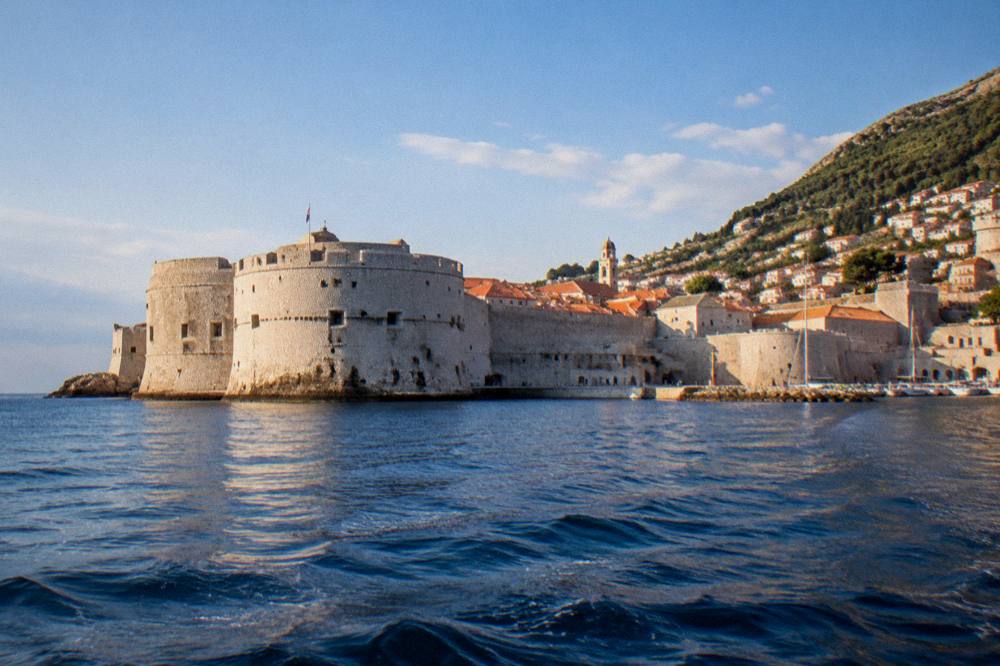
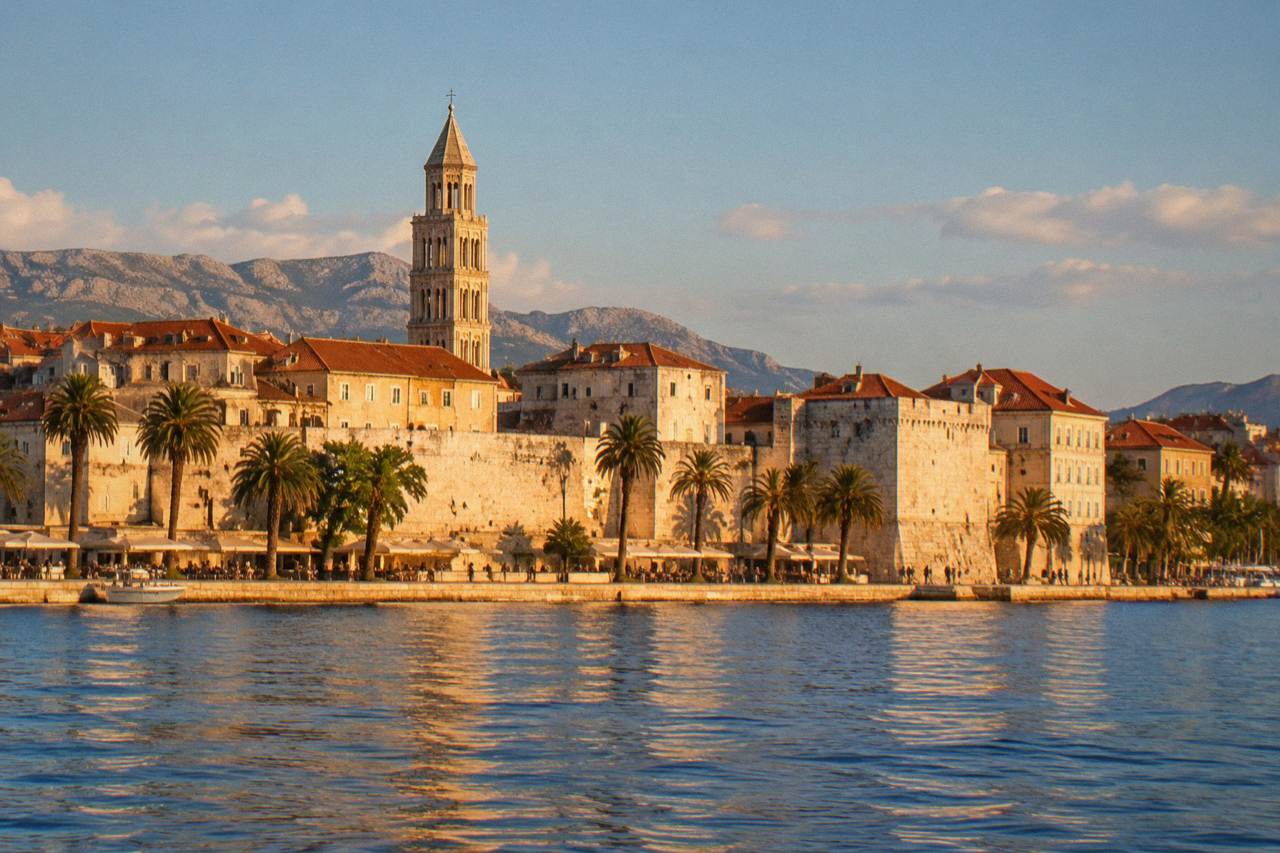
Split's old town is a Roman palace still in use, with the Cathedral of St Domnius, its bell tower rising 57 m, the cellars open 8:30 to 20:00 daily, and about 160,577 people living in the city around it. Dubrovnik's old town is a unified baroque-era stone ensemble framed by complete walls. Split looks lived-in and layered; Dubrovnik looks curated and complete. Neither look is the other, and that is the whole choice.
The palace in Split was raised for Diocletian in the late 3rd and early 4th century, and its cellars, run by the Split City Museum, are open Monday to Sunday from 8:30 to 20:00, with the central part under restoration to the end of 2026 while the passage stays open. Above ground, the Peristyle still stages public life, and a Roman guard change was held there at noon daily from 28 May to 27 September 2026. Split's beauty keeps moving; the city held 6.05 million port passengers in 2025, and the port itself sits 500 to 600 m from the palace.
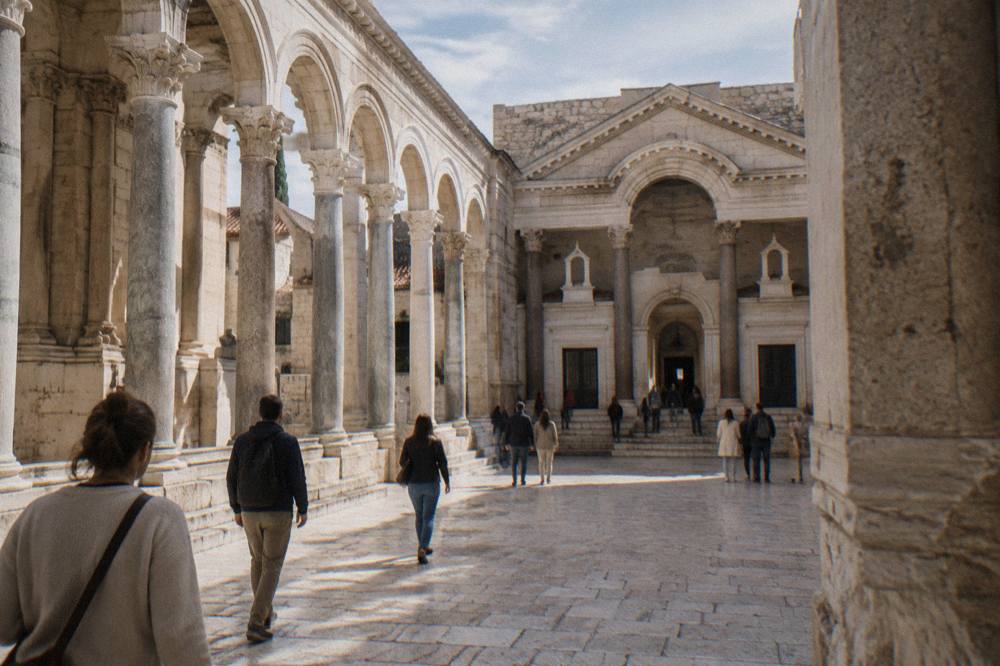
Dubrovnik, by contrast, is admired mostly as an ensemble. Its walls are the single paid experience that defines a visit, and the views from them are the image the city is known for. The trade-off the sources show is intimacy against completeness: Split's centre contains a working market, schools and ordinary apartment life inside a UNESCO property, while Dubrovnik's centre reads more purely as a monument. Neither is a replica of the other, and a traveller who loves one often respects the other without wanting to swap.
If a day in the fortress city appeals more than a day of driving, the Dubrovnik day trip guide covers how the visit works from Split.
If a day in the fortress city appeals, book a Split to Dubrovnik transfer here.
Which City Costs More To Visit?
Dubrovnik carries the higher costs per official and secondary price lists: its walls alone cost about 40 EUR, while Split's headline sights cluster lower, with the City Museum at 10.00 EUR, the Archaeological Museum at 8 EUR, the Meštrović Gallery at 12.00 EUR and the Ethnographic Museum at 7.00 EUR, and its public realm, from the Peristyle to Marjan, is free. Accommodation prices are outside what the sources state, so those should be confirmed at booking.
The pattern repeats across everything with a published figure. Split's museum ladder is short and gentle: the Ethnographic Museum at 7.00 EUR, the Archaeological Museum at 8 EUR, the City Museum at 10.00 EUR, and the Meštrović Gallery at 12.00 EUR, a ticket that also includes the Crikvine-Kaštilac site after the gallery's reopening in April 2026. Here is what the price lists actually show:
| Item | Split | Dubrovnik |
|---|---|---|
| Headline monument | Palace cellars under City Museum pricing, 10.00 EUR adult | City walls about 40 EUR adult, Lovrijenac included |
| Cathedral complex | From about 5 EUR single, up to about 15 EUR combined | Confirm on site |
| Major museum | Meštrović Gallery 12.00 EUR, Archaeological Museum 8 EUR | Confirm on site |
| Free public spaces | Peristyle, Riva, Marjan, beaches, markets | Old town streets walkable without a ticket |
| Distance between the two | 234.8 km by road, about 3 h 21 driving | Same road, coach about 4 h |
Two Split quirks are worth knowing before budgeting. The Archaeological Museum's 10 EUR combined ticket also covers the Roman ruins of Salona, 9.1 km away, within seven days. And the tourist tax across Split-Dalmatia County runs at about 2.65 EUR per person per night in high season, 1 April to 30 September, with under-12s free and 12 to 18 at half rate, collected by the accommodation and confirmed at booking. Everything else covered here is indexed on Split Croatia Travel Guide.
Which City Has The Better Setting, Sea And Beaches?
Split sits on a peninsula with the Marjan park forest at its back, a highest point of Telegrin at 178 m reached by 819 steps, and city beaches such as Bačvice within walking distance of the palace, while its islands, Brač, Hvar, Šolta and Vis, sit offshore on regular ferries. Dubrovnik's setting is a walled town above open sea. On beaches, islands and green space the sources favour Split's range; on the single dramatic waterfront view they favour Dubrovnik.
Marjan gives Split something Dubrovnik's centre does not have: a protected hill of pine and stone 3.5 km long and 1.5 km wide, walkable from the Riva, with the whole city and the islands spread below from Telegrin. The city's climate backs the outdoor case too. The DHMZ Split-Marjan station table, covering 1948 to 2024, gives July a mean of 26.2 C with 353.3 hours of sunshine and only 26.6 mm of rain, and even November, the wettest month at 115.5 mm, stays mild at a 12.7 C mean. Winter light is real as well, with December still recording 120.8 hours of sunshine on the same station table.
| Month | Mean temperature (C) | Precipitation (mm) |
|---|---|---|
| January | 8.0 | 77.8 |
| April | 14.4 | 62.0 |
| July | 26.2 | 26.6 |
| October | 17.2 | 77.0 |
| November | 12.7 | 115.5 |
The island reach is Split's quiet advantage in this comparison. Car ferries run to Stari Grad on Hvar in about 120 minutes and Supetar on Brač in about 50 minutes, Šolta's Rogač is about 60 minutes away, and catamarans serve Hvar town and Vis. A foot passenger on the Stari Grad line pays 5.90 EUR off-season and 8.40 EUR in season, fares the Jadrolinija price list publishes. On the beach question specifically, the beaches in Split or Dubrovnik comparison goes deeper than this page can.
Which City Suits A Longer Stay?
Split suits the longer stay on its day-trip range: Krka is 74 minutes away by road, Trogir 36, Omiš 38, Šibenik 71, Mostar 2 h 13 and Plitvice 3 h 15, plus four islands by ferry, while Dubrovnik's own day-trip range is thinner. Dubrovnik suits a shorter, more concentrated visit built around its walls. Travellers torn between both usually give Split the extra nights.
The numbers make the case plainly. From Diocletian's Palace, Klis Fortress is a 22-minute drive, the Roman site of Salona 14 minutes, and the UNESCO towns of Trogir and Šibenik under 36 and 71 minutes respectively. Plitvice Lakes, the park whose lakes and waterfalls are on many Croatia itineraries, is 3 h 15 away, and its tickets are seasonal, 10 EUR from November to March, 23 EUR in April, May and October, and 40 EUR from June to September, with timed online entry and the visitor's name on the ticket.
For travellers who would rather not drive that far, guided options run from Split, including the Plitvice Lakes guided tour with entry tickets, with Check availability showing current dates and the operator's live listing.
How long to give each city is its own question, and the how many days for Split page works it through, as does the Split or Dubrovnik time-split comparison.
Common Questions About Split Or Dubrovnik
What is prettier, Split or Dubrovnik?
Dubrovnik is prettier as a single complete walled ensemble; Split is prettier as a layered living city inside a Roman palace. If the goal is one unmistakable panorama, Dubrovnik wins. If the goal is beauty mixed with everyday life, beaches and islands, Split does.
Is Split cheaper than Dubrovnik?
On the published price lists, yes. Dubrovnik's walls cost about 40 EUR, while Split's museums run 7.00 to 12.00 EUR, its cathedral complex from about 5 EUR, and its public spaces, the Peristyle, Riva, Marjan and the beaches, are free. Hotel rates are outside the sources, so confirm at booking.
Can you visit both Split and Dubrovnik on one trip?
Yes. Driving between them takes about 3 h 21, the coach about 4 h. Many travellers base in Split and take a Dubrovnik day trip, then give the saved nights to islands or national parks.
Which city has better beaches?
Split has city beaches such as Bačvice within walking distance of the old town and four islands a ferry ride away.
Which city is closer to the national parks?
Split. Krka is 74 minutes away by road and Plitvice 3 h 15, and both have seasonal published prices.
Both cities earn their reputations, and the choice between them is a choice between two kinds of beauty rather than a ranking. Dubrovnik delivers the complete stone set piece; Split delivers the palace, the hill, the beaches and the islands all at once. Travellers with time for only one base usually find Split's range the harder thing to give up, and the pretty fortress city makes an excellent day trip from it.