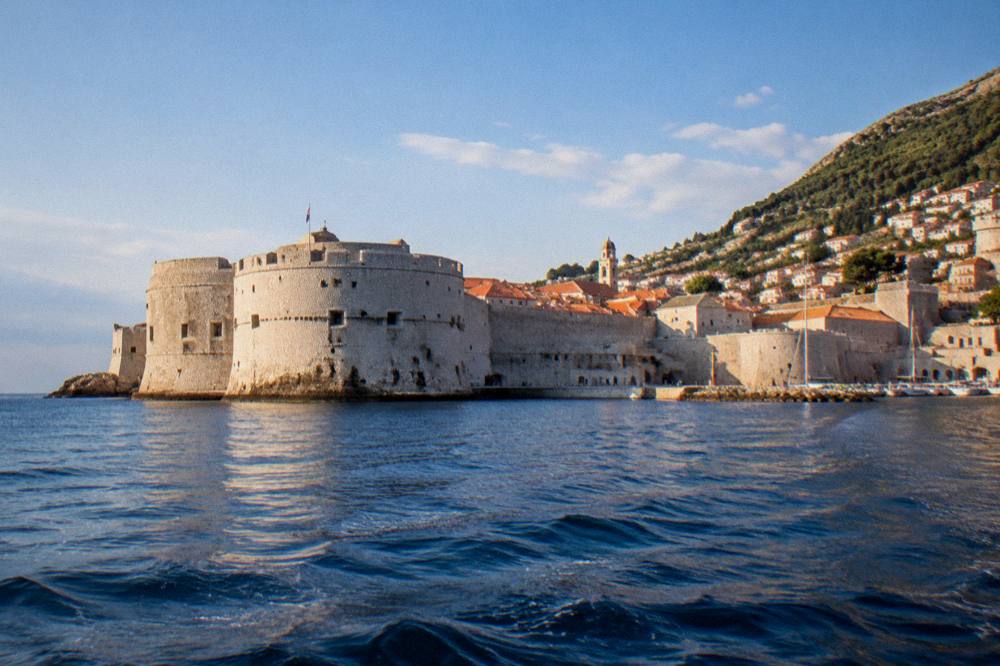
Are Beaches Better In Split Or Dubrovnik?
Split's city beaches are free and sit inside the city itself, while Dubrovnik pairs its walled Old Town with a three-hour-plus transfer from Split. Here is how the two compare.
Split, the coastal city in central Dalmatia, keeps its main beaches inside the city itself: Bačvice, Firule, Žnjan and Kašjuni are city beaches, they are free, and they sit a short walk or bus ride from the Old Town that grew out of Diocletian's Palace. Dubrovnik, 234.8 km and about 3 hours 21 minutes away by car in free-flow traffic, is a different proposition, a walled town whose paid attraction, the city walls at about 40 EUR a ticket, stands above a coast this page's sources say little else about. That gap is exactly where the honest comparison lives.
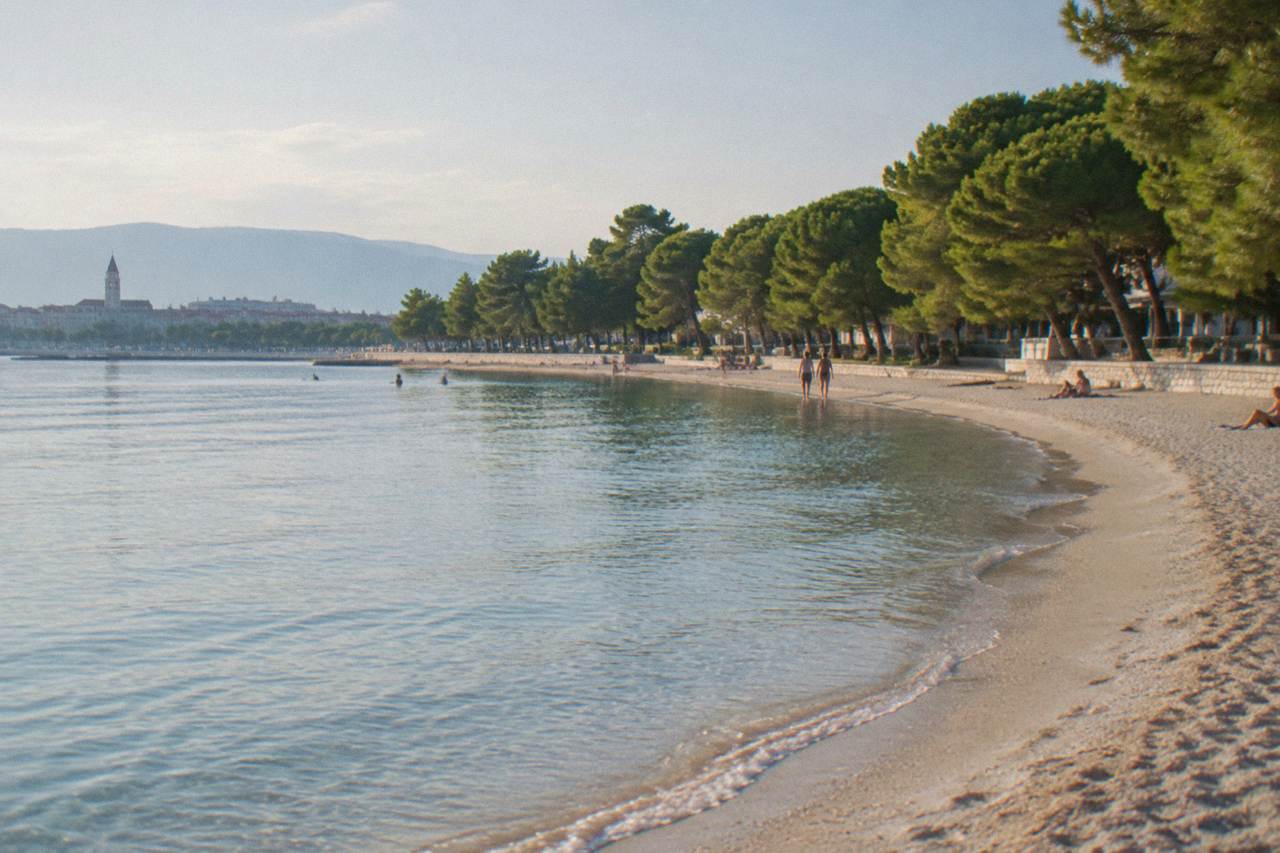
Are Beaches Better In Split Or Dubrovnik?
For a beach-centred holiday, Split wins on convenience and cost: Bačvice, Firule, Žnjan and Kašjuni are free city beaches within reach of the Old Town, and the tourist infrastructure of a working Adriatic port sits behind them. Dubrovnik pairs its beaches with a world-famous walled town rather than a beach resort experience, and reaching it from Split takes 234.8 km of driving, about 3 hours 21 minutes free-flow, or roughly 4 hours by coach.
The honest answer depends on what the trip is for. A visitor whose days revolve around swimming, picigin on Bačvice (the ball game born there in 1908, protected intangible heritage of Croatia), and an easy walk home from the sand should base in Split. A visitor who wants the walls, the limestone streets and the view from above, and who treats the sea as an afternoon extra, will get more from Dubrovnik.
What this page will not do is invent a verdict about Dubrovnik's individual beaches. The figures held here cover Split's beaches, the distances between the two cities, the Dubrovnik walls ticket and the Split climate record.
The site's own Split or Dubrovnik comparison guide goes deeper on hotels, food and sightseeing, and the question of how long to spend in each city is worth settling before any beach is chosen.
What Beaches Does Split Actually Have?
Split's four named city beaches, Bačvice, Firule, Žnjan and Kašjuni, are free to enter, need no ticket and no club membership, and sit inside the city boundary rather than outside it. Bačvice is the home of picigin, the shallow-water ball game born there in 1908 and now protected intangible heritage of Croatia, and the beaches are close enough to the Old Town that a swim between sightseeing stops is a normal part of a day.
Bačvice is the one the whole city argues about, a sandy, shallow bay where picigin players stand in waist-deep water year-round. Firule sits next to it, quieter and backed by pine. Žnjan stretches along the eastern side, a long concreted and pebbled stretch with cafes. Kašjuni lies under the Marjan peninsula on the western side, a small bay facing open water, reached by a road or a walk up and over Marjan's slopes.
None of these charges entry. The Peristyle, the Riva, the Golden Gate, Marjan's park forest and the city beaches are all free, which means a full day of Split's core experiences, palace, promenade, hill and swim, can be spent without a single attraction ticket.
What the sources here do not carry is a Blue Flag award for any Split beach for 2026, a water-quality verdict or a facilities list. Anyone who cares about lifeguard hours or water testing should check the posted signs at the beach or the city's own information before swimming. The full guide to Split's beaches covers each bay in detail.
A beach day in Split does not have to mean lying still. The sea kayaking options above paddle out from the city coast, and the Canyoning tour on the Cetina river runs from Split or Zadvarje for a day of rock, water and rope in the canyon behind Omiš. Both are ways to use the same stretch of Adriatic and Dalmatian hinterland that the beaches sit on.
How Far Are The Beaches From Each City Centre?
Split's beaches sit inside the city itself, with Bačvice roughly a 15-minute walk east of Diocletian's Palace and Kašjuni under the Marjan peninsula to the west, so no transfer is needed at all. Dubrovnik, from a Split base, is 234.8 km away, about 3 hours 21 minutes of free-flow driving, or roughly 4 hours by coach, which turns any Dubrovnik beach stop into a long day trip rather than a casual swim.
The distance table below, computed from Diocletian's Palace as the start point, shows what a Split base does to every coastal option:
| Destination from Split's palace | Distance by road | Free-flow driving time |
|---|---|---|
| Omiš and the Cetina river | 25.5 km | 38 min |
| Trogir | 29.3 km | 36 min |
| Makarska | 86.1 km | 75 min |
| Šibenik | 84.8 km | 71 min |
| Zadar | 159.5 km | 2 h |
| Dubrovnik | 234.8 km | 3 h 21 |
Read that table as a beach map. From Split, a string of coastal towns and river mouths sits within an hour, and Dubrovnik sits at the far end of the list. The day trip guide to Dubrovnik covers the practicalities of the run south, including the border crossing to Bosnia and Herzegovina at Neum, and there is no train alternative, the rail line from Split runs inland to Zagreb, not down the coast.
For a traveller based in Dubrovnik the arithmetic reverses, but the sources here do not carry distances from Dubrovnik outward, so this page prints none. What can be said is that Split's position in the middle of the Dalmatian coast, with the islands of Brač, Šolta, Hvar and Vis offshore and ferries and catamarans leaving from the port 500 to 600 m from the palace, gives it the denser beach-and-island network of the two. Other pages covering the same trip are gathered on Split Croatia Travel Guide.
When Is The Sea Warm Enough For Swimming In Split?
By the DHMZ Split-Marjan station record for 1948 to 2024, July is the warmest month at a 26.2 C mean and August sits at 25.9 C, with 18 days at 30 C or more in July and 17 in August, so mid-summer is the safest swimming window on paper. June averages 23.4 C and September 21.6 C, and how warm the water feels on any given day is a live question, not a monthly one.
The monthly record for the Split station:
| Month | Mean temperature (C) | Precipitation (mm) |
|---|---|---|
| Jan | 8.0 | 77.8 |
| Feb | 8.5 | 65.2 |
| Mar | 10.8 | 63.2 |
| Apr | 14.4 | 62.0 |
| May | 19.2 | 57.5 |
| Jun | 23.4 | 49.0 |
| Jul | 26.2 | 26.6 |
| Aug | 25.9 | 41.3 |
| Sep | 21.6 | 70.9 |
| Oct | 17.2 | 77.0 |
| Nov | 12.7 | 115.5 |
| Dec | 9.4 | 103.7 |
Two cautions come with that table. First, no official monthly sea-temperature normal exists for Split, so this page prints none; the live reading published by the weather service is the only sea figure worth trusting on the day. Second, these are air means from a single station on the Marjan peninsula, not a forecast, and the month-by-month guide treats the shoulder seasons in more depth. For the swimming question specifically, the practical pattern the numbers support is simple: June to September is warm, July and August are the reliable core, and October at a 17.2 C mean is a judgment call.
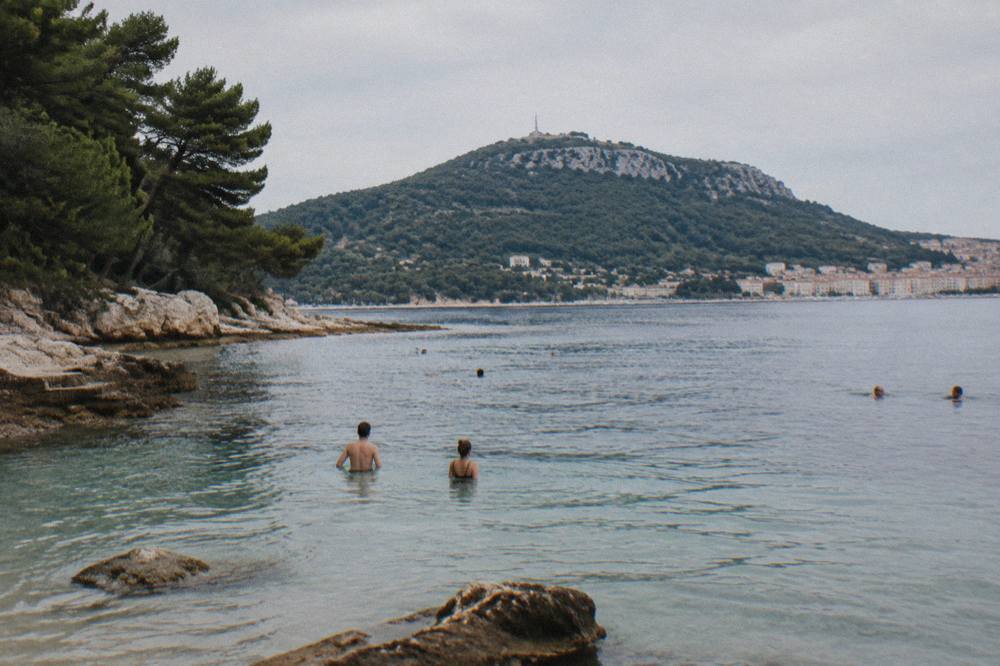
Which City Is Easier To Combine With A Beach Holiday?
Split is the easier beach base on every figure this page holds: its beaches are free and inside the city, its port runs ferries and catamarans to Brač, Šolta, Hvar and Vis from a terminal 500 to 600 m from the palace, and the city handled 6.05 million port passengers in 2025 as Croatia's busiest passenger port. Dubrovnik rewards a different holiday, one organised around its walls and old town, with the beach as a secondary activity.
The island network is the decisive factor. From Split, the Stari Grad car ferry on Hvar takes about 120 minutes, Supetar on Brač about 50, Rogač on Šolta about 60 and Vis about 140, so a beach day can mean a different island every morning. A swim at Kašjuni, a ferry to Šolta and a sunset walk on the Riva can all happen inside one day without a car.
Fancy a swim at the Blue Lagoon? Book a Blue Lagoon speedboat tour here.
That said, a Split beach week and a Dubrovnik stop are not rivals, they are sequential. The drive south takes an afternoon, and the walls ticket at about 40 EUR is the reason to make it. The sensible pattern the sources support is a beach base in Split, a day or two in Dubrovnik at the end, and the flying question settled by which end of the coast the itinerary starts from.
For anyone who wants the sea but not a sun-lounger day, the Cetina canyoning tour from Split or Zadvarje swaps the beach for the river canyon behind Omiš, with a route check and Check availability covering the current conditions.
Common Questions About Beaches In Split Or Dubrovnik
Are beaches better in Split or Dubrovnik?
For a beach-centred trip, Split: its four named city beaches, Bačvice, Firule, Žnjan and Kašjuni, are free and inside the city. Dubrovnik suits a trip organised around its walled Old Town, with the sea as an extra rather than the point.
Are Split's beaches free?
Yes. Bačvice, Firule, Žnjan and Kašjuni are city beaches with no entry charge, and the same applies to the Peristyle, the Riva and the Marjan park forest.
Can you swim in Split in October?
The DHMZ Split-Marjan record gives October a 17.2 C mean air temperature, so swimming in October is a matter of personal tolerance and the live sea reading on the day, not a guarantee.
How far is Dubrovnik from Split's beaches?
Dubrovnik is 234.8 km from Diocletian's Palace by road, about 3 hours 21 minutes in free-flow traffic, or roughly 4 hours by coach, so it works as a day trip or a second base rather than a beach hop.
Do Split's beaches have a Blue Flag?
This site prints no Blue Flag claim for any Split beach for 2026. Check the signs posted at each beach or the city's official information for current awards and water quality.
Which month is warmest for swimming in Split?
July, at a 26.2 C mean on the DHMZ Split-Marjan record for 1948 to 2024, with August close behind at 25.9 C. No official monthly sea-temperature normal is published, so the live reading is the figure to trust on the day.
The short version stands: base in Split for the beaches, add Dubrovnik for the walls, and let the 3-hour-21-minute drive south decide how many days each end of the coast gets.