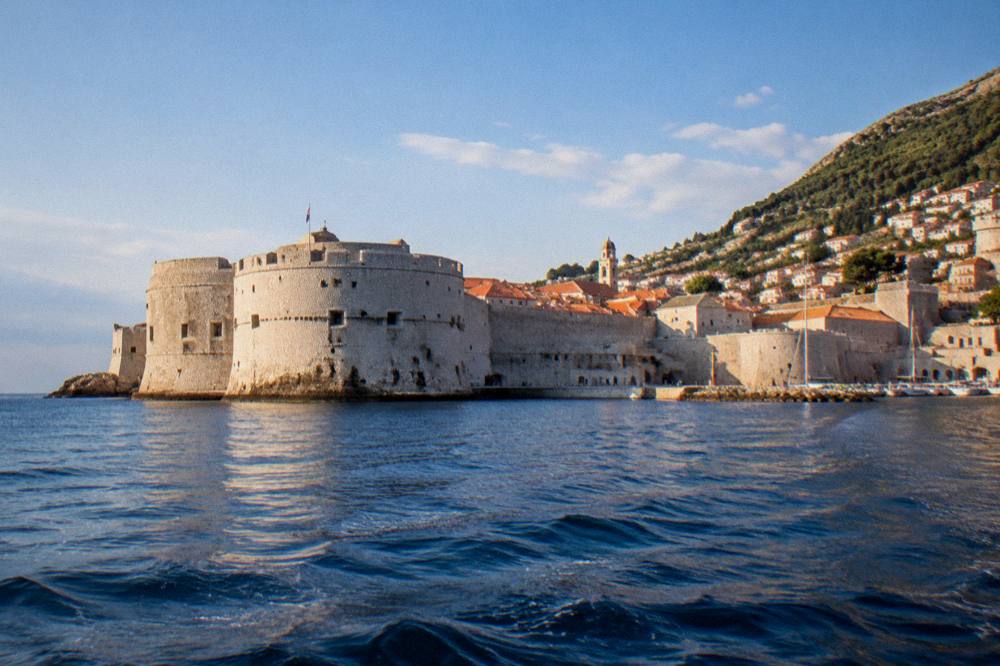
Dubrovnik Day Trip From Split
Dubrovnik sits 234.8 km down the Adriatic coast from Split, and a day trip is entirely possible by coach, car or organised tour. This guide sets out the real times, costs and trade-offs.
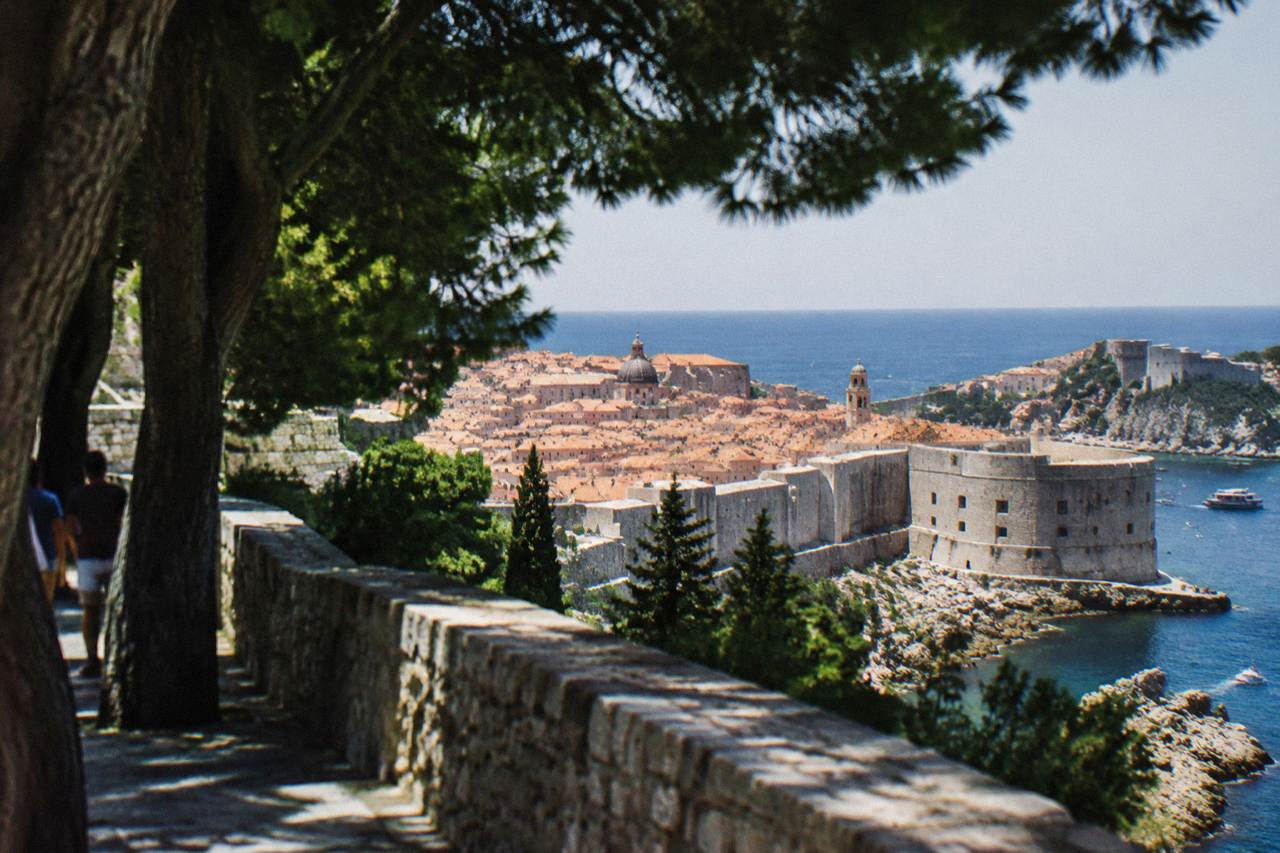
Short answer
Dubrovnik is 234.8 km from Split, about 3 h 21 by car free-flow or about 4 h by coach. A day trip works best with an early start: the city walls ticket is about 40 EUR, and organised tours from Split handle the border-free Schengen crossing and the parking question for you.
Dubrovnik is the one Dalmatian city that competes with Split for fame, and it sits at the far southern end of the Croatian coast, 234.8 km from Diocletian's Palace by road. A day trip from Split is a long day but a workable one, and the route itself is part of the appeal, running down the coast past Makarska and the Pelješac peninsula. This guide sets out what the sources actually say: driving and coach times from the measured figures, what the walls ticket costs, and where a day trip makes sense and where it does not.
Is A Dubrovnik Day Trip From Split Worth It?
A Dubrovnik day trip from Split is worth it if the walls and the old town are the goal and you accept a very long day on the road. The drive alone is 3 h 21 each way in free-flow conditions, so roughly seven hours of the day is transport. If you would rather not commit that much road time, closer options like Trogir at 36 minutes or Klis at 22 minutes from the palace give a full day trip without the mileage.
That trade-off is the honest starting point. The measured free-flow driving time from Diocletian's Palace to Dubrovnik is 3 h 21 over 234.8 km, which makes Dubrovnik the farthest of Split's classic day trips, well beyond Krka at 74 minutes, Mostar at 2 h 13 or Makarska at 75 minutes. Croatia has been in the Schengen Area since 1 January 2023, but Bosnia and Herzegovina is outside Schengen, so the Bosnian Neum corridor is an external border: expect passport or ID checks in both directions, and local traffic can slow the route in the peak months.
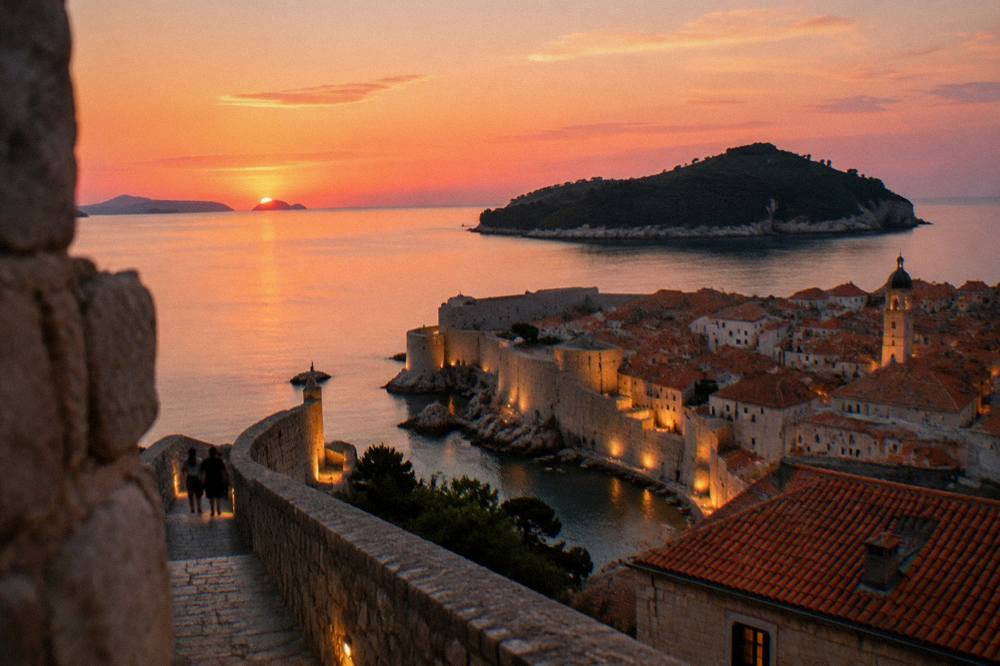
Dubrovnik also delivers something none of the closer trips can. Its walled old town is a UNESCO World Heritage property in its own right, distinct from Split's 1979 listing, and the city walls walk is one of the best known paid attractions on the Adriatic. For a fuller comparison of the two cities as destinations, the site carries a dedicated Split versus Dubrovnik guide and an answer to which is prettier, Split or Dubrovnik.
There is also a question of what you are giving up in Split itself. A Dubrovnik day consumes the entire daylight budget in high summer, which means no Marjan morning, no Bačvice swim and no slow afternoon in the palace cellars on that day. The things to do in Split page shows the scale of what the base city holds, and that inventory is the real opportunity cost of the long drive south.
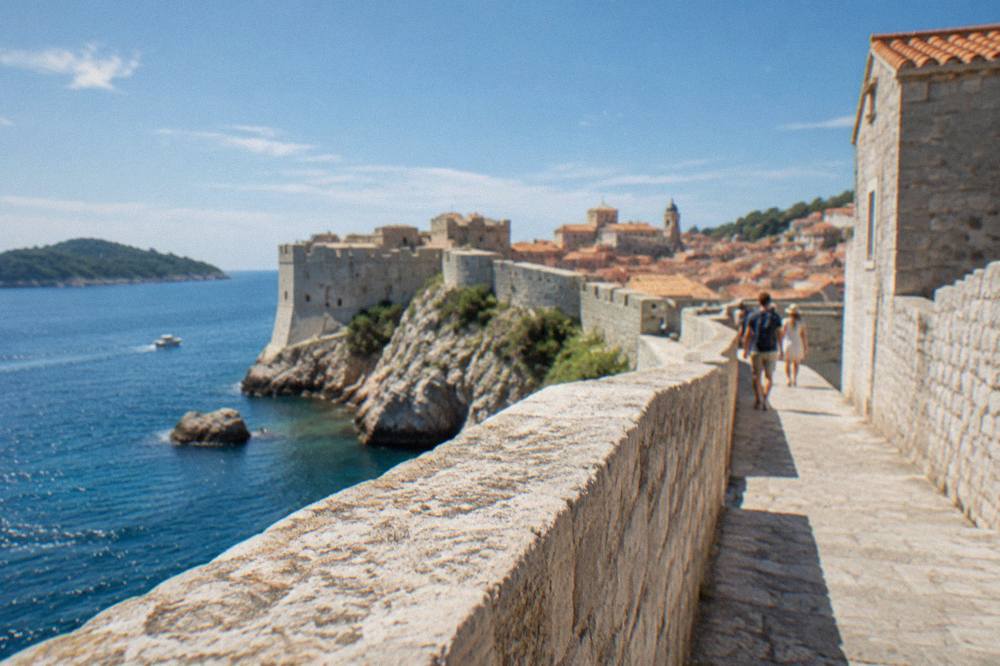
How Far Is Dubrovnik From Split And How Do You Get There?
Dubrovnik is 234.8 km from Diocletian's Palace by road, about 3 h 21 driving in free-flow conditions. By coach the journey runs about 4 h, on the service the Split bus station operates from Obala kneza Domagoja, 500 to 600 m from the palace. There is no usable train option: the rail network does not connect the two cities, a point the site covers in detail elsewhere.
Three practical options exist, and each suits a different traveller.
Whichever way you choose to travel. Book a Split to Dubrovnik transfer here.
| Option | Time each way | Notes from the sources |
|---|---|---|
| Car | 234.8 km, about 3 h 21 free-flow | OSRM measured route from Diocletian's Palace; traffic in summer adds time |
| Coach | About 4 h | Departs Split main bus station, which sits beside the ferry port and railway station |
| Organised day trip | Set departure and return | Door-to-door timing handled by the operator; the listing gives the exact schedule |
The driving figure is worth reading carefully: 3 h 21 is a free-flow computation, not a summer-morning guarantee. The same route passes Makarska at 75 minutes and the Pelješac peninsula approach before Dubrovnik, so the second half of the drive is slower road than the first. Anyone weighing the car against the coach can compare the two cities as arrival airports too, in the site's answer to whether it is better to fly into Split or Dubrovnik, and the question of whether you can catch a train from Split to Dubrovnik has its own page.
Because the road time dominates the day, an organised trip is a genuine alternative rather than a convenience. A tour fixes the departure, handles the return and removes the Dubrovnik parking question entirely, and the operator's live listing carries the current price and schedule.
The small-group option is the one most often paired with this route: the Dubrovnik Day Tour from Split or Trogir runs as a full-day trip, and Check availability shows the current dates and price.
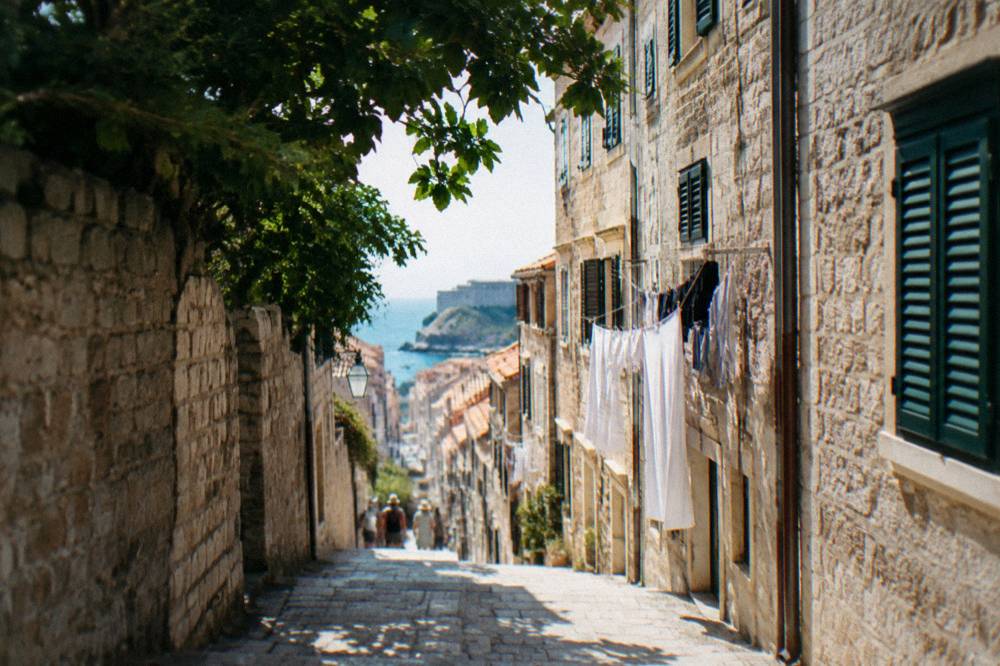
How Much Does A Dubrovnik Day Trip Cost?
The headline entry cost is the Dubrovnik city walls ticket at about 40 EUR for 2026, which includes Lovrijenac fortress, from a secondary ticketing source. On top of that come transport costs: a coach fare, fuel and parking if driving, or the tour price if going organised. Lunch inside the walls sits at old-town prices, so a realistic budget needs the ticket plus food plus travel.
The walls figure comes from a secondary ticketing site rather than the official city walls page, so treat about 40 EUR as the planning number and confirm the live price when buying. What the walls ticket buys matters too: the circuit runs around the full old town perimeter, with Lovrijenac across a small bay included in the same ticket.
| Cost item | Planning figure | Source basis |
|---|---|---|
| Dubrovnik city walls, adult | About 40 EUR, includes Lovrijenac | Secondary ticketing source, 2026 |
| Coach travel | Confirm at the bus station | No verified fare in the sources |
| Organised day trip | On the booking page | Renders from the operator data |
| Old-town lunch | Old-town prices, check posted menus | No fixed figure |
| Parking in Dubrovnik | No verified tariff; confirm locally | Not in the sources |
That table is deliberately honest about its gaps. What is verifiable is the walls price and the fact that everything else is a variable you can pin down at booking.
Can You Walk The Dubrovnik City Walls In A Day Trip?
Yes, the walls circuit fits comfortably inside a day trip, because it is a walk rather than a hike, done at sightseeing pace with stops for views and photos. The practical constraint is timing: the walls are the single busiest paid attraction in the city, so a day-tripper arriving at midday meets the peak. An early arrival from Split, or a tour that reaches the walls first, avoids the worst of it.
The ticket is bought at the gate, and the about 40 EUR price includes Lovrijenac on the far side. Two or three circuits' worth of viewing are packed into one loop: the sea-facing stretch, the rooftops over the old town, and the fortress across the water. Shoulders and knees covered is the standard rule at religious buildings in Dalmatia generally, and it applies in Dubrovnik's churches as it does in Split's Cathedral of St Domnius.
A day trip built around the walls looks roughly like this.
| Time | Activity |
|---|---|
| Early morning | Depart Split, 234.8 km ahead |
| Late morning | Arrive Dubrovnik, enter the old town |
| Midday | Walls circuit, about 40 EUR, Lovrijenac included |
| Afternoon | Lunch and the old town lanes |
| Evening | Return drive of about 3 h 21 to Split |
The return leg deserves respect. Arriving back in Split late is normal for this trip, and the ferry port, bus station and railway station hub is 500 to 600 m from the palace, so the final walk into the old town is short no matter how the day ends.
What Do You Actually See In Dubrovnik On One Day?
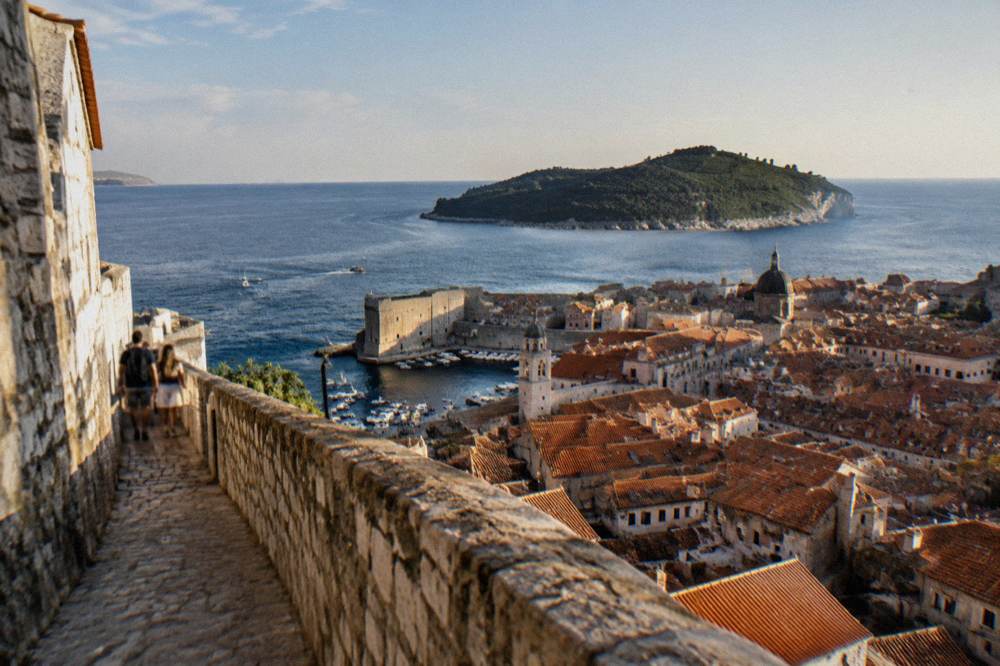
One day in Dubrovnik covers the walls, the main street through the old town, the Franciscan corner and the harbour front, all inside a compact walled area you can cross on foot in well under an hour. What one day does not cover is the islands off the coast, the cable car hill in a leisurely way, or any swimming, each of which really wants an overnight. The town rewards walking slowly more than it rewards a checklist.
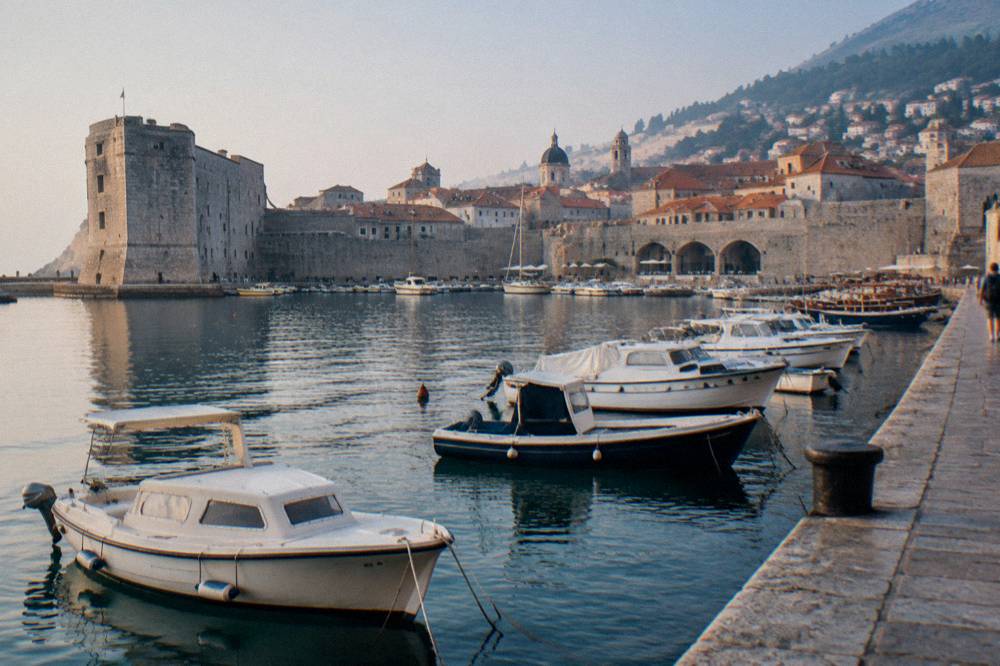
The old town is small enough that geography does the planning for you. Enter through the western gate, walk the main limestone street, climb to the walls, come down through the lanes and end at the old harbour. Lokrum sits just offshore, and the sea frames every view, which is a fair part of why the comparison with Split, a city where the sea frames everything too, generates so much debate. The wider set of guides lives on Split Croatia Travel Guide.
For travellers who cannot decide how to split days between the two, the site has a dedicated answer on whether to spend longer in Split or Dubrovnik, plus a beach-by-beach comparison in are beaches better in Split or Dubrovnik.
Organised Tour Or Independent Travel: Which Works Better From Split?
An organised day trip works better for a single-day Dubrovnik visit for one simple reason: the day is dominated by driving, and a tour converts that dead time into someone else's problem, with fixed timing that protects the return. Independent travel by car or coach suits travellers who want to set their own pace, stay past the tour departure hour, or combine Dubrovnik with an overnight, which one day cannot really do.
The comparison is honest on both sides.
| Factor | Organised trip | Independent |
|---|---|---|
| Road time | Fixed, handled by operator | You drive 234.8 km each way or sit a 4 h coach |
| Timing | Set schedule, guaranteed return | Fully flexible, risk of underestimating the drive |
| Walls visit | Timed to avoid the worst crowding | You choose, midday is the peak |
| Cost transparency | Price on the booking page | Walls about 40 EUR plus fares and parking |
| Overnight extension | Not available | Possible, and recommended if time allows |
The tours that run this route from Split are full-day products, and their listings carry current prices, ratings and schedules. The dedicated Dubrovnik day trip option is the direct one, and Check availability shows live dates.
How Does A Dubrovnik Trip Compare With Other Day Trips From Split?
Dubrovnik is the longest of Split's classic day trips at 3 h 21 of driving each way, against 2 h 13 to Mostar, 74 minutes to Krka and 36 minutes to Trogir. That makes it a trip for a long stay or a one-off priority, while the closer options stack easily into a multi-day plan. A ten-day Split itinerary can absorb Dubrovnik comfortably; a three-day one usually cannot.
The full measured picture from Diocletian's Palace, in free-flow driving minutes:
| Destination | Distance | Free-flow time |
|---|---|---|
| Trogir | 29.3 km | 36 min |
| Omiš | 25.5 km | 38 min |
| Šibenik | 84.8 km | 71 min |
| Krka, Skradinski buk | 90.2 km | 74 min |
| Makarska | 86.1 km | 75 min |
| Zadar | 159.5 km | 2 h |
| Mostar | 173.2 km | 2 h 13 |
| Plitvice Lakes | 258.1 km | 3 h 15 |
| Dubrovnik | 234.8 km | 3 h 21 |
Two things jump out of that table. First, Plitvice at 3 h 15 is marginally quicker to reach than Dubrovnik despite being farther in kilometres, because the Plitvice route uses faster road. Second, Mostar and Dubrovnik pair naturally on a map but pull in opposite directions for a single day, so travellers pick one or the other, or take two separate days. The site's overview of day trips from Split lays out the full menu, and the Mostar day trip guide covers the inland alternative in detail.
For anyone torn between the two flagship long trips, there is a workable pattern: take the Mostar, Počitelj and Kravice tour on one day and Dubrovnik on another, since both are full-day products on paper and neither fits twice in a single week of anything else. Check availability shows the live departure options for the Mostar side of that pairing.
When Is The Best Time Of Year For A Dubrovnik Day Trip From Split?
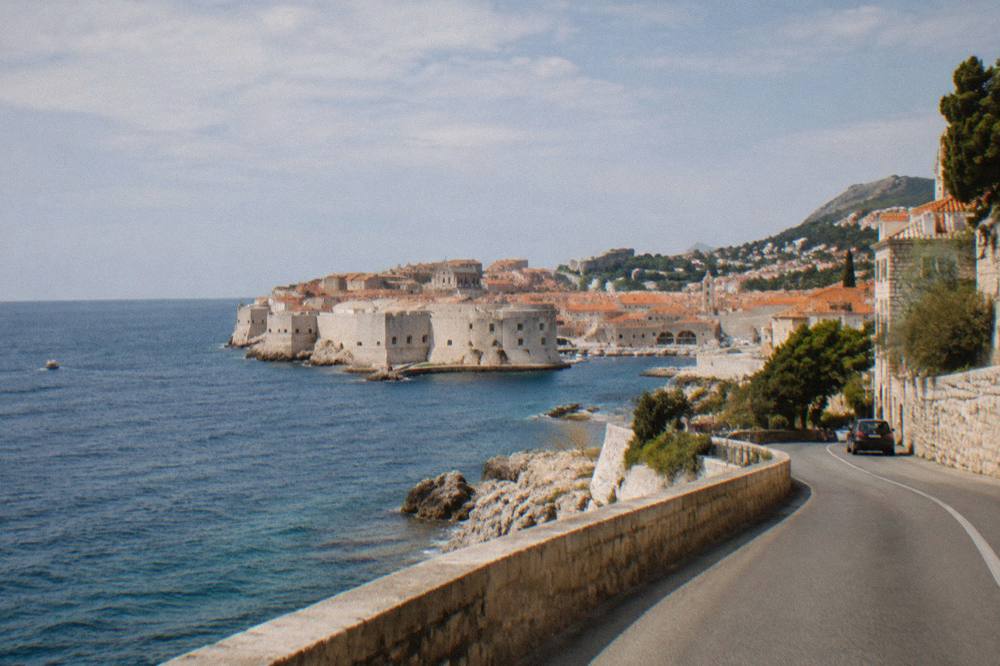
Late spring and early autumn are the best windows for a Dubrovnik day trip, because the walls walk is exposed to sun for its full length and the DHMZ Split Marjan station table shows July averaging 26.2 C with 18 days at 30 C or more, conditions that suit swimming better than wall walking. May, June and September combine workable heat with full summer timetables on the coast road and the ferries.
The climate figures are for the Split side of the route, from the DHMZ Split Marjan station over the period 1948 to 2024, but they describe the coast generally: July is the warmest month at a 26.2 C mean, August close behind at 25.9 C, with the driest month July at 26.6 mm of rain and November the wettest at 115.5 mm. A walls circuit in July heat is doable with water and a hat, but an early start matters even more then.
Event timing cuts both ways. Ultra Europe fills Split on 9 to 11 July 2027 at Park Mladeži, which raises Split accommodation pressure that week rather than Dubrovnik's, while the Riva central section in Split is expected to see partial closures through 2027 as its renovation runs. None of that touches the Dubrovnik side, but it shapes the base camp, and the site's best time to visit Split guide carries the full seasonal picture.
Should You Overnight In Dubrovnik Instead Of Day Tripping?
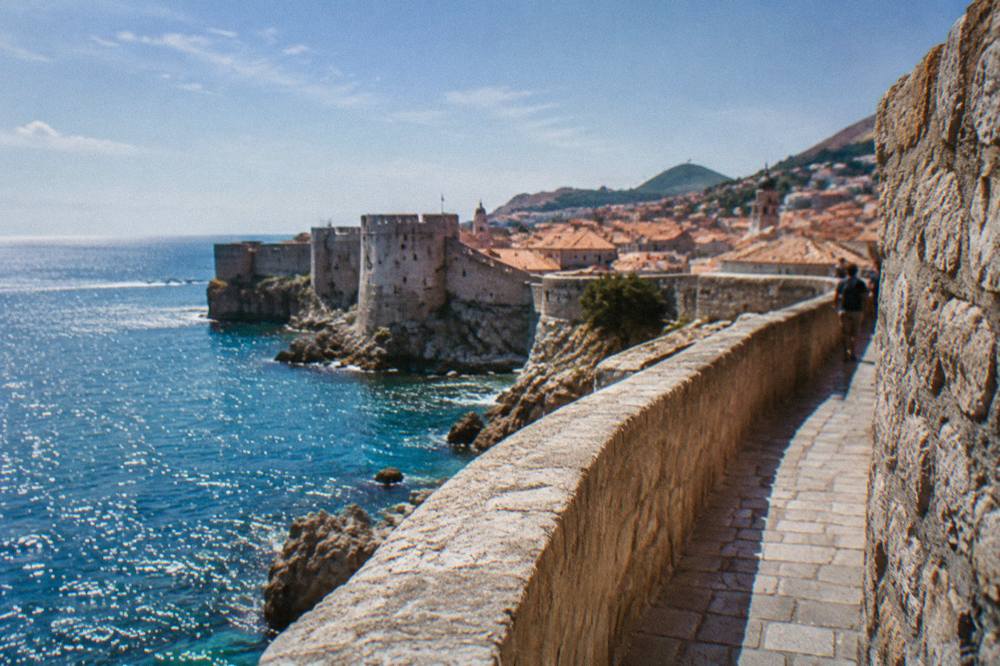
An overnight is the better plan if Dubrovnik is a priority rather than a checkbox, because it buys an evening walk on the walls-free streets, a morning walls circuit before the coaches arrive, and the option of Lokrum or a cable car afternoon, none of which a day trip reaches. The day trip remains the right call for a Split-based stay of limited length, or for travellers who prefer one base.
The economics of the decision are simple. A day trip spends roughly seven hours on the road to buy five or six in the city. An overnight converts two of those road hours into an evening and a morning, which in a walled town is when it is at its best. The site's one day in Split itinerary and the things to do in Split page show what the base city holds for the rest of a stay, and it is a lot, which is exactly why the day trip question stays live.
For a longer Dalmatian plan, the overnight option also opens the Hvar and island routes on the way down, which a straight day trip skips entirely. A wet-weather note belongs here too: the walls walk closes in rough conditions, and the site's rainy day in Split guide is the better plan if the forecast turns, since Dubrovnik's core attraction is exactly the kind of open-air circuit that weather can shut down.
Common Questions About A Dubrovnik Day Trip From Split
How long does it take to get from Split to Dubrovnik?
The measured free-flow driving route from Diocletian's Palace is 234.8 km, about 3 h 21 each way. The coach journey runs about 4 h. Confirm current timetables at the Split bus station on Obala kneza Domagoja.
Is a day trip to Dubrovnik from Split worth it?
It is worth it if the walls and the old town are the goal and you accept roughly seven hours of total road time. For shorter stays, Trogir at 36 minutes or Klis at 22 minutes from the palace are far lighter options.
How much does the Dubrovnik city walls ticket cost?
About 40 EUR for an adult in 2026, including Lovrijenac fortress, according to a secondary ticketing source. Confirm the live price when buying, as the figure is not from the official walls page.
Can you take a train from Split to Dubrovnik?
No. The Croatian rail network does not connect the two cities. The options are car, coach or an organised day trip.
Do you pass through Bosnia on the way to Dubrovnik?
The coastal route passes the Neum corridor, which belongs to Bosnia and Herzegovina. Croatia has been in the Schengen Area since 1 January 2023, which has changed the border situation on this route compared with older guides.
Is Dubrovnik or Split better for a first visit?
They serve different trips: Dubrovnik is compact and wall-defined, Split is larger, lived-in and built around Diocletian's Palace, a UNESCO property since 1979. The site carries a full comparison in its Split versus Dubrovnik guide.
What is the best month for a Dubrovnik day trip?
May, June and September. July averages 26.2 C at the DHMZ Split Marjan station with 18 days at 30 C or more, and the walls walk is fully exposed to the sun, so shoulder months give the same views with less heat.
A Dubrovnik day trip from Split is a commitment of road time rewarded by one of the best known walled cities on the Adriatic, and the numbers above let you decide honestly whether your dates, budget and appetite for driving support it, or whether a closer trip from the day trips menu serves your stay better.