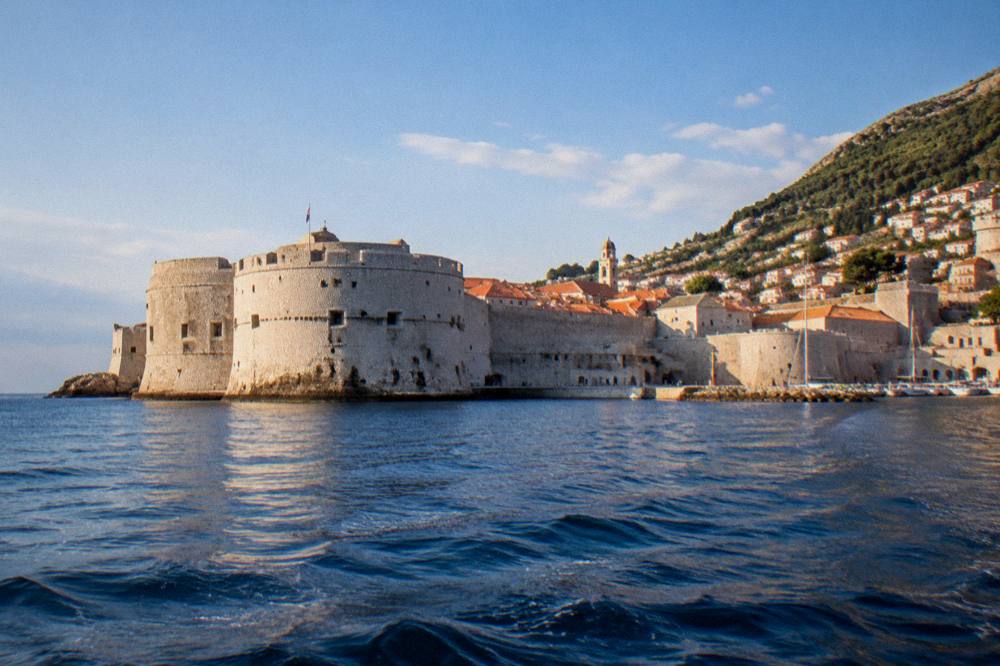
Should I Spend Longer In Split Or Dubrovnik?
A practical comparison of Split and Dubrovnik for trip planning: which city deserves the extra nights, with verified travel times, ticket prices and day-trip options.
Split, the coastal city in central Dalmatia where the Adriatic meets Diocletian's Palace, is the more practical base for a longer stay, while Dubrovnik concentrates its headline sights inside walls you can walk in a day. That is the short answer, and the reasoning behind it comes down to transport geography: the ferry port, the main bus station and the railway station in Split sit together 500 to 600 m from the palace, and nearly every island and inland day trip in the region starts from that one spot. Dubrovnik sits at the far southern end of the coast, 234.8 km and about 3 hours 21 minutes of free-flow driving from Split's palace, which makes it a destination rather than a hub.
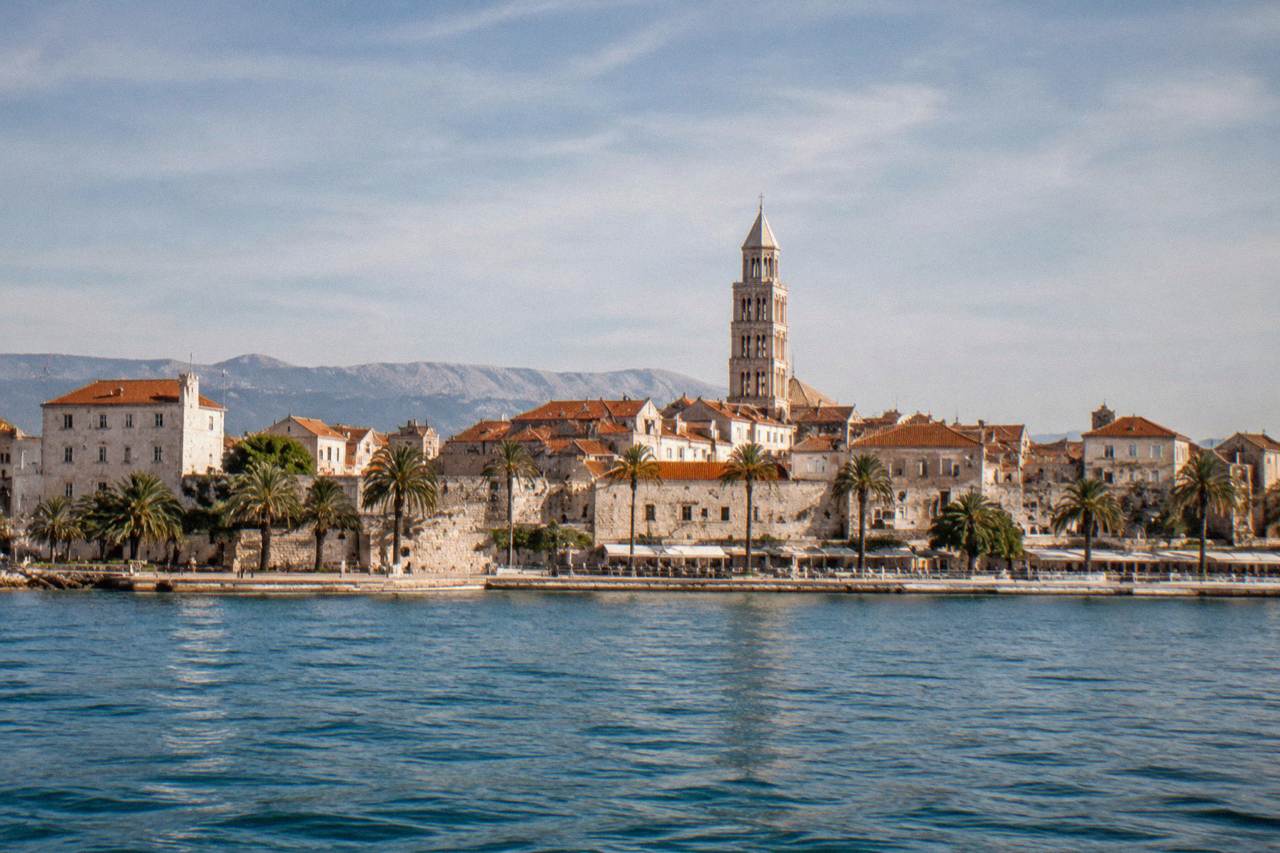
Should I Spend Longer In Split Or Dubrovnik?
Spend the extra nights in Split if islands, national parks or varied day trips matter to you, and give Dubrovnik one to two nights if your priority is the walled old town itself. Split combines a UNESCO-listed palace city, Croatia's busiest passenger port at 6.05 million passengers in 2025, and fast ferry links to Brač, Šolta, Hvar and Vis, while Dubrovnik's core attractions, the walls and the old town, are walkable in a single full day on the spot.
The two cities are not really competitors; they occupy different positions in an itinerary. Split is a working city of 160,577 people (2021 census) built in and around a Roman palace, with a forest park on the Marjan peninsula at its western edge. Dubrovnik is a smaller, more concentrated historic core whose city walls ticket, about 40 EUR in 2026 including Lovrijenac, is its single defining expense. If you plan to move between them, the coach journey takes about 4 hours and there is no direct train, a point the Split to Dubrovnik guide covers in detail.
A useful framing test: list what you want to do each day. If the list is city-only, walking, walls, museums, restaurants, Dubrovnik holds attention for two days comfortably. If the list includes a waterfall park, an island beach or a sea cave, Split is the city that puts those within reach, and the fuller comparison sits in the Split vs Dubrovnik guide.
Why Split Rewards The Extra Nights
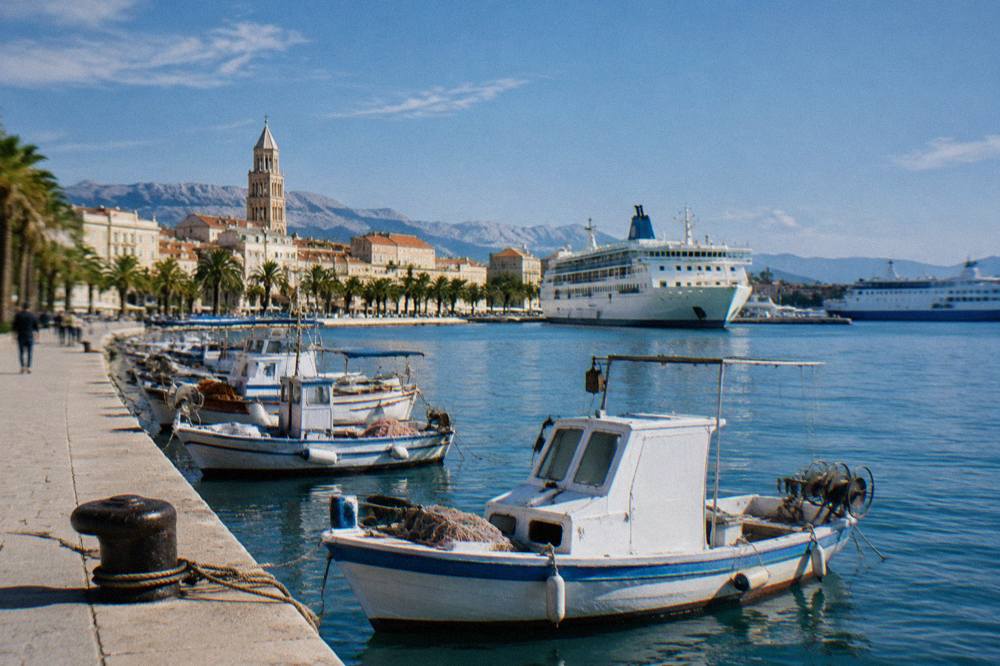
Split earns a longer stay through its day-trip range: Krka National Park is 74 minutes away by car, Trogir 36 minutes, the Blue Cave and Vis islands sit offshore by boat, and car ferries reach Brač in about 50 minutes and Šolta in about 60. A traveller basing themselves in Split can fill a week without repeating a destination, because the ferry, coach and rail hub on Obala kneza Domagoja starts all of it within a short walk of the palace.
The day-trip reach is the measurable difference. The table below shows free-flow driving times from Diocletian's Palace, computed from route data, alongside what each destination offers.
| Destination from Split | Driving time | What it offers |
|---|---|---|
| Salona | 14 min | Roman ruins, 10 EUR combined ticket with the Archaeological Museum |
| Trogir | 36 min | UNESCO old town (1997), 29.3 km away |
| Klis Fortress | 22 min | Fortress viewpoint, 10 EUR, a Game of Thrones Meereen location |
| Omiš | 38 min | Cetina river canyon and Mirabela fortress, 4 EUR |
| Krka National Park (Skradinski buk) | 74 min | Waterfalls, ticket 7 to 40 EUR by month |
| Šibenik | 71 min | St James Cathedral, UNESCO 2000 |
| Makarska | 75 min | Beach town under the Biokovo range |
| Mostar | 2 h 13 | Old Bridge Area, UNESCO 2005 |
| Dubrovnik | 3 h 21 | Walled city, walls about 40 EUR |
In-city time also fills quickly. The palace substructures run by Split City Museum open Monday to Sunday 8:30 to 20:00, the Cathedral of St Domnius complex sells combined tickets from about 5 EUR up to about 15 EUR, and the Meštrović Gallery at 12.00 EUR reopened in April 2026 after a fifteen-month renovation. Add Marjan hill, whose Telegrin peak at 178 m is reached by 819 steps from Trumbićeva obala, and the city itself justifies three nights before any excursion. The how many days is enough for Split question gets its own fuller treatment elsewhere on this site.
The gastro side of the city is not filler either. A guided walk that pairs the green market with tastings, such as the Split: Historical & Gastro Treasures Tour with Green Market, covers ground that would otherwise take a day of independent wandering, and the market itself is free to enter.
What Dubrovnik Does Best In A Short Stay
Dubrovnik delivers its core experience quickly: the city walls walk, the old town lanes and the cable-car viewpoint can fill one long day, and the walls ticket at about 40 EUR covering Lovrijenac is the one expense that defines the visit. What Dubrovnik lacks, relative to Split, is a comparable network of cheap, fast day trips, since it sits at the southern edge of the Croatian coast rather than at the centre of the ferry and island system.
That is not a criticism of Dubrovnik; it is a scheduling fact. The old town is compact, car-free in its core, and rewards a slower pace on a second evening rather than a fifth day of sightseeing. Visitors coming from Split should note the practical links: the coach takes about 4 hours, and there is no train connection at all, so rail travellers change at the coast; the can you catch a train from Split to Dubrovnik answer spells out the reality. Once there, the Dubrovnik day trip page outlines what a single day can realistically hold.
For prettiness debates, the question of what is prettier, Split or Dubrovnik draws a sharper distinction than most guidebooks admit: Dubrovnik is more uniform in its stone, Split more layered and lived-in.
How The Two Cities Compare On Cost And Access
On the measurable costs the card carries, Split's headline sights are cheaper as a set: the palace cellars and Split City Museum sit at 10.00 EUR, the Archaeological Museum at 8 EUR, and the Peristyle, Riva, Marjan and the beaches are free, while Dubrovnik's defining walls ticket is about 40 EUR. On access, Split's airport handled 3,881,186 passengers in 2025 and its port 6.05 million, making it Croatia's busiest passenger port, and its position puts Zadar 2 hours and Mostar 2 hours 13 away by car.
| Measure | Split | Dubrovnik |
|---|---|---|
| UNESCO status | Palace complex, 1979, 20.8 ha | Old town, 1979 |
| Defining paid sight | Cathedral complex, about 5 to 15 EUR | City walls, about 40 EUR with Lovrijenac |
| Free headline spaces | Peristyle, Riva, Marjan, beaches | Old town lanes (walls ticketed) |
| Island links by ferry | Brač ~50 min, Šolta ~60 min, Stari Grad ~120 min, Vis ~140 min | Limited relative to Split |
| Major airport | SPU, 20 km away, 3,881,186 passengers 2025 | Serves the far south coast |
| Day-trip radius | Krka 74 min, Trogir 36 min, Mostar 2 h 13 | Elafiti islands and Montenegro border |
Weather barely separates them for planning purposes. The DHMZ Split Marjan station (1948 to 2024) gives Split a July mean of 26.2 C and a January mean of 8.0 C, with 353.3 sunshine hours in July, so the coastal season is long either way. The best month to visit question matters more than the city choice for comfort.
How To Divide Your Nights Between The Two
A workable split for a seven-night Dalmatian trip is four nights in Split and two or three in Dubrovnik, travelling south by coach in about 4 hours once, and flying home from the southern airport if the fare allows an open-jaw ticket. Reversing the ratio only pays off if your day list is walls-and-lanes-only; every island, park or canyon interest pulls nights back toward Split, because those trips all depart from its port and bus hub.
Ready to plan the journey south? Book a Split to Dubrovnik transfer here.
Two practical wrinkles for 2026 and 2027 planning. The Riva, Split's waterfront promenade, is scheduled for a central-section renovation starting in November 2026 and running a little over a year, so partial closures should be expected on the Riva through 2027; the walkway itself is not disappearing. And if you are weighing arrival airports rather than cities, the is it better to fly into Split or Dubrovnik answer treats that trade-off directly, including Split's new seasonal Newark route that began on 30 April 2026.
One last consideration is temperament. Split is a city with a university, a football club and a daily market rhythm; Dubrovnik is a stage set with a residential core. Neither is wrong. The honest rule is simple: stay longer where the day list is longer, and by that measure the answer is Split. The full index of guides sits on Split Croatia Travel Guide.
Common Questions About Split Or Dubrovnik
Is three nights in Split enough?
Three nights covers the palace, the cathedral complex, Marjan and one day trip such as Trogir or Klis. A fourth night opens up Krka or an island, and the ferry hub makes each extra day a different destination.
Can you do Dubrovnik as a day trip from Split?
Yes, though it is a long day: the drive is 234.8 km, about 3 hours 21 minutes free-flow, and the coach about 4 hours each way. Guided day trips exist, but an overnight gives the walls and lanes time without the return clock.
Which city is cheaper to stay in?
On sightseeing costs, Split's headline tickets run lower as a set, with the City Museum at 10.00 EUR and free spaces including the Peristyle, Riva and Marjan. Accommodation rates vary by season and should be checked at booking; a tourist tax of about 2.65 EUR per person per night applies in high season, collected by the accommodation.
Do Split and Dubrovnik have beaches?
Split has city beaches at Bačvice and elsewhere along its coast, all free to access. The fuller beach comparison sits in the beaches question on this site.
Which city is better without a car?
Split is stronger car-free: ferries, coaches and trains leave from one hub 500 to 600 m from the palace, and the old town, Marjan and beaches are walkable. Dubrovnik is also walkable but has a thinner onward network.
How many days do you need for both cities?
Six nights is a sensible minimum: three to four in Split with a day trip, two in Dubrovnik, and one coach transfer of about 4 hours between them.
Whatever ratio you choose, book the Split end first if islands or parks are on the list, because ferry and catamaran capacity is the one constraint the region's numbers, 6.05 million port passengers in 2025, make plain every summer.