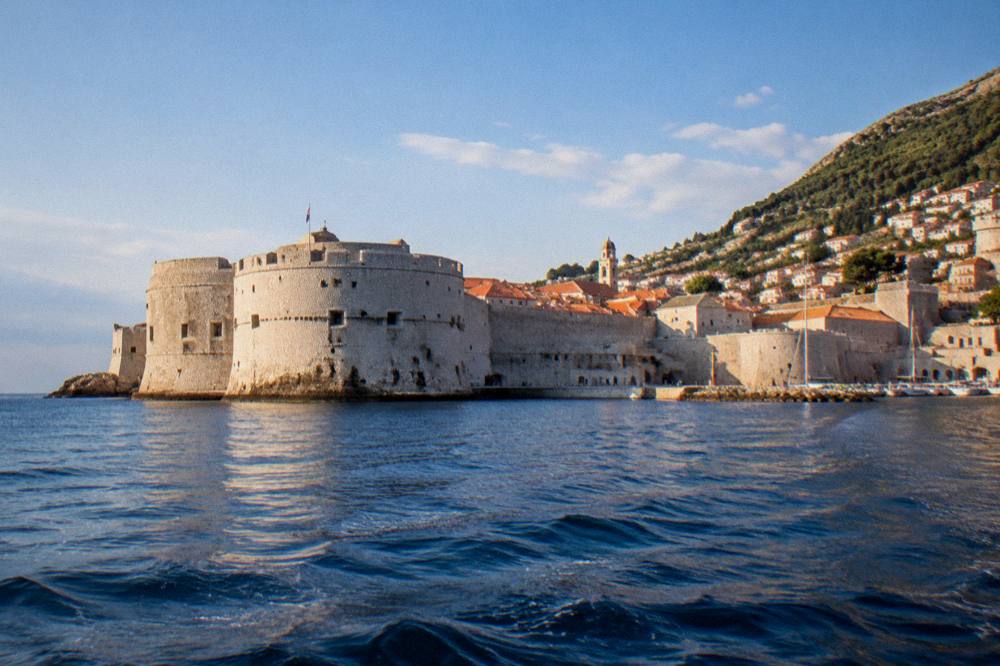
Split Vs Dubrovnik
Split and Dubrovnik sit 234.8 km apart on the Adriatic coast, and the choice between them comes down to what each city actually offers: a working port city inside a Roman palace, or a walled town built for the view. Here is how the two compare on travel times, entry prices, beaches and day trips, using published figures.
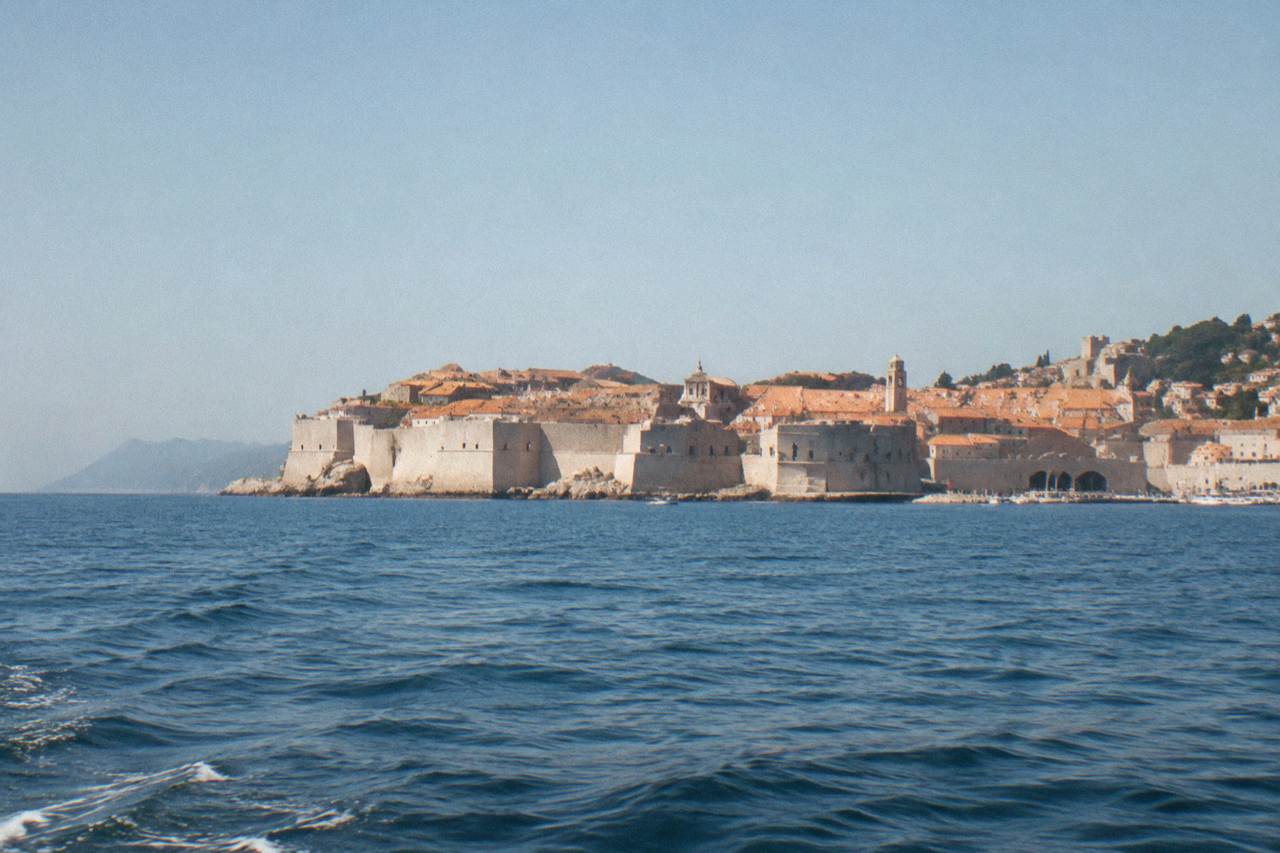
Short answer
Split is a coastal city in central Dalmatia built in and around Diocletian's Palace, 234.8 km and about 3 hours 21 minutes of free-flow driving from Dubrovnik. Split suits travellers who want a real city with ferries, islands and national parks on the doorstep; Dubrovnik suits travellers who want a compact walled old town. A combined stay is easy, with coaches linking the two in about 4 hours.
Split, a coastal city in central Dalmatia on the Adriatic, and Dubrovnik, the walled town at the southern end of the Croatian coast, get compared constantly, and the comparison is fair: both are UNESCO-listed, both face the same sea, and both sit on the same 3 hour 21 minute stretch of coast road. But they are different products. Split is a city of 160,577 people at the 2021 census, Croatia's busiest passenger port with 6.05 million port passengers in 2025, with a ferry hub, a bus station and a railway station grouped together 500 to 600 m from a Roman palace. Dubrovnik is smaller, denser and built around a single walkable circuit of walls. This page compares the two on the numbers that matter, using published prices and distances, and it assumes Split as the base, because that is the city this site covers.
Which City Should You Choose, Split Or Dubrovnik?
Choose Split if you want a living city with islands, rivers and two national parks within day-trip range, and choose Dubrovnik if your priority is a compact walled old town you can walk end to end. Split holds the larger inventory: a palace core, the Marjan hill park, and ferry lines to Brač, Hvar, Šolta and Vis. Dubrovnik concentrates its appeal in one historic circuit, with the walls as the headline ticket at about 40 EUR.
The honest framing is that Split is a base and Dubrovnik is a destination. Split's ferry port, main bus station and railway station sit together on Obala kneza Domagoja, which means day trips to Hvar by catamaran, Krka by coach or the Cetina river by van all start from one place. Dubrovnik is 234.8 km and 3 hours 21 minutes of free-flow driving from Diocletian's Palace, at the end of the Croatian coast, with fewer islands and parks in range.
Neither city requires the other to be skipped. Coaches link the two in about 4 hours, and the practical pattern many travellers use is three or four nights in Split with day trips, then two or three nights in Dubrovnik at the end. The Split to Dubrovnik transport guide covers the routes in detail, and the deeper argument over which town is prettier sits in the Split or Dubrovnik comparison.
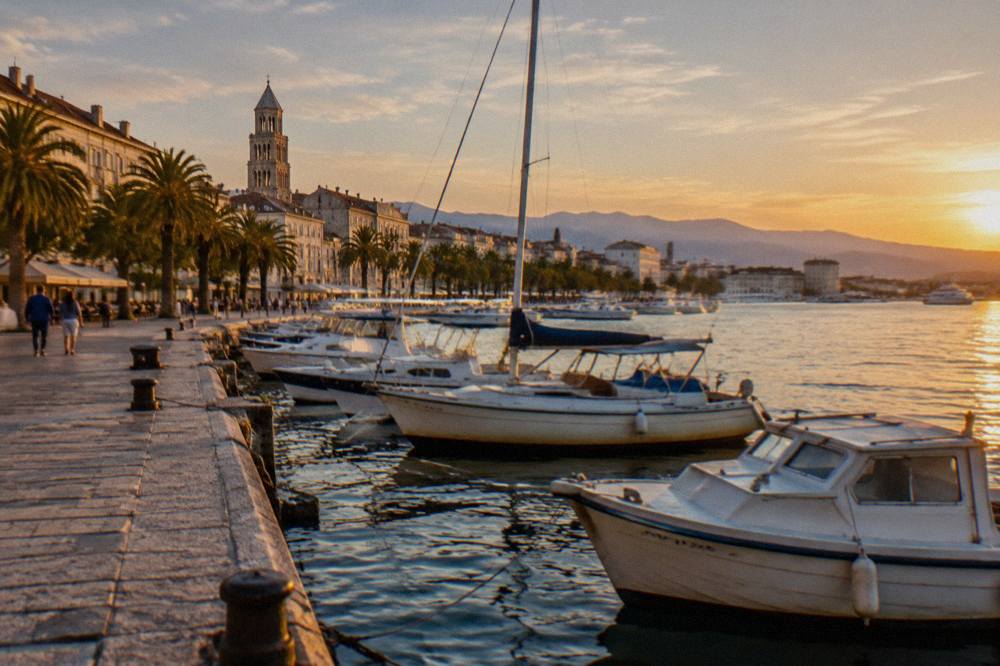
How Far Is Dubrovnik From Split And How Do You Get There?
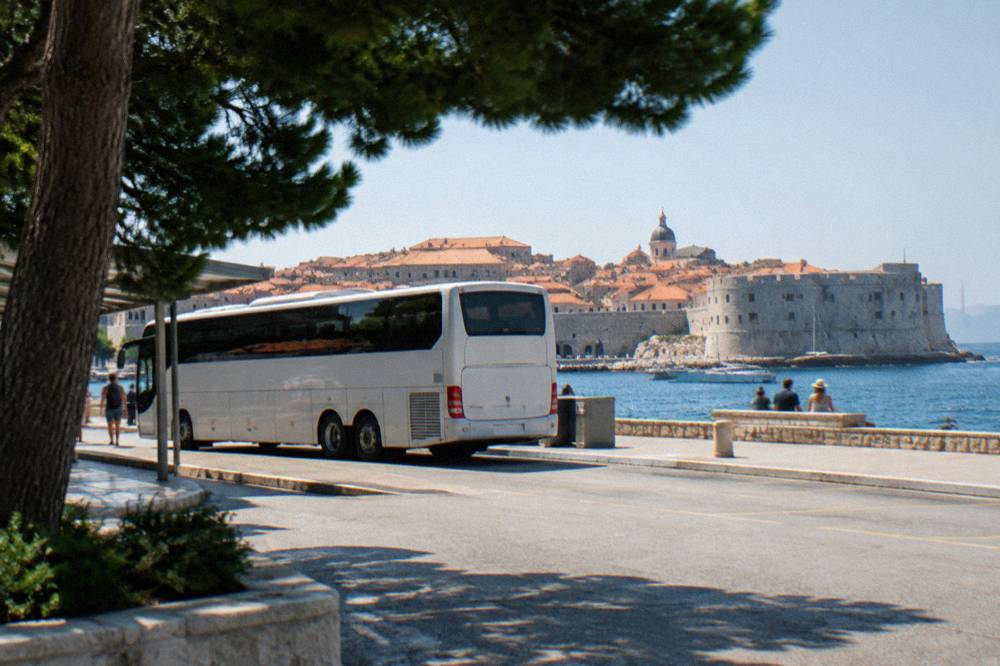
Dubrovnik is 234.8 km from Diocletian's Palace by road, about 3 hours 21 minutes of free-flow driving, and the coach between the two cities takes about 4 hours. There is no train: the Croatian rail network ends at Split, and the coastal rail line south of the city does not exist, so the realistic options are coach, car, or a mix of bus and boat. The route runs down the Adriatic coast through Makarska, 86.1 km and 75 minutes from Split, and clips Bosnia and Herzegovina around Neum, so passports stay reachable even inside Schengen-era Croatia.
The driving distances from the palace, computed on free-flow routing, give a sense of the scale involved:
| Route from Diocletian's Palace | Distance | Driving time |
|---|---|---|
| Makarska | 86.1 km | 75 min |
| Dubrovnik | 234.8 km | 3 h 21 |
| Mostar (Bosnia and Herzegovina) | 173.2 km | 2 h 13 |
| Split Airport, Kaštel Štafilić | 24.9 km | 31 min |
A hire car is one option, and the Split car rental guide explains where the offices cluster; the border crossing at Neum means carrying a passport even for the short transit. The coach is the simpler choice, running from the main bus station beside the ferry port. The question of whether a train runs from Split to Dubrovnik has a flat answer: it does not.
To sort the journey south, book a Split to Dubrovnik transfer here.
If you would rather not organise the journey yourself, a guided day trip is the alternative:
What Does Each City Cost To Visit?
The headline difference is the Dubrovnik city walls ticket at about 40 EUR including Lovrijenac, against a Split old town you can walk for free: the Peristyle, the Riva, the Golden Gate, the Grgur Ninski statue, the markets, Marjan and the city beaches all charge nothing. Split's paid sights are modest, with the Split City Museum at 10.00 EUR, the Meštrović Gallery at 12.00 EUR and the Archaeological Museum at 8 EUR.
The Split entry prices are the museum price lists themselves; the walls figure is a secondary guide's number for the 2026 season and should be confirmed at the ticket desk. The comparison table:
| Sight | City | Adult price |
|---|---|---|
| Diocletian's Palace substructures (cellars) | Split | 10 EUR (Split City Museum price list) |
| Split City Museum, Papalić Palace | Split | 10.00 EUR, 8.00 reduced |
| Meštrović Gallery, includes Crikvine-Kaštilac | Split | 12.00 EUR |
| Archaeological Museum | Split | 8 EUR, 10 EUR combined with Salona within 7 days |
| Klis Fortress | Split area | 10 EUR |
| Cathedral of St Domnius complex | Split | from about 5 EUR, combined tickets up to about 15 EUR |
| Dubrovnik city walls, includes Lovrijenac | Dubrovnik | about 40 EUR |
Daily costs behave differently too. The tourist tax across Split-Dalmatia County runs at about 2.65 EUR per person per night in high season, 1 April to 30 September, free under 12 and half rate from 12 to 18, collected by the accommodation and confirmed at booking. Croatia uses the euro since 1 January 2023, so there is no currency friction between the two cities. For food costs, the Split restaurants guide and the Split food guide set out what dishes actually cost, and the budget guide covers the free side of the city.
How Do The Beaches Compare In Split And Dubrovnik?
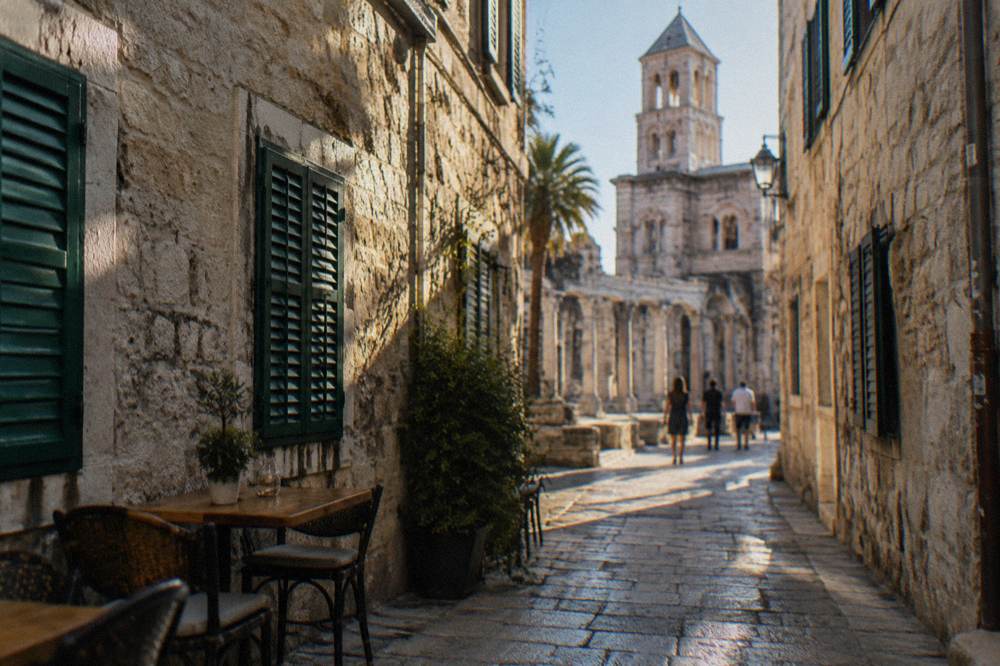
Split's beaches are city beaches inside the town itself, free to walk onto and strung along the coast from Bačvice to Žnjan and out to Stobreč, while Dubrovnik's beaches are smaller patches of rock and shingle folded beneath the walls and around the Lapad bay. No Split beach may be described as Blue Flag for 2026, because no such listing was found, and no sea-temperature normal is published for either city.
What Split has that Dubrovnik does not is volume and access. Bačvice, the shallow sandy bay where picigin, a protected intangible heritage of Croatia, has been played since 1908, sits a short walk from the palace. Kašjuni sits under Marjan. Žnjan and Stobreč extend the line east. All are free, per the site's own beach guide. The fuller comparison, including the water-quality question, sits in the Split or Dubrovnik beaches answer, and the Split beaches guide covers each bay in turn.
One climate fact worth carrying: the DHMZ Split-Marjan station, period 1948 to 2024, records 7 days at 30 C or more in June, 18 in July and 17 in August. That is the swimming window, and both cities share it.
Which City Has Better Day Trips?
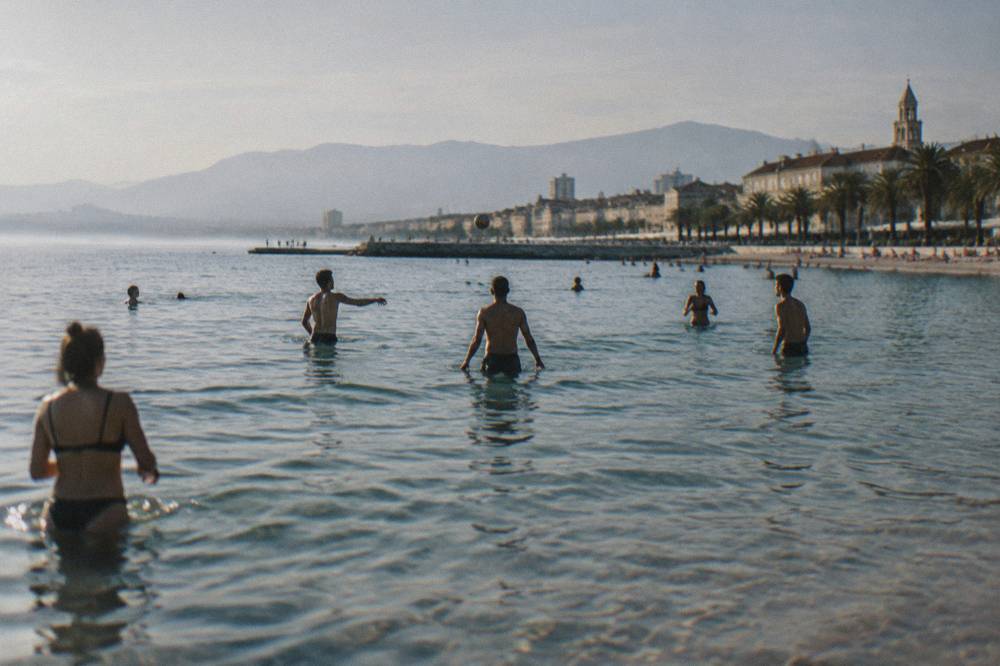
Split wins the day-trip contest on range alone: from the palace you can drive to Trogir in 36 minutes, Omiš in 38, Šibenik in 71, Krka National Park's Skradinski buk in 74, Makarska in 75, Zadar in 2 hours, Mostar in 2 hours 13 and Plitvice Lakes in 3 hours 15, and the islands of Brač, Hvar, Šolta and Vis sit offshore on scheduled ferries and catamarans. Dubrovnik's classic day trips are Elafiti islands, Montenegro and Mostar, itself 173.2 km and 2 hours 13 from Split.
The UNESCO list tells part of the story. Split's own Historical Complex with the Palace of Diocletian was inscribed in 1979. Trogir followed in 1997, the Cathedral of St James in Šibenik in 2000, the Old Bridge Area of Mostar in 2005 with the bridge rebuilt in 2004, and the Venetian Works listing covered Šibenik's St Nicholas Fortress in 2017. No other base on the Croatian coast puts four World Heritage sites plus two national parks inside a single day's drive.
| Day trip from Split | Distance from palace | Driving time |
|---|---|---|
| Salona | 9.1 km | 14 min |
| Klis Fortress | 13.9 km | 22 min |
| Trogir | 29.3 km | 36 min |
| Omiš and the Cetina river | 25.5 km | 38 min |
| Šibenik | 84.8 km | 71 min |
| Krka National Park, Skradinski buk | 90.2 km | 74 min |
| Plitvice Lakes | 258.1 km | 3 h 15 |
The park prices are seasonal and published. Krka charges 7 EUR in January to March and November to December, 20 EUR in April, May and October, and 40 EUR from June to September, with the ticket including the Skradin boat and Lozovac bus transfers from 1 April to 31 October. Plitvice charges 10 EUR in the winter months, 23 EUR in April, May and October, 40 EUR from June to September with a 25 EUR afternoon slot in peak, and the visitor's name is mandatory on the ticket with timed online entry through the official webshop. Swimming at Krka is allowed only in clearly marked areas, so the old claim of swimming at Skradinski buk should be forgotten; designated spots sit at Roški slap, Stinice and Pisak from 1 June to 30 September.
Island trips are Split's second advantage. The car ferry to Stari Grad on Hvar takes about 120 minutes, the line to Supetar on Brač about 50 minutes, Rogač on Šolta about 60 minutes and Vis about 140 minutes, while catamarans run directly to Hvar town and Jelsa. The Hvar ferry guide and the ferries from Split guide carry the routes and the foot-passenger fares. The day trips overview collects the full menu.
Three of the strongest day trips from Split, all bookable with free cancellation on the operator's live listing:
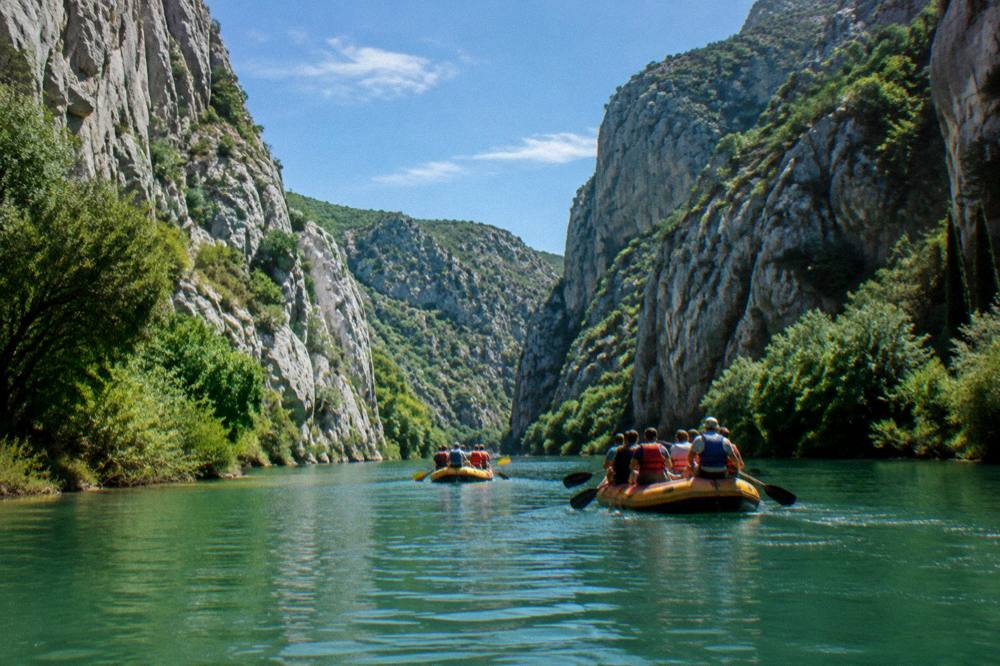
The Cetina river trip deserves a word because it is the one Split can offer and Dubrovnik cannot: rafting, cliff jumping and cave exploring on a single Dalmatia river, 25.5 km and 38 minutes of driving from the palace to Omiš. The Omiš and Cetina river guide covers the town, and Mirabela fortress there charges 4 EUR, rising to 6 EUR from 1 June to 30 September by the city's own 2026 decision.
Is Split Or Dubrovnik Better For Food And Nightlife?
Split has the wider everyday food and bar scene, because it is a university and port city of 160,577 people rather than a tourist town: the green market by the palace runs as a working market, the Riva and the Prokurative hold the cafe and bar life, and the nightlife spreads across the old town, Bačvice and Žnjan. Dubrovnik's scene clusters inside the walls and around the bays, at prices tuned to the walls-and-cable-car crowd.
The checks worth making are the same in both cities: posted prices on the menu, an itemised bill, and the cover charge printed where a cover charge applies. Those are things you can verify on the spot, and they travel better than any stereotype. For where the food actually is, the where locals eat answer and the Split food guide are the site's own ground, and the Split nightlife guide maps the bars and clubs district by district.
Events tip the balance seasonally. Split's calendar runs Advent from 27 November 2026 to 7 January 2027 with the ice rink at Đardin, Sudamja, the city's day for its patron St Domnius, every 7 May, the Croatian National Theatre season from 25 September 2026 to 14 June 2027, and Ultra Europe on 9 to 11 July 2027 at Park Mladeži. The Roman guard change on the Peristyle ran daily at noon from 28 May to 27 September 2026.
How Does The Weather Compare Between Split And Dubrovnik?
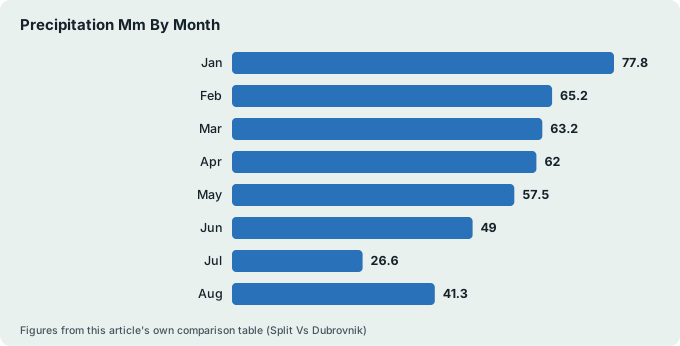
Split's climate record, the DHMZ Split-Marjan station for 1948 to 2024, shows a January mean of 8.0 C, a July mean of 26.2 C and an August mean of 25.9 C, with July the driest month at 26.6 mm and November the wettest at 115.5 mm, and sunshine of about 2,600 hours a year.
The Split table itself, with every figure labelled to the Split-Marjan station:
| Month | Mean C | Precipitation mm |
|---|---|---|
| Jan | 8.0 | 77.8 |
| Feb | 8.5 | 65.2 |
| Mar | 10.8 | 63.2 |
| Apr | 14.4 | 62.0 |
| May | 19.2 | 57.5 |
| Jun | 23.4 | 49.0 |
| Jul | 26.2 | 26.6 |
| Aug | 25.9 | 41.3 |
| Sep | 21.6 | 70.9 |
| Oct | 17.2 | 77.0 |
| Nov | 12.7 | 115.5 |
| Dec | 9.4 | 103.7 |
Both cities sit on the same Adriatic coast and share the same broad pattern: warm dry summers, wetter Novembers, and a swimming season that runs well into October. The monthly detail, including the sunshine figures of 353.3 hours in July and 120.8 in December, sits in the Split weather guide, and the timing question is handled in the best time to visit Split. One caution applies to both towns: the Riva's central section in Split is due for renovation works from November 2026 lasting a little over a year, so partial closures should be expected through 2027.
Where Should You Fly Into, Split Or Dubrovnik?
Split Airport in Kaštel Štafilić handled 3,881,186 passengers in 2025 and sits 20 km from Split and 6 km from Trogir by its own pages, with the Platanus shuttle to the main bus station at 10 EUR one way and 15 EUR return; it is 24.9 km and about 31 minutes of driving from the palace.
The decision usually follows the itinerary rather than the airport. If the plan is Split plus islands plus Krka or Plitvice, flying into Split saves the 3 hour 21 minute transfer. If the plan is Dubrovnik first and Split second, flying into one and out of the other is the standard pattern, and the flights to Split guide covers the route map, including the seasonal Newark service that began on 30 April 2026 as the airport's first transatlantic route. The airport to city centre guide covers every transfer option, and Promet Split's city bus lines 37 and 38 stop at the airport for a few euros, confirm the fare on board.
The fly into Split or Dubrovnik answer works the question through in full, and the Split Airport guide has the terminal detail.
How Many Days Should Each City Get?
Split rewards three to five nights as a base, because the day trips need the nights: Krka, Plitvice, Hvar, Brač, the Blue Cave and the Cetina river each consume a full day, and the city itself, the palace, Marjan and the beaches, needs two. Dubrovnik works in two nights, with the walls, the old town and one island excursion. Split airport and Dubrovnik airport are 234.8 road-kilometres apart, so splitting the stay means one 3 hour 21 minute drive or a 4 hour coach.
The full reasoning, including one-week patterns that add island overnights, sits in the how many days for Split answer and in the one day in Split, two days in Split and three days in Split itineraries. For the split-stay question specifically, the longer Split or Dubrovnik answer argues it through. If Dubrovnik is the final stop, the Dubrovnik day trip guide covers what a return visit looks like from Split.
The bottom line for the Split Croatia Travel Guide reader: if the trip is one city only and the walls are the dream, Dubrovnik delivers it, at about 40 EUR for the ticket and at Dubrovnik prices everywhere else. If the trip is a week or more, or if islands, rivers and waterfalls matter as much as stone, Split is the base, and Dubrovnik is the excursion. Both answers are defensible; only one of them comes with a ferry port 500 m from a Roman palace.
Common Questions About Split Or Dubrovnik
Is Split or Dubrovnik prettier?
Dubrovnik's walled old town is the more immediately dramatic sight, and its walls at about 40 EUR are the headline experience. Split counters with a Roman palace you live inside rather than look at, plus the Marjan hill park and the Riva, all free to walk.
How far is Dubrovnik from Split?
Dubrovnik is 234.8 km from Diocletian's Palace by road, about 3 hours 21 minutes of free-flow driving. The coach between the two cities takes about 4 hours, and there is no train connection.
Are the beaches better in Split or Dubrovnik?
Split has more beach inside the city itself, from Bačvice to Kašjuni, Žnjan and Stobreč, all free to access. No Split beach may be claimed as Blue Flag for 2026, and no official sea-temperature normal exists for either city, so judge the water on the day.
Should I spend longer in Split or Dubrovnik?
Split usually earns the longer stay because the day trips, Krka, Plitvice, Hvar, Brač, the Blue Cave and the Cetina river, each need a full day. Dubrovnik compresses well into two nights. A common pattern is Split as the base with Dubrovnik at the end.
Is it better to fly into Split or Dubrovnik?
Follow the itinerary. Split Airport handled 3,881,186 passengers in 2025 and sits 20 km from the city, with a 10 EUR one-way shuttle to the main bus station.
Is there a train from Split to Dubrovnik?
No. The Croatian rail network ends at Split; the line south along the coast was never built. The realistic options are the coach, about 4 hours, or a hire car, about 3 hours 21 minutes of driving plus stops, noting the passport transit at Neum.