Can I Drink On The Street In Split?
Drinking on the street in Split is banned in the historic core, with a 300 EUR fine on the city's published rules. Here is where the ban applies, where drinking is legal, and how the summer shop ban works.
Split, the coastal city in Dalmatia where Diocletian's Palace forms the old town, tightened its public-space rules in 2026, and street drinking is one of the behaviours they target. The city's tourist board publishes the fine amounts on its own Enjoy Respect page, so this is not a rumour circulating on travel forums: it is a published city decision. The short answer is that drinking alcohol in the street inside the historic core is banned and fined, while drinking on a licensed terrace, in a bar or on a boat trip is completely normal and legal. The details below cover where the boundary runs, what the fines are, and how the separate summer sales ban on shops works.
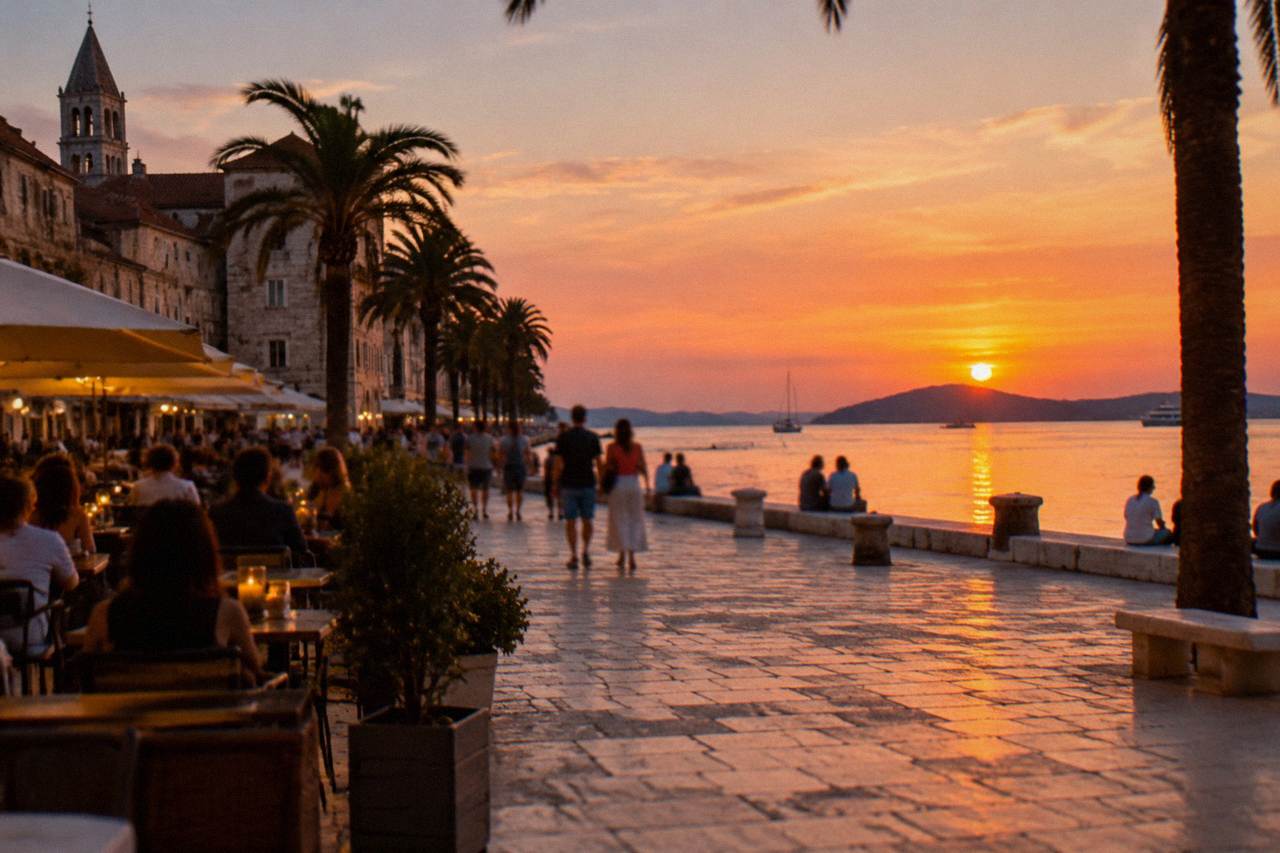
Can I Drink On The Street In Split?
No. Drinking alcohol on the street in Split's historic core is banned and can bring a 300 EUR fine under the city rules published on the Split tourist board's Enjoy Respect page, with the same fine applying within 100 m of schools. Drinking is allowed on licensed terraces and in bars and restaurants, and a seasonal night ban additionally stops shops selling alcohol between 21:00 and 06:00 in summer.
The rules come from a Split city decision covering Zone A, the historic core, which was voted in during 2026 with a 60-day transition period. The decision also covers other behaviours: no open-flame food preparation, no soliciting of tours or accommodation on the street, and no goods displayed outside shop fronts. Alcohol is the item travellers ask about, and the fine attached to public drinking is printed openly by the tourist board at 300 EUR.
The logic behind the rule is straightforward. The old town is a UNESCO-listed historic complex, inscribed in 1979, and its stone squares, the Peristyle and the streets around the Riva fill with people every evening in season. The city's answer to bottle-and-street culture is a flat fine rather than a warning. Enforcement is handled by municipal wardens and police, and the fine is issued on the spot.
There is no ambiguity about what counts as a licensed space. A cafe table on a terrace with table service is licensed. A bench on the Riva with a bottle from a shop is not, and that is exactly the situation the rule was written for. If in doubt, the distinction is simple: if a venue served you the drink at a table, you are fine; if you carried it outdoors yourself within the historic core, you are not.
Where The Alcohol Rules Apply In Split
The ban covers Zone A, the historic core of Split: the streets inside and around Diocletian's Palace, the Peristyle, the Prokurative, the Riva waterfront and the surrounding old-town lanes, plus any public space within 100 m of a school. Outside that zone, public drinking falls under general Croatian public-order rules rather than the city's specific 300 EUR fine.
The tourist board's page names the offences and their amounts directly, and it is worth knowing the full list, because the same wardens who check for street drinking also check for the others. Split is a walkable, compact city, and visitors cover the whole old town on foot without ever leaving the regulated zone, which is why the rule catches people out: the palace, the Golden Gate, the Grgur Ninski statue and the Riva are all inside it.
One neighbouring question travellers often pair with this one is broader behaviour in the city; the page on what to avoid in Split covers the rest of the list, including the swimwear rule in the centre, which is fined but whose amount is set locally and should be confirmed on the spot. The dress rule matters here for the same reason the alcohol rule does: the historic core is treated as a protected public space, not a beach resort. Split's beaches, including Bačvice, sit outside the old-town zone, and the guide to whether you can swim in the sea in Split covers the water side of a summer day.
For the evenings when you want the city explained rather than just explored, a guided walk keeps the route inside the zone with someone who knows its boundaries; the trio below includes the small-group Diocletian's Palace walking tour alongside two full-day options.
The Night-Time Shop Ban In Split
Separately from the street-drinking fine, shops and supermarkets in Split are banned from selling alcohol at night in summer: the reported hours are 21:00 to 06:00, running 1 June to 15 September, with a seasonal repeat from 1 June 2027 unless the rule changes. Bars, restaurants and licensed terraces are not affected, so the ban targets off-licence sales only.
The seasonal sales ban is the part of Split's alcohol framework that surprises people who have bought late-evening beer on earlier trips. It applies to retail: shops, supermarkets and corner stores, not to venues where drinks are consumed on the premises. So the practical effect is that a late-night drink in Split is a bar drink, not a shop drink, and that has been the pattern each summer since the rule came into force. The full index of guides sits on Split Croatia Travel Guide.
For visitors, the change barely registers if plans centre on terraces, restaurants and boat days. A cruise with lunch and drinks included, such as the Blue Lagoon and three islands trip, handles refreshments on board legally, and you can Check availability for summer dates when the shop ban is in force. For more on where the eating and drinking life of the city actually sits, the page on where locals eat in Split is the companion read.
Should You Worry About The Rules As A Visitor?
No, provided drinks stay on terraces, in bars and on licensed premises. The fines target street drinking, public urination and similar behaviour in the historic core, not visitors having wine with dinner. The city publishes the amounts openly, so the boundary is knowable in advance, and ordinary restaurant and cafe drinking sits entirely on the legal side of it.
The rules exist to protect the old town's condition during the peak months, when cruise passengers, festival crowds and summer heat all peak together. The city counted 487,377 cruise passengers in 2025, and the port handled 6.05 million passengers across the year, its own statistics page confirms. At that volume, the historic core needs published rules rather than goodwill, which is the honest way to read the fine list.
The Published Fine Amounts In Split
The Split tourist board's Enjoy Respect page lists the amounts directly: 300 EUR for drinking alcohol in the historic centre or within 100 m of schools, 300 EUR for public urination, 300 EUR for climbing on monuments or bathing in fountains, 300 EUR for vomiting, 150 EUR for sleeping in public spaces and 300 EUR for taxi touting. Walking in swimwear or shirtless in the centre is also fined, at an amount set locally.
Here is the full list in table form, exactly as the tourist board publishes it, because a single view of the amounts is more useful than scattered mentions.
| Behaviour | Fine | Where it applies |
|---|---|---|
| Drinking alcohol in a public space | 300 EUR | Historic centre, or within 100 m of schools |
| Public urination | 300 EUR | Public areas of the city |
| Climbing on monuments or bathing in fountains | 300 EUR | Monuments and fountains, including the old town |
| Vomiting in a public space | 300 EUR | Public areas of the city |
| Sleeping in public spaces | 150 EUR | Public areas of the city |
| Taxi touting | 300 EUR | City-wide |
| Swimwear or shirtless in the historic centre | Fined, amount set locally | Historic core |
Two clarifications keep this table honest. First, the swimwear fine is real and enforced, but its amount is not on the official page; ask locally or simply dress normally in the centre. Second, the alcohol fine attaches to the place, not the drink: a beer on the Peristyle steps and a bottle of wine on a bench carry the same exposure. The offence is public consumption outside licensed premises inside the zone.
Where Drinking Is Completely Fine In Split
Drinking is legal on licensed cafe and bar terraces, in restaurants, at wine bars, at private events and on licensed boat trips, anywhere in the city and at any hour the venue is open. The street-drinking fine and the summer night sales ban restrict only public consumption and retail sales, never licensed hospitality, so a normal evening out in Split involves no rule at all.
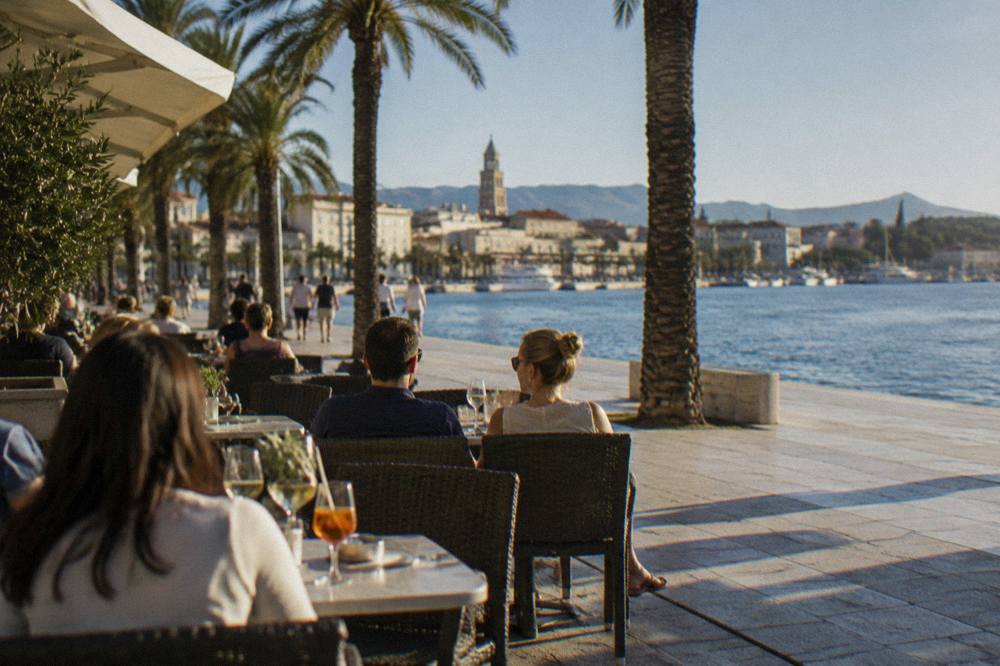
The terrace culture is the point of an evening in this city. Tables spill from the Prokurative square onto the streets near the palace, the Riva fills from late afternoon, and venues hold licences for exactly the outdoor consumption the street rule prohibits. If your plans involve a guided evening or a day on the water, both work within the rules: drinks on board a licensed excursion are served by the operator, and the evening kayak trips along the coast finish well away from the regulated lanes.
For a full day built around water rather than wine bars, the pick below is the same Blue Lagoon cruise featured earlier in a larger comparison band.
A second option from the trio covers Krka National Park with a boat ride on the river, and the river there has its own swimming rule worth knowing in advance: swimming is allowed only in clearly marked areas.
If you are weighing Split against a longer Dalmatian itinerary, the comparison of whether to spend longer in Split or Dubrovnik covers the trade-offs, and the basics of entry, including visas and the euro, sit on the page about whether you need a visa to visit.
Common Questions About Drinking In Split
Can I drink on the street in Split?
No. Public drinking in the historic centre carries a 300 EUR fine on the city's published rules, and the same fine applies within 100 m of schools. Drinking is legal on licensed terraces and in bars and restaurants.
Can I drink on the Riva in Split?
The Riva waterfront sits inside the regulated historic-core zone, so drinking alcohol carried onto its benches and promenade is covered by the 300 EUR fine. Cafe and bar terraces directly on the Riva are licensed and are the legal way to have a drink there.
Can shops in Split sell alcohol at night?
Not in summer. Shops are reported to be banned from selling alcohol between 21:00 and 06:00, from 1 June to 15 September, a rule that repeats seasonally. Bars and restaurants are unaffected and serve as normal.
Is it legal to drink on Split's beaches?
The published fine list covers the historic centre and school zones rather than beaches. Beach kiosks and beach bars sell drinks for consumption in their areas, and glass bottles on sand are a poor idea regardless of the rules. Confirm locally at the specific beach.
What else is fined in Split's Old Town?
The published amounts include 300 EUR for public urination, 300 EUR for climbing monuments or bathing in fountains, 300 EUR for vomiting, 150 EUR for sleeping in public spaces and 300 EUR for taxi touting. Swimwear or shirtless dress in the centre is fined at an amount set locally.
Can I drink on a boat tour from Split?
Yes. Licensed boat tours serve drinks on board as part of their operation, and a cruise with lunch and wine included keeps everything within the licensed-premises rule. Confirm with the operator what the day's refreshments cover.
The rule of thumb for the whole city is short: buy your drink where you drink it, keep it off the old town's streets and steps, and the 300 EUR fine stays a line on a website rather than a receipt in your hand.
