How Do You Pay For The Bus In Split?
How to pay for buses in Split: tickets from the driver and kiosks, the Platanus airport shuttle, Promet lines 37 and 38, and whether you need a bus at all.
Split, a coastal city in central Dalmatia on the Adriatic, runs its city buses under one operator, Promet Split, and its airport link under a separate shuttle company called Platanus, so the answer to the payment question depends on which bus you are standing in front of. The main bus station, the ferry port and the railway station all sit together on Obala kneza Domagoja, 500 to 600 m from Diocletian's Palace, which means a large share of the journeys visitors make in this city never need a bus at all.
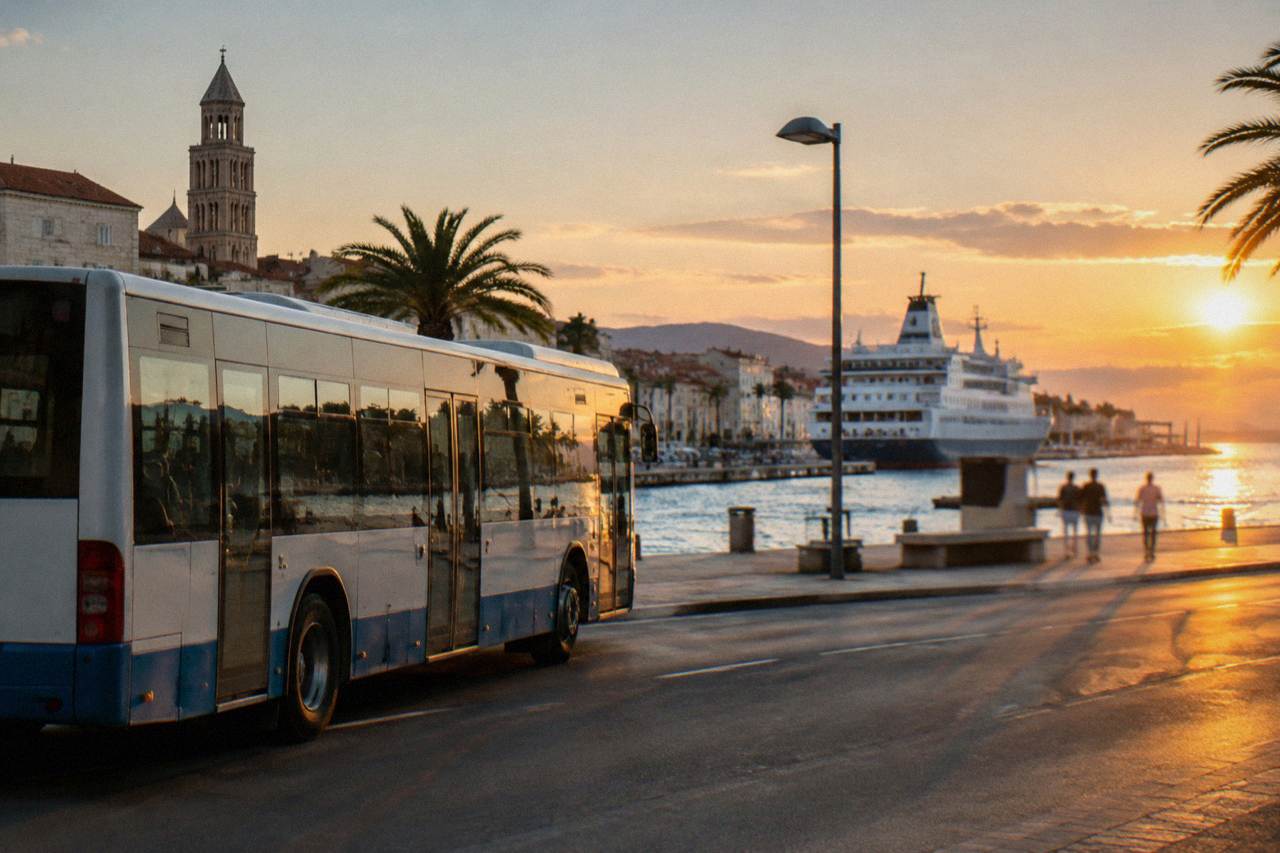
How Do You Pay For The Bus In Split?
On Split's city buses you pay either the driver directly as you board or at a staffed ticket point, always in euro, since Croatia adopted the euro on 1 January 2023. There is no card turnstile at the door and no Oyster-style system: a paper ticket or a contactless payment as the operator allows is the whole mechanism, and the fare is confirmed on board or at the kiosk before you travel rather than assumed in advance.
The practical detail is that Promet Split, the city operator, sells tickets in two ways: on the vehicle and at sales points in the city, and the two prices are not guaranteed to match. The operator's own price list is the only authoritative source for the current figure, and it can be checked at the main bus station on Obala kneza Domagoja before you board. Anything you read on a third-party blog, including a specific number of euros, may be years out of date.
Croatia has used the euro since 1 January 2023, so the kuna references in older guidebooks are obsolete. Coins and notes in euro are accepted wherever a driver or kiosk sells tickets, and card acceptance varies by vehicle and sales point, so carrying a small amount of cash for a single ride is the safer default. For orientation on the wider transport picture, the guide to the Split bus station covers how the hub connects with ferries and trains, and for the question of sightseeing transport, see is there a hop on hop off bus in Split.
What Are Your Payment And Transport Options At Split Airport?
The airport at Split is served by the Platanus shuttle, at 10 EUR one way and 15 EUR return, running from the airport's north parking to the main bus station beside the ferry port, and by Promet Split city bus lines 37 and 38, which stop at the airport with a fare of a few euros that you confirm on board. Taxis and hire cars complete the picture, though their fares are not published on any page this desk can point to.
The Platanus figures come from the shuttle operator's own page: 10 EUR for a single and 15 EUR for a return, paid to the operator. The city bus alternative is slower but cheaper in kind: Promet Split's lines 37 and 38 stop at the airport, and their fare is a few euros, confirmed on board, because the operator's price page does not display it in a form this desk can quote.
| Option | Route | Price As Published | Where You Pay |
|---|---|---|---|
| Platanus shuttle | Airport north parking to Split main bus station | 10 EUR one way, 15 EUR return | Operator, at booking or on the day |
| Promet Split lines 37 and 38 | Airport stop into Split | A few euros, confirm on board | Driver on boarding |
| City bus network | Routes across Split and suburbs | Current price list at the operator | Driver or ticket sales point |
| On foot | Bus station to Diocletian's Palace | Free, 500 to 600 m | Not applicable |
One distance correction worth carrying: the airport's own pages place it 20 km from Split and 6 km from Trogir, in Kaštel Štafilić in the Kaštela belt. Descriptions that put the airport ten minutes from the city are describing Trogir, not Split, and driving from the palace measures 24.9 km, about 31 minutes free-flow. If your accommodation is in Trogir rather than Split, the airport is genuinely close, and the Split or Dubrovnik arrival comparison may help before you commit.
Do You Actually Need A Bus To Get Around Split?
No, for the historic core and the seafront you do not need a bus at all: the palace, the Riva, Bačvice and the ferry port sit within a walkable band, the main bus and railway stations are 500 to 600 m from the palace, and the Marjan hill park is reached on foot, with its highest point Telegrin at 178 m and 819 steps from Trumbićeva obala. Buses earn their keep for Žnjan, Stobreč, the suburbs and the airport.
That geography is the reason payment questions matter less in Split than in larger cities. A visitor arriving by ferry, staying near the Old Town and spending days between the Peristyle, the markets and the beaches can go a full week without boarding a city bus. The walkability question is covered in its own article, and cruise passengers in particular dock within the same walkable band.
| Journey | Distance Or Time As Published | Bus Needed |
|---|---|---|
| Bus station to Diocletian's Palace | 500 to 600 m | No |
| Ferry port to Old Town | Same hub area, 500 to 600 m | No |
| Trumbićeva obala to Telegrin, Marjan | 819 steps, summit 178 m | No |
| Split Airport to the city | 20 km, about 31 minutes driving free-flow | Yes, shuttle or lines 37 and 38 |
| Salona | 9.1 km, about 14 minutes driving | Yes, or a tour |
| Klis Fortress | 13.9 km, about 22 minutes driving | Yes, or a tour |
For the journeys a bus cannot cover well, tours pick up the slack. A half-day on the Cetina river rafting trip with cliff jumping includes hotel or meeting-point pickup logic that removes the public-transport question entirely for an afternoon, and you can Check availability alongside the internal page. The sunset tour of Klis Fortress works the same way for the fortress that sits 13.9 km and about 22 driving minutes from the palace.
Is The Bus Station Or The Airport The Better Place To Sort Tickets?
The main bus station on Obala kneza Domagoja is the better place, because it combines the Promet Split sales points with the long-distance coach operator desks and the ferry terminal in one hub, 500 to 600 m from the palace, whereas the airport offers only the Platanus shuttle desk and the city bus stop, and no separate ticket office infrastructure for onward travel.
Long-distance coach tickets from Split are a different product from city bus tickets. Coach times from Split run to about 4 hours to Dubrovnik and about 5 hours 30 to Zagreb, and the train to Zagreb takes about 7 hours 15 to 8 hours 10. Those tickets are sold by the individual coach operators and at the station, not by Promet Split, so a visitor who buys a city ticket at a kiosk has not bought a coach seat. Buying long-distance travel at the station desk, the day before if the season is busy, avoids the disappointment of a full departure.
Do You Need Cash Or A Card For Buses In Split?
Carry a small amount of euro cash for buses in Split, because card acceptance on board depends on the vehicle and the operator's equipment rather than a published guarantee, and Croatia's currency since 1 January 2023 has been the euro. The Platanus airport shuttle publishes fixed euro prices, 10 EUR one way and 15 EUR return, which card or cash can settle, but a single city ride is the kind of small transaction cash handles without friction.
The euro changeover is the fact that ends any confusion left over from kuna-era advice. Prices anywhere in the city, bus fares included, are quoted and paid in euro, and cash machines dispense euro. For budgeting the wider stay, the article on whether eating out in Split is expensive carries the food-side figures, and the month-by-month picture in the best month to visit Split explains why July and August, with 18 and 17 days at 30 C or more respectively in the DHMZ Split-Marjan station table for 1948-2024, stretch every transport service in the city.
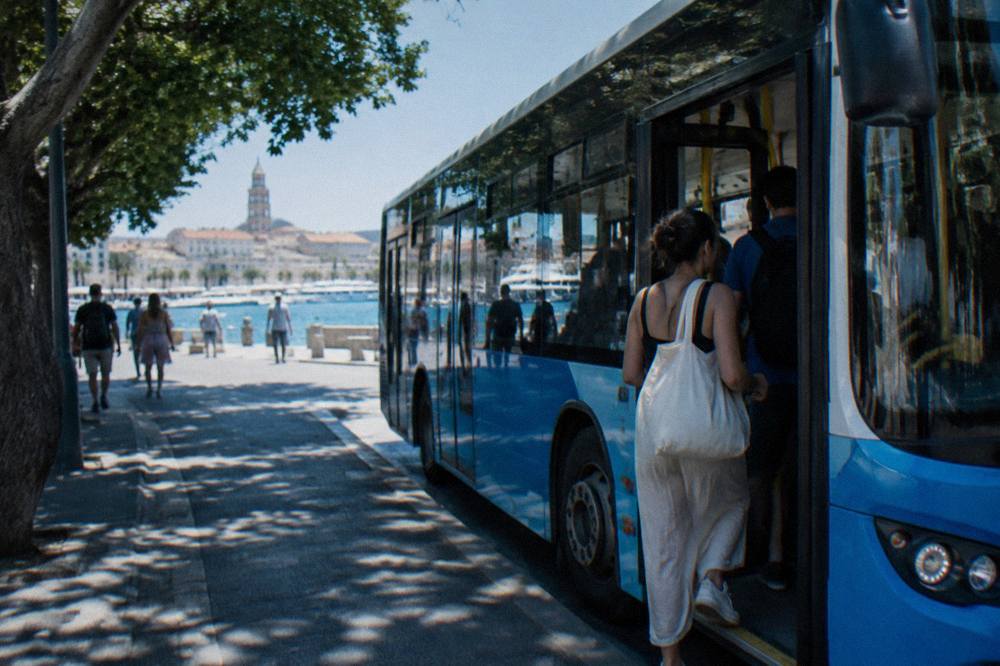
Two practical cautions complete the payment picture. First, e-scooter rules in Croatia tightened in 2026, with national proposals for registration and insurance on top of the existing 25 km/h and helmet requirements, so a scooter is not a payment-free escape from bus tickets. Second, the night-time retail alcohol ban in Split's historic core, in force seasonally, is one of several public-order rules visitors meet without expecting them; the what to avoid in Split article lists them properly.
Can You Pay Your Way To The Big Day Trips By Bus?
Yes for the near ones, with limits: Salona sits 9.1 km and about 14 driving minutes from the palace and Klis Fortress 13.9 km and about 22 minutes, both reachable by suburban bus or tour, while Krka at about 74 driving minutes, Plitvice at about 3 hours 15 and Mostar at about 2 hours 13 are coach territory where a seat is bought from an operator, not a fare paid to a driver.
The distinction matters for planning. A local bus fare is small and flexible; a Krka or Plitvice seat is a booked product with a departure time. Krka's own price list charges adults 7 EUR from January to March and November to December, 20 EUR in April, May and October, and 40 EUR from June to September, and that park entry is separate from whatever the coach or tour costs. Plitvice charges 10, 23 or 40 EUR by season, with timed online entry and the visitor's name required on the ticket.
For travellers who would rather not assemble the bus, the entry ticket and the timing themselves, guided options bundle the transport. The Mostar and Kravice waterfalls tour, the Klis sunset tour and the Cetina rafting trip between them cover the fortress, the river canyon and a full crossing into Bosnia and Herzegovina, and each renders its own live price and availability at the point of booking.
Common Questions About Paying For The Bus In Split
How do you pay for the bus in Split?
You pay the driver on boarding or buy at a ticket sales point in euro, the currency since 1 January 2023, with the current fare confirmed from the operator's own price list or on board rather than from older published figures.
How much is the bus from Split Airport to the city centre?
The Platanus shuttle is published at 10 EUR one way and 15 EUR return from the airport to the main bus station, and Promet Split lines 37 and 38 also stop at the airport for a fare of a few euros, confirmed on board.
Can you pay by card on Split city buses?
Card acceptance depends on the vehicle and the operator's equipment, so the safe default is a small amount of euro cash for a single ride, with cards reliable for the Platanus shuttle's published fixed prices.
Where do you buy long-distance coach tickets in Split?
At the main bus station on Obala kneza Domagoja, 500 to 600 m from Diocletian's Palace, where the coach operator desks, the ferry port and the railway station share one hub; city bus tickets and coach seats are sold separately.
Do you need a bus at all inside Split?
Usually not: the palace, the Riva, Bačvice and the transport hub sit in one walkable band, and buses mainly earn their keep for Žnjan, Stobreč, the suburbs and the airport, 20 km away by the airport's own pages.
Is the euro the currency for bus fares in Split?
Yes, Croatia adopted the euro on 1 January 2023, and every bus, shuttle and coach fare in the city is quoted and paid in it; any kuna figure in an older guide is obsolete.
Paying for the bus in Split comes down to three habits: euro cash or a card for the driver on city lines, the published 10 EUR Platanus fare for the airport run, and booked seats rather than on-board fares for the long coach routes. Check the operator's price list at the station for the current city fare, and the rest of the city unfolds on foot from the same 500 to 600 m of hub that the Split Croatia Travel Guide covers in depth.