Split Bus Station
Split's main bus station sits on Obala kneza Domagoja, 500 to 600 m from Diocletian's Palace, sharing the waterfront with the ferry port and the railway station. This guide covers where it is, how to reach the Old Town, the airport link, coach destinations, ferry connections and what the station itself offers.
Short answer
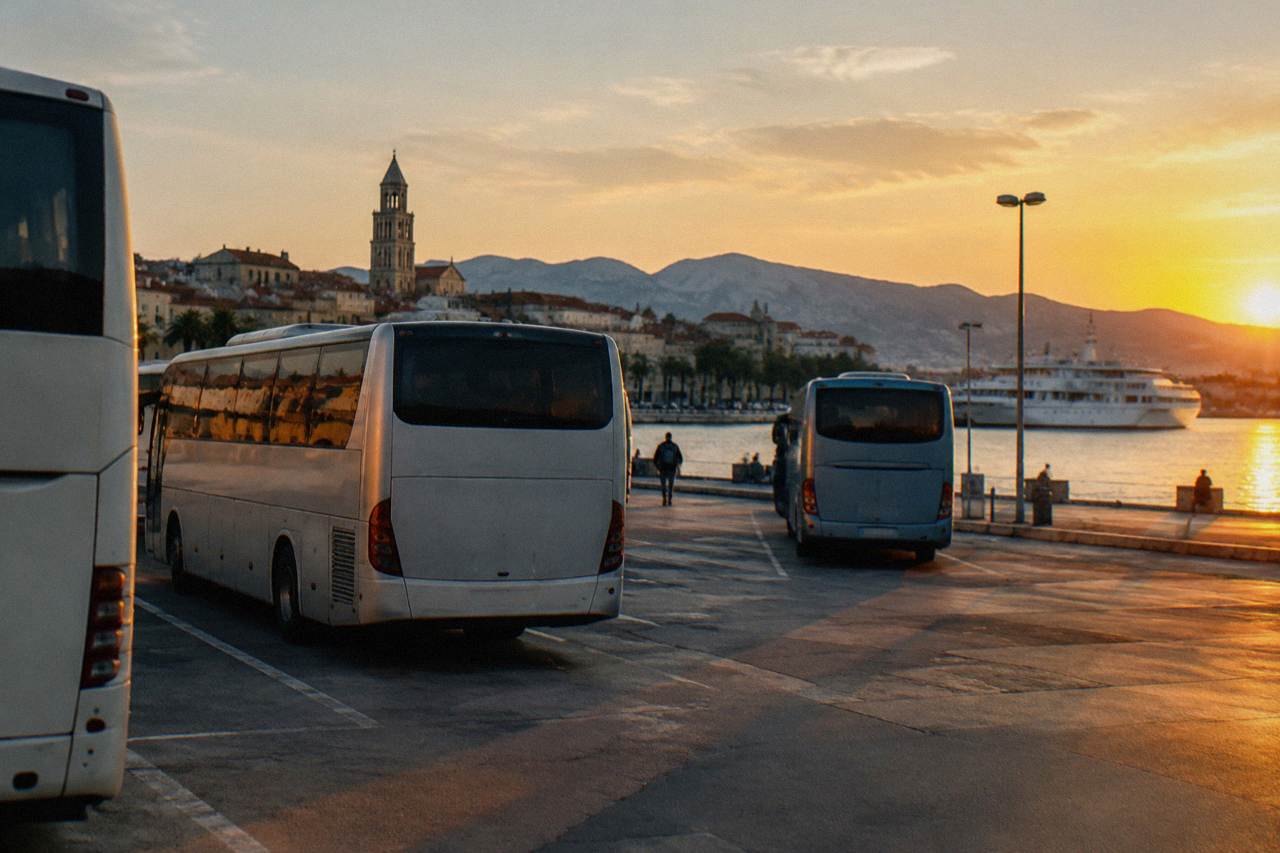
Split's main bus station is on Obala kneza Domagoja, beside the ferry port and the railway station, 500 to 600 m from Diocletian's Palace. The Platanus airport shuttle runs between the airport and the station for 10 EUR one way or 15 EUR return, and coaches leave for Dubrovnik in about 4 hours and Zagreb in about 5 hours 30.
Split's main bus station is not a standalone terminal on the edge of town. It is one part of a single transport hub on Obala kneza Domagoja, the waterfront road that runs along the eastern side of the historic centre, where the main bus station, the railway station and the ferry port sit together 500 to 600 m from Diocletian's Palace. Arriving by coach, stepping off a ferry from Hvar or Brač, or coming in on the train from Zagreb all land you within a short walk of the same stretch of coast, with the Riva promenade and the palace entrance a few hundred metres to the west. That geography shapes everything about how the station works, from the airport shuttle stop to the ferry check-in desks to the boat trips that leave from the piers beside it. This guide from the Split Croatia Travel Guide editorial desk covers the station itself, the routes in and out, and how the hub connects to the rest of the city and the coast.
Where Is The Split Bus Station And What Sits Around It?
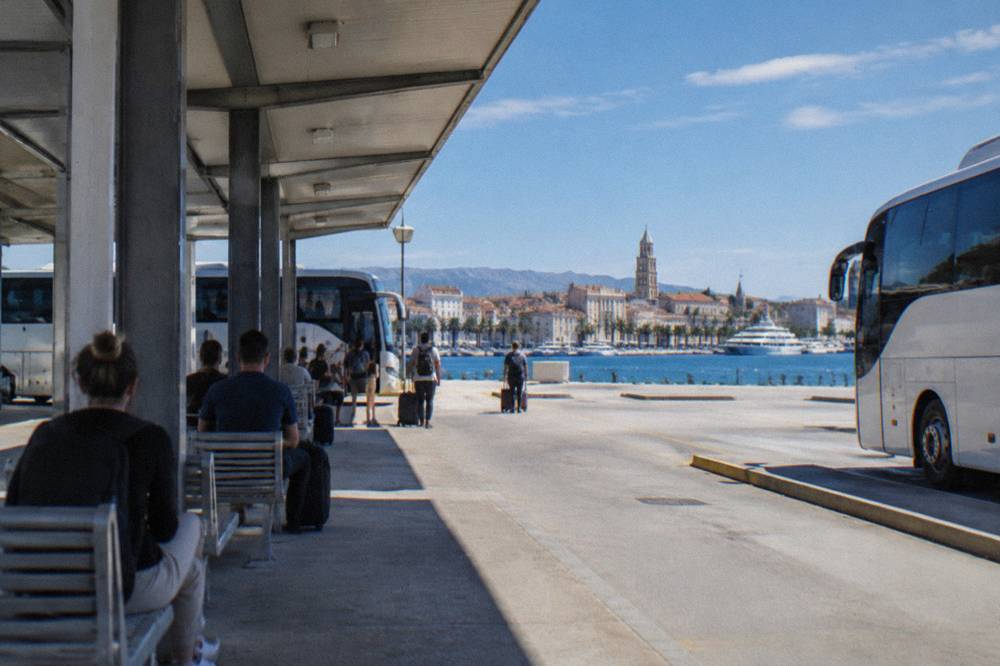
The main bus station in Split occupies the eastern waterfront on Obala kneza Domagoja, directly beside the ferry port and the railway station, 500 to 600 m on foot from Diocletian's Palace. The station is the city's principal coach terminus and the transfer point between long-distance buses, island ferries, catamarans and the train, all of which operate from the same short stretch of the harbour.
The layout is linear. The bus bays and the station building face the sea, with the ferry terminal and its departure lanes immediately to the south and the railway station at the northern end of the same block. Behind the station, inland, sits the quarter around the Prokurative square and the western edge of the Old Town, so the walk into the palace complex involves crossing the waterfront road and heading west through narrow stone streets. The Riva promenade runs between the station and the palace, meaning you effectively walk along the seafront to reach the historic centre.
A few practical anchors help with orientation. The green market area lies a few minutes inland to the north, the ferry check-in for Jadrolinija lines sits at the southern end of the same waterfront, and the catamaran piers used by Kapetan Luka, TP Line and Bura Line services sit between them. Everything at this hub is within a walk measured in hundreds of metres, not kilometres. If your connection involves a ferry leaving shortly after your coach arrives, the short distance between the bus bays and the port is the single most useful fact about the station's position.
How Do You Walk From The Split Bus Station To Diocletian's Palace?
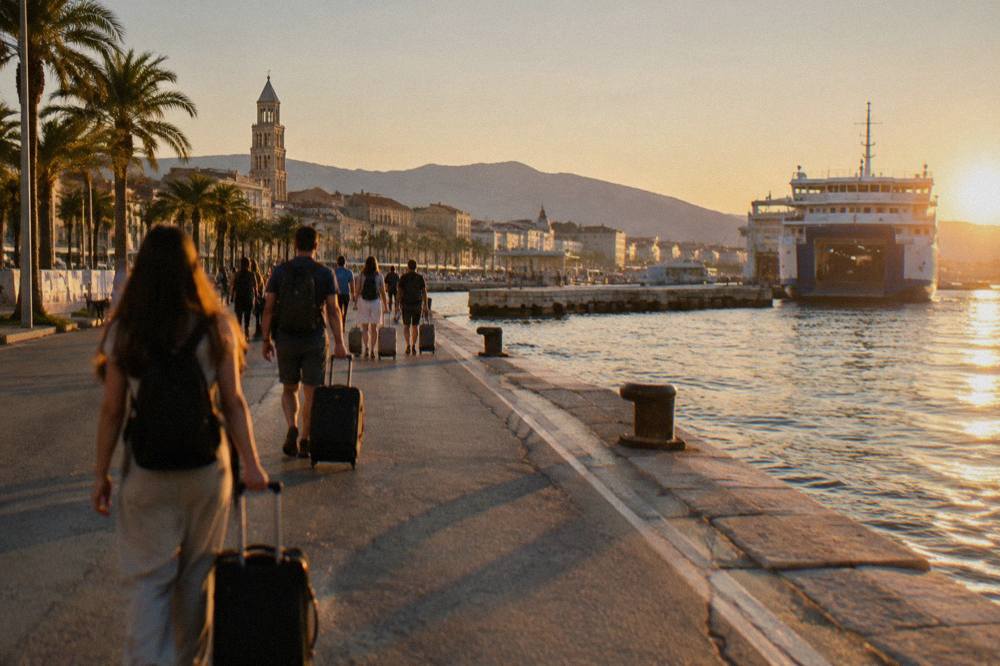
The walk from the main bus station to Diocletian's Palace is 500 to 600 m along the waterfront, crossing Obala kneza Domagoja and following the Riva westward to the southern, sea-facing entrance of the palace. The route is flat, paved the whole way and passes the ferry piers, so luggage rolls easily and the walk takes only a few minutes at a normal pace.
There is no need for a taxi or a bus for this transfer. Leaving the bus bays, you cross the waterfront road to the pedestrian side, where the Riva promenade begins. Heading west, the bronze and stone facade of the palace's southern wall rises directly ahead of you, with the Riva's palm line running alongside. The eastern Silver Gate gives access into the palace streets from the land side, and the cellars entrance sits near the southern wall, run by the Split City Museum, open Monday to Sunday 8:30 to 20:00, with the central part under restoration to the end of 2026 while the passage stays open.
Two things are worth knowing before you set off. First, the whole route is exposed to the sun along the seafront, and in July the DHMZ Split-Marjan station table shows a monthly mean of 26.2 C with 18 days at 30 C or more, so a morning or evening arrival is more comfortable than midday. Second, the palace streets themselves are stone and stepped in places, so wheeled luggage is easiest handled along the Riva until the last moment. Once inside the palace, an orientation walk makes sense before you explore alone; the small-group palace walking tour covers the Peristyle, the Golden Gate and the cellars with a guide, and you can Check availability before you arrive.
For readers planning the wider stay, the itineraries in one day in Split assume exactly this arrival path, and the station-to-palace walk is the opening leg of nearly all of them.
How Do You Get Between Split Airport And The Main Bus Station?
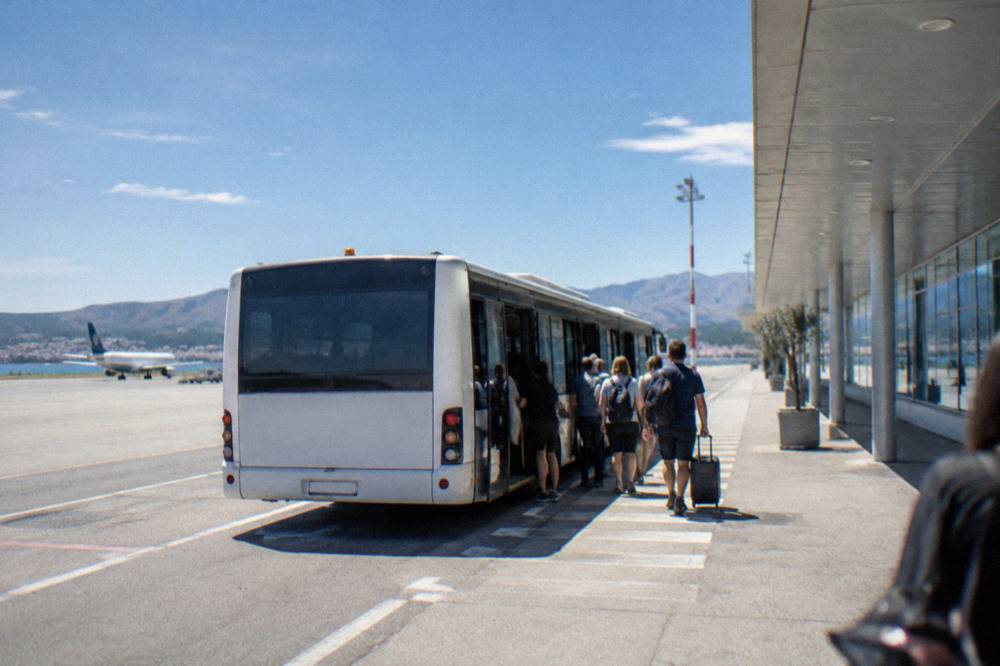
The Platanus airport shuttle runs between Split Airport and the main bus station, charging 10 EUR one way and 15 EUR return, with the city stop at the station on Obala kneza Domagoja by the ferry port. The airport itself sits in Kaštel Štafilić in the Kaštela belt, 20 km from Split and 6 km from Trogir according to the airport's own pages, with the drive from the palace measured at 24.9 km and about 31 minutes free-flow.
The shuttle is the simplest airport transfer because its city terminus is the station itself, placing you at the heart of the transport hub the moment you step off. The station side is also where many day-trip coaches and boat departures gather, so a landing morning can turn into a same-day excursion without a second cross-town journey. Full detail on the airport, including the new seasonal Newark route that began on 30 April 2026 as the airport's first transatlantic service, sits in the Split Airport guide, and the transfer options are compared in Split Airport to city centre.
City buses also serve the airport: Promet Split lines 37 and 38 stop there. The fare is not printed on the operator's public price page, so confirm on board, a few euros is the honest expectation and nothing more should be assumed. Taxis and ride-hailing operate at the airport, but no verified fare figure exists for that journey, so ask for the price before you commit. One frequent confusion is worth correcting: older guides sometimes name a different shuttle operator and an 8 EUR fare, but the current operator's own page lists Platanus at 10 EUR one way and 15 EUR return.
A practical note on timing: the airport handled 3,881,186 passengers in 2025 and 3,376,272 in the first nine months of 2026, so summer mornings are busy at both the terminal and the shuttle stop. Booking the shuttle's return leg when you land is a reasonable safeguard for an early departure day.
Which Destinations Can You Reach By Coach From Split?
Long-distance coaches from Split reach Dubrovnik in about 4 hours and Zagreb in about 5 hours 30, with the two runs the backbone of the intercity network, and regional coaches cover the Dalmatian coast and inland. All long-distance services depart from the main bus station on Obala kneza Domagoja, and the figures for these headline journeys are approximate coach times rather than fixed timetables, so confirm exact departures when booking.
Heading north to the capital before or after your stay. Book a bus ticket to Zagreb here.
The Dubrovnik coach runs down the coastal road, and the train is not an alternative for that route: there is no rail line from Split to Dubrovnik, so the coach, a private transfer or a hire car are the options, with the drive measured at 234.8 km and about 3 hours 21 minutes free-flow from the palace. The Zagreb coach competes with the train on that corridor, and the comparison is lopsided on time: the train takes about 7 hours 15 to 8 hours 10 against roughly 5 hours 30 by coach, though the rail journey has its own following. The full comparison, including the Zagreb corridor and the airport question, is laid out in Split to Dubrovnik and the wider day trips from Split guide.
| Journey from Split | Approximate scheduled time | Notes |
|---|---|---|
| Coach to Dubrovnik | about 4 h | coastal road, no rail alternative |
| Coach to Zagreb | about 5 h 30 | competes with the train |
| Train to Zagreb | about 7 h 15 to 8 h 10 | departs the station in the same hub |
| Drive to Trogir | 36 min | 29.3 km from the palace, free-flow |
| Drive to Omiš | 38 min | 25.5 km from the palace, free-flow |
| Drive to Šibenik | 71 min | 84.8 km from the palace, free-flow |
| Drive to Zadar | about 2 h | 159.5 km from the palace, free-flow |
Regional and seasonal coaches also fan out from the same station to the towns that appear throughout this site: Trogir and its Čiovo island, Omiš up the Cetina river mouth, Makarska below the Biokovo range, and inland toward Sinj. In high summer, additional services run for festival and event traffic, including around Ultra Europe, whose 2027 edition is fixed for 9 to 11 July 2027 at Park Mladeži, a short ride from the station. Seasonal schedules change, so the operator's own timetable is the authority for any specific date.
How Do Ferries And Catamarans Connect At The Same Waterfront Hub?
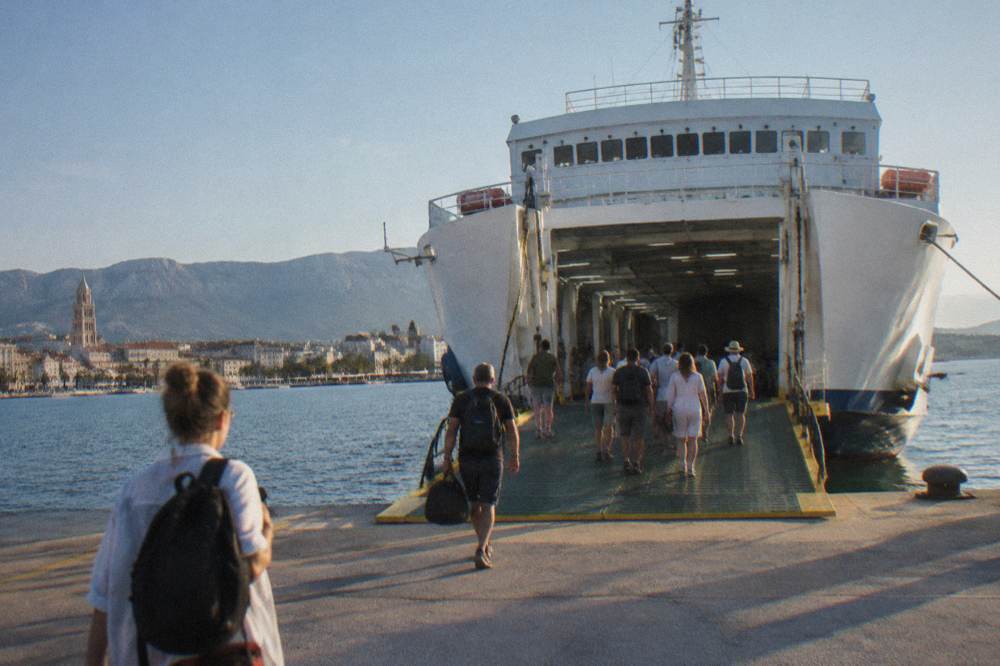
Jadrolinija car ferries leave from the piers beside the bus station, with line 635 to Stari Grad on Hvar taking about 120 minutes, line 631 to Supetar on Brač about 50 minutes, line 636 to Rogač on Šolta about 60 minutes and the Vis ferry about 140 minutes. Foot passengers on the Stari Grad line pay 5.90 EUR off-season and 8.40 EUR in season, and catamarans run from the adjacent piers to Hvar town and Vis.
The ferry detail matters most for one common mistake: Hvar town itself is reached by catamaran, while the car ferry lands at Stari Grad on the same island, a bus or taxi ride away from Hvar town. Confusing the two leads to missed connections, and the difference is spelled out fully in Split to Hvar ferry and ferries from Split. From 2026, the Split to Supetar line has no off-season timetable at all, operating on high-season and low-season schedules year round, one of five Croatian lines now run that way, which says a great deal about how heavily the Brač crossing is used.
| Route from Split | Type | Approximate crossing | Foot passenger fare |
|---|---|---|---|
| Line 635 to Stari Grad, Hvar | car ferry | about 120 min | 5.90 EUR off-season, 8.40 EUR in season |
| Line 631 to Supetar, Brač | car ferry | about 50 min | fare on the operator's price list |
| Line 636 to Rogač, Šolta | car ferry | about 60 min | fare on the operator's price list |
| Split to Vis | ferry | about 140 min | fare on the operator's price list |
| Line 9603 Split, Bol, Stari Grad, Jelsa | catamaran | per timetable | 6.40 EUR low, 10.00 EUR high to Hvar or Jelsa |
| Line 9602 Split, Milna, Hvar, Vis | catamaran | per timetable | 7.20 EUR low, 10.00 EUR high to Vis |
The catamaran operators Kapetan Luka, TP Line and Bura Line all appear in the Port of Split's live departure feed alongside Jadrolinija, so several companies compete on the fast island runs from piers within the same few hundred metres. In summer 2026 an international Split to Bari ferry line also operated, extending the hub's reach across the Adriatic to Italy. If your itinerary pairs a coach arrival with a same-day island crossing, treat the walk from the bus bays to the ferry check-in as a transfer of a few hundred metres and plan the connection with the ferry's own check-in deadline in mind.
How Do You Buy Bus Tickets In Split?
Long-distance coach tickets in Split are sold at the station's ticket counters and through the operating carriers, and city bus tickets are a separate system run by Promet Split, bought before boarding or from the driver, with the fare confirmed at the point of sale rather than assumed from a guide. The station building on Obala kneza Domagoja houses the booking desks for intercity and international coaches, and city buses stop on the streets around the hub.
For long-distance coaches, the desk in the station is the place to buy or collect a ticket for same-day travel, and each operating carrier handles its own services, so the desk you need depends on the carrier running your route. In July and August the hub is at its busiest, and the same-month facts shape the experience: the DHMZ Split-Marjan station table records 353.3 hours of July sunshine and a July mean of 26.2 C, so queues form in the shade of the station building rather than on the open forecourt.
For city buses, the mechanics are covered in detail in how do you pay for the bus in Split. The essentials: Promet Split runs the city network, tickets are cheaper bought in advance than from the driver where that option exists, and the airport is served by lines 37 and 38 with the fare confirmed on board. A question that comes up often is whether a hop-on-hop-off sightseeing bus exists; the honest answer lives in is there a hop-on-hop-off bus in Split, and for a compact city whose palace core is entirely walkable, ordinary city buses plus your own feet cover nearly everything, as discussed in getting around Split.
A separate category confuses newcomers: the day-trip coaches that collect passengers for Krka, Plitvice and Dubrovnik excursions are tour operations, not scheduled line services, and their pickup points cluster around the same hub and nearby streets. Their tickets come from the tour listing, not the station counter, and their departure logistics are given at booking.
What Facilities Does The Split Bus Station Offer?
The main bus station in Split provides covered and open bus bays along the waterfront, ticket counters in the station building, waiting areas, left-luggage facilities, toilets, cafe and kiosk units and direct level access to the ferry piers and railway platforms, all within a few hundred metres of Diocletian's Palace. The station's defining facility, though, is the hub itself: no other place in the city puts coaches, trains, ferries, catamarans and the airport shuttle in one walkable line.
For luggage, the station's left-luggage service is the practical answer for the city's most common visitor problem, a late ferry or flight on the last day. Dedicated luggage storage businesses also operate in the Old Town, and the options are compared in the Split luggage storage guide. For waiting, the waterfront itself does much of the work: the Riva begins at the station's western edge, so a two-hour gap between connections is better spent on the seafront than indoors, with the palace cellars, the Peristyle and the Golden Gate all inside a ten-minute radius. The rainy day in Split guide covers the indoor alternatives, including the Split City Museum at Papalić Palace, 10.00 EUR adult, 8.00 EUR reduced, family 18.00, closed Mondays, and the Ethnographic Museum at 7.00 EUR adult.
| Facility at the hub | What it covers |
|---|---|
| Coach bays and ticket counters | long-distance and regional departures, per-carrier desks |
| Railway platforms | trains toward Zagreb, about 7 h 15 to 8 h 10 |
| Ferry check-in and piers | Jadrolinija lines 631, 635, 636 and Vis |
| Catamaran piers | Kapetan Luka, TP Line, Bura Line departures |
| Airport shuttle stop | Platanus service, 10 EUR one way, 15 EUR return |
| Left luggage | storage at the station and in the Old Town |
Accessibility is a genuine strength of the site. The whole hub sits on flat waterfront ground, and the walk to the palace is level until you enter the stone streets. The climate record explains why that matters in planning: the DHMZ Split-Marjan table shows a January mean of 8.0 C and a July mean of 26.2 C, so winter waits outdoors are mild while midsummer ones call for shade and water, and November, the wettest month at 115.5 mm, is when a covered waiting area earns its keep.
Where Are Good Places To Eat Near The Split Bus Station?
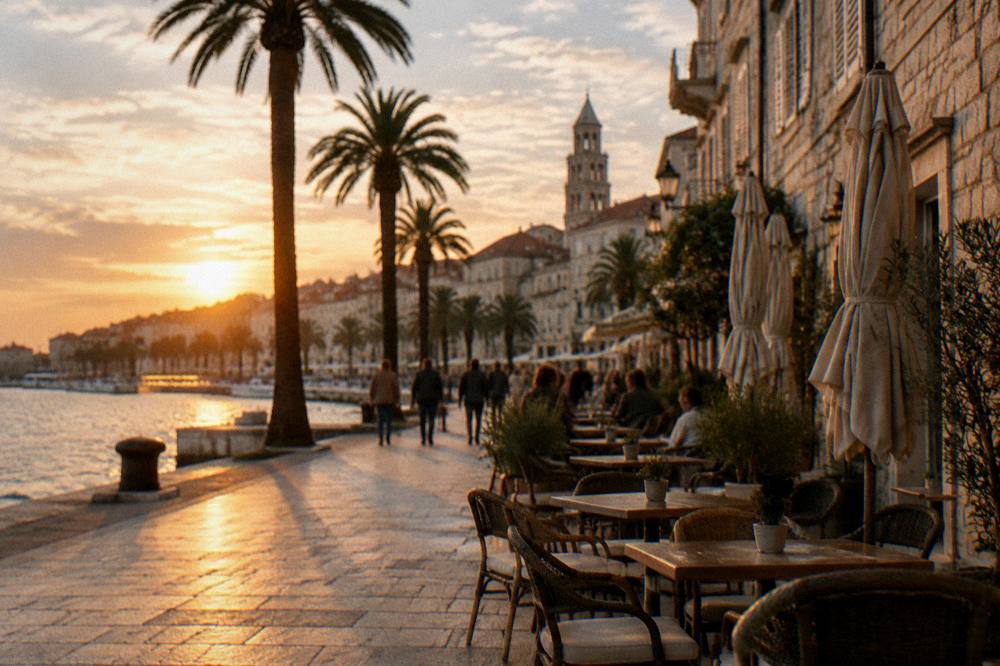
Eating near the main bus station in Split means the waterfront strip of the Riva to the west, the cafe tables around the Prokurative square just inland, and the konoba restaurants of the Old Town, all within a walk of a few hundred metres, with posted menu prices the reliable check on any venue before you sit down. The station's own kiosks and cafes cover coffee, pastries and quick sandwiches for a departure, but the real eating is five minutes away inside and around the palace.
Two habits protect you anywhere in the centre. First, read the posted menu before choosing a table, and check that the bill arrives itemised, since a cover charge must appear on the menu if it is charged. Second, walk one street back from the seafront: the areas around the green market and the lanes of Veli Varos hold long-standing local places, and the where do locals eat in Split piece covers the logic. The market itself, next to the station's inland side, is the place for fruit, cheese and bread for a ferry crossing, and its stalls are described in the Split green market guide, with the wider food picture in Split restaurants and Split food.
The one rule that genuinely bites near the station concerns drinking rather than eating. Public alcohol consumption in the historic core outside licensed terraces is banned, with a 300 EUR fine, under the public-order rules in force since 2026. Buy a beer for the ferry if you like, but open it on board or at a terrace, not while walking through the Old Town lanes. Between 1 June and 15 September, shops in the area also stop selling alcohol at night, so a late bottle before an early ferry needs an earlier purchase.
Is The Area Around The Split Bus Station A Good Place To Stay?
The streets behind the bus station, between the Prokurative square and the Old Town's western lanes, put you 500 to 600 m from the palace, on flat ground, within walking distance of the ferry piers for island day trips, and at the foot of the Marjan park peninsula, which makes it one of the most practical bases in the city for visitors who plan to move around. The trade-off is a busy, transport-facing waterfront rather than a quiet residential quarter.
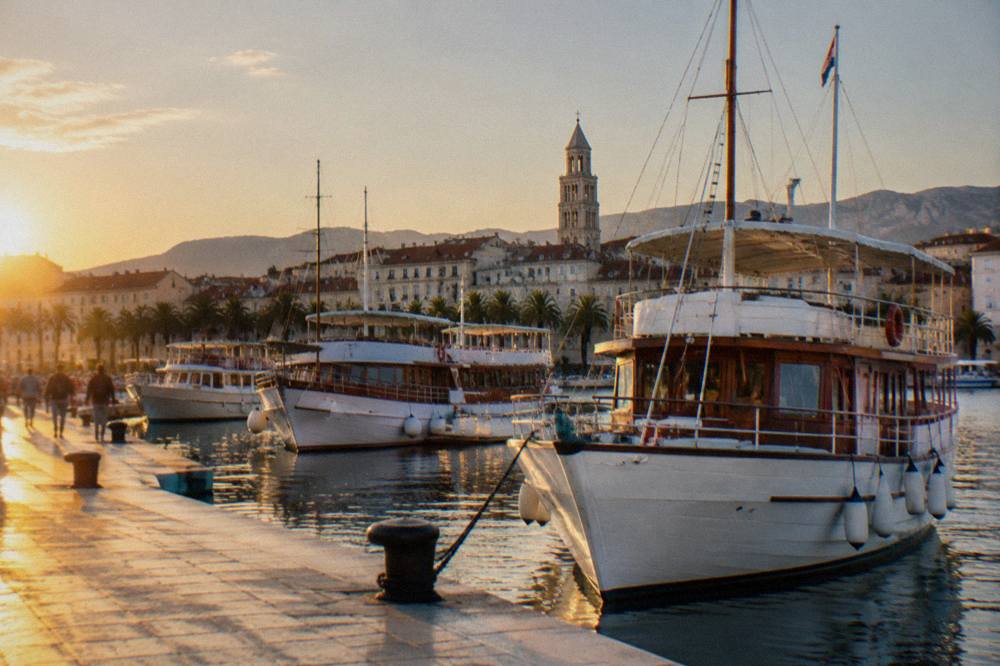
The case for staying here is movement. Every ferry, catamaran and day-trip departure in the city starts within a few minutes' walk, and the best of those excursions are boat trips: the Blue Lagoon and three islands cruise with lunch, wine and swimming is this site's featured pick for the area because its departures leave from these piers, and you can Check availability alongside planning the stay. The wider fleet of options is surveyed in Split boat tours.
The case against is noise and traffic: the hub is a working port frontage, and summer brings early ferry traffic. The neighbourhood guides give the full comparison: where to stay in Split maps the quarters, Split apartments covers self-catering, and budget travellers can start from Split on a budget. One structural fact affects the Old Town end of the market: the historic core's moratorium on new short-term rental registrations has been extended through 2026, with existing registrations grandfathered, so the apartment stock inside the palace core is effectively fixed while demand grows.
Which Day Trips Use The Split Bus Station Area As Their Departure Point?
Day trips from the Split bus station hub split into three groups: boat trips leaving the adjacent piers to the Blue Lagoon, Šolta, Hvar and Brač, coach tours to Krka, Plitvice, Mostar and Dubrovnik that collect passengers at or near the station, and independent trips by ferry or regional bus to Trogir, Omiš and Salona. Every one of them starts within a few hundred metres of where your coach or shuttle drops you.
For booked tours, the hub's advantage is a single arrival point. A family landing at the airport can take the 10 EUR shuttle to the station, store bags, and meet a Krka or Plitvice departure without crossing the city. The Krka trips run to the national park whose 2026 price list charges 40 EUR adult from June to September, 20 EUR in April, May and October, and 7 EUR from January to March and in November and December, with the ticket including the Skradin boat and Lozovac transfers between 1 April and 31 October. Krka's rules allow swimming only in clearly marked areas, so treat any swim stop as the tour describes it, not as a free-for-all. The Krka Waterfalls tour with boat ride and swimming is a good example of the format, and you can Check availability for your dates.
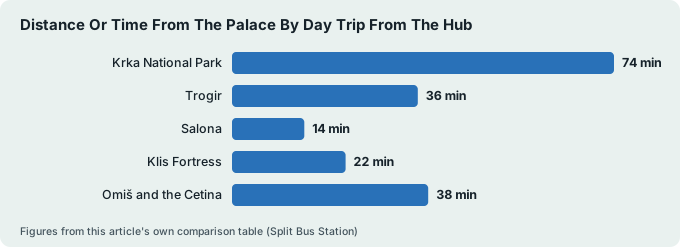
For independent trips, drive times from the palace set expectations: Salona at 14 minutes, Klis Fortress at 22 minutes, Trogir at 36 minutes, Omiš at 38 minutes, and Šibenik at 71 minutes. Plitvice is the outlier at about 3 hours 15 each way, which is why its day tours run as full itineraries; its entry is timed online with the visitor's name on the ticket, and adult pricing runs 10, 23 or 40 EUR by season with a 25 EUR afternoon slot in peak. The dedicated guides to Krka, Plitvice Lakes and Trogir carry the detail for each.
| Day trip from the hub | Mode | Distance or time from the palace | Entry cost to plan for |
|---|---|---|---|
| Blue Lagoon and Šolta | boat from the piers | cruise itineraries vary | ticket price on the booking page |
| Krka National Park | coach tour or drive | 74 min drive to Skradinski buk | 7 / 20 / 40 EUR by month |
| Plitvice Lakes | coach tour or drive | about 3 h 15 drive | 10 / 23 / 40 EUR by season |
| Trogir | regional bus or drive | 36 min drive | Trogir cathedral price not stated, confirm locally |
| Salona | bus or drive | 14 min drive | 10 EUR combined with the Archaeological Museum |
| Klis Fortress | bus or drive | 22 min drive | 10 EUR adult |
| Omiš and the Cetina | bus or drive | 38 min drive | Mirabela 4 EUR, 6 EUR in summer |
One planning note ties the calendar to the hub: the biggest single day of summer traffic around the station is the Ultra Europe weekend, fixed for 9 to 11 July 2027 at Park Mladeži, and accommodation and transport around those dates tighten well in advance, as the Ultra Europe guide explains.
What Should You Know About The Hub In Winter And At Night?
The Split bus station hub runs year round, but winter changes its rhythm: Advent in Split runs from 27 November 2026 to 7 January 2027 with the ice rink at Đardin a short walk inland, the Supetar ferry now runs with no off-season timetable, and the DHMZ Split-Marjan station table records a January mean of 8.0 C with 103.7 mm of December rain, so the practical difference is weather and light rather than closure.
Winter travellers should note two dated items. First, the Riva's central section is scheduled for renovation works from November 2026 lasting a little over a year, so partial closures on the seafront stretch between the station and the palace should be expected through 2027, with the walk remaining possible throughout. Second, the palace cellars' central part stays under restoration to the end of 2026 with the passage open, so the substructures remain visitable in their usual hours. The Split in winter guide carries the seasonal picture.
At night the hub stays lit and active because ferries and catamarans run early and late, but the night-time retail alcohol ban between 1 June and 15 September closes shop sales from the evening hours, and the public-order fines in the historic core are enforced, including 300 EUR for public drinking and 150 EUR for sleeping in public spaces. For anyone with a dawn ferry, the quiet truth is that the hub is the safest place in the city to wait, simply because it never fully empties.
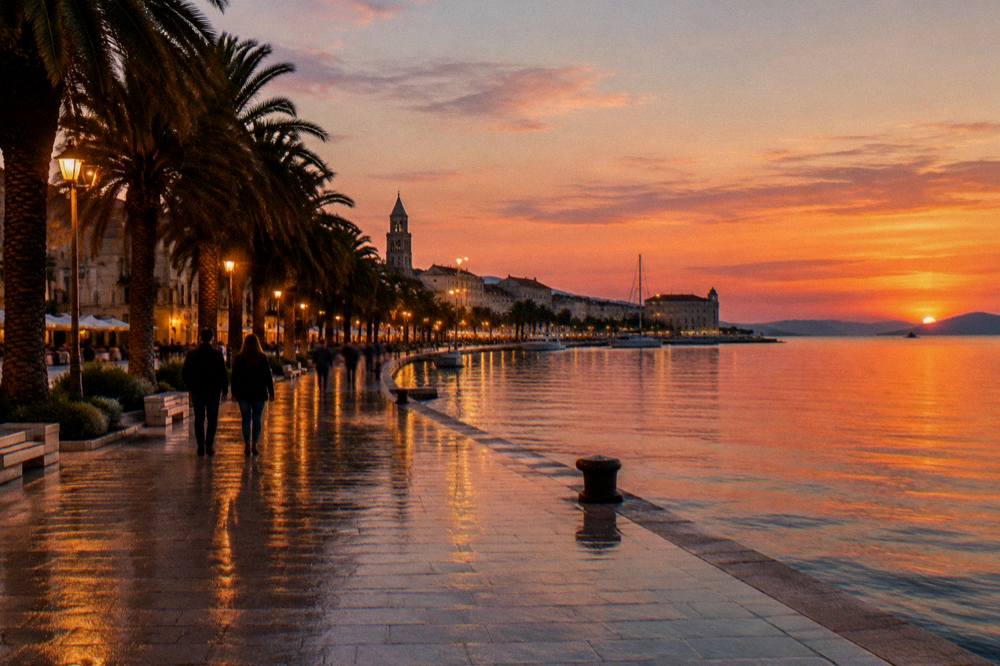
Common Questions About The Split Bus Station
How far is the Split bus station from the Old Town?
The main bus station sits 500 to 600 m from Diocletian's Palace, a flat walk of a few minutes along the waterfront. The ferry port and the railway station occupy the same block, so all three arrivals land you at the same point.
How do I get from Split Airport to the bus station?
The Platanus shuttle runs from the airport to the main bus station for 10 EUR one way and 15 EUR return. Promet Split city bus lines 37 and 38 also stop at the airport; the fare is confirmed on board. The airport is 20 km from Split and 6 km from Trogir.
Can you walk from the Split bus station to the ferry port?
Yes. The ferry piers and catamaran docks sit immediately beside the bus bays on the same waterfront, and the longest walk within the hub is a few hundred metres.
Is there luggage storage at the Split bus station?
The station offers left-luggage facilities, and additional luggage storage businesses operate in the Old Town, all described in the site's luggage storage guide. Options are busiest in summer, so a late-afternoon pickup can queue.
How long is the bus from Split to Dubrovnik?
The coach journey takes about 4 hours. There is no train on that route, and the drive from the palace is measured at 234.8 km, about 3 hours 21 minutes free-flow.
Does the train from Split leave from the bus station?
The railway station sits at the northern end of the same hub on Obala kneza Domagoja, beside the bus bays. Trains to Zagreb take about 7 hours 15 to 8 hours 10.
The Split bus station earns its place in your planning not because the building itself is a destination but because it is the hinge the whole region turns on: coaches, trains, ferries, catamarans and the airport shuttle arranged along one flat waterfront, with the palace a few hundred metres away. Build your arrival, your island crossings and your day trips around that single fact and the city becomes a great deal easier to manage.