Is It Safe For Americans To Go To Croatia Right Now?
Safety, entry rules, local fines and practical advice for American travellers visiting Split and Dalmatia, with current figures.
Croatia has been a European Union member since 1 July 2013, joined the Schengen area on 1 January 2023, uses the euro, and runs a national emergency number, 112, that answers in English, and for American visitors the realistic safety questions in Split are practical ones: entry formalities, petty theft in the crowded Old Town, sun and sea conditions, and a set of local public-order fines that are easy to break by accident. Split itself is a coastal city in central Dalmatia built in and around Diocletian's Palace, and its historic core is compact, pedestrian and busy late into the night. This page reports what official and primary sources say, entry rules included, so an American reader can plan from facts rather than forum threads. The desk behind this site has not visited Split and reports sources instead of personal experience.
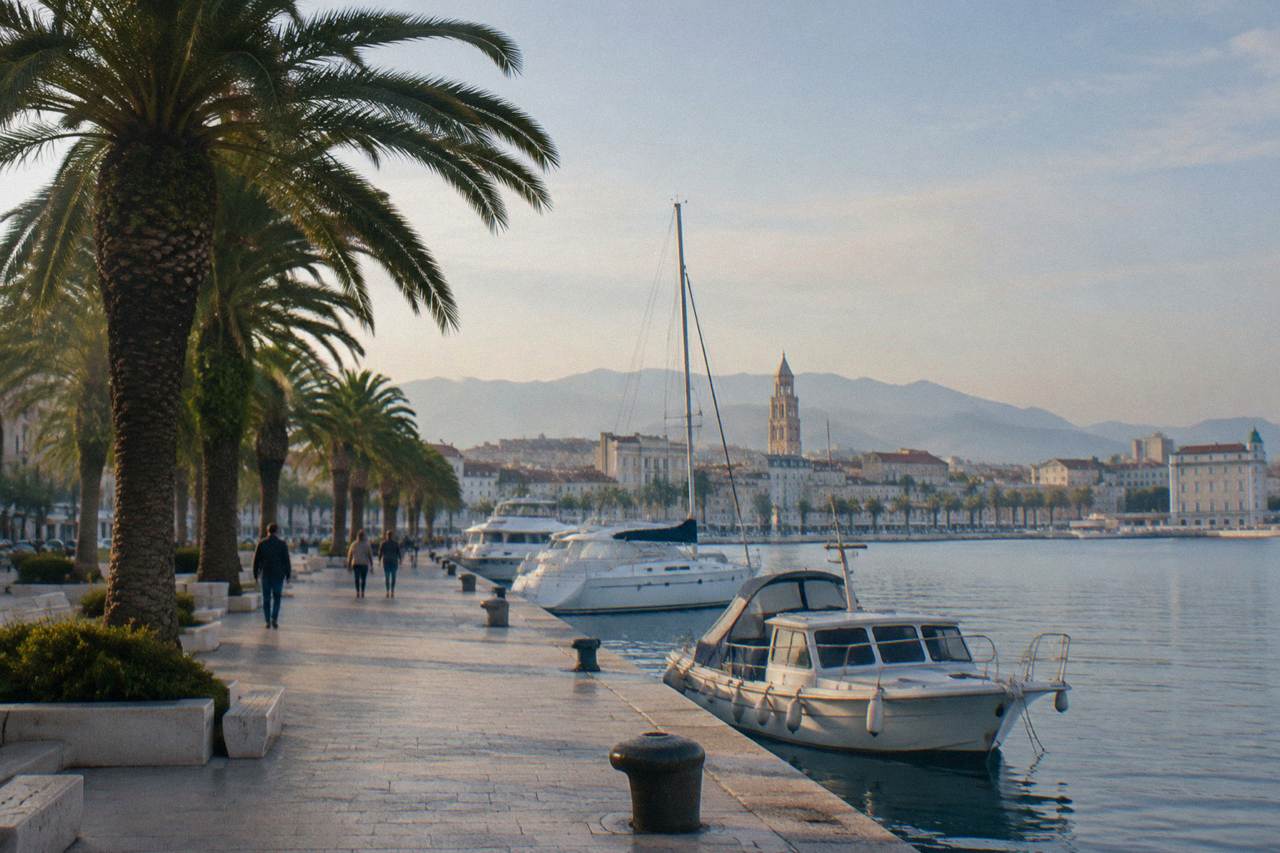
Is It Safe For Americans To Go To Croatia Right Now?
Yes. Croatia is a European Union and Schengen member with a permanent tourist economy, and no official source advises against travel there. For Americans the practical risks in Split are petty theft in crowds, sun exposure and sea conditions, plus local public-order fines, rather than violent crime or political instability. The emergency number 112 works nationally and answers in English.
The United States maintains no travel advisory against Croatia that would affect an ordinary holiday, and Croatia's own tourism machinery, from the port authority to the city's official tourism site, publishes visitor-facing rules rather than warnings. The Port of Split handled 6.05 million passengers in 2025, and Split Airport processed 3,881,186 passengers in the same year, both figures from the operators' own statistics pages. Cities that move that many people safely through a season are built for visitors.
That is not the same as "nothing can go wrong". Crowded ferry terminals, festival nights and the narrow lanes inside Diocletian's Palace create the classic conditions for pickpocketing anywhere in southern Europe. The right frame is a Barcelona-or-Lisbon level of ordinary caution, not a special Croatian risk. Readers who want a fuller rundown of the street-level specifics, from the green market to the late-night Riva, can read the site's dedicated Split safety guide, and the practical annoyances are covered separately in what to avoid in Split.
One genuinely useful distinction for American readers: Croatia is small and heavily policed in tourist zones. Split's historic core falls under a specific 2026 city decision on public order, described below with its verified fines. That means the behaviour that matters is rule-following rather than threat-avoidance.
What Entry Rules Apply To Americans Arriving In Croatia?
Americans do not need a visa for short stays, because Croatia is in the Schengen area and US passport holders enter under the standard Schengen short-stay allowance. The European Entry Exit System, EES, has been fully operational since 10 April 2026 and records biometrics at the border, and ETIAS travel authorisation is not yet live and has no fixed start date.
The sequencing matters for anyone booking flights. Since Croatia joined Schengen on 1 January 2023, a US passport holder enters under the common short-stay allowance for visa-exempt nationals, and the EES now logs fingerprints and a facial image at first entry instead of a passport stamp. ETIAS, the paid pre-travel authorisation that has been discussed for years, still had no confirmed start date so the desk's reporting position is simple: no American should pay anyone for an ETIAS today, and anyone already in the Schengen area on a prior entry does not register again at the Croatian border.
There are two practical footnotes. First, if an American enters Schengen elsewhere, in Frankfurt or Paris for example, and then flies to Split, the EES registration already happened and the domestic flight is treated like a domestic leg. Second, passport validity should cover the whole stay plus the standard Schengen margin, and the airline checks this at check-in, not Croatian police. Direct flights exist from the United States: United Airlines ran a seasonal Newark to Split service from 30 April 2026, the airport's first transatlantic route, a detail covered in full in can you fly direct from the US to Split.
Health paperwork is the other half of the question. Croatia imposes no COVID-era entry requirement on Americans, no vaccination proof and no health form. The number to save is 112, the single European emergency number, which connects ambulance, fire and police and has English-speaking operators. Pharmacies in Split are marked with a green cross and dense in the centre; for anything serious the emergency department is the pathway 112 opens.
What Local Rules And Fines Apply In Split's Historic Centre?
Split enforces a 2026 public-order decision in its historic core with specific fines: 300 EUR for drinking alcohol in public in the centre, 300 EUR for urinating, vomiting, or climbing on monuments or bathing in fountains, 150 EUR for sleeping in public spaces, and 300 EUR for taxi touting. Walking in swimwear or shirtless in the centre is also fined, though the amount is set locally and should be confirmed.
These figures come from the City of Split's official tourism site, which published the rules under an "enjoy and respect" heading for the 2026 season. The alcohol rule carries the detail that matters to Americans used to open-container norms: drinking in the street, in the historic centre or within 100 metres of schools, draws the 300 EUR fine, while drinking on a licensed terrace is entirely legal. A companion seasonal rule bans shops, not bars or restaurants, from selling alcohol between 21:00 and 06:00 from 1 June to 15 September, so a late-night shop run for beer simply fails; a bar terrace does not. Everything else covered here is indexed on Split Croatia Travel Guide.
| Offence in Split's historic core | Fine |
|---|---|
| Drinking alcohol in public (centre or within 100 m of schools) | 300 EUR |
| Urinating in public | 300 EUR |
| Vomiting in public | 300 EUR |
| Climbing on monuments or bathing in fountains | 300 EUR |
| Sleeping in public spaces | 150 EUR |
| Taxi touting | 300 EUR |
| Swimwear or shirtless in the centre | Fined, amount set locally |
Drones are the other rule that catches Americans out, because aerial travel videos are a habit. Flying is restricted over Split's old town and the airport zone, and drones are banned in the national parks including Krka and Plitvice, per secondary reporting on Croatian and EU rules. The safe assumption is that a drone brought to Split stays in the bag unless the operator has checked the current national rules and any registration requirement.
None of this describes a dangerous city. It describes a city that has written down, in euro amounts, exactly which behaviours it will not absorb from a summer of 6.05 million port passengers. Follow the list and the historic centre at midnight is busier and calmer than a typical American downtown at the same hour.
Is Split Safe At Night, On The Beaches And On The Water?
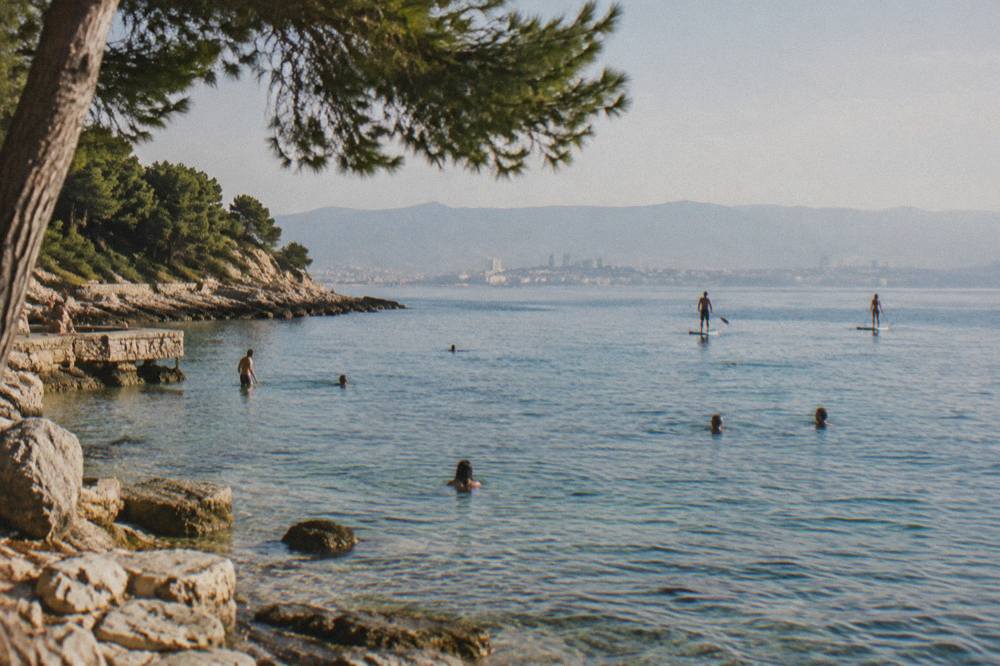
Split's centre stays lit and busy late, the Riva promenade and Peristyle are free public spaces with foot traffic past midnight in season, and the sea risks are ordinary Adriatic ones: rocks rather than currents, and jellyfish occasionally. Beaches are city beaches, Bačvice and Žnjan among them, with no entry fee, and the water is supervised only where a posted sign says so.
Night safety in Split is mostly crowd common sense. The Riva, the Prokurative square and the lanes of the palace are pedestrian-heavy until the last cafés close, and the police presence scales with the season. Ultra Europe, running 9 to 11 July 2027 at Park Mladeži, concentrates tens of thousands of revellers; the festival's 2026 edition ran on 10 to 12 July without the city publishing any standing safety warning against attending. The ordinary precautions hold: keep the passport in the hotel safe and a copy in the pocket, watch phones on packed ferries, and agree a taxi price or use a meter rather than accepting a tout, which, as above, is itself an offence the city fines at 300 EUR.
The sea deserves honest treatment. The live reading at the DHMZ Split station was 20.4 C in mid-October 2026, which is swimmable but not bathtub water, and there is no official monthly sea-temperature normal to quote, so any "the sea is X degrees in June" claim should be ignored. Picigin, the shallow-water ball game born on Bačvice beach in 1908 and now protected intangible heritage of Croatia, is played in knee-deep water for a reason: Bačvice shelves gently, which makes it forgiving. Rocky beaches on the Marjan side of the peninsula demand water shoes. Jump from nothing, dive from nothing, and treat cliff jumping as something done with an operator who checks the depth, which is exactly what the rafting and canyoning trips on the Cetina near Omiš provide.
For readers planning around weather rather than worry, the DHMZ Split-Marjan station table for 1948 to 2024 gives July a mean of 26.2 C and 18 days at 30 C or more, which is the honest basis for packing water and shade. November, at 115.5 mm of rain, is the wettest month in the same table.
| Month | Mean temperature (C) | Rain (mm) |
|---|---|---|
| January | 8.0 | 77.8 |
| April | 14.4 | 62.0 |
| July | 26.2 | 26.6 |
| October | 17.2 | 77.0 |
Source for both columns: DHMZ Split-Marjan station, monthly means 1948 to 2024. Guided water activities are one area where an operator genuinely adds a safety margin, and the solo pick below is the site's featured day trip from Split precisely because it keeps a first-time visitor with a guide across Trogir, Salona and Klis Fortress.
What Should Americans Know About Money, Health Care And Getting Help?
Croatia has used the euro since 1 January 2023, cards are accepted almost everywhere in Split, and the emergency number 112 connects ambulance, fire and police with English-speaking operators. American health insurance typically does not pay European providers directly, so the practical answer is travel insurance that covers medical care and repatriation, carried as a card and a policy number.
Money safety in Split is a low-drama topic. The euro ended the old kuna confusion in 2023, and the main fraud vector is the same as anywhere: card skimming is rare but cash should come from bank ATMs inside bank lobbies rather than standalone machines on tourist streets. Cover charges, locally "bread and water", are legal when printed on the menu, so the check-before-ordering habit that an American would apply in Rome applies here too. Food prices are covered honestly in is it expensive to eat in Split, and the tourist tax, about 2.65 EUR per person per night in high season with under-12s free and 12 to 18s at half rate, is collected by the accommodation and confirmed at booking.
Day trips are where safety planning and holiday planning merge. Krka and Plitvice both operate under park rules: Krka's own rules page states swimming is allowed only in clearly marked areas, and Plitvice requires the visitor's name on the ticket with timed online entry. The desk's reporting on which park suits which traveller is in which one is better, Plitvice or Krka. None of these trips involves anything an ordinary healthy American cannot do; the risks are heat, footing on wet stone, and booking with an operator whose cancellation terms are clear, which is what the live listing shows before payment.
For the questions Americans actually type, the answers below are short and sourced.
Common Questions About Safety In Split For Americans
Is it safe for Americans to go to Croatia right now?
Yes. Croatia is an EU and Schengen member, the emergency number 112 answers in English, and no official source advises against travel. The realistic risks in Split are petty theft, sun exposure and local public-order fines, not violent crime.
Can Americans drink alcohol in public in Split?
No. Drinking in the street in the historic centre or within 100 metres of schools carries a 300 EUR fine under the city's 2026 public-order rules. Drinking on a licensed terrace is legal, and shops, not bars, are banned from selling alcohol between 21:00 and 06:00 from 1 June to 15 September.
Do Americans need a visa or ETIAS for Croatia?
No visa is needed for a short stay under the standard Schengen allowance for US passport holders. The Entry Exit System has been fully operational since 10 April 2026 and records biometrics at the border. ETIAS is not live and has no fixed start date, so no American should pay anyone for one today.
Is Split safe to walk around at night?
The historic centre, the Riva and the Peristyle stay lit and busy late in season, and policing scales with visitor numbers. Ordinary crowd precautions apply, mainly guarding phones and wallets on packed streets and ferries.
What is the emergency number in Croatia?
112. It connects ambulance, fire and police across Croatia and has English-speaking operators. Save it before arrival, and carry travel insurance that covers European medical care.
Are Split's beaches safe for swimming?
The city beaches, including Bačvice, are free and shelving, and picigin has been played in the shallow water at Bačvice since 1908. Rocky beaches on the Marjan side need water shoes, and swimming should follow any posted signs, since supervision exists only where a sign says so.
Taken together, the sourced picture is consistent: Split is a safe city for American visitors by any standard measure, and the preparation that matters is paperwork that is already routine, EES biometrics at the border and travel insurance in the wallet, plus reading the posted local rules once. The rest of the planning, from the best month to visit Split to what makes this city worth the flight, is covered across this Split Croatia Travel Guide, and every figure on this page is attributed to the body that publishes it.
