Is Split Safe
Split is a coastal city in Dalmatia, Croatia, built in and around Diocletian's Palace, and the questions travellers ask about it are usually about petty theft, local fines, the sea and the summer heat. This guide sets out what is officially published.
Short answer
Split is widely treated as a safe destination for routine city travel, and the risks that matter are practical ones: pickpocketing in crowds, the summer heat, the sea, and a set of local public order rules in the historic centre that carry fines of up to 300 EUR.
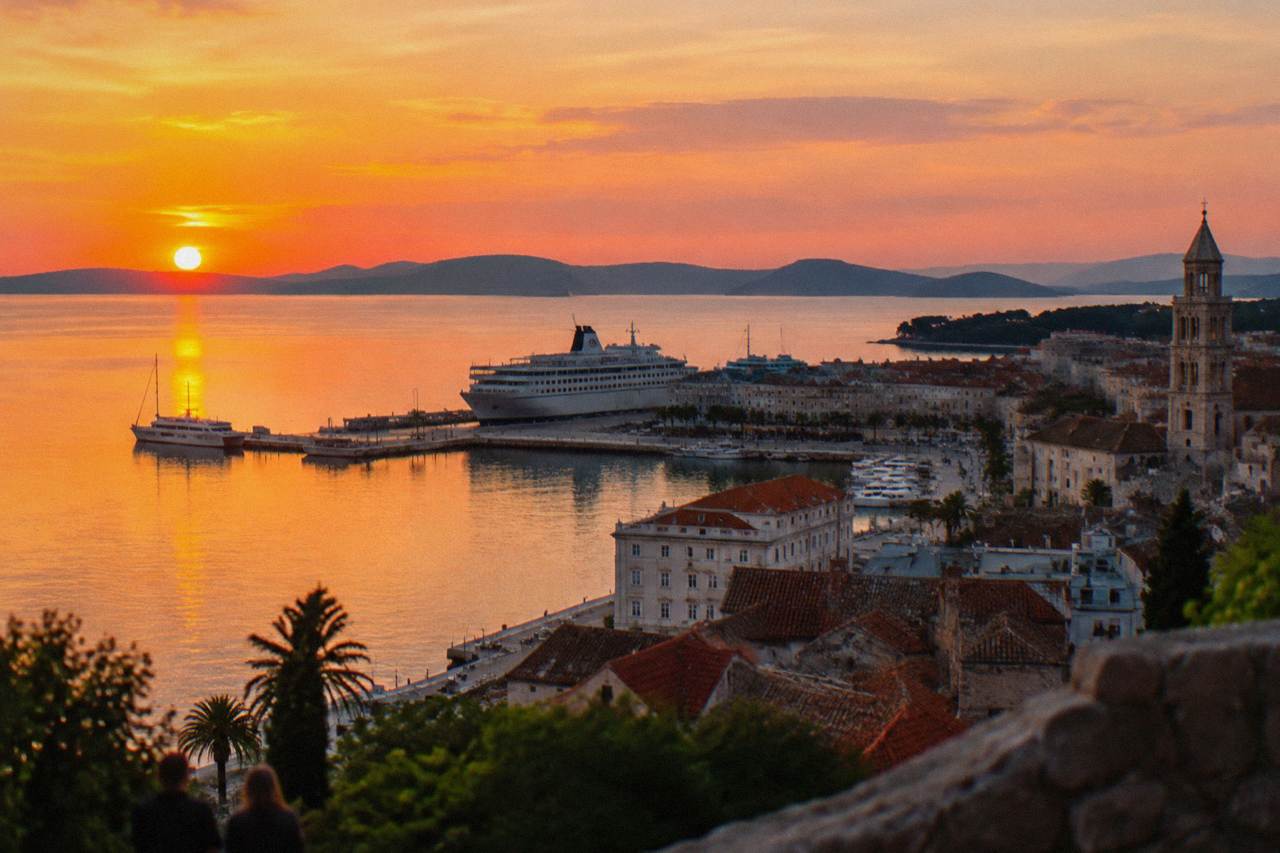
Split is a coastal city in Dalmatia, Croatia, on the Adriatic Sea, with its Old Town set inside and around Diocletian's Palace, the ferry port and the main bus station 500 to 600 m away on Obala kneza Domagoja. The safety questions travellers ask about Split are rarely about violent crime, because the city of 160,577 people (2021 census) functions as a normal European port town. The questions that matter are about pickpockets in the summer crowds, a specific set of public order rules the city enforces in the historic centre, the heat in July and August, and the sea on the beaches and boat trips. This guide reports what the official and primary sources say about each of them.
The city's own tourism site publishes a page titled Enjoy Respect, which sets out the behaviour rules in force in Split and the fines attached to them. That page, the national park rules, the ferry operator's route pages and the meteorological station table are the backbone of everything below. Where a figure exists on an official source, it is printed here. Where it does not, the answer says so and points to what to confirm locally.
Is Split Safe For Tourists Overall?
Split is a routine European port city for safety purposes, with no elevated crime category reported on any official city page, and the practical risks are pickpocketing in crowded areas, the summer heat, the sea, and fines for behaviour that is legal in many other destinations. Croatia uses the euro since 1 January 2023, is a Schengen member, and the single emergency number is 112 for police, fire and medical services anywhere in the country.
Violent crime against visitors is not a subject the city's tourism site addresses, which itself tells you something about where it ranks among local concerns. The Enjoy Respect page from visitsplit.com deals instead with public order: drinking, sleeping in public, climbing monuments and dress in the historic centre. Those are the rules a visitor can actually fall foul of, and they carry fines of 150 to 300 EUR.
The other side of safety is infrastructure. Croatia's emergency number 112 works nationwide and operates in English. Pharmacies, a hospital and walk-in medical services sit in the central city, and any accommodation host can direct you to the nearest one. For the ordinary travel risks, the same habits that work in any busy Mediterranean port apply here: keep valuables out of back pockets, watch bags in the palace alleys at peak season, and read the local rules before the first evening out. The rest of this guide goes through them one by one, and the things to do in Split overview covers how the city is laid out.
What Are The Common Risks And Annoyances In Split?
The risks worth planning for in Split are pickpocketing in crowded spots such as the palace alleys, the Riva and buses at ferry arrival times, ticket and apartment overcharging where prices are not posted, and heat exhaustion in July and August, when the DHMZ Split Marjan station records 18 days at 30 C or more in July and 17 in August. None of these is unique to Split, and each has a simple check attached to it.
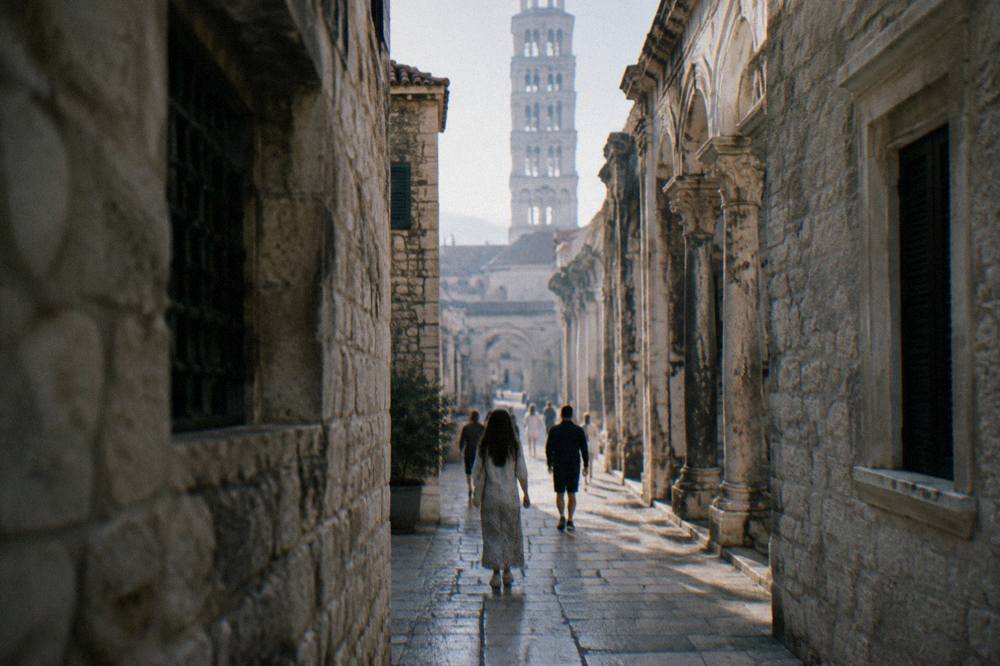
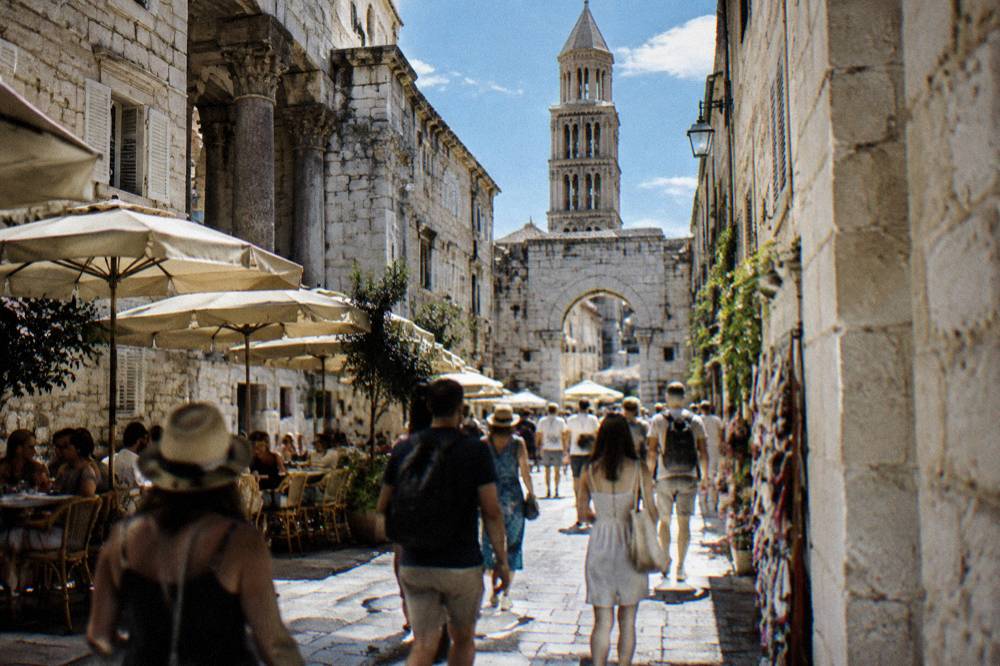
Pickpocketing is the classic port-city risk because the crowds concentrate: the Peristyle, the cellars exit, the Riva and the green market all compress foot traffic into narrow stone lanes. Split is a working passenger port of 6.05 million passengers a year (2025, the port's own figures), so arrival and departure waves are real. Keep the phone and wallet in front pockets or a closed bag, and be more careful on the days a cruise ship is in, simply because the alleys are fuller.
Overcharging is best defeated by checks rather than suspicion. A restaurant menu in Split must show prices; check that the bill matches the menu and that any cover charge appears on the menu itself before you sit down. For apartments, the accommodation collects the tourist tax, about 2.65 EUR per person per night in high season (1 April to 30 September), with under 12s free and 12 to 18s at half rate, and the exact amount is confirmed at booking. If a host quotes a tax figure wildly above that, ask for it in writing.
The heat is the risk people underestimate. The station table for Split Marjan (1948 to 2024) puts the July mean at 26.2 C and August at 25.9 C, and the sunshine at 353.3 hours in July. Shade, water and a midday break are not soft advice here, they are the difference between a good day and a heat headache.
For nights out, the Split nightlife guide maps the bars of the Old Town, and the Split restaurants guide covers where and how to check a bill.
What Are The Public Order Rules And Fines In Split?
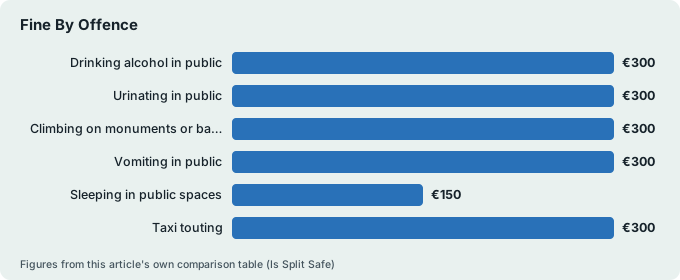
The fines on the city's Enjoy Respect page are 300 EUR for drinking alcohol in the historic centre or within 100 m of schools, 300 EUR for urinating in public, 300 EUR for climbing on monuments or bathing in fountains, 300 EUR for vomiting, 150 EUR for sleeping in public spaces, and 300 EUR for taxi touting. Walking in swimwear or shirtless in the historic centre is also fined, but no official amount is published, so confirm locally rather than trusting a number.
These are not theoretical. The 2026 season saw the city tighten enforcement in Zone A, the historic core, with a specific ban on drinking alcohol in public apart from licensed terraces, alongside rules against open flame food preparation and tour or accommodation soliciting on the street. The fines above apply to visitors and residents alike.
| Offence | Fine | Where it applies |
|---|---|---|
| Drinking alcohol in public | 300 EUR | Historic centre, or within 100 m of schools |
| Urinating in public | 300 EUR | City-wide |
| Climbing on monuments or bathing in fountains | 300 EUR | City-wide |
| Vomiting in public | 300 EUR | City-wide |
| Sleeping in public spaces | 150 EUR | City-wide |
| Taxi touting | 300 EUR | City-wide |
| Swimwear or shirtless | Fined, amount set locally | Historic centre |
There is also a seasonal night rule: shops and supermarkets, not bars or restaurants, are banned from selling alcohol at night from 1 June to 15 September, in force from 2026. If a corner shop refuses an evening beer sale in summer, that is why. Buy earlier, or drink on a licensed terrace.
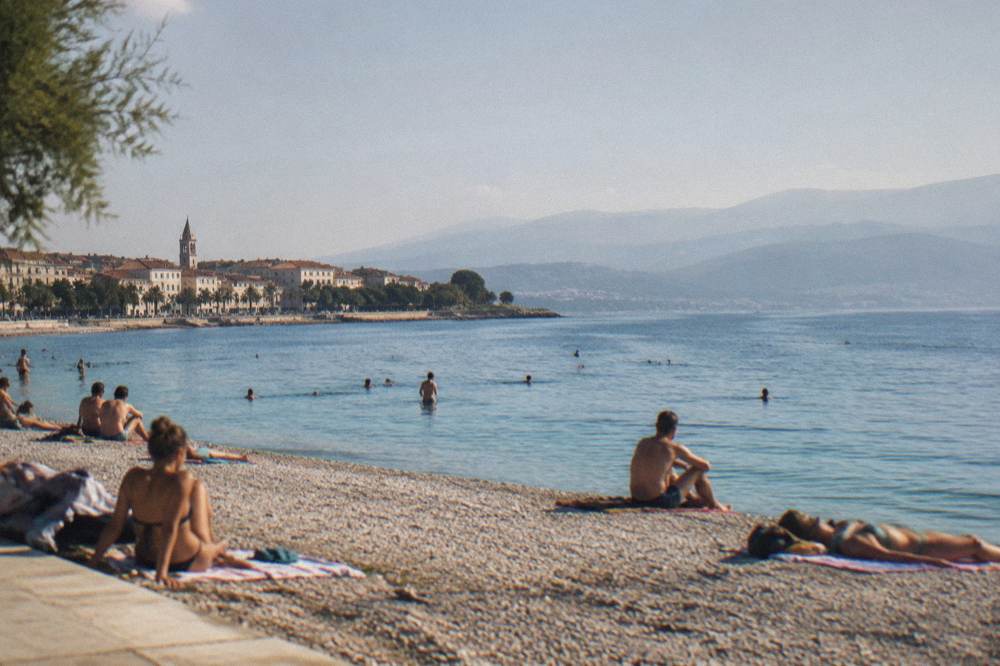
The dress rule surprises people who come straight from the beach. Bačvice is a short walk from the palace, but the walk back through the historic centre in a swimsuit is exactly what the rule targets. Put on a shirt and a wrap. For what the beaches themselves are like, the Split beaches guide covers Bačvice, Kašjuni, Žnjan and the rest.
Is Split Safe At Night?
Split's Old Town at night is busy, lit and policed through the main season, and the safety issues after dark are the same ones as by day plus alcohol: the public drinking fine of 300 EUR, unlit steps at the edges of the palace and on Marjan's paths, and the sea wall on the Riva, which has no barrier along its full length. Ordinary city caution covers almost all of it.
The palace alleys stay active late in summer because the bars stay open late, and a crowd is generally safer than emptiness. The two genuinely dark spots are the outer slopes and staircases of Marjan, the park peninsula west of the centre, and the far ends of the Riva away from the café terraces. Marjan's 819 steps from Trumbićeva obala to the Telegrin summit at 178 m are a daytime walk; the Marjan Hill guide covers the paths. Do it before dark, or stick to the paved waterfront.
The alcohol rules matter most at night. Public drinking in the historic centre is a 300 EUR fine, and the seasonal night retail ban means the off-licence option disappears after the evening cut-off. Terrace prices are higher, but the fine is higher still. The can you drink on the street in Split answer covers the detail.
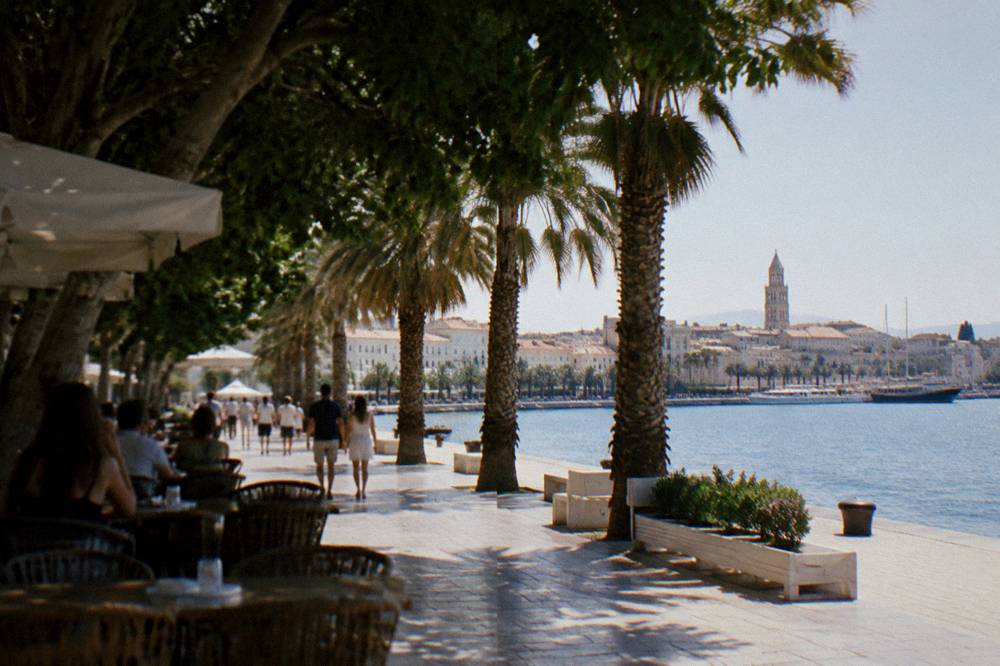
One more night note: the Riva renovation. The central section of the waterfront is planned for works from November 2026 lasting a little over a year, so partial closures on the Riva are expected through 2027. At night, follow the signed diversion rather than the muscle memory of the usual route.
Is The Sea And Sun Safe In Split?
The sea around Split is calm and swimmable at the city beaches, with the usual caveats: sea urchins on rocky stretches, no lifeguard guarantee outside the peak season, July and August heat with 18 and 17 days respectively at 30 C or more on the DHMZ Split Marjan record (1948 to 2024), and a July rainfall average of just 26.6 mm, which tells you how relentless the sun is.
Bačvice, the city's main sandy bay and the home of picigin since 1908, is shallow and sheltered. Kašjuni below Marjan and Žnjan to the east are other established city beaches. None of them can be claimed as a Blue Flag beach here, because no such claim for 2026 could be found on the official listings; check the current flags and lifeguard presence on arrival rather than assuming. Sea footwear is cheap insurance on the rockier stretches, mainly for urchins.
The sun is the bigger hazard. The station record gives July 353.3 sunshine hours and December just 120.8, and the summer means of 26.2 C in July and 25.9 C in August are averages, not peaks. Old stone reflects heat, the palace alleys hold it, and the fixed lunch-and-shade rhythm of the coast exists for a reason. The Split weather guide and the best time to visit Split guide break the months down.
| Month | Mean temp (C) | Rainfall (mm) | Days at 30 C or more |
|---|---|---|---|
| June | 23.4 | 49.0 | 7 |
| July | 26.2 | 26.6 | 18 |
| August | 25.9 | 41.3 | 17 |
| September | 21.6 | 70.9 | not published monthly |
Figures are DHMZ Split Marjan station monthly means, 1948 to 2024. For boat trips, the operator's crew makes the call on sea conditions; a speedboat run to the Blue Lagoon or the islands is cancelled or rerouted when the maestral or a bura wind makes it unpleasant, and the operator's live listing states the terms. Swim only where the crew says, and remember that no monthly sea temperature normal is published, so plan on the live reading rather than a chart.
Is Split Safe For Solo Travellers And Families?
Split works well for solo travellers and families on the same conditions as any mid sized European city: the centre is compact and walkable, the transport hub sits 500 to 600 m from the palace, the emergency number 112 covers police and medical help in English, and the main family-specific risks are the heat, the sea and traffic around the Riva and ferry dock rather than crime.
Solo travellers should follow the standard port-city routine. The bus station, ferry terminal and railway station share one strip, which is convenient but also the busiest pickpocket zone at arrival times. Licensed accommodation, booked through channels that confirm the tourist tax collection, removes the street soliciting problem entirely, since soliciting is one of the behaviours the city bans in the historic core.
Families get a genuinely easy city. The pedestrian Old Town, the shallow bay at Bačvice and the green market routine make Split manageable with children, and the Split with kids guide builds the itinerary. The where to stay in Split guide helps pick a base within walking distance, which cuts road crossings to a minimum.
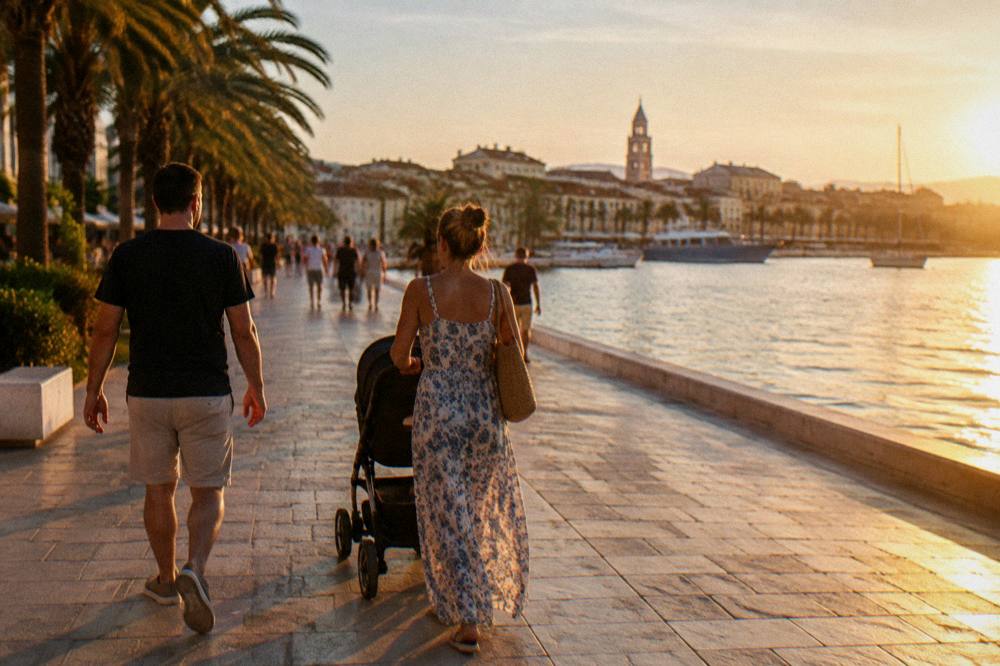
Two family-specific cautions. First, the ferry dock is a working port with vehicle movements; hold hands on the quay. Second, the summer heat is harder on children than on adults, and the beach at midday is not the place to be. Morning and late afternoon swimming, with the shaded hours in between, is how the city actually lives in July.
Are Day Trips From Split Safe?
Day trips from Split are safe when booked with an operator whose listing states the route, the meeting point and the cancellation terms, and the risks are logistics rather than crime: long driving days to Plitvice at about 3 h 15 each way free-flow, water and heat exposure on boat trips, and the park rules at Krka, which permit swimming only in clearly marked areas from 1 June to 30 September.
The driving times from the palace are fixed facts: Klis 22 minutes, Salona 14, Trogir 36, Omiš 38, Krka's Skradinski buk 74, Zadar about 2 hours, Mostar 2 h 13, Dubrovnik 3 h 21 and Plitvice 3 h 15. Anything to Plitvice or Mostar is a long day, and the guided options exist partly because self-driving those routes after a full park visit is tiring. The Split day trips guide compares them all.
| Destination | Driving time from the palace (free-flow) | Main safety consideration |
|---|---|---|
| Salona | 14 min | Open archaeological site, sun exposure |
| Klis Fortress | 22 min | Uneven stone paths and drop-offs |
| Trogir | 36 min | Traffic on the approach bridge |
| Omiš | 38 min | River and sea activities, follow the guide |
| Krka (Skradinski buk) | 74 min | Swimming only in marked areas, 1 Jun to 30 Sep |
| Zadar | 2 h | Long day, motorway driving |
| Mostar | 2 h 13 | Border crossing, carry your passport |
| Dubrovnik | 3 h 21 | Border crossing near Neum, long day |
| Plitvice Lakes | 3 h 15 | Longest day; timed entry, name on ticket |
Two park rules matter. At Krka, the park's own rules page states swimming is not allowed outside clearly marked swimming areas, with the designated spots reported at Roški slap, Stinice and Pisak in the summer window. At Plitvice, entry is timed online and the visitor's name must be on the ticket. Both are planning facts as much as safety facts: a guided tour with tickets included removes the timed-entry and parking decisions from the longest trip on the list, and Check availability shows the current terms on the operator's live listing.
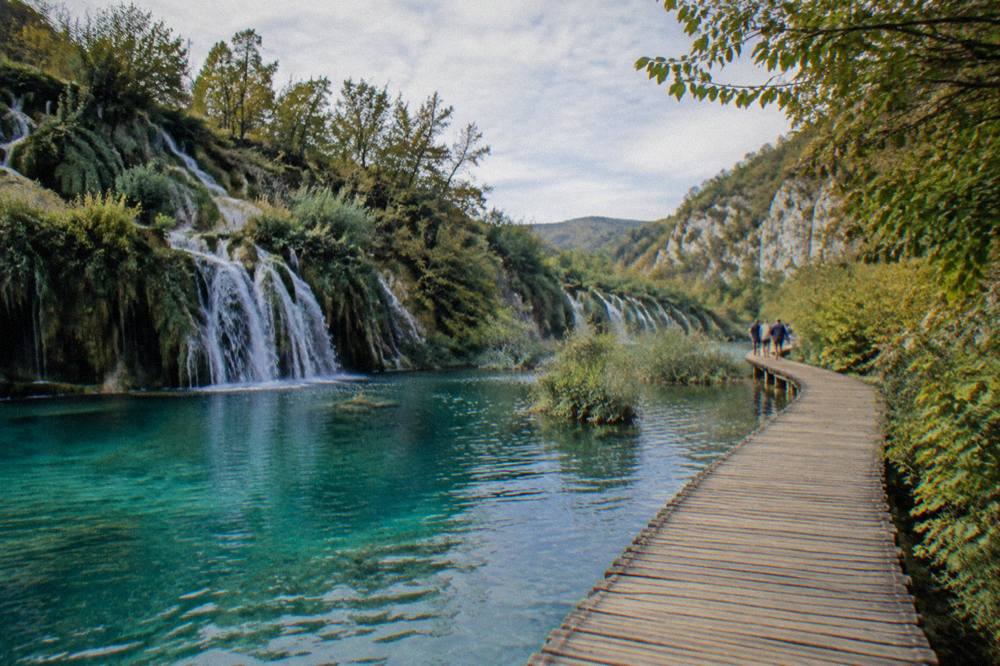
For the water-based days, the Krka trips pair the park with a boat ride, and the listing states what is included. Check availability before locking the date, because boat segments depend on water levels and season.
What About Taxis, Transport And Money Safety In Split?
No taxi fare, Uber or Bolt price for Split can be printed here because none is verified on an official page, so agree the fare or confirm the meter before getting in, and note that taxi touting itself carries a 300 EUR fine for the touter. The Platanus airport shuttle is published at 10 EUR one way and 15 EUR return to the main bus station, and Promet Split city lines 37 and 38 stop at the airport, with the fare confirmed on board.
The airport facts that are often repeated wrongly are worth fixing. Split Airport's own pages put it in Kaštel Štafilić, 20 km from Split and 6 km from Trogir, not the "10 minutes from the city" of some listings, and driving from the palace is 24.9 km, about 31 minutes free-flow. The Split airport guide and the airport to city centre guide cover the transfer options in full.
| Transport | Verified fact | Source note |
|---|---|---|
| Airport shuttle (Platanus) | 10 EUR one way, 15 EUR return | Operator's own page |
| City bus to airport | Promet lines 37 and 38 stop there | Fare a few euros, confirm on board |
| Ferries | Stari Grad foot passenger 5.90 EUR off season, 8.40 EUR in season | Jadrolinija price list |
| Catamarans | 6.40 to 10.00 EUR to Hvar or Jelsa, 7.20 to 10.00 EUR to Vis | Jadrolinija, seasonal |
| Emergency number | 112, nationwide | Country fact |
Money safety in Split is simple because Croatia has used the euro since 1 January 2023. Cards are accepted almost everywhere in the city; cash matters for the green market, some beach kiosks and the Blue Cave entrance, which is paid in cash on site at Biševo. The Split money and cards guide has the detail. Drones are worth one line: flying over the old town, the airport zones or the national parks is restricted, and the parks ban them outright.
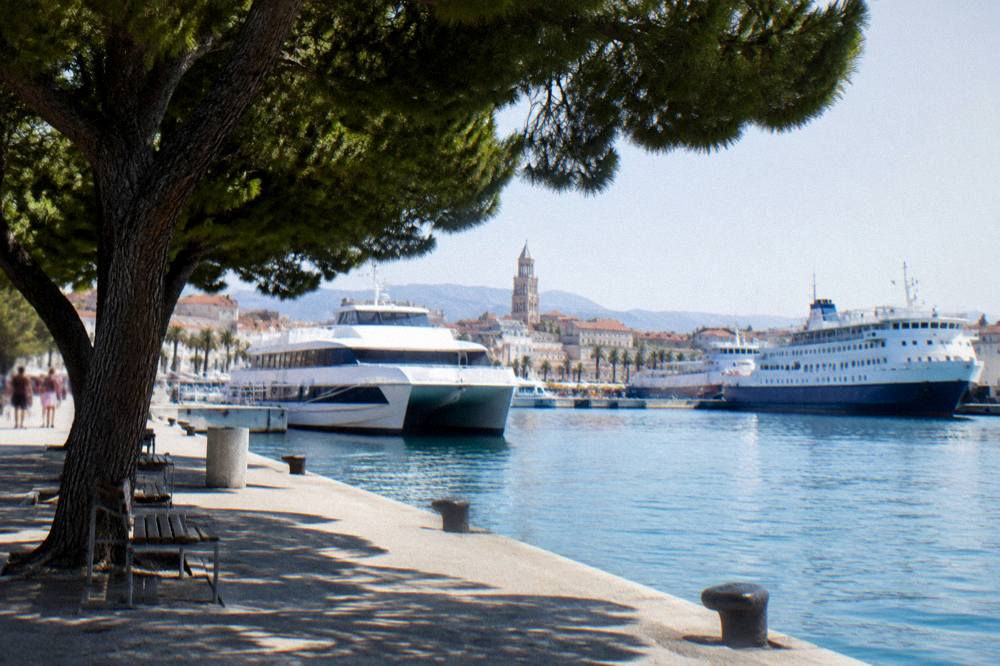
For ferry days, the ferries from Split guide and the Split to Hvar ferry guide cover routes, times and the difference between the Stari Grad car ferry and the Hvar town catamaran, a mix-up that causes more traveller grief than any crime in Split.
What Should You Do In An Emergency In Split?
Call 112 for police, fire or medical emergencies anywhere in Croatia, including Split; the line operates in English and dispatches all three services. For non urgent matters, go to the nearest pharmacy or emergency clinic, ask your accommodation host to call ahead in Croatian, and keep your travel insurance details and the European emergency number saved offline before you need them.
Beyond the number itself, the practical advice is preparation. Screenshot your accommodation address in Croatian, carry the insurance policy number physically as well as digitally, and know that a pharmacy (ljekarna) is the first stop for minor illness on a Sunday. The city hospital serves the region and the port's proximity means medical access is central.
The last word on safety in Split belongs to proportion. This is a city whose official tourism effort goes into fining people for climbing fountains and drinking in the street, which tells you the risk register is short. Mind the pockets in the crowds, respect the heat, wear a shirt in the Old Town, book boat trips with operators whose terms you have read, and the rest of the trip looks after itself. The Split Croatia Travel Guide homepage pulls the whole destination together, from the palace to the islands.
Common Questions About Safety In Split
Is Split Safe At Night?
The Old Town stays busy and lit through the season. The night risks are the 300 EUR public drinking fine in the historic centre, unlit steps on Marjan's slopes, and the open sea wall on the Riva. Ordinary city caution, and a licensed terrace instead of the street, covers it.
Can You Drink Alcohol In Public In Split?
No. Drinking alcohol in the historic centre or within 100 m of schools carries a 300 EUR fine on the city's Enjoy Respect rules. From 1 June to 15 September, shops are also banned from selling alcohol at night, while bars and restaurant terraces serve as normal.
Is Split Safe For Solo Female Travellers?
Split is treated as a safe, walkable city with a compact, busy centre and the nationwide 112 emergency line. The standard precautions apply: keep valuables secure in crowds, plan the walk home from Marjan or the far beaches before dark, and use licensed accommodation and transport.
What Is The Emergency Number In Split?
112, the single European emergency number, reaches police, fire and medical services across Croatia and operates in English. For minor illness, a pharmacy is the first stop, and any accommodation host can help call ahead.
Are There Pickpockets In Split?
Crowded spots concentrate the risk, as in any port city. The palace alleys, the Peristyle, the Riva and the bus and ferry hub on Obala kneza Domagoja are the places to keep bags closed and phones in front pockets, especially around ferry arrival times and peak season days.
Is It Safe To Swim In Split?
The city beaches such as Bačvice are shallow and sheltered, and swimming at Krka is allowed only in clearly marked areas from 1 June to 30 September. Wear sea footwear on rocky stretches, check for lifeguard presence on arrival, and let the boat crew decide swim stops on island trips.
