Ultra Europe
Ultra Europe, Split's flagship electronic music festival, returns 9 to 11 July 2027 at Park Mladeži, and this guide covers the dates, the venue, the July weather the DHMZ Split Marjan station records, and how to build a week around the festival.
Short answer
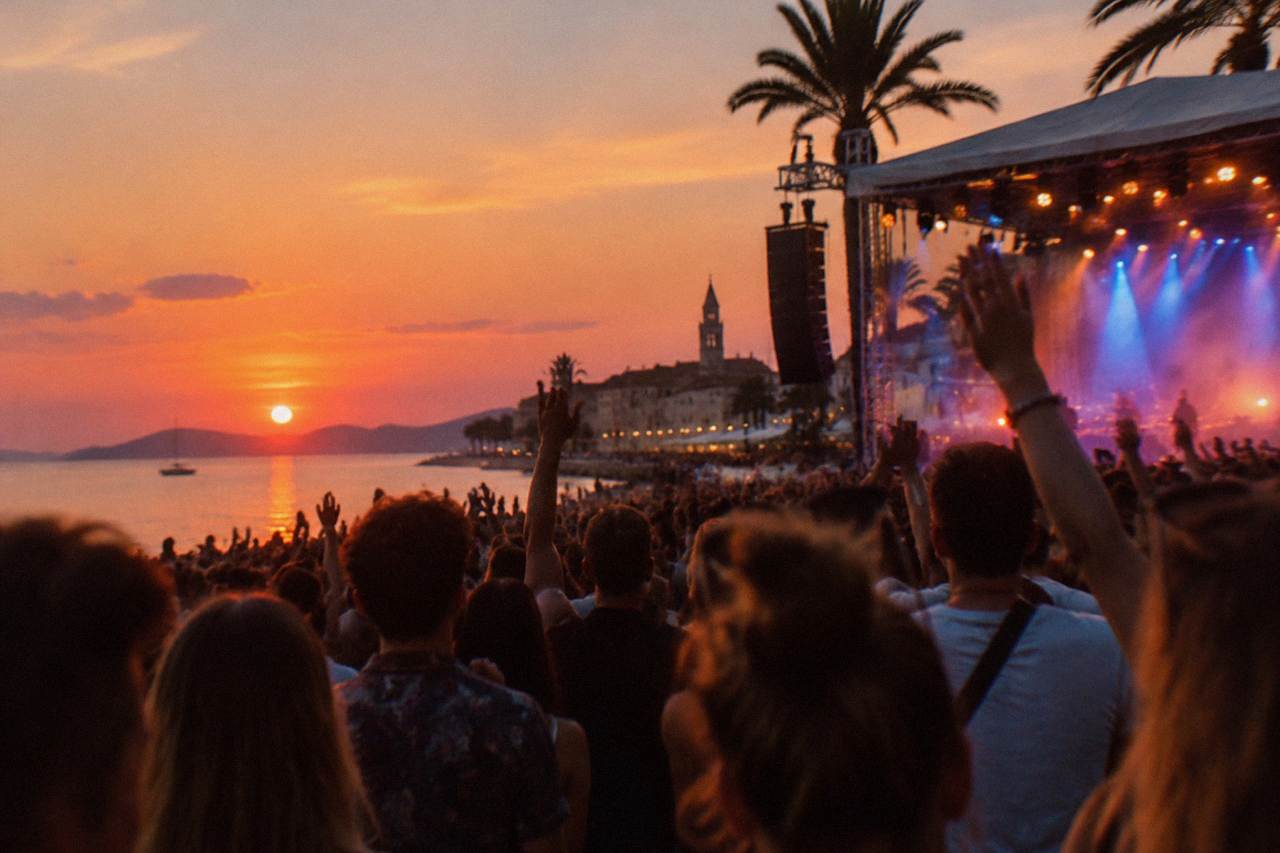
Ultra Europe 2027 takes place 9 to 11 July 2027 at Park Mladeži in Split, Dalmatia, Croatia. Split is a coastal city on the Adriatic whose Old Town sits inside Diocletian's Palace, with the islands of Brač, Hvar and Šolta offshore, and the festival draws an international crowd each July.
Ultra Europe is Split's flagship electronic music festival, and the 2027 edition runs 9 to 11 July 2027 at Park Mladeži in Split, a coastal city on the Adriatic Sea in Dalmatia, Croatia. The festival has anchored the city's summer since its early editions, and it lands in the middle of the warmest, brightest stretch of the Split year: the DHMZ Split Marjan station table, covering 1948 to 2024, gives July a mean of 26.2 C with 353.3 hours of sunshine and just 26.6 mm of rain, the driest month of the whole record. Festival week therefore doubles as peak Adriatic beach season, with the Old Town inside Diocletian's Palace, the Marjan park forest and the islands of Brač, Hvar and Šolta all within reach of the festival site.
This page from the Split Croatia Travel Guide editorial desk pulls together what the primary sources say: the festival dates, what the venue is, what July in Split actually feels like on the long station record, where to stay, and how to fill the days between the music with boat trips, fortress sunsets and river adventures outside the city.
When Is Ultra Europe 2027 In Split?
Ultra Europe 2027 runs three days, 9 to 11 July 2027, at Park Mladeži in Split. The festival's own site lists those dates, and no other 2027 Split festival dates on this page are announced yet: the Split Summer Festival's 2027 edition has no confirmed dates, and its 72nd edition ran 14 July to 14 August 2026. Plan around the second full weekend of July.
The July slot is fixed enough to build a holiday around. The 2026 edition ran 10 to 12 July, and the 2027 dates keep the same mid-July pattern, one week before the window where the Split Summer Festival has historically staged opera, ballet and drama premieres across venues including the Peristyle. Anyone combining Ultra with a theatre visit should note that the Croatian National Theatre Split season runs 25 September 2026 to 14 June 2027, so the festival falls in the theatre's summer break rather than inside its season.
Split's calendar around the festival looks like this, with every date below taken from the official sources:
| Event | Dates | Source detail |
|---|---|---|
| Ultra Europe | 9 to 11 July 2027, Park Mladeži | Listed on the festival's own site |
| Split Summer Festival | 2027 not announced; 72nd edition was 14 July to 14 August 2026 | City tourism calendar |
| Sudamja, St Domnius City Day | 7 May every year | Fixed feast day |
| HNK Split theatre season | 25 September 2026 to 14 June 2027 | City tourism calendar |
| Advent in Split | 27 November 2026 to 7 January 2027, ice rink at Đardin | City tender document |
| Roman guard change on the Peristyle | Ran 28 May to 27 September 2026 | City tourism calendar |
A July arrival also means arriving in the busiest stretch of the Split year on the transport network: Split Airport counted 3,881,186 passengers in 2025, and the Port of Split, which its own page calls Croatia's busiest passenger port with 6.05 million passengers in 2025, moves ferry and catamaran traffic to the islands all summer. The Split airport transfer guide covers the route in detail.
Where Is Park Mladeži And How Does The Venue Sit Within Split?
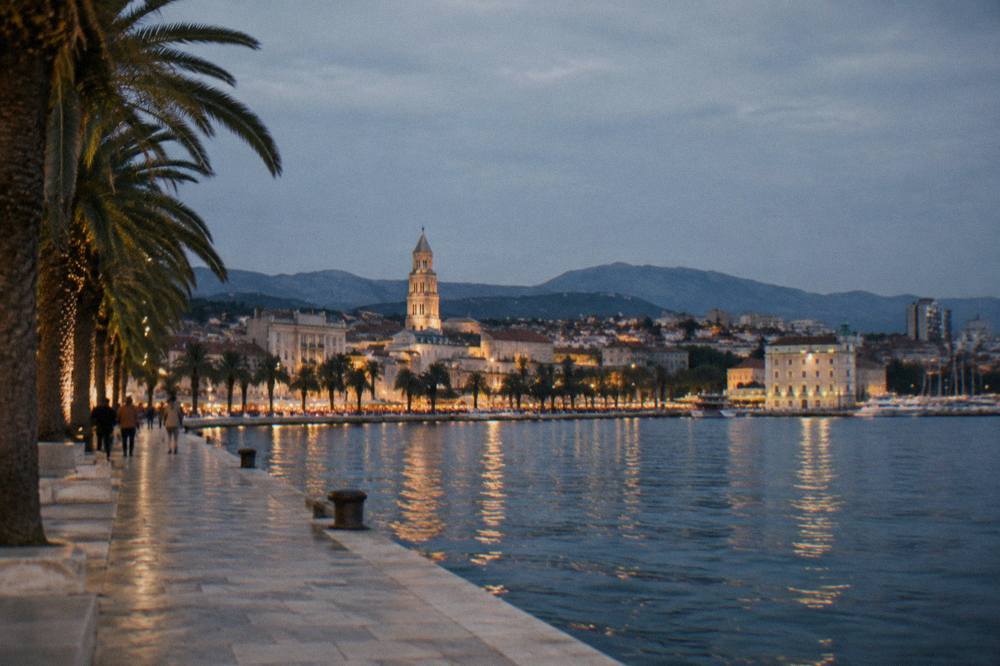
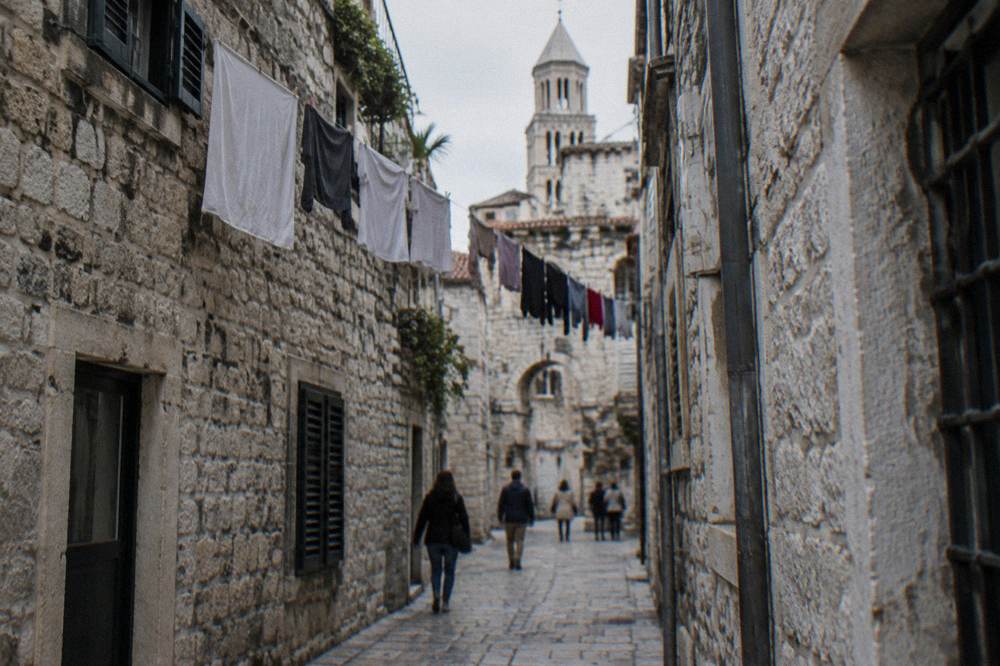
Park Mladeži is Split's youth park and stadium area, and it serves as the main Ultra Europe festival site. Split itself is compact at festival scale: the ferry port, the main bus station and the railway station sit together on Obala kneza Domagoja, just 500 to 600 m from Diocletian's Palace, so accommodation anywhere in the central peninsula keeps the festival, the beaches and the Old Town close together.
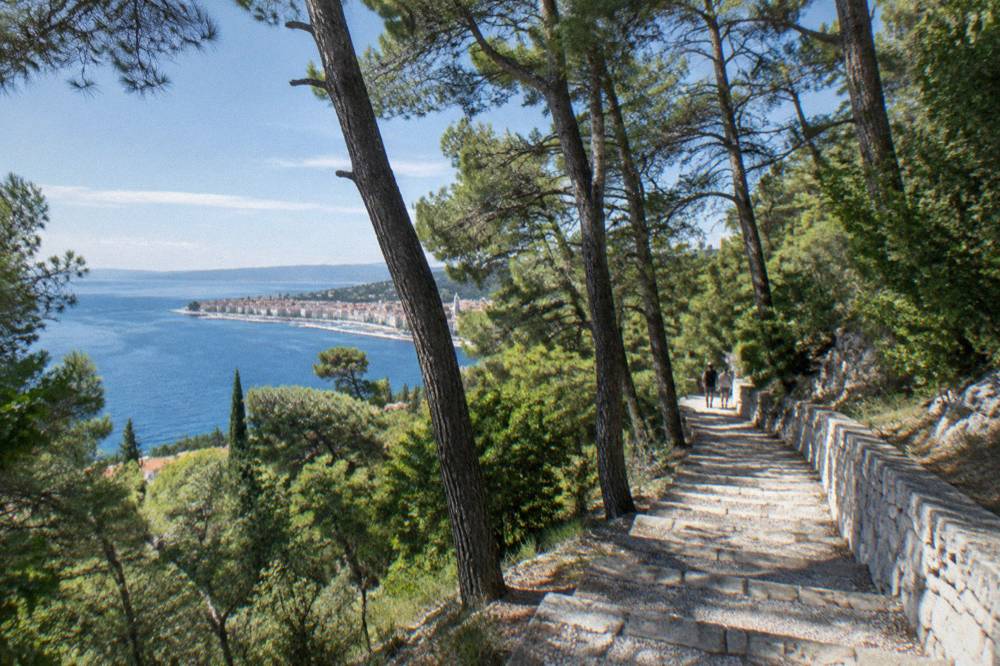
The city's shape works in a festival visitor's favour. Diocletian's Palace, built c. 295 to 305 AD for Emperor Diocletian and inscribed by UNESCO in 1979 as the Historical Complex of Split, forms the Old Town core. West of it rises the Marjan park forest, 3.5 km long and 1.5 km wide, with its highest point Telegrin at 178 m and 819 steps from Trumbićeva obala to the top. South and east lie the city beaches, including Bačvice, the home of picigin, the ball game born there in 1908 and protected as intangible heritage of Croatia.
Festival logistics answer themselves on foot for anyone staying centrally. The bus and ferry hub on Obala kneza Domagoja is the departure point for island catamarans and long-distance coaches alike, and the palace's Peristyle, the Riva waterfront, the Golden Gate and the Grgur Ninski statue are all free to walk through at any hour. Between sets, the one practical overview of Split lists the free core, and the Riva's own renovation is worth knowing about: works on its central section are planned from November 2026 for a little over a year, so partial closures on the Riva are expected through 2027, including festival week.
A quieter shift is also underway on the accommodation side. The 285-unit, five-star Hotel Marjan is planned to open for the start of the 2027 season, which would add capacity on the western side of the city just as the festival returns. Anyone booking for July 2027 should also expect the usual Split conditions: a tourist tax of about 2.65 EUR per person per night in high season, collected by the accommodation, with under 12s free and 12 to 18s paying half, and the final amount confirmed at booking.
How Do You Plan Tickets And Entry For Ultra Europe?
Ultra Europe tickets sell in phased releases through the festival's own channels, and this site prints no ticket price because the price list belongs to the organiser. Confirm the current phase, the payment currency and the entry conditions at the official Ultra Europe site before booking anything non-refundable around it, and check the visa side early: Croatia is a Schengen member since 1 January 2023.
Two border systems matter for 2027 arrivals from outside the Schengen area. The EES, the European Union's digital entry and exit system, has been fully operational at external Schengen borders since 10 April 2026, recording biometrics for non-EU short-stay visitors. ETIAS, the travel authorisation for visa-exempt visitors, is not live and has no fixed start date, so travellers should check the official EU pages close to their departure rather than rely on old forum threads.
Croatia uses the euro since 1 January 2023, which simplifies festival budgeting: one currency covers the ticket, the ferries and the ice cream. The emergency number is 112. One local rule deserves a headline for festival week: drinking alcohol in public in Split's historic centre, outside licensed terraces, carries a 300 EUR fine under the city's public order decision, and urinating in public, vomiting, climbing on monuments or bathing in fountains each carry 300 EUR as well. Shops in the city face a separate night-time retail alcohol sales ban from 21:00 to 06:00 during the summer season, so late-night supplies come from bars, not supermarkets. The what to avoid in Split overview of the city pairs well with this page for the full rule set.
What Is The Weather Like In Split During Ultra Europe Week?
July in Split has a mean temperature of 26.2 C on the DHMZ Split Marjan station record for 1948 to 2024, with 353.3 hours of sunshine, just 26.6 mm of rain, and 18 days reaching 30 C or more. August runs close behind at 25.9 C with 17 days at 30 C or more, and the surrounding months ease gradually rather than dropping off a cliff.
Festivalgoers should plan for heat. June averages 23.4 C with 7 days at 30 C or more, and September falls to 21.6 C with 70.9 mm of rain, so the festival's weekend sits inside the warmest and driest stretch of the entire station record. Sunscreen, water and shade matter at an open-air site in a Mediterranean summer, and the same physics that makes the festival hot makes the sea inviting, though this site prints no monthly sea-temperature normal because no official one exists; the DHMZ publishes a live reading instead.
| Month | Mean temperature C | Precipitation mm | Notes from the station record |
|---|---|---|---|
| May | 19.2 | 57.5 | Before the festival season peaks |
| June | 23.4 | 49.0 | 7 days at 30 C or more |
| July | 26.2 | 26.6 | Warmest month, 18 days at 30 C or more, 353.3 sunshine hours |
| August | 25.9 | 41.3 | 17 days at 30 C or more |
| September | 21.6 | 70.9 | First month of the autumn rainfall rise |
The rainfall pattern matters less in July than in any other month. November is the wettest month at 115.5 mm and July the driest at 26.6 mm, and the station's yearly total comes to 809.7 mm, most of it arriving in autumn and winter. A July visit risks heat, not rain, and the full breakdown lives in the Split weather guide, with the wider timing trade-offs in the best time to visit Split.
Where Should You Stay In Split For Ultra Europe?
Central Split is the practical base for Ultra Europe: the Old Town and the streets immediately around it keep the festival venue, the beaches and the ferry hub within a short radius, and the whole central peninsula is walkable. Book early, because July is peak season and the city's short-term rental supply inside the historic core is capped by a moratorium on new registrations that runs through 2026.
Ready to pick your base for the festival weekend? Book a hotel room in Split here.
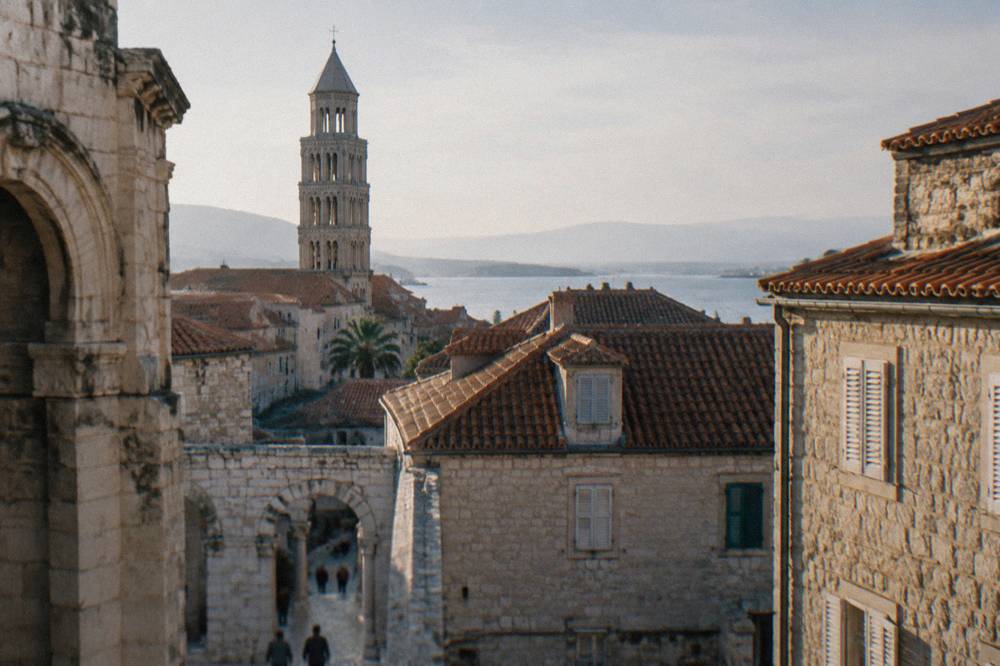
The accommodation map splits into a few clear zones. Inside and around the palace, stone apartments put you steps from the Peristyle but inside the busiest, loudest streets of the summer. Bačvice and Firule, east of the centre, sit by the main city beaches. Meje, below Marjan, is quieter and closer to Kašjuni beach. The full breakdown, including hostels for the festival crowd and the luxury end, sits in the where to stay in Split guide, with the budget angle in Split on a budget.
Two 2026 rule changes shape the rental market a visitor actually meets. The moratorium on new short-term rental registrations in the UNESCO buffer zone around Diocletian's Palace has been extended through 2026, with existing registrations allowed to continue, and national rules rolling out under EU regulation require a unique registration number per unit listed on platforms, with a new Hospitality Act planned for 1 January 2027. The practical version: book through listings that display a registration number, and confirm the tourist tax handling with the host at booking.
What Can You Do In Split Between Festival Days?
Split fills the hours between Ultra Europe sets with sea and stone: the city beaches are free, Marjan's 819 steps climb to Telegrin at 178 m, the Peristyle and the Golden Gate cost nothing, and the island ferries leave from the hub 500 to 600 m from the palace. The Split City Museum's cellars of Diocletian's Palace, run under Split City Museum management, are open 8:30 to 20:00 daily, with the museum itself closed Mondays.
A festival week can carry a full sightseeing load. The cathedral complex, whose bell tower rises 57 m from a tower, sells its tickets from about 5 EUR for a single site with combined tickets up to about 15 EUR, at the Peristyle kiosk, with shoulders and knees covered. The Meštrović Gallery, reopened in April 2026 after a 15-month energy renovation, charges 12.00 EUR for an adult ticket that also covers Crikvine-Kaštilac. The Archaeological Museum, founded in 1820, costs 8 EUR, or 10 EUR combined with the Salona ruins within 7 days.
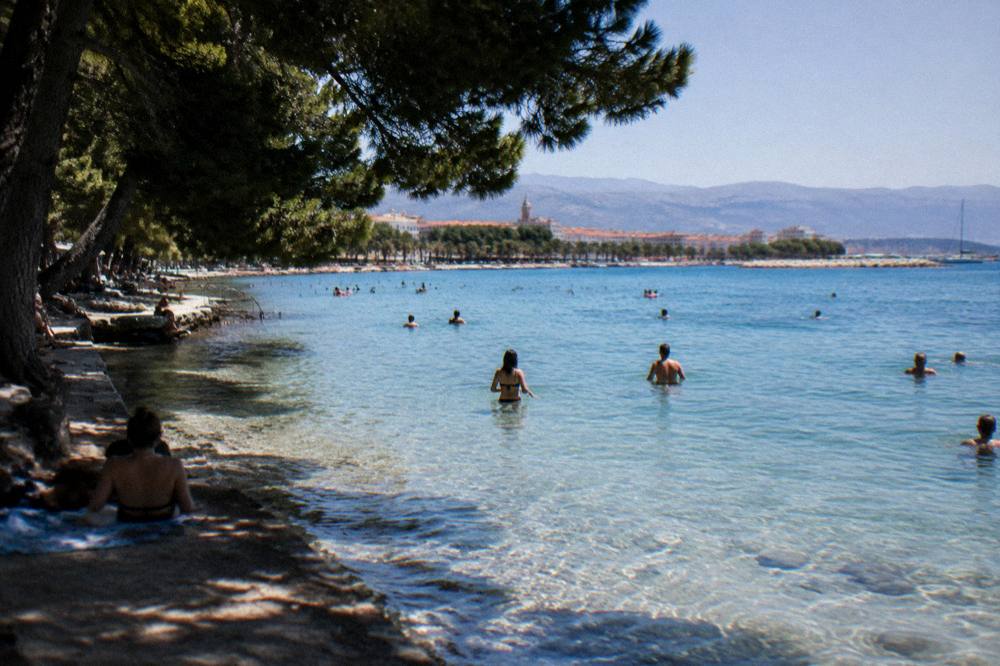
The water side of the city is equally close. Bačvice is the sandy city beach where picigin players keep the 1908 game alive in the shallows, and the beach guides cover the full sweep of the coast in Split's beaches. For a different rhythm entirely, a half-day rafting trip on the Cetina river near Omiš, 38 minutes' drive from the palace, trades festival noise for canyon water, and it pairs naturally with a festival week.
The river trip covers rafting with cliff jumping on the Cetina, and the operator's live listing carries the current price and departure detail. Between the festival days it is the simplest way to get out of the city heat without surrendering a whole day, since Omiš sits close enough to be back in Split by evening.
Which Day Trips From Split Work Around A Festival Weekend?
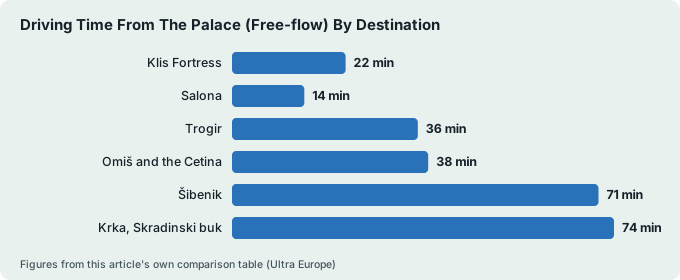
Krka National Park, Klis Fortress, Trogir and the islands all work as day trips from Split, and the driving times from Diocletian's Palace on free-flow routes are 22 minutes to Klis, 36 to Trogir, 74 to Krka's Skradinski buk and 3 hours 15 to Plitvice Lakes. In July, Krka's adult entry is 40 EUR and Plitvice's is 40 EUR, with a 25 EUR afternoon slot at Plitvice in peak season, and swimming at Krka is allowed only in clearly marked areas.
The short-haul trips suit a festival schedule best, because they leave room for an evening at the site. Klis Fortress, 10 EUR for adults and a Game of Thrones Meereen location, gives a sunset panorama over Split and the Adriatic. Trogir, a UNESCO town since 1997, and Salona, on the 10 EUR combined Archaeological Museum ticket, both fit a half day. The full menu of options is laid out in Split day trips.
| Destination | Driving time from the palace (free-flow) | Entry figure for July |
|---|---|---|
| Klis Fortress | 22 minutes | 10 EUR adult |
| Salona | 14 minutes | 10 EUR combined with the Archaeological Museum, within 7 days |
| Trogir | 36 minutes | Old town open to walk |
| Omiš and the Cetina | 38 minutes | Mirabela fortress 6 EUR from 1 June to 30 September |
| Šibenik | 71 minutes | St James Cathedral, UNESCO 2000 |
| Krka, Skradinski buk | 74 minutes | 40 EUR adult, June to September |
| Mostar | 2 hours 13 | Old Bridge Area, UNESCO 2005 |
| Plitvice Lakes | 3 hours 15 | 40 EUR adult, 25 EUR afternoon slot in peak |
One Krka rule deserves repeating because it is the single most common mistake on park trips: swimming is not allowed outside clearly marked swimming areas, and the park's own rules page states this plainly. Designated swimming spots are at Roški slap, Stinice and Pisak, open 1 June to 30 September. A tour with a wine tasting or a Trogir walk built in turns the long coach day into something richer, as the picks below show.
Mostar, with its Old Bridge rebuilt in 2004 and inscribed by UNESCO in 2005, sits outside Croatia, so passports travel too, and the EES biometric border system has applied at that external Schengen border since 10 April 2026. The operator's live listing gives the current itinerary and price for the combined Mostar and Kravice waterfalls day.
How Do The Islands Fit Into An Ultra Europe Week?
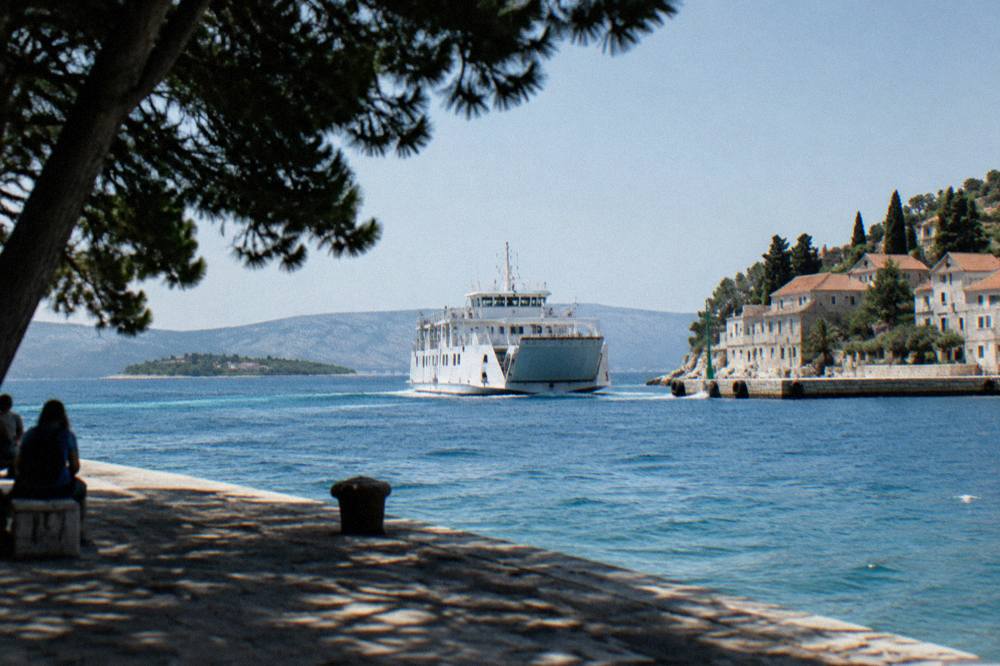
The islands of Brač, Šolta, Hvar and Vis sit directly off Split, with the car ferry to Stari Grad on Hvar taking about 120 minutes, the Supetar ferry on Brač about 50, the Rogač ferry on Šolta about 60 and the Vis ferry about 140. Foot passengers pay 5.90 EUR off-season and 8.40 EUR in season on the Stari Grad line, and Hvar town itself is reached by catamaran, not by the Stari Grad car ferry.
That last distinction is the classic booking error. Jadrolinija's route page shows line 635 running to Stari Grad, the car-ferry port at the top of Hvar island, while catamarans call at Hvar town itself, at 6.40 EUR low season and 10.00 EUR high season for the foot-passenger catamaran fare, with the Vis catamaran at 7.20 to 10.00 EUR. From 2026 the Supetar line dropped its off-season timetable altogether and runs on high-season and low-season schedules only, the fifth Croatian line to do so, a sign of how heavy island traffic has become.
| Route | Type | Sailing time | Foot passenger fare |
|---|---|---|---|
| Split to Stari Grad, Hvar (line 635) | Car ferry | About 120 minutes | 5.90 EUR off-season, 8.40 EUR in season |
| Split to Supetar, Brač (line 631) | Car ferry | About 50 minutes | Confirm on the operator's price list |
| Split to Rogač, Šolta (line 636) | Car ferry | About 60 minutes | Confirm on the operator's price list |
| Split to Vis | Ferry | About 140 minutes | Catamaran 7.20 to 10.00 EUR |
| Split to Hvar town or Jelsa | Catamaran | See schedule | 6.40 EUR low, 10.00 EUR high |
During festival week the catamarans and ferries run at full summer frequency, and the ferries from Split guide tracks the detail, with the Hvar route specifically covered in Split to Hvar by ferry. Boat tours offer a middle path for anyone who wants the islands without timetables: a small-group speedboat or a lunch cruise leaves from the waterfront and returns by evening, as the Split boat tours guide lays out.
What Should You Eat And Where Should You Go Out During Ultra Europe?
Split's eating runs from the green market's morning stalls to konoba kitchens inside the palace walls, and the nightlife the festival crowd meets is concentrated in the Old Town bars, the Bačvice beach clubs and the festival site itself. The city's public order rules now include a 300 EUR fine for drinking alcohol in the historic centre outside licensed terraces, so the street party stays inside the venues, and the shops stop selling alcohol at night through the summer season.
The practical eating advice is simple: shop where prices are posted, check that the bill is itemised, and look for the cover charge printed on the menu if one applies, checks any visitor can make without trusting a stereotype. The green market by the palace sells through the morning, and the restaurant and food guides carry the detail, in Split restaurants and Split food, with the late shift in Split nightlife.
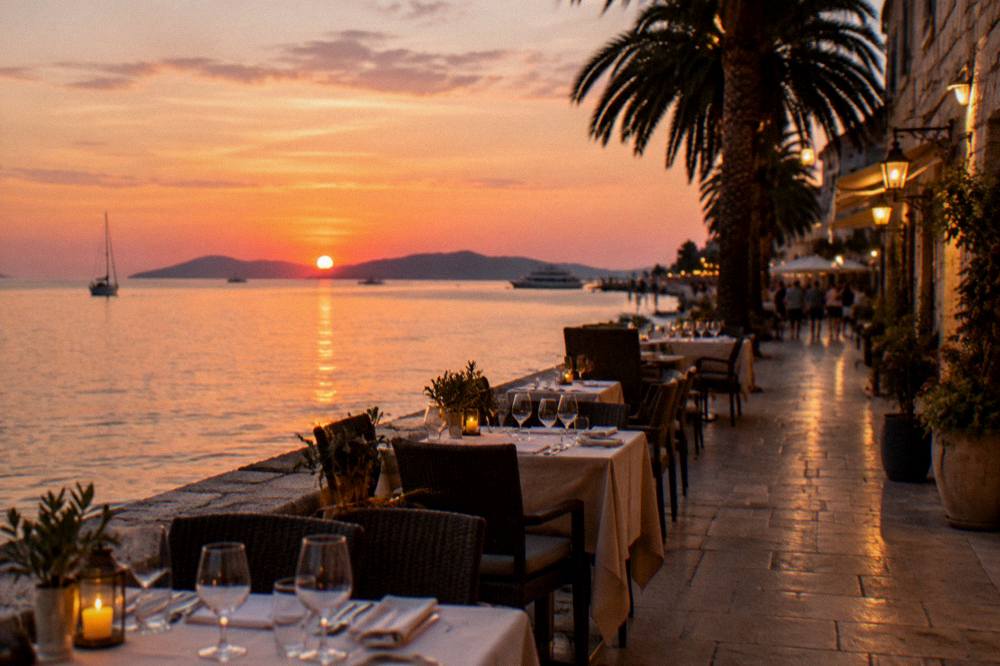
Festival week pushes demand everywhere, so reservations matter more than in May or September. A quieter counterweight to the festival nights is a sunset up at Klis Fortress or an evening walk on Marjan, both of which cost nothing beyond the effort, and both of which show the city from outside its own noise.
The sunset Klis tour runs with transport from Split and returns to the city in the evening, and the operator's live listing carries the current price and availability. Between two festival nights it is the gentlest possible way to see the coastline the music echoes across.
Common Questions About Ultra Europe In Split
When Is Ultra Europe 2027 In Split?
Ultra Europe 2027 runs 9 to 11 July 2027 at Park Mladeži in Split. The festival's own site lists the dates, and the edition follows the same mid-July pattern as 2026, which ran 10 to 12 July.
Where Does Ultra Europe Take Place?
The festival's main site is Park Mladeži in Split. The venue sits within a compact city whose ferry, bus and rail hub on Obala kneza Domagoja lies 500 to 600 m from Diocletian's Palace, keeping accommodation, beaches and the festival close together.
Is Split Hot In July?
Yes. The DHMZ Split Marjan station record for 1948 to 2024 gives July a mean of 26.2 C, 353.3 sunshine hours, only 26.6 mm of rain and 18 days reaching 30 C or more, so plan for heat, sunscreen and water rather than rain.
Can You Drink Alcohol In The Street In Split During The Festival?
No. Drinking in public in Split's historic centre, outside licensed terraces, carries a 300 EUR fine under the city's public order decision, and shops face a night-time retail alcohol sales ban from 21:00 to 06:00 through the summer season. Drink on terraces and in venues.
Which Day Trips Fit Around Ultra Europe?
The short ones. Klis Fortress is 22 minutes' drive from the palace, Trogir 36 minutes, Omiš and the Cetina river 38, and Krka's Skradinski buk 74. In July Krka charges 40 EUR adult entry and allows swimming only in clearly marked areas.
Where Should You Stay For Ultra Europe?
Central Split, inside or just outside the Old Town, keeps the festival site, the beaches and the ferry hub walkable. Book early for July, confirm the registration number on any rental listing, and expect a tourist tax of about 2.65 EUR per person per night in high season, collected by the accommodation.
Ultra Europe turns one July weekend into the loudest three days on Split's calendar, but the city around it stays exactly as walkable, as warm and as full of water as the rest of the summer: a morning on Marjan, an afternoon ferry to Šolta and an evening set at Park Mladeži all fit inside a single day, and that combination is what keeps festival visitors coming back to the Dalmatian coast.
