Split To Dubrovnik
Dubrovnik sits 234.8 km down the Adriatic coast from Split, about 3 hours 21 minutes of free-flow driving from Diocletian's Palace, and this guide sets out every option: self-drive, coach, organised day trip and the comparisons that decide which city deserves your nights.
Short answer
The drive from Split to Dubrovnik is 234.8 km and about 3 hours 21 minutes without stops, the coach takes about 4 hours, and an organised day trip handles the driving for you. Dubrovnik's city walls cost about 40 EUR in 2026 and the old town is compact enough to see in one long day.
Dubrovnik is the far end of the Dalmatian coast from Split: 234.8 km south, about 3 hours 21 minutes of free-flow driving from Diocletian's Palace, past Makarska, the Neretva delta and a short stretch of Bosnia and Herzegovina coastline before the walled city appears. Split is the practical base for the trip, with the ferry port, the main bus station and the railway station together on Obala kneza Domagoja, 500 to 600 m from the palace, and every Dubrovnik coach leaving from that same block. This guide from the Split Croatia Travel Guide editorial desk lays out the routes, the times, the costs and the decisions, using only what the official pages and price lists state.
How Far Is Dubrovnik From Split And How Long Does The Drive Take?
Dubrovnik is 234.8 km from Diocletian's Palace in Split by road, about 3 hours 21 minutes of driving in free-flow conditions, computed on the standard routing network rather than in live traffic. The route runs south along the coast past Makarska, which is itself 86.1 km and 75 minutes from Split, then crosses a short stretch of Bosnia and Herzegovina before re-entering Croatia and reaching Dubrovnik. Allow extra time for summer traffic and border checks.
The distance figures come from routing-network calculations for the exact palace-to-destination journeys, so they hold for a self-drive or a private transfer, not for a coach, which makes scheduled stops. The road quality on the main coastal corridor is good, but the last hour into Dubrovnik runs on two-lane sections where a slow vehicle or a summer Saturday can add real time.
Planning around the drive matters because Dubrovnik rewards an early arrival. The city walls are the main draw and they are walked in the open sun, so a departure from Split that lands you inside the walls at opening time beats one that arrives at midday. That logic is exactly why the organised day-trip market exists here, and it is covered two sections down.
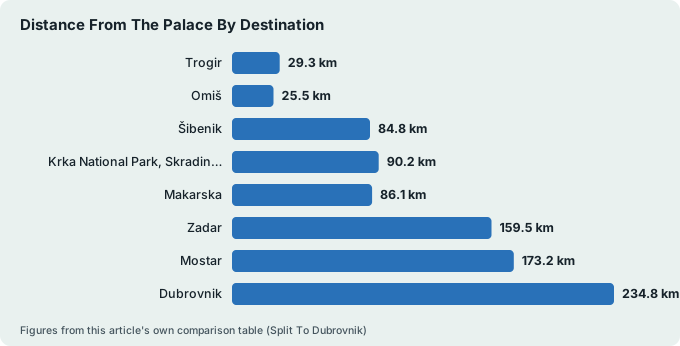
For context, here is how Dubrovnik compares with the other headline day trips from Split, all measured from Diocletian's Palace in free-flow conditions:
| Destination | Distance from the palace | Free-flow driving time |
|---|---|---|
| Trogir | 29.3 km | 36 min |
| Omiš | 25.5 km | 38 min |
| Šibenik | 84.8 km | 71 min |
| Krka National Park, Skradinski buk | 90.2 km | 74 min |
| Makarska | 86.1 km | 75 min |
| Zadar | 159.5 km | 2 h |
| Mostar | 173.2 km | 2 h 13 |
| Dubrovnik | 234.8 km | 3 h 21 |
| Plitvice Lakes | 258.1 km | 3 h 15 |
Dubrovnik and Plitvice sit together at the top of that table: both are the longest standard day trips from Split, and neither works well as an afterthought. If you are weighing the two, the full day-trips overview breaks down every option by direction and travel time.
Should You Drive From Split To Dubrovnik, Or Take The Coach?
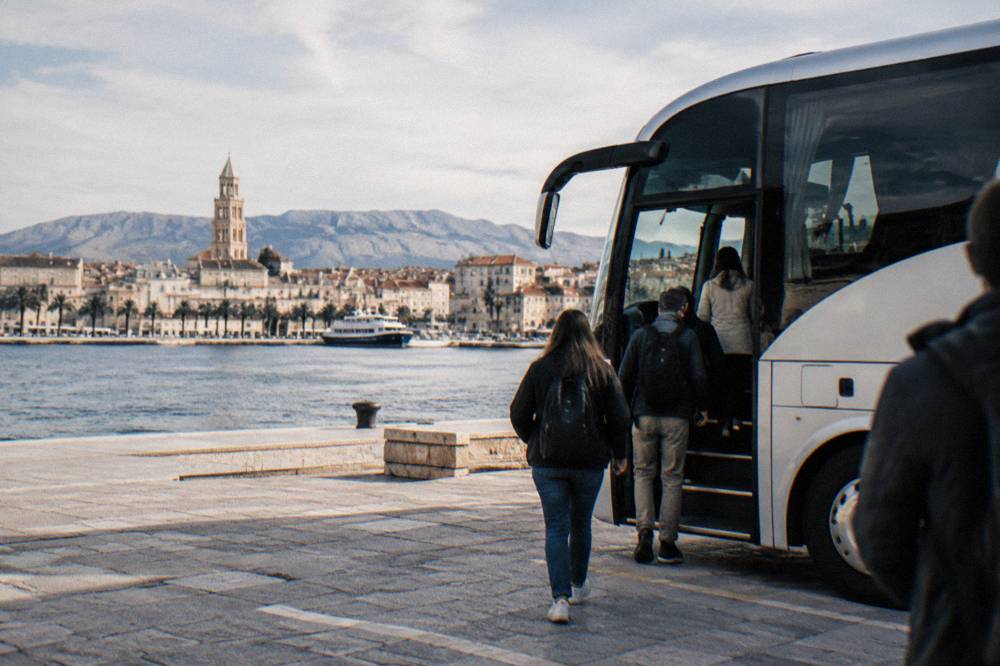
Driving yourself gives the fastest door-to-door time, about 3 hours 21 minutes free-flow, and the freedom to stop in Makarska or along the Neretva delta; the coach takes about 4 hours end to end and drops you near Dubrovnik's old town without any parking question. An organised small-group day trip covers the road, the two border crossings and the timing for you, at the cost of a fixed schedule.
The coach case is simple: about 4 hours Split to Dubrovnik, departures from the main bus station by the ferry port, and no parking to find in a city where the old town is pedestrianised. The drive case is the mirror image: leave early, stop where you like, and control your own arrival time. What the desk would flag is the border: the road to Dubrovnik crosses through Bosnia and Herzegovina briefly, so on the road (car or coach) passports or ID cards travel with you, while the ferry and flights do not cross Bosnia, and Croatia's membership of Schengen since 1 January 2023 and of the euro since the same date changes nothing about that non-EU transit.
Parking tariffs in Dubrovnik and tolls on the route are not carried in this site's facts, so confirm both before committing to a self-drive. For anyone weighing a hire car for the whole stay rather than one trip, the Split car rental guide covers the decision in full.
If you would rather not think about borders, buses or parking at all, an organised day trip is the third option, and it is the one the rest of this guide assumes for readers on a short stay.
If letting someone else handle the driving appeals, book a small group Dubrovnik day trip here.
What Does A Day Trip From Split To Dubrovnik Actually Give You?
A day trip buys you roughly a full day inside and around Dubrovnik's old town: the city walls, the Stradun, the fortresses and the cable-car viewpoint above the city, with the operator handling the drive and the border transit. The walls are the headline sight, at about 40 EUR for an adult in 2026 including Lovrijenac fortress, and everything inside the old town is walkable on foot once the bus arrives.
The walls ticket is the number to plan around. Dubrovnik's city walls cost about 40 EUR for an adult in 2026, covering the main wall circuit and Lovrijenac fortress, on the tariff reported by secondary ticket sources for the March to November high season. That is a real line in a day budget on top of the transport, and it is the single biggest entry fee on any standard day trip from Split, ahead of Plitvice at 40 EUR peak season and Krka at 40 EUR from June to September.
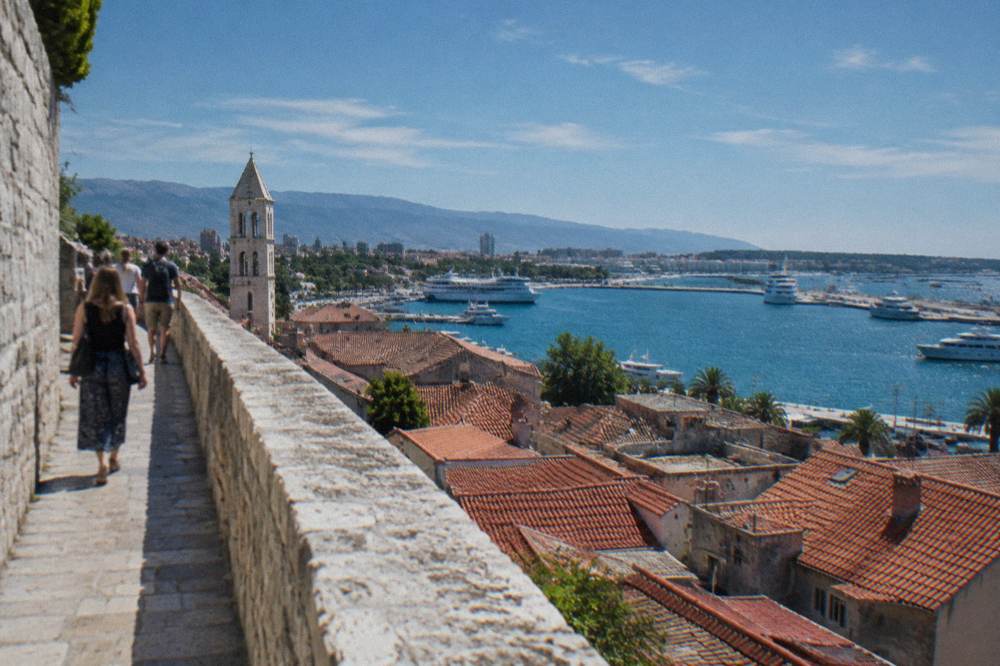
What the walls give back is the view that defines the city: the terracotta roofline, the Adriatic on three sides and the fortresses at each end. Inside the old town the Stradun, the Rector's Palace area and the side alleys are free to wander, and the compactness is the point. Where Split gives you a living city built inside a Roman palace, Dubrovnik gives you a complete walled ensemble, a contrast the Split versus Dubrovnik comparison unpacks in detail.
One structural difference worth knowing before you book anything: Split's historical complex entered the UNESCO list in 1979, and Dubrovnik's old city is likewise a World Heritage property, but the two experiences are not interchangeable. Dubrovnik is a destination you look at, from the walls and the viewpoints. Split is one you live in, with markets, beaches and the palace substructures running through daily life. Travellers who enjoy both usually give Dubrovnik the day trip and Split the nights, a split of time the longer-versus-shorter question treats directly.
What Does The Journey And The Day Cost?
The confirmed money figures are: Dubrovnik city walls about 40 EUR per adult in 2026 including Lovrijenac, and the coach journey of about 4 hours with its fare to be confirmed at the bus station or operator, since no verified fare sits in this site's facts. Tour and transfer prices render from live listings rather than being typed here, and petrol, tolls and Dubrovnik parking are all confirm-on-the-day items.
Budget the day in three layers: getting there, getting in, and eating. Getting there is either fuel and parking (unverified tariffs, check locally), a coach fare (confirm at the main bus station), or a tour price shown on the operator's live listing. Getting in is the walls ticket at about 40 EUR, which dwarfs every other entry fee in the city. Eating inside the old town is where posted menu prices are your friend: read them at the door, check that the bill is itemised, and look for a cover charge line before sitting down.
For scale, here is how the headline entry prices along the Split to Dubrovnik corridor compare, adult tickets only:
| Site | Adult price | Notes |
|---|---|---|
| Diocletian's Palace cellars, Split | 10 EUR | Split City Museum price list, daily 8:30 to 20:00 |
| Split City Museum, Papalić Palace | 10.00 EUR | 8.00 reduced, family 18.00, closed Mondays |
| Cathedral of St Domnius complex, Split | from about 5 EUR | Combined tickets up to about 15 EUR, secondary source |
| Klis Fortress | 10 EUR | Daily 9:00 to 17:00, secondary source |
| Dubrovnik city walls | about 40 EUR | 2026, includes Lovrijenac, secondary source |
The contrast at the bottom of that table is the honest headline: a day in Dubrovnik costs more to enter than a day in Split, and the walls ticket alone exceeds the combined museum spend of two full days in Split. That does not make it poor value, the wall circuit is the sight, but it belongs in the arithmetic before you commit the day.
Can You Take A Train Or A Ferry From Split To Dubrovnik?
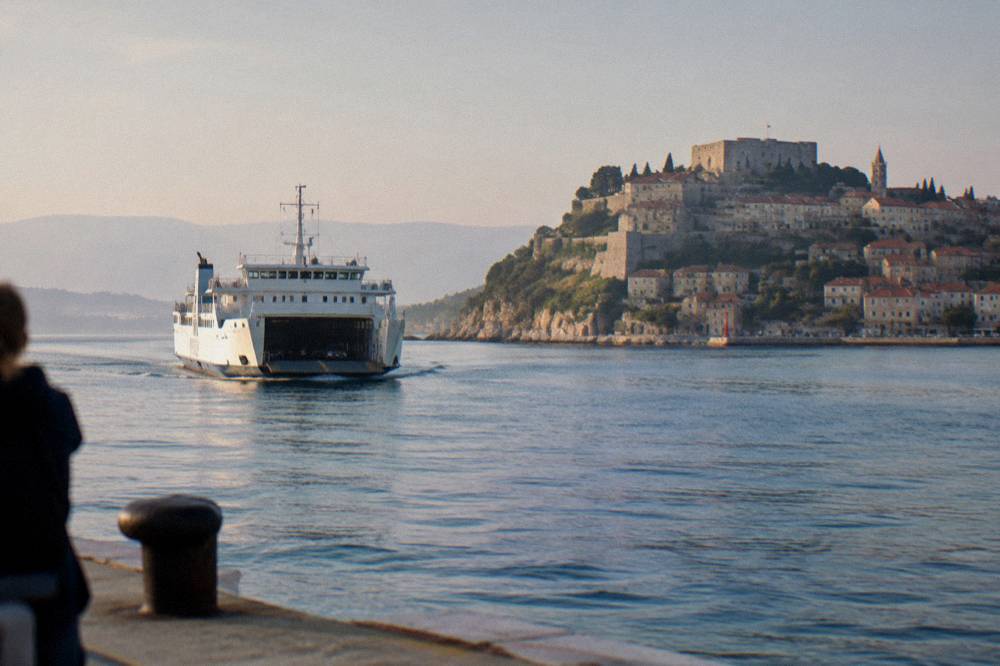
The train is not an option on this route: Croatia's rail network runs north from Split toward Zagreb, a journey of about 7 hours 15 to 8 hours 10, with no coastal line to Dubrovnik. The practical public-transport choice is the coach at about 4 hours. Ferries from Split serve the islands, Stari Grad on Hvar, Supetar on Brač, Rogač on Šolta and Vis, not a scheduled Dubrovnik passenger route.
That asymmetry surprises travellers who assume the two biggest Dalmatian cities must be linked by rail or sea. The coastal railway was never built, and the sea connection that exists is the island network. The Split to Hvar ferry guide and the ferries from Split overview cover what the sea does offer: line 635 to Stari Grad at about 120 minutes, line 631 to Supetar at about 50 minutes with no off-season timetable from 2026, line 636 to Rogač at about 60 minutes, and Vis at about 140 minutes. Foot passengers on line 635 pay 5.90 EUR off-season and 8.40 EUR in season, and catamarans run 6.40 EUR low and 10.00 EUR high season to Hvar or Jelsa, 7.20 and 10.00 EUR to Vis.
The train question in its bare form, can you catch a train from Split to Dubrovnik, is one of the most common planning searches for this route, and the answer above is the whole of it: rail goes north, coaches go south, the sea goes to the islands.
When Is The Best Time Of Year To Make The Trip?
July and August are the warmest and busiest months, with Split station means of 26.2 C and 25.9 C respectively and 18 and 17 days at 30 C or more, while May, June and September sit at 19.2 C, 23.4 C and 21.6 C with markedly quieter roads. For a Dubrovnik day trip specifically, the shoulder months win: the walls are walked in full sun with no shade, and November, the wettest month at 115.5 mm, is the one to avoid.
The climate figures throughout this section are DHMZ Split-Marjan station means for the 1948 to 2024 period, the official station record for the city. July is the driest month at 26.6 mm and carries 353.3 hours of sunshine; December drops to 120.8 hours. The rain story is simple: November wettest at 115.5 mm, December next at 103.7 mm, and the summer almost dry.
| Month | Mean temperature (C) | Precipitation (mm) | Notes for the trip |
|---|---|---|---|
| May | 19.2 | 57.5 | Warm, quieter, good walls weather |
| June | 23.4 | 49.0 | 7 days at 30 C or more |
| July | 26.2 | 26.6 | 18 days at 30 C or more, driest month |
| August | 25.9 | 41.3 | 17 days at 30 C or more |
| September | 21.6 | 70.9 | Sea still warm, crowds easing |
| October | 17.2 | 77.0 | Quieter, some rain risk |
| November | 12.7 | 115.5 | Wettest month |
One event worth building a trip around, in either direction: Ultra Europe runs 9 to 11 July 2027 at Park Mladeži in Split, which puts festival dates squarely inside the warmest, busiest window on the table above. Anyone combining the festival with a Dubrovnik day trip should expect the July conditions in the table to be the floor, not the ceiling. For the fuller picture on seasons, the Split weather guide and the best time to visit Split carry the month-by-month detail.
Split Or Dubrovnik: Which City Should Get Your Time?
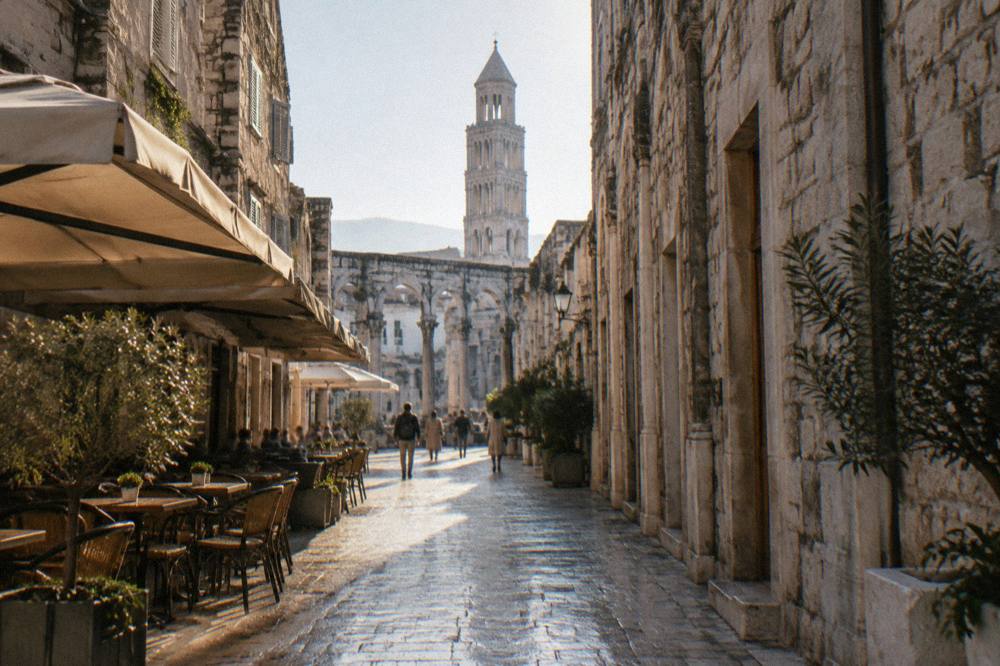
The pattern the sources support is Split as base, Dubrovnik as excursion: Split holds the palace, the Marjan hill park, Bačvice and the island ferries, while Dubrovnik concentrates its entire offer inside walls that take a day to see properly. Split's historical complex was inscribed by UNESCO in 1979; Dubrovnik's old city is likewise World Heritage. The choice is between a city you use and a city you view, and the two questions travellers ask most have direct answers.
The first question is what is prettier, Split or Dubrovnik, and the honest frame is that Dubrovnik presents a single complete architectural picture while Split layers a working city over Roman, medieval and modern fabric. The second is whether it is better to fly into Split or Dubrovnik, which turns on your first night, not on the cities' merits: Split Airport handled 3,881,186 passengers in 2025 and sits 20 km from the city in Kaštel Štafilić, with the Platanus shuttle at 10 EUR one way and 15 EUR return to the main bus station. Both airports are covered in the Split Airport guide and the airport to city centre guide.
For a like-for-like frame:
| Split | Dubrovnik | |
|---|---|---|
| UNESCO inscription | 1979, Palace of Diocletian complex | Old city, World Heritage |
| Core sight | Diocletian's Palace, built c. 295 to 305 AD | City walls, about 40 EUR adult |
| Headline free sights | Peristyle, Riva, Marjan, Golden Gate, beaches | Stradun and old-town streets inside the walls |
| Day-trip range | Krka 74 min, Hvar ferry about 120 min, Mostar 2 h 13 | Elaphiti islands, Lokrum nearby |
| Best used as | A base for several days | A day trip or one to two nights |
What Else Can You Pair With A Dubrovnik Trip From Split?
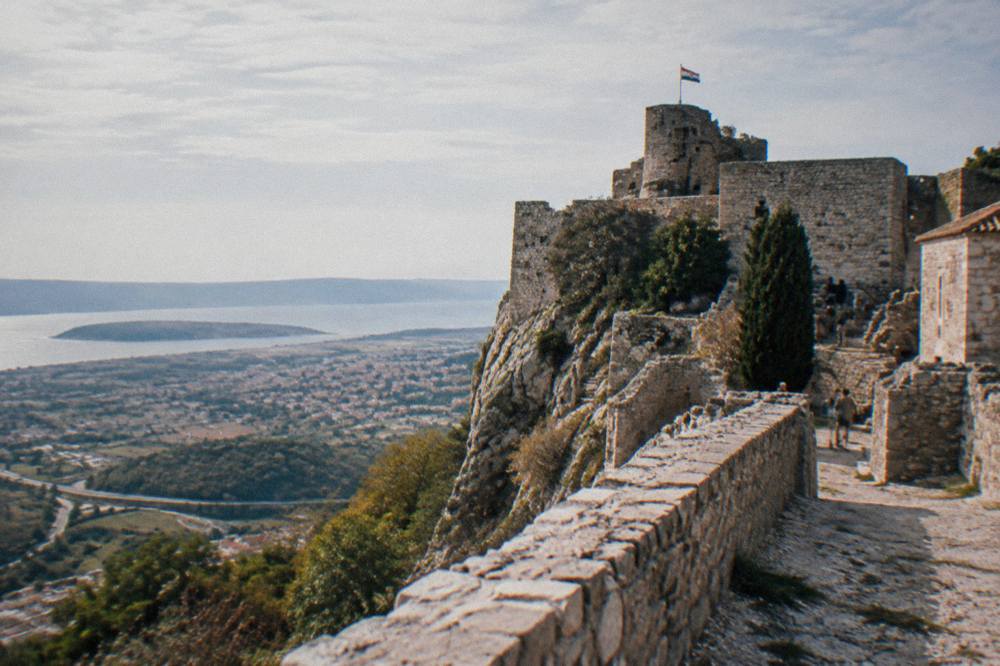
The southern route to Dubrovnik passes three worthwhile stops in their own right: Klis Fortress, 13.9 km and 22 minutes from the palace, at 10 EUR entry and known as a Game of Thrones Meereen location; Salona, the Roman site 9.1 km and 14 minutes out, on a 10 EUR combined ticket with the Archaeological Museum valid for 7 days; and Makarska, 86.1 km and 75 minutes along the coast. Mostar in Bosnia and Herzegovina, 2 h 13 away, is the fourth pairing.
Each of those has a dedicated guide on this site: Klis Fortress, Salona and the broader day-trips overview. The Salona ticket detail matters for planners: the Archaeological Museum in Split costs 8 EUR alone, and the combined museum-plus-Salona ticket is 10 EUR within 7 days, so a visit before or after the Dubrovnik trip can be folded into one purchase.
Back in Split itself, the days around a Dubrovnik excursion fill easily: the palace cellars run 8:30 to 20:00 daily with the central part under restoration to the end of 2026 but passage open, the Meštrović Gallery reopened in April 2026 after a 15-month renovation at 12.00 EUR including Crikvine-Kaštilac, and the Marjan hill park with Telegrin at 178 m is free. On the water side, the full-day catamaran option below is the natural counterpart to a Dubrovnik day: one day walls, one day islands.
For travellers with more than a week, the sequencing writes itself: Split first, the islands in the middle, Dubrovnik at the end, or Dubrovnik as a day trip and Split's own beaches, restaurants and food scene filling the remaining days. The where to stay in Split guide covers the neighbourhood choice, including staying close to the bus station if Dubrovnik and airport runs dominate your plan.
Common Questions About Travelling From Split To Dubrovnik
How far is Split from Dubrovnik?
The road distance from Diocletian's Palace in Split to Dubrovnik is 234.8 km, about 3 hours 21 minutes of free-flow driving, with the coach taking about 4 hours on scheduled services.
Can you catch a train from Split to Dubrovnik?
No coastal railway exists. Trains from Split run north toward Zagreb, a journey of about 7 hours 15 to 8 hours 10, so the southward options are coach, self-drive or an organised day trip.
How much are the Dubrovnik city walls?
About 40 EUR for an adult in 2026, including Lovrijenac fortress, on the tariff reported by secondary ticket sources for the March to November high season.
Is Dubrovnik a day trip from Split?
Yes. At 234.8 km and about 3 hours 21 minutes each way by road it is a long day, and coaches take about 4 hours, but the old town is compact and the walls circuit plus free wandering fill a single long day comfortably.
Do you cross a border between Split and Dubrovnik?
Yes, the coastal road passes briefly through Bosnia and Herzegovina before re-entering Croatia, so carry a passport or ID card on any mode of transport, including organised tours.
Is Split or Dubrovnik better to stay in?
Split works better as a base, with the palace, Marjan, beaches and the island ferries on the doorstep, while Dubrovnik rewards a day or two focused on the walls and old town. Many travellers give Split the nights and Dubrovnik the day trip.
Whichever way you split the time, the geography does the deciding for you: one coastline, one road south, two very different cities, and a day long enough to see both sides of the argument.