Which Is Nicer, Zagreb Or Split?
A comparison of Split and Zagreb for visitors: coast against inland, travel times between the two, Split's climate, prices and day trips, with sourced figures.
Split is a coastal city on the Adriatic in central Dalmatia, and that single fact settles half of the question. Zagreb lies inland, and the two cities offer genuinely different trips: Split gives you a Roman palace you live inside, a seafront, beaches and a chain of islands and national parks within a day's reach, while Zagreb functions mainly as the country's northern hub, useful for rail links and inland Croatia. The Port of Split's own page records 6.05 million passengers in 2025, which makes it Croatia's busiest passenger port, and the Split Airport statistics page shows 3,881,186 passengers in the same year. The comparison below sticks to what the sources actually publish.
Which Is Nicer, Zagreb Or Split?
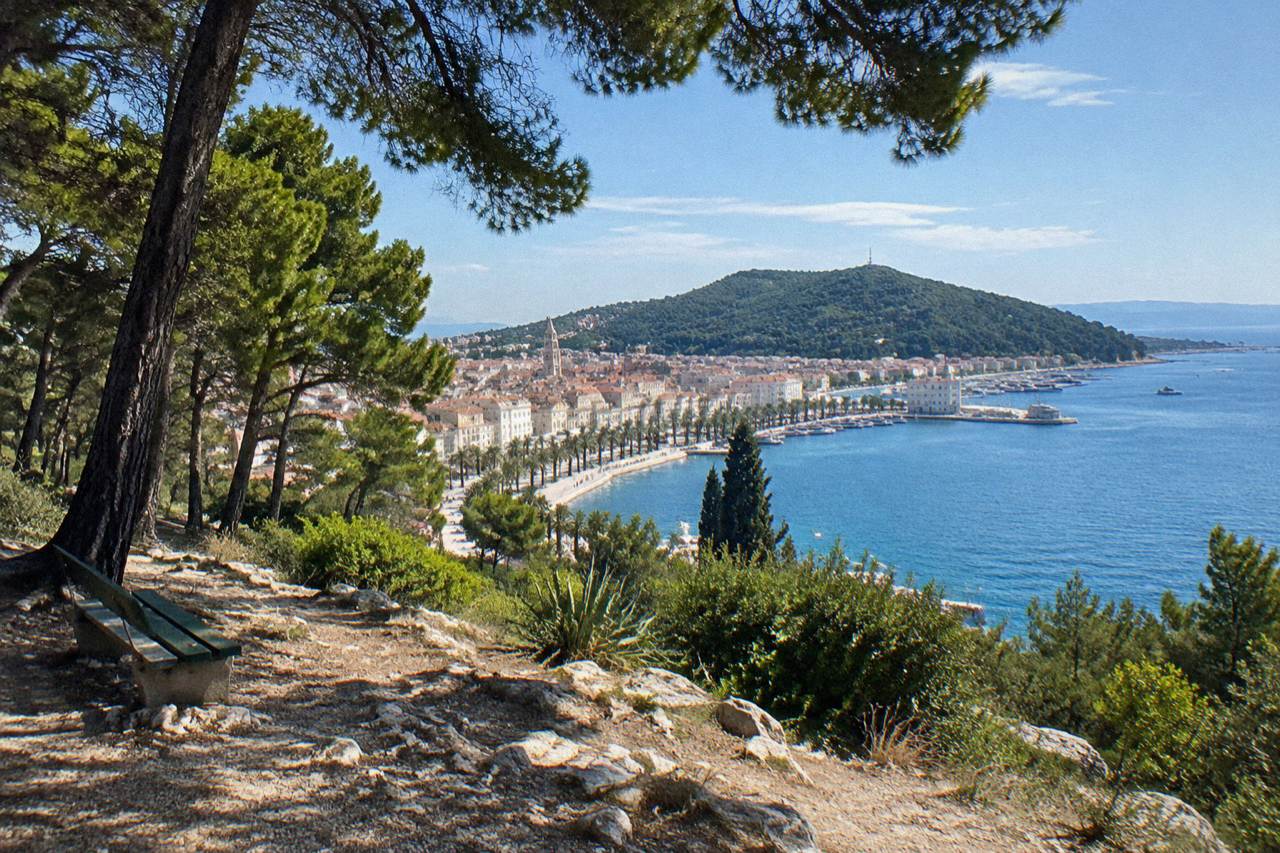
If the trip is about the sea, the coast and a live ancient city, Split is the stronger choice: it sits on the Adriatic, its Old Town runs inside Diocletian's Palace, a UNESCO property since 1979 covering 20.8 ha, and the islands of Brač, Hvar, Šolta and Vis sit offshore. Zagreb suits a city break built around inland Croatia and onward rail travel. The honest answer is that the two cities serve different itineraries rather than competing directly.
The 2021 census recorded 160,577 residents in the City of Split, so this is a real working city rather than a resort, and its centre is a palace built c. 295 to 305 AD for Emperor Diocletian. The Peristyle, the Riva, the Prokurative, the Golden Gate, the Grgur Ninski statue, the markets, Marjan and the city beaches all cost nothing to walk through, which shapes the budget picture considerably. The Split Croatia Travel Guide homepage maps the full range, from things to do in Split through to every day trip.
What can be compared directly is the journey between them, the coastal climate, the water-based activities and the day-trip range, all of which the sources quantify.
What Kind Of City Is Split?
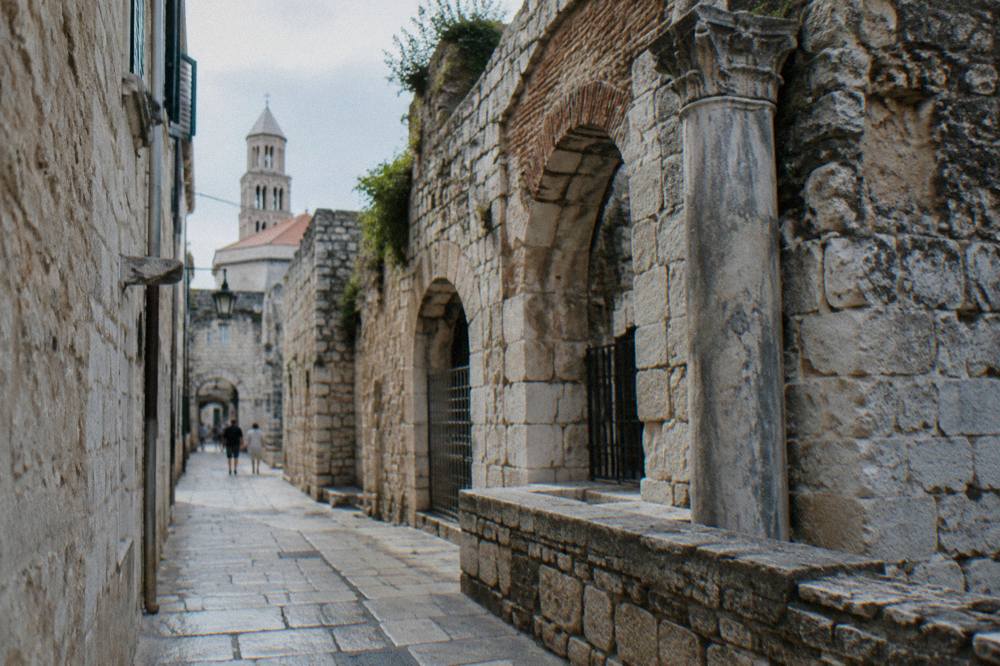
Split is a coastal city whose Old Town is built in and around Diocletian's Palace, with the Marjan peninsula park forest on its western side and the islands of Brač, Šolta, Hvar and Vis offshore. The palace was inscribed by UNESCO in 1979 as the "Historical Complex of Split with the Palace of Diocletian", a property of 20.8 ha, and the cathedral bell tower, 57 m high, still stands over it.
The palace substructures, the cellars, are run by the Split City Museum and open Monday to Sunday from 8:30 to 20:00, though the central part is under restoration to the end of 2026 with the passage staying open. The Split City Museum itself, in Papalić Palace, charges 10.00 EUR for an adult, 8.00 EUR reduced, with a family ticket at 18.00, and closes on Mondays. The Cathedral of St Domnius complex is ticketed from about 5 EUR for a single site, with combined tickets up to about 15 EUR, and shoulders and knees must be covered. If that layering of Roman, medieval and modern in one walkable core appeals, Split answers the question on its own; see what is so special about Split for the fuller case.
The Temple of Jupiter is now the Baptistery of St John and is ticketed inside the cathedral scheme, and the Roman guard change on the Peristyle at noon ran from 28 May to 27 September 2026.
How Do You Travel Between Zagreb And Split?
The coach between Split and Zagreb takes about 5 h 30, and the train takes about 7 h 15 to 8 h 10, both secondary figures that should be treated as approximate. The ferry port, the main bus station and the railway station in Split sit together on Obala kneza Domagoja, 500 to 600 m from the palace, so whichever mode you choose, you arrive within a short walk of the Old Town.
To arrange the journey between the two cities, book a Zagreb to Split transfer here.
| Route and mode | Approximate time | Notes from the sources |
|---|---|---|
| Split to Zagreb, coach | About 5 h 30 | Secondary figure |
| Split to Zagreb, train | About 7 h 15 to 8 h 10 | Secondary figure |
| Split to Dubrovnik, coach | About 4 h | Secondary figure |
| Airport to Split centre, Platanus shuttle | About 10 EUR one way, 15 EUR return | Runs to the main bus station by the ferry port |
The airport detail matters for the comparison because the airport's own pages place it 20 km from Split and 6 km from Trogir, in Kaštel Štafilić, despite the persistent "10 minutes from the city" claim found elsewhere. United Airlines ran a seasonal direct Newark to Split service from 30 April 2026, the first transatlantic route for the airport, which changes the calculus for anyone choosing between the two cities as an entry point; the question of flying into Split covers it. For a north-to-south itinerary, the practical pattern the times suggest is Zagreb first, then the coach south to Split, using each city for what it does best.
For activities once you are based in Split, the Cetina river is the clearest example of what the coast adds.
Which City Suits A Short Trip Better?
Split suits a short trip better for anyone whose priorities are the sea and a compact centre, because the palace core, the Riva, the Peristyle and the city beaches are all within walking distance of each other and of the transport hub, and the free sights include Marjan hill with its highest point Telegrin at 178 m. Zagreb rewards a longer inland itinerary with onward rail connections. Two days in Split cover the palace, Marjan and one boat trip.
The geometry is what makes it work. Marjan is 3.5 km long and 1.5 km wide, with 819 steps from Trumbićeva obala up to Telegrin, and it sits directly west of the palace core. Bačvice beach, the home of picigin, the ball game born there in 1908 per the reporting on its protected heritage status, is a short walk east. The itineraries the site publishes, one day in Split and two days in Split, are built entirely on that walkability, and the question of how many days is enough for Split answers it in detail.
Is The Weather A Reason To Pick Split?
Yes, if warmth matters: the DHMZ Split-Marjan station table for 1948-2024 gives a July mean of 26.2 C and an August mean of 25.9 C, with 18 days at 30 C or more in July and 17 in August, and about 2,600 sunshine hours a year. November is the wettest month at 115.5 mm and July the driest at 26.6 mm. The coastal climate is a defined, measured advantage.
| Month | Mean C | Precipitation mm |
|---|---|---|
| Jan | 8.0 | 77.8 |
| Feb | 8.5 | 65.2 |
| Mar | 10.8 | 63.2 |
| Apr | 14.4 | 62.0 |
| May | 19.2 | 57.5 |
| Jun | 23.4 | 49.0 |
| Jul | 26.2 | 26.6 |
| Aug | 25.9 | 41.3 |
| Sep | 21.6 | 70.9 |
| Oct | 17.2 | 77.0 |
| Nov | 12.7 | 115.5 |
| Dec | 9.4 | 103.7 |
Those are weather-station means for the period 1948-2024 from the DHMZ Split-Marjan table, and they describe a Mediterranean coastal regime: dry, warm summers and a wet November. The question of the best month to visit Split builds on the same table.
What Can You Do From Split That You Cannot Do From Zagreb?
From Split you can swim in the Adriatic off city beaches and reach five UNESCO-listed or island destinations in a day: Trogir, inscribed in 1997, is 36 minutes away by free-flowing road, Krka National Park's Skradinski buk is 74 minutes, Šibenik with its 2000-inscribed cathedral is 71 minutes, and the car ferries run to Stari Grad on Hvar in about 120 minutes and to Supetar on Brač in about 50 minutes.
The driving times from Diocletian's Palace are computed free-flow distances, and the full spread is wide: Klis Fortress 22 minutes, Salona 14 minutes, Omiš 38 minutes, Makarska 75 minutes, Zadar 2 h, Mostar 2 h 13, Dubrovnik 3 h 21 and Plitvice Lakes 3 h 15. The ferry detail matters for planning: Hvar town itself is reached by catamaran, while Stari Grad is the car ferry port, and the two must not be confused. Foot passengers on the line 635 ferry to Stari Grad pay 5.90 EUR off-season and 8.40 EUR in season, per the Jadrolinija price list. From 2026 the Split to Supetar line runs with no off-season timetable at all, only high and low season schedules, the fifth such line in Croatia, which reflects year-round island demand.
Swimming is the other divide. The question can you swim in the sea in Split covers the beaches, and no monthly sea-temperature normal exists in the official record, only live readings. What is certain is that the sea is there, at the end of the Riva, and that this is the axis on which the Zagreb-or-Split decision actually turns.
If a rafting, cliff-jumping and cave-exploring day on the Cetina river sounds like the kind of thing your trip is for, the tour below covers exactly that, and the operator's live listing carries the current price and availability.
You can also Check availability directly, and the related Cetina and Omiš guide explains the river and the town.
What Does Split Cost, And What Rules Apply?
Split's headline sights are cheap or free: the Peristyle, the Riva, the Golden Gate, the markets, Marjan and the city beaches cost nothing, the Split City Museum is 10.00 EUR, the Archaeological Museum 8 EUR with a 10 EUR combined ticket covering Salona within 7 days, the Meštrović Gallery 12.00 EUR including Crikvine-Kaštilac, and the Ethnographic Museum 7.00 EUR.
The tourist tax runs at about 2.65 EUR per person per night in high season, under 12 free and 12 to 18 half, collected by the accommodation and confirmed at booking.
The park prices are seasonal and worth quoting with their months. Krka charges 7 EUR from January to March and November to December, 20 EUR in April, May and October, and 40 EUR from June to September, with the ticket including the Skradin boat and Lozovac bus transfers from 1 April to 31 October. Plitvice Lakes charges 10 EUR in the winter months, 23 EUR in April, May and October, and 40 EUR from 1 June to 30 September, with a 25 EUR afternoon slot in peak, the visitor's name mandatory on the ticket and entry timed online. Anyone weighing that against a Zagreb base can compare the two parks directly via Plitvice or Krka and the question of whether Plitvice is closer to Split or Zagreb.
Two behavioural rules are enforced in Split's historic core. Public drinking in the centre carries a 300 EUR fine, as do urinating, climbing on monuments or bathing in fountains, and sleeping in public spaces is fined at 150 EUR; walking in swimwear or shirtless in the historic centre is also fined, with the amount set locally. Shops rather than bars face a seasonal night-time retail alcohol ban. The what to avoid in Split page lists all of it, and none of it should deter anyone, only inform them.
Common Questions About Zagreb Or Split
Which is nicer, Zagreb or Split?
For a sea-and-heritage trip, Split: a coastal city on the Adriatic with its Old Town inside Diocletian's Palace, a UNESCO property since 1979, and islands and national parks within a day's reach. Zagreb suits an inland, rail-first itinerary. The coach between them takes about 5 h 30 and the train about 7 h 15 to 8 h 10.
Is Split warmer than Zagreb?
The DHMZ Split-Marjan station table for 1948-2024 gives Split a July mean of 26.2 C, an August mean of 25.9 C, and about 2,600 sunshine hours a year.
How many days do you need in Split?
Two days cover the palace core, Marjan and one boat trip, with a third day for a park or island. See the one-day and two-day itineraries for the working plans.
Can you visit both Zagreb and Split on one trip?
Yes. The coach takes about 5 h 30 and the train about 7 h 15 to 8 h 10, and in Split the bus and rail stations sit beside the ferry port, 500 to 600 m from the palace.
Is Split expensive?
The core is not: the Peristyle, the Riva, Marjan and the city beaches are free, the Split City Museum is 10.00 EUR, the Archaeological Museum 8 EUR, and the tourist tax about 2.65 EUR per person per night in high season, confirmed at booking.
The verdict, in the end, is geographic. Split is the nicer city for a trip built on the sea, a walkable Roman core with documented prices, and day trips measured in minutes and ferry hours; Zagreb is the practical northern hub for reaching it. Choose the coast, and let the coach or the train join the two halves together.
