What Is So Special About Split?
Split is a living Roman palace city on the Adriatic: Diocletian's Palace at its core, Marjan hill above, islands offshore, and Croatia's busiest passenger port at its feet.
Split is a coastal city in central Dalmatia, on the Croatian shore of the Adriatic Sea, and what makes it unusual is not a single monument but the way the city grew inside one. Diocletian's Palace, built around 295 to 305 AD for a retiring Roman emperor, is not a roped-off ruin behind a ticket booth: apartments, bars, shops and churches occupy its walls, and about 160,577 people lived in the city at the 2021 census. To the west sits the forested Marjan peninsula, to the south the city beaches, and offshore the islands of Brač, Šolta, Hvar and Vis, reached by ferries and catamarans from a port that handled 6.05 million passengers in 2025, Croatia's busiest passenger port by its own figures. This page sets out, fact by fact, what distinguishes Split from every other city on the Adriatic coast.
What Is So Special About Split?
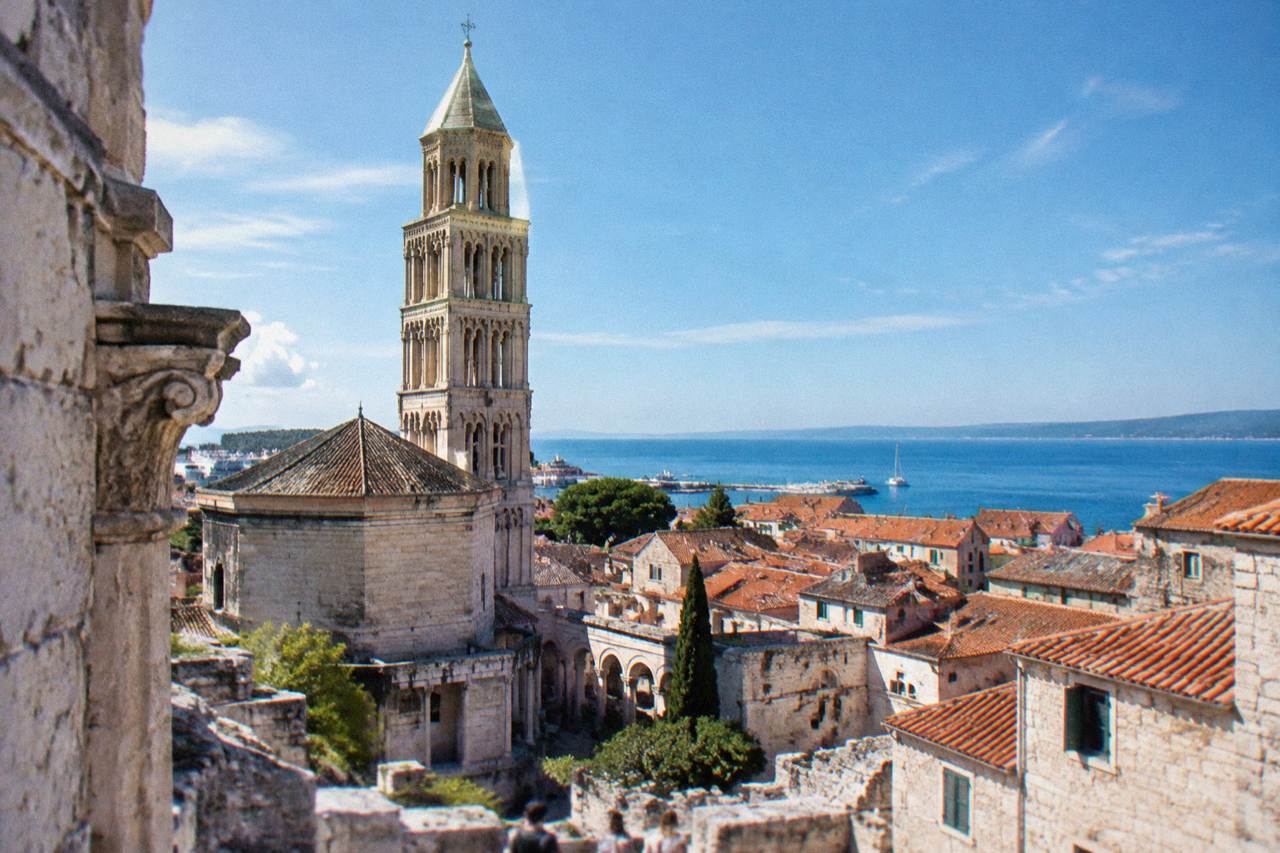
Split's defining feature is that it is a Roman palace that became a city: Diocletian's Palace, raised around 295 to 305 AD, still forms the street plan of the Old Town, and UNESCO inscribed the Historical Complex of Split with the Palace of Diocletian on its World Heritage List in 1979. The palace covers a 20.8 hectare property, and its cellars, the Peristyle courtyard, the Golden Gate and the Temple of Jupiter all sit within a fifteen minute walk of the ferry port.
That arrangement is what no other Dalmatian city can copy. The palace substructures, the cellars, are run by the Split City Museum and open Monday to Sunday from 8:30 to 20:00, while the Split City Museum itself in Papalić Palace charges 10.00 EUR for an adult ticket and closes on Mondays. Above ground, the Peristyle, the Riva waterfront, the Prokurative square, the Golden Gate, the Grgur Ninski statue, the green markets and Marjan hill all cost nothing to see, which makes the historic core one of the few in Europe where the grandest spaces are free. The Split City Museum's own price list shows the scale of what is ticketed against what is not. For orientation before you walk in, the Diocletian's Palace guide on this site lays out the palace sights in walking order.
Why Is Diocletian's Palace Different From Other Roman Ruins?
The palace is inhabited, which changes everything about how you visit it: bars sit in former guard rooms, the Temple of Jupiter is now the Baptistery of St John, and the cathedral bell tower and 57 m tall, rises over rooftops rather than over an archaeological park. The central part of the cellars is under restoration to the end of 2026, with the public passage staying open, so the site keeps working even mid-project.
To have those layers explained by a historian, book a history walking tour here.
The Cathedral of St Domnius complex sells five single-site tickets and several combined tickets from a kiosk on the Peristyle, from about 5 EUR for the cathedral up to about 15 EUR for a combined ticket covering everything, with shoulders and knees covered expected inside. This desk reports prices as the secondary guides list them, so confirm the current tariff at the kiosk. The Roman guard change on the Peristyle at noon ran from 28 May to 27 September 2026, a free performance that turns the courtyard into a stage. Klis Fortress, a 22 minute drive from the palace and 10 EUR to enter according to the secondary listing, was a Meereen location in Game of Thrones, and Split sunset tours aside, the fortress is the city's most striking side trip. If the palace walls are your main reason for coming, read whether Diocletian's Palace is free before you budget.
How Does The Setting Of Marjan And The Islands Set Split Apart?
Split backs onto the Marjan park forest, a peninsula 3.5 km long and 1.5 km wide whose highest point, Telegrin, stands 178 m above the sea and is reached by 819 steps from Trumbićeva obala, while the islands of Brač, Šolta, Hvar and Vis sit an hour or two offshore by ferry or catamaran. The ferry port, the main bus station and the railway station sit together on Obala kneza Domagoja, 500 to 600 m from the palace.
Few cities of this size put a protected forest hill, swimmable beaches and an international ferry hub within a ten minute walk of a Roman palace. Jadrolinija's route pages give the crossings: line 635 to Stari Grad on Hvar takes about 120 minutes, line 631 to Supetar on Brač about 50 minutes, and line 636 to Rogač on Šolta about 60 minutes, while Vis is about 140 minutes away. Foot passengers on line 635 pay 5.90 EUR off-season and 8.40 EUR in season, and catamarans reach Hvar or Jelsa for 6.40 EUR low season and 10.00 EUR high season per the Jadrolinija tariff. Note the distinction that trips up visitors every summer: Hvar town is reached by catamaran, Stari Grad by car ferry. The climate underwrites the whole pattern. The DHMZ Split Marjan station table, monthly means for 1948 to 2024, shows what the year looks like:
| Month | Mean Temperature (C) | Precipitation (mm) |
|---|---|---|
| January | 8.0 | 77.8 |
| March | 10.8 | 63.2 |
| May | 19.2 | 57.5 |
| July | 26.2 | 26.6 |
| September | 21.6 | 70.9 |
| November | 12.7 | 115.5 |
July is the warmest month at a 26.2 C mean and the driest at 26.6 mm of rain; November is the wettest at 115.5 mm. July records 353.3 hours of sunshine against 120.8 in December, and the station counts 18 days at 30 C or more in July and 17 in August. If you are timing a visit, the best month to visit Split breaks the trade-offs down month by month, and whether you can swim in the sea in Split answers the beach question. This desk does not print a monthly sea-temperature normal because none exists officially; the DHMZ live reading is the only figure worth quoting, on the day you check it.
What Can You Reach From Split In A Day?
Split works as a base because the Dalmatian coast stacks up within a few hours' drive: Krka National Park is 74 minutes from the palace by the OSRM free-flow measure, Trogir 36, Omiš 38, Mostar 2 hours 13, Dubrovnik 3 hours 21 and Plitvice Lakes 3 hours 15, while the islands go by boat from the port itself. That radius is the second half of the city's appeal: a visitor can sleep inside a Roman palace and stand under a waterfall, in a Bosnian bazaar town or on a Dalmatian island the same day.
| Destination | Driving Time From The Palace | Entry Fee (2026) |
|---|---|---|
| Salona | 14 min | 10 EUR combined with the Archaeological Museum, within 7 days |
| Klis Fortress | 22 min | 10 EUR (secondary listing) |
| Trogir | 36 min | Old Town, UNESCO 1997, freely walkable |
| Krka National Park (Skradinski buk) | 74 min | 7 / 20 / 40 EUR by season |
| Plitvice Lakes | 3 h 15 | 10 / 23 / 40 EUR by season, timed online entry |
| Mostar | 2 h 13 | Old Bridge Area, UNESCO 2005 |
Two corrections matter here, because both are widely misstated. Krka's park rules state that swimming is not allowed outside clearly marked areas, so "swim under Skradinski buk" is off the menu; the designated spots are reported at Roški slap, Stinice and Pisak from 1 June to 30 September. And Plitvice requires the visitor's name on the ticket with timed online entry, so it sells out in peak weeks in a way Krka does not. The Krka price list is seasonal, 7 EUR in January to March and November to December, 20 EUR in April, May and October, and 40 EUR from June to September; Plitvice runs 10, 23 and 40 EUR on the same pattern with a 25 EUR afternoon slot in peak. For the comparison that follows from those numbers, see Plitvice or Krka.
Is Split Expensive Or Difficult To Visit?
Split is straightforward for foreign visitors: Croatia has used the euro since 1 January 2023 and has been in the Schengen area since 1 January 2023, the tourist tax is about 2.65 EUR per person per night in high season, collected by the accommodation and confirmed at booking, and Split Airport handled 3,881,186 passengers in 2025, including its first transatlantic route, Newark to Split, from 30 April 2026. The Platanus shuttle runs from the airport to the main bus station by the ferry port for 10 EUR one way or 15 EUR return, and the airport's own pages place it 20 km from Split and 6 km from Trogir, in Kaštel Štafilić.
Two 2026 rules are worth knowing before arrival. Drinking alcohol in the historic centre, outside licensed terraces, carries a 300 EUR fine under the city's Enjoy Respect rules, and the same amount applies to urinating, climbing on monuments or bathing in fountains, with 150 EUR for sleeping in public spaces. Shops, though not bars, are banned from selling alcohol at night in the summer season. The Riva's central section is set for renovation from November 2026 lasting a little over a year, so expect partial closures on the waterfront through 2027, while the palace cellars stay open through their restoration. None of this makes the city hostile; it makes it orderly, and the what to avoid in Split page collects the rest. Advent runs from 27 November 2026 to 7 January 2027 with the ice rink at Đardin, Ultra Europe returns to Park Mladeži on 9 to 11 July 2027, and HNK Split's season runs to 14 June 2027, so the city fills the shoulder months too.
Where Does Adventure Fit Into A Split Trip?
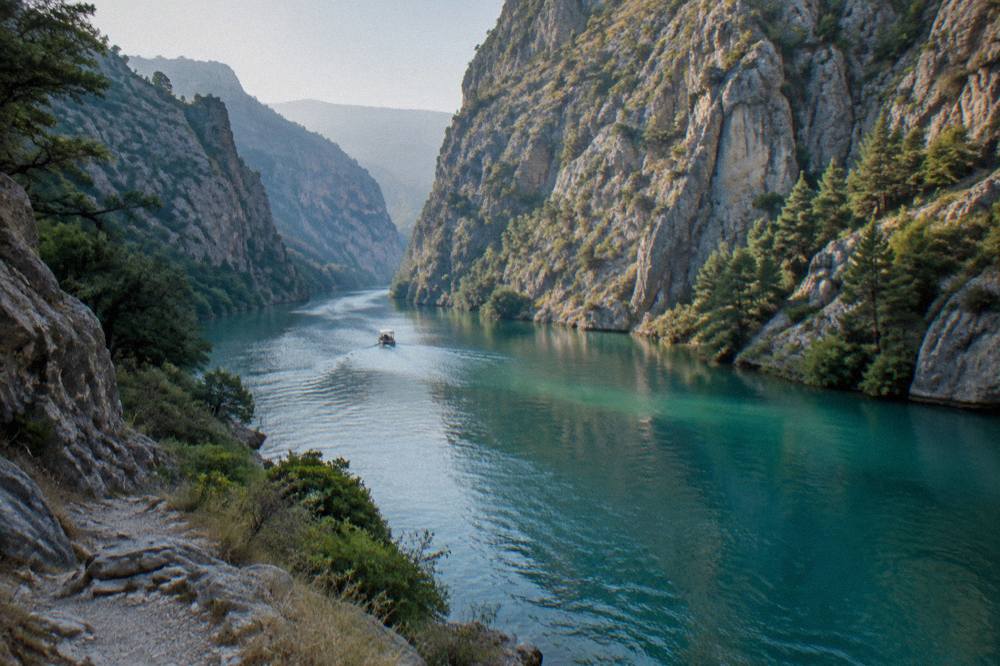
Split's third identity, beyond palace and port, is as an adventure base: the Cetina river canyon above Omiš sits 38 minutes from the palace and carries rafting, canyoning and zip line trips, while the coast itself lends sea kayaking around Marjan and the Bačvice bay, where the shallow-water ball game picigin has been played since 1908 and is protected intangible heritage of Croatia. The canyon and the city sit close enough that a morning on white water and an evening on the Riva are the same day's plan.
The related tour on this page is a case in point: the half-day rafting trip on the Cetina with cliff jumping covers the river's calm stretches and jumps, and the listing carries the current price and rating. Omiš itself adds the Mirabela fortress, 4 EUR and 6 EUR from 1 June to 30 September per the city's 2026 decision, at the mouth of the canyon. What a visitor should weigh is fit, not quality: families with children lean to the calmer rafting stretches, stronger swimmers to canyoning, and anyone pressed for time to the half-day formats that return to Split by late afternoon.
The broader point stands: Split is one of the few European cities where a UNESCO-listed Roman core, a forested hill, city beaches, a canyon river and four ferry-served islands share one compact waterfront. The pages on how many days are enough for Split and whether Split is worth visiting take the planning question from here, and the Split Croatia Travel Guide covers the palace, beaches and day trips in depth.
Common Questions About What Makes Split Special
What is so special about Split?
Split is a city living inside a Roman emperor's palace: Diocletian's Palace, built around 295 to 305 AD, is still the Old Town's street plan and a UNESCO World Heritage property since 1979, with Marjan hill, city beaches and island ferries a short walk away. The port handled 6.05 million passengers in 2025, Croatia's busiest passenger port.
Is Split older than Dubrovnik?
This desk does not rank cities by age. What the record shows is that Diocletian's Palace was built around 295 to 305 AD and Split's Old Town grew inside it; comparisons of the two cities are covered in the Split versus Dubrovnik guide.
Can you walk everywhere in Split?
The historic core, the Riva, the markets and the city beaches are all walkable from the ferry port and bus station, 500 to 600 m from the palace. Marjan hill involves 819 steps from Trumbićeva obala to the Telegrin viewpoint at 178 m, so wear real shoes for that part.
What food is Split known for?
The green market and the fish market anchor the city's food culture, and picigin, though a sport rather than a dish, has been played on Bačvice since 1908 and is protected intangible heritage. Where locals eat is covered in detail on its own page on this site.
Do you need a car in Split?
Not for the city itself, and the islands go by ferry or catamaran. A car helps for stringing together Krka, Klis, Salona or Mostar, though guided day trips cover all of them; driving times from the palace are 22 minutes to Klis, 74 to Krka and 2 hours 13 to Mostar.
Split rewards the visitor who treats it as three places in one: a Roman palace you can sleep inside, a working Adriatic port that feeds the islands, and a forested hill with the whole sweep below. Few cities of 160,577 people offer all three within a fifteen minute radius, and that, more than any single sight, is the answer to the question.
