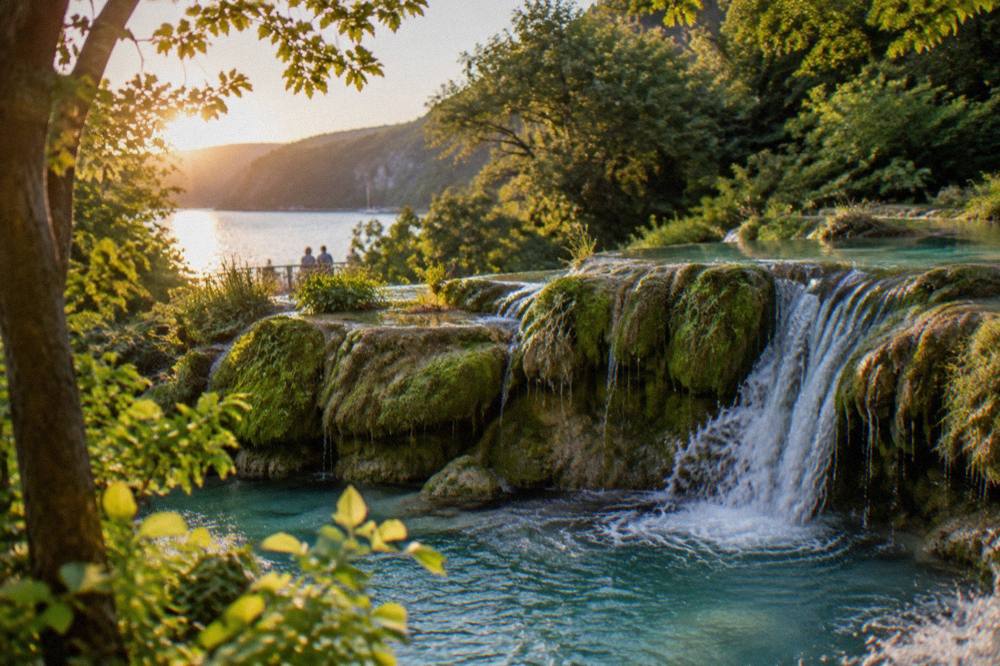
Sibenik From Split
Sibenik sits 84.8 km north of Split by road, a 71-minute free-flow drive from Diocletian's Palace, and its Cathedral of St James has been on the UNESCO World Heritage List since 2000. Here is what the sources say about getting there, what to see, and how to pair the town with Krka National Park on one day trip.
Short answer
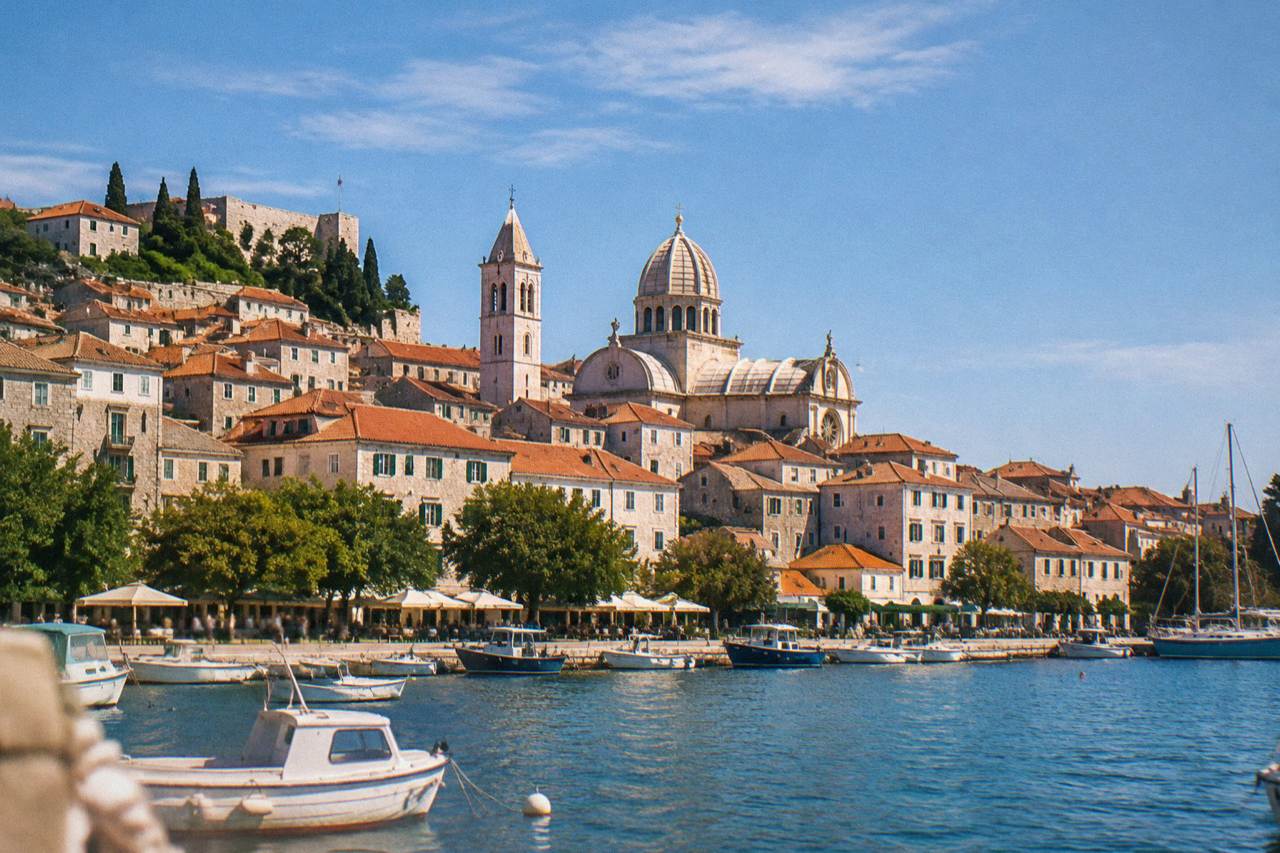
Sibenik is 84.8 km from Diocletian's Palace in Split, about a 71-minute drive free-flow. The Cathedral of St James, inscribed by UNESCO in 2000, is the reason to go, and Krka National Park lies inland of the town, which makes a combined Sibenik and Krka day practical by car or by an organised trip.
Sibenik is the Dalmatian town north of Split whose Cathedral of St James joined the UNESCO World Heritage List in 2000, and it lies 84.8 km from Diocletian's Palace by road, a drive of about 71 minutes in free-flowing traffic. That puts it within comfortable day-trip range of Split, close enough that the town pairs naturally with Krka National Park, whose waterfalls sit roughly the same driving distance from the palace at 90.2 km and 74 minutes. This guide from the Split Croatia Travel Guide editorial desk sets out what the sources actually say: the drive, the UNESCO facts, the park prices by month, and how Sibenik compares with Trogir as a day out.
Where Is Sibenik And How Far Is It From Split?
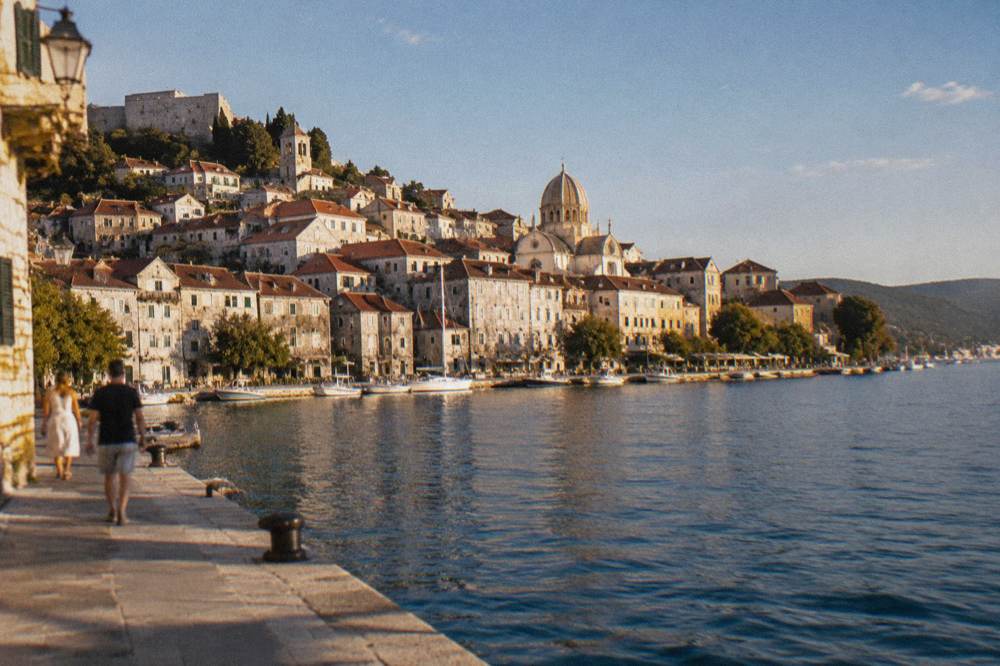
Sibenik stands on the central Dalmatian coast 84.8 km north of Diocletian's Palace in Split, a driving time of about 71 minutes in free-flowing traffic, computed on the Open Source Routing Machine network. It is the closest of the larger UNESCO towns to Split after Trogir, and it sits at the mouth of the Krka river, which is why the national park of the same name lies directly inland of the city.
The routing figures come from a free-flow calculation, which means no traffic, no ferries and no parking search. In July and August the coastal motorway carries holiday traffic, so a realistic door-to-door time is longer; the 71-minute figure is the floor, not the promise. The town's position at the Krka mouth is the geographic fact that shapes every Sibenik day trip: the river's estuary is at the city, and the park's best-known site, Skradinski buk, is a short drive further inland. Split itself was inscribed by UNESCO in 1979 for the Historical Complex of Split with the Palace of Diocletian, and Sibenik followed for its cathedral in 2000, so a single day trip can touch two of Dalmatia's listed sites.
For orientation against the other day trips, the distances and free-flow drive times from the palace are:
| Destination from Diocletian's Palace | Distance | Free-flow drive time |
|---|---|---|
| Trogir | 29.3 km | 36 min |
| Sibenik | 84.8 km | 71 min |
| Krka National Park, Skradinski buk | 90.2 km | 74 min |
| Makarska | 86.1 km | 75 min |
| Zadar | 159.5 km | 2 h |
| Mostar | 173.2 km | 2 h 13 |
| Dubrovnik | 234.8 km | 3 h 21 |
| Plitvice Lakes | 258.1 km | 3 h 15 |
Note the last two rows: Dubrovnik and Plitvice are both further than three hours free-flow, while Sibenik and Krka sit at barely over an hour. That single comparison is why a Sibenik day trip feels different from a Plitvice day trip: less windscreen, more town.
How Do You Get From Split To Sibenik Without A Car?
Driving is the documented option, at 84.8 km and about 71 minutes free-flow from the palace, and the bus station on Obala kneza Domagoja, 500 to 600 m from the palace, is where coach services leave Split; times and prices must be confirmed at the station or at booking. No train and no ferry connect the two cities.
What the sources do establish is the departure point. Split's ferry port, main bus station and railway station sit together on Obala kneza Domagoja, 500 to 600 m from the palace, which makes the transfer from the Old Town to any departure simple on foot. Confirm times and fares at the station or when booking.
Two practical alternatives exist. The first is an organised day trip, where the operator runs the transport; the tours on this site include Krka trips from Split that stop at Skradinski buk, and the operator's live listing states the itinerary.
Rather let someone else handle the drive? Book a Krka waterfalls day trip here.
What Are The Highlights Of A Sibenik Day Trip?
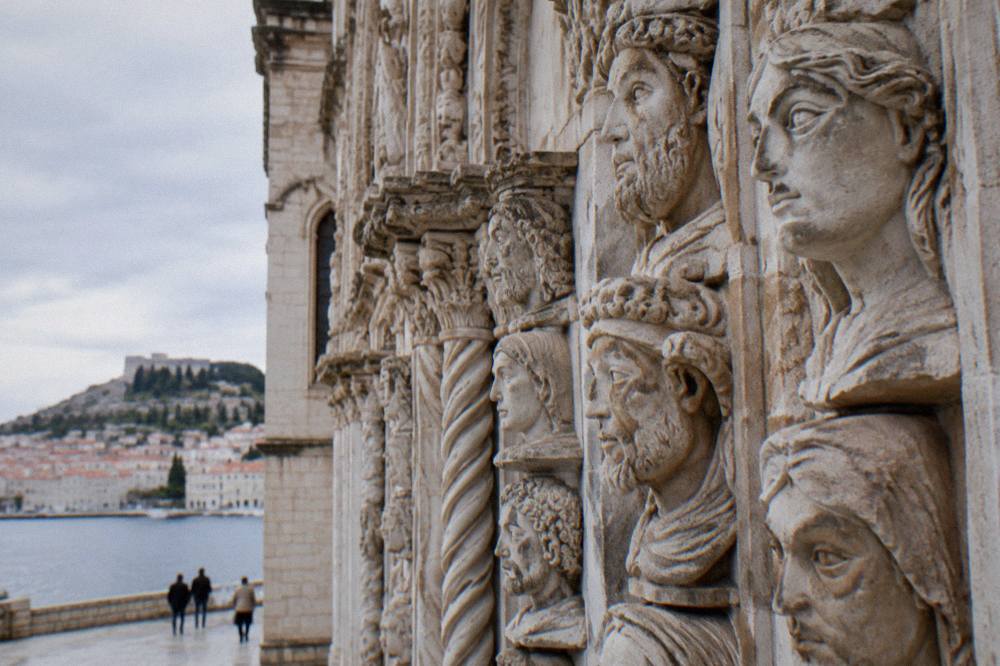
The Cathedral of St James, inscribed by UNESCO in 2000, is Sibenik's documented headline sight, and the town's second listing connection is the St Nicholas Fortress, which UNESCO records as part of the Venetian Works listing of 2017; no Sibenik ticket price, opening hour or interior detail appears in the facts, so those must be confirmed on site or at booking.
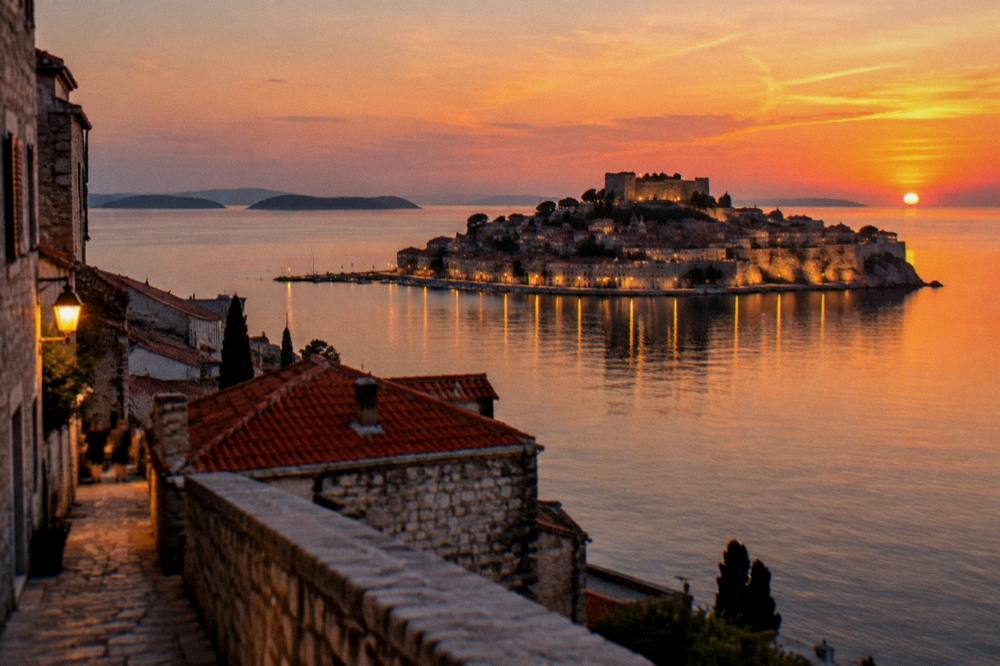
Start with what UNESCO itself says. The Cathedral of St James was inscribed in 2000, and the St Nicholas Fortress belongs to the Venetian Works of Defence, a transnational listing dated 2017. Those two facts frame the town: a cathedral that carries World Heritage status in its own right, and a fortress on a broader defensive listing.
There is no Sibenik cathedral ticket price listed, no fortress entry fee and no opening hours for either. That is not a comment on the town; it simply means this site prints only figures it can attach to a source, and the reader should confirm current prices at the entrance or through the operator's live listing when booking a guided trip. The walkable core between the cathedral and the waterfront is free to wander, in the same way that Split's own Peristyle and Riva promenade cost nothing.
A one-day shape works like this: arrive mid-morning, spend the first hours around the cathedral and the old streets, eat in town, then either stay for the afternoon by the sea or drive inland toward Krka. Sibenik's scale suits a half-day of walking. Anyone who wants the structure of a guided day, with a guide covering the history, can look at the walking-tour options in Split itself and the Krka trips that run from the city, all bookable through the operator's live listing.
The tours above are not Sibenik tours; they are the adventure and long-distance day trips this site features from Split, including a Cetina canyon zipline trip that runs from Omiš. They suit a reader planning several day trips from one base, which is the pattern the rest of this page assumes.
Can You Combine Sibenik With Krka National Park In One Day?
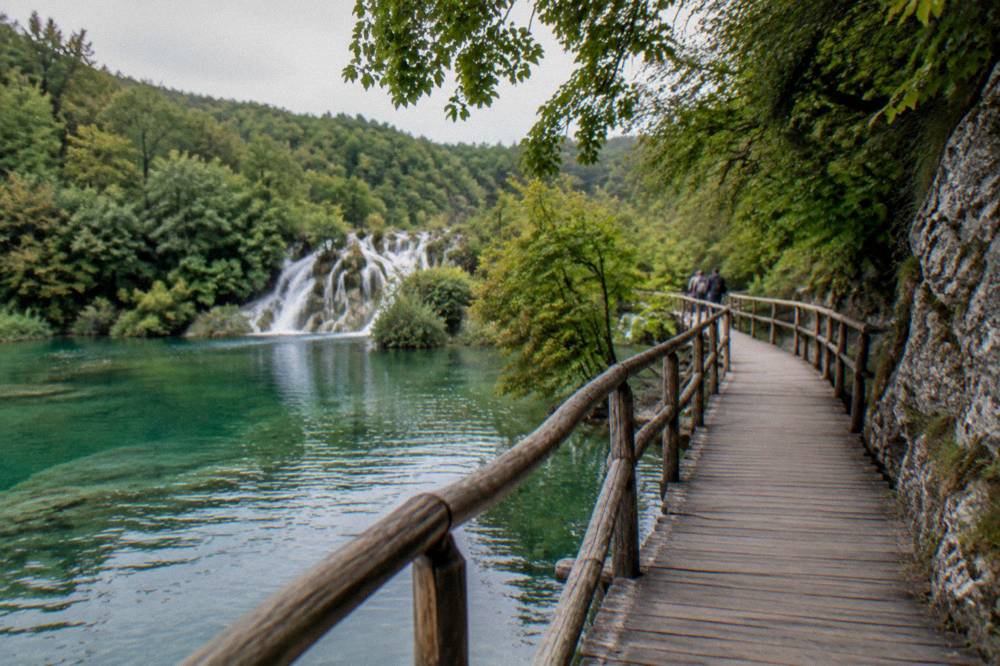
Yes, and it is the standard combination: Krka's Skradinski buk lies 90.2 km and about 74 minutes free-flow from Diocletian's Palace, only a few kilometres beyond Sibenik itself, and Krka's 2026 price list sets entry at 7 EUR from January to March and November to December, 20 EUR in April, May and October, and 40 EUR from June to September, with the ticket covering the Skradin boat and Lozovac bus transfers from 1 April to 31 October.
The geography makes the pairing work. The park's headline site sits barely beyond Sibenik on the same corridor, so a car day can reach the town by late morning and the falls by mid-afternoon, or the reverse. One hard rule from the park's own regulations: swimming is not allowed anywhere in Krka outside clearly marked swimming areas, and the designated spots reported for Roški slap, Stinice and Pisak run 1 June to 30 September. Do not plan a swim at Skradinski buk; the park's rules page states the ban plainly.
| Krka National Park, all accessible land sites | Adult price | Months |
|---|---|---|
| Winter price | 7 EUR | January to March, November to December |
| Shoulder price | 20 EUR | April, May, October |
| Peak price | 40 EUR | June to September |
| Roški slap, Kistanje, Manojlovac, Burnum, Eco Campus | 7 / 12 / 20 EUR | Seasonal tiers |
From 1 October 2026 the park's autumn pricing applies, matching the 20 EUR October tier and 7 EUR from November in the table above. The ticket inclusions matter for planning: the Skradin boat and the Lozovac bus transfers are inside the entry price in the transfer season, so a visitor arriving at Skradin does not pay separately for the boat leg. The full park picture, including how a Krka day compares with Plitvice, is on the site's Krka guide.
If driving yourself feels like work, a guided option covers the logistics. The site's featured Cetina-region trip, the Zipline Croatia adventure from Omiš, is a different kind of Dalmatian day out entirely, running through the canyon south of Split rather than north to Sibenik; readers building a week of day trips can Check availability on the operator's live listing. For the Krka leg specifically, an organised waterfalls trip from Split handles the park transfer and the swimming-stop rules.
What Does A Sibenik Day Trip Cost To Plan?
Count on three cost lines: Krka entry at 7, 20 or 40 EUR per adult depending on month, fuel and any parking for a self-drive day at tariffs this site does not print, and food in town at prices confirmed on posted menus; the Sibenik cathedral ticket, fortress fee and coach fare are confirmed on site or at booking rather than estimated here.
Everything else, from the cathedral kiosk to the car park meter, is a check-at-the-counter item. Croatia has used the euro since 1 January 2023, so all prices are in EUR, and the tourist tax, about 2.65 EUR per person per night in high season, is a matter for your accommodation, collected at booking.
| Cost line on a Sibenik and Krka day | Figure the sources give |
|---|---|
| Krka entry, adult | 7 EUR winter, 20 EUR shoulder, 40 EUR June to September |
| Krka transfers, Skradin boat and Lozovac bus | Included in ticket, 1 April to 31 October |
| Sibenik Cathedral of St James entry | Confirm on site, no verified price |
| Coach or fuel, Split to Sibenik | Confirm at booking, no verified fare |
| Emergency number anywhere in Croatia | 112 |
Two dated planning facts sharpen the budget picture. First, the Krka and Plitvice autumn price reductions took effect on 1 October 2026, so an October visit pays the 20 EUR tier rather than the summer 40 EUR. Second, for comparison on longer days out, Dubrovnik's city walls are listed at about 40 EUR for 2026 including Lovrijenac, a figure from a secondary ticketing source, while Plitvice charges 10, 23 or 40 EUR by season with a 25 EUR afternoon slot in peak; the Plitvice guide carries the full breakdown. Plitvice also requires the visitor's name on the ticket and uses timed online entry through the official webshop, a rule worth knowing before any long-distance park day.
For readers whose budget stretches to a bigger loop, the Mostar combination is the other documented option: a Mostar and Kravice waterfalls day trip from Split covers the Old Bridge Area, inscribed by UNESCO in 2005 with the bridge rebuilt in 2004, at 173.2 km free-flow from the palace. That is a long day by any measure, and the Mostar guide on this site covers it separately.
Sibenik Or Trogir: Which Day Trip From Split Suits You?
Trogir is 29.3 km and 36 minutes free-flow from the palace, Sibenik is 84.8 km and 71 minutes, and Trogir's old town has been UNESCO-listed since 1997 against Sibenik's cathedral listing of 2000, so the choice is between a short, walkable half-day trip and a longer day that can absorb Krka National Park as well.
The comparison is really about time budget. Trogir is close enough for a half-day, even an evening, and its listing covers the whole historic city. Sibenik's listing attaches to one building, the Cathedral of St James, but the town anchors a full day because Krka sits behind it.
| Comparison | Trogir | Sibenik |
|---|---|---|
| Distance from Diocletian's Palace | 29.3 km | 84.8 km |
| Free-flow drive time | 36 min | 71 min |
| UNESCO inscription | 1997, Historic City of Trogir | 2000, Cathedral of St James |
| Natural pairing | Split airport, 6 km from Trogir | Krka National Park, 90.2 km from the palace |
| Verified entry price | None in the facts | None in the facts |
A useful detail from the airport's own pages: Split Airport lies in Kaštel Štafilić, 20 km from Split and 6 km from Trogir, so a Trogir day can bolt onto a flight day neatly. Sibenik has no such hook, but it has the river. Readers weighing both can start with the Trogir guide and decide by drive time.
When Is The Best Time Of Year For A Sibenik Day Trip?
The DHMZ Split Marjan station table, covering 1948 to 2024, shows a July mean of 26.2 C and a January mean of 8.0 C, with July the driest month at 26.6 mm and November the wettest at 115.5 mm, so late spring and early autumn combine warm travel weather with the cheaper 20 EUR Krka tier, while July and August bring the 40 EUR tier and the heaviest road traffic.
July logs 353.3 hours of sunshine against 120.8 in December, and the station counts 18 days at 30 C or more in July and 17 in August, against 7 in June. Anyone planning a July or August visit should treat those figures as the honest version of a Dalmatian summer: hot, dry and busy, with park entry at its peak price.
| Month | Mean temperature, DHMZ Split Marjan 1948 to 2024 | Precipitation mm |
|---|---|---|
| January | 8.0 C | 77.8 |
| February | 8.5 C | 65.2 |
| March | 10.8 C | 63.2 |
| April | 14.4 C | 62.0 |
| May | 19.2 C | 57.5 |
| June | 23.4 C | 49.0 |
| July | 26.2 C | 26.6 |
| August | 25.9 C | 41.3 |
| September | 21.6 C | 70.9 |
| October | 17.2 C | 77.0 |
| November | 12.7 C | 115.5 |
| December | 9.4 C | 103.7 |
The money angle follows the weather. April, May and October sit in the 20 EUR Krka tier with means of 14.4, 19.2 and 17.2 C, and November drops the park to 7 EUR at a 12.7 C mean, at the price of the year's heaviest rain. There is no official monthly sea-temperature normal, so swim planning relies on the live DHMZ reading on the day. The full month-by-month picture, including events that crowd the coast, is in the site's Split weather guide.
One behaviour rule worth repeating for summer visitors: Split's public-order decision fines public drinking in the historic centre at 300 EUR, urinating at 300 EUR, climbing on monuments or bathing in fountains at 300 EUR and sleeping in public spaces at 150 EUR, and walking in swimwear or shirtless in the historic centre is a fined offence whose amount is set locally. Pack a cover-up for the cathedral, where shoulders and knees are expected to be covered, the same dress expectation as Split's own Cathedral of St Domnius.
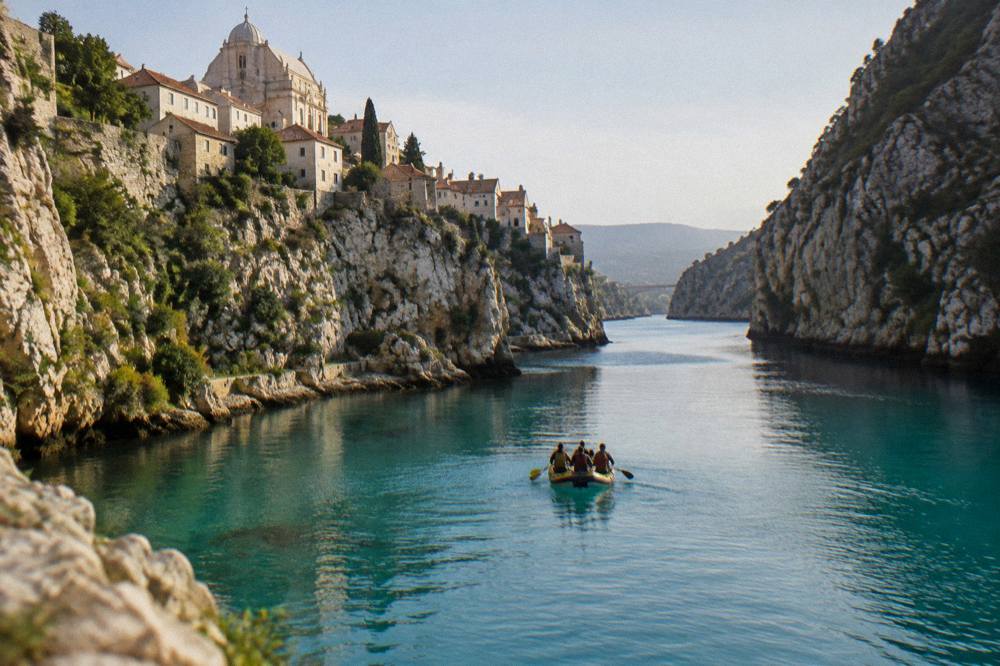
Those three picks are this site's featured adventure day trips from Split. Beyond them, the water-based alternative is the Cetina river south of the city, where a half-day rafting trip with cliff jumping runs out of the Omiš area covered in the site's Omiš and Cetina guide. It makes a strong contrast with a Sibenik day: river and canyon instead of cathedral and waterfalls, and a shorter drive.
Common Questions About A Sibenik Day Trip From Split
The short answers: Sibenik is 84.8 km and about 71 minutes free-flow from Diocletian's Palace, its Cathedral of St James has been UNESCO-listed since 2000, Krka National Park pairs with the town on a single day, and the Sibenik cathedral ticket price and the Split to Sibenik coach fare are confirmed locally, so those are confirmed on site or at booking.
How far is Sibenik from Split?
The road distance from Diocletian's Palace to Sibenik is 84.8 km, a drive of about 71 minutes in free-flowing traffic. Real summer travel takes longer, and no verified coach time or fare for the route appears in the site's facts, so bus timings are confirmed at the station on Obala kneza Domagoja or at booking.
Is Sibenik worth a day trip from Split?
Yes, on the strength of its UNESCO listing: the Cathedral of St James was inscribed in 2000, and the St Nicholas Fortress belongs to the Venetian Works of Defence listing of 2017. At 71 minutes free-flow each way, the town fits a relaxed day and can absorb Krka National Park as well.
Can you visit Sibenik and Krka National Park on the same day?
Yes. Skradinski buk in Krka is 90.2 km and about 74 minutes free-flow from Diocletian's Palace, only slightly beyond Sibenik itself. Krka entry costs 7 EUR in winter months, 20 EUR in April, May and October, and 40 EUR from June to September, and the ticket includes the Skradin boat and Lozovac bus transfers from 1 April to 31 October.
What is there to see in Sibenik?
The documented sights are the Cathedral of St James, on the World Heritage List since 2000, and the St Nicholas Fortress, part of the 2017 Venetian Works of Defence inscription. No verified ticket prices or opening hours for either appear in the site's facts, so check at the entrance.
Is Sibenik or Trogir the better day trip from Split?
Trogir is the shorter trip at 29.3 km and 36 minutes free-flow, with its whole historic city UNESCO-listed since 1997, while Sibenik at 84.8 km and 71 minutes offers the cathedral of 2000 plus the Krka combination. Choose Trogir for a short half-day, Sibenik for a full day with a national park.
When is the cheapest time to visit Krka near Sibenik?
The Krka price list sets 7 EUR entry from January to March and from November to December, against 40 EUR from June to September, and the autumn reduction took effect on 1 October 2026 with 20 EUR in October. November is the wettest month on the DHMZ Split Marjan record at 115.5 mm, so the cheapest months trade price for rain.
Sibenik rewards exactly the kind of day trip it looks built for: one cathedral with a UNESCO plaque, one fortress on a defensive listing, and a national park ten minutes further up the river, all inside a drive of about 71 minutes free-flow from the palace in Split.