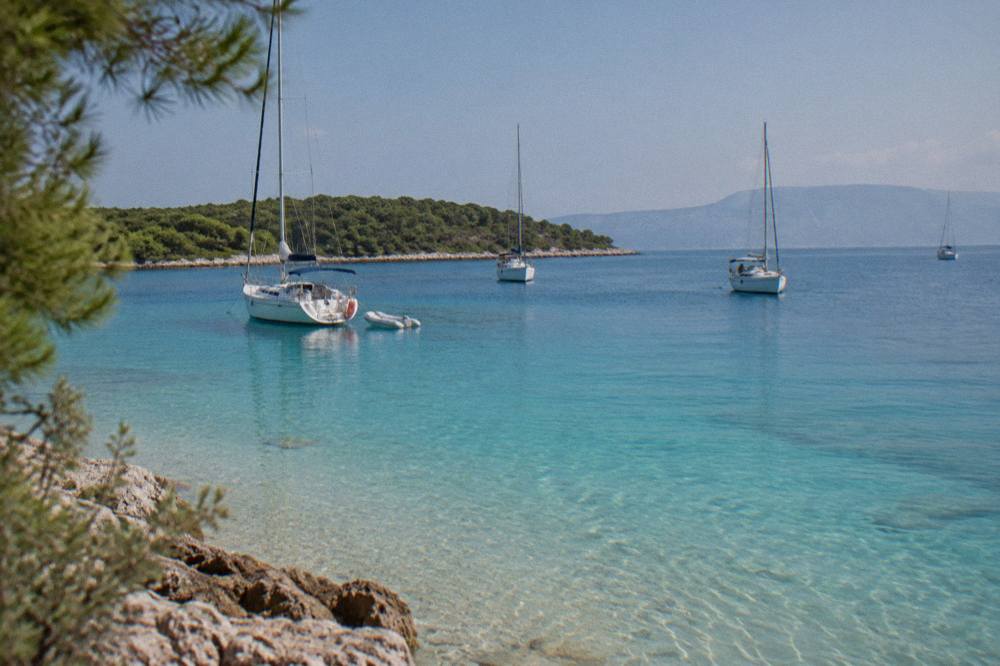
Split Beaches
Split, the coastal city in central Dalmatia, keeps its beaches inside the city itself: Bačvice, Firule, Žnjan and Kašjuni are free, walkable and open to an Adriatic that the DHMZ Split-Marjan station shows at a July mean of 26.2 C.
Short answer
The main Split beaches are Bačvice, Firule, Žnjan and Kašjuni, all city beaches, all free. The core swim season runs June to September, and island beaches on Brač, Šolta and Hvar sit between 50 and 140 minutes away by ferry or catamaran.
Split, the coastal city in central Dalmatia on the Adriatic Sea, is one of the few Croatian cities where the beaches sit inside the town rather than at the end of a bus ride. The Old Town inside Diocletian's Palace lies between the Riva waterfront and the first of those beaches, and the Marjan peninsula park forest closes off the western end of the bay with Kašjuni at its foot. This guide from the Split Croatia Travel Guide editorial desk covers what each beach is, when the water is warm enough, which island beaches you can reach in a day, and the local rules that apply between the sand and the historic centre.
Which Are The Main Beaches In Split?
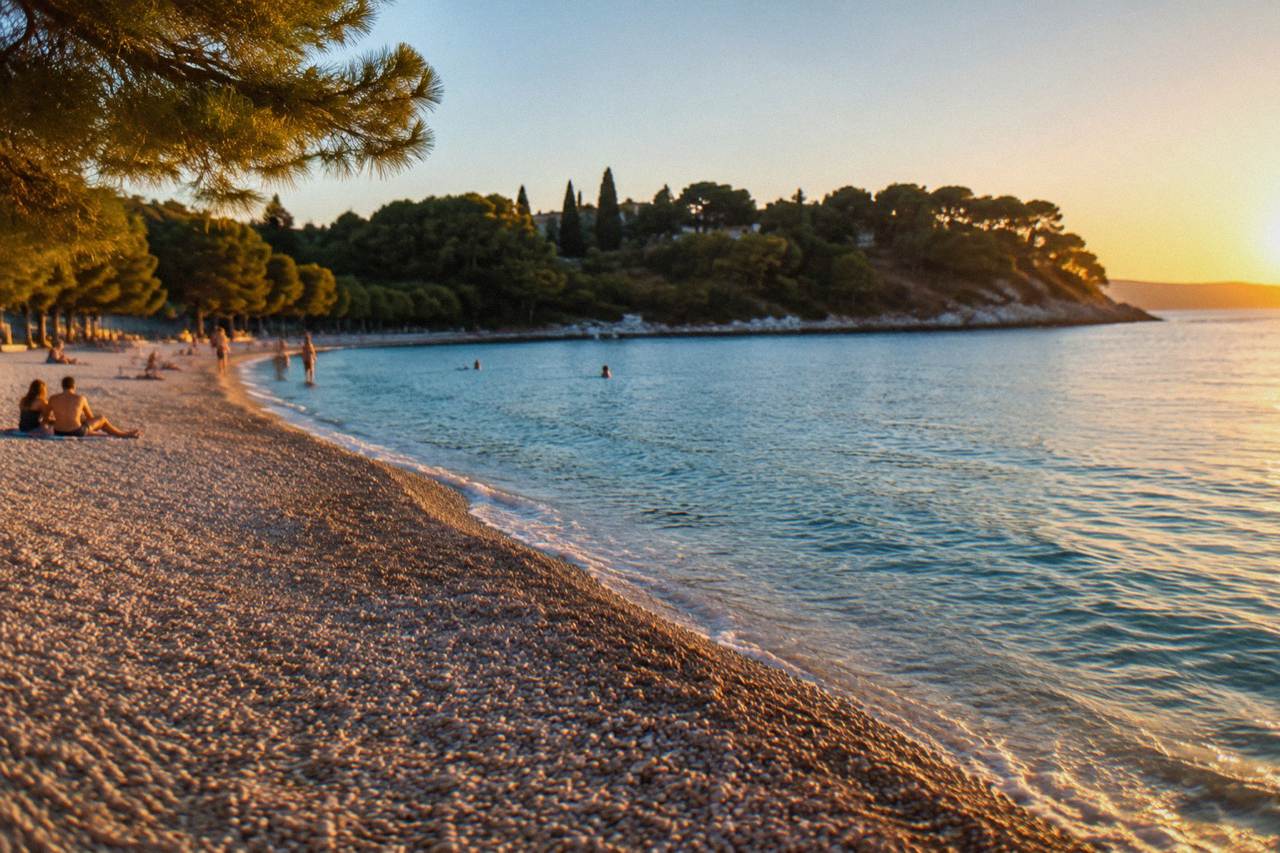
The four principal city beaches are Bačvice, Firule, Žnjan and Kašjuni, and every one of them is free to enter, with no ticket, no gate and no charge for walking on. Bačvice is the sandy city beach closest to the centre, Firule continues the same shore eastwards, Žnjan runs along the paved stretch beyond it, and Kašjuni sits beneath the Marjan park forest on the western side. All four are city beaches in the ordinary sense of the word: public, urban, and reachable on foot or by city bus from the palace.
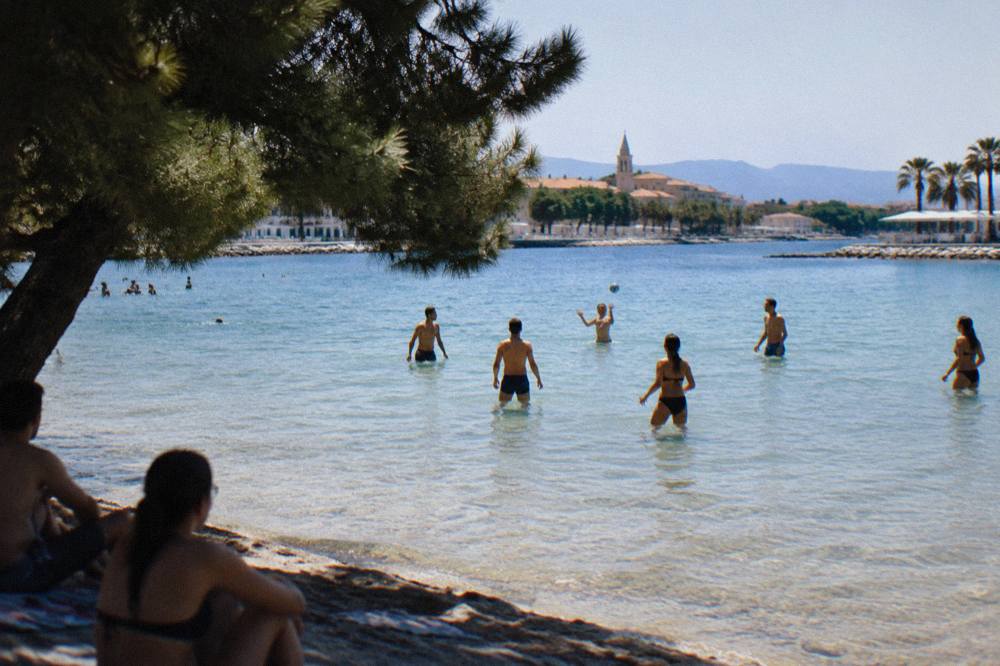
The game is still played standing in the shallows, hitting a small ball without catching it, and on a summer afternoon the bay hums with it. Firule, the next bay east, shares the same shallow, sandy character and sits beside the tennis club that gives the shore its name. Žnjan is the concrete-and-pebble terrace further east, backed by cafés, popular with families who want calm water and easy access. Kašjuni, on the south side of the Marjan peninsula, is the quietest of the four, a pebble cove under the hill, with the sea on two sides of the headland.
| Beach | Character | Access from the Old Town |
|---|---|---|
| Bačvice | Sand and shallow water, the home of picigin | Short walk east of the palace |
| Firule | Sand and shallows continuing the same shore | Walk past Bačvice eastwards |
| Žnjan | Paved plateaus and pebble entry, café terrace | City bus or a longer walk east |
| Kašjuni | Pebble cove beneath the Marjan park forest | Walk or bus over Marjan's southern side |
If the plan is to combine a morning in the palace with an afternoon on the sand, Bačvice and Firule are the practical pair, because they lie in a straight line east of the Riva. Kašjuni rewards the walk over or around Marjan with the calmest water of the four, since the peninsula shelters the cove from the open sea. The Marjan hill guide covers the paths across the park forest, whose highest point Telegrin stands 178 m above the sea, with 819 steps from Trumbićeva obala to the top.
When Is The Water Warm Enough For Swimming In Split?
The core swim season in Split runs from June through September, when the DHMZ Split-Marjan station, for the period 1948 to 2024, records mean air temperatures of 23.4 C in June, 26.2 C in July, 25.9 C in August and 21.6 C in September. July and August are the warmest months, with 18 days at 30 C or more in July and 17 in August. The station table is an air-temperature record, not a sea-temperature one: no official monthly sea-temperature normal exists for Split, so any monthly sea figure quoted anywhere should be treated as an estimate rather than a measurement standard. What the record does show is that the shoulder months, May at 19.2 C and October at 17.2 C, are warm enough for the beach itself even when the swimming gets short.
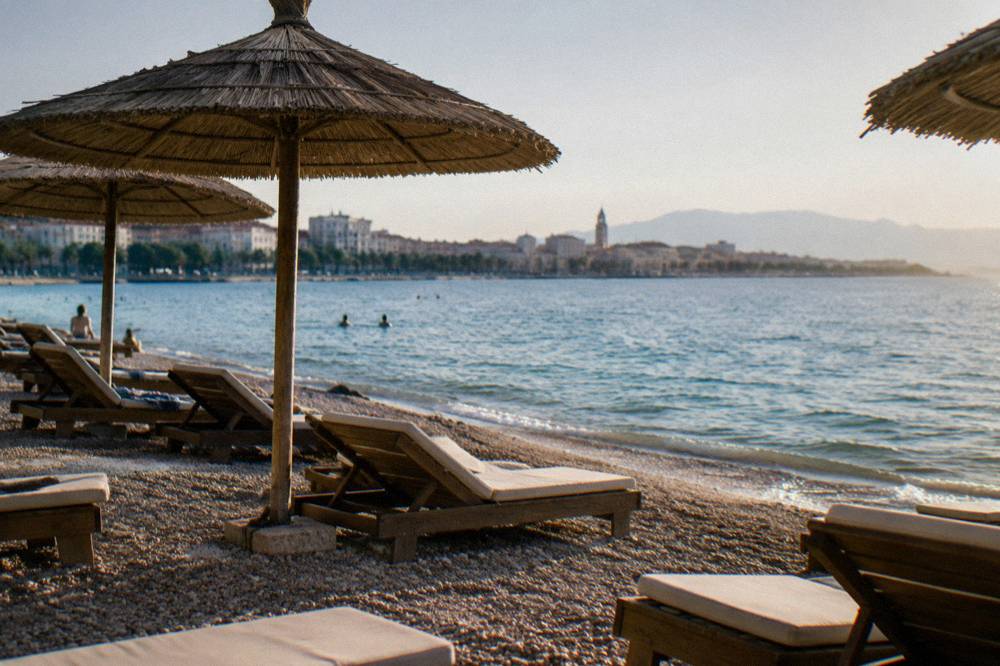
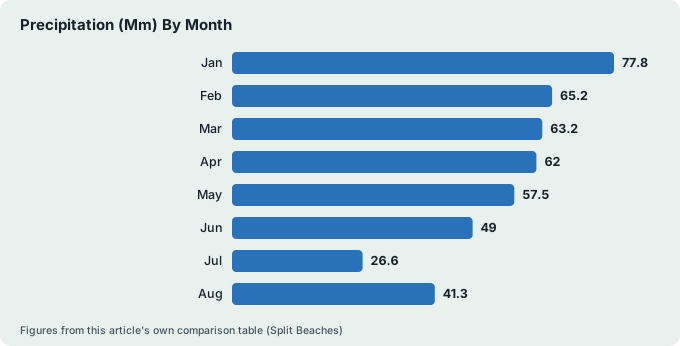
The same station table settles the rainfall question that matters for a beach holiday. July is the driest month on the record at 26.6 mm, August follows at 41.3 mm, and the wet months cluster in late autumn: November is the wettest at 115.5 mm and December carries 103.7 mm. Sunshine runs the same way, with 353.3 hours in July against 120.8 hours in December, and about 2,600 hours across the year. In plain planning terms, a July or August week is the safest bet for sun, June and September trade a little warmth for thinner crowds, and anything from November to February is a walking-and-coffee season rather than a swimming one.
| Month | Mean air temperature, DHMZ Split-Marjan 1948-2024 (C) | Precipitation (mm) |
|---|---|---|
| Jan | 8.0 | 77.8 |
| Feb | 8.5 | 65.2 |
| Mar | 10.8 | 63.2 |
| Apr | 14.4 | 62.0 |
| May | 19.2 | 57.5 |
| Jun | 23.4 | 49.0 |
| Jul | 26.2 | 26.6 |
| Aug | 25.9 | 41.3 |
| Sep | 21.6 | 70.9 |
| Oct | 17.2 | 77.0 |
| Nov | 12.7 | 115.5 |
| Dec | 9.4 | 103.7 |
For anyone weighing Split against the far south of the coast on beach weather, the Split weather guide carries the full station table, and the best time to visit Split translates it into a month-by-month verdict. One caveat from the same record: September's 70.9 mm falls largely in short storms rather than grey weeks, and the sea in early October is often warmer than the air, since water holds the summer heat longer than air does. The live sea reading published by DHMZ is the only sea figure worth checking on the day, and it moves through the year rather than sitting at a fixed normal.
A beach week in Split does not have to be only a beach week. The same transport hub that carries the ferries, Obala kneza Domagoja, 500 to 600 m from the palace, starts the day trips, and the pairing that suits beach visitors is a water day followed by an inland one. The self-guided Plitvice Lakes day tour with a boat ride, covered on its own tour page, is the inland counterweight: the lakes replace salt water with freshwater cascades, and the operator's live listing shows current availability, Check availability.
Which Split Beach Suits Which Kind Of Swimmer?
Families with small children suit Bačvice and Firule, whose sand and waist-deep shallows make them the safest entries in the city; swimmers who want calm, clear water away from the crowds suit Kašjuni beneath Marjan; and Žnjan suits visitors who want a café terrace and paved sunbathing beside the sea rather than a natural cove. None of the four charges entry, and none of them is more than a city bus ride from the centre. The choice is really between the sandy east bay and the pebble west cove, and the two sit on opposite sides of the Marjan peninsula, so the wind direction on the day can decide for you.
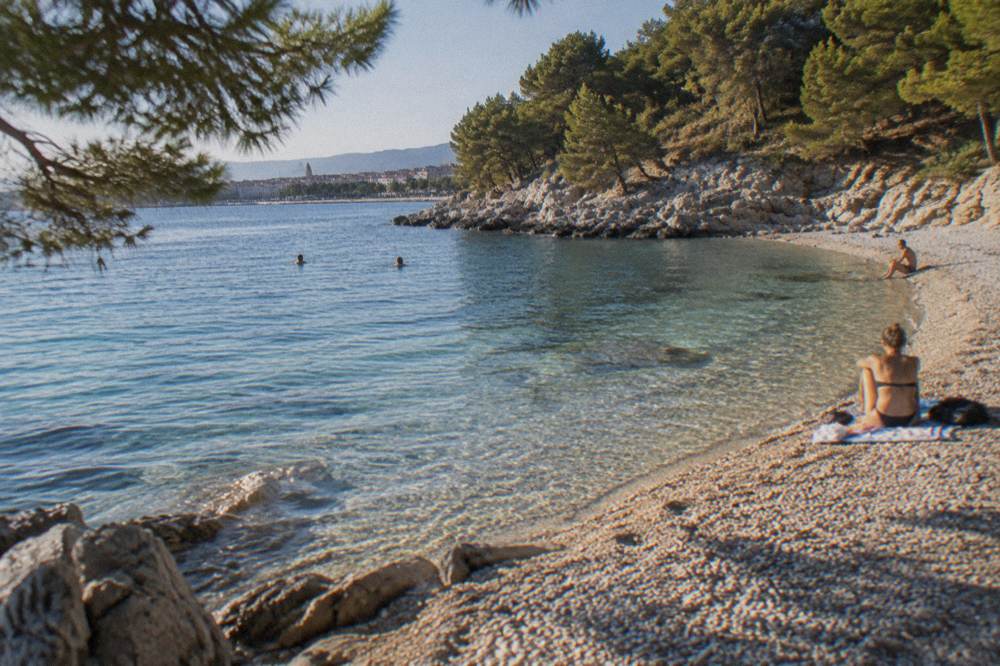
The shallow-sand character of Bačvice is also why picigin settled there: the game needs standing-depth water and a soft bottom, and Bačvice has both across a wide area of the bay. Firule shares that profile with fewer people in it, which is the standard local arithmetic between the two. Kašjuni and the adjoining coves on Marjan's southern side are pebble, so water shoes earn their place in the bag, but the trade is water clarity, since the pebble bottom keeps the sea visible to the stones. Žnjan, rebuilt as a paved terrace with entry ladders and pebble patches, is where the afternoon turns into dinner without moving far, and the Split restaurants guide picks up the story from there.
Can You Reach Island Beaches From Split In A Day?
Yes: from the ferry port beside the main bus station, the car ferry to Supetar on Brač takes about 50 minutes, the ferry to Rogač on Šolta about 60 minutes, the car ferry to Stari Grad on Hvar about 120 minutes and the ferry to Vis about 140 minutes, with catamarans running faster passenger-only services on several of the same routes. Hvar town itself is reached by catamaran, while Stari Grad is the car-ferry port on the same island, and confusing the two is the classic first-timer's booking error. The Port of Split's busiest passenger port with 6.05 million passengers in 2025, moves all of this from one waterfront.
The island beaches that follow are the ones the ferry network puts within a day return. Zlatni Rat on Brač, the shifting pebble horn near Bol, is the destination the Brač and Zlatni Rat guide covers in full, reached by catamaran via Bol or by ferry to Supetar and road. Šolta's coves sit closest to the city, about an hour out, and the Blue Lagoon and Šolta guide covers the stretch of water between them that the boat trips work all summer. Hvar carries the Fortica viewpoint above Hvar town, ticketed at 12 EUR per the Hvar tourism pages, and its Pakleni islands beaches are the standard boat-trip destination from both shores.
| Island destination | Route from Split | Journey time | Typical craft |
|---|---|---|---|
| Supetar, Brač | Line 631 | About 50 minutes | Car ferry |
| Rogač, Šolta | Line 636 | About 60 minutes | Car ferry |
| Stari Grad, Hvar | Line 635 | About 120 minutes | Car ferry |
| Hvar town or Jelsa | Catamaran lines 9603 and 9602 | Faster than the ferry | Passenger catamaran |
| Vis town | Catamaran line 9602 | About 140 minutes by ferry | Ferry or catamaran |
Foot-passenger fares on the ferries are published in Jadrolinija's price list: 5.90 EUR off-season and 8.40 EUR in season for the Stari Grad line, while catamarans run at 6.40 EUR low and 10.00 EUR high season to Hvar or Jelsa, and 7.20 and 10.00 EUR to Vis. The ferries from Split guide and the Split to Hvar ferry guide carry the route detail, and the Split boat tours guide covers the skipper-included alternative, where the boat, the swimming stops and often the lunch come as one package. One timing note from the 2026 timetable changes: the Split to Supetar line dropped its off-season timetable from 2026 and now runs high-season and low-season schedules only, the fifth Croatian line to do so.
What Can You Do At Split Beaches Besides Swimming?
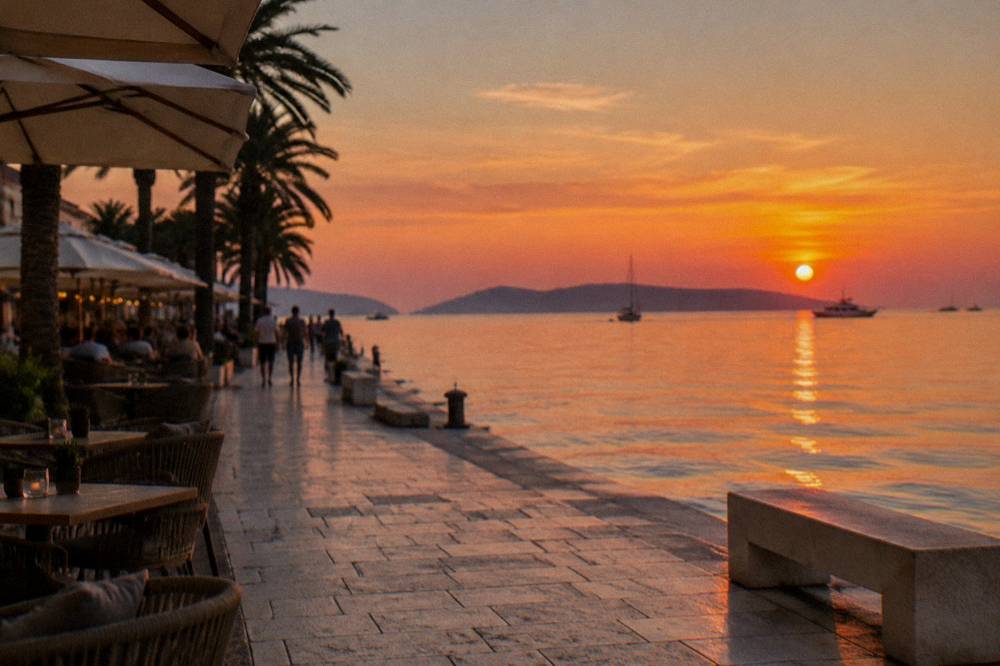
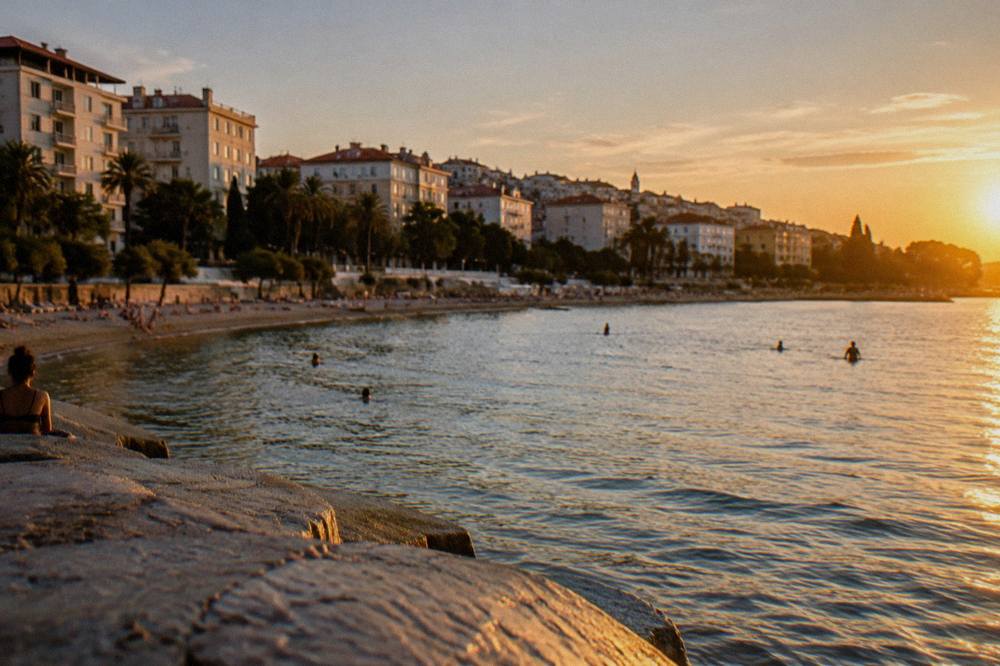
Beyond swimming, Split's shore carries picigin on Bačvice, a protected ball game born there in 1908; sea kayaking along the Marjan coast and out to the headlands; boat trips to the Blue Lagoon and the Pakleni islands; and, on the land side, the walk or ride up Marjan to Telegrin at 178 m for the view back over the bays. All of the water-side activity starts from the same waterfront the ferries use, which keeps the logistics simple: the beach, the kayak slip and the day-boat dock sit within a short walk of one another. The evening version of the coast is its own event, since the sunsets here face the open Adriatic and the islands.
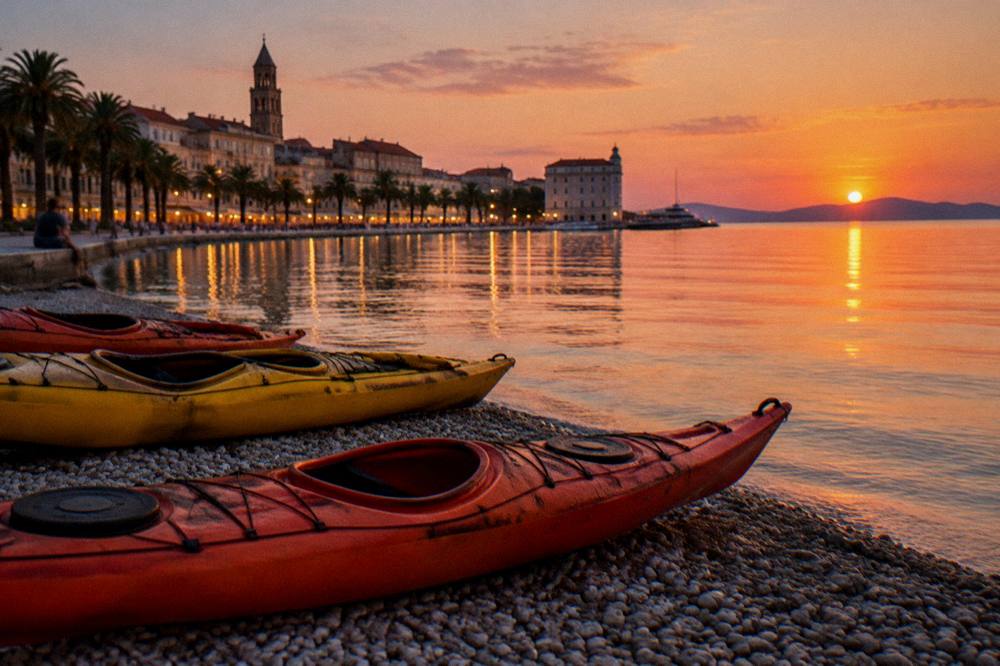
The illuminated evening kayak tour paddles the city waterfront after dark, and the half-day and guided kayak trips work the Marjan cliffs and the beaches in daylight; each has its own page under the boat and water tours listings, and the operator's live listing carries the current dates and availability. On land, the electric tuk-tuk city ride covers the hill and the beaches in one loop for anyone who would rather save the legs for the water, and the free things to do in Split guide rounds out the no-cost layer: the beaches themselves, Marjan, the Peristyle and the Riva all sit on that list.
For the day the sea is flat and the schedule is open, the small-group Blue Lagoon and three-island speedboat trips and the half-day three-island runs out of Split and Trogir pack swimming stops into a morning. When the wind turns and the bays chop over, the fallback is not far: the rainy day in Split guide and the museums cluster inside the palace, all of them within ten minutes' walk of the first beach. That bounce between sand and stone is what makes the city work as a base: the same address serves the beach, the palace and the boat dock.
Where Should You Stay In Split To Be Near The Beaches?
To stay beside the beaches, the areas that matter are Bačvice and Firule for the sandy east bays, Meje for Kašjuni and the Marjan foot, and Žnjan for the café-lined terrace east of the centre, all of them within a walk or a short city bus ride of the Old Town. The historic centre itself sits between the Riva and the first sand, so even a palace-address stay puts Bačvice minutes away on foot. The trade is simple: Meje buys quiet and the hill, Bačvice buys proximity to the sand and the night-time buzz, and Žnjan buys family space and easier parking.
The where to stay in Split guide breaks the neighbourhoods down in detail, and the accommodation collects the tourist tax, about 2.65 EUR per person per night in high season, always confirmed at booking. Two further reads matter for a beach-centred stay: the Split with kids guide, which works the shallow bays hard, and the Split on a budget guide, which pairs the free beaches with the free old town. One planning note: the historic centre's short-term-rental registrations remain capped under the moratorium extended through 2026, so the apartment stock inside the palace core is fixed, and the beach neighbourhoods carry the newer rooms.
What Rules Apply On And Around Split Beaches?
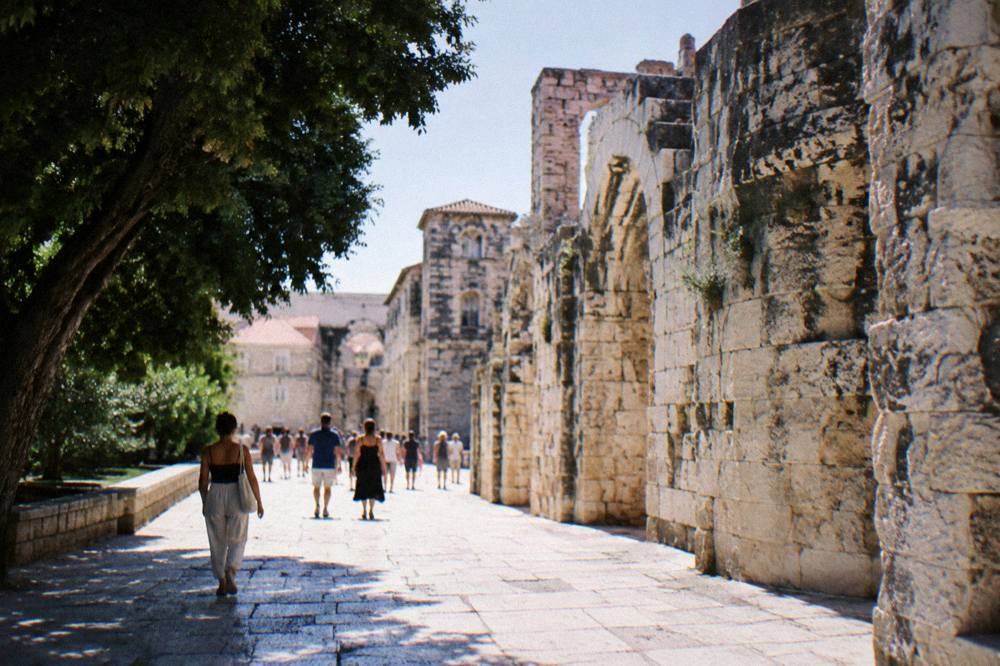
On Split's public surfaces the public-order fines are 300 EUR for drinking alcohol in the historic centre, 300 EUR for urinating, vomiting, climbing on monuments or bathing in fountains, 300 EUR for taxi touting and 150 EUR for sleeping in public spaces, and walking in swimwear or shirtless in the historic centre is also fined, with the amount set locally. The beach itself is not the historic centre, but the walk between the two is, and the Riva and the palace streets are exactly where the swimwear rule bites on the way back from the sand. Cover up for the walk home and the question never arises.
The night-time rules are equally concrete. Retail alcohol sales in shops, as distinct from bars and restaurants, are banned between 21:00 and 06:00 during the summer season, a restriction that repeats from 1 June 2027 unless changed, and the beach terraces are licensed premises unaffected by it. Drones are barred over the old town and the airport zones and banned in the national parks. For the wider practical layer, emergencies included, the national number is 112, Croatia is in the euro since 1 January 2023 and in Schengen since 1 January 2023, and the Split safety guide carries the rest.
| Rule | What the sources say |
|---|---|
| Swimwear in the historic centre | Fined, amount set locally |
| Alcohol in the historic centre | 300 EUR fine |
| Climbing monuments, bathing in fountains | 300 EUR fine |
| Sleeping in public spaces | 150 EUR fine |
| Night shop alcohol sales, summer season | Banned 21:00 to 06:00, repeating from 1 June 2027 |
| Drones | No-fly over the old town, the airport zones and the national parks |
Common Questions About Split Beaches
Are the beaches in Split free?
Yes. Bačvice, Firule, Žnjan and Kašjuni are city beaches and free, with no entry charge on any of them.
Can you swim in the sea in Split?
Yes, from June through September the sea is comfortably swimmable, and the DHMZ Split-Marjan station shows July and August air means of 26.2 C and 25.9 C for the period 1948 to 2024. The full answer is in the site's guide to swimming in the sea in Split.
Which Split beach is best for families?
Bačvice and Firule, for their sand and waist-deep shallows, with Žnjan as the café-terrace alternative. Kašjuni is calmer but pebbly, so bring water shoes.
Do any Split beaches hold a Blue Flag?
No claim for 2026 appears in the site's facts, so no award status is stated here. Check the current award list locally if a flag matters to you.
Can you walk from the Old Town to a beach?
Yes. Bačvice is a short walk east of the palace and the Riva, Firule lies beyond it, and Kašjuni is reached over or around the Marjan peninsula.
Which month is warmest in Split?
July, at a mean of 26.2 C on the DHMZ Split-Marjan station record for 1948 to 2024, followed by August at 25.9 C.
Split's beaches earn their place in the plan by being ordinary in the best sense: free, central, and backed by a ferry port that turns the same afternoon into an island one. Pick the bay that matches the wind, cover up for the walk back through the palace streets, and let the timetable, not the postcard, decide which shore the day ends on.