Is Split In Croatia Worth Visiting?
Yes, Split in Croatia is worth visiting: a Roman palace you live inside, beaches 500 m from the centre, ferries to Hvar and Brač, and day trips to Krka and Plitvice.
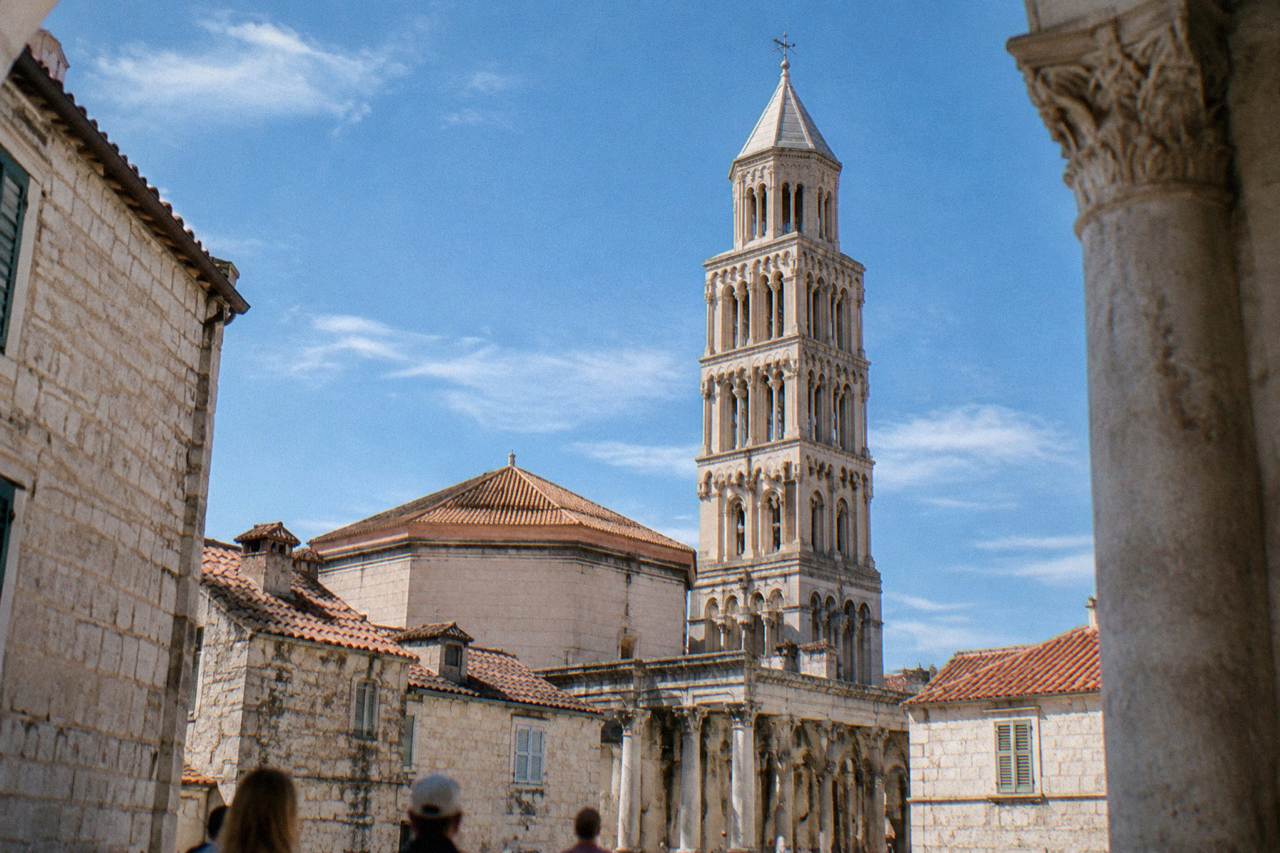
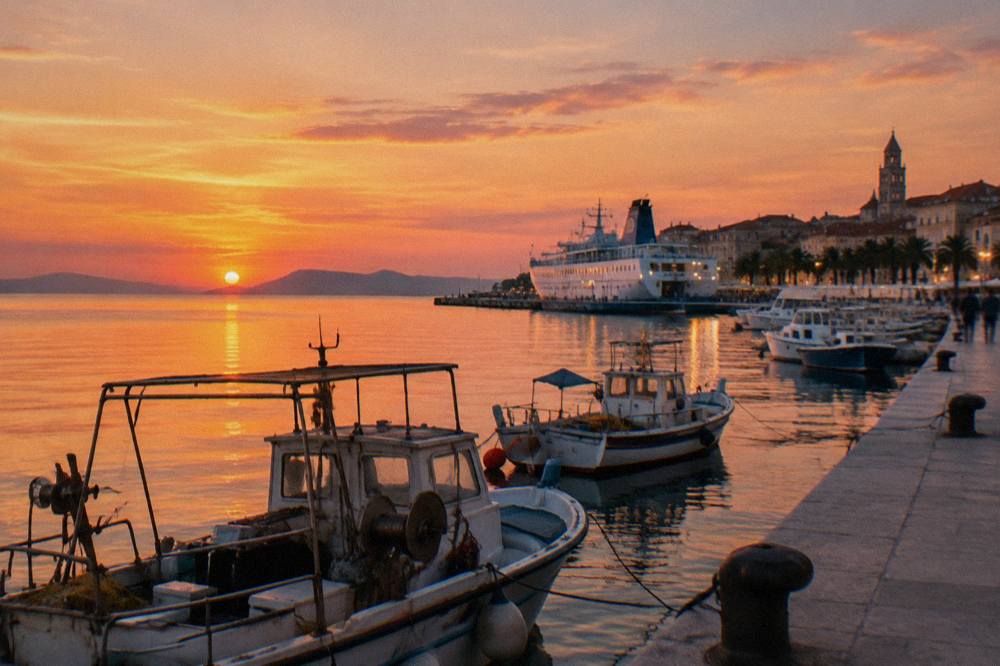
Split in Croatia is worth visiting because it is the only Adriatic city whose entire old centre is a Roman structure still in daily use. Diocletian's Palace, built around 295 to 305 AD for the emperor who retired here, holds apartments, bars, shops and a cathedral inside its walls, and UNESCO inscribed the whole historical complex in 1979. Around it sits a working port city of 160,577 people (2021 census) with beaches within a short walk of the palace, a forested park peninsula at its western edge, and ferry lines to Hvar, Brač, Šolta and Vis leaving from a terminal 500 to 600 m from the old town. The port's own statistics page records 6.05 million passengers in 2025, which makes it Croatia's busiest passenger port.
That combination, a walkable Roman core, a sea on three sides and islands an hour away, is what the rest of this page examines in detail: what the city offers, what it costs, how it works as a base for day trips, and when to go. The figures below come from the DHMZ Split-Marjan station table, the Jadrolinija route pages and the attractions' own price lists.
Is Split In Croatia Worth Visiting?
Yes. Split is worth visiting for three reasons that stack together: a UNESCO-listed Roman palace you walk through rather than look at, city beaches and the Marjan park forest within reach of the centre on foot, and a ferry port that puts Hvar, Brač, Šolta and Vis an hour or so offshore. The city also works as a base for Krka, Plitvice, Trogir and Klis, all reachable on organised day trips. A short stay is enough to see the core: the palace, the Riva promenade and the Peristyle can be covered on foot in a day, and one day in Split genuinely covers the essentials if that is all the time there is.
The honest qualification is that Split rewards a particular kind of traveller. It is a port city first and a museum second, so the zone around the bus and ferry terminal is functional rather than picturesque, and the old town fills and empties with the tide of day visitors from cruise ships. The visitsplit event calendar and the port's own page record 487,377 cruise passengers in 2025, so the Peristyle is busy at midday and calmer by early evening. Anyone wanting a quiet, polished resort town should compare it with what is prettier, Split or Dubrovnik before booking.
For everyone else the trade works. The palace cellars, run by the Split City Museum, are open Monday to Sunday 8:30 to 20:00, and the City Museum's own price list puts its Papalić Palace ticket at 10.00 EUR adult. The Peristyle, the Riva, the Golden Gate, the Grgur Ninski statue, the markets, Marjan and the city beaches cost nothing. A traveller can spend a morning inside the ancient walls, swim at Bačvice in the afternoon and eat grilled fish that evening, all without a vehicle.
What Makes Split Worth The Trip?
Split's core appeal is that its main monument is a living quarter, not a ticketed ruin: Diocletian's Palace contains buildings still in residential and commercial use, with the cathedral, the Peristyle and the cellars embedded among them. The second draw is geography: the Marjan peninsula park forest rises to Telegrin at 178 m, 819 steps from Trumbićeva obala, and city beaches sit 500 to 600 m from the palace. The third is the sea: the ferry port and the bus and rail stations share one waterfront.
The palace itself was built c. 295 to 305 AD as a retirement residence for Emperor Diocletian, and the historical complex around it, 20.8 ha in total, entered the UNESCO World Heritage list in 1979. The Temple of Jupiter is now the Baptistery of St John, and the cathedral's bell tower stands 57 m over the Peristyle. Cathedral complex tickets are sold at a kiosk on the Peristyle; secondary guides put single-site tickets from about 5 EUR and combined tickets up to about 15 EUR, and the cathedral asks that shoulders and knees be covered. For the free parts of the palace, is Diocletian's Palace free? has the breakdown.
Beyond the walls, Split keeps a manageable list of genuinely good museums. The Meštrović Gallery reopened in April 2026 after a 15-month energy renovation, and its price list shows a 12.00 EUR adult ticket that includes the Crikvine-Kaštilac site. The Archaeological Museum, founded in 1820, charges 8 EUR, or 10 EUR combined with the Roman ruins at Salona within 7 days. The Ethnographic Museum is 7.00 EUR. Between the palace and Marjan, the old quarter of Veli Varos and the green market fill out days without a ticket at all, and free things to do in Split lists them.
Guided options fill the gaps the signs leave. A guided loop covering Trogir, Salona, an olive museum and Klis Fortress runs from the city and explains the layers the plaques skip; Check availability for current dates. Two other formats suit first visits: a sea kayak trip along the city coast, and a gastro walk through the green market.
How Much Does A Day In Split Cost?
A day in Split costs very little to enter: the Peristyle, the Riva, Marjan, the markets and the city beaches are free, and the paid sightseeing runs from 7.00 EUR at the Ethnographic Museum through 10.00 EUR at the Split City Museum to 12.00 EUR at the Meštrović Gallery. Croatia has used the euro since 1 January 2023, and the tourist tax is about 2.65 EUR per person per night in high season, collected by the accommodation and confirmed at booking.
Eating out is the variable. The city has no Michelin-starred restaurant (the question is there a Michelin star restaurant in Split? covers the detail), and everyday konoba cooking keeps prices well below Dubrovnik's; the pages on eating costs and where locals eat give the practical picture. Accommodation in the old town is capped in supply, because the city extended a moratorium on new short-term rental registrations in the historic core through 2026, so early booking matters in summer.
The table below shows what the paid part of a sightseeing day costs, from the museums' and operators' own price lists.
| Sight in Split | Adult ticket | Source detail |
|---|---|---|
| Split City Museum (Papalić Palace) | 10.00 EUR | Museum price list, closed Mondays |
| Palace cellars (substructures) | Mon to Sun 8:30 to 20:00 | Split City Museum, central part under restoration to end of 2026, passage open |
| Cathedral complex | from about 5 EUR, combos up to about 15 EUR | Secondary guides, kiosk on the Peristyle |
| Archaeological Museum | 8 EUR, 10 EUR with Salona within 7 days | Museum price list from 7 January 2026 |
| Ethnographic Museum | 7.00 EUR | Museum price list |
| Meštrović Gallery | 12.00 EUR, includes Crikvine-Kaštilac | Gallery price list, reopened April 2026 |
| Klis Fortress | 10 EUR | Game of Thrones Meereen location, figure secondary |
One cost trap is behavioural rather than monetary. Split's 2026 public order rules fine public drinking in the historic centre at 300 EUR, and climbing on monuments or bathing in fountains likewise 300 EUR; walking in swimwear or shirtless in the centre is also fined, with the amount set locally. The page on what to avoid in Split lists the rest.
Is Split A Good Base For Day Trips?
Split is the best day-trip base on the Croatian coast. From the palace, free-flow driving times are 14 minutes to Roman Salona, 22 minutes to Klis Fortress, 36 minutes to Trogir, 38 minutes to Omiš, 74 minutes to Krka's Skradinski buk and about 3 hours 15 to Plitvice Lakes, while ferries and catamarans reach Šolta in about 60 minutes, Brač in about 50 and Hvar via Stari Grad in about 120. The ferry port, main bus station and railway station sit together 500 to 600 m from the palace, so the connections are genuinely walkable from the old town.
The island side is the part competitors cannot match. Jadrolinija's line 635 runs the car ferry to Stari Grad on Hvar in about 120 minutes, with foot passengers at 5.90 EUR off-season and 8.40 EUR in season; line 631 reaches Supetar on Brač in about 50 minutes, and from 2026 that route no longer has an off-season timetable at all, the fifth Croatian line to drop it. Note the distinction that trips up: Hvar town itself is reached by catamaran, Stari Grad by car ferry. Catamaran fares run 6.40 EUR low / 10.00 EUR high to Hvar or Jelsa and 7.20 / 10.00 EUR to Vis, with Vis about 140 minutes away.
To let a boat handle the island hopping for a day, book a Hvar and Pakleni islands cruise here.
On the mainland, the national parks anchor the long days. Krka charges 7 / 20 / 40 EUR by season (January to March and November to December at 7, April, May and October at 20, June to September at 40), and Plitvice charges 10 / 23 / 40 EUR with a 25 EUR afternoon slot in peak; Plitvice requires timed online entry and prints the visitor's name on the ticket. The comparison Plitvice or Krka helps decide between them.
| Day trip from Split | Free-flow time | Notes from the timetable and price sources |
|---|---|---|
| Salona | 14 min drive | Combined 10 EUR ticket with the Archaeological Museum, valid 7 days |
| Klis Fortress | 22 min drive | 10 EUR adult, Meereen filming location |
| Trogir | 36 min drive | UNESCO listed 1997 |
| Omiš and the Cetina | 38 min drive | Mirabela fortress 4 EUR, 6 EUR from 1 June to 30 September |
| Krka (Skradinski buk) | 74 min drive | Ticket includes Skradin boat and Lozovac bus, 1 April to 31 October |
| Šibenik | 71 min drive | St James cathedral, UNESCO 2000 |
| Hvar (Stari Grad ferry) | about 120 min | Foot passenger 5.90 / 8.40 EUR |
| Brač (Supetar ferry) | about 50 min | No off-season timetable from 2026 |
| Plitvice Lakes | 3 h 15 drive | Timed online entry, name on ticket |
For travellers who prefer not to drive, the guided options cover the same ground, and the Trogir, Salona, olive museum and Klis loop is the natural first pick.
Should You Stay In Split Or On An Island?
Stay in Split if variety matters: the city gives you the palace, beaches, Marjan and every ferry and coach connection from one terminal, while the islands give one setting each. Hvar, Brač and Šolta are day-trip easy from Split, about 50 to 120 minutes by boat, but the reverse is not true of Split's mainland trips: Krka, Plitvice and Mostar all start from the city, not from the islands. Split also holds its season better: Hvar town slows sharply outside summer, while Split's resident population of 160,577 keeps restaurants, museums and the HNK theatre season (25 September 2026 to 14 June 2027) running through the shoulder months.
The counter-case is quiet. Split's old town is dense and, in July and August, loud; the DHMZ Split-Marjan station table records 18 days at 30 C or more in July and 17 in August. A split stay, a few nights in the city plus a few on Hvar or Šolta, is the arrangement the ferry network is effectively built for. The comparisons is Hvar nicer than Split? and how many days is enough for Split? work through the arithmetic.
When Is The Best Time To Visit Split?
By the DHMZ Split-Marjan station record (1948-2024), June and September are the best months: June averages 23.4 C with 49 mm of rain, and September 21.6 C with 70.9 mm, while July, the busiest month, averages 26.2 C with only 26.6 mm of rain and 18 days at 30 C or more. November is the wettest month at 115.5 mm and January the coldest at 8.0 C. Sunshine runs 353.3 hours in July against 120.8 hours in December.
| Month | Mean temp (C) | Rain (mm) | Month | Mean temp (C) | Rain (mm) |
|---|---|---|---|---|---|
| Jan | 8.0 | 77.8 | Jul | 26.2 | 26.6 |
| Feb | 8.5 | 65.2 | Aug | 25.9 | 41.3 |
| Mar | 10.8 | 63.2 | Sep | 21.6 | 70.9 |
| Apr | 14.4 | 62.0 | Oct | 17.2 | 77.0 |
| May | 19.2 | 57.5 | Nov | 12.7 | 115.5 |
| Jun | 23.4 | 49.0 | Dec | 9.4 | 103.7 |
Two scheduling facts matter for 2026 and 2027. Advent in Split runs 27 November 2026 to 7 January 2027 with the ice rink at Đardin, and Ultra Europe 2027 takes Park Mladeži on 9 to 11 July 2027, dates that double hotel demand in that window. One disruption to plan around: the central section of the Riva promenade is scheduled for renovation from November 2026 for a little over a year, so partial closures on the Riva are expected through 2027, and the palace cellars' central part is under restoration to the end of 2026 with the passage kept open. The full month-by-month breakdown is in what is the best month to visit Split.
Getting there is the easy part. The airport at Kaštel Štafilić handled 3,881,186 passengers in 2025, sits 20 km from Split and 6 km from Trogir by its own pages, and the Platanus shuttle runs to the main bus station by the ferry port for 10 EUR one way or 15 EUR return. Since April 2026 there is even a seasonal direct flight from Newark, the airport's first transatlantic route, and Croatia's membership of the Schengen area since 1 January 2023 removes border friction for most European arrivals.
Common Questions About Visiting Split
Is Split in Croatia worth visiting?
Yes. Split combines a UNESCO-listed Roman palace in daily use, free city beaches within a short walk of the centre, the Marjan park forest and ferry lines to Hvar, Brač, Šolta and Vis, plus day trips to Krka, Plitvice, Trogir and Klis. It suits travellers who want a real working city with history embedded in it, not a resort village.
How many days does Split need?
One full day covers the palace, the Peristyle, the Riva and a swim; two days add Marjan and a museum; three or more allow a first day trip such as Trogir, Salona and Klis or an island hop. The essentials are all within walking distance of each other.
Is Split expensive?
Sightseeing is moderate: museum tickets run 7.00 to 12.00 EUR, and the cathedral complex from about 5 EUR. Croatia uses the euro, and the tourist tax is about 2.65 EUR per person per night in high season, collected by the accommodation. Eating costs sit below Dubrovnik's for comparable food.
Can you swim in Split?
Yes. Bačvice, the city's main beach, sits a short walk east of the palace, and the Marjan side holds quieter coves such as Kašjuni. The sea is warm enough for swimming through the summer months; the live sea temperature is published by the national weather service, and no monthly normal is published.
Is Split walkable?
The old town, the Riva, the green market and the ferry, bus and rail terminals all sit within roughly 600 m of the palace. Marjan's trails start from the western edge of the centre, with 819 steps from Trumbićeva obala up to Telegrin at 178 m.
Do you need a car in Split?
Not for the city itself, and organised day trips cover Krka, Plitvice, Trogir and Mostar. A car helps only for independent exploration of the hinterland or the far end of long routes; parking tariffs are not published here, so confirm with your accommodation before renting.
The short verdict stands: Split earns its place on any Dalmatian itinerary, and it earns it twice over for anyone using the city as the hub for the islands and parks that surround it.
