Free Things To Do In Split
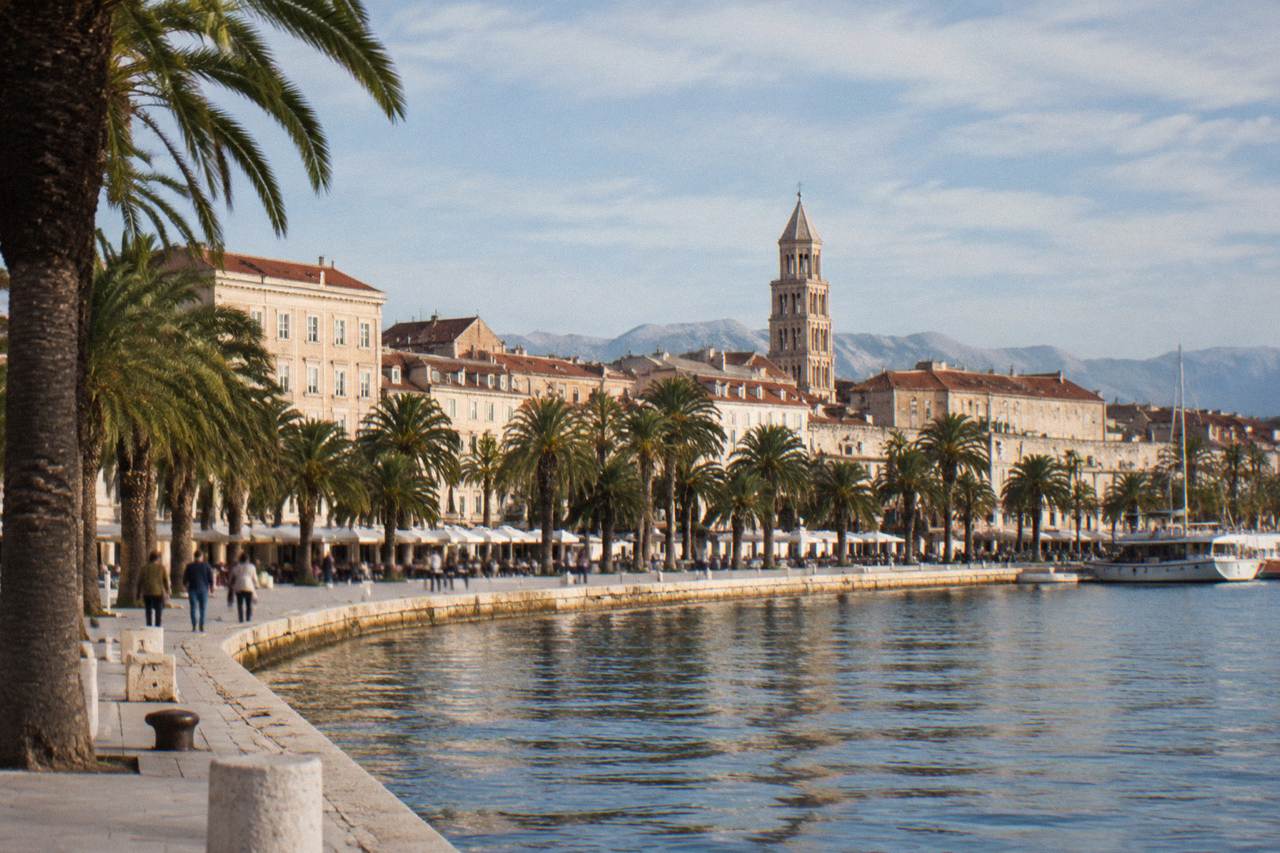
Split gives away an unusual amount for a city whose old core is a UNESCO-listed Roman palace: the Peristyle, the Riva, the Marjan park forest, the city beaches and the green markets all cost nothing, and a daily Roman guard change plays out on the Peristyle for free in season.
Short answer
The free list in Split is long: the Peristyle and the palace streets, the Golden Gate and the Grgur Ninski statue, the Riva and Prokurative squares, Marjan hill with its 819 steps to Telegrin at 178 m, the beaches of Bačvice and Kašjuni, the green markets and, in season, the noon Roman guard change on the Peristyle. Only the interiors, the museums and the bell tower take a ticket.
Split, the coastal city in central Dalmatia where the Adriatic meets a Roman palace, is unusually generous to visitors spending nothing. The ground floor of the city, its squares, gates, promenade, park forest and beaches, is free to walk, and several of its headline sights sit exactly on that free layer. This guide sets out what costs nothing, what the ticketed interiors charge, and where the free events fall in the year, so a budget day in Split can be planned down to the last euro, of which few will be needed.
Which Sights In Split Are Free To Enter?
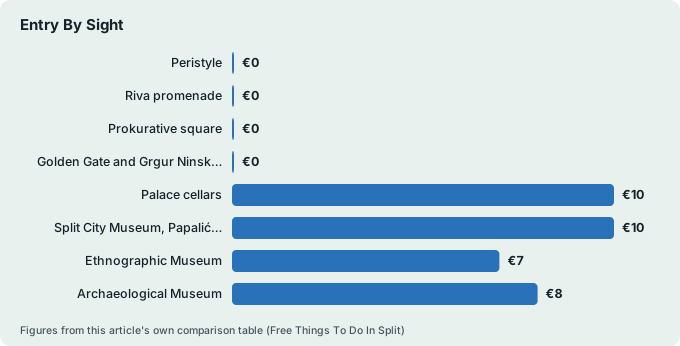
The free list in Split covers the Peristyle, the Riva promenade, the Prokurative square, the Golden Gate, the Grgur Ninski statue, the city's green markets, the whole Marjan park forest and every city beach including Bačvice and Kašjuni. Only interiors take a ticket: the palace cellars at 10.00 EUR, the Split City Museum at 10.00 EUR, the Ethnographic Museum at 7.00 EUR, the Archaeological Museum at 8 EUR and the Meštrović Gallery at 12.00 EUR.
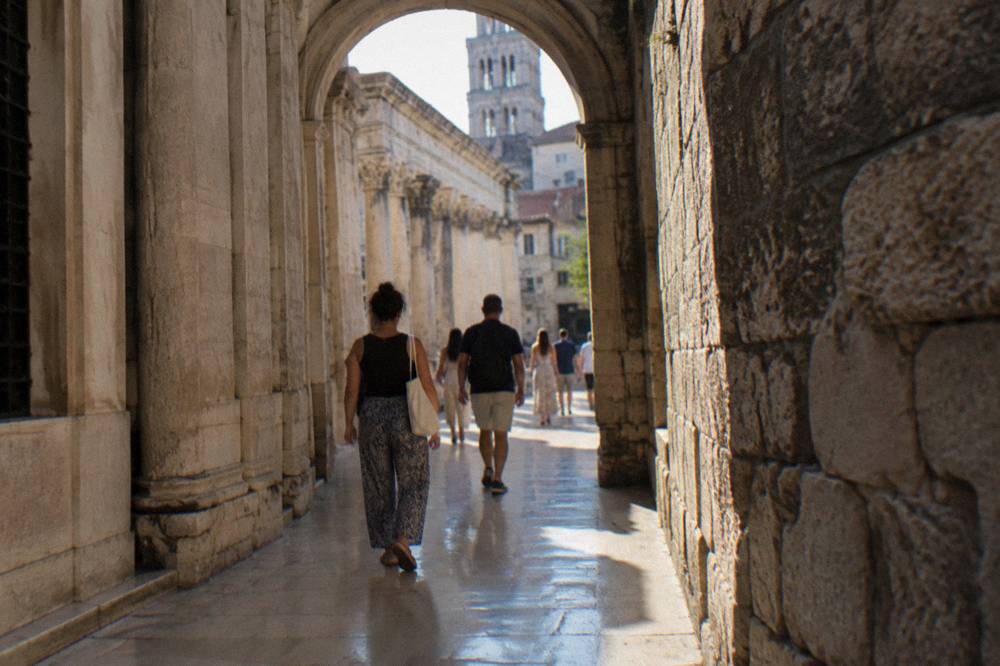
That division is the whole trick of visiting Split cheaply. The palace of Diocletian, begun around 295 to 305 AD, is not a gated monument: it is the city's living core, and its courtyards, gates and streets are public space, inscribed by UNESCO in 1979 as the Historical Complex of Split with the Palace of Diocletian across 20.8 ha. A visitor can stand on the Peristyle, walk the cellars' surrounding streets, pass under the Golden Gate and touch the toe of the Grgur Ninski statue without paying anyone anything.
What the ticket buys is depth. The Split City Museum's price list shows the palace substructures, the cellars, open Monday to Sunday 8:30 to 20:00, and its own Papalić Palace rooms at 10.00 EUR adult, 8.00 reduced, family 18.00. The cathedral complex runs from about 5 EUR for the cathedral up to about 15 EUR for a combined ticket, sold at the kiosk on the Peristyle, with shoulders and knees covered. The full breakdown of what the palace charges for is in the site's dedicated answer on whether Diocletian's Palace is free.
| Sight | Entry | Notes |
|---|---|---|
| Peristyle | Free | Central palace courtyard, open public space |
| Riva promenade | Free | Seafront walk, partial closures expected through 2027 |
| Prokurative square | Free | Open square west of the palace |
| Golden Gate and Grgur Ninski statue | Free | North palace gate and the bronze statue |
| Palace cellars | 10.00 EUR | Split City Museum, Mon to Sun 8:30 to 20:00 |
| Split City Museum, Papalić Palace | 10.00 EUR | Closed Mondays |
| Ethnographic Museum | 7.00 EUR | Vestibule viewing point 2.00 EUR |
| Archaeological Museum | 8 EUR | Combined with Salona 10 EUR within 7 days |
| Meštrović Gallery | 12.00 EUR | Includes Crikvine-Kaštilac, reopened April 2026 |
For travellers building a whole low-cost itinerary, the site's root page on things to do in Split stacks the free and paid options by day.
Can You Explore Diocletian's Palace Without A Ticket?
Yes, the entire street level of Diocletian's Palace is public and free: the Peristyle, the Vestibule's exterior, the Golden, Silver, Iron and Bronze Gates, the cardo and decumanus streets and the walls seen from outside all cost nothing at any hour. What a ticket covers is only inside the substructures, the cathedral complex including the Temple of Jupiter, now the Baptistery of St John, and the bell tower at 57 m, from about 5 EUR up to about 15 EUR combined.
The palace was built as a residence for the emperor Diocletian in the late 3rd and early 4th century, and it functioned afterwards as a town. Houses, shops and bars filled its shell, which is why nobody can fence it: three thousand people's worth of city life happens inside it daily. A free route that covers the essentials runs from the Golden Gate and the Grgur Ninski statue, down the cardo to the Peristyle, past the cathedral frontage, through to the Vestibule and out onto the Riva.
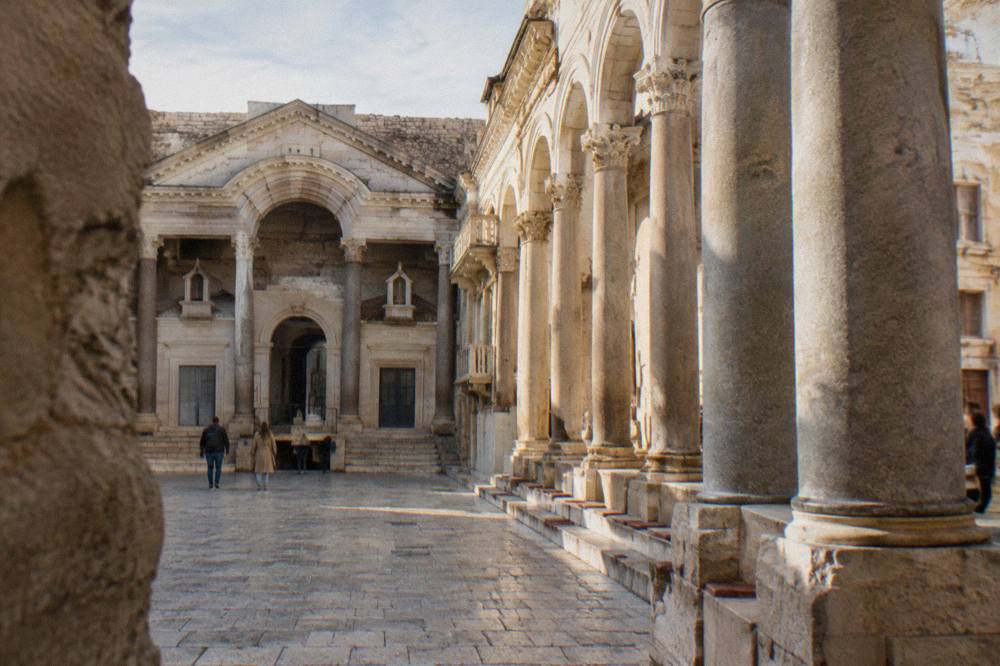
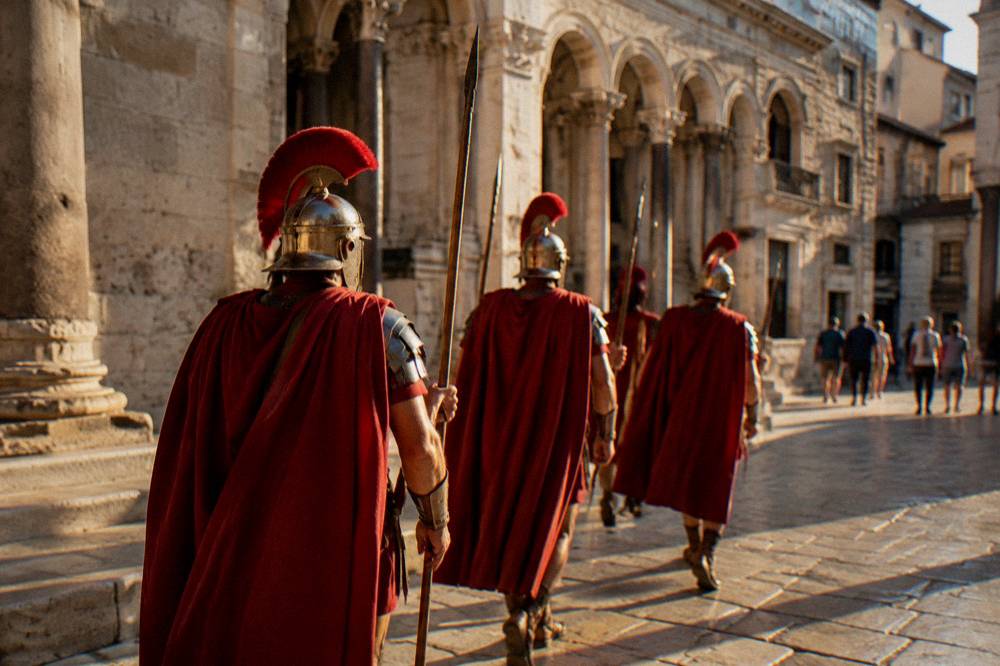
One dated detail changes what free looks like this year: the central part of the palace substructures is under restoration and conservation until the end of 2026, and the reporting on the works states the public passage stays open. On the surface, the daily change of Diocletian's Roman Guard plays on the Peristyle at noon, and the city's event page ran it from 28 May to 27 September 2026, free to watch. The site's guide to Split on a budget extends the same logic to food and transport.
Tip-based walking tours also run locally, free to join with the guide tipped at the end; confirm the arrangement with the guide before setting off. A paid small-group alternative covers the palace and Old Town with a licensed guide.
Is Marjan Hill Free To Walk?
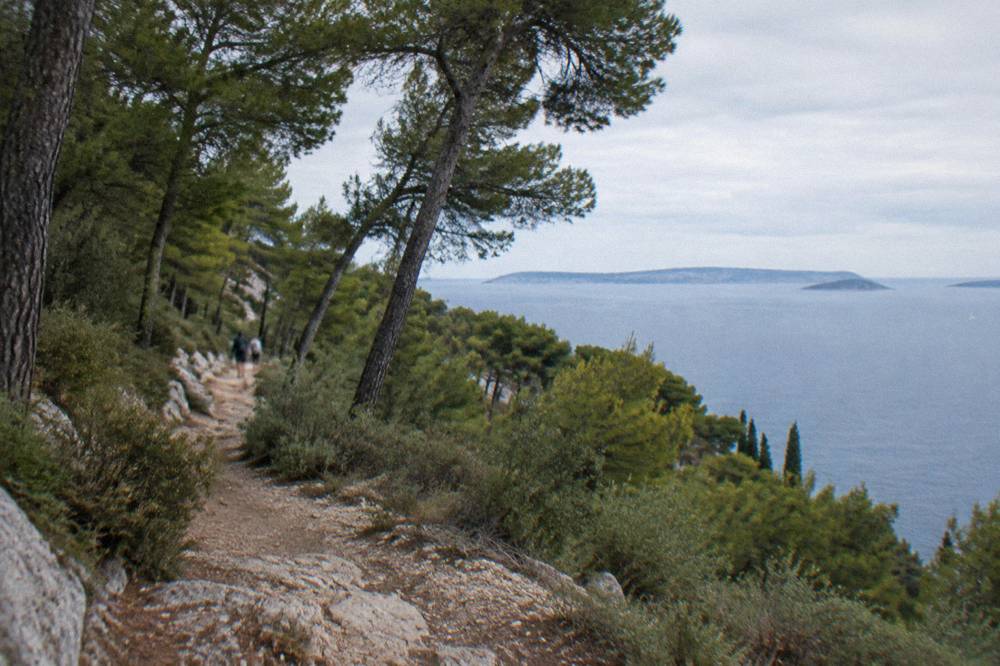
Marjan, the park forest on the peninsula west of the Old Town, is completely free, with no gate, ticket or opening hours. Its highest point is Telegrin at 178 m, reached by 819 steps from Trumbićeva obala, and the peninsula runs 3.5 km long and 1.5 km wide. The Marjan hill guide data from the park society gives all these figures, and the whole network of paths, viewpoints and small beaches costs nothing at any time of day.
The climb is the single best free panorama in the city. From the base of the steps near the ferry port it is a steady stair ascent through pine to the Telegrin summit, where the view runs across the islands of Šolta, Brač and Hvar offshore. The western side drops to quieter coves, and the southern paths pass stone churches set in the forest. Shade makes Marjan walkable even in July, when the DHMZ Split-Marjan station table, covering 1948 to 2024, gives a mean of 26.2 C.
| Marjan figure | Value |
|---|---|
| Highest point | Telegrin, 178 m |
| Steps from Trumbićeva obala to Telegrin | 819 |
| Peninsula length | 3.5 km |
| Peninsula width | 1.5 km |
| Entry cost | Free, no gate |
Running down Marjan's southern slope lands you at Kašjuni beach, also free, and from there the path continues back toward the city. For pacing a day that mixes the hill with the palace, the one day in Split itinerary is the site's template.
Are The Beaches In Split Free?
Every city beach in Split is free to walk on, sit on and swim from, including Bačvice, the sandy bay ten minutes' walk east of the port, Kašjuni beneath Marjan, Žnjan to the east and the Firule and Ovčice bays behind Bačvice. No Split beach charges entry. What costs money is only what you rent or consume: sunbeds where a concession offers them, food and drink, and parking, none of which is required to swim.
Bačvice is the classic free afternoon. It is the shallow sandy bay closest to the centre, and it is the home of picigin, the shallow-water ball game born on the beach in 1908 and now protected intangible heritage of Croatia. Players gather in the water late afternoon, and watching costs nothing. The sand shelves so gently that the water stays shallow far out, which is why families cluster here. The site's full beaches guide compares the bays by sand, shade and access.
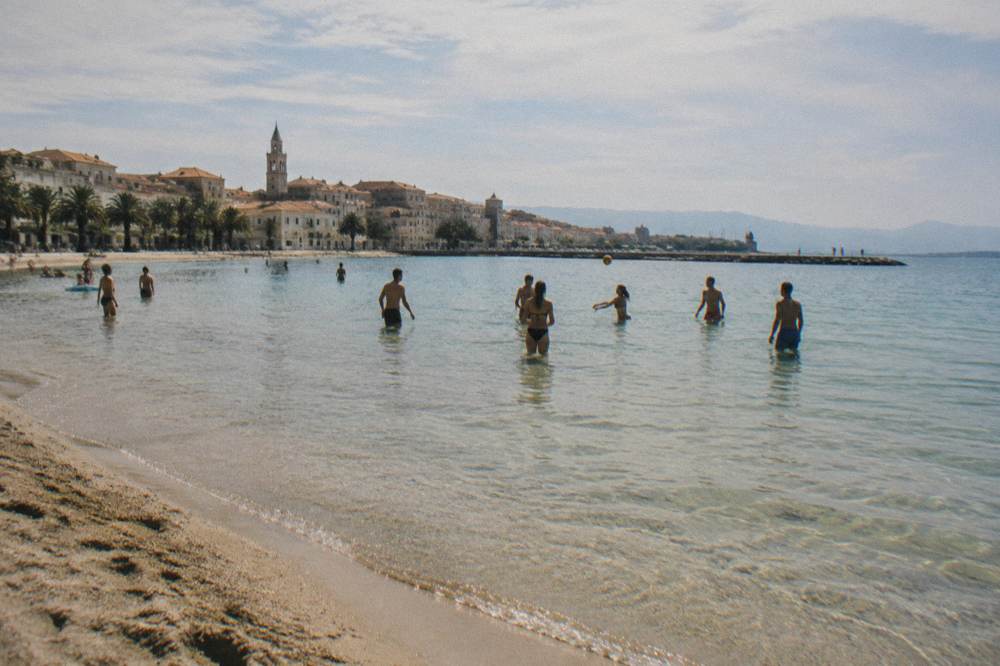
Swimming itself is free and the season is long. The live reading from the DHMZ station gave a sea temperature of 20.4 C on the morning of 12 October 2026, warm enough to swim, and the question of whether you can swim in the sea in Split is answered by the site in full elsewhere. For a free day built around water without a boat ticket, the sequence that works is Bačvice in the morning, the palace streets at midday, Marjan and Kašjuni in the late afternoon.
| Beach | Location | Entry | Character |
|---|---|---|---|
| Bačvice | East of the port, 10 minutes' walk | Free | Sand, shallow water, picigin |
| Firule | Behind Bačvice | Free | Quieter, gravel and concrete |
| Ovčice | East of Firule | Free | Small concrete and gravel bay |
| Kašjuni | South side of Marjan | Free | Pebble, shaded by the hill |
| Žnjan | East of the centre | Free | Concrete platforms, cafes |
What Free Events Does Split Put On Through The Year?
Split's calendar carries several free-to-watch events: the change of Diocletian's Roman Guard on the Peristyle at noon, which ran 28 May to 27 September 2026, Sudamja, the city's St Domnius day celebrations on 7 May each year, and Advent in Split from 27 November 2026 to 7 January 2027 with the ice rink at Đardin. Watching all of these is free; only skating, theatre and festival tickets cost money.
The guard change is the easiest to catch, a short costured ceremony on the Peristyle at midday through the summer half of the year. Sudamja, the feast of the city's patron on 7 May, brings processions and a fair to the streets around the cathedral, and the program typically appears in late April. Advent runs from late November into the first week of January, and the city's tender document for the Đardin ice rink confirms the 27 November 2026 to 7 January 2027 window; walking through the lights and stalls is free even if the rink itself is not.
The Croatian National Theatre's season runs 25 September 2026 to 14 June 2027, ticketed, but the building's terrace and the square around it are free evening atmosphere. The 72nd Split Summer Festival ran 14 July to 14 August 2026 at venues including the Peristyle, with 2027 dates not yet announced; when it returns, parts of its program traditionally play in open public space. The site's best time to visit Split guide aligns these dates with weather and crowds.
| Event | Dates | Cost to watch |
|---|---|---|
| Roman guard change, Peristyle | Daily at noon, 28 May to 27 Sep 2026 | Free |
| Sudamja, St Domnius city day | 7 May each year | Free |
| Advent in Split | 27 Nov 2026 to 7 Jan 2027 | Free to walk; rink and food paid |
| HNK Split season | 25 Sep 2026 to 14 Jun 2027 | Tickets |
| Split Summer Festival | 2026 edition past; 2027 not announced | Tickets for performances |
Are The Markets And Local Shopping Streets Free To Wander?
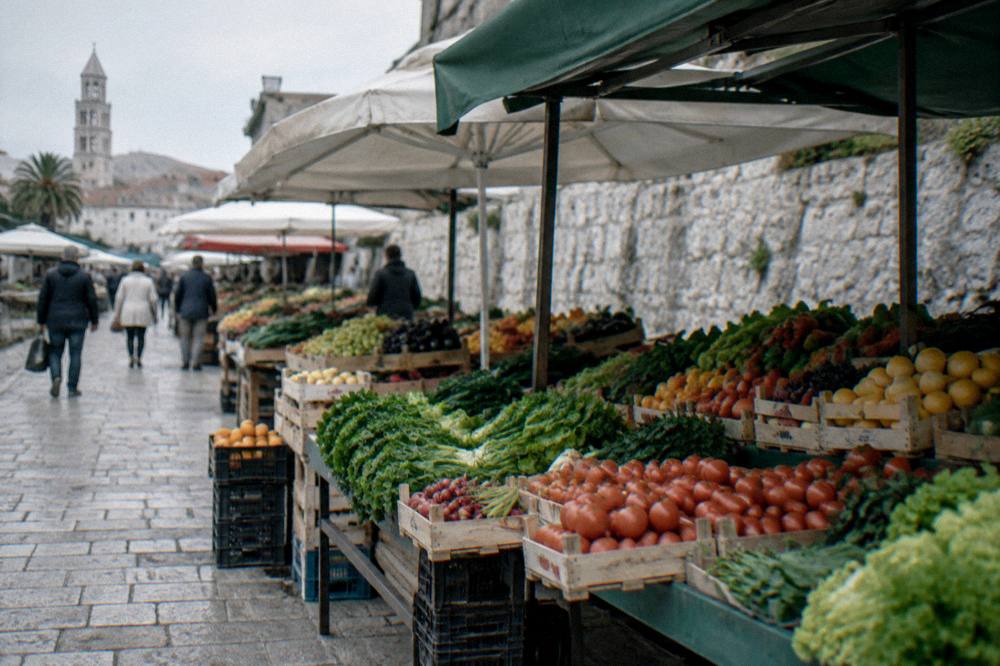
Split's markets cost nothing to enter and are working daily commerce rather than tourist theatre: the green market around the east wall of the palace sells fruit, vegetables and flowers from the surrounding villages, and the fish market near the Riva sells the morning's catch. Both are free to browse, and both open early, with the green market at its liveliest in the first hours of the morning.
The green market, locally the Pazar, runs along the palace's eastern exterior wall, and it is where the city has shopped for produce for generations. Prices are posted per kilo, and the stallholders sell peaches, figs, olives and herbs through the summer and mandarins into the autumn. The fish market sits closer to the Riva in a purpose-built stone hall. Even buying nothing, the two markets together give the truest free picture of Split's daily life, and the site's guide to Split food picks up the same ingredients on the plate.
Shopping streets are the same story. Marmontova, the pedestrian street running north from the Riva, and the palace lanes themselves are free to wander, and window shopping there passes the city's best architecture. For visitors who want the market experience with tastings built in, a guided gastro walk visits the green market with a local host.
How Much Do The Big Day Trips Cost Compared With Free Days In The City?
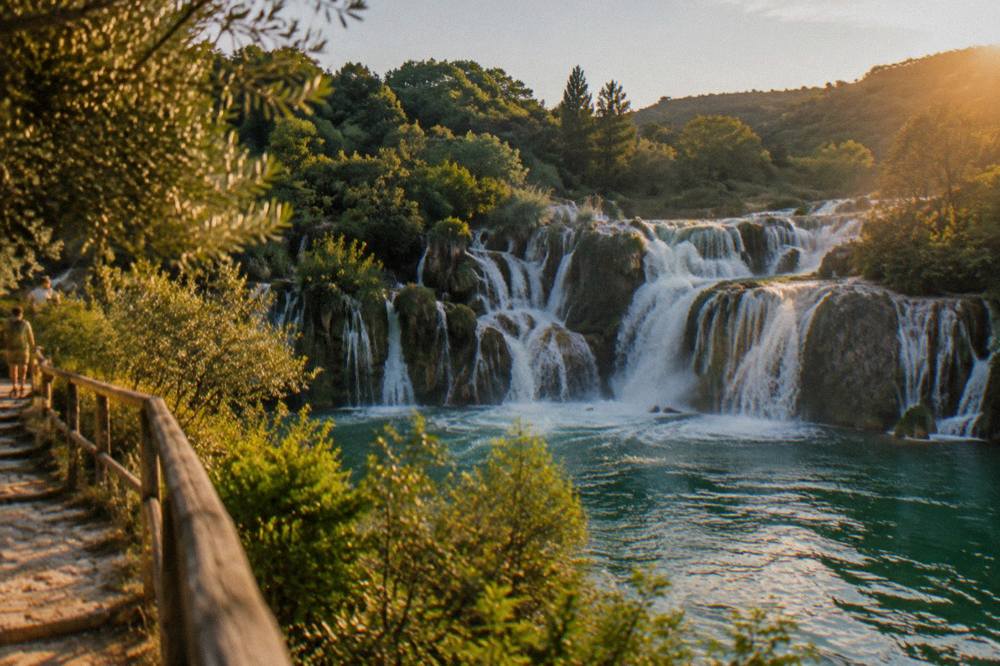
The major paid day trips from Split are Krka National Park at 7, 20 or 40 EUR by season, Plitvice Lakes at 10, 23 or 40 EUR, Klis Fortress at 10 EUR and the Blue Cave entrance at 24 EUR in high season or 18 EUR in shoulder season, while a full free day inside Split itself needs only the palace streets, Marjan and a beach. Krka's 40 EUR tier runs June to September, its 20 EUR tier April, May and October, and 7 EUR the rest of the year.
The comparison matters for anyone stretching a budget. A free Split day delivers a Roman palace, a hill panorama and a swim; a paid day trip delivers waterfalls or caves. Krka's official price list shows the boat and bus transfers inside the park are included in the ticket from 1 April to 31 October. Plitvice requires the visitor's name on the ticket and timed online entry through the official webshop. Neither park permits drones, and Krka allows swimming only in clearly marked areas, with reported designated spots at Roški slap, Stinice and Pisak between 1 June and 30 September.
| Day trip | Adult price 2026 | Season detail |
|---|---|---|
| Krka National Park | 7 / 20 / 40 EUR | Jan to Mar and Nov to Dec 7; Apr, May, Oct 20; Jun to Sep 40 |
| Plitvice Lakes | 10 / 23 / 40 EUR | Winter 10; Apr, May, Oct 23; Jun to Sep 40, afternoon slot 25 |
| Klis Fortress | 10 EUR | Children 3 EUR |
| Blue Cave, Biševo | 24 / 18 EUR | High season 20 Jun to 10 Sep; shoulder either side |
| Salona with museum | 10 EUR combined | Archaeological Museum plus Salona within 7 days |
Organised coach and boat versions of these trips bundle transport and, sometimes, entry. The site's day trips guide compares the routes, and the islands are covered separately, from the ferry to Hvar to the full run of ferries from Split.
Can You See Split From The Water For Free Or Cheaply?
Seeing Split from the sea costs nothing if you swim off the city beaches or walk the Riva, and the paid options start with short guided kayak trips along the same coast, which start from 45 USD with gear and a guide included, and run up to full-day island speedboat tours. The free version is the view from Bačvice or the Marjan path; the paid version is the same coastline from a kayak at water level.
The coastline either side of the port is the city's free theatre. From the Marjan paths the whole bay reads as one frame: the port with its ferries, the islands beyond, the walled core of the palace at the centre. The Split Croatia Travel Guide covers the paid water options in depth elsewhere, but the honest budget answer is that the sea is free and the city hands you three ways to be in it without a ticket.
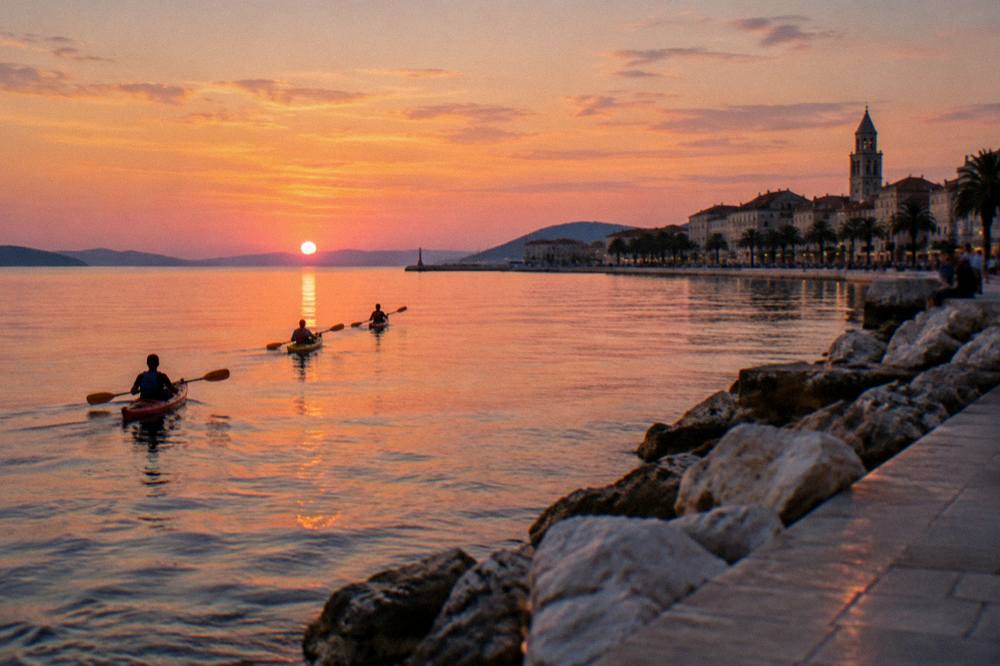
A guided kayak outing is the cheapest structured way onto the water, paddling the coast beneath Marjan with a guide, and an evening version runs under the city lights. For a bigger water day, a four-island speedboat itinerary reaches Zlatni rat on Brač, Hvar town and the Pakleni islands in one loop from Split. The islands guide to Brač and Zlatni rat details what each stop adds.
Does The Weather Change Which Free Things Work In Split?
Yes, the DHMZ Split-Marjan station table for 1948 to 2024 shows why the free outdoor Split is a long season: July averages 26.2 C with 353.3 hours of sunshine and only 26.6 mm of rain, while even January averages 8.0 C, so the palace streets and the Riva walk work year-round and the beaches and Marjan swims work from late spring to early autumn.
November is the wettest month at 115.5 mm, and it is the month to trade the beach for the markets and museums.
The monthly means spell out the planning. June, July and August carry 7, 18 and 17 days at 30 C or more respectively, which pushes free time toward the sea and the shade of Marjan's pines. September still averages 21.6 C with 70.9 mm of rain, and October 17.2 C. Advent, free to walk through from 27 November 2026, lands in the cooler, damper end of the table, with December averaging 9.4 C and 103.7 mm, which suits the lights and the rink more than the beach.
| Month | Mean C | Rain mm | Best free activity |
|---|---|---|---|
| Jan | 8.0 | 77.8 | Palace streets, markets |
| Mar | 10.8 | 63.2 | Marjan paths |
| May | 19.2 | 57.5 | Beaches, guard change |
| Jul | 26.2 | 26.6 | Bačvice swim, picigin |
| Sep | 21.6 | 70.9 | Marjan, Kašjuni |
| Nov | 12.7 | 115.5 | Museums, Advent setup |
The full monthly breakdown sits in the site's Split weather guide, and the timing trade-offs between crowds, heat and events are weighed in the best time to visit.
Common Questions About Free Things In Split
Is Diocletian's Palace free to enter?
The palace's streets, gates and the Peristyle are free public space at all hours. Only the interiors charge: the cellars at 10.00 EUR, the cathedral complex from about 5 EUR up to about 15 EUR combined, sold at the Peristyle kiosk.
What is completely free in Split?
The Peristyle, the Riva, Prokurative, the Golden Gate, the Grgur Ninski statue, the green and fish markets, the Marjan park forest with its 819 steps to Telegrin at 178 m, and all city beaches including Bačvice and Kašjuni. Entry to none of them costs anything.
Are there free walking tours in Split?
Tip-based walks run locally, free to join with the guide tipped at the end. Confirm the meeting point and arrangement with the guide directly, as schedules shift with the season.
Can you watch picigin for free at Bačvice?
Yes. Picigin, the shallow-water ball game born on Bačvice in 1908 and protected intangible heritage of Croatia, is played in the bay's shallows, typically late afternoon, and watching from the sand costs nothing.
Is the Roman guard change in Split free?
Yes. The change of Diocletian's Roman Guard plays on the Peristyle at noon and ran daily from 28 May to 27 September 2026. Check the current schedule before planning around it.
Which month is warmest in Split for free outdoor sightseeing?
July, at a mean of 26.2 C with 353.3 hours of sunshine and just 26.6 mm of rain, per the DHMZ Split-Marjan table for 1948 to 2024. May and September are milder alternatives for the same free itinerary.
A free day in Split is not a compromise version of the city; it is the city as its residents use it, one palace square, one market stall and one beach at a time, with the paid interiors waiting whenever curiosity outlasts the budget.