Klis Fortress
Klis Fortress guards the mountain pass above Split, a 25-minute drive from Diocletian's Palace, with a 10 EUR adult ticket, daily opening from 9:00 to 17:00, and a Game of Thrones past as Meereen.
Short answer
Klis Fortress is 13.9 km from Diocletian's Palace in Split, about 22 minutes by car, open daily 9:00 to 17:00, 10 EUR for adults and 3 EUR for children. It was a Game of Thrones Meereen filming location and pairs naturally with Salona, 9.1 km and about 14 minutes away.
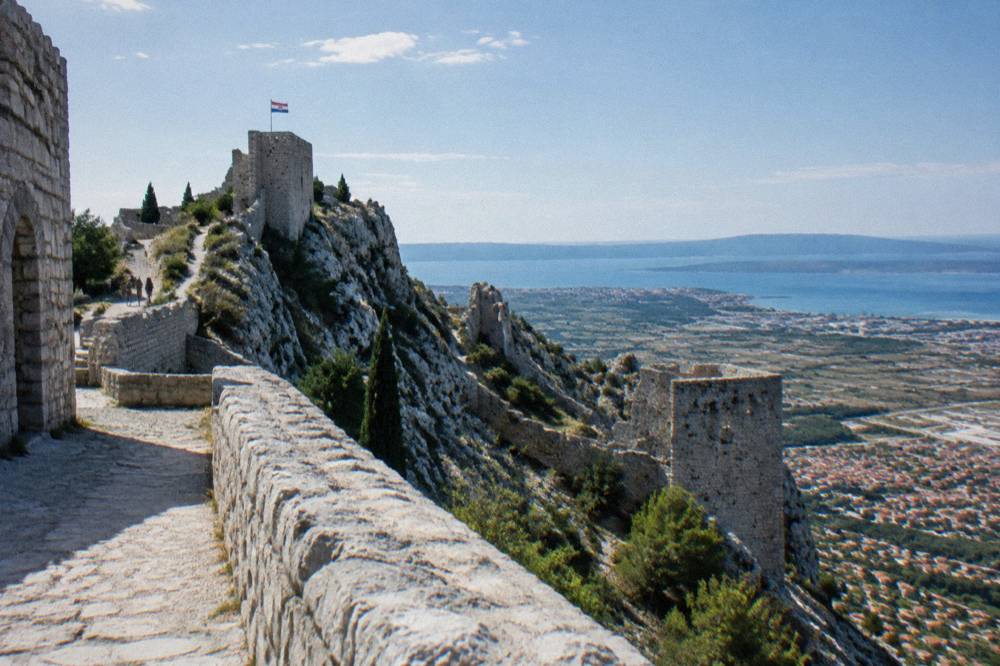
Klis Fortress sits on a rocky ridge above the village of Klis, 13.9 km and about 22 minutes by car from Diocletian's Palace in Split, Dalmatia's coastal hub on the Adriatic. The fortress controls the narrow pass between the Kozjak and Mosor mountains, the historical gateway between the Split hinterland and the sea, and its walls now look down over the whole of the city, the Marjan peninsula and the islands beyond. The ticket price list gives 10 EUR for adults and 3 EUR for children, with daily opening from 9:00 to 17:00. The fortress also has a screen past: it served as a Meereen location in Game of Thrones, which is the single filming detail this guide states. This page lays out the practical picture, tickets, access, what the site holds, and how to fold Klis into a Split itinerary, in the reporting voice of the Split Croatia Travel Guide editorial desk.
Where Is Klis Fortress And How Do You Get There From Split?
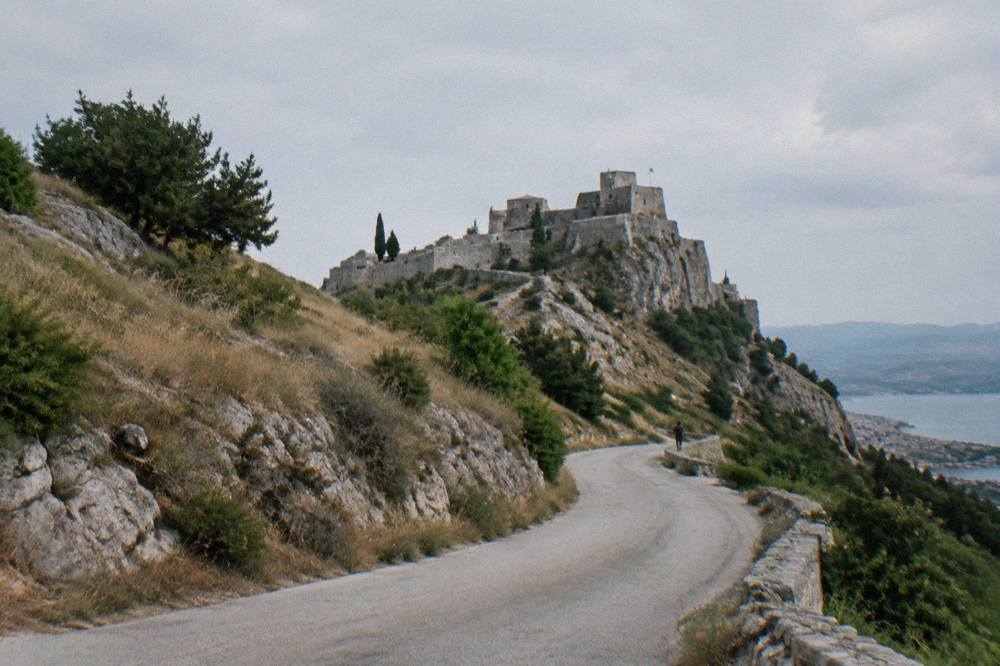
Klis Fortress stands 13.9 km from Diocletian's Palace in central Split, about 22 minutes by car in free-flow traffic, on the ridge above the village of Klis between the Kozjak and Mosor mountains. The route climbs out of the city through the hinterland suburbs and up the historic pass that the fortress was built to watch. There is no ferry and no train involvement: this is an inland hill destination, reached by road.
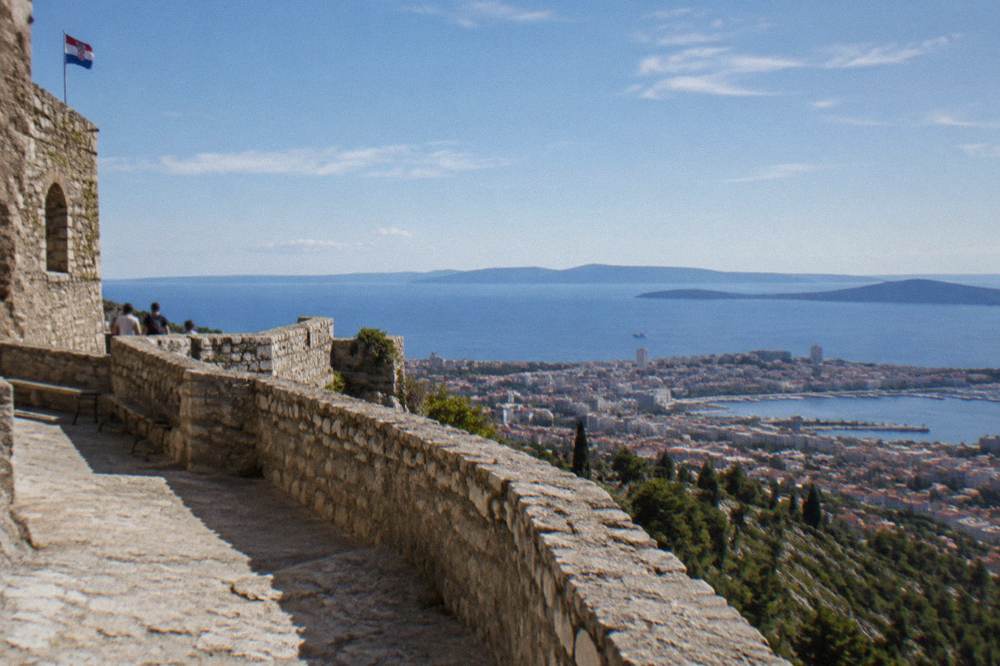
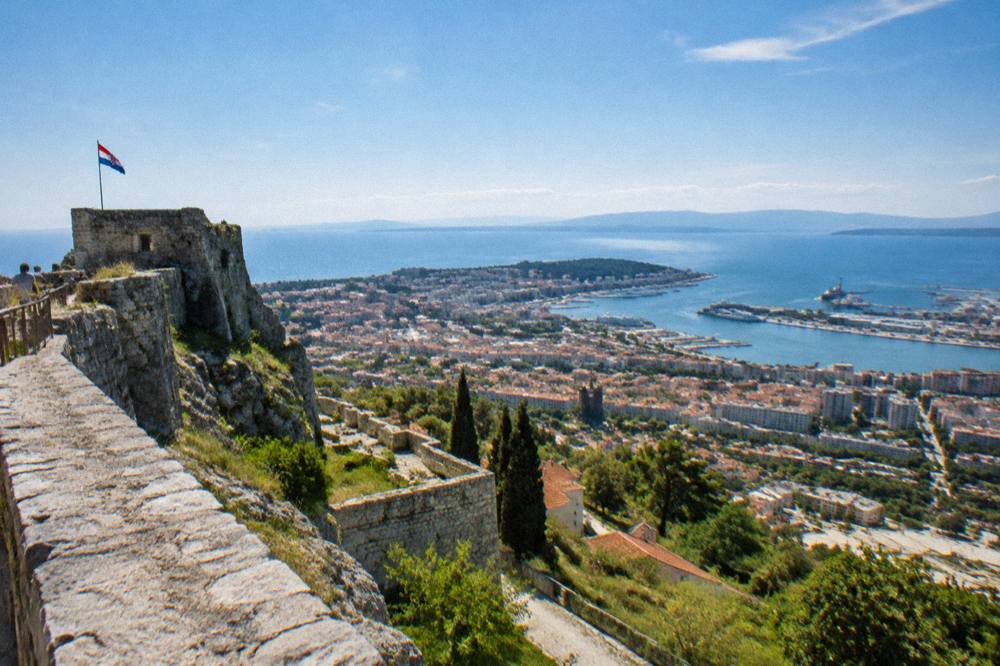
The driving figures come from a free-flow routing calculation, so midsummer traffic or roadworks can stretch the journey. What the fortress offers in return is the single clearest panorama of the Split area available without a boat: from the upper walls the view runs across the city, the port complex on Obala kneza Domagoja, Marjan and the offshore islands, with the Mosor range behind you. The position explains the fortress. Every army that wanted Split had to come through this pass first.
For anyone relying on public transport or organised travel rather than a hire car, the practical fallback is a guided tour, and two of this site's tour products cover Klis directly: the sunset Klis Fortress tour (Check availability) and the Trogir, Salona and Klis guided day tour. Both remove the parking question entirely, which matters in high summer when the small car park at the gate fills early.
Distances From Diocletian's Palace To Klis And Its Neighbours
The table below gathers the driving figures the routing data gives for Klis and the inland destinations near it. Salona is the obvious pairing: the Roman ruins sit practically on the way, and the two sites together make a natural half-day loop out of the city.
| Destination | Distance from the palace | Driving time (free-flow) |
|---|---|---|
| Klis Fortress | 13.9 km | about 22 min |
| Salona | 9.1 km | about 14 min |
| Trogir | 29.3 km | about 36 min |
| Omiš | 25.5 km | about 38 min |
| Krka National Park (Skradinski buk) | 90.2 km | about 74 min |
What Does Klis Fortress Cost And When Is It Open?
The Klis Fortress price list gives 10 EUR for an adult ticket and 3 EUR for children, with opening daily from 9:00 to 17:00. The figures come from the tourism board's printed tariff rather than the fortress's own website, which shows no price on its pages, so the numbers can move between seasons: treat them as the working reference and confirm at the gate if your visit matters for the exact figure.
Two practical notes follow from the hours. First, the fortress closes at 17:00, which makes it a morning or midday sight rather than an evening one for independent visitors: a late start from Split risks arriving with an hour or less on the walls. Second, the site is almost entirely outdoors, stone steps and open terraces, so the visit cost is really time and weather, not money. There is little shade on the upper levels, and the DHMZ Split Marjan station table gives July a mean of 26.2 C with 18 days at 30 C or more, which argues for a morning arrival in summer.
The closing time is exactly why the sunset tour format exists: a guided evening visit is the only way to be on the walls after 17:00, and the sunset Klis Fortress tour with Game of Thrones views is this site's featured product for that (Check availability). Its price and rating render from the live listing; what it covers in practical terms is transport from Split, entry arrangements and a guide on the walls at golden hour.
Split Area Attraction Tickets At A Glance
For readers building a budget, here is how Klis sits against the other paid sights in and around Split, using the tariffs the sources publish. The free tier in Split is generous: the Peristyle, the Riva, the Golden Gate, the Grgur Ninski statue, Marjan and the city beaches all cost nothing.
| Site | Adult ticket | Source status |
|---|---|---|
| Klis Fortress | 10 EUR, children 3 EUR | Fortress tariff |
| Diocletian's Palace cellars (Split City Museum) | 10.00 EUR | museum price list |
| Split City Museum, Papalić Palace | 10.00 EUR | museum price list |
| Archaeological Museum Split | 8 EUR | museum price list |
| Archaeological Museum plus Salona combined | 10 EUR within 7 days | museum price list |
| Meštrović Gallery | 12.00 EUR | gallery price list |
| Ethnographic Museum | 7.00 EUR | museum price list |
| Cathedral of St Domnius | from about 5 EUR, combined tickets up to about 15 EUR | secondary source |
The cathedral line carries an asterisk in spirit: its single and combined tickets come from a secondary guide rather than an official price page, and the cathedral's hours are not published in a form this site will print. For the fortress itself, the 10 EUR and 3 EUR figures are the best available tariff, and nothing else about Klis pricing should be treated as settled until seen at the gate.
Why Is Klis Fortress Famous, And What Was Filmed There?
Klis Fortress is famous for two things: its role as the fortified gate above Split, controlling the mountain pass every inland approach to the city had to cross, and its use as a Meereen filming location in Game of Thrones, which brought a new wave of visitors to walls that had been a military site for well over a thousand years. The fortress's identity is military and geographic: a ridge fortified because of where it sits, not because of what was built inside it.
On the filming question, this guide states only this much: Klis Fortress was a Meereen location. No scene list, no cast detail, no production anecdote belongs here, because none of that is in the sourced record. What can be said firmly is the effect: the television audience met the fortress as a slave-city skyline, and the fortress met a fresh stream of visitors who otherwise would rarely leave the coast road. Readers who want the wider screen angle will find the fuller coverage on the Game of Thrones guide.
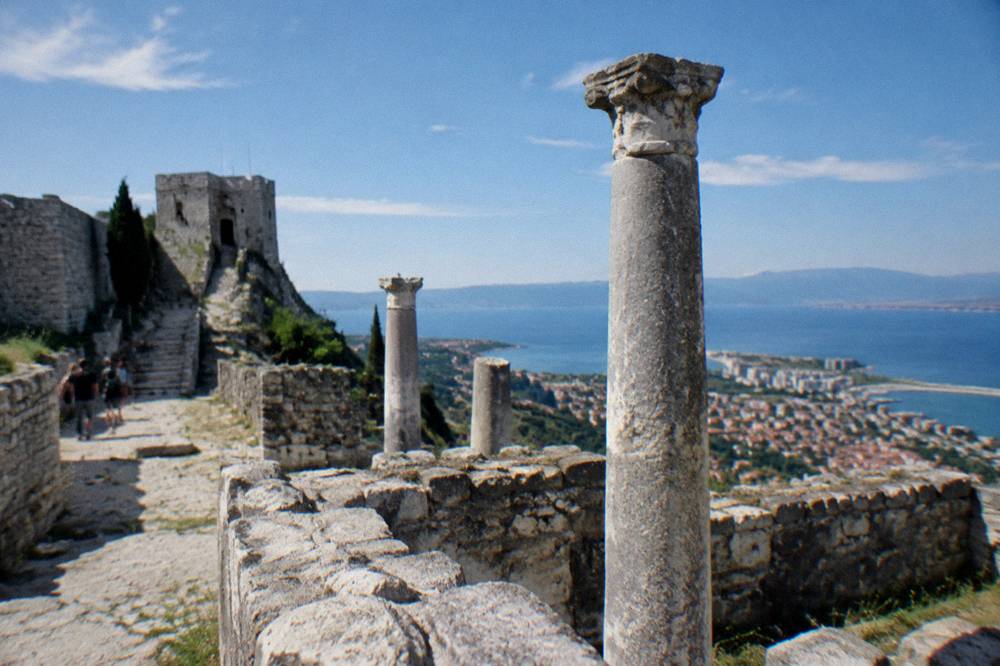
Beyond the screen, the fortress's story is the pass itself. Whoever held Klis held the approach to Split, and the walls were fought over, rebuilt and re-armed across centuries of changing powers. The visible site today is a layered one: outer works, gate passages, cisterns, a small display area inside, and long terraces of rough stone whose main furniture is the view. There is no palace interior here, no mosaics: this is a ruin you read from the outside, and the reading is best done with a guide or a good map.
A guided walk solves that problem neatly. The sunset tour that is this page's featured product puts a guide on the walls with you, and the operator's live listing shows what is covered, from the historical layers to the filming viewpoints.
What Will You Actually See On The Walls?
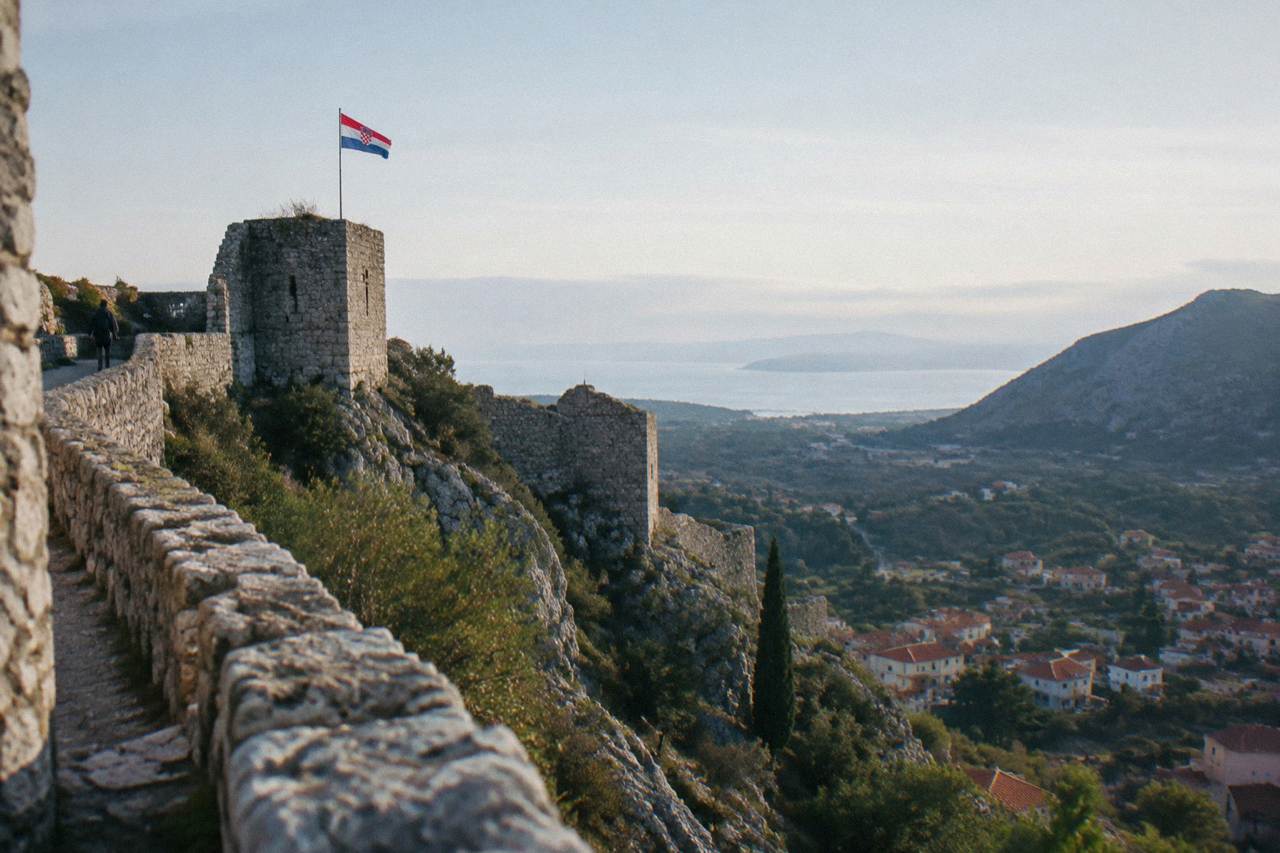
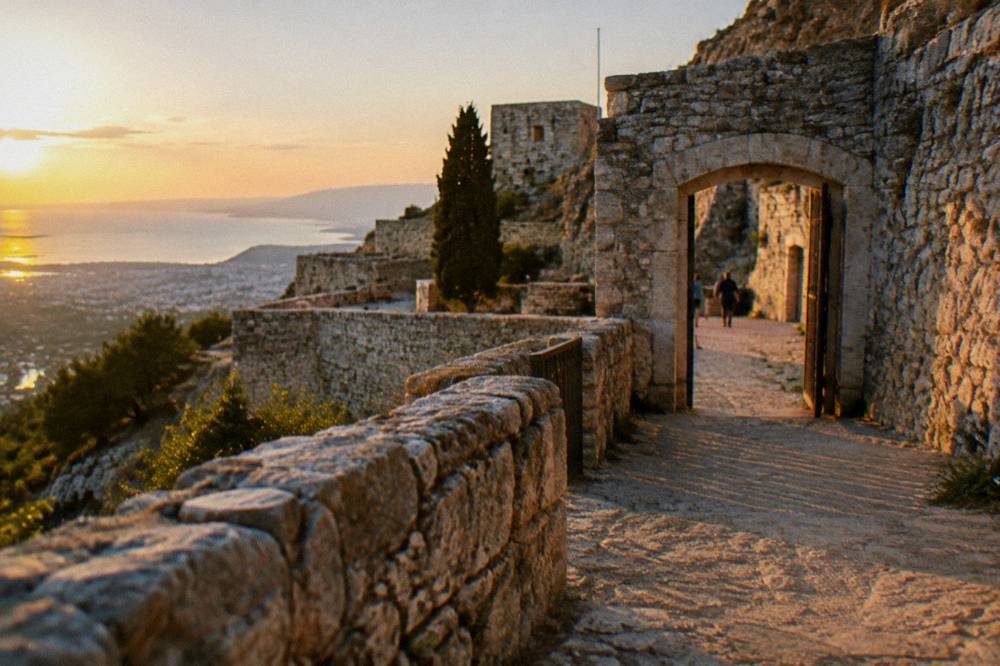
Visitors to Klis Fortress walk a sequence of gateways, courtyards and terraced walls spread along the ridge, with the reward being less artefact than geography: from the upper platform the whole Split basin is laid out, from the port and Diocletian's Palace's rooftops to Marjan and the line of islands offshore. Inside the walls are display rooms, cisterns and stretches of walkway, but the site reads as a fortress landscape, not a museum collection.
The layout rewards a slow circuit. The entrance passage climbs through the outer gate into the first courtyard; paths then branch upward toward the highest platform, where the panorama opens fully. Give the circuit more time than the drive: the routing says 22 minutes from the palace, but the walls themselves deserve at least an hour, more in summer heat or with children, since the surfaces are uneven stone throughout. Footwear matters more here than in the polished streets of the Old Town.
What the fortress does not offer is shade, cafés on every corner or lawns. Bring water. The DHMZ Split Marjan table gives July sunshine of 353.3 hours against December's 120.8, and the fortress has essentially no cover from it. A morning visit in high season doubles as the sensible heat strategy: the site is quietest and coolest before the tour groups arrive from the coast.
What To Bring For A Klis Visit, By Season
| Season | Conditions at Split (DHMZ Marjan, 1948 to 2024) | What the visit needs |
|---|---|---|
| December to February | Means 8.0 to 9.4 C | Warm layers, windproof jacket: the ridge is exposed |
| March to May | Means 10.8 to 19.2 C | Light layers, water, morning start |
| June to August | Means 23.4 to 26.2 C, 18 days at 30 C or more in July | Sun hat, full water bottles, closed shoes, morning arrival |
| September to November | Means 21.6 down to 12.7 C, November wettest at 115.5 mm | Rain layer from October, water, grip shoes on wet stone |
How Much Time Should You Spend At Klis Fortress?
A standalone visit to Klis Fortress works as a half-day: 22 minutes each way by car, roughly an hour to an hour and a half on the walls at an unhurried pace, and buffer for the drive and the car park. The stronger play is to pair it with Salona, 9.1 km and about 14 minutes from the palace, which turns the trip into a full morning loop of fortress and Roman ruins before lunch back in Split.
The Salona pairing is not just geography, it is economics. The Archaeological Museum's price list sells a combined ticket, the museum in Split plus Salona, for 10 EUR within 7 days, against 8 EUR for the museum alone; visit the museum in the city first and the ruins at Salona cost almost nothing extra. Salona keeps summer hours of 9:00 to 20:00 daily from 1 June to 30 September, comfortably later than Klis's 17:00 close, so the correct order in summer is Klis first, Salona second.
For readers structuring a longer stay, the itineraries on this site already slot Klis in: the three days in Split plan gives the fortress and Salona their own half-day, and the two days in Split plan folds both into a hinterland morning. Anyone with only a single day should stay in the city and work through Diocletian's Palace and the Riva instead: Klis is a superb second- or third-day sight, not a first-day one.
That guided option bundles Trogir, Salona, an olive museum and Klis into one handled day, which suits travellers who would rather not drive the hinterland roads themselves. Its price, rating and duration render on its tour page.
If you would rather not drive the hinterland roads yourself, book a guided day trip here.
A Half-Day Klis And Salona Loop From Split
| Step | Stop | Time on site | Note |
|---|---|---|---|
| 1 | Drive from the palace to Klis | about 22 min | Arrive near opening for shade and parking |
| 2 | Klis Fortress walls and display areas | 60 to 90 min | Open daily 9:00 to 17:00, 10 EUR adult |
| 3 | Drive Klis to Salona | short hop via the hinterland road | Signposted from Klis village |
| 4 | Salona Roman ruins | 60 to 90 min | Summer hours to 20:00; combined ticket 10 EUR with the museum |
| 5 | Drive Salona to the palace | about 14 min | Returns you to the Old Town for lunch |
Is Klis Fortress Good For Families And Children?
Klis Fortress suits families with school-age children well: the ticket is 3 EUR for children against 10 EUR for adults, the walls offer space to roam, archery-style ramps and gateways that fire the imagination, and the visit length is short enough to hold attention. The caveats are physical rather than commercial: the paths are uneven stone with drops and low walls in places, so toddlers need close supervision and the visit is easiest outside the midday heat of July and August.
The practical family pattern is the morning loop described above, done at a child's pace. Split itself is a strongly family-friendly base, and this site's Split with kids guide covers the city-side half of such a day, from Bačvice's shallow bay to the green market. Klis then adds the horizon-expanding half: the drive up the pass, the fortress walls, and the view back over everywhere the family has just walked.
Two rules keep the day smooth. Water and hats, always, for the reasons the climate table gives. And a fixed turnaround time on the walls, because the drive back plus lunch is what turns a fortress visit into a good day rather than a hot one. The 17:00 close enforces the schedule anyway.
Can You Combine Klis With The Cetina Canyon Or The Coast?
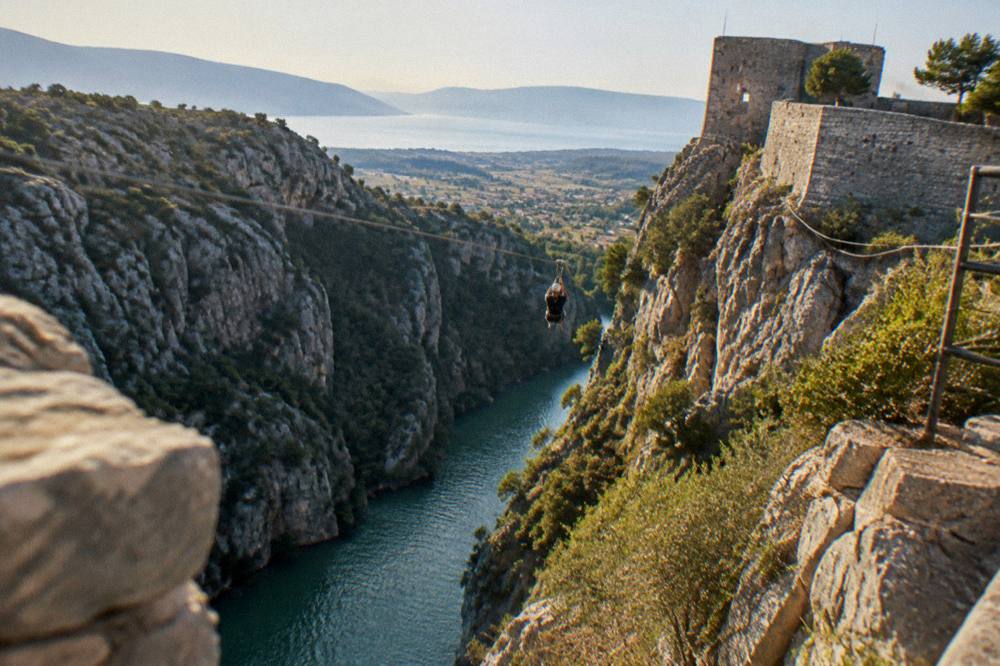
Yes, and the geography helps: Klis sits at the inland end of a natural corridor that runs from Split up the pass and onward toward Omiš and the Cetina river canyon, 25.5 km and about 38 minutes from the palace, so a single day can carry a fortress morning and an afternoon of rafting, ziplining or canyon exploring. The combination is one of the strongest active days available from Split, and several guided products cover the canyon side of it.
The canyon side is where the tours earn their place. Beyond the sunset fortress walk and the Trogir, Salona and Klis day tour already mentioned, the tours from Split include rafting, cliff-jumping and canyoning trips on the Cetina, reached from Split or from Zadvarje. The extreme canyoning option is below; its price and rating render from its own data, and what it covers in plain terms is a full-day descent of the Cetina gorge with guides and equipment.
For a softer version of the same corridor, Omiš itself is worth the drive: the town sits where the Cetina meets the sea, its Mirabela fortress charges 4 EUR, rising to 6 EUR from 1 June to 30 September, and the Omiš and Cetina river guide covers the full menu. A Klis morning, a Cetina afternoon and an evening return along the coast road is a long but complete Dalmatian day.
Active And Sightseeing Options Around The Klis Corridor
| Option | Type | Where it starts | Covered on this site |
|---|---|---|---|
| Klis Fortress independent visit | Sightseeing | Drive or tour from Split | This page |
| Klis sunset guided tour | Guided walk | Split, transport included | Live listing |
| Trogir, Salona and Klis day tour | Guided day trip | Split | Tour page |
| Cetina rafting and cliff jumping | Adventure | Split or Omiš side | /guides/omis-and-cetina-river/ |
| Zipline over the Cetina canyon | Adventure | Omiš area | /guides/omis-and-cetina-river/ |
| Omiš Mirabela fortress | Sightseeing | Omiš, 38 min from the palace | /guides/omis-and-cetina-river/ |
When Is The Best Time Of Day To Visit Klis Fortress?
The best time to visit Klis Fortress is morning, as close to the 9:00 opening as your schedule allows: the summer tariff hours run only to 17:00, the July climate record gives a mean of 26.2 C with 18 days at 30 C or more, and the ridge has almost no shade, so the walls are dramatically more comfortable before noon. The exception is a guided sunset visit, the one format that puts you on the walls after closing time.
The logic is straightforward. The fortress experience is the walls and the view, both fully exposed. The DHMZ Split Marjan table gives July sunshine of 353.3 hours and August 25.9 C mean with 17 days at 30 C or more: by early afternoon in those months the upper terraces are an oven, and photography is flat, harsh light anyway. Morning gives softer light across the Split basin and a wall temperature you can touch.
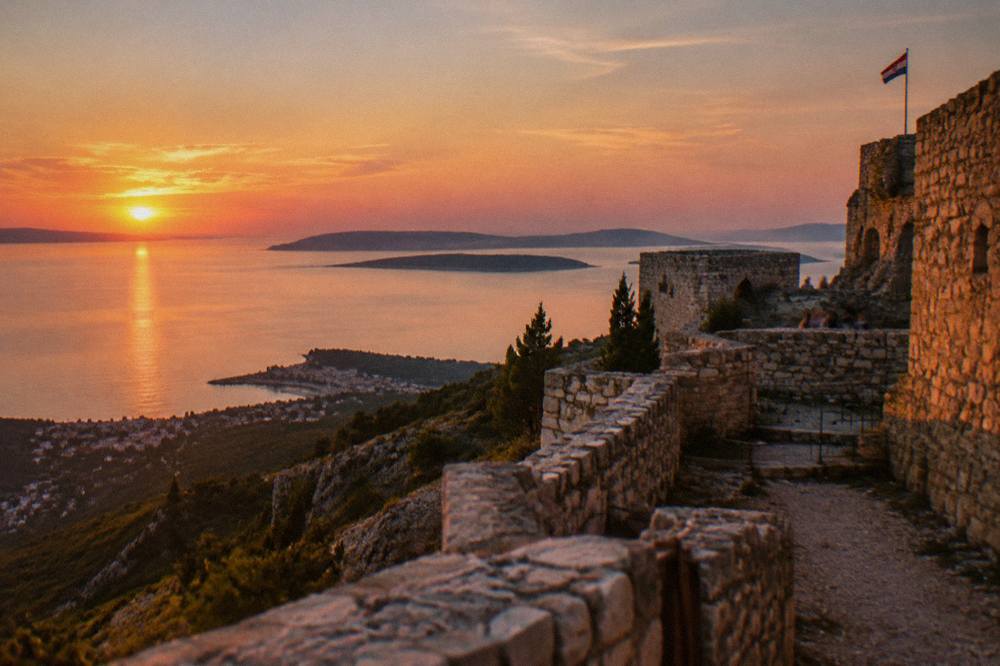
For photographers, the calculus inverts at the day's other end. The evening guided format exists precisely because the west-facing view over Split and the sea is at its best as the sun drops, and the light climbs the walls rather than beating off them. That is the niche the featured sunset tour fills (Check availability). In the shoulder months, October through March, the constraint relaxes: a 10.8 C March mean or an 8.0 C January mean makes midday visiting entirely reasonable, with a wind layer for the exposed ridge.
What Should You Know Before You Go?
Before visiting Klis Fortress, know the working figures: 10 EUR adult and 3 EUR child tickets, daily 9:00 to 17:00, 13.9 km and about 22 minutes by car from Diocletian's Palace, and no printed tariff on the fortress's own website, so treat those numbers as the reference and confirm at the gate. Bring water, closed shoes and sun protection, expect uneven stone throughout, and plan either a morning circuit or a guided evening visit rather than a hot midday one.
A few Dalmatia-wide reminders complete the picture. Croatia uses the euro, since 1 January 2023, and is a full Schengen member, so no border formalities apply on the drive from anywhere in the country; the emergency number is 112. The accommodation collects tourist tax of about 2.65 EUR per person per night in high season, confirmed at booking. In Split's historic core, the public-order rules are enforced with real fines: 300 EUR for drinking alcohol in the centre, 300 EUR for climbing on monuments, 150 EUR for sleeping in public spaces, and walking in swimwear or shirtless in the centre is fined at an amount set locally, so change before you leave the beach for the Old Town.
None of this touches Klis directly, but the fortress trip usually brackets a city day, and the fines attach to the city end of it. The wider set of pitfalls, from street drinking to over-ordering, is covered in the what to avoid in Split guide. For the fortress itself, the short version is: go early, carry water, mind the stone, and give the view the time it has earned.
Common Questions About Klis Fortress
How far is Klis Fortress from Split?
Klis Fortress is 13.9 km from Diocletian's Palace in central Split, about 22 minutes by car in free-flow traffic. The route climbs the historic mountain pass between the Kozjak and Mosor ranges directly above the city.
How much does Klis Fortress cost?
The price list gives 10 EUR for adults and 3 EUR for children. The fortress's own website shows no tariff, so confirm the current figures at the gate when you arrive.
What are Klis Fortress opening hours?
The published tariff lists daily opening from 9:00 to 17:00. The only way to be on the walls after 17:00 is a guided evening tour, which runs under the fortress's own arrangements.
Was Klis Fortress in Game of Thrones?
Yes. Klis Fortress was a Meereen location in Game of Thrones. That single verified filming detail is what this guide states; no scene or production specifics are recorded here.
Can you combine Klis Fortress with Salona?
Yes, easily. Salona lies 9.1 km and about 14 minutes from the palace, effectively on the way, and the Archaeological Museum sells a combined ticket covering the Split museum and Salona for 10 EUR within 7 days. Salona keeps daily hours of 9:00 to 20:00 in summer, so visit Klis first.
Is Klis Fortress suitable for children?
For school-age children, yes: the child ticket is 3 EUR and the walls are an open landscape to explore. The paths are uneven stone with drops and low parapets in places, so toddlers need close supervision and summer visits should start in the morning.
Klis Fortress rewards exactly the kind of traveller who tires of polished old-town streets: a short climb, raw walls, a military story told by geography, and a panorama that puts every other Split viewpoint in context. Go early or go guided at sunset, fold in Salona if the day allows, and the fortress will likely be the memory that outlasts the palace.