What Are Some Hidden Gems In Split?
Quiet corners of Split most guides skip: Veli Varoš, the Marjan steps, small museums, Kašjuni beach and nearby Salona, with prices and opening notes.
Split, a coastal city in central Dalmatia on the Adriatic, hides its quiet rewards one turn off the Riva. The headline sights, the Peristyle, the cathedral bell tower and the cellars of Diocletian's Palace, sit inside a UNESCO property of just 20.8 hectares, and everything on this page lies within roughly half an hour of them on foot or by local bus. The Split City Museum price list, the Archaeological Museum tariff and the visitsplit calendar supply the figures below; where a figure does not exist on an official page, this page says so instead of guessing. For the full spread of mainstream sights, start with the things to do in Split overview and keep this one for the corners the crowds thin out around.
What Are Some Hidden Gems In Split?
The strongest hidden gems in Split are Veli Varoš at the foot of Marjan, the 819 steps up to Telegrin at 178 m, the Kašjuni cove on the south side of the peninsula, the Ethnographic Museum at 7.00 EUR, the Archaeological Museum at 8 EUR, and the Froggyland collection of amphibian dioramas. Each is free or cheap, each sits within walking distance of the palace, and each is documented on an official price list or city page rather than in tourist brochures.
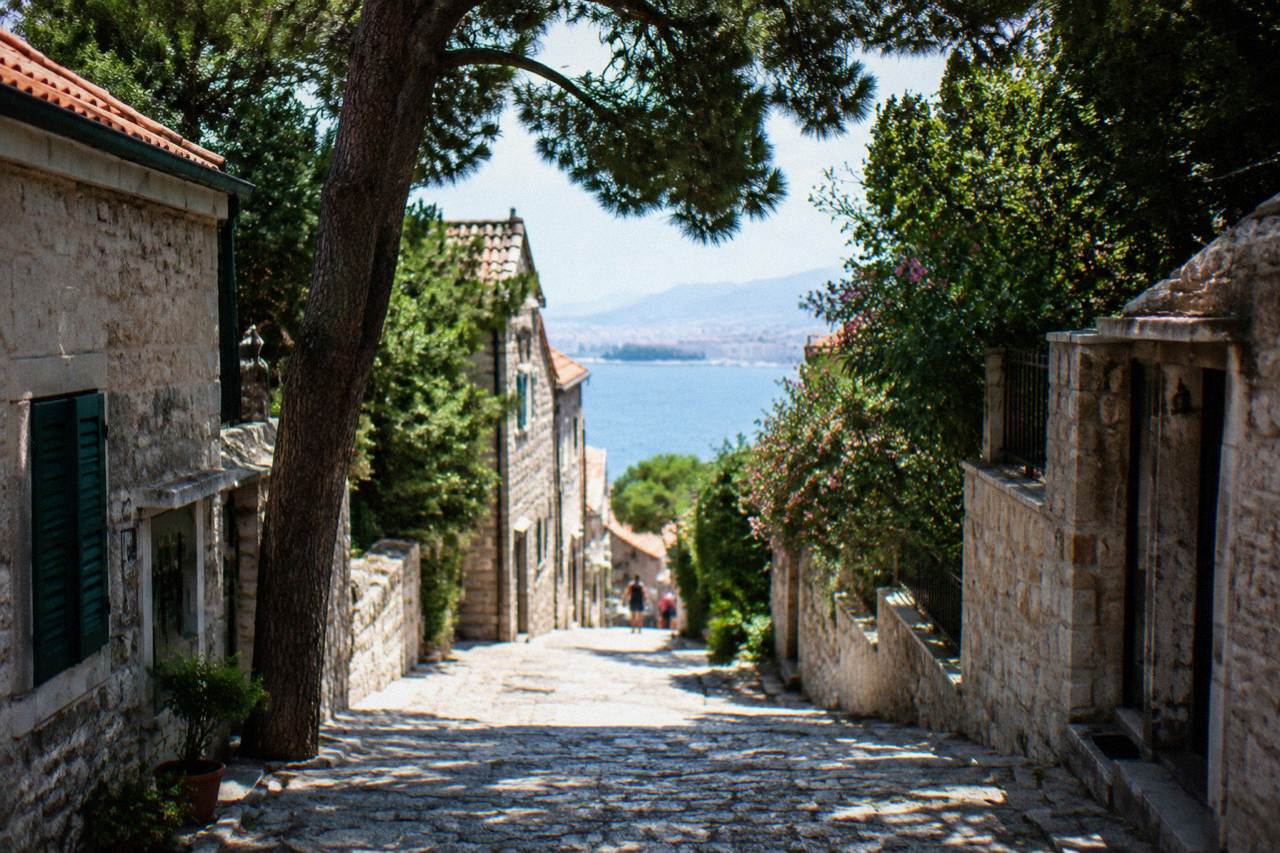
Veli Varoš comes first because it is the easiest to miss. This former fishing quarter of stone lanes and external staircases lies just west of the Old Town, squeezed between the Riva and the Marjan slopes, and walking through it adds five minutes to the route up the hill. The quarter has no ticket, no queue and no signage industry; it is simply the oldest working neighbourhood left at the peninsula's base. The Veli Varoš guide maps the lanes and the small churches worth pausing at.
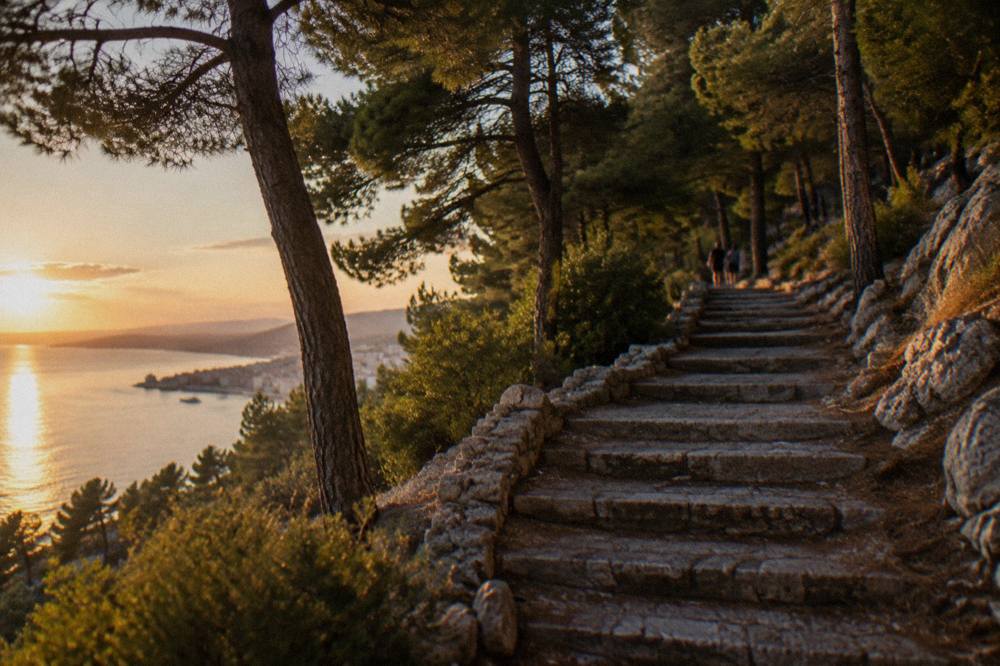
Second comes the Marjan park forest itself. The park society's own data page gives the peninsula as 3.5 km long and 1.5 km wide, with Telegrin, the highest point, at 178 m and 819 steps leading up from Trumbićeva obala. Locals run those steps in the morning; visitors who take them at any pace get the whole city, the islands of Brač, Šolta and Hvar, and the open Adriatic from the top. The Marjan hill guide covers the paths, and the Split sunset guide picks the viewing spots.
Which Small Museums In Split Are Worth The Walk?
Three small museums sit within a short walk of the palace: the Ethnographic Museum at 7.00 EUR adult, the Archaeological Museum at 8 EUR adult, and the Split City Museum at 10.00 EUR adult in the Papalić Palace, closed Mondays. The Archaeological Museum's combined ticket with the Salona ruins, 10 EUR within 7 days, is the least-used bargain in the city's cultural offer. All three prices come from the museums' own published price lists.
The Ethnographic Museum, inside the former museum building reached through the Vestibule, holds the Dalmatian costume, craft and household collections; its price page lists 7.00 EUR adult, 4.00 reduced and a 2.00 EUR Vestibule-only ticket. The Archaeological Museum, founded in 1820, holds the Salona material in the city and charges 8 EUR, with the Salona site combined at 10 EUR. The Split City Museum occupies the Papalić Palace and charges 10.00 EUR adult, 8.00 reduced and 18.00 for a family, Tuesday to Sunday 9:00 to 20:00. The same institution runs the palace cellars, open Monday to Sunday 8:30 to 20:00, with their central part under restoration to the end of 2026 and the passage staying open.
| Museum | Adult price | Official hours / notes |
|---|---|---|
| Ethnographic Museum | 7.00 EUR | Vestibule ticket 2.00 EUR separately |
| Archaeological Museum | 8 EUR | Combined with Salona 10 EUR, within 7 days |
| Split City Museum (Papalić Palace) | 10.00 EUR | Closed Mondays, 9:00 to 20:00 |
| Meštrović Gallery | 12.00 EUR | Includes Crikvine-Kaštilac |
The Meštrović Gallery belongs on the same walk up the Marjan slopes. It reopened in April 2026 after a fifteen-month energy renovation, and its price page lists 12.00 EUR adult, with the ticket covering the gallery and the Crikvine-Kaštilac chapel site a short walk east. The Meštrović Gallery guide covers what the collection holds and how the two sites pair.
Food is the other quiet lane into the city. The green market behind the eastern wall of the palace runs the way it has for generations, and the stands set their own prices; the green market guide explains what to look for, and the where locals eat in Split answer names the districts locals actually eat in. A guided route through those stands and the Old Town konobas exists as a bookable walk:
Where Can You Swim In Split Without The Crowds?
The quiet swims are Kašjuni cove and the small beaches on Marjan's south side, reached on foot or by the city bus around the peninsula, plus Žnjan east of the port and the beaches at Stobreč, a local bus ride away. Bačvice, the city's central sandy bay and the 1908 birthplace of picigin, is the famous one; the hidden swims are the pine-backed coves where the sand gives way to pebble and the skyline gives way to trees.
Kašjuni sits beneath the Marjan cliffs on the peninsula's shaded southern shore, and the Kašjuni beach guide covers access and what the cove offers. Žnjan, east of the ferry port, spreads a chain of concrete platforms and pebble entries along a long promenade, and the Žnjan guide maps it. Stobreč, on a small peninsula further east, feels like a separate village because it was one; the Stobreč guide explains the local bus connection. This page prints no sea-temperature normal because no official monthly normal exists; the DHMZ live reading for Split gives the current sea temperature on the day.
Which Day Trips From Split Count As Hidden?
The overlooked day trips are Salona, the Roman city 9.1 km from the palace or about 14 minutes by car, on the 10 EUR combined Archaeological Museum ticket; Klis Fortress at 10 EUR, a 22-minute drive; Šolta, reached by the line 636 ferry in about 60 minutes; and the Blue Lagoon off Šolta's coast. Trogir and Hvar take the headlines, but Salona, Klis and Šolta are the quiet three, and each has a verified price or sailing time attached to it.
Salona was the Roman capital of Dalmatia, and its ruins spread across a site with summer hours, 9:00 to 20:00 daily from 1 June to 30 September. Klis Fortress, a 13.9 km drive that takes about 22 minutes free-flow, charges 10 EUR adult and 3 EUR for children, open 9:00 to 17:00; it served as a Game of Thrones Meereen location, which the Klis Fortress guide covers along with the views. Šolta gets a fraction of Hvar's traffic: the Jadrolinija line 636 ferry runs Split to Rogač in about 60 minutes, with foot passengers paying 5.90 EUR off-season and 8.40 EUR in season on the comparable island lines. The Blue Lagoon and Šolta guide and the Salona guide carry the detail. Other pages covering the same trip are gathered on Split Croatia Travel Guide.
| Day trip | Distance / time from the palace | Entry or fare |
|---|---|---|
| Salona | 9.1 km, about 14 min drive | 10 EUR combined with the museum |
| Klis Fortress | 13.9 km, about 22 min drive | 10 EUR adult |
| Šolta (Rogač) | Ferry line 636, about 60 min | Island ferry fares from 5.90 EUR on foot |
| Trogir | 29.3 km, about 36 min drive | Old town free to walk |
What Are Some Hidden Gems In Split? The Ones Under Your Feet
Inside the palace itself, the quiet corners are the Vestibule dome, the street of the cellars' northern exits, the Froggyland collection of over a thousand stuffed amphibians arranged in miniature human scenes, and the Meje district staircases west of the Riva. None of these carries a palace ticket beyond the standard sites, and Froggyland, a private museum, sets its own entry fee, so confirm the price at the door.
Froggyland is the strangest hour in Split: a taxidermy collection of frogs posed as blacksmiths, teachers and barbers, mounted in hand-built dioramas. The Froggyland guide explains the collection's background and where it sits off the main palace axis. The Meje staircases climb from the western Riva toward Marjan through the Meje district, passing villas and garden walls that the brochure stands never photograph. The rainy day in Split guide pulls the indoor options together when the weather turns, and the DHMZ Split-Marjan table shows why November, the wettest month at 115.5 mm, is the month that happens in.
A guided walk is one way into the layered food and history of these back streets, and two park day trips pair well with a quiet-city stay:
If you want the stories behind the stones, book a history walking tour here.
How Do You Find Hidden Split Without A Guide?
Walk west and uphill. Veli Varoš, the Marjan steps, Kašjuni and the Meštrović Gallery all lie on one continuous line out of the Old Town, and the green market, Froggyland and the Vestibule lie on a second line through the palace itself. Bus lines 37 and 38 run toward the airport side of the city, and the local Promet network covers Žnjan and Stobreč; fares are confirmed on board. No guided tour is needed for any of the gems on this page.
The pattern in Split is that the quiet sits one ridge or one street away from the loud. The palace core holds the crowds and the ticket kiosks; the peninsula holds the steps, the pines and the coves; the east holds the local beaches; and the mainland immediately north holds Salona and Klis. Pick a direction and keep walking. The split walking tours guide covers the guided options for readers who want the commentary, and tip-based walks also run locally; agree the arrangement with the guide directly.
| Hidden gem | Cost | Time needed |
|---|---|---|
| Veli Varoš lanes | Free | Under an hour |
| Marjan steps to Telegrin, 819 steps | Free | About 2 hours round trip |
| Kašjuni cove | Free | Half a day with the walk |
| Archaeological Museum plus Salona | 10 EUR combined | Half a day split between both |
| Klis Fortress | 10 EUR | Half a day |
Common Questions About Hidden Gems In Split
What Are Some Hidden Gems In Split?
Veli Varoš, the Marjan steps to Telegrin, Kašjuni cove, the Ethnographic Museum, the Archaeological Museum with its Salona combined ticket, Froggyland and the Stobreč peninsula. Each is free or modestly priced, and each sits within the city or a short local ride from it.
Is Marjan Hill Free To Visit?
Yes. Marjan is a park forest with free access at all times. The park society's page lists the 819 steps from Trumbićeva obala to the Telegrin viewpoint at 178 m, and no part of the park charges entry.
Is Kašjuni Beach Hard To Reach?
No, though it takes a walk or a short bus ride around the peninsula's western side. The cove sits below the Marjan cliffs on the south shore, and the approach runs through pine cover rather than the open promenade.
What Does Salona Cost To Visit?
The Archaeological Museum's price list gives a 10 EUR adult combined ticket covering the museum in Split and the Salona site, used within 7 days. The museum alone is 8 EUR. Salona keeps summer hours, 9:00 to 20:00 daily from 1 June to 30 September.
Can You Reach Šolta Without A Tour?
Yes. Jadrolinija's line 636 ferry runs from Split to Rogač on Šolta in about 60 minutes, and island foot-passenger fares run from 5.90 EUR off-season to 8.40 EUR in season on the comparable lines. Check the sailing times for your date before you go.
Are The Small Museums In Split Open On Mondays?
The Split City Museum in the Papalić Palace is closed Mondays. The palace cellars, run by the same institution, open Monday to Sunday 8:30 to 20:00. Confirm the Ethnographic and Archaeological museums' days on their own pages before planning a Monday.
Split rewards the visitor who walks one street further, and the gems above are all documented, priced and reachable without a guide or a boat booking. Start early, take the steps while the stones are still cool, and finish the day at a market stand or a konoba the brochures never mention.
