Varos Split
Veli Varos is the old fishermen's quarter on the western edge of Split's centre in Dalmatia, Croatia, squeezed between the Riva promenade and the Marjan hill park forest, a five minute walk from Diocletian's Palace and a world away from its crowds.
Short answer
Veli Varos sits immediately west of Diocletian's Palace in Split, between the Riva waterfront and the Marjan hill park forest. It is a free, walkable residential quarter of stone lanes, small konobas and stairs up Marjan, best used as a calm base or a quiet evening stroll beside the busy Old Town.
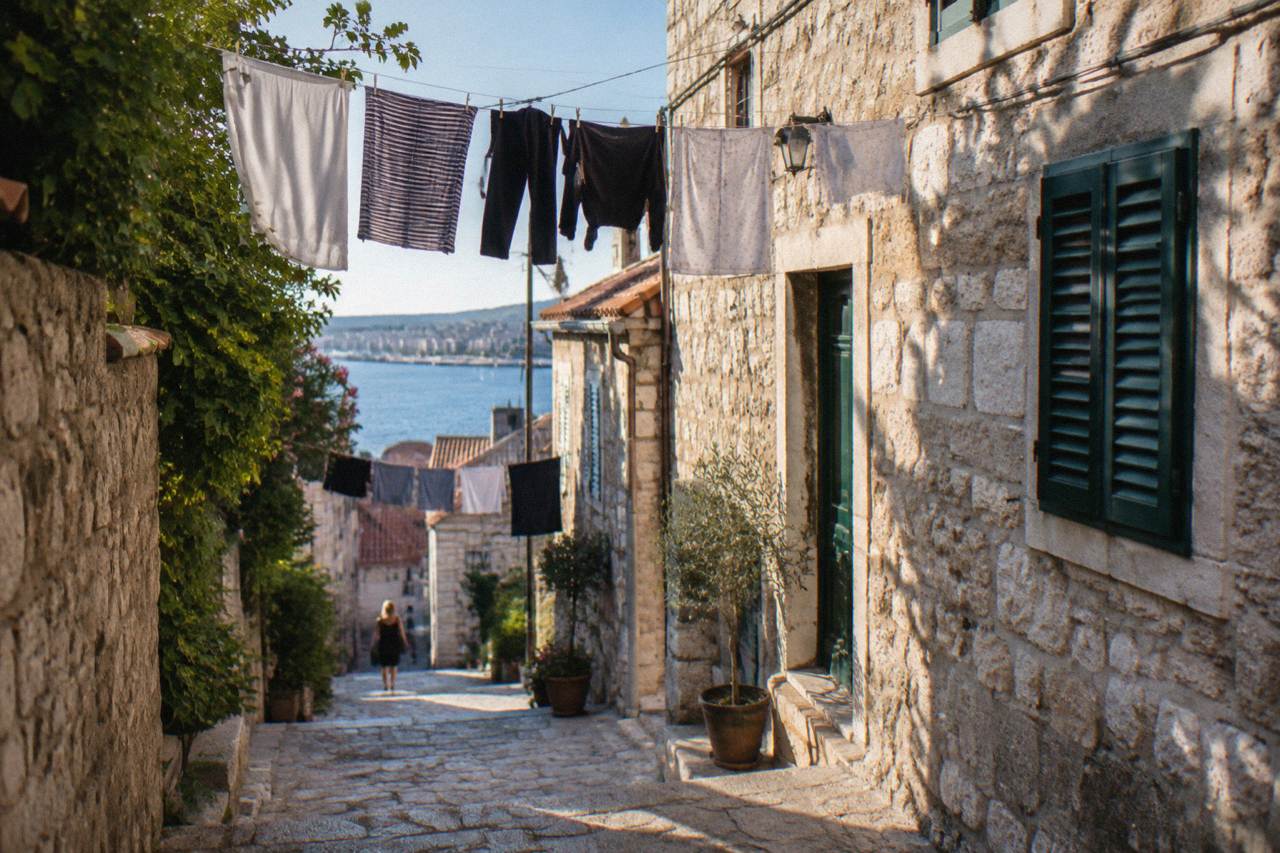
Veli Varos is the old stone quarter on the western edge of Split, the coastal city in central Dalmatia, Croatia, that grew in and around Diocletian's Palace and now spreads west toward the Marjan peninsula. The neighbourhood sits between the Riva waterfront and the Marjan hill park forest, close enough to the palace that the walk from its lanes to the Peristyle takes only a few minutes, yet its character is entirely its own: low stone houses, narrow car-free alleys, small family konobas and long staircases that climb straight into the pines.

This page from the Split Croatia Travel Guide editorial desk covers what Veli Varos is, what to see in and around it, how it connects to Marjan Hill, where to eat and swim, and how the quarter fits into a wider Split itinerary, including the day trips that leave from the transport hub on Obala kneza Domagoja.
Where Is Veli Varos In Split?
Veli Varos is the residential quarter immediately west of Split's Old Town, lying between the Riva promenade and the southern slopes of the Marjan hill park forest, within a short walk of Diocletian's Palace. It forms part of the historic fabric of the city centre, and its lanes rise from the waterfront toward the pine woods above. There is no ticket, no gate and no opening hour: it is simply a lived-in neighbourhood you walk through.
Split's geography explains the quarter's shape. The palace core, described in the Diocletian's Palace guide, occupies the eastern half of the centre, and from its western gate, the Iron Gate, the streets run out toward the sea and the hill. Veli Varos grew outside the palace walls as a fishermen's and labourers' settlement, and its plan has barely changed: parallel lanes connected by steep steps, houses built of the same pale stone as the palace itself. The ferry port, the main bus station and the railway station sit together on Obala kneza Domagoja, 500 to 600 m from the palace, so the quarter sits between the transport hub and the hill.
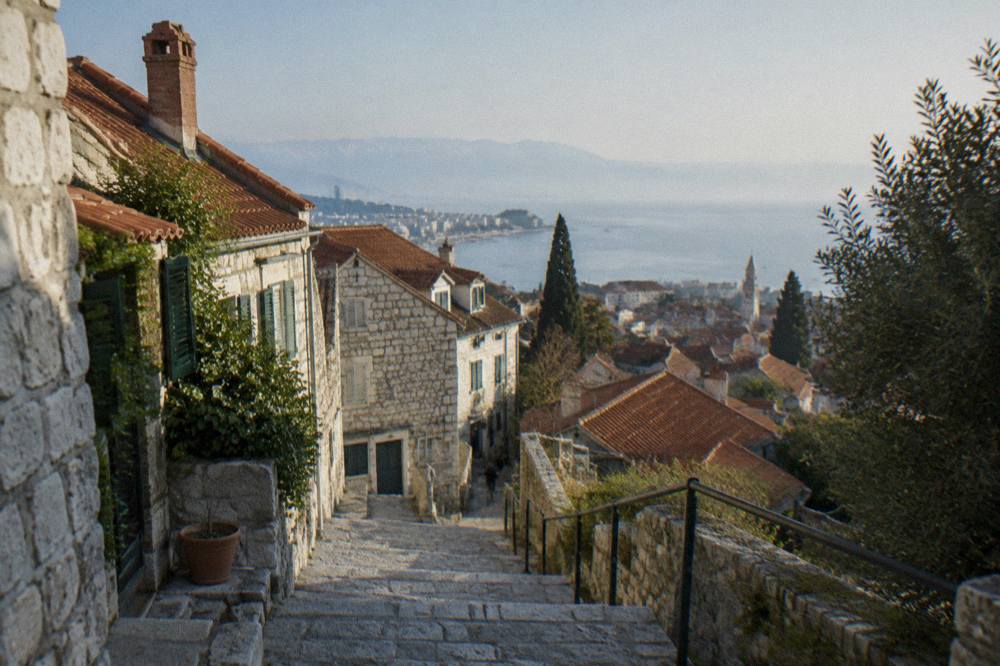
Orientation is simple once you see the hill. Marjan, the park-forest peninsula on the city's western side, is 3.5 km long and 1.5 km wide, and its highest point, Telegrin, stands 178 m above the sea, according to the Marjan park society's own published figures. Veli Varos occupies the ground at the foot of that slope closest to the centre. To the south lies the Riva promenade, and beyond it the ferry piers. To the east, the lanes of the Old Town. To the west, the wooded paths of Marjan Hill.
| Direction from Veli Varos | What you reach | Notes |
|---|---|---|
| East | Diocletian's Palace and the Peristyle | A few minutes on foot through the Iron Gate side lanes |
| South | The Riva and the ferry port | Waterfront promenade facing the islands |
| West and up | Marjan park forest | Stairs and paths climb into the pines toward Telegrin at 178 m |
| Beyond Marjan | Kašjuni and the south-facing coast | The Meje quarter wraps the peninsula's southern side |
A practical note for 2026 and 2027: the Riva's central section is set for renovation works planned from November 2026, running a little over a year, so partial closures along the waterfront should be expected through 2027. Veli Varos itself is not affected, and its lanes remain the quickest quiet route between the palace and the Marjan stairs.
What To See In And Around Veli Varos?
The quarter's own sights are its stone lanes, small squares and church facades, all free to wander, while the headline monuments of Split sit a few minutes east: Diocletian's Palace cellars, the Peristyle, the Cathedral of St Domnius and its 57 m bell tower, and the Golden Gate with the Grgur Ninski statue. Veli Varos works best as the calm approach to all of them rather than a destination with a ticket office.
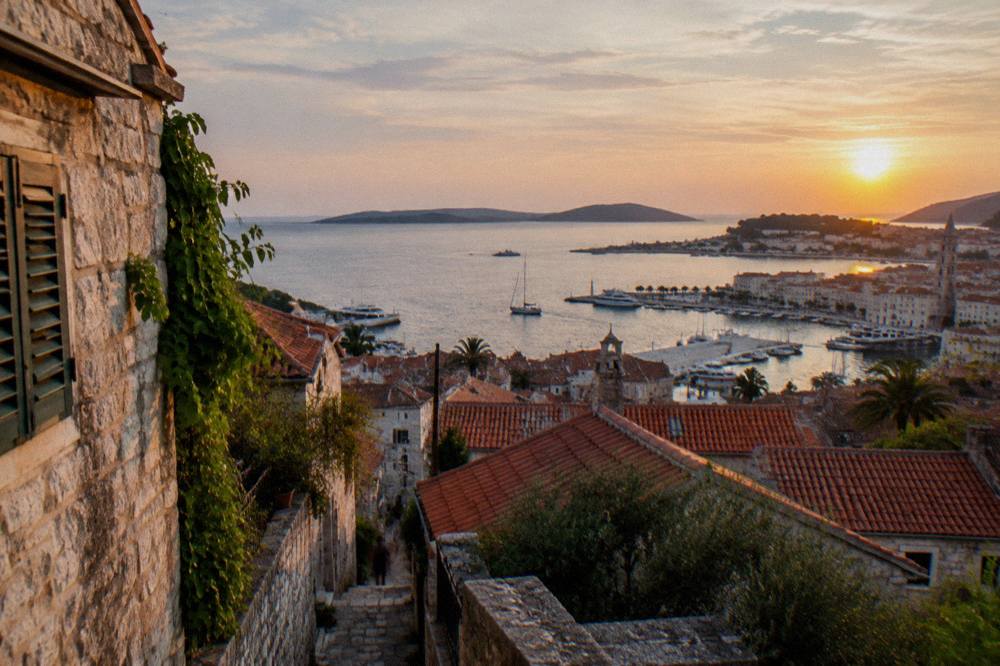
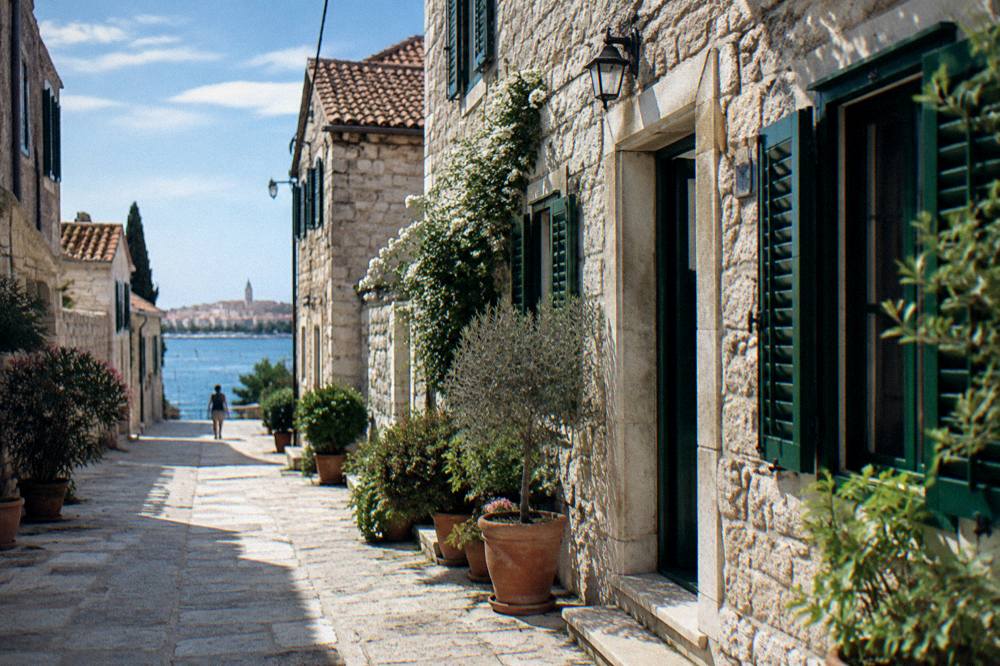
Start in the lanes themselves. The houses of Veli Varos are modest two and three storey stone buildings, many with external staircases and shuttered windows, and the streets between them are narrow enough that cars are largely absent. The quarter's small churches are its landmarks; the church of St Nicholas on its slope is the traditional stopping point on the route up Marjan. Nothing here is ticketed, and the whole quarter can be crossed on foot in well under half an hour.
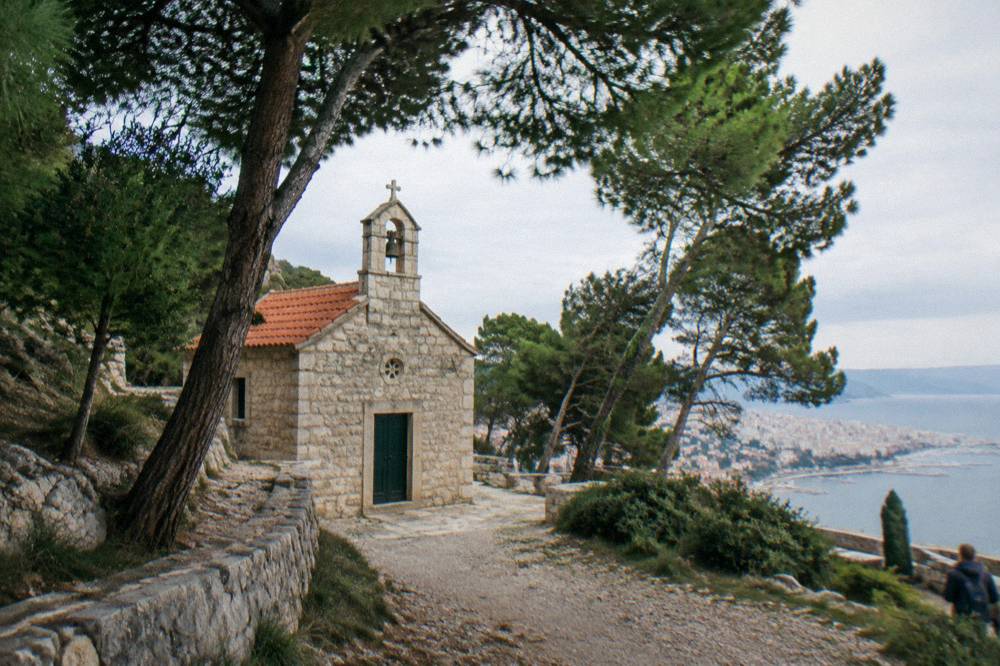
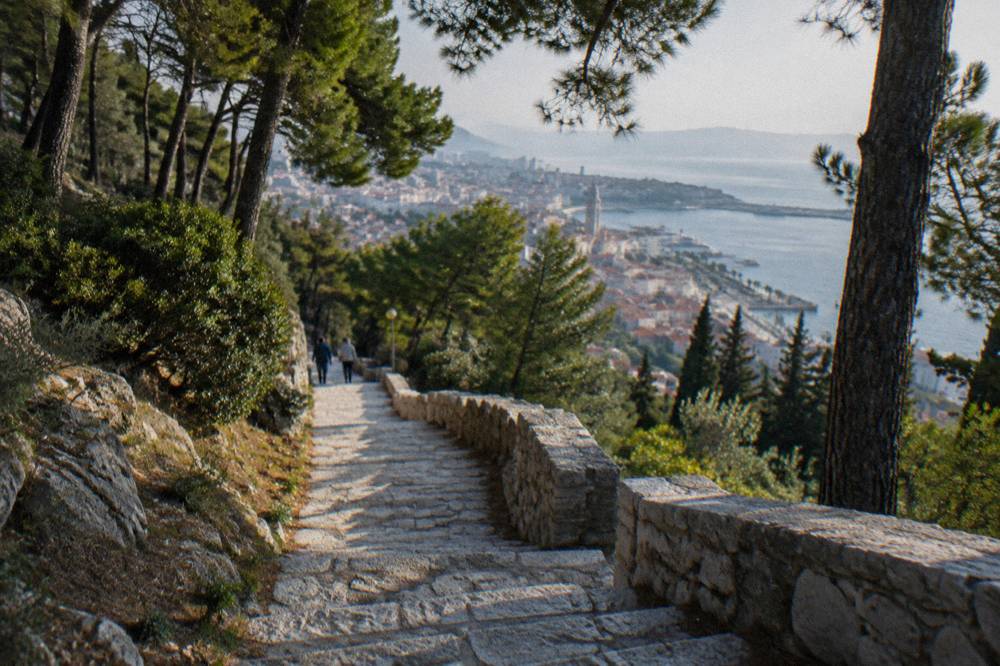
From the top of the quarter, the paths continue into the Marjan park forest proper. The park society's figures record 819 steps from Trumbićeva obala, the street at the foot of the slope, up to Telegrin, the 178 m high point. The climb is shaded for much of its length and ends at a view over the whole city, the islands of Brač, Šolta and Hvar offshore, and the open Adriatic. For a fuller route description, see the Marjan Hill guide.
East of the quarter, the palace monuments begin almost at once. The Diocletian's Palace cellars are run by the Split City Museum and open Monday to Sunday from 8:30 to 20:00, though the museum's own notices state that the central part of the substructures is under restoration until the end of 2026, with the passage remaining open. The Peristyle, the palace's central square, is free, as are the Prokurative, the Golden Gate, the Grgur Ninski statue and the city's markets.
| Sight near Veli Varos | Entry | Notes |
|---|---|---|
| Veli Varos lanes and squares | Free | Open residential quarter, no ticket |
| Peristyle, Prokurative, Golden Gate, Grgur Ninski | Free | Palace core, a few minutes east |
| Diocletian's Palace cellars | Ticket via Split City Museum | Open Mon to Sun 8:30 to 20:00; central part in restoration to end of 2026, passage open |
| Split City Museum, Papalić Palace | 10.00 EUR adult, 8.00 reduced, 18.00 family | Closed Mondays |
| Cathedral of St Domnius complex | From about 5 EUR, combined tickets up to about 15 EUR | Shoulders and knees covered |
Veli Varos also sits on the natural walking line between the palace and Marjan, which makes it a useful base for travellers who want the monuments in the morning, the hill in the afternoon and a konoba table in between. If the plan is broader than one neighbourhood, the one day in Split itinerary and the two days in Split itinerary both route through this western edge of the centre.
Is Veli Varos A Good Place To Stay In Split?
Veli Varos is one of the calmest places to stay in central Split: it keeps Diocletian's Palace, the Riva, the bus station and the ferry piers within walking distance while avoiding the late night noise of the bars inside the palace walls. The trade-offs are stairs, limited vehicle access and a smaller choice of shops than the flat streets east of the centre.
Accommodation in Split concentrates in a handful of areas, and each suits a different trip. The palace core itself is atmospheric but loud in season. Bačvice and Firule, east of the centre, put the sandy city beach first, as the Bačvice and Firule guide explains. Žnjan, further east still, is a modern seafront strip described in the Žnjan guide. Meje, which wraps the southern side of Marjan, is quieter and more residential still, and Stobreč, out along the coast, feels like a separate village. Veli Varos is the compromise that keeps everything central within a short walk.
| Split area | Character | Best suited to |
|---|---|---|
| Veli Varos | Stone lanes below Marjan, west of the palace | Walkers who want quiet and centrality together |
| Old Town and palace core | Monuments, bars, crowds | First time visitors who want everything on the doorstep |
| Bačvice and Firule | Sandy city beach, family friendly | Beach first trips with children |
| Meje | Hillside villas above Kašjuni | Quiet stays with a car or strong legs |
| Stobreč | Coastal village feel east of the city | Longer, slower stays |
One booking detail worth knowing: Croatia's accommodation collects a tourist tax, about 2.65 EUR per person per night in high season (1 April to 30 September), with under 12s free and 12 to 18s paying half, confirmed at booking. The country has used the euro since 1 January 2023 and has been a Schengen member since 1 January 2023, so border formalities for most European arrivals ended years ago.
For travellers using Veli Varos as a base for the big day trips, the practical draw is the transport geography: the coaches and tours for Krka, Plitvice Lakes, Trogir and Mostar leave from or pass the main bus station on Obala kneza Domagoja, which sits beside the ferry port 500 to 600 m from the palace. From the heart of Veli Varos that hub is a short downhill walk at departure time and a short climb home at the end of the day.
Where Do Locals Eat In And Around Veli Varos?
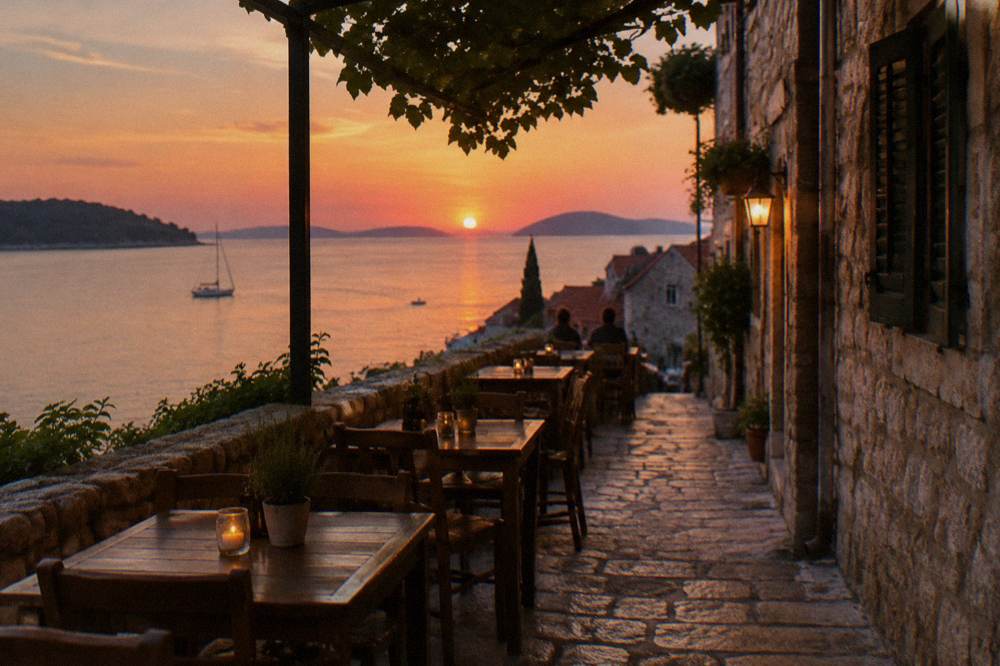
Veli Varos and the streets at its edges carry a concentration of small konobas and family kitchens that serve Dalmatian standards: grilled fish, black risotto, peka and local wine, at prices generally below the terrace rows on the Riva. The reliable checks are the ones any diner can make: posted menus, itemised bills and the cover charge printed on the menu.
The quarter's food character comes from its residential history. Konobas here are small, often fewer than a dozen tables, and they run to the Dalmatian repertoire rather than tourist menus. For a fuller survey of where the city eats, the where locals eat in Split article covers the neighbourhoods beyond the palace walls, and the Split restaurants guide and Split food guide go dish by dish.
Practical habits matter more than any single address. Menus with printed prices must be displayed; the bill should arrive itemised; the cover charge, where charged, appears on the menu itself. Those three checks, which the city's consumer rules entitle every diner to, do more to keep a meal honest than any list of names. Reservations are sensible in the peak months of July and August, when the DHMZ Split-Marjan station table records 18 days at 30 C or more in July and 17 in August, and an evening table in a shaded lane is worth booking.
Can You Climb Marjan Hill From Veli Varos?
Yes, and Veli Varos is one of the two classic starting points for the climb. The park society's published figures record 819 steps from Trumbićeva obala, at the foot of the quarter's slope, up to Telegrin, the 178 m high point of a peninsula 3.5 km long and 1.5 km wide. The ascent is shaded, stepped for much of the way, and needs no ticket, guide or permit.
The route is straightforward. From the upper lanes of Veli Varos, signed paths and staircases join the Marjan trail network; the stone stairway from Trumbićeva obala is the counted one, and it delivers walkers to the Telegrin viewpoint above the city. Allow more time than the distance suggests in summer heat: the July mean at the DHMZ Split-Marjan station is 26.2 C, with 353.3 hours of sunshine in the month, so the morning or late afternoon is the sensible window. Water and sensible shoes are the only equipment.
Beyond Telegrin, the peninsula's paths continue west to lookouts, bays and the Meštrović Gallery on the southern edge of the park. The gallery, which reopened in April 2026 after a 15 month renovation, charges 12.00 EUR for an adult ticket that also covers Crikvine-Kaštilac, Ivan Meštrović's chapel site further along the coast. The gallery's own price list gives 8.00 EUR reduced and 20.00 EUR for a family ticket.
| Marjan fact | Figure | Source |
|---|---|---|
| Highest point, Telegrin | 178 m | Marjan park society |
| Steps from Trumbićeva obala to Telegrin | 819 | Marjan park society |
| Peninsula length | 3.5 km | Marjan park society |
| Peninsula width | 1.5 km | Marjan park society |
| Meštrović Gallery adult ticket | 12.00 EUR, includes Crikvine-Kaštilac | Gallery price list |
| Entry to Marjan park forest itself | Free | No ticket on any official source |
Which Beaches Are Closest To Veli Varos?
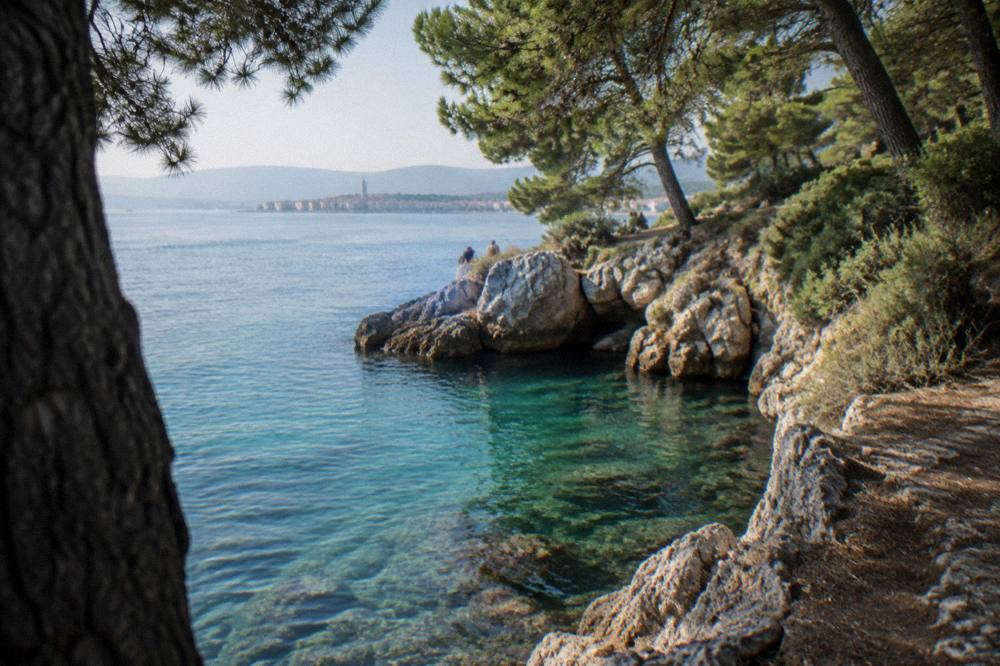
The nearest swimming to Veli Varos is on the Marjan side of the city: the stone coves and concrete platforms along the peninsula's southern edge below the Meje quarter, with Kašjuni the best known of them, all within walking distance of the quarter's upper lanes. On the east side of the centre, the sandy Bačvice beach sits about fifteen minutes away on foot.
The two beach worlds of central Split suit different travellers. Bačvice, covered in the Bačvice beach guide, is the city's sandy shallow bay, home of picigin, the ball game born on the beach in 1908 and now protected intangible heritage of Croatia. It is family friendly and central. The Marjan coves, reached through Meje, are quieter, stonier and clearer, and they pair naturally with a Veli Varos base because the walk passes through the quarter's own lanes. The city's beaches are free, and no Split beach's Blue Flag status for 2026 can be stated here, so check the current flag listings if that matters to your choice.
No official monthly sea-temperature normal exists for Split, so the honest answer on swimming weather is the air record plus the live reading: the DHMZ Split-Marjan station logged a sea temperature of 20.4 C on the morning of 12 October 2026, and the same station's 1948 to 2024 table gives monthly air means of 26.2 C in July and 25.9 C in August, falling to 21.6 C in September. For the month by month picture, the Split weather guide and the can you swim in the sea in Split article carry the detail.
How Does Veli Varos Fit Into A Split Itinerary?
Veli Varos earns its place as the quiet spine of almost any Split itinerary: a morning walk through the lanes to the palace, an afternoon climb of Marjan's 819 steps, an evening konoba table, and, on longer stays, a departure point for the island and national park day trips that leave from the bus station by the ferry port. One day can touch it; three days let it breathe.
For a single day, the one day in Split itinerary strings the palace core, the Riva and a Marjan viewpoint together, and the western lanes of Veli Varos sit on the natural line between the Riva and the hill stairs. Cruise passengers ashore for the day can do the same loop on foot from the port, as the Split cruise port day itinerary sets out. With two or three days, the three days in Split itinerary adds an island day and a park day to the city day.
The quarter also suits Split's walking-tour habits. Small-group guided walks of Diocletian's Palace leave from points in or near the palace core, and tip-based walks run locally as well; confirm the meeting point and the tipping convention with the guide directly. From the quarter, every walking route in the Split walking tours guide starts within a few minutes on foot.
To hear the history from someone who teaches it, book a history walking tour here.
Which Day Trips Work Best From Veli Varos?
The full Split day trip menu is available from Veli Varos because everything leaves from the transport hub on Obala kneza Domagoja, 500 to 600 m from the palace: Krka National Park, Plitvice Lakes, Trogir, Salona, Klis Fortress, Omiš and the Cetina, Hvar, Brač, Vis and the Blue Cave, and the long runs to Mostar and Dubrovnik. The coach and minibus tours pick up at or near the same hub.
The driving times from Diocletian's Palace, computed on free-flow routing, set the realistic expectations for each trip. Klis Fortress, a Game of Thrones Meereen location with a 10 EUR adult ticket, is 22 minutes away; Salona's Roman ruins, visited on a 10 EUR combined ticket with the Archaeological Museum within 7 days, are 14 minutes; Trogir, a UNESCO city since 1997, is 36 minutes; Krka's Skradinski buk entrance is 74 minutes; Plitvice Lakes is 3 hours 15. The two national parks dominate the day trip market, and their seasonal prices matter when choosing a date.
| Day trip from Split | Driving time from the palace | Entry figure |
|---|---|---|
| Salona | 14 min | Combined with Archaeological Museum 10 EUR within 7 days |
| Klis Fortress | 22 min | 10 EUR adult |
| Trogir | 36 min | Old town itself free to walk |
| Omiš | 38 min | Mirabela fortress 4 EUR, 6 EUR from 1 June to 30 September |
| Krka, Skradinski buk | 74 min | 7 / 20 / 40 EUR by season, boat and bus transfers included 1 April to 31 October |
| Plitvice Lakes | 3 h 15 | 10 / 23 / 40 EUR by season, timed online entry, name on ticket |
| Dubrovnik | 3 h 21 by car, about 4 h by coach | City walls 40 EUR in 2026 |
Krka's own price list sets 7 EUR in January to March and November to December, 20 EUR in April, May and October, and 40 EUR from June to September, with the Skradin boat and Lozovac bus transfers included from 1 April to 31 October. The park's rules allow swimming only in clearly marked areas, so the old claim of swimming beneath Skradinski buk should be forgotten; designated spots sit at Roški slap, Stinice and Pisak from 1 June to 30 September. The Krka National Park day trip guide carries the full breakdown, including whether to pre-book.
Plitvice Lakes prices 10 EUR from 1 January to 31 March and from 1 November, 23 EUR in April, May and October, and 40 EUR from 1 June to 30 September, with a 25 EUR afternoon slot in the peak. Entry is timed and online, and the visitor's name goes on the ticket. The Plitvice Lakes day trip guide explains the routing; a guided option is the Plitvice day trip from Split, with Check availability for current dates and prices. There is also Check availability on the variant whose listing includes entry tickets, which removes the timed-slot booking step.
The islands run on a different timetable logic. Jadrolinija's line 635 car ferry reaches Stari Grad on Hvar in about 120 minutes, with foot passengers paying 5.90 EUR off-season and 8.40 EUR in season; line 631 reaches Supetar on Brač in about 50 minutes; line 636 reaches Rogač on Šolta in about 60 minutes; the Vis crossing takes about 140 minutes. Catamarans run to Hvar town and Jelsa at 6.40 EUR low season and 10.00 EUR high season, and to Vis at 7.20 and 10.00 EUR. Hvar town itself is a catamaran destination, Stari Grad a ferry one; the two are not interchangeable, a distinction the Split to Hvar ferry guide unpacks.
When Is The Best Time To Visit Veli Varos?
The best months for Veli Varos are May, June, September and early October, when the DHMZ Split-Marjan station's 1948 to 2024 table shows means of 19.2 C, 23.4 C, 21.6 C and 17.2 C respectively, with rainfall below the autumn peak. July and August are the warmest months at 26.2 C and 25.9 C mean, and November is the wettest at 115.5 mm.
The station record gives the month by month picture that glossy brochures blur. July is both the driest month, 26.6 mm, and the brightest, 353.3 hours of sunshine; December falls to 120.8 hours. Rain builds through autumn: November's 115.5 mm makes it the wettest month of the record, ahead of December at 103.7 mm and October at 77 mm. Spring is gentler than autumn, with March at 10.8 C and 63.2 mm against October's 17.2 C and 77 mm.
| Month | Mean temperature (C) | Precipitation (mm) |
|---|---|---|
| January | 8.0 | 77.8 |
| February | 8.5 | 65.2 |
| March | 10.8 | 63.2 |
| April | 14.4 | 62.0 |
| May | 19.2 | 57.5 |
| June | 23.4 | 49.0 |
| July | 26.2 | 26.6 |
| August | 25.9 | 41.3 |
| September | 21.6 | 70.9 |
| October | 17.2 | 77.0 |
| November | 12.7 | 115.5 |
| December | 9.4 | 103.7 |
All figures are the DHMZ Split-Marjan station's monthly means for the 1948 to 2024 period, and sunshine across the year runs at about 2,600 hours. The event calendar adds seasonal colour: Advent in Split runs 27 November 2026 to 7 January 2027 with the Đardin ice rink, Sudamja, the city day of St Domnius, falls on 7 May every year, and Ultra Europe takes Park Mladeži on 9 to 11 July 2027. The month by month trade-offs are set out in the best time to visit Split guide.
Common Questions About Veli Varos In Split
Is Veli Varos In Split Worth Visiting?
Yes, for anyone who wants the quiet side of central Split. The quarter is free to wander, sits minutes from Diocletian's Palace and the Riva, and holds the classic stairway start of the Marjan climb. Travelers who only want monuments can pass through it in ten minutes; those who linger find konobas and stone lanes with no ticket queue anywhere.
How Far Is Veli Varos From Diocletian's Palace?
Veli Varos begins immediately west of the palace core, and the walk from its central lanes to the Peristyle takes only a few minutes on foot through the streets around the Iron Gate side of the Old Town. No transport is needed; the whole distance is flat or gently rising pedestrian streets and steps.
Can You Walk To Marjan Hill From Veli Varos?
Yes. The quarter's upper lanes connect directly to the Marjan trail network, and the park society's figures record 819 steps from Trumbićeva obala to the Telegrin high point at 178 m. The climb is free, shaded for much of its length, and best done in the morning or late afternoon in summer.
Is Veli Varos A Good Area To Stay In For First Time Visitors?
It suits first time visitors who want centrality with quiet nights: the palace, the Riva, the bus station and the ferry port are all within walking distance, while the bars inside the palace walls stay a few streets away. The trade-offs are stairs, limited car access and a smaller choice of shops than the flat eastern centre.
Are There Beaches Near Veli Varos?
The nearest swimming is on the Marjan side of the city, along the stone coves and platforms of the peninsula's southern edge below the Meje quarter, including Kašjuni. The sandy Bačvice beach on the east side of the centre is roughly a fifteen minute walk away and is the city's main family beach.
Do You Need A Car In Veli Varos?
No. The quarter is pedestrian by character, the city centre is compact, and the ferries, catamarans, coaches and day trip pickups all leave from the hub on Obala kneza Domagoja a short walk away. A car only earns its keep for multi stop touring beyond the day trip network; parking tariffs vary and should be confirmed with the accommodation.
Veli Varos remains the quiet half of central Split: the same pale stone as the palace, the same sea at the bottom of the lanes, and a stairway into the pines where the city ends. Walk it slowly, book the konoba ahead in July, and let the quarter do what it has always done, which is to hold still while the rest of the centre moves.
