Kasjuni Beach
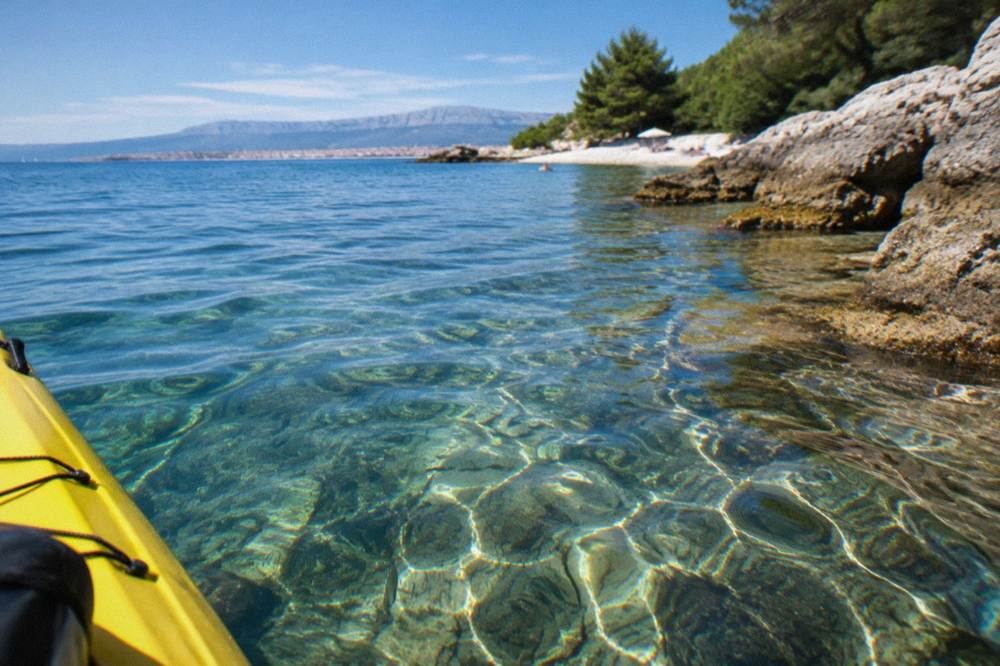
Kasjuni Beach sits on the southern shore of the Marjan peninsula in Split, Dalmatia, Croatia, a free city beach of pale pebbles and clear, sheltered water that faces the open Adriatic and the island of Brač.
Short answer
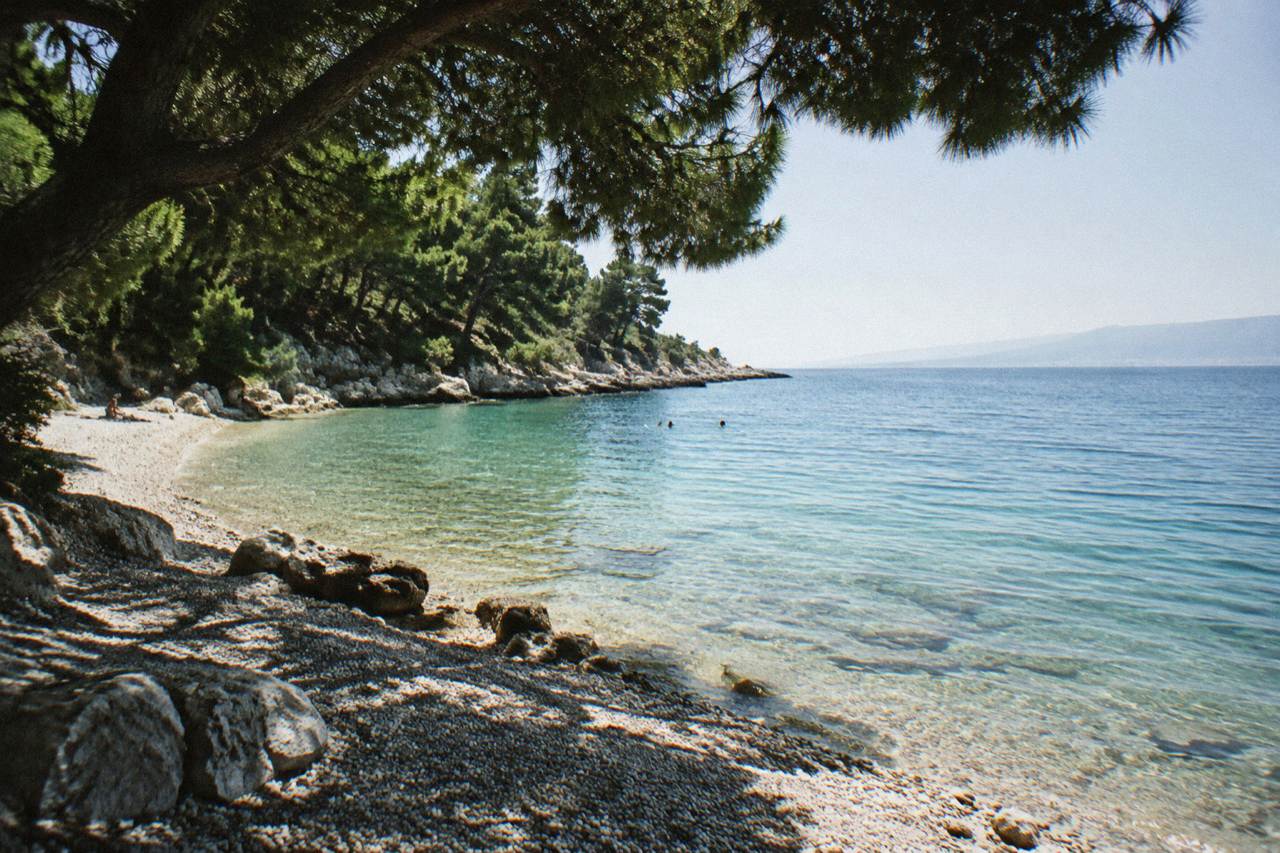
Kasjuni Beach is a free public pebble beach on the south side of the Marjan peninsula in Split, about a 30 to 40 minute walk from Diocletian's Palace, with calm water, natural shade from pines and the Meštrović Gallery a short distance away.
Kasjuni Beach is a free public beach on the southern shore of the Marjan peninsula in Split, the coastal city in Dalmatia, Croatia, whose Old Town lives inside the walls of Diocletian's Palace. Where the city's eastern beaches such as Bačvice face the sheltered bay and the ferry port, Kasjuni looks the other way, south and west, across open water towards the island of Brač. The beach is pebble and shingle rather than sand, the water is clear and unusually calm for a south-facing shore because the headland protects the cove, and the pine trees that cover the slopes of Marjan come right down to the back of the beach. This page sets out what the beach is like, how to reach it on foot and by local bus, what it costs, what sits within a short walk of it, and how it fits into a wider stay in the city.
What And Where Exactly Is Kasjuni Beach In Split?
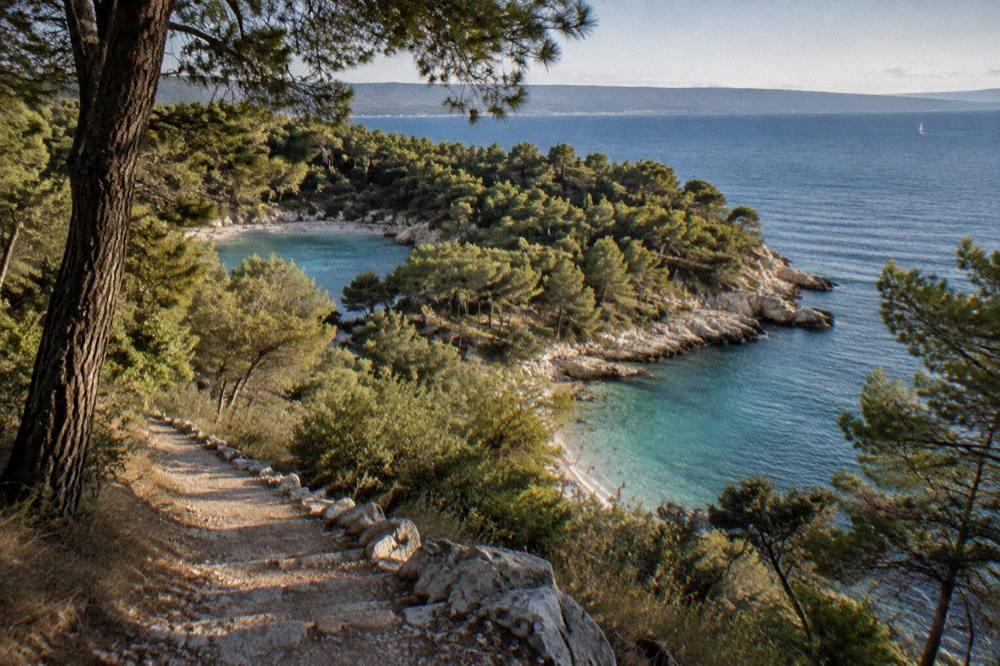
Kasjuni Beach is a free city beach in a small cove on the southern coast of the Marjan peninsula, west of Split's Old Town, around the headland from the more exposed Ježinac beach and below the wooded slopes that rise towards the Telegrin viewpoint at 178 m. The beach is pebble and fine shingle, the bay is sheltered, and the water deepens gradually, which is why local listings describe it as a family-friendly swimming spot. Entry costs nothing at any time of year.
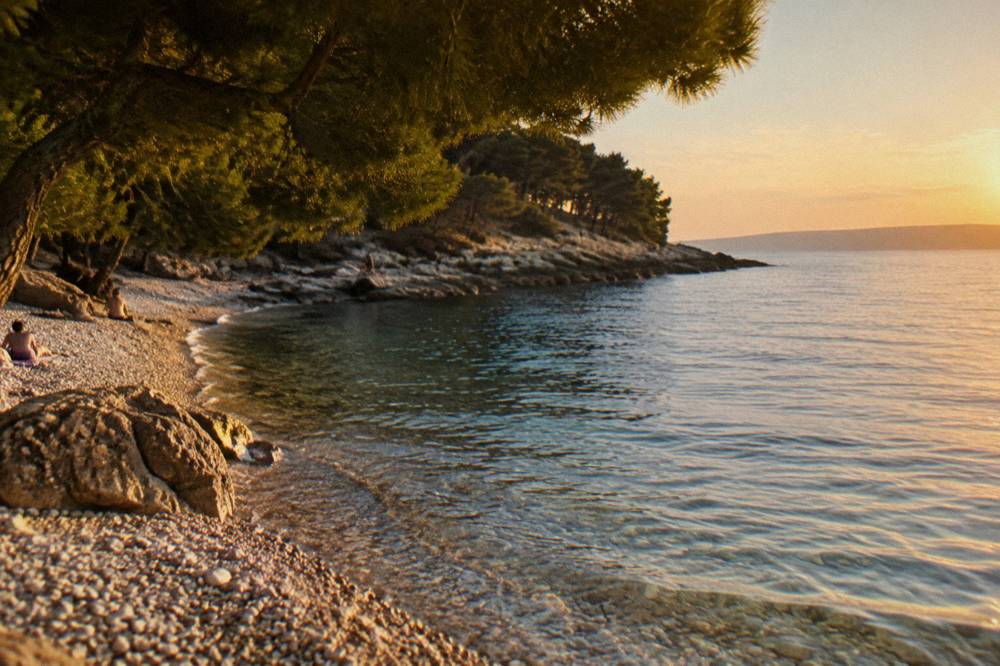
Marjan is the peninsula park that forms the western edge of Split. The Društvo Marjan park society's own figures describe it as 3.5 km long and 1.5 km wide, with its highest point, Telegrin, at 178 m and 819 steps leading up from Trumbićeva obala on the northern side. Kasjuni sits on the peninsula's southern flank, in the stretch of coast below the Meje neighbourhood, where the hillside drops steeply to a series of small coves. The southern position matters for two practical reasons. First, the afternoon sun is behind the beach rather than in swimmers' eyes, and the pines give real shade through the middle of the day. Second, the cove is protected from the bura and the jugo winds to different degrees, so the water stays swimmable on days when the open coast beyond the headland is rough.
The beach belongs to the same family of free city beaches as Bačvice, Žnjan and Firule: no gate, no ticket, no charge for standing on the pebbles. What separates Kasjuni from all three is setting rather than service. Bačvice sits at the edge of the city centre with apartment blocks around it; Kasjuni sits under a protected park forest, and the loudest thing on the shore on a weekday morning is likely to be the sea. That character comes with trade-offs, which the sections below set out honestly: the walk in is longer, the food options are thinner, and the beach is pebble, so footwear that survives stones is worth packing.
How Do You Get To Kasjuni Beach From Split Old Town?
On foot, Kasjuni Beach is roughly a 30 to 40 minute walk from Diocletian's Palace: out through the western edge of the Old Town, along the Riva, up through the Meje streets or the Marjan park paths, and down to the cove on the peninsula's south side. By local bus, Split's city network serves the Meje area on the route towards the Marjan coast, and the stop is a short downhill walk from the pebbles. No ferry, no ticket and no car is needed.
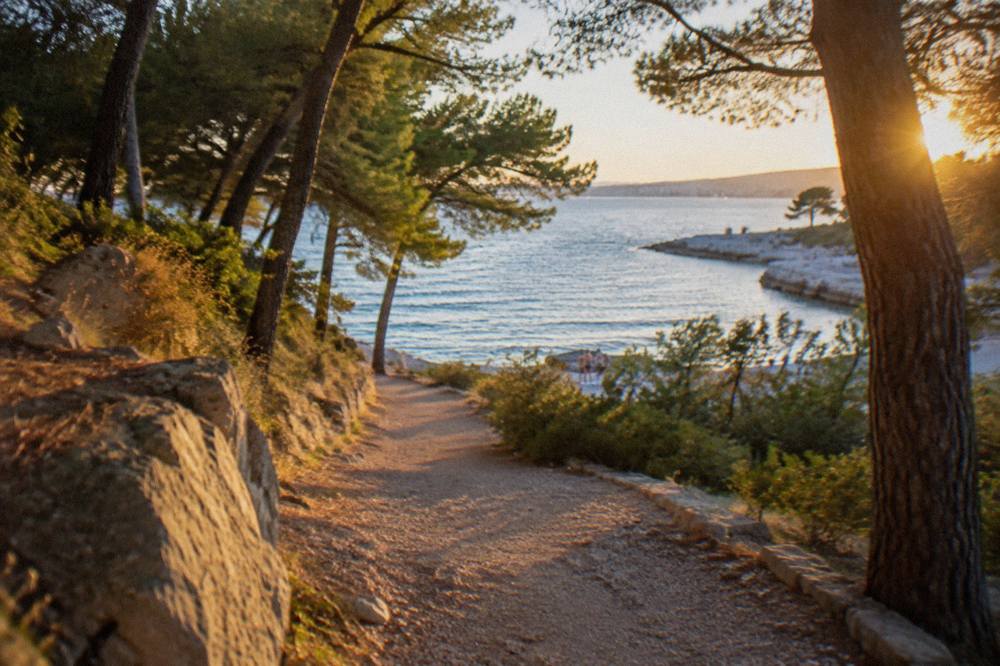
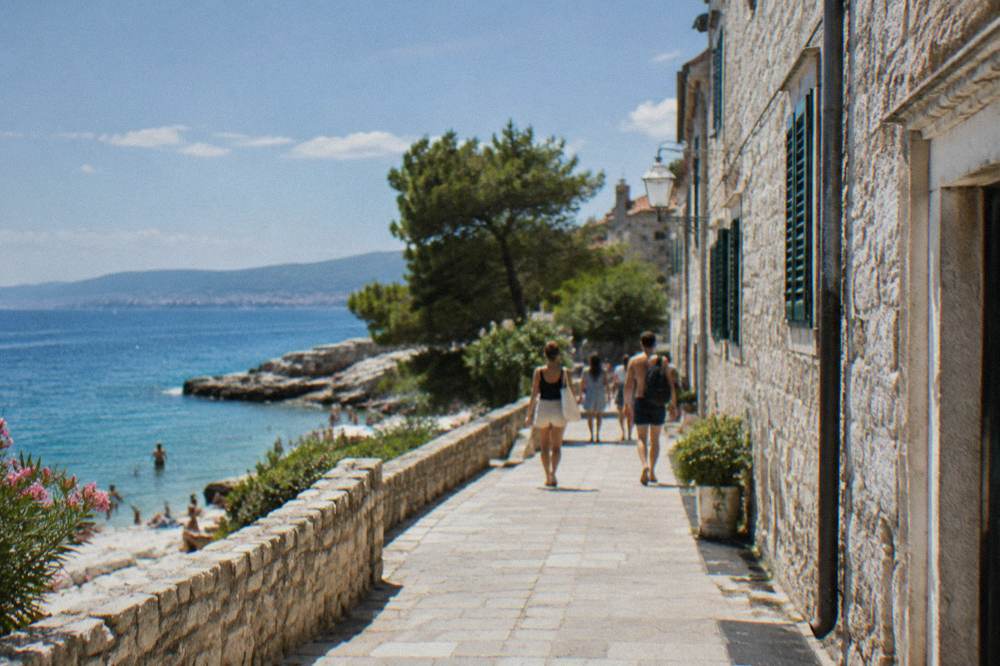
The walking route is the one to take at least once, because it passes through two of the city's most likeable quarters in succession. From the palace's western gate the route crosses the Riva promenade, the long seaside walk that forms the city's front room, then climbs through Veli Varoš, the old fishermen's quarter of stone lanes and steep stairs on the eastern foot of Marjan. Above Veli Varoš the path enters the park forest itself, where gravel tracks thread between pines. The southern path forks down towards the coast and the string of coves, of which Kasjuni is the largest and best known.
Cyclists and families with small children often prefer to come by local bus, and Split's city buses accept contactless payment on board, though the exact fare should be confirmed with the driver or on the operator's site before travelling. Taxis and ride-hailing serve the Meje streets above the beach, but no verified fare figure exists for that run and none should be believed if quoted here.
If a day at Kasjuni is one item on a longer list, it slots naturally into the middle of a stay: the beach pairs well with the Marjan hill paths in the morning and the palace in the late afternoon, and the site's three days in Split itinerary gives it exactly that slot. Visitors with only a single day usually prioritise the palace and the Riva, and the one day in Split plan reflects that.
Once the city-leg of the trip is planned, the sea is the other half of a Split holiday, and the operators below cover both halves.
What Does Kasjuni Beach Cost, And What Facilities Does It Have?
Kasjuni Beach is free to enter and free to sit on, like every city beach in Split, and the City of Split publishes no ticket, no lounge-chair tariff and no booking scheme for it. What the shoreline itself offers is natural: pebble and shingle, gradual shallows, pine shade at the back of the beach and open sea views towards Brač. Any cafe, sunbed or watersport service that operates in the cove is seasonal and privately run, so prices should be checked on the spot.
The honest position on facilities is that this page prints no facility list, because no official source carries one, and inventing a catalogue of showers, changing rooms and snack bars would be exactly the kind of guess this site refuses to make. What can be said is structural. The cove sits inside the Marjan park-forest zone, where building is restricted, so development stays light by nature rather than by chance. Visitors who want a full-service beach day with rows of beds and a beach club at the back of the sand should read the site's answer page on the best beach clubs in Split and plan accordingly. Visitors who want quiet water, trees and space should walk to Kasjuni.
One point of etiquette and law deserves a heading of its own, because Split introduced new public-order rules for its historic core that are enforced with named fines. That is the next section.
Is Swimwear Really Banned In Split, And What Are The Actual Fines?
Yes, in the historic centre: a 2026 city decision formalised rules against walking in swimwear or shirtless on public surfaces in the Zone A old-town area, alongside verified fines of 300 EUR for drinking alcohol in public in the historic centre, 300 EUR for urinating, 300 EUR for climbing monuments or bathing in fountains, and 150 EUR for sleeping in public spaces. The exact swimwear fine amount is set locally and is not published on the city's pages, so confirm locally.
The distinction that matters for a beach day is geography. The rules target the historic core, the streets inside and around the palace, not the beaches themselves. On Kasjuni, swimwear is the point; in the Peristyle or the streets around the Golden Gate, it is an offence. The practical version of the rule is simple: dress at the beach, dress again before walking back through the Old Town, and the question never arises. The city's tourism site carries the rules under its Enjoy Respect campaign, and the fines listed above are printed there in black and white.
The same 2026 rule set brought a seasonal night-time restriction on retail alcohol sales in shops, from 1 June to 15 September, with automatic seasonal repeat from 1 June 2027 unless changed. Bars and restaurant terraces with licences are not affected. None of this changes life on the beach; it changes what happens on the walk home. The site's page on what to avoid in Split covers the wider practicalities.
When Is The Best Time Of Day And Year For Kasjuni Beach?
By the DHMZ Split-Marjan station table for 1948 to 2024, July is the warmest month at a 26.2 C mean and August follows at 25.9 C, with 18 days at 30 C or more in July and 17 in August, so mid-morning and late afternoon are the comfortable windows in high summer. June averages 23.4 C and September 21.6 C. November is the wettest month at 115.5 mm and July the driest at 26.6 mm.
The full monthly picture from the station table, the standard reference for Split's weather:
| Month | Mean temperature (C) | Precipitation (mm) |
|---|---|---|
| Jan | 8.0 | 77.8 |
| Feb | 8.5 | 65.2 |
| Mar | 10.8 | 63.2 |
| Apr | 14.4 | 62.0 |
| May | 19.2 | 57.5 |
| Jun | 23.4 | 49.0 |
| Jul | 26.2 | 26.6 |
| Aug | 25.9 | 41.3 |
| Sep | 21.6 | 70.9 |
| Oct | 17.2 | 77.0 |
| Nov | 12.7 | 115.5 |
| Dec | 9.4 | 103.7 |
Two readings of that table help a beach planner. The first is that September is the quietly excellent month: the mean is still 21.6 C, the sea has absorbed a whole summer of heat, and the July and August crowds have gone. The second is that October at a 17.2 C mean is a walking-and-coffee month rather than a swimming month for anyone who is not hardy, and the site's page on sunbathing in Split in October draws that line carefully. No official monthly sea-temperature normal exists for Split, so none is printed here; the live reading published by the weather service is the only figure worth following, and it changes daily.
Within a single day, the cove's orientation does the scheduling. Morning light falls softly across the water, the pines hold their shade through midday, and by late afternoon the sun drops behind the Marjan ridge earlier than it does on the city's eastern beaches. Locals who want a long evening swim tend to choose Bačvice for exactly that reason; locals who want a quiet morning in clear water walk to Kasjuni. Everything else covered here is indexed on Split Croatia Travel Guide.
What Sits Within Walking Distance Of Kasjuni Beach?
The Meštrović Gallery stands a short walk uphill from Kasjuni, at 12.00 EUR for an adult ticket that also includes the Crikvine-Kaštilac chapel site, having reopened in April 2026 after a fifteen-month energy renovation; the Marjan park paths, the Ježinac coves and the whole southern coast of the peninsula are free to walk; and the palace core is 30 to 40 minutes back on foot. Nothing at the beach itself is ticketed.
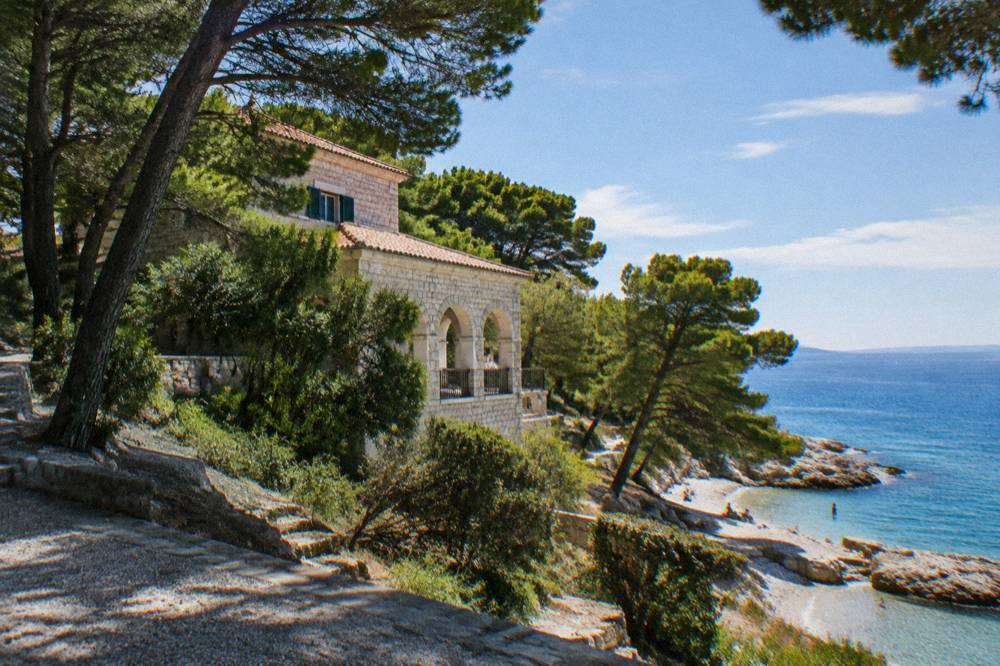
The gallery is the cultural anchor of this end of the peninsula. The house was designed and built by the sculptor himself as a home and studio, and the museum's own price list sets the adult ticket at 12.00 EUR, reduced at 8.00 EUR and a family ticket at 20.00 EUR, with the ticket covering both the gallery and the Crikvine-Kaštilac site a little further along the coast. The reopening followed a renovation that replaced windows, roof and heating systems, and the museum marked it with a new exhibition on the house as a space of life and art. A morning in the galleries and an afternoon on the pebbles is the natural pairing.
The wider museum landscape of Split, for anyone building a rainy-day alternative around a beach week:
| Museum or site | Adult ticket (EUR) | Notes |
|---|---|---|
| Meštrović Gallery | 12.00 | Includes Crikvine-Kaštilac, reopened April 2026 |
| Split City Museum, Papalić Palace | 10.00 | Reduced 8.00, family 18.00, closed Mondays |
| Archaeological Museum | 8.00 | Combined with Salona 10.00 within 7 days |
| Ethnographic Museum | 7.00 | Reduced 4.00, Vestibule 2.00 |
| Diocletian's Palace cellars | 10.00 | Open 8:30 to 20:00 daily, per the City Museum |
Back on the peninsula itself, the free inventory is long. The Marjan tracks, the Telegrin summit, the southern coves and the views across to Brač cost nothing, and the park society's numbers give the hill its shape: 178 m at the top, 819 steps on the classic stair route. Kayakers launch from this coast, and the operator below runs guided trips on the Split waterfront for anyone who wants the sea view from sea level rather than from the pebbles.
How Does Kasjuni Compare With Split's Other Beaches?
Kasjuni is the calm, shaded, pebble-and-pine choice on Marjan's south side; Bačvice is the sandy-bottomed city beach where picigin, the ball game born there in 1908 and now protected intangible heritage of Croatia, is played in the shallows; Žnjan is the long concrete-and-pebble stretch to the east with the beach-club energy; and Firule is the quiet residential bay next to Bačvice. All four are free, and all four are pebble or sand-mix rather than pure sand except Bačvice.
| Beach | Character | Bottom | Standout fact |
|---|---|---|---|
| Kasjuni | Wooded cove, Marjan south side | Pebble and shingle | Faces Brač, pine shade to the shore |
| Bačvice | City-centre bay | Sandy mix | Home of picigin since 1908, protected heritage |
| Firule | Residential bay east of Bačvice | Pebble | Quietest of the eastern beaches |
| Žnjan | Long eastern stretch | Concrete and pebble | Beach-club end of the city |
No Blue Flag claim is made for any of these beaches, because no such award appears for Split in the current listings this site checks; readers who care about the flag should consult the international register directly before booking a trip around it. Water quality varies day to day with weather and season, and the city publishes no standing verdict this page could honestly repeat.
The choice between Kasjuni and Bačvice is really a choice between two holidays. Bačvice puts a swim five minutes from the palace, with cafes, the promenade and the evening life of the city on the same shoreline; the trade-off is that everyone else has the same idea in July and August. Kasjuni asks for a walk or a bus ride and gives back trees, clearer water and a horizon with an island in it. Families with very small children often prefer Bačvice's shallows and sand mix; confident swimmers and anyone who sleeps badly near nightlife prefer Kasjuni. The site's fuller things to do in Split round-up places both in context.
Can You Combine Kasjuni Beach With A Day Trip From Split?
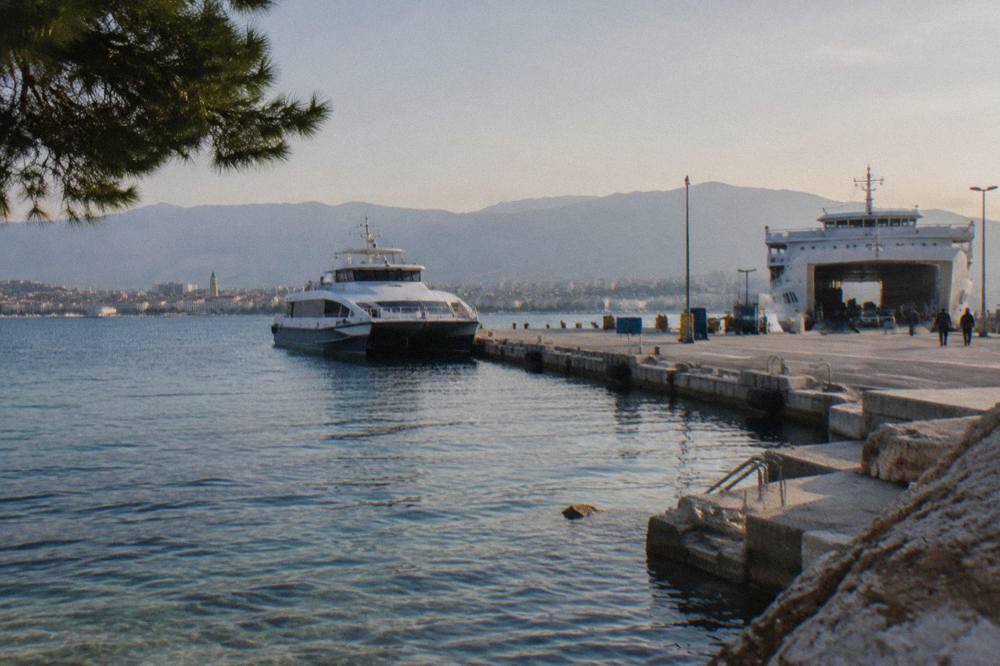
Yes, easily, because every major day trip from Split starts from the transport hub on Obala kneza Domagoja, where the ferry port, the main bus station and the railway station sit together 500 to 600 m from the palace, roughly 30 to 40 minutes on foot from Kasjuni. Krka National Park is 74 minutes by free-flow road from the palace, Trogir 36, Omiš 38, and the car ferry to Stari Grad on Hvar takes about 120 minutes.
| Day trip from Split | Road time (free-flow) | Park or ferry note |
|---|---|---|
| Klis Fortress | 22 min | 10 EUR adult, Meereen in Game of Thrones |
| Salona | 14 min | Combined ticket with Archaeological Museum 10 EUR |
| Trogir | 36 min | UNESCO listing since 1997 |
| Omiš and the Cetina | 38 min | Mirabela fortress 4 EUR, 6 EUR in summer |
| Šibenik | 71 min | Cathedral UNESCO listed 2000 |
| Krka, Skradinski buk | 74 min | 40 EUR Jun to Sep, 20 Apr, May, Oct, 7 winter |
| Makarska | 75 min | Biokovo mountain behind the town |
| Zadar | 2 h | Old town on a peninsula |
| Mostar | 2 h 13 | Old Bridge UNESCO listed 2005 |
| Dubrovnik | 3 h 21 | City walls 40 EUR in 2026 |
| Plitvice Lakes | 3 h 15 | 40 EUR Jun to Sep, timed online entry |
Two of those need a caution. Krka's park rules state plainly that swimming is allowed only in clearly marked areas, so nobody should plan a Krka day around swimming under the waterfalls; the designated summer spots sit elsewhere in the park. And Hvar town is reached by catamaran while Stari Grad is the car-ferry port, a mix-up that has sent more than one traveller to the wrong quay on the right island. For a beach-first holiday, the smarter pattern is the reverse of the usual: keep the mornings on Kasjuni and give the afternoons to one guided day trip, letting someone else handle the driving and the park logistics.
For the palace-centre half of the trip, a guided walk that includes the ticketed sites saves queueing in the sun.
And for the evenings, the food side of the city is worth a guide of its own.
What Should You Pack For Kasjuni Beach, And What Should You Skip?
Pack swim shoes, because the beach is pebble and shingle and entry is easier with protection; a shade plan, since natural pine shade thins out by mid-afternoon; water, since the cove is inside a park forest with light services; and reef-safe sunscreen for the long southern exposure. Skip sand toys, since there is no sand, and skip any plan to drive directly to the shore in July, when the Meje lanes and Marjan access roads fill early and no parking tariff is published to plan around.
The packing question is really a terrain question. Pebble beaches reward simple preparation: shoes that grip on wet stone, a mat thick enough that the pebbles do not print on skin, and a bag that can carry everything back up the hill. The pine shade at the back of Kasjuni is generous but finite, and it moves with the sun, so a parasol or a wide-brimmed hat extends the usable day by a couple of hours. Snorkelling is rewarding on this coast because the water is clear and the rocky edges hold small fish, and a cheap mask is the single best-value item in the bag.
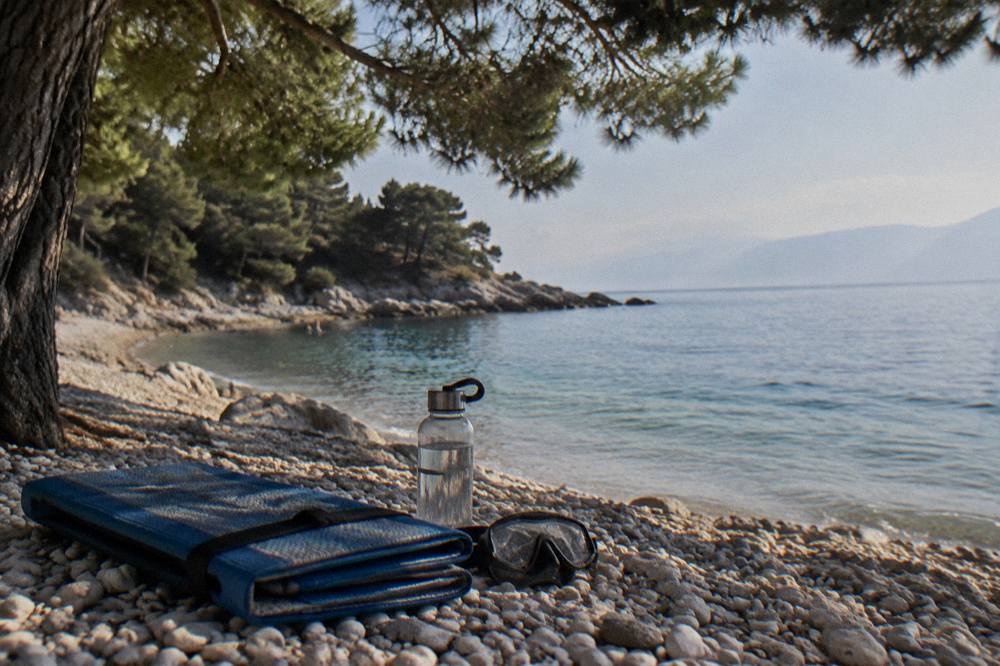
What to skip is shorter but matters. Skip inflatables on windy days, because the cove opens to the south and an offshore breeze carries light toys out fast. Skip glass bottles, which break on stone and are unwelcome anywhere on a park peninsula. And skip the idea that a beach day here needs a car: the whole point of Kasjuni, and the reason it keeps its character, is that it sits at the end of a walk through a park, reached the slow way from a city that was built, in the first place, as a palace by the sea. Anyone wanting the fuller sweep of that city can start with the Old Town and the palace story, or with the two days in Split plan, and let the beach take whichever afternoon the weather gives it.
Before the practical questions, one last look at how the beach day connects to the water itself: a morning at Kasjuni and a full day among the islands are not rivals but halves of the same week.
Common Questions About Kasjuni Beach
Is Kasjuni Beach free?
Yes. Kasjuni is a public city beach and entry is free at any time of year, like Bačvice, Firule and Žnjan. Any seasonal private service at the cove, such as a cafe or sunbeds, charges separately and should be checked on the spot.
Is Kasjuni Beach sandy?
No. The beach is pebble and fine shingle with clear water and a gradual entry. Swim shoes make a real difference on wet stone. Bačvice, on the city side, is the beach with a sandy mix.
How far is Kasjuni Beach from Diocletian's Palace?
Roughly a 30 to 40 minute walk, out along the Riva, up through Veli Varoš and along the Marjan paths to the southern coves. Local buses serve the Meje area near the beach, and the fare should be confirmed on board.
Can you swim at Kasjuni in October?
The DHMZ Split-Marjan station gives October a 17.2 C mean air temperature, so warm days still happen but swimming becomes a matter of personal tolerance. No official monthly sea-temperature normal exists, so check the live reading on the day.
Is Kasjuni Beach good for families?
The sheltered cove, gradual shallows and pine shade make it one of the calmer city beaches for children, with the caveat that the surface is pebble rather than sand and the walk in is longer than at Bačvice.
Are there restaurants at Kasjuni Beach?
The cove sits inside the Marjan park-forest zone, where development is light and services are seasonal. This page prints no facility list because no official one exists; the fuller beach-club and dining options are concentrated on the eastern city beaches and in the Old Town.