Mestrovic Gallery
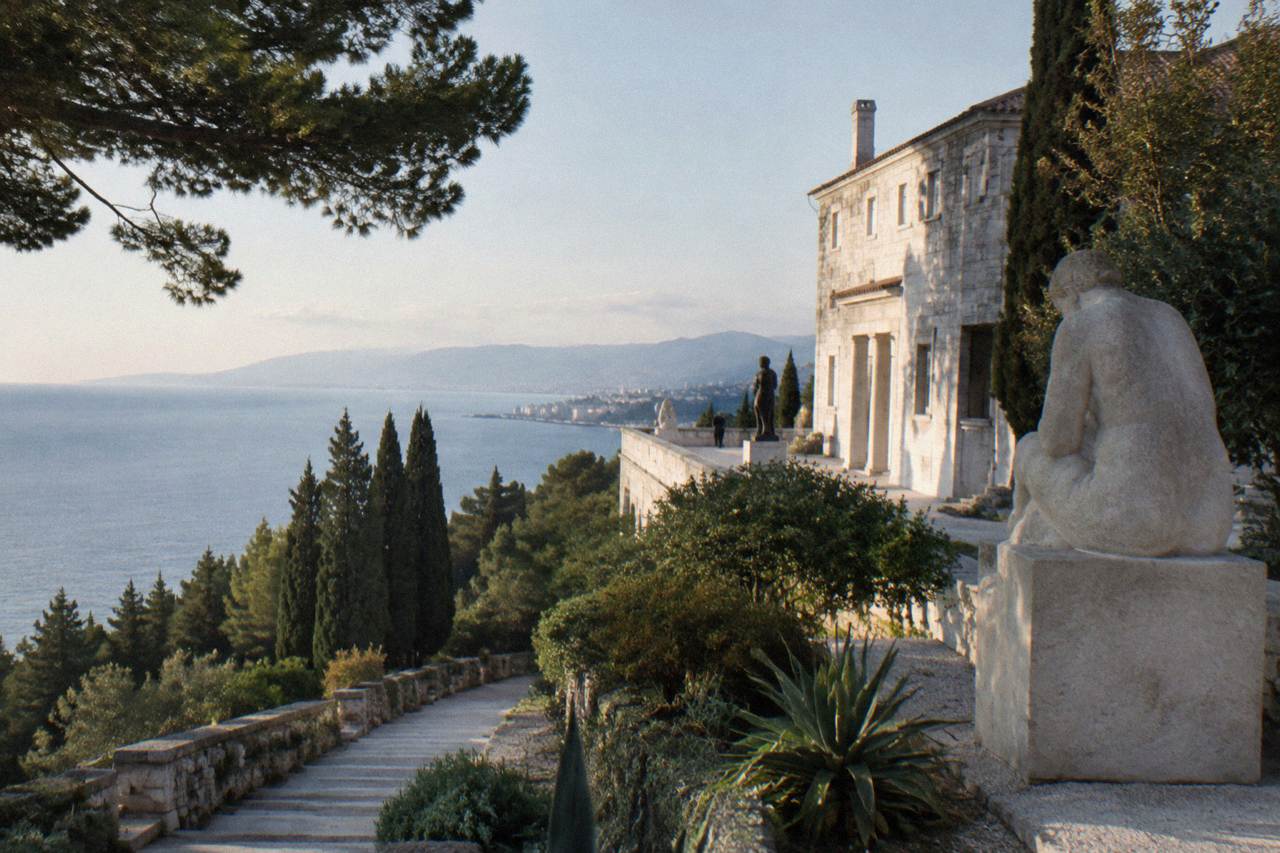
The Mestrovic Gallery in Split sits on the southern slope of Marjan in the villa Ivan Meštrović designed and built for himself in the interwar years, holding the largest public collection of his sculpture in Croatia. It reopened in April 2026 after a fifteen-month energy renovation, and its 12.00 EUR adult ticket also admits you to his chapel complex at Crikvine-Kaštilac a short walk east.
Short answer
The Mestrovic Gallery in Split charges 12.00 EUR for adults, 8.00 EUR reduced and 20.00 EUR for a family ticket, and the price includes the Crikvine-Kaštilac site. It reopened in April 2026 after a fifteen-month renovation. It stands on Šetalište Ivana Meštrovića on the Marjan slope, about fifteen to twenty minutes on foot west of the Old Town.
The Mestrovic Gallery in Split, on the Dalmatian coast of Croatia, is the villa that Ivan Meštrović, the Croatian sculptor whose work stands in museums from Paris to Chicago, designed and built for himself in the years between the two world wars, on the southern slope of the Marjan peninsula. The building is a protected monument in its own right, and its galleries hold the largest single public collection of his sculpture, drawings and architectural models in the country. The gallery's price list sets an adult ticket at 12.00 EUR, which includes the Crikvine-Kaštilac chapel complex a short walk east along the same street, with a reduced ticket at 8.00 EUR and a family ticket at 20.00 EUR. After fifteen months of closure for an energy renovation that replaced the windows, roof and heating systems and added solar panels, the gallery reopened in April 2026 with a new exhibition on the house itself as a space of life and art.
What Is The Mestrovic Gallery In Split?
The Mestrovic Gallery is the former home and studio of Ivan Meštrović, Croatia's best-known modern sculptor, built to his own design on the Marjan slope in the interwar years and converted into a public gallery in his lifetime. It holds his marble and bronze sculpture, drawings, furniture and architectural models, and the villa itself, with its terraced garden above the sea, is part of what the ticket buys.
Meštrović is the figure the collection exists to explain. Born in Otavice, a village in the Dalmatian hinterland, he trained in Split as a stone cutter and then in Vienna, and went on to exhibit across Europe and the United States; his public work includes monuments in Zagreb, Chicago and elsewhere, and he was the first sculptor to have a one-man show at the Victoria and Albert Museum in London. The Split villa was where he intended to live and work, drawing on Renaissance and Byzantine forms he had studied in Dalmatia, and he donated the house, the chapel at Crikvine-Kaštilac and the bulk of the works now displayed in them to the Croatian people.
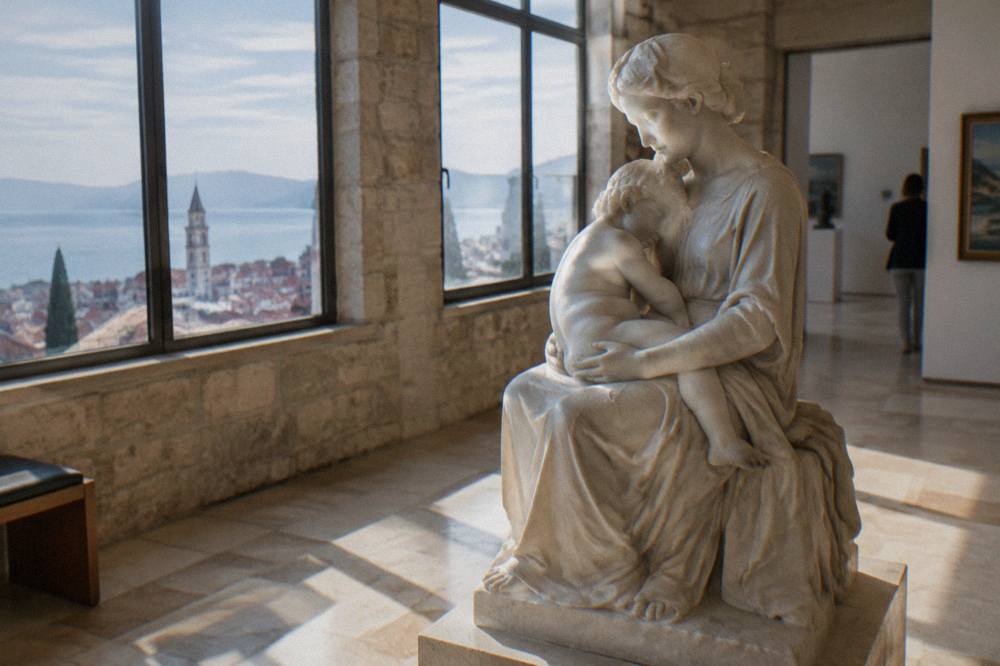
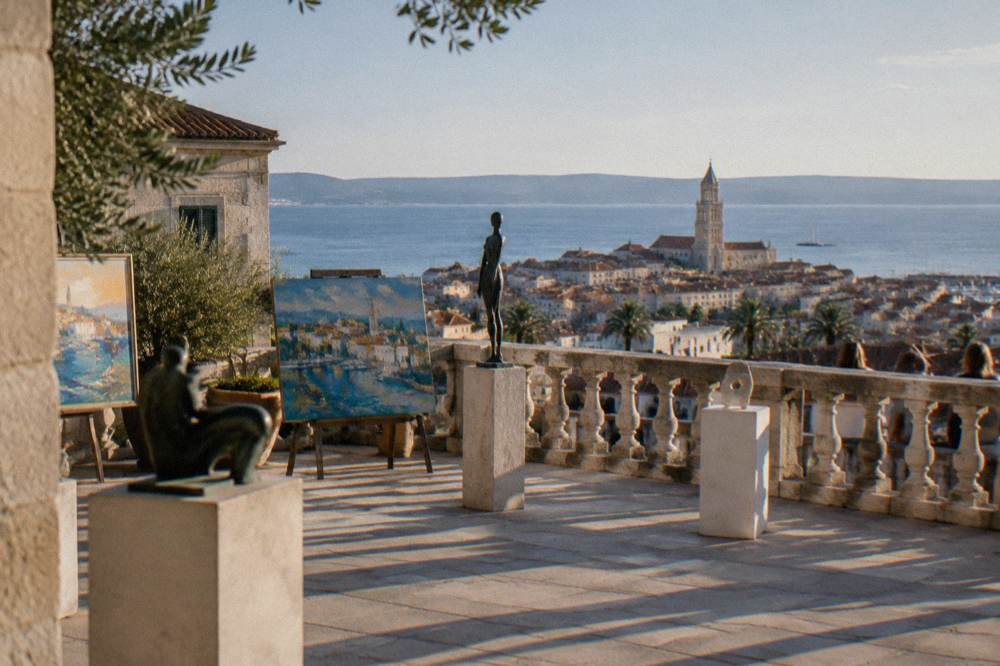
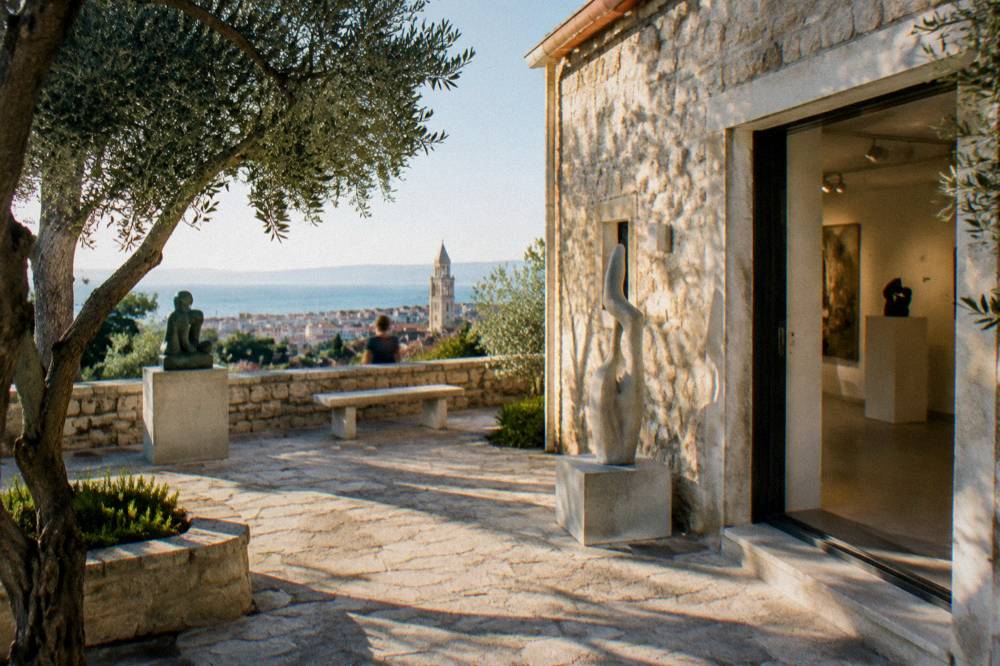
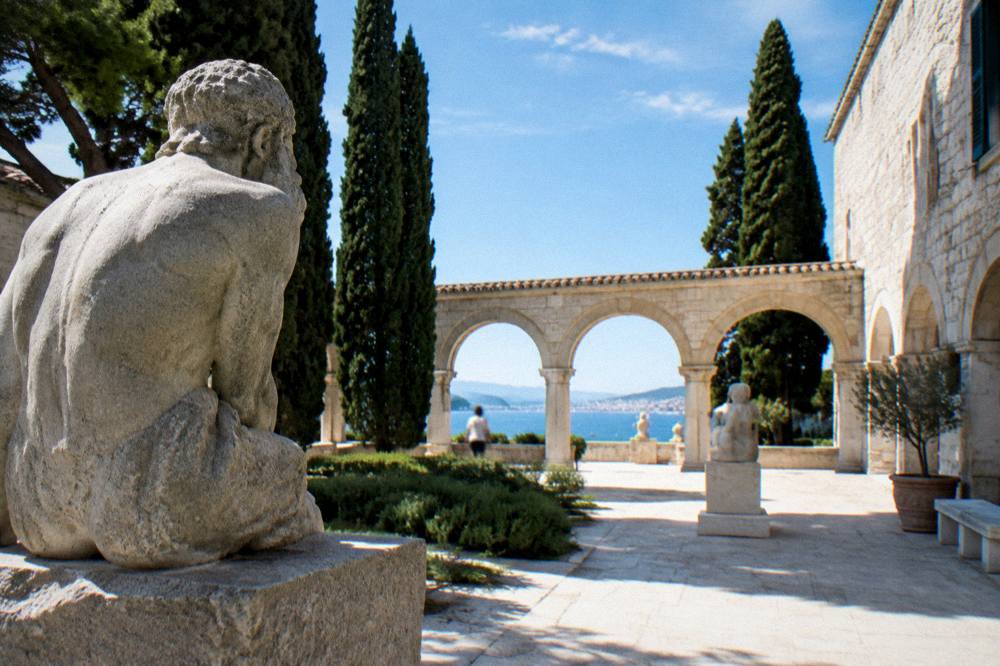
The gallery's rooms are arranged over the villa's three levels, mixing finished marbles and bronzes with the maquettes and models that show how large commissions were planned. Two themes return constantly: the Croatian national cycle, including the Vidali and Mati (Mother) groups, and religious work that runs from the wooden crucifixes to the great Job study. The terraces look straight down over the pines to the sea, and the garden itself holds sculpture in the open air.
For context on the city that surrounds it, the things to do in Split overview places the gallery among the palace, the beaches and the day trips, and the Marjan hill guide covers the park forest the villa leans against.
How Much Does The Mestrovic Gallery Cost, And What Does The Ticket Include?
An adult ticket to the Mestrovic Gallery is 12.00 EUR, a reduced ticket is 8.00 EUR and a family ticket is 20.00 EUR, on the gallery's own published price list. The ticket is not gallery-only: it also admits the holder to the Crikvine-Kaštilac complex, Meštrović's walled chapel and estate a short walk east along the same street, making it a two-site visit for one price.
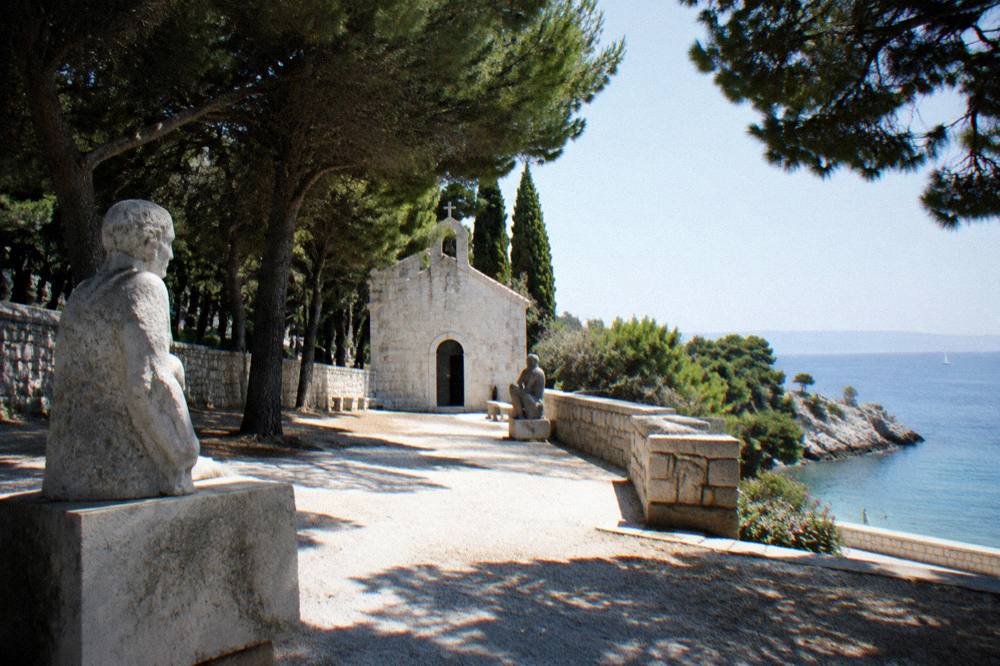
The price list is the gallery's own, published on its official site, and it states plainly that the 12.00 EUR adult ticket covers both the gallery and Crikvine-Kaštilac. That detail matters for planning, because the two sites sit about ten minutes apart on foot along Šetalište Ivana Meštrovića, the seaside avenue named for the sculptor, and a visit that skips the chapel leaves half the ticket unused. The chapel, dedicated to the Most Holy Redeemer, was planned as a family mausoleum and holds more of his religious carving, set in a walled kaštilac, a fortified estate yard, above a small pebble cove.
| Ticket | Price | What it covers |
|---|---|---|
| Adult | 12.00 EUR | Gallery and Crikvine-Kaštilac |
| Reduced | 8.00 EUR | Gallery and Crikvine-Kaštilac |
| Family | 20.00 EUR | Gallery and Crikvine-Kaštilac for the family group |
Set against the other ticketed museums in the city, the gallery sits at the upper end but bundles two sites. The comparison below uses each museum's own published adult price.
| Museum in Split | Adult ticket | Source detail |
|---|---|---|
| Mestrovic Gallery | 12.00 EUR | Includes Crikvine-Kaštilac; reopened April 2026 |
| Split City Museum (Papalić Palace) | 10.00 EUR | 8.00 EUR reduced, family 18.00 EUR |
| Archaeological Museum | 8.00 EUR | 10.00 EUR combined with Salona within 7 days |
| Ethnographic Museum | 7.00 EUR | 4.00 EUR reduced |
The palace cellars run by the City Museum are covered separately in the Diocletian's Palace cellars guide, and the Split museums overview puts all of these institutions side by side for anyone building a museum day.
Where Is The Mestrovic Gallery, And How Do You Get There From The Old Town?
The Mestrovic Gallery stands on Šetalište Ivana Meštrovića, the seaside avenue on the southern slope of Marjan west of the Old Town, roughly fifteen to twenty minutes on foot from the Peristyle through the Veli Varos quarter or along the Riva. There is no ticket gate between the Old Town and the gallery: the walk itself is free, and buses stop on the coastal road near the gallery.
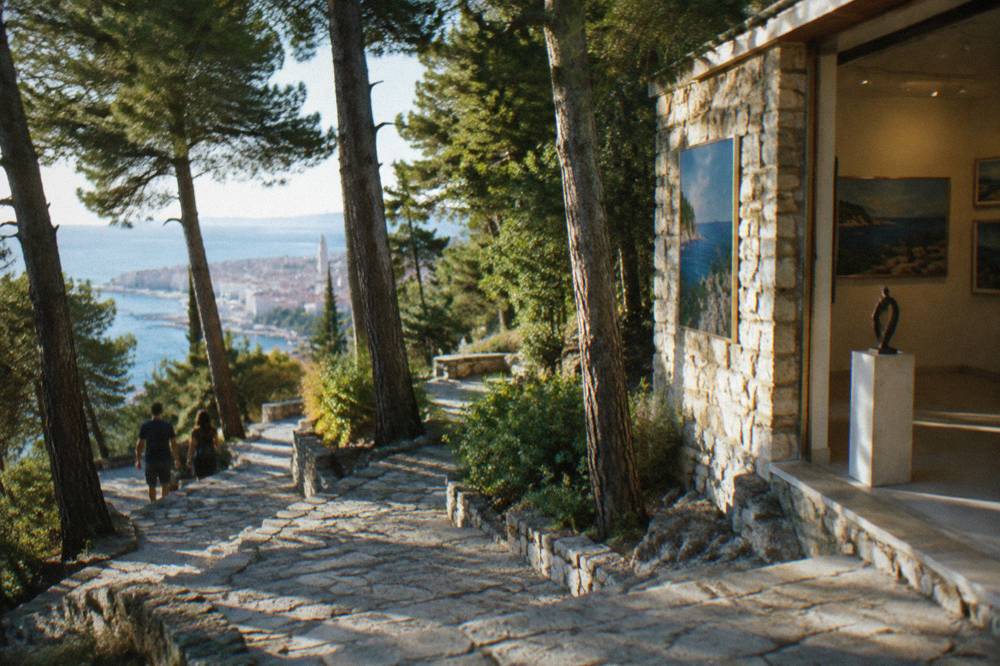
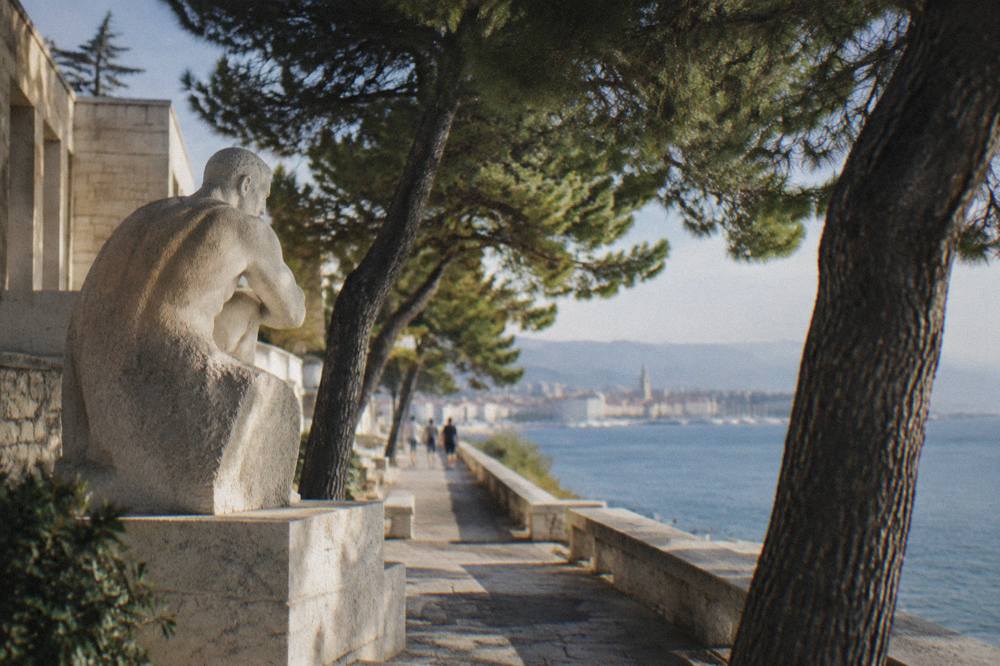
Two walking routes compete for the same twenty minutes. The quieter one climbs from the western edge of the Old Town through Veli Varos, the old fishermen's quarter of stone lanes, and comes out near the gallery's upper entrance; the flatter one follows the Riva west and then the seaside avenue past the Ježinac and Kašjuni beaches, arriving with the sea on your left the whole way. The second route passes the terrace of pine forest that Meštrović looked at from his studio window.
For anyone combining the walk with the rest of the peninsula, the Marjan hill guide covers the paths, including the 819 steps from Trumbićeva obala to the Telegrin viewpoint at 178 m, and the Kašjuni beach guide covers the cove directly below the gallery's slope.
What Happened In The 2026 Renovation And Reopening?
The Mestrovic Gallery reopened on 20 and 21 April 2026 after a fifteen-month energy renovation that replaced the windows, renewed the roof and installed new heating, cooling and solar systems, closing the villa for about fifteen months before that. The reopening exhibition, on the Meštrović house in Split as a space of living and art, ran until 9 October 2026, and the works left the collection and the terraces intact for visitors.
The renovation was an energy project rather than a redesign. Its stated purpose was to make an interwar villa, built with thick stone walls and single glazing, workable year-round without altering the fabric that makes the building part of the collection. For travellers the practical outcome is simple: the gallery is open again, in a building whose interior climate no longer forces winter closure for conservation reasons, and the reopening gave the curators a reason to rehang the permanent display around the house's own history.
The reopening also changed what a first visit looks like. The new exhibition placed Meštrović's furniture, family photographs and studio equipment alongside the sculpture, so the villa now explains itself as a home first and a museum second. That reading is unusual among Croatian museums and is the single strongest argument for visiting the gallery rather than only seeing Meštrović's public monuments in passing.
What Should You Actually Look At Inside The Mestrovic Gallery?
The core of the collection is Meštrović's marble and bronze work spanning his whole career, with the Mati (Mother) series, the Job study, the Vidali group, wooden crucifixes and maquettes for large public monuments as the pieces the gallery's own material returns to again and again, all housed in the villa's tiered sequence of studios, salons and loggias. The terraces and garden sculptures are part of the visit, not a footnote.
Three threads organise a walk through the rooms. The first is the early national-romantic work, the pieces built from Dalmatian history and the Kosovo cycle that made Meštrović's name in Vienna before the First World War. The second is the religious carving, where the wooden and stone crucifixes and the Job torsos show the turn toward a stripped, almost brutal simplicity that prefigures his late American church commissions. The third is the house itself: the studio spaces on the lower level retain their north light and their raw stone, deliberately unfinished against the polished floors of the piano nobile above.
Two practical notes shape a visit. The villa's floors are linked by stairs, and the garden path down toward the sea edge is stepped and unpaved, so anyone with limited mobility should treat the lower levels, reached from the main entrance, as the core of the visit. Photography is normally permitted in the permanent rooms without flash, but the house enforces standard museum rules about touching the marble, which is softer than it looks and stained permanently by skin oils.
For contrast with the older Split, the Diocletian's Palace guide covers the Roman core of the city, and the cathedral of St Domnius guide explains the medieval complex that Meštrović's generation of Dalmatian artists measured themselves against.
How Does The Gallery Fit Into A Day In Split?
The Mestrovic Gallery pairs naturally with Marjan, Kašjuni beach and Veli Varos as a half-day western loop: walk out through Veli Varos or along the seafront, spend an hour or two in the gallery and at Crikvine-Kaštilac, then swim or continue up Marjan before returning along the Riva. The gallery is the one ticketed stop on that loop, since Marjan, the beaches, the Riva and the palace squares are all free.
A sample western day, using only distances and times the facts support, runs as follows. From the Peristyle, cross to the west through the Old Town into Veli Varos and climb to the gallery in roughly twenty minutes. After the gallery and chapel, the Kašjuni cove below the slope is the nearest swimming spot, and the Marjan paths lead on from there toward the Telegrin viewpoint. Returning along the seaside avenue and the Riva brings you back past the Prokurative and the Golden Gate, and into the palace for the evening.
| Stop on the western loop | Cost | Time needed |
|---|---|---|
| Veli Varos quarter | Free | 20 to 30 minutes |
| Mestrovic Gallery and Crikvine-Kaštilac | 12.00 EUR adult | 1.5 to 2.5 hours |
| Kašjuni beach | Free | Open-ended |
| Marjan paths to Telegrin | Free | 1 to 2 hours |
| Riva promenade walk back | Free | 20 to 30 minutes |
Anyone on a tighter clock should read the one day in Split itinerary, which weighs the gallery against the palace and a boat trip, while the two days in Split and three days in Split plans both give the western slope its own half-day. Cruise passengers working from a single port day can check the Split cruise port day plan, which treats the gallery as a reach-in-extra stop rather than a fixture.
When Is The Best Time To Visit The Mestrovic Gallery?
The gallery is at its most comfortable in spring and autumn, when the walk along Šetalište Ivana Meštrovića is shaded and the DHMZ Split Marjan station means sit at 14.4 C in April, 19.2 C in May and 17.2 C in October; July and August means of 26.2 C and 25.9 C make the unshaded return walk the warmest part of the day. November is the wettest month at 115.5 mm.
The station figures behind that answer come from the DHMZ Split-Marjan station's monthly means for the 1948 to 2024 period, the closest long-term record to the gallery's own hillside. July, the warmest month at 26.2 C, brings 18 days at 30 C or more, and August brings 17, which matters less inside the air-conditioned villa than on the stepped garden path between the gallery and the chapel. Rainfall is lowest in July at 26.6 mm and climbs through autumn to a November peak of 115.5 mm.
| Month | Mean temperature (C) | Precipitation (mm) | Days at 30 C or more |
|---|---|---|---|
| April | 14.4 | 62.0 | Not published |
| May | 19.2 | 57.5 | Not published |
| June | 23.4 | 49.0 | 7 |
| July | 26.2 | 26.6 | 18 |
| August | 25.9 | 41.3 | 17 |
| October | 17.2 | 77.0 | Not published |
| November | 12.7 | 115.5 | Not published |
Seasonal events also shape the calendar around the gallery. Advent in Split runs 27 November 2026 to 7 January 2027 with the ice rink at Đardin, and the Croatian National Theatre's season runs 25 September 2026 to 14 June 2027, both of which pull winter visitors toward the centre rather than the Marjan slope. In summer the gallery is a useful midday refuge: the palace squares are exposed stone, while the villa's thick walls and tall windows keep the rooms cool, and the surrounding pine cover shades the approach. The Split in winter and best time to visit Split guides carry the full seasonal argument for the city as a whole.
What Else Is Near The Mestrovic Gallery In Split?
The gallery's immediate neighbours are the Kašjuni and Ježinac coves below the slope, the Marjan park forest above it, the Veli Varos quarter on the approach and the seaside avenue that runs back to the Riva; the Old Town's palace sights, from the Peristyle to the Golden Gate, are twenty to twenty-five minutes on foot beyond that. Crikvine-Kaštilac is on the same ticket, ten minutes east.
The near circle is walkable and free apart from the gallery itself. Veli Varos, with its stone houses stacked under the hill, is on every approach from the Old Town. The Marjan paths begin practically at the gallery's garden wall. Kašjuni is the quiet swimming cove on the southern side of the peninsula, and the Riva and the palace squares close the loop at the eastern end.
| Nearby sight | Distance from the gallery | Cost | Guide on this site |
|---|---|---|---|
| Crikvine-Kaštilac | About 10 minutes on foot | Included in gallery ticket | This page |
| Kašjuni beach | Downhill from the slope | Free | Kasjuni beach guide |
| Veli Varos quarter | 10 to 15 minutes on foot | Free | Veli Varos guide |
| Marjan park forest | Paths start at the garden edge | Free | Marjan hill guide |
| Riva promenade | About 25 minutes on foot | Free | Riva promenade guide |
Beyond the peninsula, the day-trip network starts from the ferry port and bus station on Obala kneza Domagoja, 500 to 600 m from the palace. A guided kayak trip from the city shore gives the same coastline a second time from sea level, paddling below the Marjan cliffs the gallery looks out over, and it links naturally with a gallery morning; Check availability if that pairing appeals. The Split boat tours guide and Split day trips guide cover the islands and the inland options in full.
Common Questions About The Mestrovic Gallery
How much is the Mestrovic Gallery in Split?
The gallery's own price list sets an adult ticket at 12.00 EUR, a reduced ticket at 8.00 EUR and a family ticket at 20.00 EUR, and the ticket also admits the holder to the Crikvine-Kaštilac complex a short walk east. Confirm any concession categories at the desk when buying.
Is the Mestrovic Gallery worth visiting in Split?
For anyone with an interest in sculpture, modern art or architecture, the villa and its collection are among the strongest single-artist holdings in Croatia, in a building the artist designed himself above the sea. The combined ticket with Crikvine-Kaštilac and the walkable Marjan setting make it a half-day rather than a quick indoor stop.
How do I get to the Mestrovic Gallery from the Old Town?
Walk west from the Old Town through the Veli Varos quarter, or follow the Riva and the seaside avenue, Šetalište Ivana Meštrovića; either route takes roughly fifteen to twenty minutes on foot. City buses stop on the coastal road near the gallery for anyone preferring not to walk.
What does the Mestrovic Gallery ticket include?
The published price list states that the adult, reduced and family tickets all cover both the gallery on the Marjan slope and the Crikvine-Kaštilac chapel complex along the same street. The two sites are about ten minutes apart on foot and are visited on the same ticket.
Was the Mestrovic Gallery closed for renovation?
Yes. The gallery closed for about fifteen months for an energy renovation that replaced the windows, renewed the roof and installed new heating, cooling and solar systems, and it reopened on 20 and 21 April 2026 with an exhibition on the Meštrović house as a space of living and art, which ran until 9 October 2026.
Can you combine the Mestrovic Gallery with a beach or a walk?
Yes, and the geography encourages it. Kašjuni beach sits below the gallery's slope, the Marjan park paths start at its garden edge, and the return walk along the Riva takes about twenty-five minutes, so a gallery visit slots easily into a free half-day loop of the western peninsula.
The Mestrovic Gallery rewards the walk out of the palace more than any other ticketed sight on Split's western slope: one price, two sites, a sculptor's own villa, and the sea and pine forest that he built it to face. Read more from the Split Croatia Travel Guide to build the rest of the day around it.
