What Is A Must Do In Split?
The must-do experiences in Split, from Diocletian's Palace and Marjan Hill to the Blue Lagoon and Hvar boat trips, with verified ticket prices and practical tips.
Split, the coastal city in central Dalmatia where the Adriatic meets a Roman palace, compresses a week's worth of experiences into a walkable core. The city of 160,577 people (2021 census) is built in and around Diocletian's Palace, inscribed on the UNESCO World Heritage list in 1979 as the Historical Complex of Split with the Palace of Diocletian, a 20.8 ha property. The ferry port, the main bus station and the railway station sit together on Obala kneza Domagoja, 500 to 600 m from the palace, which is also where the island and national park day trips start. Croatia uses the euro since 1 January 2023, is a Schengen member, and the emergency number is 112.
What Is A Must Do In Split?
The single must-do in Split is Diocletian's Palace itself: walk the Peristyle, the Golden Gate and the substructures of a palace built c. 295 to 305 AD for Emperor Diocletian, then climb Marjan Hill for the view over the city and the islands. After that, the priorities are a boat day on the Adriatic, the Blue Lagoon or Hvar, and one inland day trip to Krka National Park or Trogir. Everything on that list starts or finishes within a short walk of the Riva.
The palace is not a monument behind a rope, it is the city centre. Shops, bars and apartments sit inside walls laid out at the turn of the 4th century, and the Split City Museum runs the substructures, the cellars, daily 8:30 to 20:00 with the central part under restoration to the end of 2026 while the passage stays open. The City Museum's own price list puts its Papalić Palace ticket at 10.00 EUR adult, 8.00 EUR reduced, 18.00 EUR family, closed Mondays. The Peristyle, the Riva, the Prokurative, the Golden Gate, the Grgur Ninski statue, the markets, Marjan and the city beaches cost nothing.
The second figure in the first paragraph matters as much as the first: the port handled 6.05 million passengers in 2025 and its own page calls it Croatia's busiest passenger port. That is the machinery behind the must-do boat days, and it is the reason Split works as a base for Hvar, Brač, Šolta and Vis. For the wider picture of the city's sights, see things to do in Split.
Walk Diocletian's Palace And The Split Old Town
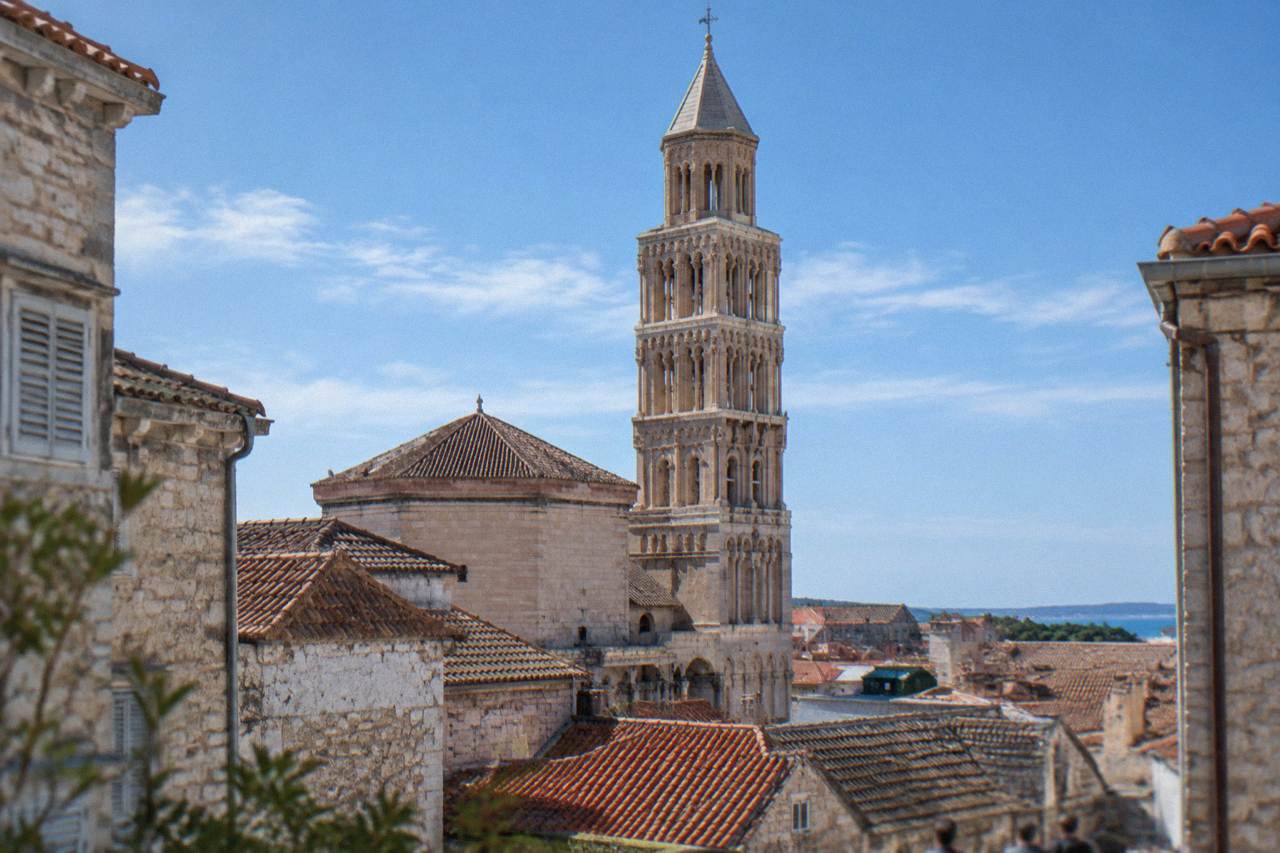
Walking Diocletian's Palace is the one thing every visitor to Split should do, and the essentials are the Peristyle square, the Cathedral of St Domnius with its 57 m bell tower, the Temple of Jupiter, now the Baptistery of St John, and the cellars run by the Split City Museum daily 8:30 to 20:00. The cathedral complex is ticketed from about 5 EUR with combined tickets up to about 15 EUR, sold at the Peristyle kiosk.
The palace measures its hold on the city in small details. The bell tower of the cathedral and stands 57 m, the figure given on the official cathedral page. Shoulders and knees must be covered inside the cathedral. The Temple of Jupiter, on the west side of the Peristyle, is now the Baptistery of St John and is ticketed inside the cathedral scheme rather than separately.
Free sights carry the walk between ticketed ones: the Peristyle, the Golden Gate with the Grgur Ninski statue, the Prokurative square and the Riva promenade all sit within a few minutes of each other. The Roman guard change on the Peristyle at noon ran from 28 May to 27 September 2026, so a summer visitor could catch it with no ticket at all. The Riva's central section is set for renovation works from November 2026 lasting a little over a year, so partial closures on the Riva should be expected through 2027.
A guided walk adds context the stones do not announce. The palace and the old town sit close enough together that a short guided tour covers both, and the small-group options include Check availability on the operator's live listing. For more detail on the monument itself, read the guide to Diocletian's Palace and the answer to is Diocletian Palace free.
If you'd like the palace explained by a history professor, book a history walking tour here.
Get Out On The Water: Blue Lagoon, Hvar And The Islands
The must-do boat day from Split is either the Blue Lagoon, the sheltered swimming stop between the islands close to the city, or a full-island day to Hvar and the Blue Cave on Biševo, where the 2026 entrance fee is 24 EUR in high season from 20 June to 10 September and 18 EUR in shoulder season, paid in cash on site. Hvar town is reached by catamaran and Stari Grad on Hvar by car ferry, and the two are not interchangeable.
Jadrolinija's route page gives the Split to Stari Grad ferry as about 120 minutes, with foot passengers at 5.90 EUR off-season and 8.40 EUR in season. The Split to Supetar crossing on Brač takes about 50 minutes, Šolta about 60, and Vis about 140. Catamaran fares reported from the operator's documents run 6.40 EUR low season and 10.00 EUR high to Hvar or Jelsa, and 7.20 and 10.00 to Vis. From 2026 the Supetar line has no off-season timetable at all, only high and low season sailings, which tells its own story about year-round island demand.
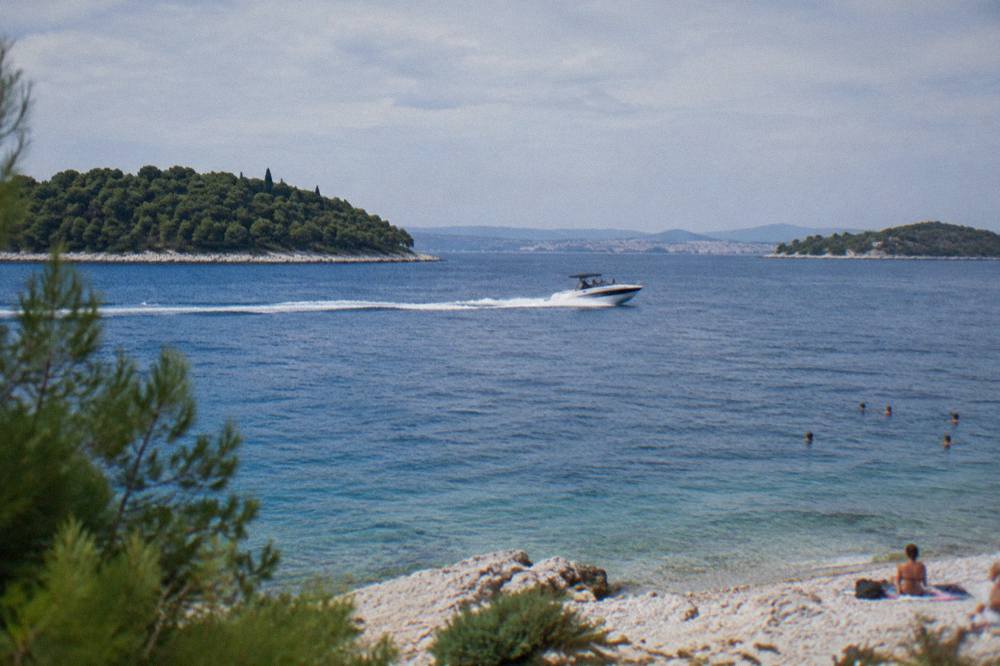
Organised tours bundle what the ferries cannot: the Blue Cave's tight entrance window, swimming stops and Hvar town in one day. The Blue Cave fee is paid in cash at the cave itself, and children aged 6 to 12 pay half. This site's featured tour for the question is the small-group speedboat day that links the Blue Cave, a Mamma Mia filming island and Hvar in one loop: Check availability. For the comparison that decides the day, see is Hvar nicer than Split and the guide to Hvar.
Climb Marjan Hill Above The City
Marjan, the park-forest peninsula on Split's western side, is the city's free viewpoint, with its highest point Telegrin at 178 m, reached by 819 steps from Trumbićeva obala, and the peninsula runs 3.5 km long and 1.5 km wide. It costs nothing, the city beaches on its flanks cost nothing, and the climb puts the whole palace, port and island chain in one frame.
The Društvo Marjan figures give the geography precisely: Telegrin at 178 m, the 819 steps, the peninsula's dimensions. The hill is also the quiet answer to the question of where Split's beaches live, with Kašjuni on the south side and the city beaches along the shores below. Picigin, the shallow-water ball game born on Bačvice beach, has been protected intangible heritage of Croatia, with its origin dated to 1908, and Bačvice is where it is played.
The Meštrović Gallery sits at the foot of Marjan's southern slope. It reopened in April 2026 after a 15-month energy renovation, and its price list shows a 12.00 EUR adult ticket that includes the Crikvine-Kaštilac site. The Ethnographic Museum charges 7.00 EUR, and the Archaeological Museum, founded in 1820, charges 8 EUR, or 10 EUR combined with Salona within 7 days. For the full hill, see the Marjan Hill guide.
Take One Day Trip Inland: Krka, Trogir Or Klis
The must-do inland day trips from Split are Krka National Park, at 40 EUR adult entry from June to September, 20 EUR in April, May and October and 7 EUR from November to March per the park's 2026 price list, Trogir, the UNESCO-listed town 36 minutes' drive away, and Klis Fortress at 10 EUR, which was a Meereen location in Game of Thrones. Plitvice Lakes is the long option at roughly 3 h 15 of driving each way.
The Krka price list is seasonal and explicit, and the ticket includes the Skradin boat and the Lozovac bus transfers from 1 April to 31 October. Swimming in Krka is allowed only in clearly marked areas, with designated spots reported at Roški slap, Stinice and Pisak from 1 June to 30 September. Plitvice runs 10, 23 and 40 EUR across the same seasonal shape, with a 25 EUR afternoon slot in peak season, the visitor's name mandatory on the ticket and timed online entry through the official webshop. The comparison between the two parks is covered in which one is better, Plitvice or Krka.
| Day trip from Split | Driving time from the palace | Entry cost, adult |
|---|---|---|
| Klis Fortress | 22 min | 10 EUR |
| Salona | 14 min | 10 EUR combined with Archaeological Museum |
| Trogir | 36 min | Old town free to walk |
| Omiš | 38 min | Mirabela fortress 4 EUR, 6 EUR from 1 June to 30 September |
| Krka, Skradinski buk | 74 min | 7 / 20 / 40 EUR by season |
| Šibenik | 71 min | Cathedral of St James, exterior viewable free |
| Plitvice Lakes | 3 h 15 | 10 / 23 / 40 EUR by season |
Salona, the Roman site at Solin, is the short-history option: the combined 10 EUR ticket with the Archaeological Museum is valid within 7 days, and the site keeps summer hours daily 9:00 to 20:00. For the biggest call of all, the Split against Dubrovnik question, see what is prettier, Split or Dubrovnik.
When To Do It: Weather, Events And Timing
The warmest months in Split are July at a 26.2 C mean and August at 25.9 C, from the DHMZ Split Marjan station table for 1948 to 2024, and July is also the driest at 26.6 mm of rain against November's 115.5 mm, the wettest month. July brings 18 days at 30 C or more and August 17, so June, with 7 such days and a 23.4 C mean, is the calmer warm window.
| Month | Mean temperature C | Precipitation mm |
|---|---|---|
| June | 23.4 | 49.0 |
| July | 26.2 | 26.6 |
| August | 25.9 | 41.3 |
| September | 21.6 | 70.9 |
| October | 17.2 | 77.0 |
Timing around events is part of the answer. Ultra Europe runs 9 to 11 July 2027 at Park Mladeži. Advent in Split runs 27 November 2026 to 7 January 2027 with the ice rink at Đardin, and the Croatian National Theatre season runs 25 September 2026 to 14 June 2027. The 72nd Split Summer Festival ran 14 July to 14 August 2026 and its 2027 dates have not been announced. The month-by-month detail sits in what is the best month to visit Split.
Two practical rules from 2026 shape a day in the centre. Drinking alcohol in the historic centre outside licensed terraces carries a 300 EUR fine, as do urinating, climbing on monuments and bathing in fountains, with sleeping in public spaces at 150 EUR. Walking the centre in swimwear or shirtless is also fined, and the amount is set locally. Night-time retail alcohol sales in shops, not bars or restaurants, were banned in the 2026 summer season. What else to sidestep is listed in what to avoid in Split.
If only one of the three gets the nod, the Blue Cave and Hvar day is the one this page features: it covers the cave, a filming island, Hvar town and swimming stops in a single small-group loop, and the listing carries the current dates and availability. Check availability before locking the rest of the itinerary around it.
Common Questions About Must-Do Experiences In Split
What is a must do in Split?
Walk Diocletian's Palace, including the Peristyle and the Split City Museum cellars open 8:30 to 20:00, then climb Marjan Hill to Telegrin at 178 m, then spend a day on the water at the Blue Lagoon or Hvar. Those three cover the Roman core, the free viewpoint and the Adriatic that define the city.
Can you walk everywhere in Split?
The palace, the Riva, the Prokurative, the markets and the city beaches are all within a compact walkable core, and the ferry and bus hub is 500 to 600 m from the palace. Marjan is walkable on steps and paths, with 819 steps from Trumbićeva obala to the Telegrin viewpoint.
How many days does Split need?
Two days cover the palace, Marjan and a boat trip, and a third day adds Krka or Trogir. The full reasoning, including how the ferry timetables shape an island itinerary, is in the guide to how many days is enough for Split.
Is Split expensive?
Croatia uses the euro, and the headline sights are moderate: the City Museum at 10.00 EUR, the Meštrović Gallery at 12.00 EUR, the Archaeological Museum at 8 EUR and Klis Fortress at 10 EUR. The tourist tax is about 2.65 EUR per person per night in high season, under 12 free, collected by the accommodation and confirmed at booking.
Which is the best boat trip from Split?
The Blue Lagoon trips are the short swimming option and the Blue Cave and Hvar day is the full-island option, with the Blue Cave entry at 24 EUR in high season paid in cash on site. The choice depends on whether the day is about swimming close to the city or seeing Biševo and Hvar town.
The short version of the whole answer: the palace first, Marjan second, a boat day third, and one inland day trip if the schedule allows. Everything on that list leaves from a city small enough to walk across in an afternoon, and the Split Croatia Travel Guide covers each piece of it in its own depth.
