Cathedral Of Saint Domnius
The Cathedral of Saint Domnius in Split began life as a Roman imperial mausoleum and stands at the heart of Diocletian's Palace. This guide covers the tickets, the bell tower, the dress code and everything worth knowing before a visit.
Short answer
The Cathedral of Saint Domnius is Split's cathedral, built as Emperor Diocletian's mausoleum around 295 to 305 AD inside what is now Diocletian's Palace. Tickets run from about 5 EUR for a single site up to about 15 EUR for a combined ticket covering all five sites, sold at the Peristyle kiosk. Shoulders and knees must be covered.
Split, the coastal city in Dalmatia on the Adriatic, keeps its cathedral in an unusual place: inside a Roman palace. The Cathedral of Saint Domnius, locally the Katedrala svetog Duje, began not as a church but as the mausoleum built for Emperor Diocletian around 295 to 305 AD, at the centre of the retirement palace he raised on this shore. The UNESCO listing that covers it, the Historical Complex of Split with the Palace of Diocletian, was inscribed in 1979 and spans 20.8 hectares, and the cathedral, its 57 m bell tower and the surrounding lanes sit inside that protected core. This guide from the Split Croatia Travel Guide editorial desk sets out what the sources say about the building, the tickets, the climb and the rules, so a visit can be planned without guesswork.
What Is The Cathedral Of Saint Domnius In Split?
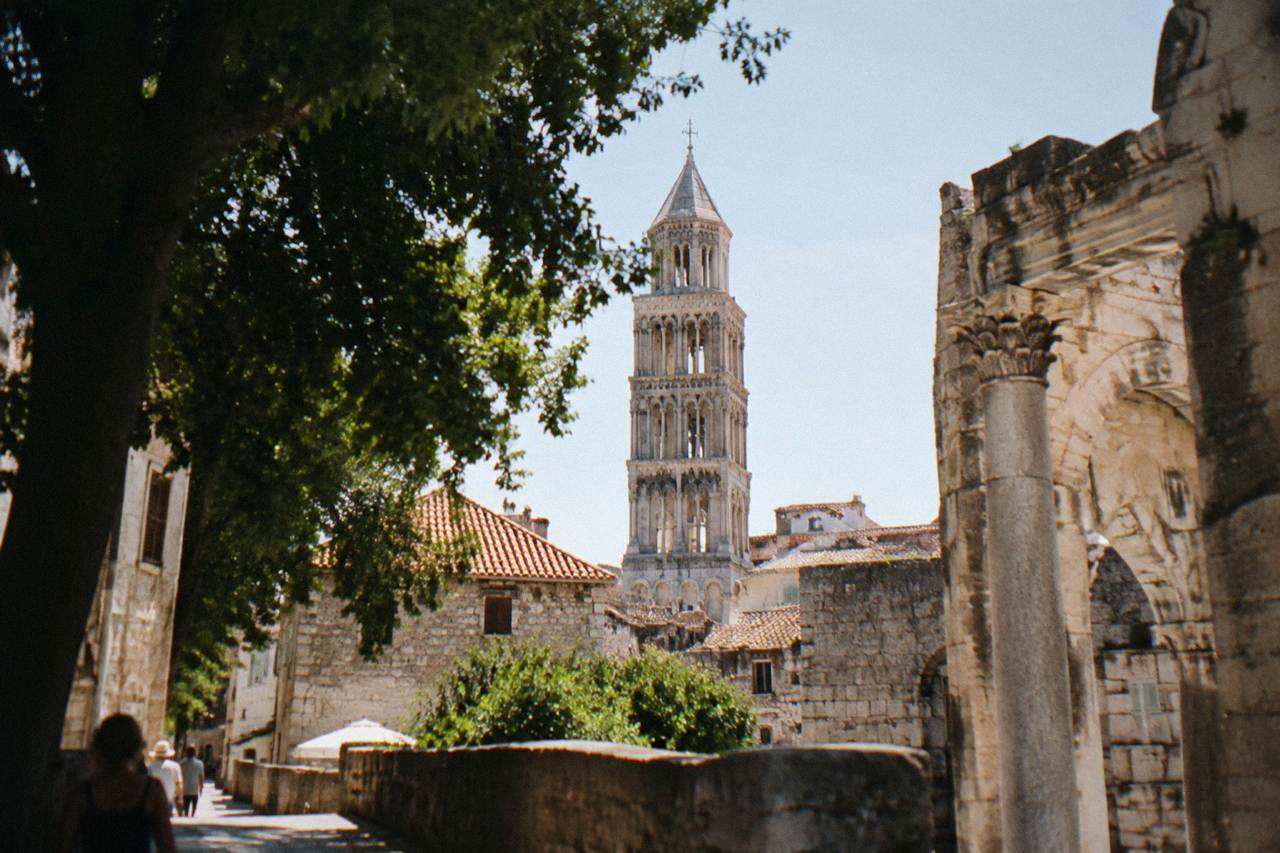
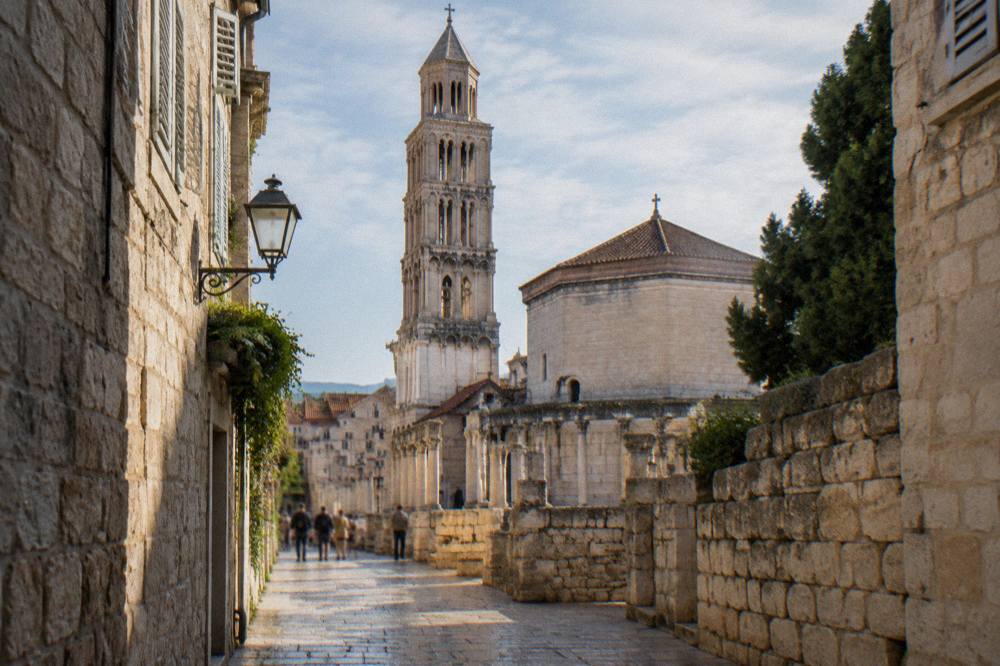
The Cathedral of Saint Domnius is Split's Catholic cathedral, formed from the mausoleum Emperor Diocletian built for himself around 295 to 305 AD at the heart of his palace, later consecrated as a church and dedicated to the city's patron saint. The building stands directly beside the Peristyle, the palace's main square, and its bell tower rises 57 m above the Old Town rooftops.
Diocletian's palace was a vast rectangular retirement compound, and the mausoleum occupied the most honoured position in its southern half, diagonally opposite the temple dedicated to Jupiter. When the palace gradually turned into a living city, the mausoleum was converted for Christian worship and the Temple of Jupiter became the Baptistery of St John, a pairing that still defines the visit today. The Temple of Jupiter is now ticketed inside the same cathedral scheme rather than as a separate attraction.
The cathedral complex as sold to visitors is really five sites in one: the cathedral church itself, built into the old mausoleum shell; the crypt beneath it; the baptistery in the former Temple of Jupiter; the treasury; and the bell tower, 57 m tall. A visit can be as short as the church interior or as long as all five spaces, and the ticket structure, described below, reflects that. The building sits a few steps from the Peristyle, where the Roman guard change was staged at noon through the 2026 season, and the whole complex is within a five minute walk of the Riva waterfront.
How Old Is The Cathedral Of Saint Domnius?
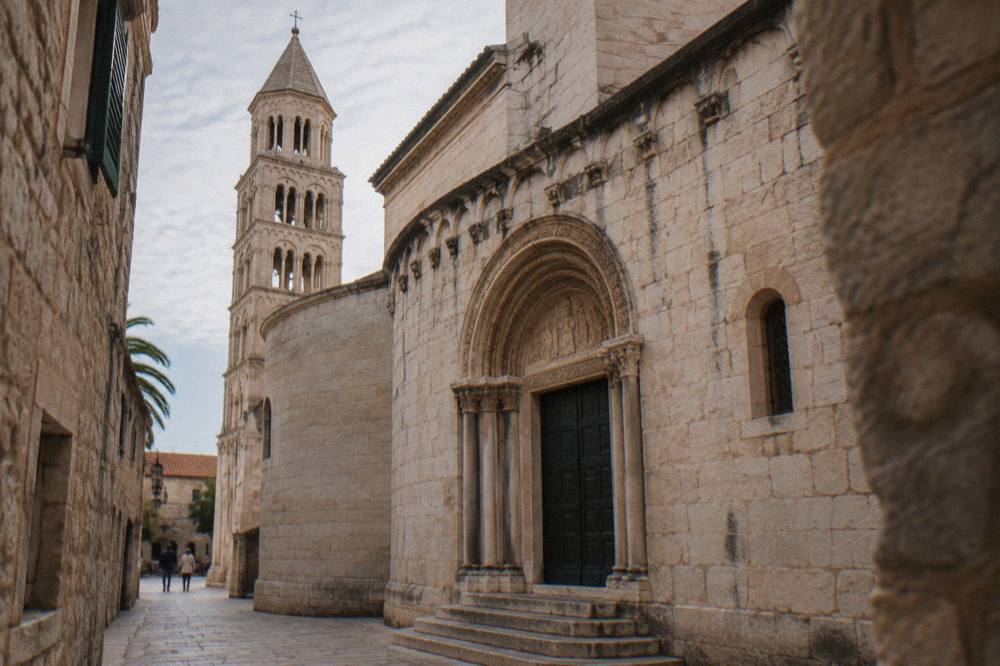
The core of the building dates to roughly 295 to 305 AD, when Diocletian's palace was constructed, making the cathedral's shell one of the oldest standing Roman imperial structures still in religious use. The bell tower is far younger, and the UNESCO listing that protects the whole complex dates from 1979.
The Roman shell and the medieval additions tell two different stories. The mausoleum's rotunda, its columns and its carved decoration belong to the original palace build of c. 295 to 305 AD. Everything vertical that defines the skyline, the 57 m bell tower, belongs to a much later Dalmatian Romanesque building campaign. The city around it grew inside and outside the palace walls until Split reached a population of 160,577 at the 2021 census, yet the cathedral has stayed the fixed point of the Old Town the whole time.
| Dated fact | Year or period | What changed |
|---|---|---|
| Palace and mausoleum built | c. 295 to 305 AD | Diocletian's retirement palace, later the core of the city |
| Bell tower height | 57 m | The tower beside the cathedral |
| Archaeological Museum founded | 1820 | Croatia's archaeological collection, now linked to Salona |
| Picigin codified on Bačvice | 1908 | The ball game now protected intangible heritage |
| UNESCO inscription | 1979 | Historical Complex of Split with the Palace of Diocletian, 20.8 ha |
| Euro and Schengen entry | 1 January 2023 | Croatia adopts the euro and joins Schengen |
That timeline matters for planning because the palace is not a ruin or an open air museum. It is a lived-in district with apartments, bars and shops between the ancient walls, which is why the city applies public order rules inside it, including fines of 300 EUR for drinking alcohol in the historic core and 150 EUR for sleeping in public spaces. The cathedral itself keeps its own quieter regime, and the dress code section below covers it.
A guided walk is the efficient way to place the cathedral in the wider palace story, since the layers, Roman, medieval, Venetian, are packed into a few hundred metres. The small-group palace walks cover the Peristyle, the Golden Gate and the Grgur Ninski statue alongside the cathedral, and the walking tour options collected below are the ones with their own pages on this site.
To get the full palace story from a historian, book a history walking tour here.
What Do Tickets To The Cathedral Of Saint Domnius Cost?
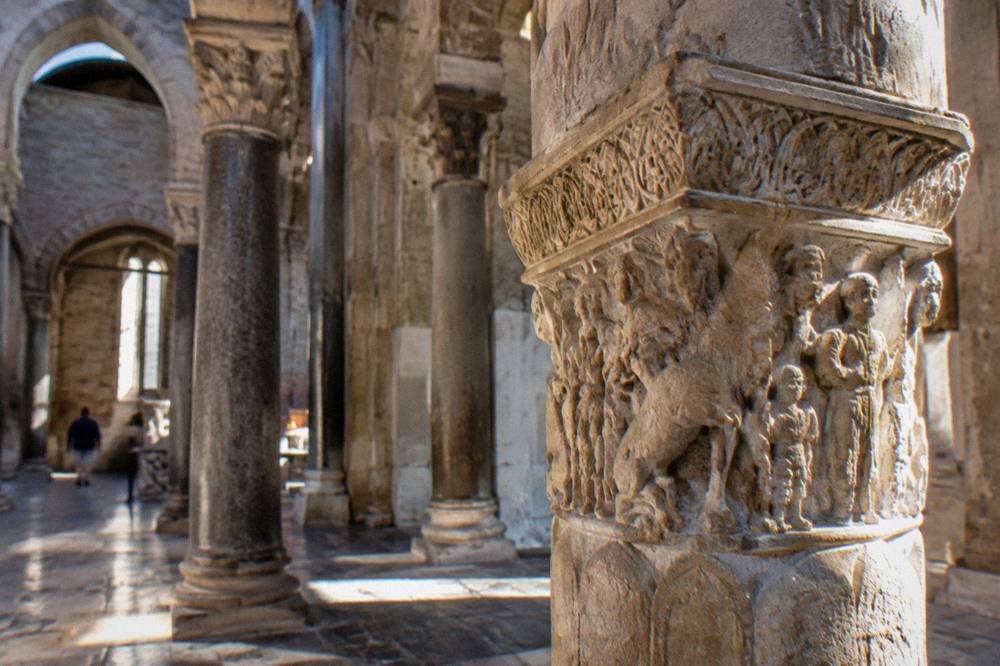
Tickets run from about 5 EUR for the cathedral church alone, with single entries for the crypt, the baptistery, the treasury and the bell tower sold at the kiosk on the Peristyle, and colour-coded combined tickets up to about 15 EUR covering all five sites. The former Temple of Jupiter, now the Baptistery of St John, is included in the same scheme rather than sold separately.
The five sites and the combined tickets are described by secondary guides rather than an official price page, so treat every figure as approximate and confirm the current price at the kiosk before buying. The structure, though, is consistent: singles for each space, and combined tickets that group the cathedral, crypt and baptistery, or add the treasury, or the bell tower, up to a full ticket covering everything. Opening hours are likewise not published on an official page, so plan the visit around a full day in the Old Town rather than a fixed timetable, and check locally on arrival.
| Ticketed site | What it is | Notes for the visit |
|---|---|---|
| Cathedral | The former imperial mausoleum, consecrated as a church | Dress code applies, shoulders and knees covered |
| Crypt | The vaulted space beneath the cathedral | Small, quick to see |
| Baptistery | The former Temple of Jupiter, around the Peristyle | Roman frontage, medieval font |
| Treasury | Cathedral relics and church silver | Compact collection |
| Bell tower | 57 m tower | Stairs and views over the palace and the sea |
Beyond the cathedral scheme, the surrounding palace sights have their own clear prices. The cellars of Diocletian's Palace, run by the Split City Museum, are open 8:30 to 20:00 daily, with the City Museum's own price list showing 10.00 EUR adult, 8.00 reduced and 18.00 family at the Papalić Palace, closed Mondays. The Archaeological Museum charges 8 EUR, or 10 EUR combined with the Salona ruins within seven days, and the Meštrović Gallery charges 12 EUR including its Crikvine-Kaštilac site.
| Split sight | Adult price | Source detail |
|---|---|---|
| Cathedral complex | from about 5 EUR, combined up to about 15 EUR | Peristyle kiosk, secondary price reporting |
| Diocletian's Palace cellars | 10 EUR | Split City Museum, open 8:30 to 20:00 |
| Split City Museum, Papalić Palace | 10.00 EUR | 8.00 reduced, family 18.00, closed Mondays |
| Archaeological Museum | 8 EUR | 10 EUR combined with Salona within 7 days |
| Meštrović Gallery | 12.00 EUR | Includes Crikvine-Kaštilac |
| Ethnographic Museum | 7.00 EUR | 4.00 reduced, Vestibule 2.00 |
One caveat worth repeating: the Peristyle, the Riva, the Prokurative, the Golden Gate, the Grgur Ninski statue, the markets, Marjan and the city beaches are all free. A full day in Split can mix one paid cathedral visit with hours of free wandering, and the things to do in Split round-up on this site lays out the free options in order.
Is a guided visit with tickets included worth it? The listing for the Game of Thrones and history walking tour shows tickets bundled into the price, and a small-group palace walk reaches the cathedral with a guide who can read the layers aloud. That choice is personal: the building explains itself poorly to a first time visitor, and the ticket kiosk explains nothing at all.
Can You Climb The Bell Tower Of The Cathedral In Split?
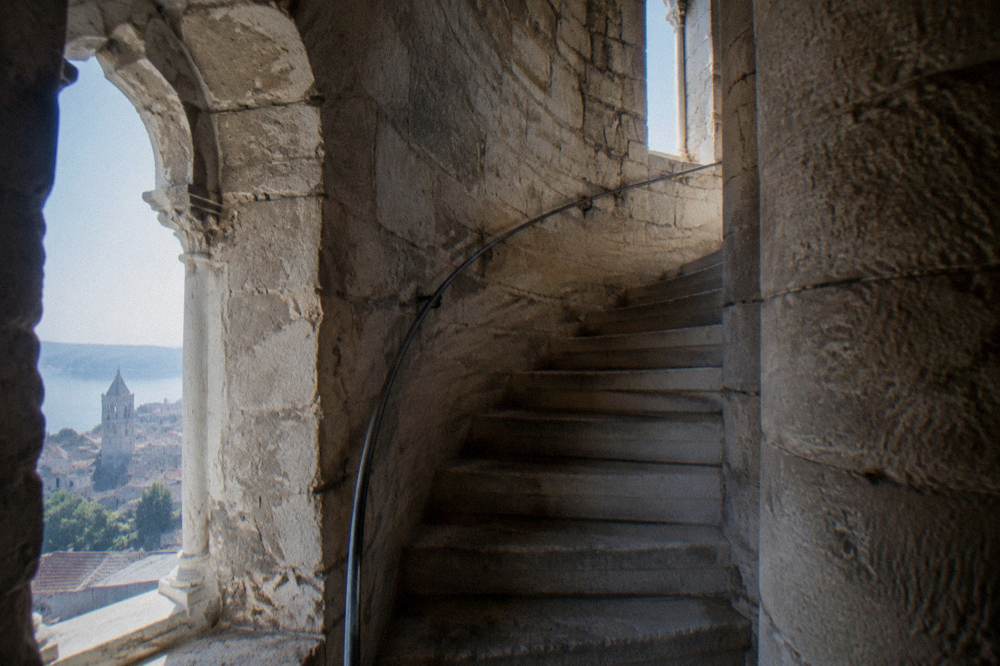
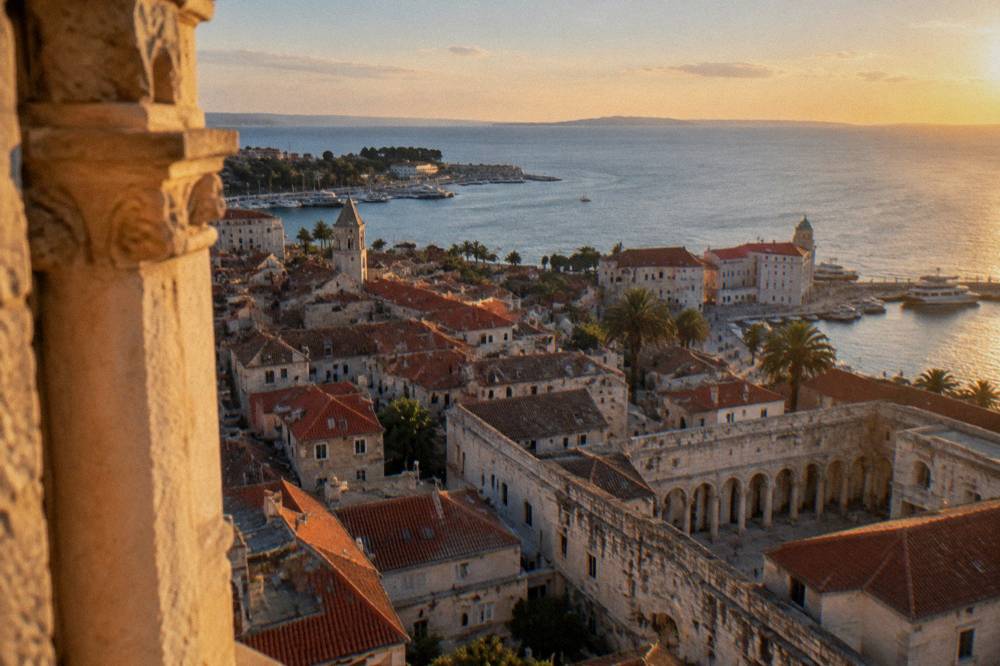
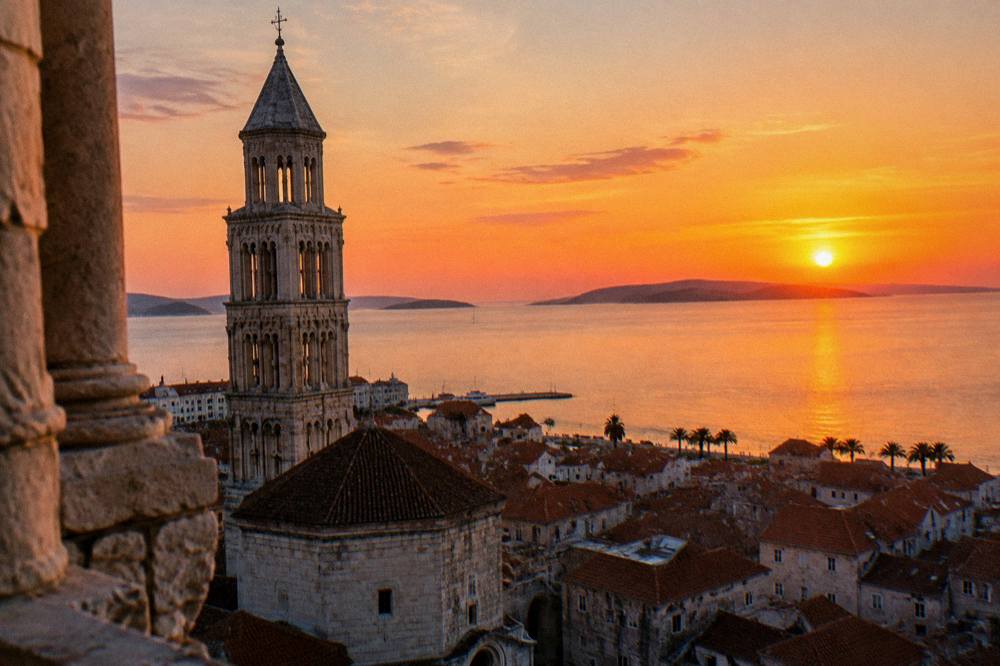
Yes, the 57 m bell tower of the Cathedral of Saint Domnius can be climbed on a tower ticket, and it is the highest viewpoint over Diocletian's Palace and the Split waterfront. The tower stands directly beside the cathedral on the Peristyle side, so the climb is a short add-on to any cathedral ticket.
The reward is the layout of the city made legible: the rectangle of the palace below, the Riva and the ferry port immediately south, Marjan's green ridge to the west with its high point Telegrin at 178 m, and the islands offshore. On clear days the line of islands, Brač, Šolta and Hvar, reads across the horizon, which is the same view the port's ferry routes follow, the line 635 car ferry to Stari Grad on Hvar taking about 120 minutes and the line 631 ferry to Supetar on Brač about 50 minutes. Climbing is a matter of stairs and weather rather than fitness alone: the tower is narrow in places, and in July, when the DHMZ Split Marjan station records a mean of 26.2 C and 18 days at 30 C or more, the morning is the merciful window.
The tower also puts the palace's survival in perspective. From above it is plain that the cathedral and its neighbours are not a monument cordoned off from the city but a functioning district, with the Riva promenade running along the seafront below. The Riva's central section is scheduled for renovation works from November 2026, expected to last a little over a year, so partial closures along the waterfront are likely through 2027, though the promenade itself remains the city's free walking spine.
Is There A Dress Code For The Cathedral Of Saint Domnius?
Yes, the Cathedral of Saint Domnius requires shoulders and knees to be covered, as an active place of worship inside a functioning Catholic diocese. The rule applies to the cathedral church and by extension to the baptistery and crypt, so a scarf or a longer layer in a day pack covers the requirement for the whole complex.
The city's own public order rules are a separate matter and apply outside, in the historic core: walking in swimwear or shirtless in the historic centre is a finable offence, with the fine amount set locally, while the published fines on the city's rules page run to 300 EUR for drinking alcohol in the historic centre or within 100 m of schools, 300 EUR for urinating or for climbing on monuments, and 150 EUR for sleeping in public spaces. Coming from the beach at Bačvice or from a boat trip, a change of clothing is the practical answer rather than a debate at the door.
The evening is when the palace district changes character, and the cathedral's floodlit stone is the anchor of it. An evening kayak tour paddles the coast below Marjan with the Old Town lights behind it, and the illuminated evening option in the picks below is the one with a page on this site.
What Should You See Around The Cathedral In Split?
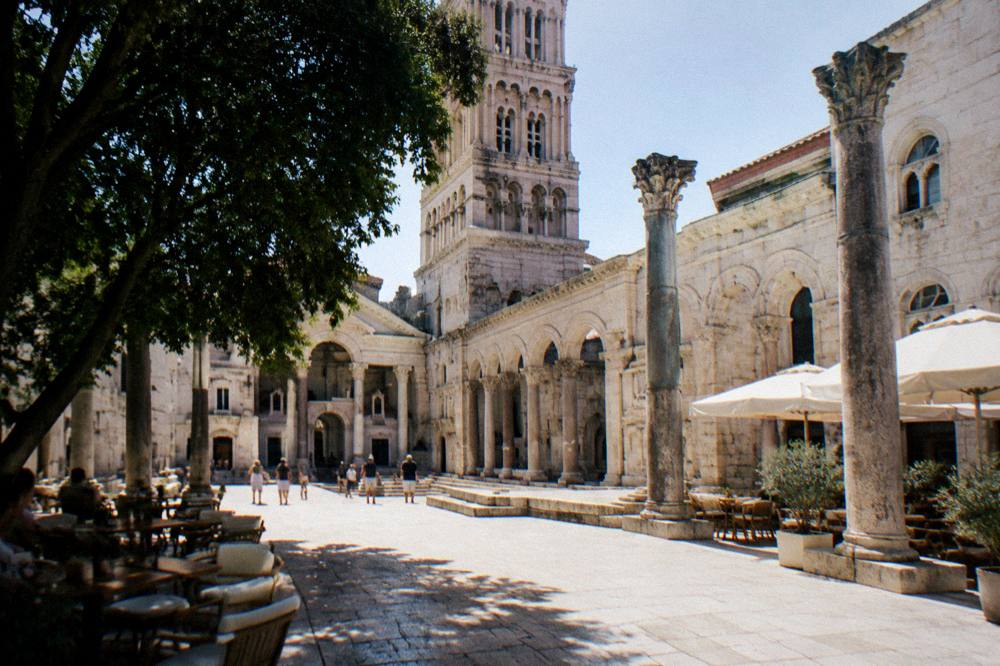
The Peristyle square, the palace cellars, the Golden Gate, the Grgur Ninski statue and the Temple of Jupiter baptistery all sit within a few minutes' walk of the Cathedral of Saint Domnius, and all but the cellars and the baptistery are free to see. The Riva waterfront and the green market extend the walk south and north of the palace walls.
The logical circuit starts on the Peristyle, the palace's colonnaded main square, where the cathedral, the baptistery and the ticket kiosk stand together. From there the cellars run beneath the southern half of the palace, an atmospheric vaulted route the Split City Museum keeps open daily, restoration works in the central part notwithstanding. North through the living lanes, the Golden Gate exits the palace toward the statue of Grgur Ninski, whose bronze toe is polished by custom, and beyond it the green market and the plane tree shade of the Marmontova side of town.
| Sight | Distance from the cathedral | Cost | Best pairing |
|---|---|---|---|
| Peristyle | On the doorstep | Free | Cathedral ticket kiosk |
| Temple of Jupiter baptistery | Under 2 minutes | Inside cathedral scheme | Combined ticket |
| Palace cellars | 3 minutes | 10 EUR | Morning before the crowds |
| Golden Gate and Grgur Ninski | 5 minutes | Free | Green market stop |
| Riva promenade | 5 minutes | Free | Sunset walk, closures possible |
| Marjan hill steps | 15 minutes | Free | 819 steps to Telegrin at 178 m |
Marjan deserves the spare half day. The park forest peninsula west of the centre runs 3.5 km long and 1.5 km wide, with the 819 step climb from Trumbićeva obala to the Telegrin viewpoint at 178 m, and the beaches of Kašjuni on its southern shore. The Marjan hill and Peristyle pages on this site cover both in detail, and the one day in Split itinerary sequences the palace, the cathedral and the waterfront for a single visit.
When Is The Best Time To Visit The Cathedral In Split?
The months either side of summer, May, June, September and early October, give the most comfortable conditions for a cathedral visit and a bell tower climb, with the DHMZ Split Marjan station recording means of 19.2 C in May, 23.4 C in June and 21.6 C in September against 26.2 C in July. July and August combine heat and peak crowds, while winter is mild, 8 C in January, and quiet.
The station table behind that, the DHMZ Split Marjan record for 1948 to 2024, also shows the rain pattern: November is the wettest month at 115.5 mm and July the driest at 26.6 mm, with July delivering 353.3 hours of sunshine against 120.8 in December. For a bell tower climb in high summer, the practical reading is that July averages 18 days at 30 C or more and August 17, so the tower is an early morning errand in those months. Advent, from 27 November 2026 to 7 January 2027, turns the streets around the cathedral into a winter market with the ice rink at Đardin, and the cathedral complex is the backdrop to all of it.
| Month | Mean temperature C | Precipitation mm | Cathedral visit note |
|---|---|---|---|
| January | 8.0 | 77.8 | Quiet, mild, Advent just ended |
| April | 14.4 | 62.0 | Comfortable, shoulder season |
| May | 19.2 | 57.5 | Ideal walking weather |
| July | 26.2 | 26.6 | 18 days at 30 C or more, climb early |
| September | 21.6 | 70.9 | Warm sea, thinner crowds |
| November | 12.7 | 115.5 | Wettest month, Advent opens 27 November |
The cathedral is also a working church in a working calendar. Sudamja, the feast of St Domnius and the city's day, falls on 7 May each year, and the Croatian National Theatre's season runs from 25 September 2026 to 14 June 2027 for anyone pairing culture with the visit.
How Does The Cathedral Fit Into A Wider Split Trip?
The Cathedral of Saint Domnius needs only a morning, which leaves the afternoon for the sea: the ferry port sits 500 to 600 m from the palace, with car ferries to Stari Grad on Hvar in about 120 minutes and to Supetar on Brač in about 50 minutes, plus catamarans to Hvar town and Vis. A small-group speedboat to the Blue Lagoon and three islands is the half day pairing that returns to the same waterfront.
That geography is Split's quiet advantage over every other Dalmatian base. The cathedral, the palace and the ferry berths share a few hundred metres, so a trip can hold a Roman morning and a swim stop in one day without changing accommodation. The two days in Split and three days in Split itineraries build exactly that rhythm, and day trips inland, Klis Fortress 22 minutes away by car, Salona 14, Krka about 74, all start from the same bus and rail hub on Obala kneza Domagoja.
For the sea half of the day, the small-group Blue Lagoon speedboat run is this site's featured pairing for the cathedral page: it covers the Blue Lagoon and three islands with swimming stops, and its live listing carries the current price, rating and availability. Check availability before locking a date, since small-group boats fill first in July and August.
For travellers who prefer the story told aloud, the guided walks remain the strongest companion to a cathedral ticket, and the trio below rounds up the palace walk, the kayak evening and the Blue Lagoon boat in one place.
Common Questions About The Cathedral Of Saint Domnius
Is the Cathedral of Saint Domnius inside Diocletian's Palace?
Yes. The cathedral was formed from the mausoleum Emperor Diocletian built at the heart of his palace around 295 to 305 AD, and it stands beside the Peristyle inside the UNESCO-listed Historical Complex of Split with the Palace of Diocletian, inscribed in 1979.
What do Cathedral of Saint Domnius tickets cost?
Tickets run from about 5 EUR for a single site, with combined tickets up to about 15 EUR covering all five sites, sold at the kiosk on the Peristyle. The figures come from secondary guides rather than an official price page, so confirm the current price at the kiosk.
Can you climb the cathedral bell tower in Split?
Yes. The bell tower, 57 m tall, is climbed on a tower ticket and gives the highest view over Diocletian's Palace, the Riva and the offshore islands. In July, which averages 18 days at 30 C or more on the DHMZ Split Marjan record, climb early.
Is there a dress code for the Cathedral of Saint Domnius?
Yes, shoulders and knees must be covered. The rule applies to the cathedral and the baptistery, so a scarf or a longer layer carried in a day bag covers the whole complex.
What are the Cathedral of Saint Domnius opening hours?
Hours are not published on an official page, so confirm locally on arrival or with the kiosk on the Peristyle before planning a timed visit.
Is the Temple of Jupiter part of the cathedral visit?
Yes. The Temple of Jupiter is now the Baptistery of St John and is ticketed inside the cathedral scheme, standing a minute's walk from the cathedral across the Peristyle.
