3 Days In Split
Three days is enough to see Diocletian's Palace, climb Marjan, swim at Bačvice and take one big day trip from Split, with the ferry port, bus station and railway station all within 600 m of the palace.
Short answer
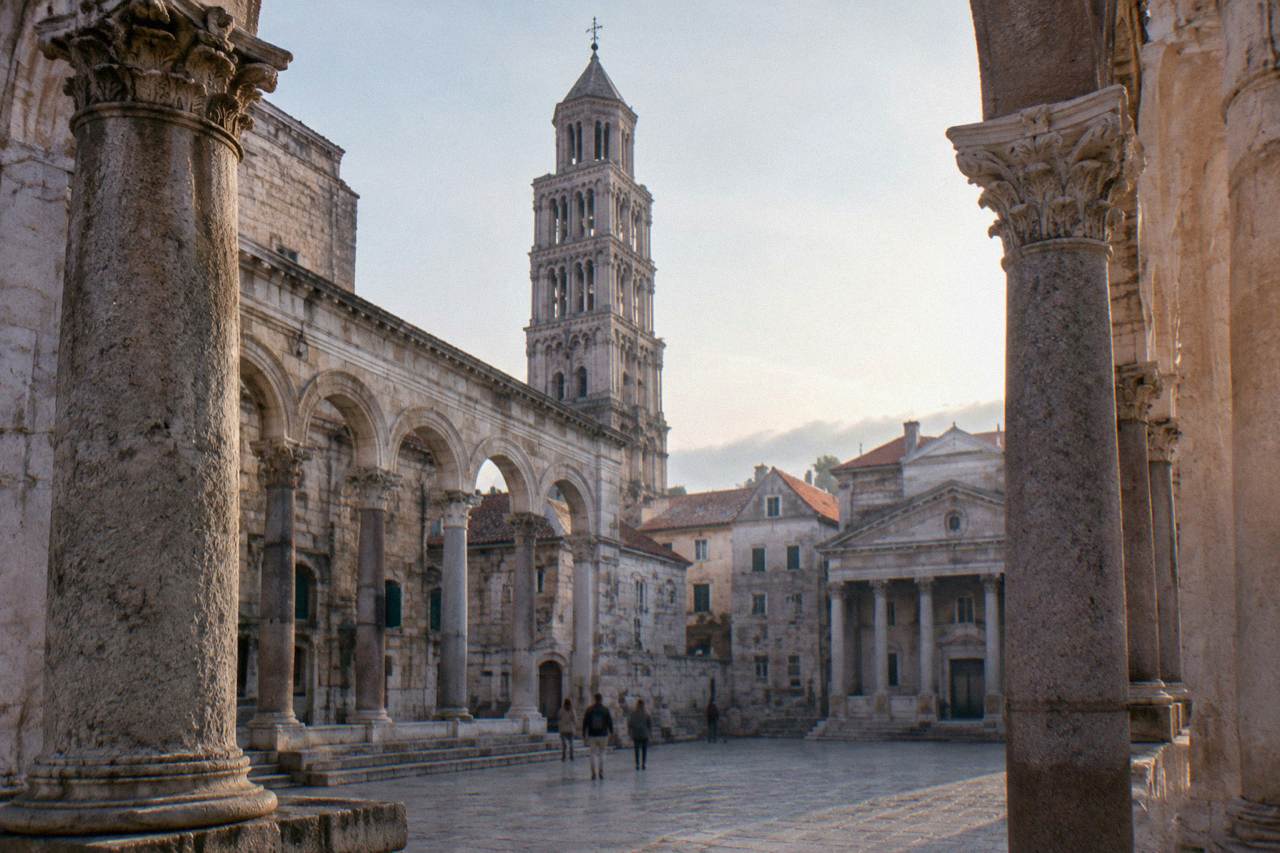
Spend day one inside Diocletian's Palace and the Old Town, day two on Marjan hill, the Riva and the city beaches, and day three on a day trip to Krka, Hvar or Mostar. Split's transport hub sits 500 to 600 m from the palace, so every departure starts on foot.
Split packs a Roman palace, a forested peninsula and a working ferry port into a city of 160,577 people (2021 census), and three days is the point at which the city itself and one major day trip both fit without rushing. The Old Town lives inside and around Diocletian's Palace, built c. 295 to 305 AD for Emperor Diocletian and inscribed by UNESCO in 1979 as the Historical Complex of Split with the Palace of Diocletian, a property of 20.8 ha. The ferry port, the main bus station and the railway station sit together on Obala kneza Domagoja, 500 to 600 m from the palace, which means every day trip in this plan begins with a short walk. Croatia uses the euro since 1 January 2023 and has been in the Schengen area since 1 January 2023; the emergency number is 112.
This itinerary keeps day one inside the palace walls, day two on foot and sea from Marjan to Bačvice, and day three on the road or water. Days can be swapped freely: if the DHMZ Split Marjan station forecast shows rain, pull a rainy day in Split plan forward and save the hill and the beach for the clear day.
Is 3 Days In Split Enough, And What Fits?
Three days is enough for the palace, the Old Town, Marjan hill, two city beaches and one full-day trip, because Split's attraction core is compact and walkable and every ferry, catamaran, coach and tour departure point sits within 600 m of Diocletian's Palace. A second day trip squeezes in only if day three runs on a tight guided tour. Travellers torn between two and three days can compare the shorter plan on two days in Split; the city also works compressed into one day in Split for cruise and transit stops.
Want to stay in the middle of it all? Book a hotel in Split here.
The reasoning comes from geography rather than opinion. The Peristyle, the Riva, the Prokurative, the Golden Gate, the Grgur Ninski statue, the green market, Marjan and the city beaches are all free and all within walking distance of each other. The paid sights cluster tightly too: the Split City Museum in Papalić Palace, the cathedral complex, the palace cellars and the Ethnographic Museum sit inside or on the edge of the palace. Only the Meštrović Gallery and the Archaeological Museum need a longer walk or a short ride.
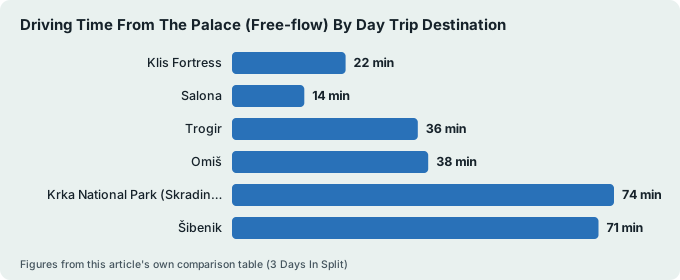
What three days cannot do is everything. The big day trips, Krka, Plitvice, Hvar, Mostar and Dubrovnik, each eat a full day. A reader who wants two of them should look at the how many days is enough for Split question and plan from four days upward. The table below gives the free-flow driving times computed from the palace so day three can be chosen with open eyes.
| Day trip destination | Driving time from the palace (free-flow) | Notes |
|---|---|---|
| Klis Fortress | 22 min | 10 EUR entry, Game of Thrones Meereen location |
| Salona | 14 min | Combined ticket with the Archaeological Museum, 10 EUR within 7 days |
| Trogir | 36 min | UNESCO World Heritage since 1997 |
| Omiš | 38 min | Mirabela fortress 4 EUR, 6 EUR from 1 June to 30 September |
| Krka National Park (Skradinski buk) | 74 min | Entry 7 / 20 / 40 EUR by season |
| Šibenik | 71 min | St James Cathedral, UNESCO since 2000 |
| Mostar | 2 h 13 | Border crossing into Bosnia and Herzegovina, passport needed |
| Dubrovnik | 3 h 21 | City walls 40 EUR (2026) |
| Plitvice Lakes | 3 h 15 | Entry 10 / 23 / 40 EUR by season, timed online entry |
What Should Day One In Split Look Like?
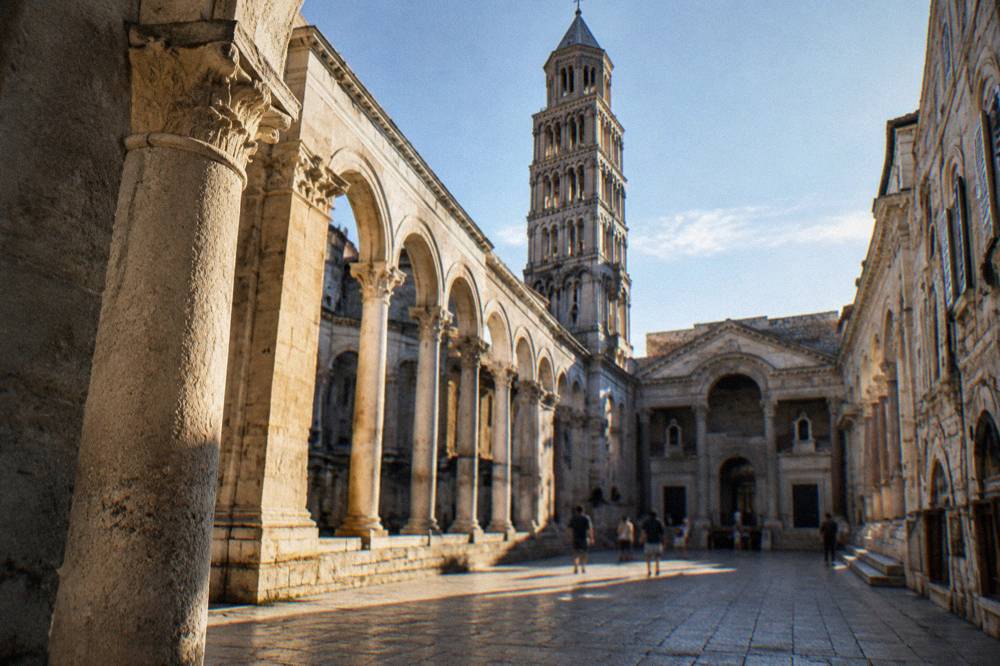
Day one belongs to Diocletian's Palace: start at the Peristyle, buy the cathedral combo that matches the parts you want, walk the cellars, then loop the Golden Gate, the Grgur Ninski statue, the Vestibule and the Riva, finishing with sunset on the Prokurative. The palace is not a museum behind a wall, it is the living centre of the city, with shops, flats and bars inside a Roman structure, so the day is a walk rather than a queue.
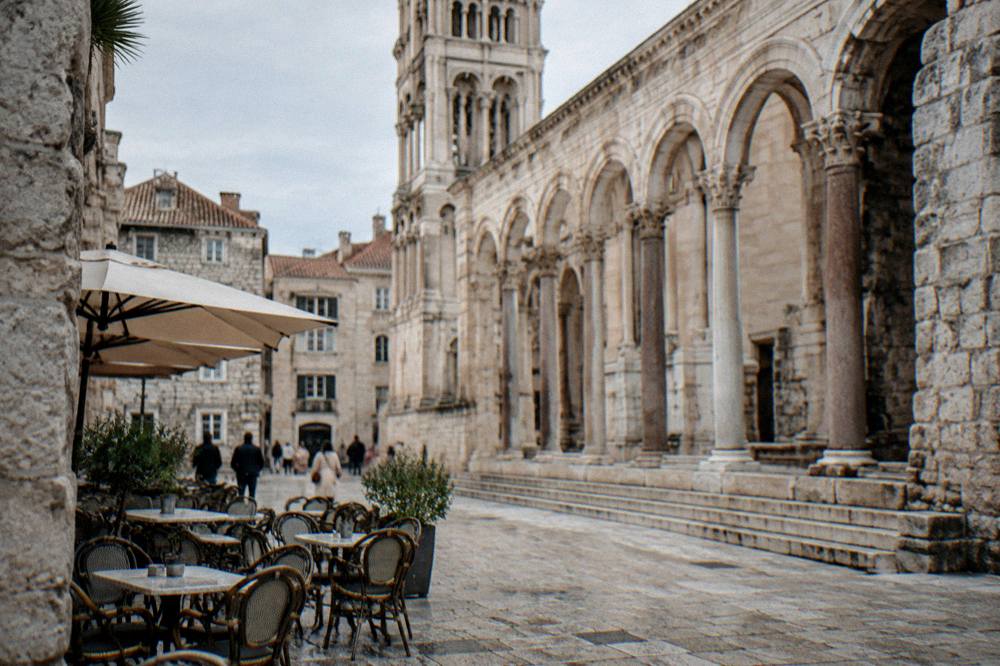
Begin at the Peristyle, the open colonnaded square that formed the palace's formal entrance axis. The cathedral complex of St Domnius rises at its side, with a bell tower of 57 m; the Temple of Jupiter on the west side is now the Baptistery of St John and is ticketed inside the cathedral scheme. Cathedral pricing comes from a secondary guide rather than an official price page, so treat the figures as about: single sites from about 5 EUR, combined tickets up to about 15 EUR, sold at the kiosk on the Peristyle, with shoulders and knees covered inside. The cathedral of St Domnius and the Temple of Jupiter each have their own pages with the detail.
The substructures, the cellars, are run by the Split City Museum and open Monday to Sunday from 8:30 to 20:00; the museum's price list shows the City Museum ticket at 10.00 EUR adult, 8.00 EUR reduced, family 18.00, with the Papalić Palace site closed Mondays. The central part of the cellars is under restoration to the end of 2026, and the passage stays open during the works. Full detail sits on the Diocletian's Palace cellars page.
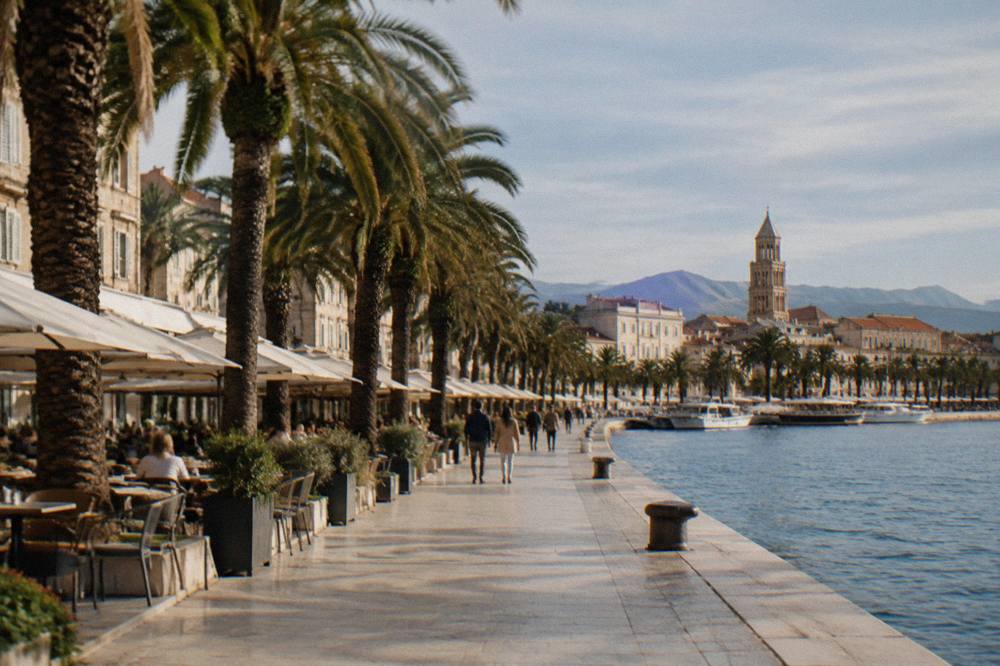
Work outward in the afternoon. The Golden Gate, the palace's north entrance, and the large bronze Grgur Ninski statue beside it are free, as are the Prokurative squares and the whole of the Riva promenade along the harbour. One planning note for 2026 and 2027: the Riva's central section is scheduled for renovation works from November 2026 lasting a little over a year, so partial closures on the Riva should be expected through 2027. The Riva remains usable, simply in parts.
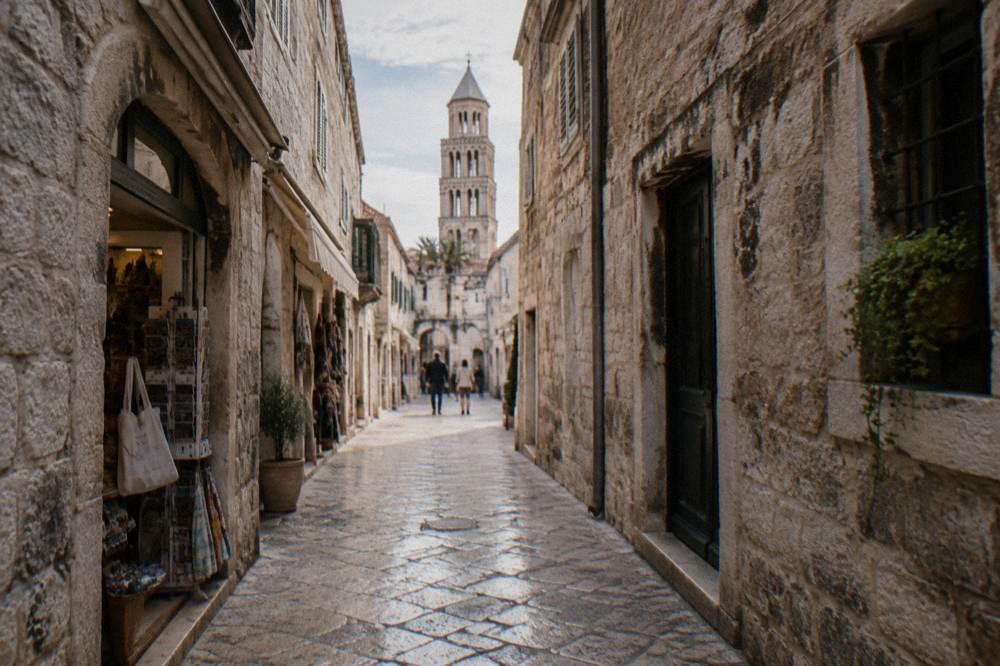
Dinner belongs in or just outside the palace walls. The Old Town holds the densest choice; where locals eat is a separate question with its own answer on where do locals eat in Split. One rule to know before the first evening drink: Split's public-order decision fines drinking alcohol in the historic centre 300 EUR, and a night-time retail alcohol sales ban in shops runs in summer. Check the posted prices and the itemised bill anywhere in the centre, and confirm the cover charge is on the menu before sitting down.
What Should Day Two In Split Look Like?
Day two is Split outdoors: climb Marjan hill by its 819 steps to the Telegrin viewpoint at 178 m, descend to the quiet coves on the north side, then spend the afternoon at Bačvice or Kašjuni beach and the evening on the Riva or the Prokurative. Every part of this day is free except food, and the walk and the swim sit 30 minutes apart on foot.
Marjan, the park-forest peninsula on the city's west side, is 3.5 km long and 1.5 km wide, with its highest point Telegrin at 178 m. The classic ascent is the staircase of 819 steps from Trumbićeva obala up to Telegrin; the Marjan hill page maps the paths, the churches and the viewing points. Go early in summer: the DHMZ Split Marjan station table, for the period 1948 to 2024, shows a July mean of 26.2 C with 18 days at 30 C or more, and August 17 such days. July sunshine runs 353.3 hours against December's 120.8.
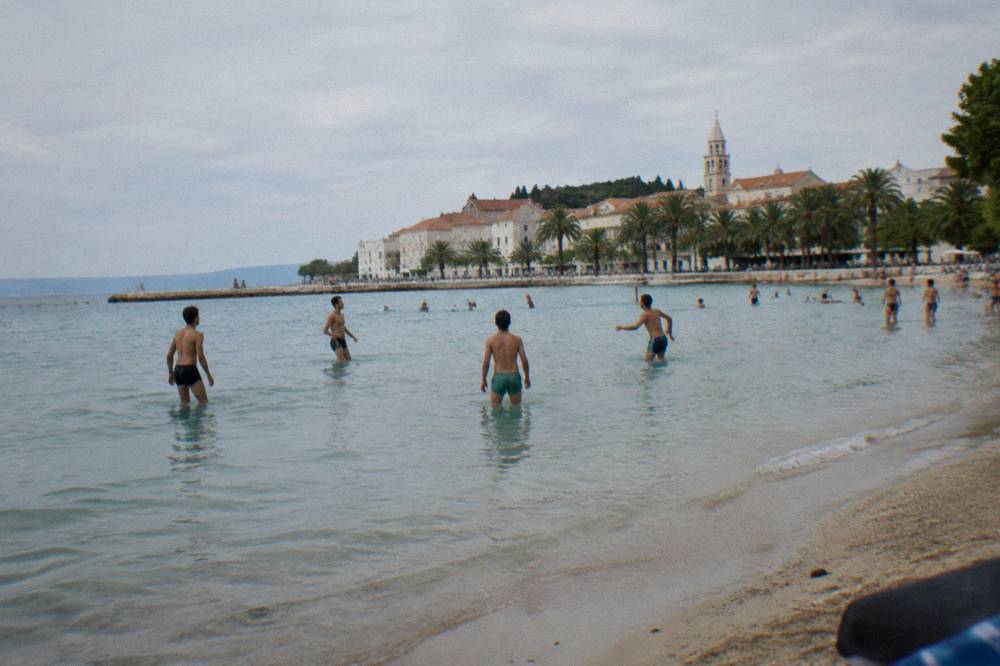
After the hill, the city beaches. Bačvice is the sandy bay closest to the centre and the home of picigin, the shallow-water ball game born on the beach in 1908 and protected as intangible heritage of Croatia. Kašjuni, under Marjan's southern slope, is the calmer sandy alternative. Both are free, like all the city beaches, and the swim between them is a genuine option in the warmer months.
If the afternoon runs long, two museums sit within reach. The Meštrović Gallery on the west side charges 12.00 EUR adult, a ticket that includes Crikvine-Kaštilac, and reopened in April 2026 after a 15-month energy renovation with a new exhibition on the Meštrović house that runs until 9 October 2026. The Archaeological Museum, founded in 1820, charges 8 EUR, or 10 EUR combined with Salona within 7 days, a ticket that pairs neatly with day three plans. The Meštrović Gallery page has the full ticket detail.
The evening closes on the water. Split's port was Croatia's busiest passenger port in 2025 with 6.05 million passengers, so the harbour itself is the show: ferries to the islands, cruise calls, catamarans, and the Riva full until late. On any day from late May, the Roman guard change on the Peristyle at noon is a free performance; it ran 28 May to 27 September 2026.
| Day two stop | Entry cost | What the ticket covers |
|---|---|---|
| Marjan hill and Telegrin viewpoint | Free | All paths, steps and viewing points |
| Bačvice beach | Free | Sandy city beach, picigin home since 1908 |
| Kašjuni beach | Free | Sandy cove under Marjan |
| Meštrović Gallery | 12.00 EUR adult | Gallery plus Crikvine-Kaštilac |
| Archaeological Museum | 8 EUR adult | Museum, or 10 EUR combined with Salona within 7 days |
| Ethnographic Museum | 7.00 EUR adult | Museum, Vestibule viewpoint 2.00 EUR |
What Should Day Three In Split Look Like?
Day three is the day trip, and the choice is between water, waterfalls and history: a speedboat run to the Blue Cave and Hvar, a coach or boat tour to Krka National Park, or a guided crossing to Mostar and the Kravice waterfalls in Bosnia and Herzegovina, each a full day from Split's transport hub. Pick one, because none of them pairs with another on the same day.
The islands are the fastest flavour of the Adriatic. Car ferries run line 635 to Stari Grad on Hvar in about 120 minutes and line 631 to Supetar on Brač in about 50 minutes, with foot passengers paying 5.90 EUR off-season and 8.40 EUR in season on the Stari Grad line per Jadrolinija's price list. Catamarans reach Hvar town and Jelsa for 6.40 EUR low and 10.00 EUR high season, and Vis for 7.20 and 10.00 EUR (Jadrolinija price lists). Note the geography: Hvar town itself is reached by catamaran, Stari Grad by car ferry, and confusing the two strands a day. The Hvar day-trip page and the split to Hvar ferry guide cover it fully.
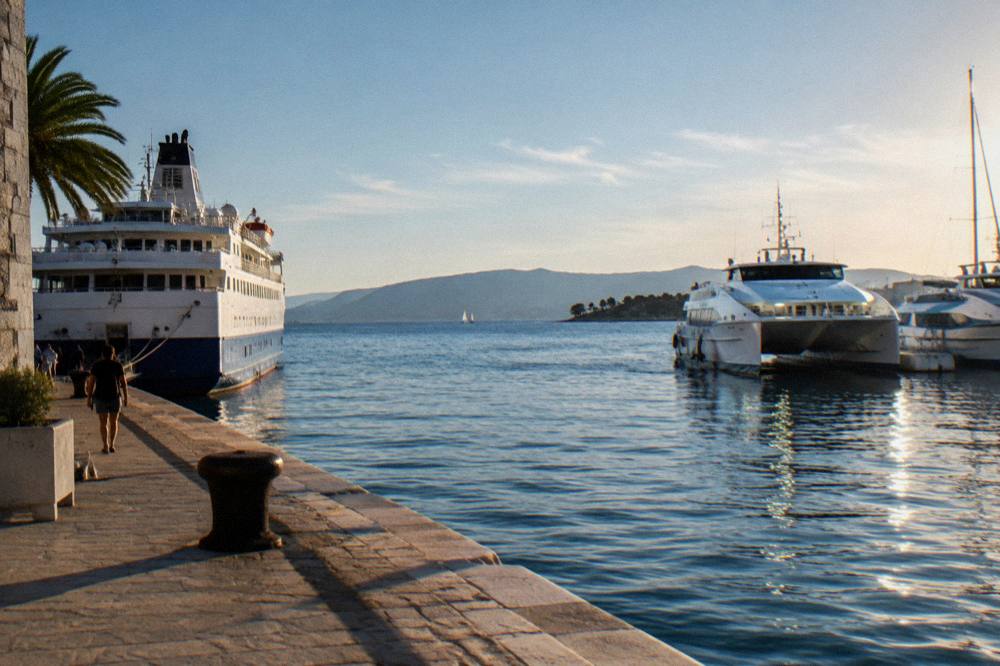
Krka National Park is the waterfall day. Entry covers all accessible land sites at 7 EUR in January to March, November and December, 20 EUR in April, May and October, and 40 EUR from June to September, and the ticket includes the Skradin boat and the Lozovac bus transfers from 1 April to 31 October. One rule matters: swimming is not allowed outside clearly marked areas, with designated spots at Roški slap, Stinice and Pisak from 1 June to 30 September. The old claim of swimming beneath Skradinski buk no longer holds. The Krka National Park page carries the whole price list. Everything else covered here is indexed on Split Croatia Travel Guide.
Mostar is the history day and the one trip that crosses a border, so a passport is needed and timing matters. Driving time from the palace is 2 h 13 free-flow, but border queues vary and guided tours absorb them. The Mostar page covers the Old Bridge area, inscribed by UNESCO in 2005 with the rebuilt bridge of 2004. The Mostar and Kravice waterfalls tour is this site's featured pick for the route, combining the town, the Ottoman village of Počitelj and the Kravice falls with the driving handled. Availability moves fast in season: Check availability.
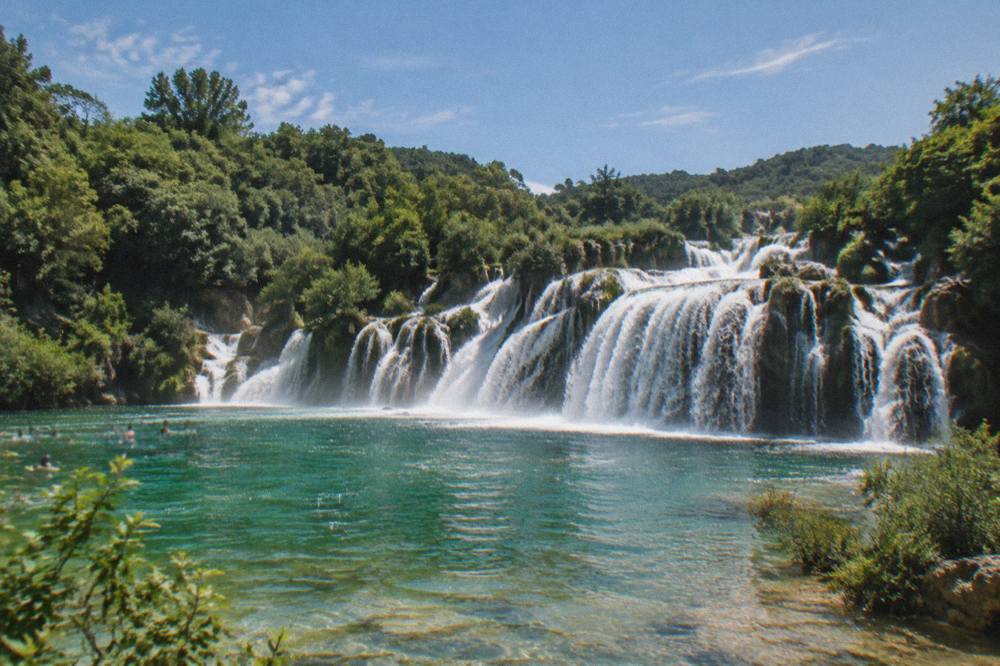
For a shorter or gentler day, Trogir and Klis Fortress combine easily. Trogir is 36 minutes' drive and UNESCO-listed since 1997; Klis is 22 minutes, charges 10 EUR and served as a Meereen filming location, with the detail on the Klis Fortress page and the Game of Thrones guide.
| Day three option | Journey from Split | Entry cost | Passport needed |
|---|---|---|---|
| Hvar by catamaran | 6.40 to 10.00 EUR fare | Fortica fortress 12 EUR | No, Schengen |
| Stari Grad, Hvar, by ferry line 635 | About 120 min, foot passenger 5.90 / 8.40 EUR | 7 | No, Schengen |
| Krka National Park | 74 min drive | 7 / 20 / 40 EUR by season | No, Schengen |
| Mostar and Kravice | 2 h 13 drive, border crossing | Tour-dependent | Yes |
| Trogir and Klis | 36 and 22 min drive | Klis 10 EUR | No, Schengen |
| Plitvice Lakes | 3 h 15 drive | 10 / 23 / 40 EUR by season, timed entry | No, Schengen |
What Should You Know About Money, Rules And Getting Around?
Split uses the euro, prices at museums and ferries are posted and small, and the rules worth knowing are the public-order fines in the historic centre, the about 2.65 EUR per night high-season tourist tax collected by your accommodation, and the fact that everything in this itinerary is reachable on foot or from the one transport hub by the ferry port. Croatia adopted the euro on 1 January 2023 and joined Schengen the same day, so there are no border formalities on domestic day trips.
Walking in swimwear or shirtless in the centre is also fined, and the amount is set locally, so confirm locally rather than trusting a figure. The tourist tax runs at about 2.65 EUR per person per night in high season, 1 April to 30 September, free under 12 and half price from 12 to 18, collected by the accommodation and confirmed at booking.
Getting around needs no car for the city itself. The airport, SPU, sits in Kaštel Štafilić, 20 km from Split and 6 km from Trogir by its own pages, and the Platanus shuttle runs from the airport to the main bus station by the ferry port for 10 EUR one way and 15 EUR return. City bus lines 37 and 38 also stop at the airport; the fare is a few euros, confirm on board. The getting around Split and Split airport to city centre guides carry the detail.
For arrivals by sea, cruise passengers can follow the dedicated Split cruise port day plan, and families have the Split with kids variant of this same structure.
| Practical item | Figure | Source basis |
|---|---|---|
| Currency | Euro, since 1 January 2023 | ECB |
| Tourist tax, high season | About 2.65 EUR per person per night, 1 April to 30 September | County decision |
| Airport shuttle, Platanus | 10 EUR one way, 15 EUR return | Operator page |
| Airport distance | 20 km from Split, 6 km from Trogir | Airport's own pages |
| Alcohol fine, historic centre | 300 EUR | City decision |
| Emergency number | 112 | National |
When Is The Best Month For A 3-Day Split Trip?
The DHMZ Split Marjan station table, for the period 1948 to 2024, points to May, June and September as the balanced months: May averages 19.2 C with 57.5 mm of rain, June 23.4 C with 49 mm, and September 21.6 C with 70.9 mm, against July's 26.2 C mean with only 26.6 mm of rain but 18 days at 30 C or more. November is the wettest month at 115.5 mm and should be avoided by anyone whose three days depend on the sea.
July and August are the full-summer months, warm, dry and busy, with 353.3 hours of July sunshine. The shoulder months trade a few degrees for thin crowds and lower island traffic. Winter is its own proposition: the Split in winter guide covers Advent in Split, which runs 27 November 2026 to 7 January 2027 with the ice rink at Đardin, and the best time to visit Split page works through the whole table.
| Month | Mean temperature | Precipitation | Character for a 3-day visit |
|---|---|---|---|
| April | 14.4 C | 62.0 mm | Cool sea, low crowds |
| May | 19.2 C | 57.5 mm | Balanced, first swimming weeks |
| June | 23.4 C | 49.0 mm | Warm, 7 days at 30 C or more |
| July | 26.2 C | 26.6 mm | Driest month, 18 days at 30 C or more |
| August | 25.9 C | 41.3 mm | Peak season, 17 days at 30 C or more |
| September | 21.6 C | 70.9 mm | Warm sea, thinning crowds |
| October | 17.2 C | 77.0 mm | Quiet, Krka and Plitvice at 20 and 23 EUR |
| November | 12.7 C | 115.5 mm | Wettest month, city-only plans |
What If You Have A Fourth Day, Or Only Two?
A fourth day unlocks a second island or a second park, most naturally Vis, reachable by ferry in about 140 minutes, or Plitvice Lakes at 3 h 15 of driving with timed online entry and the visitor's name on the ticket, while two days means cutting day three entirely and keeping the palace and Marjan. The plan set out on this page is the hinge between the two-day and week-long formats.
With a spare day, the Blue Cave and Vis route is the distinctive one. The Blue Cave on Biševo charges 24 EUR in high season, 20 June to 10 September, and 18 EUR in the shoulder months, paid in cash on site, and children from 6 to 12 pay half. Weather cancels cave entries when the sea is rough, so keep that day flexible. The week-long alternative is set out in the Split island hopping week itinerary.
With only two days, follow the two days in Split compression: the palace and the Old Town on day one, Marjan plus one beach on day two, and leave the day trips for a return. The things to do in Split root page indexes every option by category if the plan needs reshuffling.
Common Questions About 3 Days In Split
Is 3 days in Split enough?
Yes, for the city plus one day trip. Three days covers Diocletian's Palace, Marjan hill, the city beaches and either Krka, Hvar, Mostar or Dubrovnik as a single full-day excursion, with every departure point 500 to 600 m from the palace.
What is the best day trip from Split?
It depends on the interest. Krka National Park is the waterfall day at 74 minutes' drive, Hvar is the island day by catamaran or ferry, Mostar is the history day across the border in Bosnia and Herzegovina, and Dubrovnik is the long coastal run at 3 h 21 each way.
Can you visit Hvar from Split in one day?
Yes. Catamarans reach Hvar town directly, and Jadrolinija's line 635 car ferry runs to Stari Grad in about 120 minutes with foot passengers paying 5.90 EUR off-season and 8.40 EUR in season. Hvar town is the catamaran destination and Stari Grad is the ferry destination, so plan the right one.
Do you need a car for 3 days in Split?
No. Every city element of this itinerary is walkable, and the day trips run by ferry, catamaran, coach or guided tour from the transport hub on Obala kneza Domagoja. A car helps only for combining small inland stops such as Klis, Salona and Trogir at your own pace.
How much do the main Split sights cost?
The Peristyle, the Riva, the Prokurative, the Golden Gate, Marjan and the city beaches are free. Paid entry includes the Split City Museum at 10.00 EUR, the Meštrović Gallery at 12.00 EUR, the Archaeological Museum at 8 EUR or 10 EUR combined with Salona, and the cathedral complex from about 5 EUR with combined tickets up to about 15 EUR.
Which month is warmest in Split?
July, with a mean of 26.2 C at the DHMZ Split Marjan station for 1948 to 2024, followed by August at 25.9 C. July also brings 18 days at 30 C or more and the lowest rainfall of the year at 26.6 mm.
