Temple Of Jupiter Split
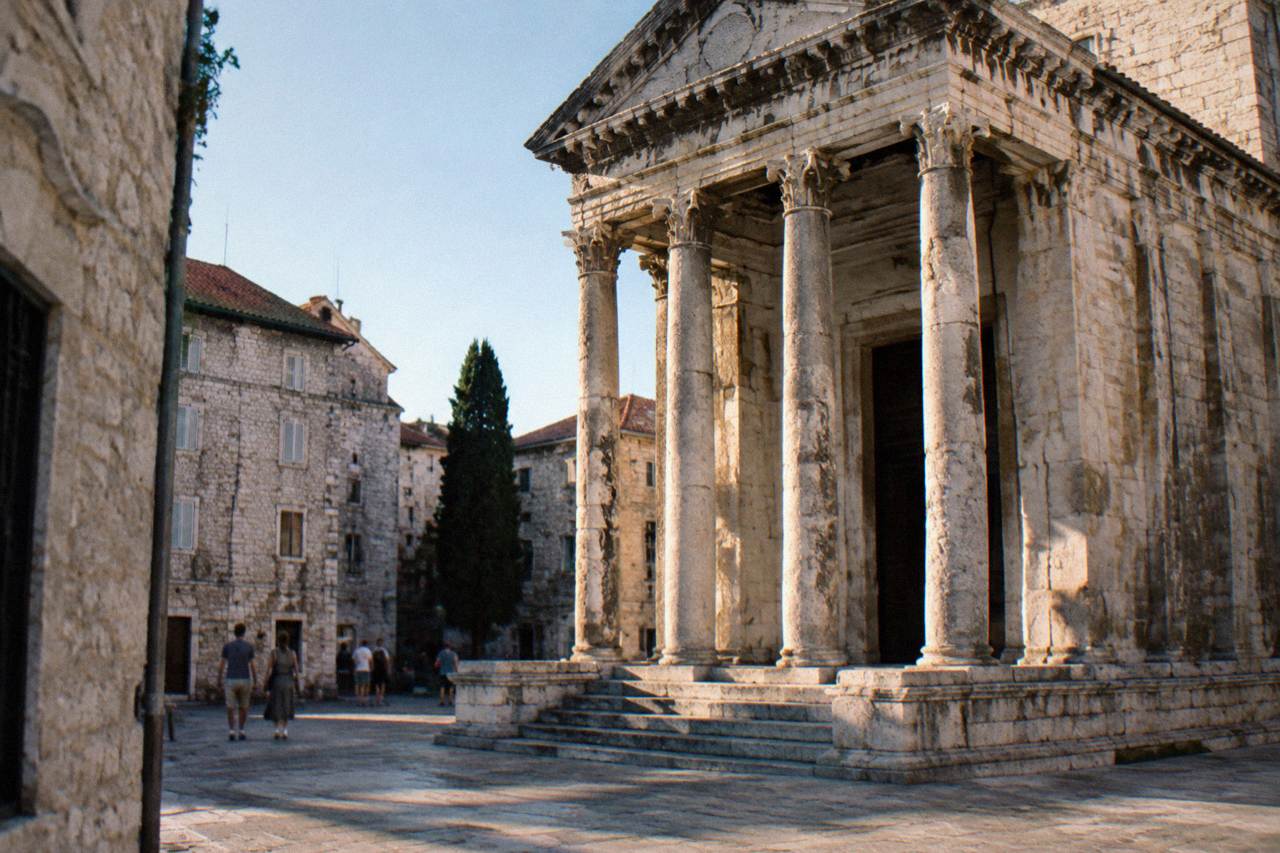
The Temple of Jupiter in Split, Dalmatia, Croatia, sits a few steps off the Peristyle of Diocletian's Palace and now serves as the Baptistery of St John, one of the closest things a Roman building gets to surviving a change of god intact.
Short answer
The Temple of Jupiter in Split is a Roman temple built as part of Diocletian's Palace around 295 to 305 AD and later converted into the Baptistery of St John. Entry is inside the Cathedral of St Domnius ticket scheme, from about 5 EUR for a single site, with combined tickets up to about 15 EUR, and shoulders and knees must be covered.
The Temple of Jupiter in Split, the coastal city in Dalmatia on the Adriatic, stands at the end of a narrow lane running west off the Peristyle of Diocletian's Palace, and almost nothing about it is what it first appears to be. The palace itself was built for Emperor Diocletian around 295 to 305 AD, and the temple was its chief place of worship, dedicated to the king of the Roman gods. At some point after the palace became a town, the building was consecrated as the Baptistery of St John, its baptismal font replaced the old altar, and the structure entered the ticket scheme of the Cathedral of St Domnius, whose own story starts at Diocletian's Palace. The UNESCO listing that covers the whole historical complex of Split, inscribed in 1979, includes this small building inside its 20.8 hectare property.
The building rewards preparation. It is small, it is crowded for much of the day, and its ticketing confuses people who expect one price for one monument. This guide from the Split Croatia Travel Guide editorial desk sets out what the sources actually say: what the temple is, what a ticket covers, what is inside, how it fits a day in the city, and how to combine it with the rest of the palace complex.
What Is The Temple Of Jupiter In Split?
The Temple of Jupiter in Split is a Roman temple built as part of Diocletian's Palace around 295 to 305 AD, dedicated to Jupiter, and later converted into a Christian baptistery, the Baptistery of St John. It stands in a narrow court at the western end of the palace's southern ceremonial axis, a few steps from the Peristyle, and it is one of the best preserved Roman temples anywhere that was later absorbed into a living city.
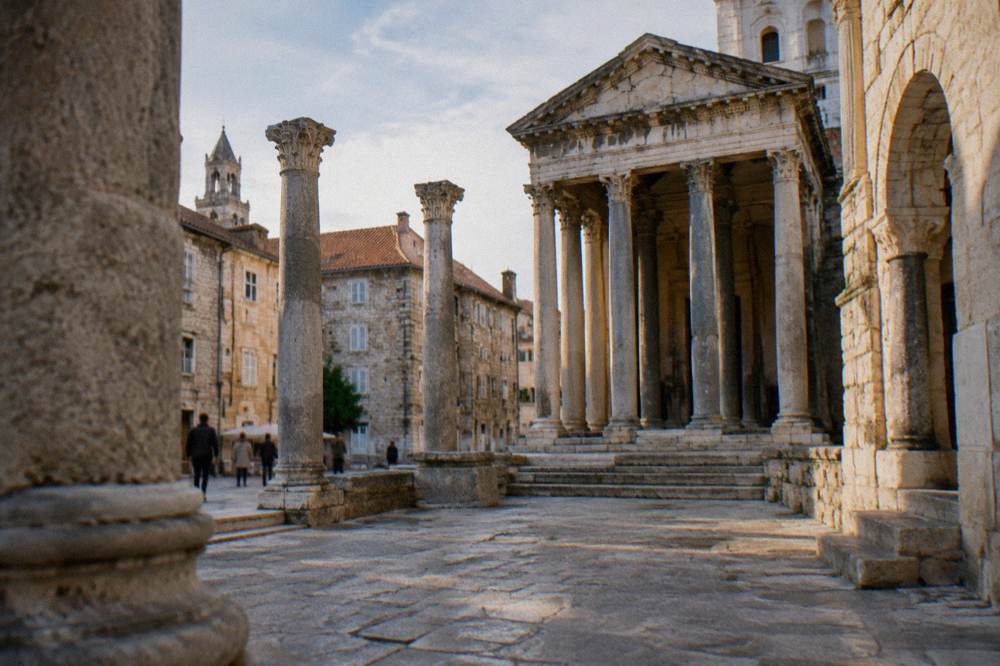
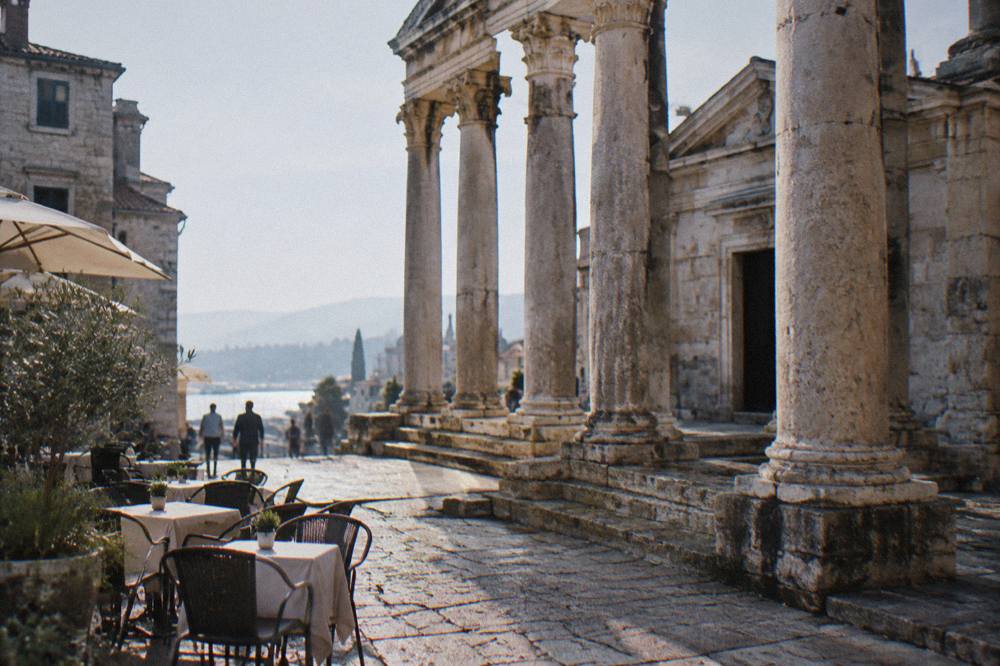
The palace was laid out as a rectangle of walls and towers with a southern facade on the sea, and its two main streets crossed at the Peristyle, the colonnaded square that served as the entrance hall to the imperial apartments. The temple sits in a raised court off the western side of that square, deliberately raised, fronted by columns, and approached by steps, the standard grammar of Roman temple architecture. The UNESCO description of the property records the palace as a whole; the temple is a named structure within it.
The conversion to the Baptistery of St John is the reason the building survived. When the palace filled with houses, workshops and churches in the centuries after the imperial period, a consecrated building kept its roof and much of its fabric. The font, the stone carving and the barrel-vaulted interior that visitors see today belong to both religions at once: the shell is Jupiter's, the furnishings are John's. The Cathedral of St Domnius, the former imperial mausoleum on the opposite side of the Peristyle, went through the same transformation, and the two buildings are sold today as parts of a single ticket scheme run from a kiosk on the Peristyle.
How Much Does The Temple Of Jupiter In Split Cost To Visit?
Entry to the Temple of Jupiter, as the Baptistery of St John, is sold inside the Cathedral of St Domnius ticket scheme: a single-site ticket is about 3 EUR, individual cathedral sites start from about 5 EUR, and colour-coded combined tickets run up to about 15 EUR for all five sites. There is no separate temple-only price and no free tier, and the kiosk selling the tickets stands on the Peristyle itself. Shoulders and knees must be covered inside.
The scheme covers five sites: the crypt, the baptistery, the cathedral, the treasury and the bell tower, with combinations sold at fixed colours. The figures come from a secondary guide rather than an official price page, so treat them as approximate and confirm at the kiosk. The bell tower, 57 m tall, is the most expensive single climb, and the baptistery is among the cheapest single entries, which makes a combined ticket the better arithmetic if the temple is not your only stop.
| Ticket | Approximate price | What it covers |
|---|---|---|
| Baptistery (Temple of Jupiter) single | about 3 EUR | The baptistery only |
| Cathedral single | from about 5 EUR | Cathedral of St Domnius only |
| Two and three site combinations | about 9 to 12 EUR | Cathedral plus crypt, baptistery or treasury in set combinations |
| All five sites | about 15 EUR | Cathedral, crypt, baptistery, treasury and bell tower |
For context, the other ticketed monument inside the palace walls is the substructures, the cellar halls run by the Split City Museum, open Monday to Sunday 8:30 to 20:00, with the City Museum's own price list showing 10.00 EUR adult, 8.00 reduced and 18.00 family for the museum at Papalić Palace. The temple, the cathedral and the cellars are three separate purchases, and the free tier of the palace, the Peristyle, the Riva, the Golden Gate, the Grgur Ninski statue, the markets, Marjan and the city beaches, needs no ticket at all, as the Diocletian's Palace cellars guide explains in detail.
The temple itself asks for twenty minutes; the palace around it asks for a morning. Readers planning a longer stay can chain the whole complex using the one day in Split itinerary, which puts the temple, the Peristyle and the cellars in sequence.
What Is Inside The Temple Of Jupiter In Split?
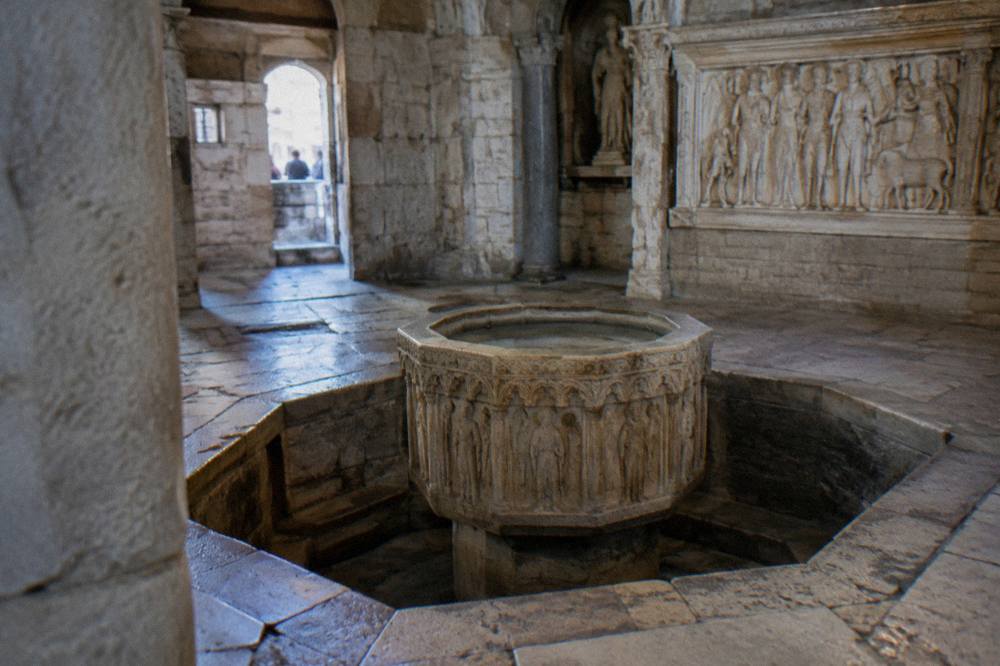
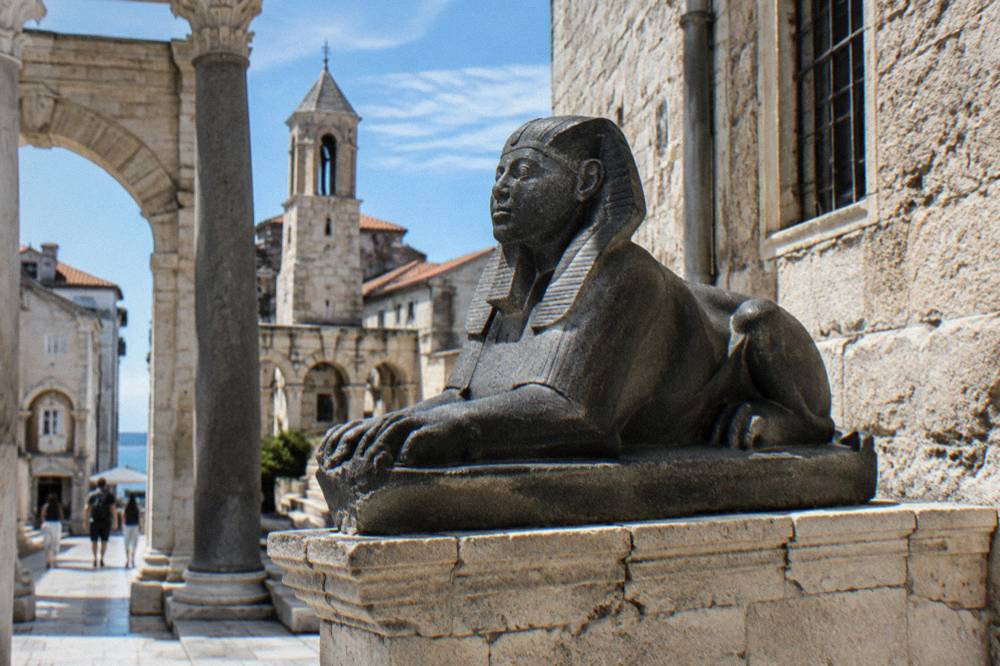
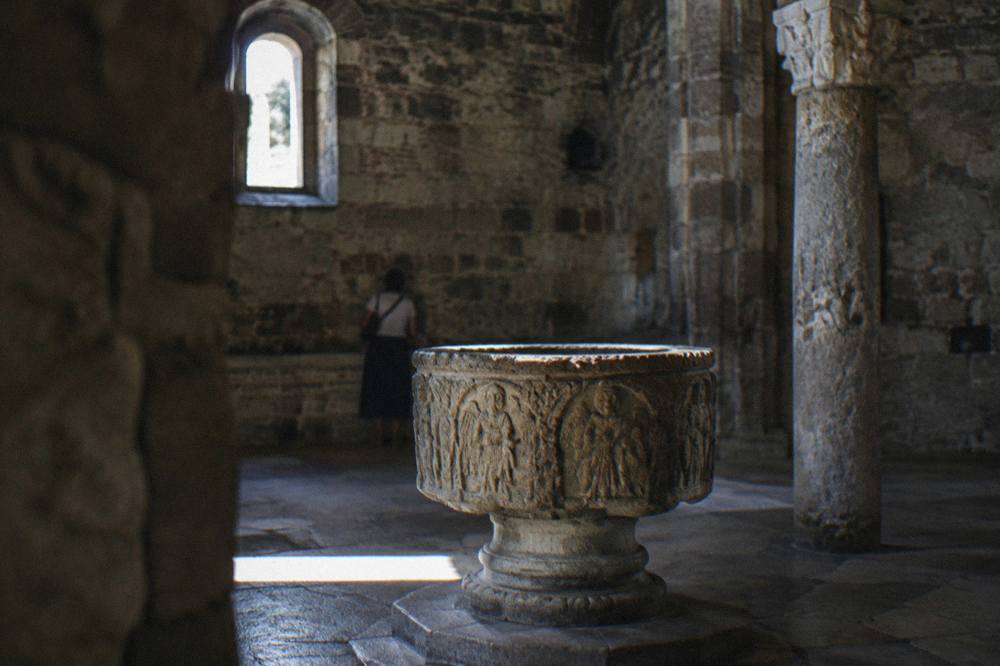
Inside, the Baptistery of St John holds a sunken cross-shaped baptismal font, a collection of carved stone fragments, and at the entrance a black granite sphinx brought from Egypt, one of several Diocletian placed around the palace. The vaulted interior is small enough to cross in ten paces, and the carving on the font and on the surrounding stone is medieval work laid over Roman walls.
The sphinx is the detail people remember. Diocletian's taste for Egyptian stone is part of the palace's signature: sphinxes stood as guardians in its ceremonial spaces, and the example beside the temple's steps is the one in the best condition. The font inside is the centrepiece, carved with scenes read by art historians as medieval Croatian work, and the walls carry fragments, capitals and inscriptions gathered from around the palace over the years.
Two cautions from the constraints are worth carrying. First, the interior is dim and often busy, and photography with flash is generally discouraged in a consecrated space; the dress rule, shoulders and knees covered, applies to men and women alike.
The temple's position makes it a natural stop in a chain: up from the Peristyle, into the baptistery, across to the cathedral and the bell tower, then down into the cellars. All of it fits inside two unhurried hours, plus queue time at the kiosk in peak months.
Curious to hear the palace explained by a historian? Book a history walking tour here.
When Is The Best Time To Visit The Temple Of Jupiter In Split?
The temple is at its quietest in the early morning and in the shoulder months of May, late September and October, when the DHMZ Split Marjan station's 1948 to 2024 table shows means of 19.2 C in May, 21.6 C in September and 17.2 C in October, and July and August, at 26.2 C and 25.9 C, bring the year's biggest crowds as well as its warmth. November, the wettest month at 115.5 mm, trades crowds for rain.
The weather logic is straightforward. July and August are the warmest months and the busiest, with 18 days at 30 C or more in July and 17 in August on the station table, and the palace lanes hold their heat well into the evening. June sits between, with 7 days at 30 C or more and 49 mm of rain. The shoulder months give comfortable walking temperatures with the palace still fully open.
| Month | Mean temperature (C) | Precipitation (mm) | Character for a palace visit |
|---|---|---|---|
| May | 19.2 | 57.5 | Warm, busy but not peak |
| June | 23.4 | 49.0 | Hot, building crowds |
| July | 26.2 | 26.6 | Peak heat, peak crowds |
| August | 25.9 | 41.3 | Peak crowds |
| September | 21.6 | 70.9 | Warm, thinning out |
| October | 17.2 | 77.0 | Mild, quiet |
| November | 12.7 | 115.5 | Wettest month, fewest crowds |
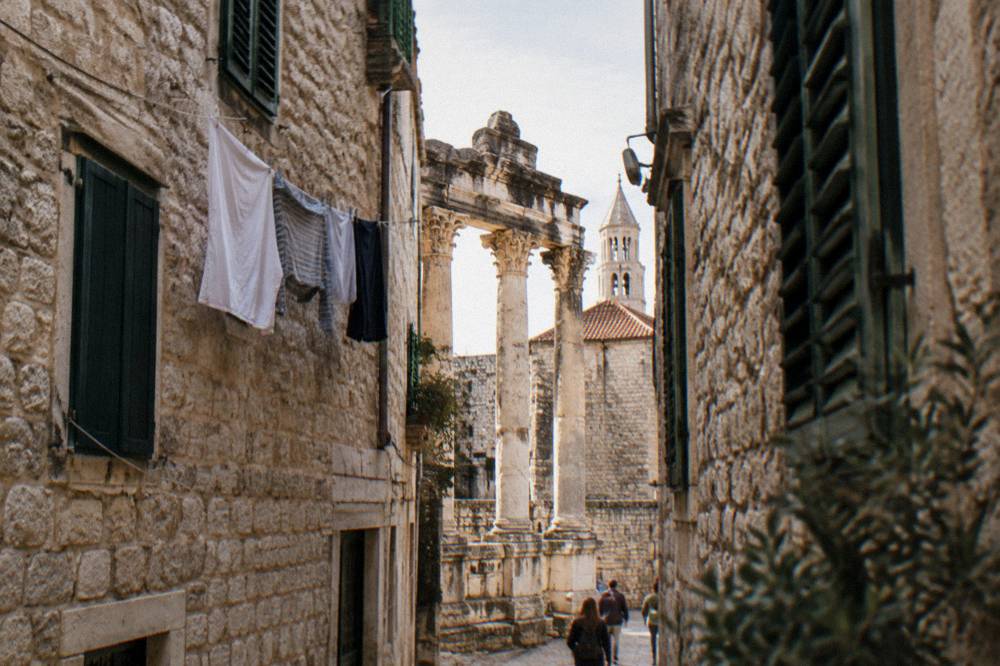
Within the day, the temple and the cathedral scheme run to their own opening pattern, and no official timetable is published; visitors should confirm times at the kiosk or at the tourist information office. As a planning rule, tour groups move through the Peristyle in late morning and mid-afternoon, and a visit in the first hour after opening or after 17:00 in summer gives the baptistery at its calmest.
How Does The Temple Of Jupiter Fit Into A Day In Split?
The temple sits inside a walkable cluster: the Peristyle is steps away, the Cathedral of St Domnius and its 57 m bell tower are across the square, the substructures open onto the Riva side of the palace, and the ferry port, bus station and railway station together on Obala kneza Domagoja are 500 to 600 m from the palace. Everything above fits a morning, leaving an afternoon for Marjan or a boat trip.
A workable order is: start at the Riva promenade for orientation, enter the palace through the southern bronze gates into the substructures, surface by the Peristyle, buy the combined ticket at the kiosk, see the baptistery first while the queue for the tower is short, then the cathedral, then the tower for the view. Finish through the northern streets to the Golden Gate and the Grgur Ninski statue, whose toe the tradition says you rub for luck. Note that the central section of the Riva is scheduled for renovation from November 2026 for a little over a year, so partial closures on the waterfront are expected through 2027.
| Stop | Distance or time from the temple | Notes |
|---|---|---|
| Peristyle | About 30 m, steps | Ticket kiosk on the square |
| Cathedral of St Domnius | Across the Peristyle, under 1 minute | Same ticket scheme |
| Bell tower | Adjacent to the cathedral | 57 m |
| Palace substructures | About 2 minutes on foot | Split City Museum, 8:30 to 20:00 |
| Golden Gate and Grgur Ninski | About 5 minutes on foot | Free |
| Ferry port and stations | 500 to 600 m from the palace | Hub for day trips |
| Marjan hill park | About 15 to 20 minutes on foot | Free, 819 steps to Telegrin at 178 m |
Visitors with more than a day should read the two days in Split and three days in Split plans, which reserve the palace for day one and give the second and third days to Marjan hill, the beaches and the islands.
What Day Trips From Split Pair Well With The Temple?
The palace and its temple need only a few hours, and Split's ferry and coach hub, 500 to 600 m from the palace, puts the region's headline day trips within reach: Krka National Park at 74 minutes' drive, Trogir at 36, Klis Fortress at 22, Salona at 14, Omiš at 38 and Plitvice Lakes at 3 hours 15, all measured free-flow from the palace by routing data. A boat trip to the islands or a Krka day can follow a palace morning without wasting a stay.
| Day trip from Split | Driving time from the palace | Key figure from the sources |
|---|---|---|
| Salona | 14 min | Combined ticket with the Archaeological Museum, 10 EUR within 7 days |
| Klis Fortress | 22 min | 10 EUR adult, Game of Thrones Meereen location |
| Trogir | 36 min | UNESCO listed since 1997 |
| Omiš | 38 min | Mirabela fortress 4 EUR, 6 EUR from 1 June to 30 September |
| Šibenik | 71 min | St James Cathedral, UNESCO since 2000 |
| Krka National Park | 74 min | 7 / 20 / 40 EUR by season |
| Plitvice Lakes | 3 h 15 | 10 / 23 / 40 EUR by season, timed online entry |
| Mostar | 2 h 13 | Old Bridge area UNESCO since 2005, bridge rebuilt 2004 |
| Dubrovnik | 3 h 21 | City walls 40 EUR in 2026 |
Krka deserves its own word because its prices are seasonal and often misquoted: the park's own price list gives 7 EUR in January to March and November to December, 20 EUR in April, May and October, and 40 EUR from June to September, with the Skradin boat and Lozovac bus transfers included from 1 April to 31 October. Swimming in the park is allowed only in clearly marked areas, never at the main falls. The Krka day trip that pairs a Trogir walking tour with a panoramic boat cruise is this site's featured pairing for the temple's readers, since it covers a second UNESCO town and the waterfalls in one loop from the same bus station by the ferry port.
Adventurous readers can swap waterfalls for the Cetina river near Omiš, where rafting, cliff jumping and cave exploring trips run from spring to autumn; the list below carries the current operator options with live prices and free cancellation.
What Are The Rules For Visiting The Temple Of Jupiter In Split?
Visitors must cover shoulders and knees inside the baptistery, buy tickets at the Peristyle kiosk rather than at the door, and observe the city's public-order rules in the historic core: drinking alcohol in the centre carries a 300 EUR fine, as do urinating, climbing on monuments and bathing in fountains, while walking in swimwear or shirtless in the centre is also fined, with the amount set locally.
The dress code is the one that catches people out in summer. A scarf or a light long layer in a day bag solves it, and the rule matches the cathedral's, so one cover-up serves both buildings. The public-order rules come from the city's Enjoy Respect decision: the fines of 300 EUR for public drinking, urinating, vomiting, climbing monuments and bathing in fountains, and 150 EUR for sleeping in public spaces, are printed figures; the swimwear fine exists but no official amount is published, so confirm locally rather than trusting a number on a forum.
Photography is permitted without flash in practice, but the space is consecrated and small, and tripods and posed shoots are not welcome. The lane to the temple is stepped and narrow; wheelchairs can reach the court but the raised interior floor and steps limit full access, and visitors with mobility needs should ask at the kiosk about the cathedral's arrangements, since the Peristyle itself and the Riva are fully flat and step-free.
Is The Temple Of Jupiter In Split Worth Visiting With Limited Time?
Yes: the Temple of Jupiter is one of the few Roman religious buildings in the world that survived conversion into a church with its plan and shell intact, it sits directly on the route every visitor already walks between the Peristyle and the Golden Gate, and a single-site ticket of about 3 EUR, or a combined ticket up to about 15 EUR, buys what many travellers remember as the palace's most atmospheric interior.
For cruise passengers, the math is friendly. The Split cruise port day plan starts at the port gates, 500 to 600 m from the palace, and the temple can be seen inside a first two hours ashore. For fly-in visitors, the airport sits in Kaštel Štafilić, 20 km from Split, with the Platanus shuttle running to the main bus station by the ferry port at 10 EUR one way and 15 EUR return, and Promet Split city bus lines 37 and 38 also stopping at the airport for a fare of a few euros, confirmable on board.
The honest verdict for a rushed visitor: if time forces a choice, see the Peristyle, the baptistery and the bell tower view, and skip the treasury. The baptistery is small but complete, the sphinx at its steps is a genuine Egyptian object in situ, and the walk from it to the Golden Gate passes the best of the palace streets. Everything else in the city, from Bačvice beach to the islands, can follow on a later day.
Common Questions About The Temple Of Jupiter In Split
Is the Temple of Jupiter in Split the same as the baptistery?
Yes. The Roman Temple of Jupiter was converted into the Baptistery of St John, and the two names describe one building in a raised court off the Peristyle of Diocletian's Palace.
How much is a ticket to the Temple of Jupiter in Split?
The baptistery is sold inside the Cathedral of St Domnius scheme, from a single-site ticket of about 3 EUR up to about 15 EUR for all five sites. Prices are approximate and confirmed at the Peristyle kiosk.
Do you need to cover up to enter the Temple of Jupiter in Split?
Yes. Shoulders and knees must be covered, the same rule as the cathedral across the Peristyle, so carry a scarf or light layer in summer.
How old is the Temple of Jupiter in Split?
It was built as part of Diocletian's Palace around 295 to 305 AD for the emperor's retirement residence, and the whole historical complex of Split entered the UNESCO list in 1979.
Can you visit the Temple of Jupiter on a cruise stop in Split?
Yes, easily. The ferry port and cruise berths sit about 500 to 600 m from the palace, and the temple is a short walk from the Peristyle, so it fits comfortably into a half day ashore.
Is the Temple of Jupiter accessible for wheelchairs?
The court is reachable by lane but the interior sits on a raised, stepped floor, so access inside is limited. The Peristyle, the Riva and the substructures' southern exit are flat by comparison, and the kiosk can advise on current arrangements.
