Split With Kids
Split, on Croatia's Adriatic coast, is a compact, walkable city where a Roman palace, sandy city beaches and island ferries sit within twenty minutes of each other, which is exactly why it works with children.
Short answer
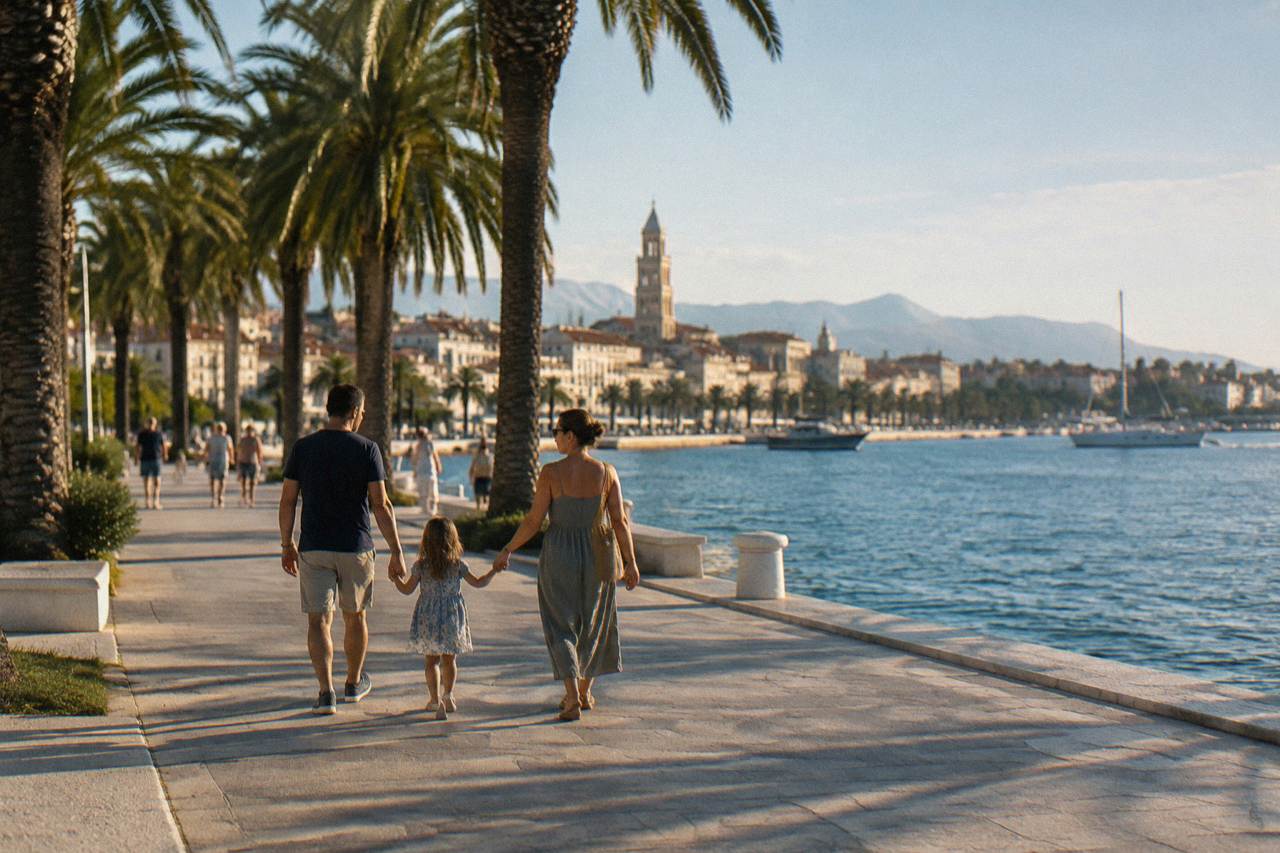
Split suits families because the Old Town, Bačvice beach and the Marjan park forest are all close together, most key sights cost under 15 EUR or nothing at all, and the ferry port, bus station and railway station share one location 500 to 600 m from Diocletian's Palace.
Split, a coastal city in central Dalmatia on the Adriatic Sea, is one of the easiest cities in Croatia to visit with children. The Old Town sits inside and around Diocletian's Palace, the sandy curve of Bačvice beach is a short walk from its southern walls, and the forested Marjan peninsula rises to the west with 178 m of view at the top. The ferry port, the main bus station and the railway station sit together on Obala kneza Domagoja, 500 to 600 m from the palace, which means boats, buses and trains for day trips all leave from the same stretch of waterfront. Croatia uses the euro since 1 January 2023, is a Schengen member, and the emergency number is 112.
This itinerary pulls the city into family-sized pieces: palace alleys that take an hour rather than a day, beaches with shallow water, a hill with steps worth counting, and day trips by boat and bus that children remember longer than another museum. Prices below are the published ones, and anything a family should confirm locally is flagged as such.
Is Split Good For Families With Kids?
Split works well for families because the city is compact, coastal and free at its edges: the Peristyle, the Riva, the Prokurative, the Golden Gate, the Grgur Ninski statue, the markets, Marjan and the city beaches all cost nothing, while the key museums charge between 7 and 12 EUR for an adult. Diocletian's Palace substructures are open Monday to Sunday 8:30 to 20:00 and the palace streets themselves are simply the city streets, so sightseeing never requires a long detour or an expensive ticket.
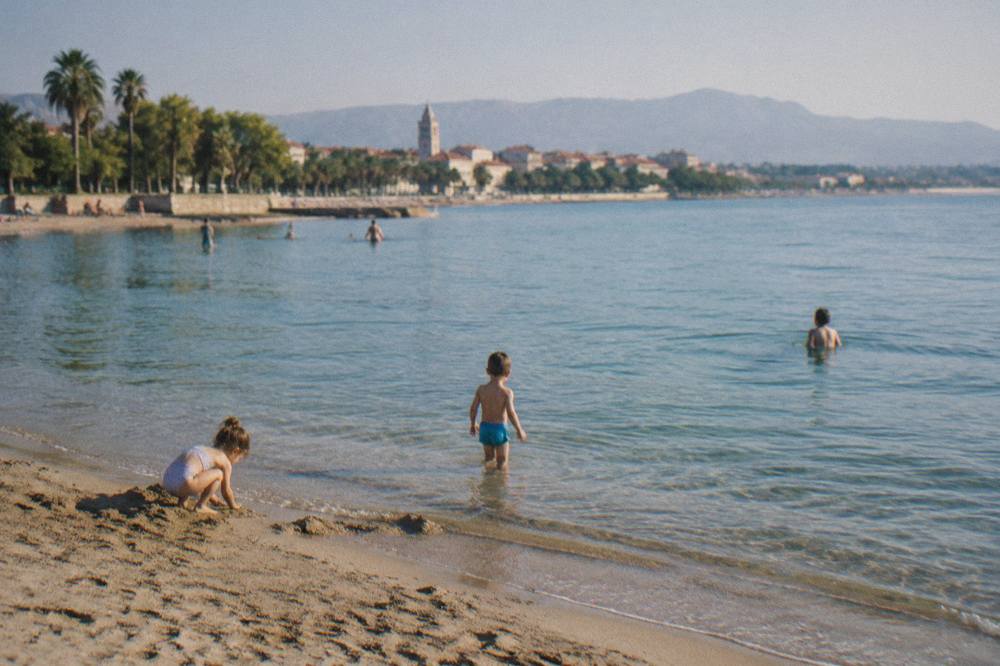
The layout does a lot of the parenting for you. The palace core is pedestrian, so children can walk a few paces ahead without traffic. The Riva promenade runs flat along the harbour with ice cream stops at short intervals, and Bačvice, the sandy city beach where the ball game picigin was born in 1908, is close enough for a swim between sightseeing and dinner. Sand is rare on the Dalmatian coast, and Bačvice has it, which matters enormously with toddlers.
The city's size, 160,577 people at the 2021 census, means it has real hospitals, pharmacies, playgrounds and a full bus network rather than a resort's version of them. The things to do in Split overview lists the full range if any adult-only evenings are being planned around the family days.
What Are The Best Things To Do In Split With Kids?
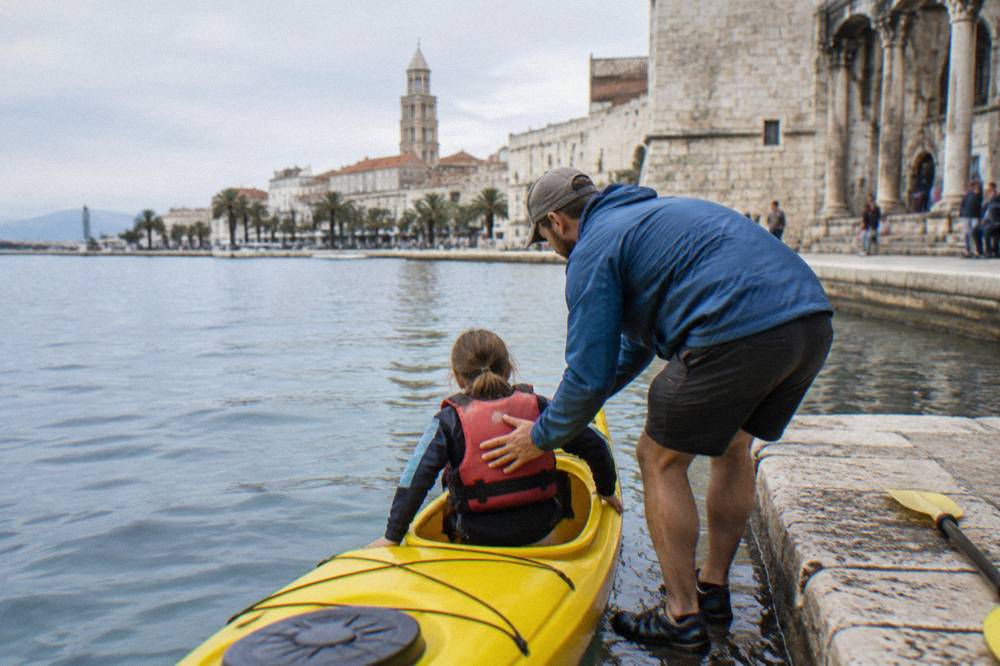
The best family activities in Split are the free ones and the wet ones: the Peristyle and the palace alleys, the Riva and the Green Market, Bačvice beach for sand and picigin-watching, Marjan's steps and viewpoints, the sea by kayak, and the Blue Lagoon or island boat trips that leave from the waterfront. Paid highlights are the Diocletian's Palace cellars at 10 EUR adult per the Split City Museum's price list, the Meštrović Gallery at 12.00 EUR, and the Archaeological Museum at 8 EUR.
Start inside the palace. The cellars, run by the Split City Museum, are open Monday to Sunday 8:30 to 20:00, and their vaulted, echoey halls are genuinely exciting for children, a real underground rather than a roped-off room. The central part is under restoration to the end of 2026, with the passage staying open, so some halls may be screened off. The Split City Museum itself at Papalić Palace charges 10.00 EUR adult, 8.00 reduced, family 18.00, and is closed Mondays. The Diocletian's Palace cellars page has the full detail.
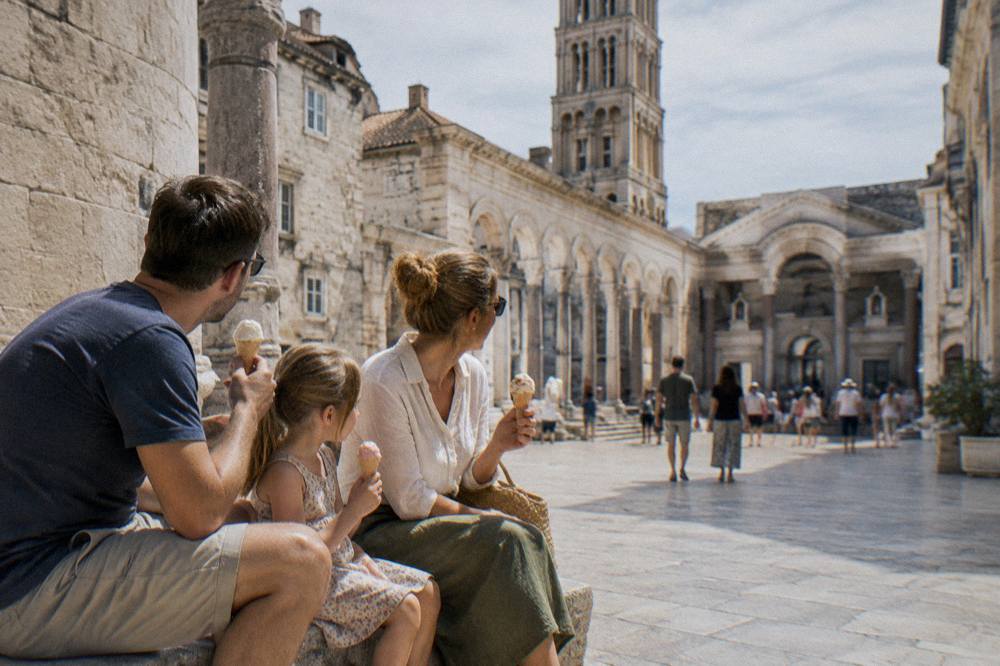
Above ground, the Peristyle is the palace's open courtyard and the stage for the daily Roman guard change at noon, which ran 28 May to 27 September 2026; check the current dates on the city's calendar before promising it to a child. The Cathedral of St Domnius complex is worth a stop for the 57 m bell tower with tickets from about 5 EUR and combined tickets up to about 15 EUR, prices from a secondary guide so confirm at the Peristyle kiosk. Shoulders and knees must be covered inside.
For a fuller first-day plan built around these sights, see one day in Split, which sequences the palace, the Riva and Marjan without overloading a single day.
The three trips above are the ones this site rates for families with older children: canyoning on the Cetina river out towards Omiš, a combined Trogir, Salona and Klis Fortress coach day that suits mixed-age groups, and a guided sea kayak trip along the coast near Split. Ages and difficulty are stated on each operator's live listing, so check the minimum age there before booking.
Which Split Beaches Suit Children Best?
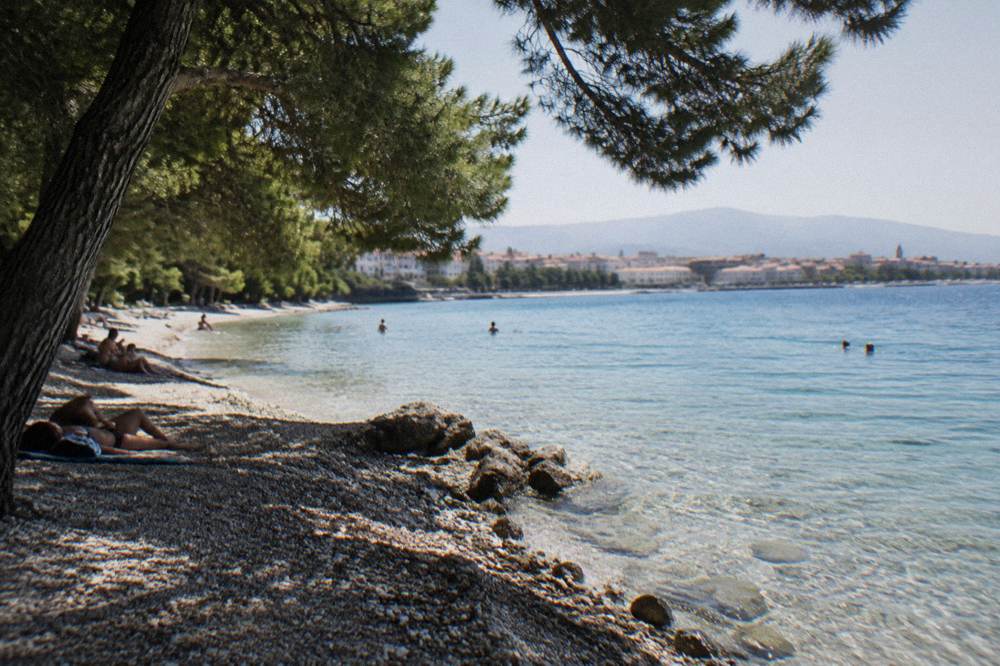
Bačvice is the main family beach in Split: sandy, shallow and walking distance from the Old Town, which is why picigin, the shallow-water ball game born there in 1908, is still played in the water just offshore. Kašjuni, on the south side of Marjan below the cliffs, is the calmer pebble alternative. Žnjan, east of the centre, is a longer concrete-and-pebble stretch with more space and café terraces. All city beaches are free.
Sand makes Bačvice the default for small children: the water shelves gently and the beach is enclosed in a bay. Kašjuni takes a little longer to reach but is quieter, with clearer water over pale stone. Žnjan is a good wind-down option after a morning of sightseeing because it spreads people out and has play areas along the promenade. The full comparison, including how to reach each one, is on the Bačvice beach page.
One thing to keep in mind: no Split beach holds a published Blue Flag listing for 2026 that this site could find on the official flag registry, so treat water quality as something to read from the beach's own posted signs rather than any claim on a booking page. Jellyfish appear occasionally anywhere on the Adriatic; local pharmacies sell the sting treatments, and 112 is the emergency number if anything serious happens.
How Hard Is The Marjan Hill Walk With Kids?
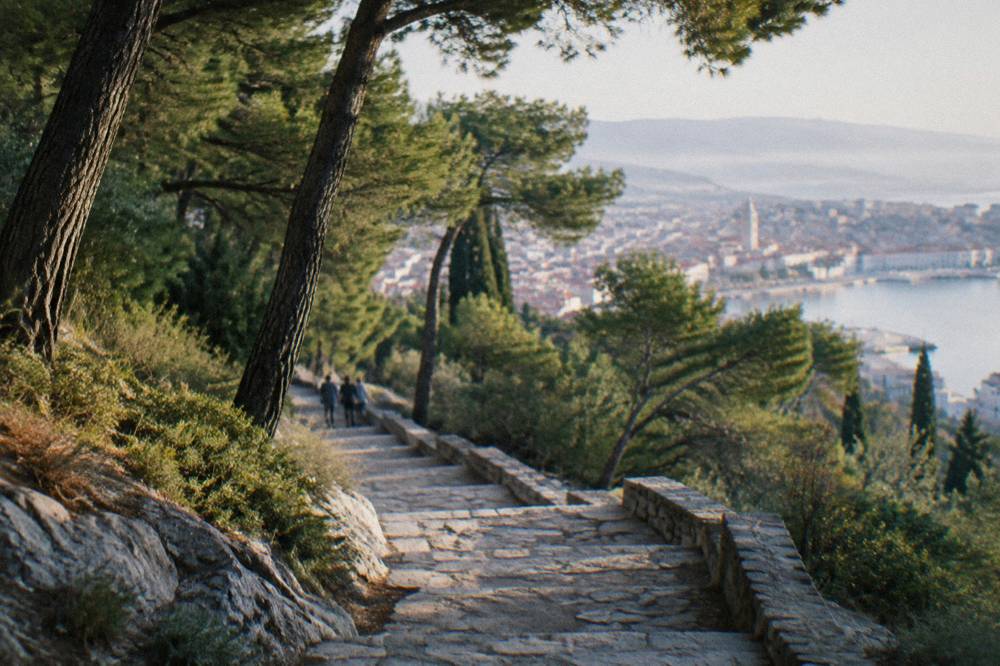
Marjan's main family walk is 819 steps from Trumbićeva obala to the Telegrin viewpoint at 178 m, the peninsula's highest point, and the park forest is 3.5 km long and 1.5 km wide with roads and paths that keep cars away. The steps are stepped and regular rather than a scramble, and the whole climb is short enough that school-age children manage it with breaks, while the lower paths along the northern side stay almost flat.
Marjan is the city's pressure valve. It is free, it is car-free at its heart, and its western and northern shores hide small coves and pine shade for hot afternoons. The Marjan Hill guide maps the routes. Two family tactics work well: either climb the steps early while it is cool and reward the summit with the view over the islands, or drive or bus to a lower entrance and walk the flat rim paths to a cove. In July the DHMZ Split Marjan station table, covering 1948 to 2024, shows 18 days at 30 C or more, and August shows 17, so morning is the honest time for the stairs in high summer.
The zoo on Marjan's southern slope is small and dated rather than a headline attraction; the park itself is the draw. Bring water, because the kiosks near the top keep limited hours outside peak season.
What Do The Museums In Split Cost For A Family?
The main Split museums charge 7 to 12 EUR for an adult: the Meštrović Gallery is 12.00 EUR and includes Crikvine-Kaštilac, the Ethnographic Museum is 7.00 EUR, the Archaeological Museum is 8 EUR with a combined Museum plus Salona ticket at 10 EUR within 7 days, and the Split City Museum is 10.00 EUR with a family ticket at 18.00. Reduced child and student rates apply at each, and the price lists are on each museum's own site.
The Meštrović Gallery reopened in April 2026 after a 15-month energy renovation and now shows a new exhibition on the house as a space of life and art, with sculpture that children read instantly. The Ethnographic Museum, on Pjaca above the Peristyle, has costumes and interiors plus a rooftop view terrace that is worth the ticket on its own. The Archaeological Museum, founded in 1820, pairs with Salona, the Roman site 14 minutes' drive from the palace, under the 10 EUR combined ticket. Everything else covered here is indexed on Split Croatia Travel Guide.
| Museum or site | Adult (EUR) | Reduced / family | Note |
|---|---|---|---|
| Meštrović Gallery | 12.00 | 8.00 reduced, family 20.00 | Includes Crikvine-Kaštilac; reopened April 2026 |
| Archaeological Museum | 8.00 | 4.00 children, students, retirees | Combined with Salona 10 EUR within 7 days |
| Split City Museum, Papalić Palace | 10.00 | 8.00 reduced, family 18.00 | Closed Mondays |
| Ethnographic Museum | 7.00 | 4.00 reduced, family 15.00 | Vestibule visit 2.00 |
| Diocletian's Palace cellars | 10.00 per the price list | Reduced rates on the list | Monday to Sunday 8:30 to 20:00 |
Froggyland, the taxidermy frog tableaux museum near the Green Market, is the wildcard children's favourite; its price is on its own listing, so confirm at the door. On a wet day the full indoor shortlist is in rainy day in Split.
That Trogir, Salona and Klis day is the easiest way to convert a museum morning into a coach-and-fortress afternoon, and the olive oil tasting on it gives the adults something too.
What Day Trips From Split Work With Children?
The family day trips that work from Split are Krka National Park, 74 minutes' drive to Skradinski buk, the Blue Lagoon and Šolta boat trips from the waterfront, Trogir at 36 minutes by road, Klis Fortress at 22 minutes, and the car ferry to Supetar on Brač at about 50 minutes with foot passengers from 5.90 EUR off-season and 8.40 EUR in season on line 635 to Stari Grad. Hvar town itself is reached by catamaran, Stari Grad by car ferry, so do not confuse the two.
Krka is the classic: the ticket includes the Skradin boat and Lozovac bus transfers from 1 April to 31 October, and entry is 7 EUR from January to March and November to December, 20 EUR in April, May and October, and 40 EUR from June to September. Swimming in Krka is allowed only in clearly marked areas, with the designated spots at Roški slap, Stinice and Pisak, 1 June to 30 September, so a summer visit can include a legal swim stop, not a forbidden one under the waterfall. The Krka National Park guide has the full price and access detail.
Klis Fortress, the medieval stronghold above the city that served as a Game of Thrones Meereen location, is a 22-minute drive and charges 10 EUR for an adult; confirm at the gate. Its walls and views are the stuff of knight games, and the Klis Fortress page covers getting there by bus.
| Day trip from Diocletian's Palace | Driving time, free-flow | Adult entry (EUR) | Family note |
|---|---|---|---|
| Klis Fortress | 22 min | 10 | Walls, views, knight-pretend |
| Salona | 14 min | Combined 10 with museum | Open Roman ruins, running room |
| Trogir | 36 min | Town free, cathedral price to confirm | Island old town, ice cream |
| Omiš and the Cetina | 38 min | Mirabela fortress 4, or 6 from 1 June to 30 September | River beach and fortress stairs |
| Krka, Skradinski buk | 74 min | 7 / 20 / 40 by month | Boat and bus transfers included in season |
| Plitvice Lakes | 3 h 15 | 10 / 23 / 40 by month | Long day; boats and walkways |
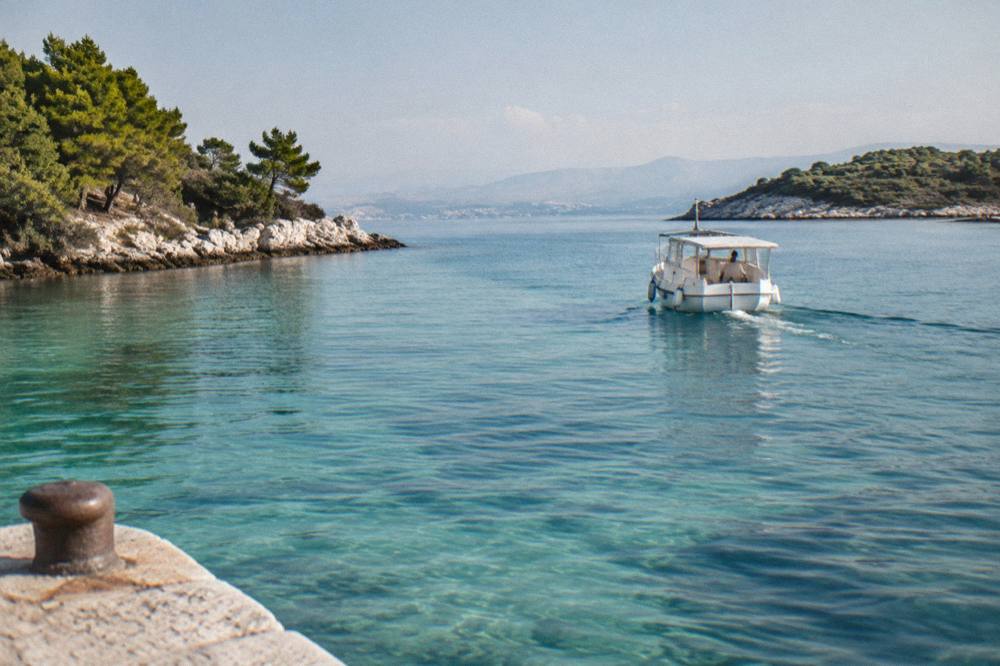
For island days, the Hvar guide and the Brač and Zlatni Rat guide set out the ferry and catamaran options, including the 6.40 EUR low-season and 10.00 EUR high-season catamaran fares to Hvar or Jelsa and the 7.20 / 10.00 EUR fares to Vis reported from the operators' PDFs. With children, the car ferry to Supetar is the forgiving choice: no small-boat boarding, deck space and a 50-minute crossing on line 631, which from 2026 has no off-season timetable.
Which Boat Trips From Split Suit Families?
The family-friendly boat trips from Split are the Blue Lagoon and three-island cruises, which combine a protected shallow swim stop with short island walks, and the small-group speedboat versions for families with confident swimmers. The Blue Lagoon itself sits between the islands off Trogir, and boats return to Split the same evening, so no packing and no overnight.
If your crew likes the sound of the speedboat version, book a Blue Lagoon speedboat tour here.
A Blue Lagoon cruise is the single best-value water day for families: lunch and swimming are built in, the lagoon is shallow enough for nervous swimmers, and the schedule includes a walk stop on Šolta or a Trogir-area island. Speedboat versions cover more, including the option of the Blue Cave on Biševo, which costs 24 EUR per person in high season from 20 June to 10 September and 18 EUR in shoulder season, paid in cash on site, and is inside a cave reached by a small transfer boat, a squeeze some young children love and others refuse. Judge your own.
The Cetina canyoning trip in that band is the adventure pick for families with teenagers: it runs from Split or Zadvarje with guides and equipment, and the operator's live listing states the minimum age and difficulty. Younger families should read the kayak option instead, which stays on the sea by the city.
What Is The Weather Like In Split Through The Year?
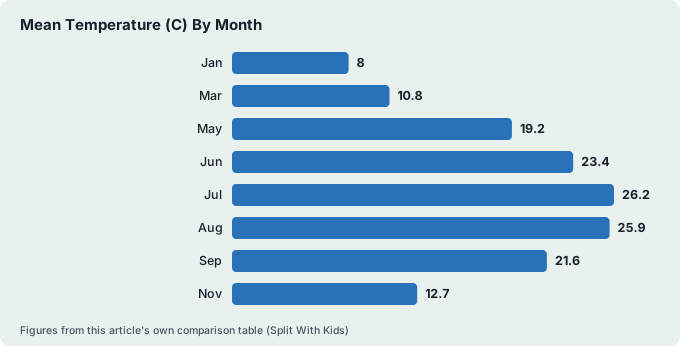
Split's climate, recorded at the DHMZ Split Marjan station for the period 1948 to 2024, gives a January mean of 8.0 C and a July mean of 26.2 C, with November the wettest month at 115.5 mm and July the driest at 26.6 mm. July averages 353.3 hours of sunshine against December's 120.8, and the city sees 18 days at 30 C or more in July and 17 in August.
For families this translates simply: May, June and September are the comfortable months, July and August are beach months best planned around morning activity and afternoon water, and winter is mild enough for palace sightseeing with a coat. Advent in Split runs 27 November 2026 to 7 January 2027 with the ice rink at Đardin, which is the moment the city becomes a children's event in itself. The split weather guide carries the month-by-month detail.
| Month | Mean temperature (C) | Precipitation (mm) | Family read |
|---|---|---|---|
| Jan | 8.0 | 77.8 | Coat weather, quiet streets |
| Mar | 10.8 | 63.2 | Sightseeing without crowds |
| May | 19.2 | 57.5 | Warm sea air, warm afternoons |
| Jun | 23.4 | 49.0 | Swim season building |
| Jul | 26.2 | 26.6 | Beach mornings, siesta middays |
| Aug | 25.9 | 41.3 | Peak heat, 17 days at 30 C or more |
| Sep | 21.6 | 70.9 | Sea still warm, schools back |
| Nov | 12.7 | 115.5 | Wettest month, museum days |
Sea temperature has no official monthly normal, so treat any figure a tour seller prints as a model estimate rather than a measurement; the live reading from the DHMZ station is the one to check on the day.
How Many Days Should A Family Spend In Split?
Three days is the working minimum for a family Split trip: one for the palace and the Riva, one for a beach or Marjan, and one for a boat trip or a Krka or Klis coach day. Four to five days lets a family add a second island day or a Mostar or Dubrovnik long day without rushing, and the site's two-day and three-day itineraries can each be stretched by half a day for slower child pacing.
The sequencing matters more than the count. Put the palace day first while legs are fresh and novelty is high, keep the boat or Krka day in the middle, and hold the beach day as the flexible one you can slide to whichever afternoon the forecast is best. Cruise-port families with a single day should use the Split cruise port day plan, which works from the berth rather than a hotel. Families stretching to a week with island overnights should read split island hopping week.
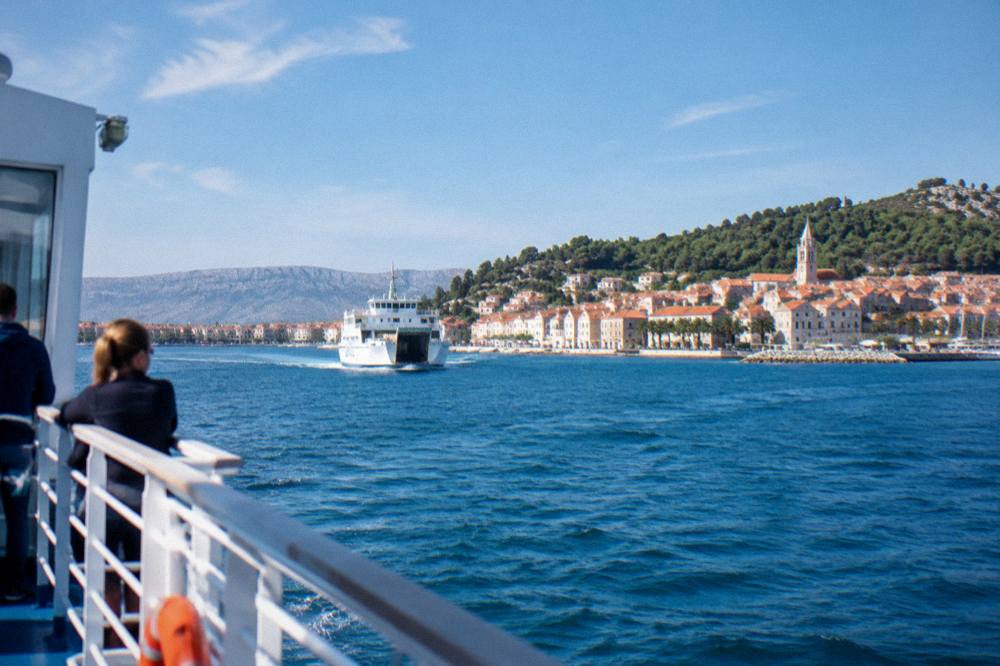
What Rules Should Families Know About In Split?
The rules that matter for families: public drinking in Split's historic centre is fined 300 EUR, urinating and climbing on monuments are fined 300 EUR each, sleeping in public spaces is fined 150 EUR, and walking in swimwear or shirtless in the historic centre is fined with the amount set locally.
Shops, not bars, are banned from selling alcohol at night from 1 June to 15 September, the tourist tax is about 2.65 EUR per person per night in high season, under 12s free and 12 to 18 at half, collected by the accommodation and confirmed at booking.
The swimwear rule is the one that catches families out: a child trotting back from Bačvice through the palace streets in a wet costume is technically in scope, so pack a wrap or a t-shirt for the walk home. The drink rules apply to the historic core and the areas near schools, and the night retail alcohol ban runs 21:00 to 06:00 in the summer window, affecting supermarket runs rather than restaurant dinners. Drones are banned over the old town and in national parks, so leave the toy one at home. EES, the EU's biometric entry-exit system, has been fully operational at Schengen borders including Croatia's since 10 April 2026, and ETIAS is not yet live; the do I need a visa to visit answer covers entry questions.
Where Should A Family Stay In Split?
The practical family districts are Bačvice and Firule for sand and swimming distance, Meje for quiet and Marjan access, and the Old Town itself for zero-commute sightseeing at the cost of steps and crowds. Veli Varos, the old fishermen's quarter below Marjan's first steps, splits the difference: village-quiet lanes a ten-minute walk from the palace.
Staying inside the palace walls puts the guard change, the cellars and the Green Market on the doorstep, but luggage is carried over stone and the evening bars carry late into the night. Bačvice and Firule trade that for a beach-first routine and flatter ground with more apartment space, and Žnjan east of the centre offers the newest, roomiest stock. The full district-by-district breakdown, with the trade-offs written out, is in where to stay in Split and the Veli Varos area guide.
| District | Best for | Trade-off |
|---|---|---|
| Old Town, inside the palace | Sightseeing on foot, atmosphere | Steps, noise, smaller rooms |
| Veli Varos | Quiet lanes near Marjan | Uphill end of the walk home |
| Bačvice and Firule | Sand, swimming, stroller-flat | 15 to 20 min walk to palace sights |
| Meje | Calm, Marjan, Kašjuni beach | Fewer shops and restaurants |
| Žnjan | Space and modern apartments | Bus or long walk to Old Town |
Common Questions About Split With Kids
Is Split with kids a good idea compared with Dubrovnik?
Split is larger, flatter in its core and cheaper at the sights, with sandy Bačvice beach and Marjan on the doorstep, while Dubrovnik's walls cost 40 EUR per adult in 2026 and its streets are steeper. Families usually find Split easier and Dubrovnik more of a single showpiece day.
What is the best beach in Split for small children?
Bačvice: sandy, shallow and walking distance from the Old Town. Kašjuni below Marjan is the calmer pebble alternative, and Žnjan east of the centre has the most open space.
Can children swim at Krka National Park?
Only in clearly marked areas. The designated spots are at Roški slap, Stinice and Pisak, open 1 June to 30 September; swimming under Skradinski buk waterfall itself is not allowed.
Is the Marjan climb too hard for children?
The main route is 819 steps to Telegrin at 178 m, regular and stepped rather than steep, and school-age children manage it with breaks. The lower northern paths are almost flat.
Do kids pay full price at Split museums?
No. Each museum lists reduced child, student and family rates: the Split City Museum family ticket is 18.00 EUR, the Ethnographic Museum family ticket is 15, and the Meštrović Gallery reduced ticket is 8.00 EUR.
What is the easiest island day trip from Split with children?
The car ferry to Supetar on Brač, line 631, about 50 minutes, with no off-season timetable from 2026. Foot passengers pay from 5.90 EUR off-season and 8.40 EUR in season on line 635 to Stari Grad.
Split rewards families who plan loosely: one palace hour, one beach hour, one boat day, and the Riva for ice cream in between. The city's own sources, the museum price lists, the ferry route pages and the DHMZ station table, all say the same thing this guide does, that a family week here costs less effort than almost anywhere else on this coast.
