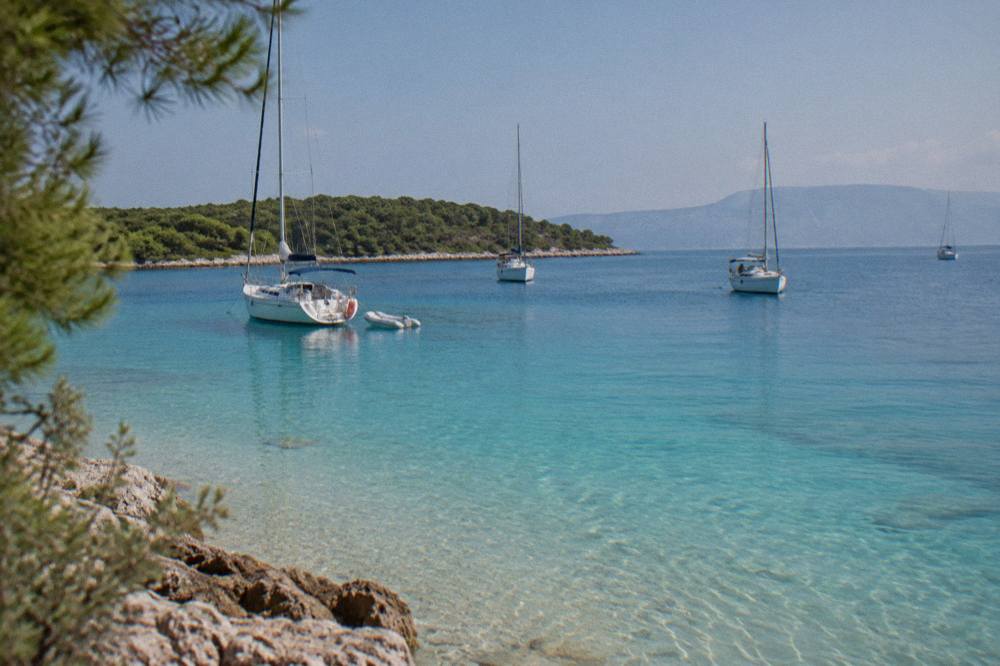
Blue Lagoon Split
The Blue Lagoon is one of the boat day trips that leaves Split every morning in season: a shallow, bright cove among the islands off the city, usually combined with stops at Šolta or neighbouring islets. This guide sets out what the trip involves, what it costs to do it yourself, and how the tour options compare.
Short answer
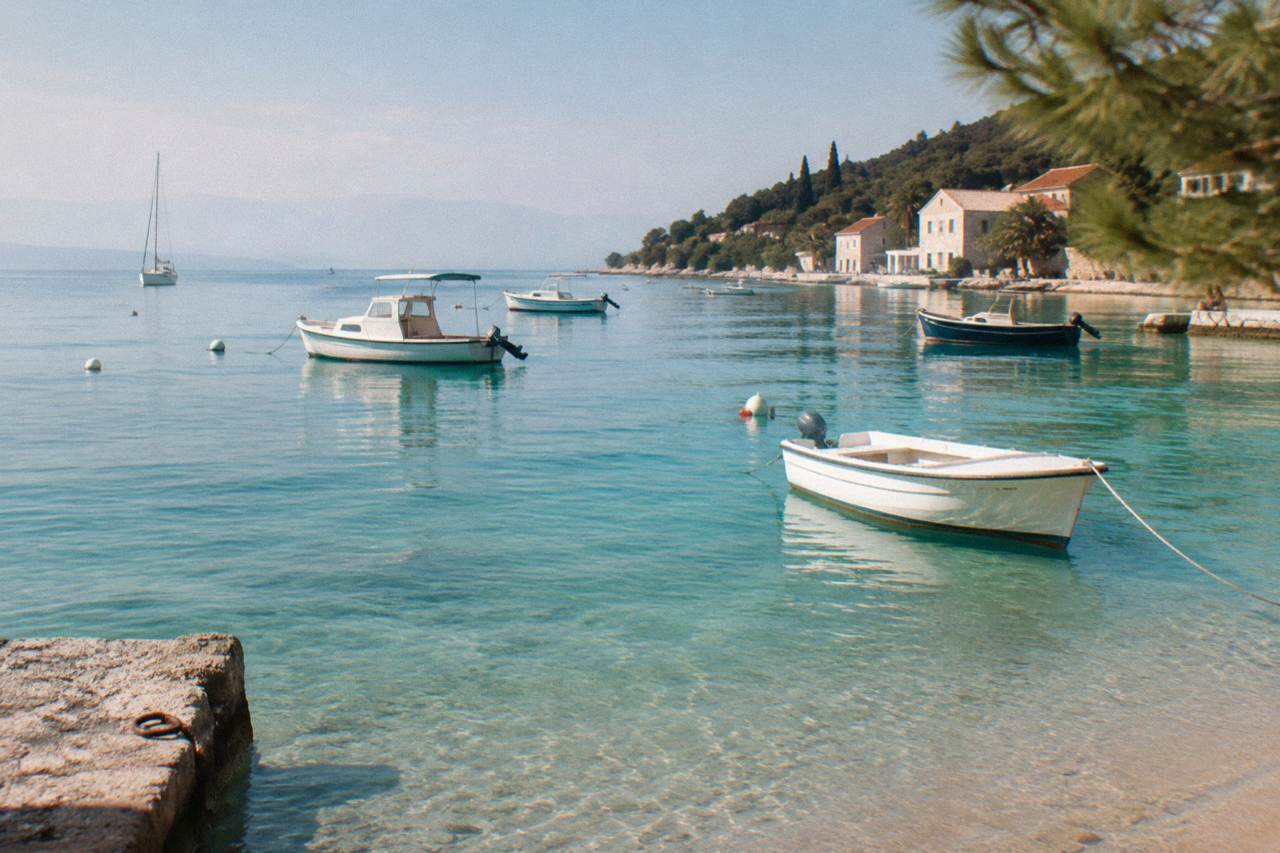
The Blue Lagoon is a shallow cove reached by boat from Split in roughly half a day to a full day, depending on the tour. Boat tours run daily in season from the Split waterfront; independent travellers take the line 636 ferry to Rogač on Šolta, then a local taxi boat. Entry to the lagoon itself is free; you pay for the boat.
The Blue Lagoon is the shorthand name Split boat operators use for a shallow, bright cove among the islands a short sail from the city, usually visited on a half-day or full-day trip that pairs a long swim stop with calls at Šolta and neighbouring islets. Split sits on the Adriatic in central Dalmatia, with Šolta directly offshore, and its ferry port on Obala kneza Domagoja handles the car ferries and catamarans while the tour boats leave from the waterfront piers nearby. The lagoon has no ticket, no gate and no infrastructure beyond what the boats bring: the cost of the day is the cost of getting there.
Where Is The Blue Lagoon Near Split?
The Blue Lagoon is a shallow cove among the small islands between Split and Šolta, close enough that tour boats reach it in well under an hour and use it as a swimming stop rather than a destination in its own right. It has no entrance fee and no facilities on land. Almost every visit is by boat, either on an organised cruise from the Split waterfront or by ferry to Šolta followed by a local taxi boat.
The lagoon sits in the island belt off that corridor. Visitors sometimes confuse the Blue Lagoon with the Blue Cave on Biševo, which is a completely different trip: the Blue Cave is a sea cave on a far island reached across open water, while the Blue Lagoon is a swim stop. The site's comparison page on is the Blue Lagoon the same as the Blue Cave unpacks the difference, and the Blue Cave and Vis day trip guide covers the cave route separately.
The other thing worth knowing before booking is that the lagoon is tidal-shallow by design. Tour boats anchor on the sandy shelf and passengers step or swim off into water that stays chest-deep for a long stretch, which is why the stop suits families and hesitant swimmers as well as confident ones. There is no town, no shop and no shade structure at the stop itself, so whatever the boat carries is what the day has.
What Does A Blue Lagoon Tour From Split Include?
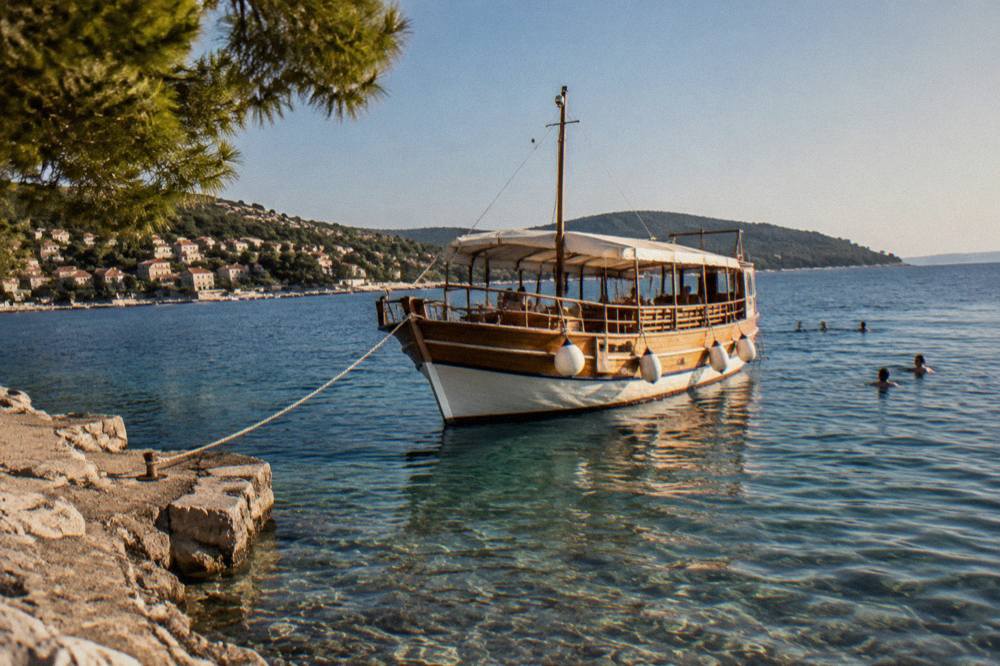
Blue Lagoon tours from Split bundle the boat, the crew and a swim stop at the lagoon together with island calls, usually Šolta or the islets around it, and on fuller cruises lunch and drinks on board. Some run as small-group speedboats, others as larger cruising boats; prices and ratings for each listing render on the tour cards below from live data. What the listings have in common is that departure is from the Split waterfront, within walking distance of the Riva.
The featured cruise on this page, the Blue Lagoon and 3 Islands cruise with lunch, wine and a swim, covers the lagoon swim stop plus three island calls with lunch and wine served on board. For readers comparing options, the two listings below show the spread of formats available on the same waters.
A speedboat version swaps the leisurely cruise for a faster circuit and a smaller group, which matters if the weather turns choppy, since smaller boats feel the sea more. A reader deciding between the two should weigh whether lunch on board matters and whether a half-day or full-day frame fits the rest of the itinerary. Every listing shows its own duration, price and rating at the point of booking, and those figures change with season, so they are not typed here.
Keen on the faster circuit with a smaller group? Book a Blue Lagoon speedboat tour here.
Sea state is the hidden variable in the choice. The channel between Split and Šolta is sheltered compared with the open crossing to Biševo, which is one reason the Blue Lagoon runs more reliably in mixed weather than the Blue Cave trip, where cave entries are suspended when the swell rises. Operators make that call on the morning of the sailing, and a good listing states its bad-weather and cancellation terms plainly at booking, so read them before choosing the cheapest option.
How Much Does The Blue Lagoon Trip Cost?
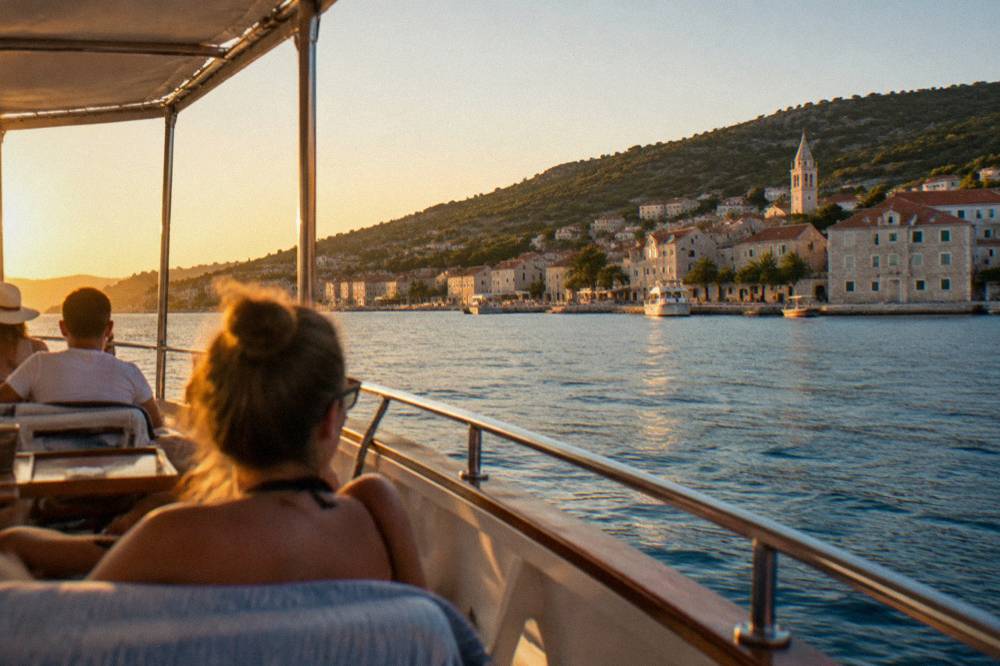
The boat tour is the main cost of the day: the lagoon itself is free, and tour prices start from the from-price shown on each live listing, which varies by season and format, so check the date you want before booking and budget separately for food and drink on the boat or in town.
| Route | Type | Time | Foot passenger fare |
|---|---|---|---|
| Split to Stari Grad, Hvar (line 635) | Car ferry | about 120 minutes | 5.90 EUR off-season, 8.40 EUR in season |
| Split to Supetar, Brač (line 631) | Car ferry | about 50 minutes | on the operator's price list |
| Split to Rogač, Šolta (line 636) | Car ferry | about 60 minutes | on the operator's price list |
| Split to Hvar or Jelsa | Catamaran (line 9603) | on the sailing schedule | 6.40 EUR low, 10.00 EUR high |
| Split to Vis | Catamaran (line 9602) | about 140 minutes by ferry | 7.20 EUR low, 10.00 EUR high |
What the comparison makes clear is that the tour price buys more than transport: it buys the routing between three or more stops, the swim time scheduled around crowds, and usually food. The independent route is cheaper but slower and leaves the taxi-boat leg from Rogač to be arranged on the spot.
One more cost to plan for is the Blue Cave fee if the itinerary ever mixes the two: entry there is 24 EUR in high season, 20 June to 10 September, and 18 EUR in shoulder season, paid in cash on site. That fee is separate from any tour price and catches out readers who budget only the ticket. The Blue Lagoon has no equivalent charge, which keeps its day simpler and cheaper at the margin.
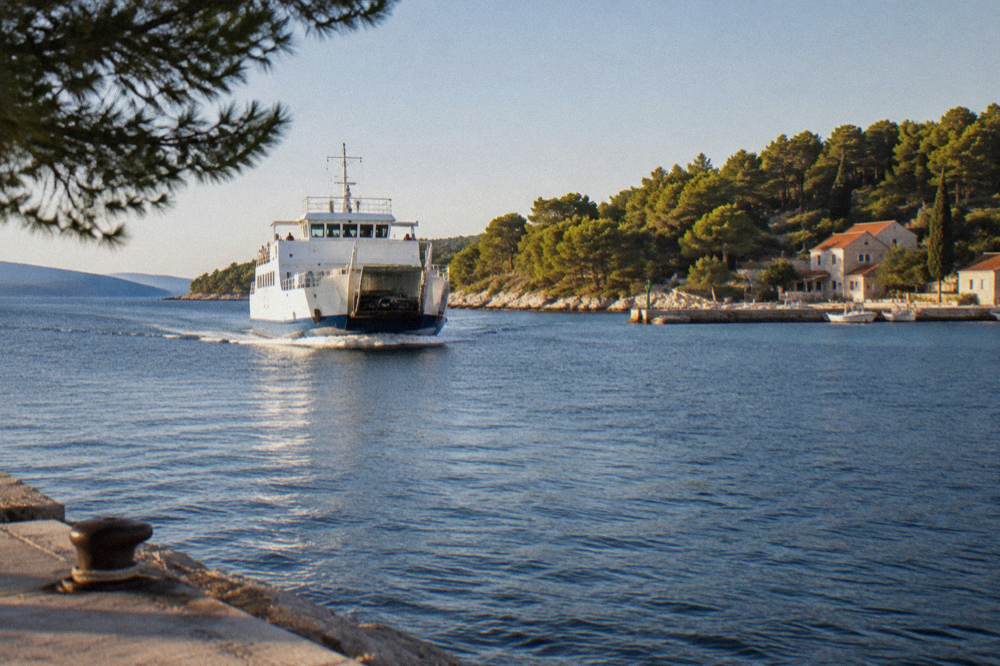
Can You Visit Šolta On Your Own From Split?
Yes: Šolta has a regular car ferry connection, line 636 from Split to Rogač at about 60 minutes, and Rogač is close enough to the island's main villages that a day without a car works. The ferry port, bus station and railway station in Split sit together on Obala kneza Domagoja, 500 to 600 m from Diocletian's Palace, so the departure point is a short walk from the Old Town.
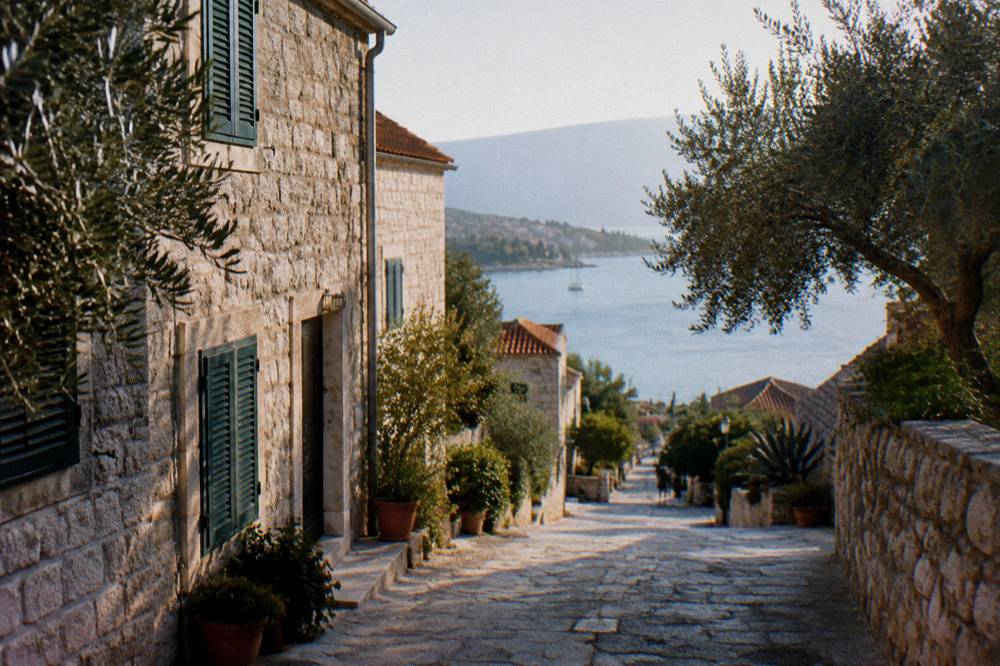
Šolta is the quiet member of Split's island belt. Where Hvar carries the nightlife reputation and Brač carries Zlatni Rat, Šolta's draws are small harbours, olive groves and walking, and it appears on this site in the Blue Lagoon and Šolta day trip context as the low-key island alternative.
For context on the scale of the port you are leaving from: the Port of Split handled 6.05 million passengers in 2025, its own figures say, making it Croatia's busiest passenger port. That scale is why the ferry, bus and rail functions sit together in one place, and why a morning departure is calmer than a midday one in high summer, when island traffic and cruise-day crowds share the same waterfront.
| Step | Leg | Time |
|---|---|---|
| 1 | Walk from Diocletian's Palace to the ferry port | 500 to 600 m |
| 2 | Line 636 ferry, Split to Rogač, Šolta | about 60 minutes |
| 3 | Local transport or taxi boat on Šolta | arrange on arrival |
| 4 | Return sailing to Split | on the operator's timetable |
In shoulder season sailings thin out, and a day on Šolta can turn into an unplanned overnight if the last boat is missed, so check the day's schedule at the port before committing.
When Is The Best Time Of Year For The Blue Lagoon?
The swim season is the frame that matters: the DHMZ Split Marjan station table, 1948 to 2024, gives July a mean of 26.2 C and August 25.9 C, with 18 days at 30 C or more in July and 17 in August, which is when the lagoon is at its warmest and its busiest. June and September are milder at 23.4 C and 21.6 C, with 7 days at 30 C or more in June. Boat tours run to their own seasonal calendars.
The full monthly picture from the station table:
| Month | Mean temperature (C) | Precipitation (mm) |
|---|---|---|
| January | 8.0 | 77.8 |
| February | 8.5 | 65.2 |
| March | 10.8 | 63.2 |
| April | 14.4 | 62.0 |
| May | 19.2 | 57.5 |
| June | 23.4 | 49.0 |
| July | 26.2 | 26.6 |
| August | 25.9 | 41.3 |
| September | 21.6 | 70.9 |
| October | 17.2 | 77.0 |
| November | 12.7 | 115.5 |
| December | 9.4 | 103.7 |
November is the wettest month at 115.5 mm and July the driest at 26.6 mm, both from the same DHMZ Split Marjan table for 1948 to 2024. No official monthly sea-temperature normal exists, so this page prints none; the live reading from the station is the only figure worth quoting, and it changes daily. The practical read is that July and August offer the warmest air and the driest weeks but the fullest boats, while late June and September keep swimmable conditions with thinner crowds, and from November the tour calendar contracts sharply regardless of the weather. More of these guides are collected on Split Croatia Travel Guide.
May deserves a mention of its own. At a mean of 19.2 C with 57.5 mm of rain across the month, it is dry enough for a day on the water even if the swimming is brisk, and the sea has had spring to begin warming. The trade-off is that some tour listings have not yet reached their full summer schedule in May, so the choice of departure times is narrower than in August.
What Should You Bring On A Blue Lagoon Boat Day?
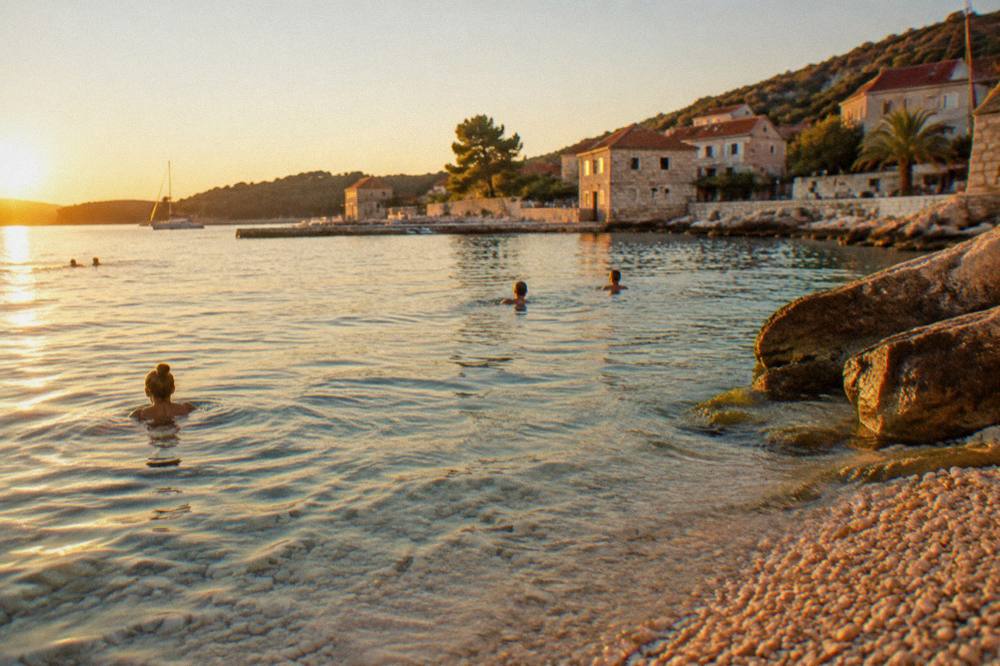
Bring swimwear, a towel, reef-friendly sun protection, water shoes for the pebble and stone surfaces, cash for island stops, and a dry bag for anything that must stay dry in an open boat. The lagoon shallows are waded rather than dived, and boats anchor off so you swim or step down into the water. Food and drink depends on the tour: the cruise format serves lunch on board, while speedboat formats usually stop at a konoba.
Sun exposure is the real variable of the day. The DHMZ Split Marjan table gives July 353.3 hours of sunshine and December 120.8 hours, and a full day on open water in July means hours of direct sun with no shade beyond what the boat provides. Water shoes earn their place because Dalmatian beaches are pebble and stone rather than sand, and the shallows around the islets are the same.
A simple packing check:
| Item | Why |
|---|---|
| Swimwear and towel | the lagoon stop is a swim stop |
| Water shoes | pebble and stone shores |
| Sun protection | hours of open-water sun in summer |
| Cash | small island konobas and taxi boats |
| Dry bag | spray and swim transfers on open boats |
Add a light layer for the return leg even in summer. The afternoon breeze that rises along the Dalmatian coast in July and August makes an open-deck crossing back to Split cooler than the departure was, and a windproof layer turns a shivery last hour into a comfortable one. A phone strap or zipped pocket solves the other common problem of the day, since transfers between boat and shore are wet by nature.
How Does The Blue Lagoon Compare With Other Split Boat Trips?
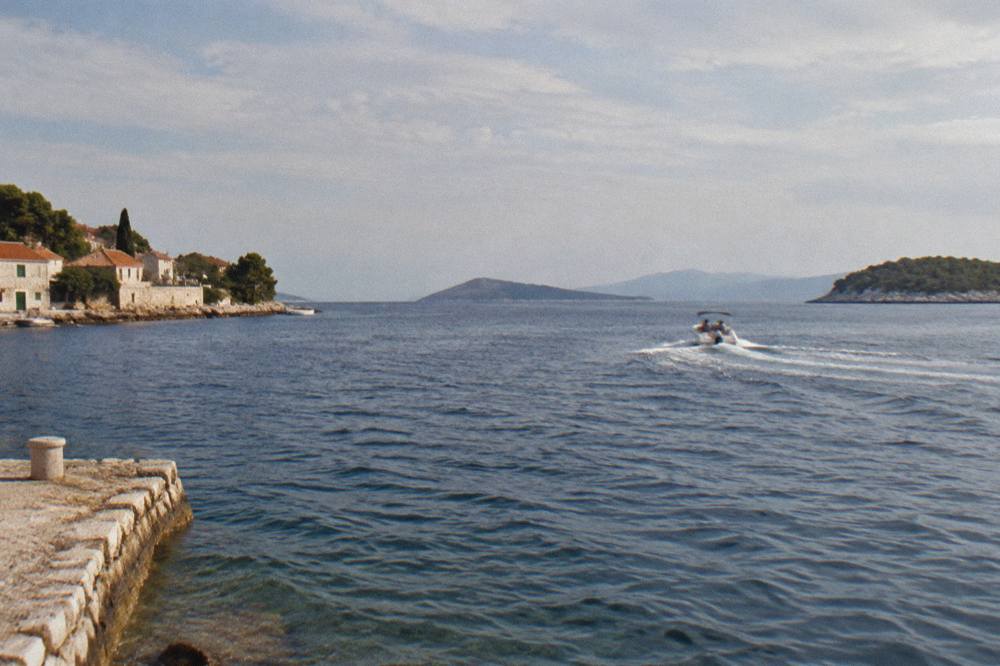
The Blue Lagoon trip is the shortest, calmest boat day from Split, built around a shallow swim stop and close islands, while the Blue Cave and Hvar runs cross much more open water to reach Biševo and the far side of Hvar, and the five-island speedboat format packs several stops into one long day. If the aim is one easy swim day with food included, the Blue Lagoon cruise is the fit; if the aim is scenery and distance covered, the Blue Cave route is the stronger choice.
The comparison that matters most is Blue Lagoon versus Blue Cave, and the site answers it directly on is there a Blue Cave in Split. In short: the lagoon is a cove for swimming, the cave is a flooded grotto on Biševo entered by small boat, with an entry fee of 24 EUR in high season, 20 June to 10 September, and 18 EUR in shoulder season, paid in cash on site. The two sit on different itineraries and different sea conditions.
| Trip | What it is | Key figure |
|---|---|---|
| Blue Lagoon and Šolta | shallow swim cove and island calls | ferry to Rogač about 60 minutes |
| Blue Cave and Vis | sea cave on Biševo plus Vis | entry 24 EUR high season, cash on site |
| Hvar | island town by catamaran or tour | catamaran 6.40 to 10.00 EUR foot passenger |
| Brač and Zlatni Rat | ferry to Supetar plus the famous beach | line 631 about 50 minutes |
| Trogir by boat | island town near the airport | 36 minutes by road from the palace |
Each of these has its own guide on the site, including Hvar, Brač and Zlatni Rat and Trogir, with the ferry and ticket figures broken out in full. Land-based alternatives such as Krka National Park and Plitvice Lakes are the natural swap when the sea is too rough for boats, and both have their own seasonal price ladders.
What Are The Rules On Boats And Islands Around Split?
Croatia uses the euro since 1 January 2023 and is a Schengen member, the emergency number is 112, and drones are restricted over Split's old town and around the airport and are banned in national parks, so leave one off the boat unless the rules are checked first. In Split itself, drinking alcohol in the historic centre carries a 300 EUR fine and sleeping in public spaces 150 EUR, under the public-order rules the city published. On the water, the crew's instructions are the law of the boat.
The fines the city's own page lists are worth knowing before a night out on either side of the boat day: alcohol in the historic centre or within 100 m of schools 300 EUR, urinating 300 EUR, climbing monuments or bathing in fountains 300 EUR, and sleeping in public spaces 150 EUR. Walking through the historic centre in swimwear is also an offence, with the amount set locally rather than published on the official page. None of this touches the lagoon itself, but it shapes the walk back through the Old Town from the evening return.
The seasonal night-time alcohol rule also matters on summer evenings: shops inside the city may not sell alcohol between 21:00 and 06:00 in the 1 June to 15 September window, though bars and restaurants serve as normal. A boat day that ends with a supermarket stop for a nightcap therefore needs an earlier shop. The rule repeats each summer unless the city changes it, so treat it as standing practice for July and August.
Common Questions About The Blue Lagoon And Šolta
Is the Blue Lagoon the same as the Blue Cave?
No. The Blue Lagoon is a shallow swim cove near Split used as a boat-tour stop, with no entry fee. The Blue Cave is a sea cave on the island of Biševo, entered by small boat, with an entry fee of 24 EUR in high season and 18 EUR in shoulder season paid in cash on site.
Can you get to the Blue Lagoon without a tour?
Partly. Take the line 636 ferry from Split to Rogač on Šolta, about 60 minutes, and arrange a local taxi boat from the port for the lagoon leg. No timetable for those local boats is published in advance, so confirm on arrival at Rogač.
Is the Blue Lagoon free to enter?
Yes, the lagoon is open water with no entrance fee, no gate and no facilities. The cost of the day is the boat: a tour from Split or the ferry plus taxi-boat combination.
How long does a Blue Lagoon tour from Split take?
Formats vary from half-day speedboat circuits to full-day cruises with lunch. Each listing shows its own duration at the point of booking, and those figures change with the season, so check the live listing rather than a fixed number.
Which month is warmest for swimming near Split?
July, at a mean of 26.2 C from the DHMZ Split Marjan station table for 1948 to 2024, with August close behind at 25.9 C. June and September stay milder at 23.4 C and 21.6 C and carry thinner crowds.
Do you need to book a Blue Lagoon tour in advance?
In July and August, yes, since boats fill and the calendar contracts outside the season. Every listing on this page offers a live availability check, and free cancellation terms are shown at booking.
The Blue Lagoon day is Split's easiest boat trip: one swim stop, two or three island calls, and a return to the waterfront before the evening. Pick the cruise format for lunch and a slow rhythm, the speedboat format for a smaller group and a faster circuit, or the ferry to Rogač for a day on Šolta arranged independently, and check the live listing for whatever the season is doing to prices and departures.