Brac From Split
Split sits directly across from Brac, the large island visible from the Riva, and a day trip across to Supetar or Bol is one of the easiest crossings on the Adriatic coast.
Short answer
The Jadrolinija line 631 car ferry runs from Split to Supetar on Brac in about 50 minutes, and from 2026 the line has no off-season timetable, only high-season and low-season sailings. Bol and Zlatni Rat sit on the island's southern side, reached by bus or taxi from Supetar, by the catamaran line that calls at Bol, or by boat tour from Split.
Split looks straight at Brac. The island fills the horizon south of the city, close enough that from the Riva promenade you can pick out the ridge that runs along its spine on any clear afternoon. The crossing is one of the shortest on the Croatian coast, and it turns Brac into a genuine day-trip option rather than a project: the Jadrolinija car ferry on line 631 covers Split to Supetar in about 50 minutes, and the operator's own route pages carry the timetables. This page lays out the routes, the stops and the choices for a Brac day, starting with the practical question of how the crossing works.
How Do You Get From Split To Brac?
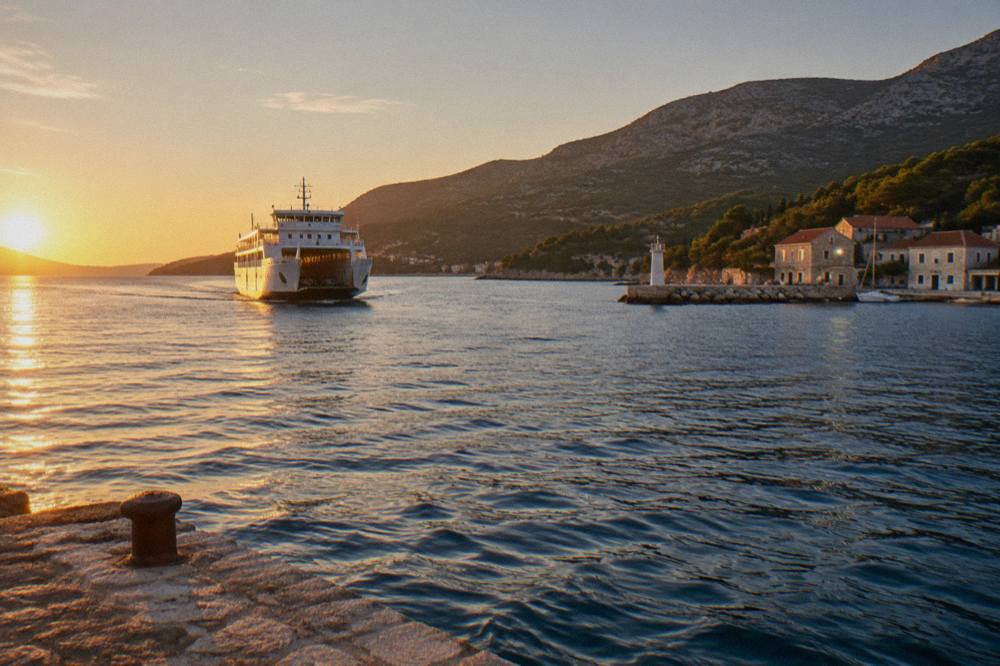
The main route is the Jadrolinija line 631 car ferry from Split to Supetar, a crossing of about 50 minutes, and from 2026 the line runs on high-season and low-season timetables only, with no off-season period. The ferry terminal sits on Obala kneza Domagoja beside the main bus station, 500 to 600 m from Diocletian's Palace, so the departure point is a short walk from the Old Town.
Planning your own crossing to the island? Book a ferry ticket here.
Jadrolinija's 2026 timetable announcement, which the operator published with its new sailing schedules, moves Split to Supetar into the group of lines that never drop to a reduced off-season service. That matters for anyone planning outside the summer: even in winter there is a low-season timetable rather than a stripped-back one, and departures are aligned with bus schedules at the Supetar end. Timetables are set by the operator, so the day's sailing times should be checked on Jadrolinija's route page before travel.
The second way across is by catamaran. Jadrolinija's line 9603 runs a route of Split, Bol, Stari Grad and Jelsa, which puts a fast-vessel stop on Brac itself at Bol, the town beside Zlatni Rat. Catamarans carry foot passengers only, so they suit travellers heading straight for the beach rather than anyone with a hire car. Other operators, among them Kapetan Luka, TP Line and Bura Line, also run catamarans out of Split, and their departures appear in the Port of Split's live departures feed.
| Route | Vessel type | Crossing time | Foot passenger fare |
|---|---|---|---|
| Split to Supetar, line 631 | Car ferry | about 50 minutes | on the operator's price list |
| Split to Bol, catamaran line 9603 | Catamaran | on the operator's timetable | Split to Hvar or Jelsa runs 6.40 EUR low season, 10.00 EUR high season |
| Split to Stari Grad, line 635 | Car ferry | about 120 minutes | 5.90 EUR off-season, 8.40 EUR in season |
The fares in the table come from Jadrolinija's own price lists for those lines. The Supetar foot-passenger fare sits on the operator's price list rather than in the figures this desk can quote line by line, so check it at the ticket office or on the operator's page before you travel. For orientation on the wider network, the ferries and islands overview from Split covers the neighbouring crossings in more depth.
Is Zlatni Rat Worth The Trip From Split?
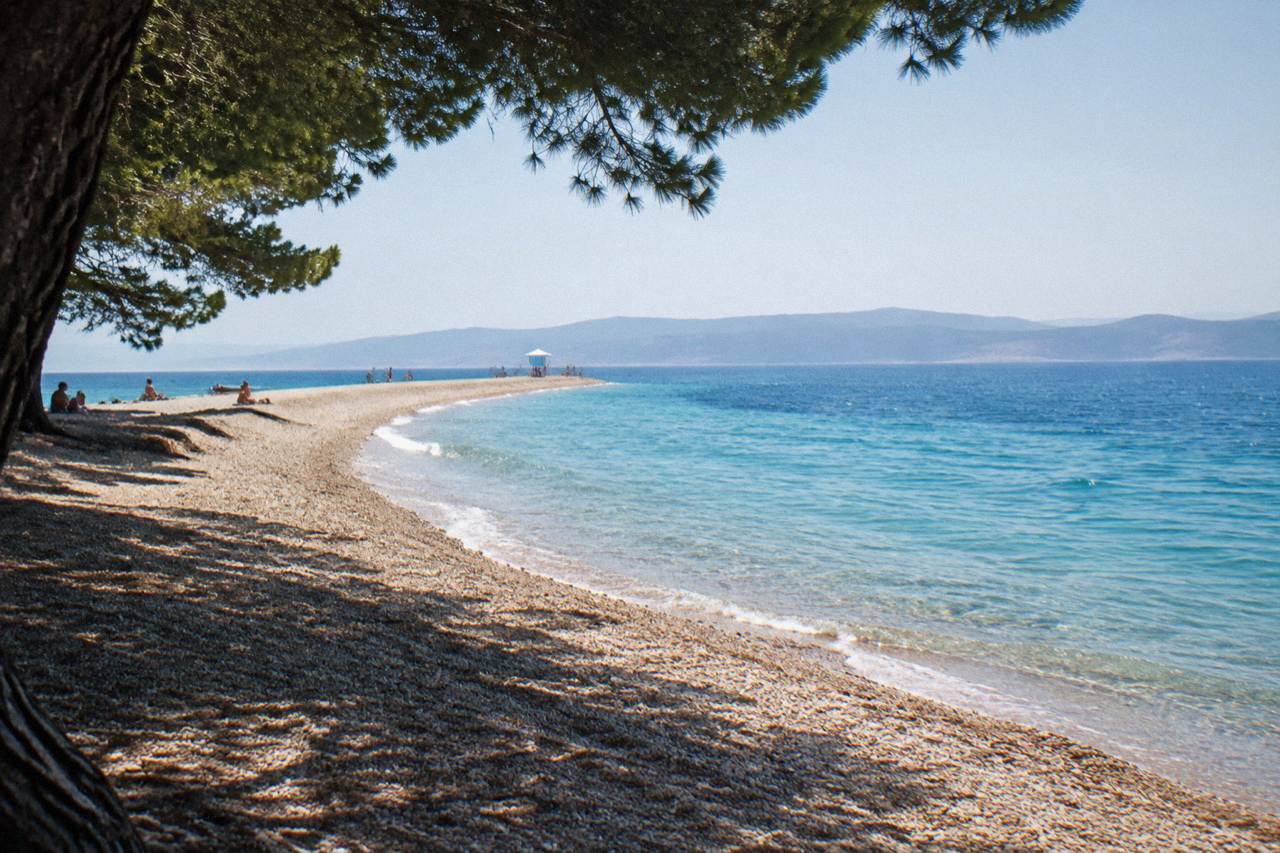
Zlatni Rat is the pebble cape at Bol, on Brac's southern shore, and it is the single most photographed stretch of the island's coastline, a spine of pale stone that shifts shape with the wind and the current. Whether it is worth the trip depends on how you feel about famous beaches: reached as a day trip it pairs a short crossing with a long transfer, reached by boat tour it arrives by sea with swimming stops along the way.
Bol is the town, Zlatni Rat is the beach beside it, and the cape's form changes over time because the material that builds it is continually rearranged by the sea. The beach is a pebble beach, not sand, and the water around it is the clear, deep blue that the southern Dalmatian islands are known for. What a visit actually looks like depends on the route chosen: a ferry into Supetar followed by the island road to Bol, a catamaran straight into Bol on line 9603, or a boat tour from Split that includes Zlatni Rat among its stops.
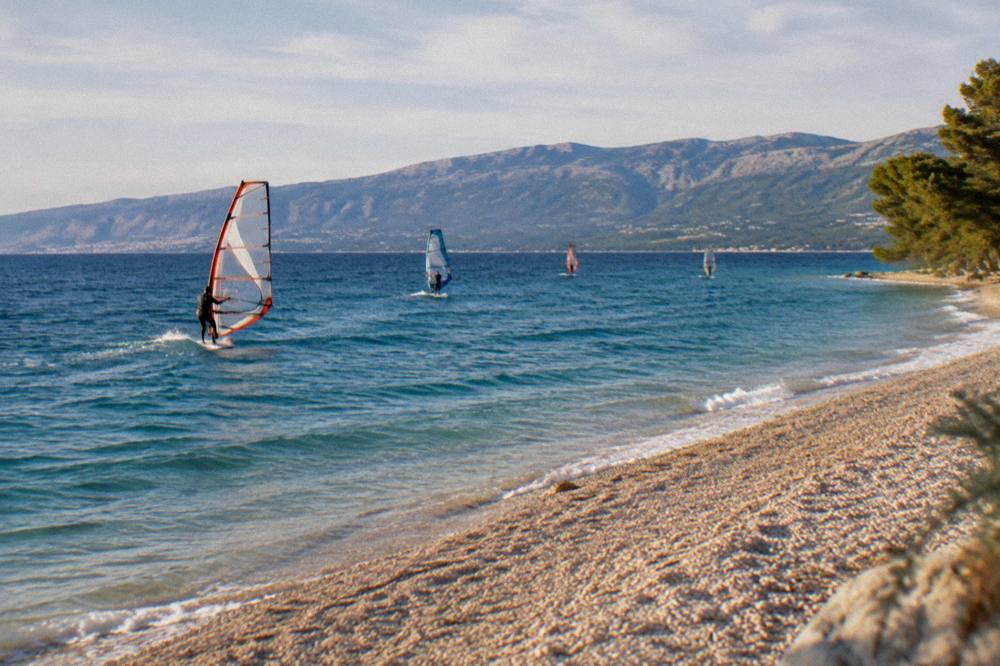
The sea conditions around the cape are worth respecting. The mistral that blows in from the northwest through summer shapes the water on one side of the spit, which is why the beach has a windsurfing culture on one flank and calmer water on the other. For a fuller picture of Split's own swimming options, the city beaches guide covers the beaches inside Split itself, including Bačvice, the home of picigin, the protected ball game born there in 1908.
What Does A Day Trip To Brac From Split Look Like?
A realistic day uses the first morning ferry to Supetar, gives the middle of the day to Bol and Zlatni Rat, and returns on a late-afternoon or evening sailing, with the whole plan hanging on the day's timetable rather than on a fixed schedule. The catamaran line that calls at Bol shortens the island transfer, and a boat tour from Split replaces the ferries entirely with a sea route that stops for swimming.
Three shapes of day work. The independent ferry day: cross to Supetar, take the island bus or a taxi to Bol, walk out to Zlatni Rat, and reverse the route in the evening. The catamaran day: line 9603 calls at Bol directly, which removes the island road transfer in one direction at least. The tour day: a speedboat or cruise from Split carries the day, tying Brac to other islands such as Šolta or Hvar in a single loop.
Sailing times decide everything on an independent day, and Jadrolinija's pages are the authority on those. What the tour option removes is the timetable dependency: the operator handles the crossings and the transfers, and the day becomes about the stops rather than the logistics. Among guided days out of the city, the boat trips in the band below are the ones this desk can point to for sea-based days, alongside one inland alternative for a different kind of excursion.
Not every day out of Split has to be a sea day, and the contrast is worth naming. The Krka National Park guide covers the waterfalls day trip, where the Krka price list sets entry at 40 EUR in June to September, 20 EUR in April, May and October, and 7 EUR from January to March and in November to December. Pairing one park day with one island day is a common shape for a week based in Split, and the things to do overview holds the full menu.
Can You Reach Bol And Zlatni Rat Without A Car?
Yes. Three car-free routes exist: the line 631 ferry to Supetar followed by the island bus or a taxi to Bol, the catamaran line 9603 that calls at Bol directly, and the boat tours from Split that include Zlatni Rat among their stops. Visitors arriving at Split Airport who want the island without driving can reach the ferry terminal on the Platanus shuttle, 10 EUR one way or 15 EUR return, which runs to the main bus station beside the port.
The car-free case for Brac is unusually strong because the ferry and the catamaran between them touch both of the island's main visitor points. Supetar is the ferry hub on the north coast facing Split, and Bol sits on the south coast, so the island transfer between them is the one leg to plan. The catamaran calling at Bol removes that leg, at the price of foot-passenger-only travel and a smaller vessel. The tour option removes all of the planning and adds swimming stops, which on a hot day is its own argument.
Car travel has a separate logic. The Split to Supetar ferry carries vehicles, and taking a car across opens the island's interior, but hiring and parking on Brac are separate questions from the crossing itself. For guidance on the driving question back in the city, the pieces around getting around and the wider day-trip menu sit elsewhere on this site; this page keeps to the car-free routes and the tours.
What Does A Brac Boat Tour From Split Include?
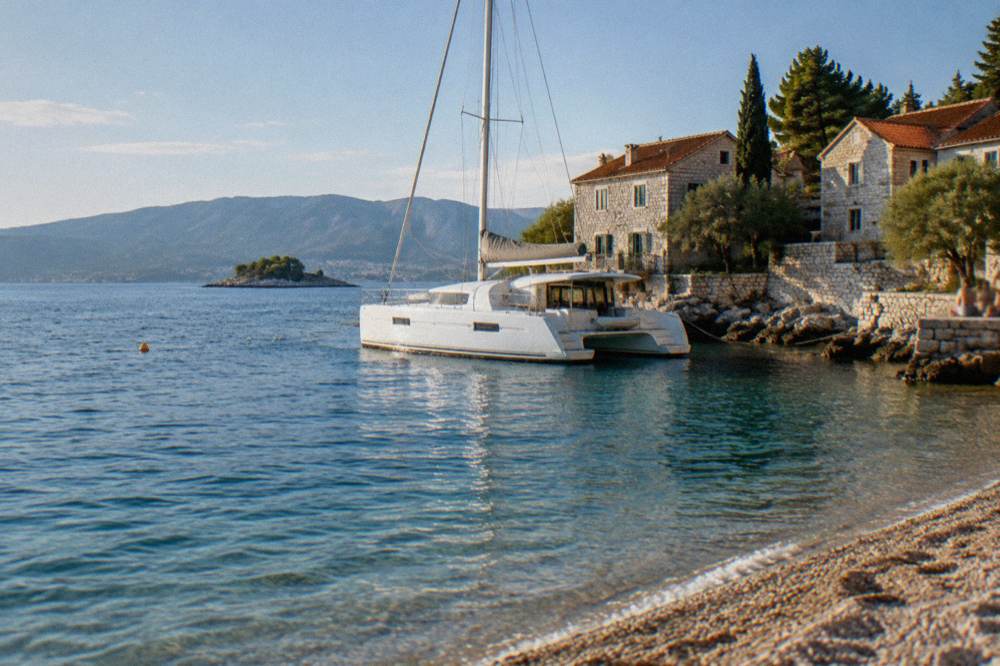
Boat tours from Split that touch Brac typically run a loop across the islands south of the city, with Zlatni Rat or the Pakleni islands and Šolta among the stops, and with swimming breaks built into the day. Exact routes, prices and durations are on each operator's live listing, and this desk never quotes a product figure in prose, so the listing is the reference for what a specific day costs and how long it runs.
Two categories dominate. Speedboat days run small groups fast across the water, which is how a Brac plus Šolta plus Blue Lagoon loop becomes possible in a single outing. Larger vessels and catamaran cruises run gentler loops that include lunch and drinks as part of the day. The small-group speedboat option below is the one this desk points to for the fast version of that loop, with the Blue Lagoon near Šolta as its swimming anchor.
The slower sea options belong to the same family of days: the cruise and catamaran products that run lunch and drinks as part of the outing. Whichever shape suits, the practical advice is the same: sea days depend on weather, operators hold the right to change routes when the wind decides otherwise, and the listing's cancellation terms are the thing to read before booking rather than after.
Where Else Can You Go On Brac Beyond Zlatni Rat?
Beyond Bol and Zlatni Rat, the island's visitor map includes Supetar, the ferry port on the north coast facing Split, and Milna, on the island's western side, which the catamaran line 9602 between Split, Milna, Hvar and Vis calls at.
Supetar rewards the ferry-day traveller who never leaves it: a small Dalmatian town with a waterfront, churches and the unhurried pace of a port that lives with its timetable. Milna sits closest to Split on the island's west and appears on the catamaran route to Hvar and Vis, which makes it a stop rather than a destination for the fast vessels. The island's stone heritage is the fact worth carrying: Brac stone was cut for buildings far beyond Croatia, and the quarries around Pučišća on the north coast are part of that story, though specific quarry visit details are a confirm-locally question.
The honest summary is that a day trip rarely gets past Bol, and that is fine. The crossing, the transfer and the beach fill a day without forcing. Travellers with two days or more can slow down, stay in Bol or Supetar, and treat the second day as the interior day, using the island bus network that connects the towns. The Blue Lagoon and Šolta guide covers the neighbouring island that often shares the boat loop with Brac.
What Does The Weather Mean For A Brac Day From Split?
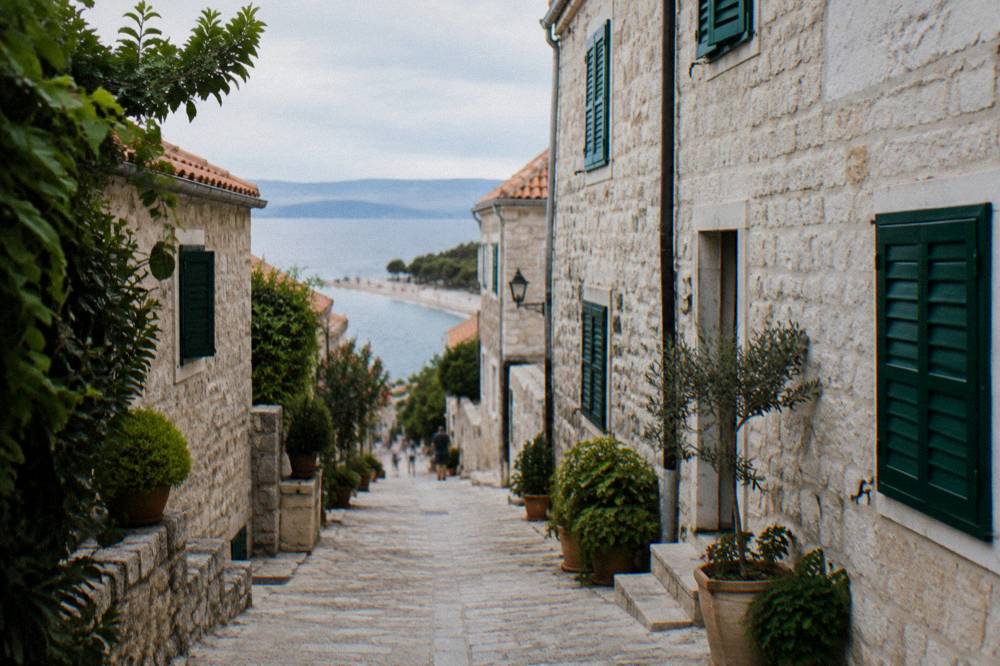
The climate record for the Split Marjan station, covering the period 1948 to 2024, puts July at a mean of 26.2 C and August at 25.9 C, with July the driest month at 26.6 mm of rain and 353.3 hours of sunshine, so midsummer crossing days are warm, bright and busy with sea breeze. June and September sit at 23.4 C and 21.6 C respectively, which makes the shoulders calmer months for the same crossing.
The station record, kept by the Croatian national meteorological service at its Split Marjan station, also counts the hot days: 7 days at 30 C or more in June, 18 in July and 17 in August. A pebble beach in those conditions asks for proper footwear, shade time and water, and the mistral that shapes Zlatni Rat is the same wind that can roughen an afternoon crossing for smaller vessels. November, the wettest month at 115.5 mm, and December, with 120.8 sunshine hours against July's 353.3, are months when the ferry does the work that the beach cannot.
| Month | Mean temperature (C) | Precipitation (mm) | Sunshine (hours) |
|---|---|---|---|
| April | 14.4 | 62.0 | not tabled for this station |
| May | 19.2 | 57.5 | not tabled for this station |
| June | 23.4 | 49.0 | not tabled for this station |
| July | 26.2 | 26.6 | 353.3 |
| August | 25.9 | 41.3 | not tabled for this station |
| September | 21.6 | 70.9 | not tabled for this station |
The figures are station means for the 1948 to 2024 period, measured on the mainland at Split Marjan, and they describe the city side of the crossing rather than a separate island station, which does not exist in the record this desk works from. No monthly sea-temperature normal is published for Split, so the sea on any given day is a live-reading question rather than a planning table.
How Does Brac Compare With Hvar And The Blue Lagoon?
Brac suits the traveller who wants a famous beach and a short crossing, Hvar suits the visitor chasing a town with a fortress and a nightlife scene, and the Blue Lagoon near Šolta suits the day that is mostly about swimming in shallow water. The crossings differ too: Supetar on Brac is about 50 minutes by ferry, Stari Grad on Hvar about 120 minutes on line 635, and Šolta's port of Rogač about 60 minutes on line 636.
The comparison is honest only when the routes are kept straight, and the ferry network makes that easy to muddle. Hvar town, the famous place, is a catamaran stop, while Stari Grad is the car-ferry port on the same island: arriving by car ferry lands you a transfer away from the town itself. Brac inverts that, since the car ferry lands at Supetar while the beach of Zlatni Rat sits at Bol on the far side. Šolta, the third island in the frame, is the quiet one, with the Blue Lagoon beside it as the swimming stop that ties the small-group speedboat loops together.
| Island | Car ferry from Split | Crossing time | Fast vessel | Character of the day |
|---|---|---|---|---|
| Brac | Line 631 to Supetar | about 50 minutes | Catamaran line 9603 calls at Bol | Beach day at Zlatni Rat |
| Hvar | Line 635 to Stari Grad | about 120 minutes | Catamarans to Hvar town, 10.00 EUR high season | Town, fortress, nightlife |
| Šolta | Line 636 to Rogač | about 60 minutes | Included in speedboat loops | Swimming at the Blue Lagoon |
The Hvar fortress entry price of 12 EUR, published by the island's own visitor site, is the one hard comparison figure for the town end of a Hvar day; Brac's equivalent spend is mostly the beach, the transfer and lunch. For travellers weighing the two big islands against each other in depth, the Hvar day trip guide and the Hvar versus Split comparison elsewhere on this site carry the fuller arguments.
What Should You Budget For A Brac Day From Split?
The transport costs are 5.90 EUR off-season and 8.40 EUR in season for a foot passenger on the Split to Stari Grad ferry, 6.40 EUR low season and 10.00 EUR high season for the catamaran to Hvar or Jelsa stops on the route that includes Bol, and 7.20 to 10.00 EUR for the Vis leg, with the Supetar foot fare on the operator's price list.
Everything else on the island, from island buses to lunch in Bol, is a confirm-on-the-day figure that this desk does not quote.
The honest budget line is that the crossing is cheap and the variables are not. A sandwich and a swim can keep a Brac day close to the ferry fare, while a long lunch on Bol's waterfront will carry the day's cost on its own. Posted prices and an itemised bill are the checks worth making anywhere on the coast, and the menu posted outside a konoba is the reference before you sit down.
| Item | Figure | Source and season |
|---|---|---|
| Split to Stari Grad ferry, foot passenger | 5.90 EUR | Jadrolinija price list, off-season |
| Split to Stari Grad ferry, foot passenger | 8.40 EUR | Jadrolinija price list, in season |
| Catamaran, Split to Hvar or Jelsa | 6.40 EUR low, 10.00 EUR high | Jadrolinija catamaran price lists |
| Catamaran, Split to Vis | 7.20 EUR low, 10.00 EUR high | Jadrolinija catamaran price lists |
| Airport shuttle to the bus station by the port | 10 EUR one way, 15 EUR return | Platanus shuttle page |
For the paid-entry sights on the mainland alternatives, the Krka and Plitvice price lists quoted earlier are the published authorities, and the guided day below is the version of the inland alternative that arrives with its entry tickets already handled.
Which Brac Day Trip From Split Should You Actually Book?
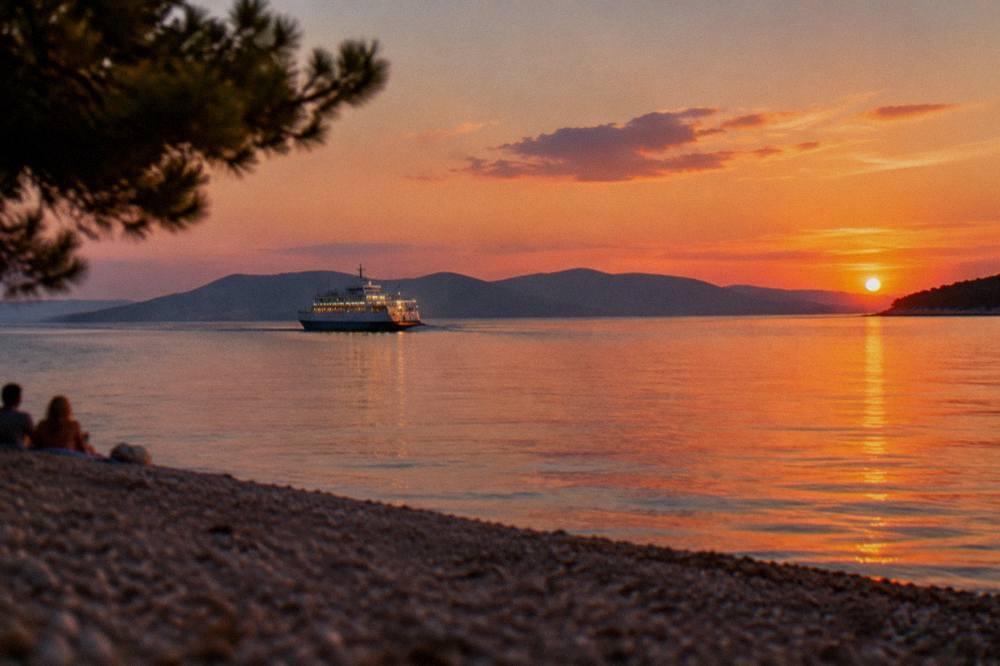
Book the small-group speedboat if the day is about swimming and covering water, book the catamaran if the day is about Bol alone and you want the shortest path to it, and take the ferry to Supetar if you want the cheapest, most flexible day with the island to explore at your own pace. A guided tour is the right call whenever timetables, transfers or a tight schedule would otherwise run the day.
The decision rests on three questions. How many islands does the day need: one, well, or several, fast. Does the timetable own the day, or does the sea? And is the weather holding? The answers move a traveller between ferry, catamaran and tour, and none of the three is a wrong answer. What the speedboat option trades in comfort it returns in reach, and what the ferry trades in speed it returns in price and freedom.
The guided alternatives below bracket the two directions a Split holiday can take from the city: inland to the parks, or out to sea. Whichever way the day points, the Split Croatia Travel Guide holds the rest of the map, from Diocletian's Palace in the Old Town to the crossings beyond Brac towards Hvar and the Blue Cave.
Common Questions About Brac From Split
How long is the ferry from Split to Brac?
The Jadrolinija line 631 car ferry covers Split to Supetar on Brac in about 50 minutes, and from 2026 the line runs on high-season and low-season timetables only, with no off-season period.
Can you do a day trip to Zlatni Rat from Split?
Yes. Options include the ferry to Supetar followed by an island transfer to Bol, the catamaran line that calls at Bol directly, and boat tours from Split that include Zlatni Rat among their stops.
Can you get to Bol without a car?
Yes, on foot throughout. The catamaran route that runs Split, Bol, Stari Grad and Jelsa calls at Bol itself, and the alternative is the Supetar ferry followed by the island bus or a taxi.
Is Brac or Hvar better for a day trip from Split?
Brac is the shorter crossing, about 50 minutes to Supetar against about 120 minutes to Stari Grad on Hvar, and it is the beach day. Hvar town, reached by catamaran, offers the fortress, priced at 12 EUR by the island's visitor site, and a livelier town scene.
When is the best time of year for a Brac beach day?
The Split Marjan station record for 1948 to 2024 puts July at a mean of 26.2 C with 353.3 hours of sunshine and 26.6 mm of rain, and June and September at 23.4 C and 21.6 C, so midsummer is the warm end and the shoulders are the calmer ones.
Do the Split to Brac ferries run all year?
The operator's own timetables decide, and this desk never states that a line runs year-round. What is published is that from 2026 the Split to Supetar line has no off-season timetable, only high-season and low-season services, so the sailing schedule should be checked on the operator's route page.
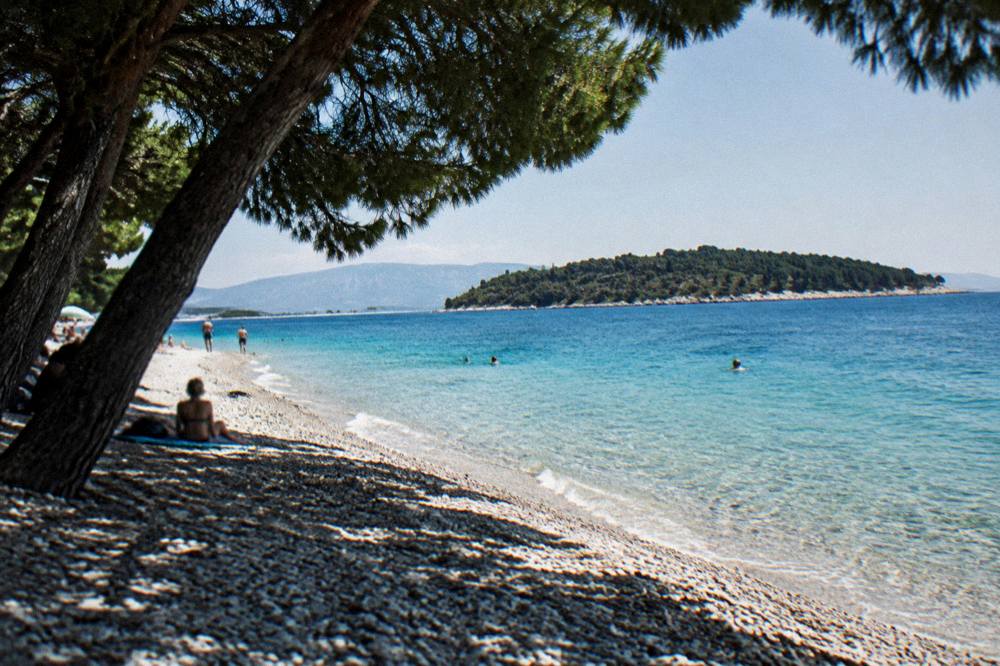
A Brac day from Split comes down to one honest choice: cross independently on the short ferry and let the island run at its own pace, or hand the day to a boat and spend it on the water between islands. Either way the crossing is measured in minutes rather than hours, the beach at the end of it shifts with every wind, and the timetable on the operator's page is the one document that decides the shape of the day.